The Kit — Pieces and Limbs
Five pieces do almost all the work. Learn what each one is for and which limb plays it, and most of a drum part explains itself.
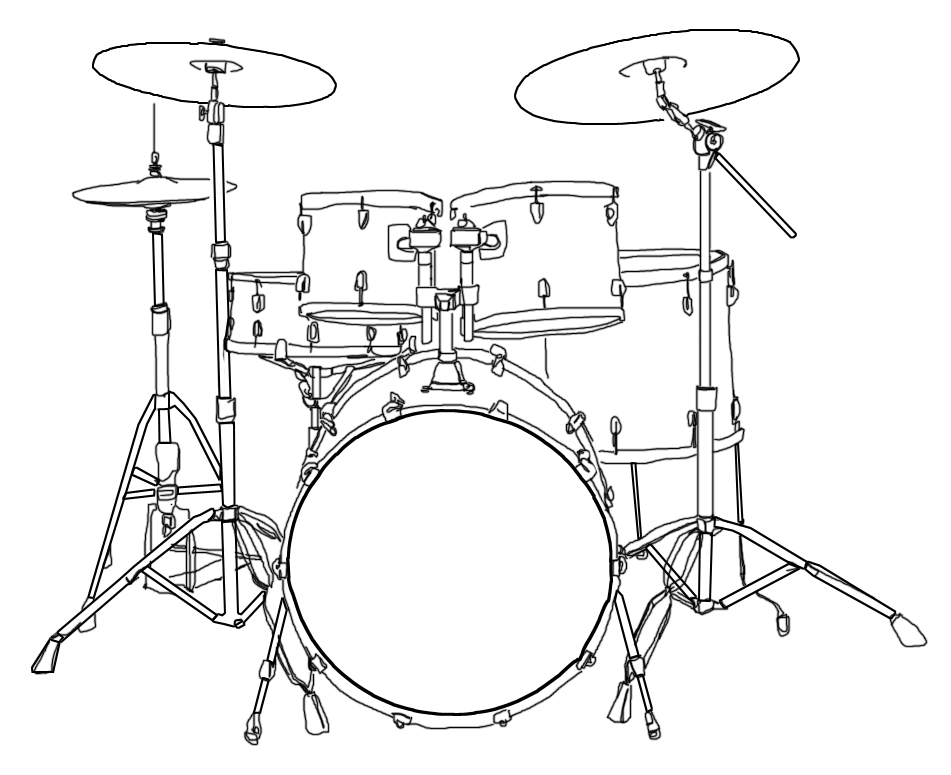
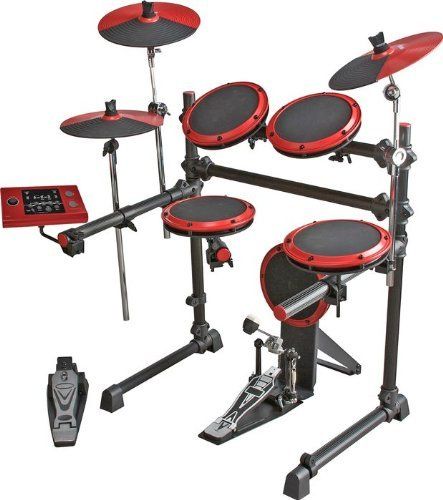
Set the throne, the heights, and the grip on How to sit before you chase a sound. Both pictures are a regular kit, from the seat you play in. Kick in the middle, snare in front of your left hand, three toms, and three cymbals: hi-hat, crash, and ride. The hi-hat is on your left. Your right hand reaches across to it. Click a name to hear that piece.
An acoustic kit

An electronic kit
Same eight pieces. The pads stay quiet until the box on the left, the module, turns a tap into the sound of that drum or cymbal. Your feet still play the two pedals.

Which limb
Click a name to hear it. These are the same pieces as the pictures. A cymbal is written ×. A drum is a round note. The map of which line is which piece is on your first groove.
Hands
In the groove the hands split. In a fill, both hands move. Which hand plays which tom is on Fills.
Left hand
The backbeat. In most Western music it is beats 2 and 4, and it is what makes people nod.
Either hand
Not part of the groove. They are what you play instead of it, in a fill. The hands take turns, right hand first. Fills.
Right hand
The hat is the clock. The ride is the same job, longer and louder. The crash marks a landing, the first beat after a fill or the top of a section.
Feet
Right foot
The floor. Lands with the bass guitar, and tells you where the bar starts.
Left foot
Holds the two cymbals shut, which is what makes a hat hit short. Lift it and the same hit rings. That open hat shows up on ghost notes and accents.
This foot also plays the second kick pedal of a double pedal. This room does not teach that. It is coming.
Before you go on
- Name all five pieces and the limb that plays each
- Play four quarter-note kicks that sound the same as each other
- Play four snare hits with your left hand, relaxed, no forearm
- Keep the hat shut with your left foot while your right hand plays it