Household stories / Bāṇeśvara
Baneshwor Mahadev (Bāṇeśvara Mahādeva / बानेश्वर महादेव)बानेश्वर महादेव
| Puranic Dedication & Lore | Honors Lord Shiva as venerated by the thousand-armed Asura king Bāṇāsura (son of Mahābali); recounted in the Bhāgavata Purāṇa, Harivaṁśa, and Nepāl-Māhātmya as a consecrated site of formidable Shaiva penance. |
|---|---|
| Sacred Geography & Setting | Situated on an elevated river terrace in the eastern sector of Kathmandu, positioned between the holy Bagmati River and the Dhobi Khola (Rudramatī) corridor; traditionally guarded the eastern trade and pilgrimage approach. |
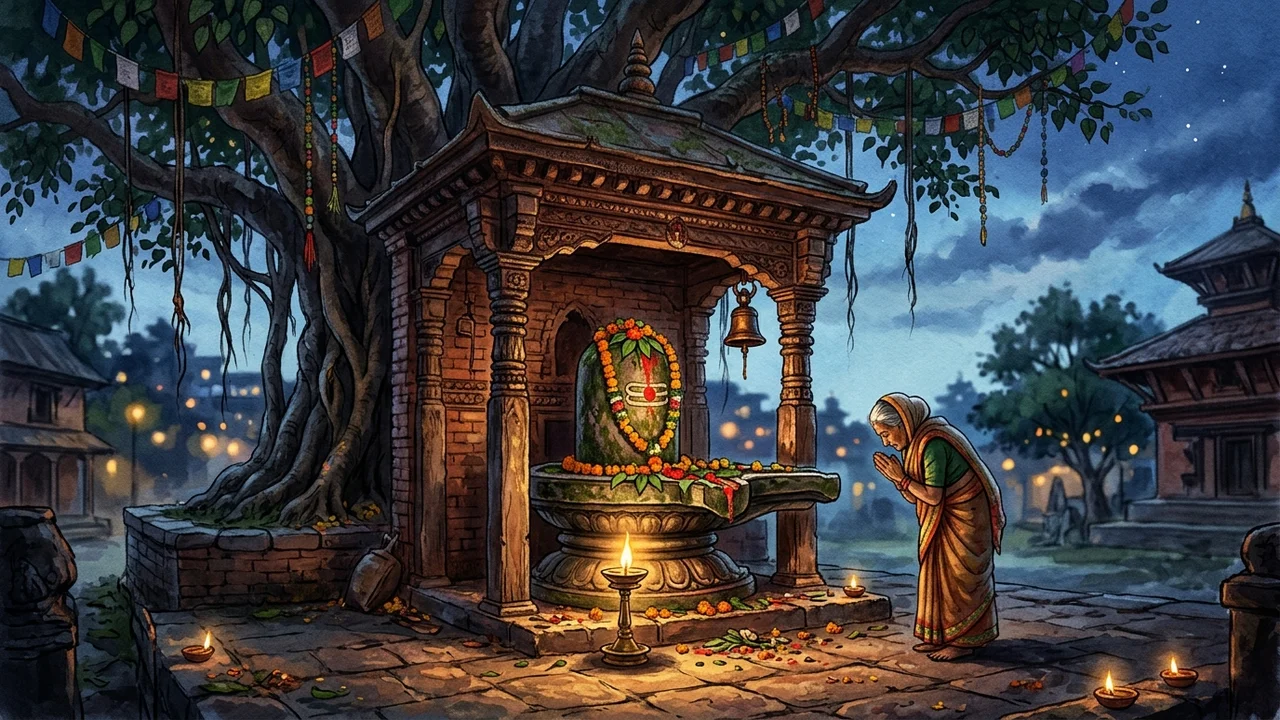
| Natural Sanctum & Svarupa | Features an ancient, uncarved natural stone Lingam (Svayambhū Bāṇaliṅga) sheltered beneath the majestic canopy of a century-old sacred Pipal tree (Ficus religiosa), emphasizing open-air communion with nature. |
| Liturgical Observances | Weekly Monday worship (Somavāra Vrata), monthly Pradoṣa twilight libations, and Maha Shivaratri evening lamp offerings by surrounding neighborhood families. |
| Socio-Cultural Role in Valley Life | Serves as an intimate neighborhood heart where local Parbate and Newar families gather for daily morning water offerings, life-cycle Rudrī rituals, and communal evening recitations. |
The story
Amidst the bustling urban thoroughfares of eastern Kathmandu, the ancient sanctuary of Baneshwor Mahadev (Bāṇeśvara Mahādeva / बानेश्वर महादेव) preserves an enduring link to Puranic mythology and the historical topography of the valley. According to the Nepāl-Māhātmya and the Harivaṁśa, this sacred ground is named after King Bāṇāsura, the legendary thousand-armed monarch of the Asuras and eldest son of the virtuous King Bali. Possessed of unbending Shaivite devotion, Banasura performed austere penance in the valley, fashioning natural stone lingams with his thousand hands to entreat the eternal protection of Mahadeva.
Gratified by Banasura’s tireless austerity, Shiva granted him invulnerability against mortals and declared that wherever Banasura established his devotion, the divine presence would abide as Bāṇeśvara—the Lord of Banasura. Historically, the shrine occupied an open, elevated terrace commanding the alluvial plain between the holy Bagmati River and the Dhobi Khola (ancient Rudramati). For centuries, travelers, merchants, and ascetics arriving from the eastern hills or the Mithila plains rested beneath its shade before crossing the river toward the royal cities of Patan and Kathmandu.
Unlike the grand multi-tiered pagodas of the central palace squares, the heart of Baneshwor Mahadev retains the elemental simplicity of an ancient open-air nature shrine. The sanctum sanctorum is sheltered beneath the massive, intertwining roots of a sacred Pipal tree (Ficus religiosa). For traditional Nepali households, the Pipal tree is itself an altar of the Trimurti—its roots representing Brahma, its trunk Vishnu, and its rustling canopy Shiva. Beneath this whispering emerald vault sits the smooth, weather-worn stone lingam, perpetually anointed by early morning libations of spring water, milk, and red vermilion powder.
Throughout the week, and especially upon auspicious Mondays (Somavāra) and monthly twilight fasts (Pradoṣa Vrata), the courtyard awakens before dawn. Elders from surrounding neighborhoods arrive with brass plates laden with Belpatra leaves, sesame seeds, and fragrant garden marigolds. Women circle the stone lingam and the sacred tree seven times, murmuring prayers for domestic harmony, the longevity of their children, and protection against premature adversity. As evening falls, rows of small clay lamps (Pālā) flicker along the stone wall, their gentle glow echoing the ancient vow that divine grace remains ever accessible to the humble householder.
In modern times, though the surrounding agricultural terraces have transformed into a thriving commercial hub and the seat of Nepal's national parliament, the sacred courtyard of Baneshwor Mahadev remains an oasis of contemplative peace. It anchors the daily rhythm of the neighborhood, reminding residents that beneath the transient currents of modern civic life lies an ancient bedrock of devotion that has sanctified the soil of Kathmandu for millennia.
कथा
काठमाडौँको पूर्वी भेगमा अवस्थित बानेश्वर महादेव नेपाली समाज र पौराणिक इतिहाससँग गहिरो सम्बन्ध राख्ने एक प्राचीन एवं जाग्रत तीर्थ हो। 'नेपालमाहात्म्य' र 'हरिवंश' पुराण अनुसार, यस स्थानको नामाकरण हजार हात भएका दैत्यराज बाणासुरको नामबाट भएको हो। महाबलीका जेठा छोरा बाणासुर भगवान् शिवका अनन्य भक्त थिए। उहाँले यस पावन भूमिमा आएर भगवान् शिवलाई प्रसन्न तुल्याउन कठोर तपस्या गर्नुभएको थियो र आफ्ना हजारौँ हातहरूले पार्थिव शिवलिङ्ग निर्माण गरी नित्य आराधना गर्नुभएको थियो।
बाणासुरको अनन्य भक्तिबाट प्रसन्न भई महादेवले उहाँलाई वरदान दिनुभयो र भन्नुभयो—"तिमीले स्थापना गरेको यो लिङ्ग 'बानेश्वर' का नामले संसारमा प्रसिद्ध हुनेछ, र यहाँ श्रद्धापूर्वक पूजा गर्नेहरूको सम्पूर्ण भय र विघ्न नाश हुनेछ।" ऐतिहासिक रूपमा बानेश्वर क्षेत्र पवित्र बाग्मती नदी र धोबीखोला (रुद्रमती) को बीचमा रहेको अग्लो टारमा अवस्थित थियो। पूर्वतर्फबाट काठमाडौँ उपत्यका प्रवेश गर्ने यात्री, व्यापारी र तीर्थयात्रीहरूका लागि यो एक प्रमुख विश्रामस्थल र आध्यात्मिक सुरक्षा-द्वार थियो।
बानेश्वर महादेवको विशेषता यसको खुला र प्राकृतिक स्वरूप हो। यहाँ विशाल र प्राचीन पीपलको रुखको छहारीमुनि खुला आकाशमुनि शिवलिङ्ग अवस्थित छ। नेपाली सनातन परम्परामा पीपललाई साक्षात् त्रिमुर्तिको रूप मानिन्छ—जरामा ब्रह्मा, काण्डमा विष्णु, र पात-पातमा महादेवको वास हुन्छ। त्यही पीपलको फेदमा स्थापित बानेश्वर महादेवमा दैनिक बिहानैदेखि स्थानीय बासिन्दाहरूले जल, पञ्चामृत, बेलपत्र र रातो अक्षता चढाएर पूजाआजा गर्दछन्।
विशेषगरी हरेक सोमबार, एकादशी, प्रदोष व्रत र महाशिवरात्रिका दिन यहाँ भक्तजनहरूको ठूलो भीड लाग्ने गर्दछ। बिहान नुहाइधुवाइ गरी आएका आमा, दिदीबहिनी तथा बुबा-हजुरबुबाहरूले पीपलको रुख र शिवलिङ्गलाई परिक्रमा गर्दै परिवारको सुख, शान्ति र आरोग्यको प्रार्थना गर्दछन्। साँझको समयमा बालिने माटोका पाला र पित्तलका दियोहरूको ज्योतिले मन्दिर परिसरलाई एक शान्त र ध्यानमय तपोभूमिमा रूपान्तरण गरिदिन्छ।
आज बानेश्वर क्षेत्र नेपालको संसद् भवन र व्यस्त व्यापारिक केन्द्रका रूपमा रूपान्तरित भइसकेको भए तापनि, बानेश्वर महादेवको आँगन भने पुरानै आध्यात्मिक शान्ति र आत्मियताको धरोहर बनेर उभिएको छ। यसले सहरको व्यस्त जीवनमा अल्झिएका मानिसहरूलाई दैनिक जीवनमा ईश्वरप्रतिको कृतज्ञता र प्रकृतिको सामिप्यताको स्मरण गराइरहन्छ।