Household stories / Gosāīkuṇḍa
Gosaikunda (Gosāīkuṇḍa / गोसाइँकुण्ड)गोसाइँकुण्ड
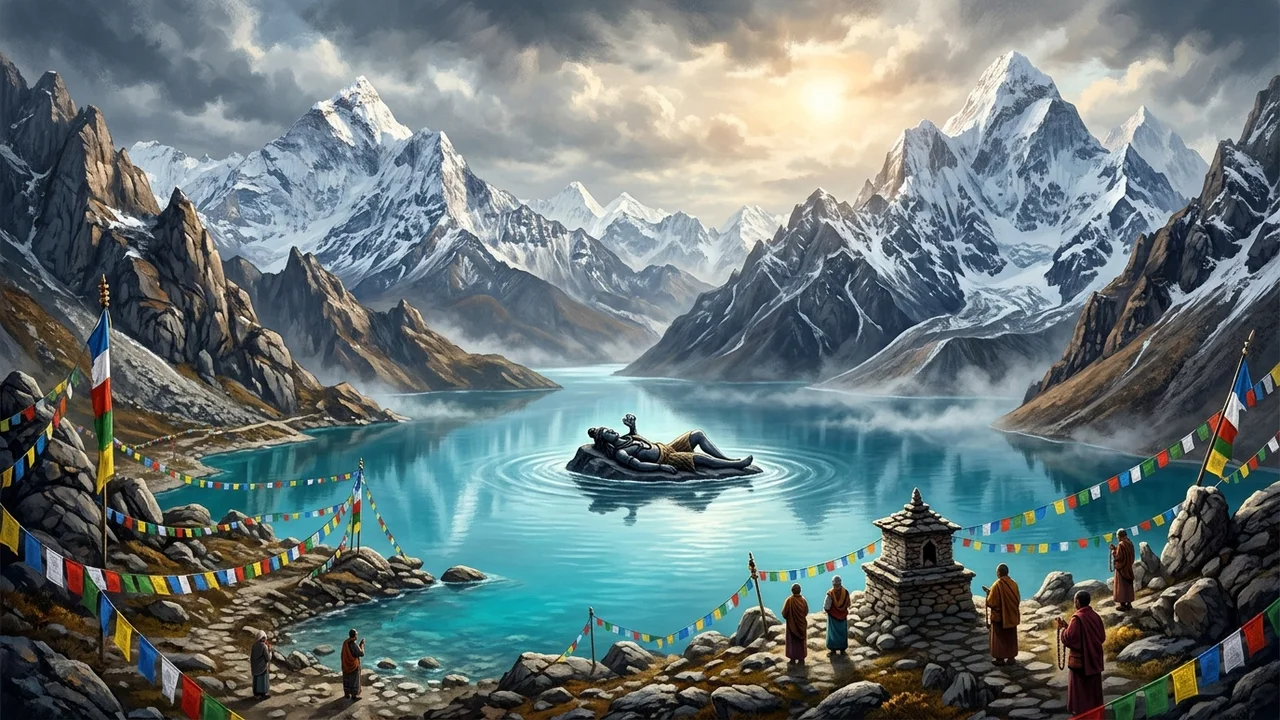
| Geographic & Ecological Setting | High-altitude alpine glacial cirque lake at 4,380 m (14,370 ft) in Langtang National Park, Rasuwa District; protected internationally as a sacred Ramsar wetland site. |
|---|---|
| Puranic Genesis & Halahala Lore | Born during the Samudra Manthana (churning of the cosmic ocean); after drinking the lethal Kālakūṭa poison to save creation, Lord Shiva suffered unbearable agony and plunged his trident (Triśūla) into the granite mountain to unleash cooling glacial springs. |
| Sacred Hydrography | Primary headwater source of the Trisuli River; mythologically connected via subterranean aquifers to Bhairav Kunda, Saraswati Kunda, and the Kumbheshwar temple pond in Lalitpur. |
| Principal Pilgrimage Cycles | Shrawan Purnima / Janai Purnima (annual sacred thread renewal and purifying immersion) and Ganga Dashahara; historic spiritual communion between Hindu pilgrims and Himalayan Buddhist communities. |
| Shamanic Initiation (Dhami-Jhankri) | Supreme spiritual proving ground where hundreds of Tamang, Gurung, and Kirat Shamans ascend beating handheld dhyangro drums to graduate into recognized healers before the submerged rock lingam. |
| Liturgical Vows & Offerings | Ablution in ice-cold glacial waters; dedicating miniature brass and iron tridents (Triśūla) and temple bells; carrying sanctified water bottles back to mid-hill family shrines. |
The story
Cradled within an austere amphitheater of jagged Himalayan peaks in Rasuwa, the sacred turquoise waters of Gosaikunda (Gosāīkuṇḍa / गोसाइँकुण्ड) rest at an elevation of 4,380 meters above sea level. In classical Hindu cosmology, the lake’s creation is the dramatic climax of the Samudra Manthana (the churning of the cosmic ocean of milk). When the gods and demons churned the primal waters with Mount Mandara and the serpent Vasuki, the first substance to surface was not ambrosial nectar, but Kālakūṭa—a pitch-black, scorching venom potent enough to extinguish all mortal life and cosmic light.
In desperate panic, the gods pleaded with Lord Shiva for salvation. Moved by compassion for creation, Shiva caught the boiling poison in his palm and swallowed it in a single draught. To prevent the venom from destroying his divine body, Goddess Parvati seized his throat, sealing the poison at the vocal cords. The searing heat turned his neck an indelible lapis-blue, bestowing upon him the eternal epithet Nīlakaṇṭha (the Blue-Throated One). Yet the internal agony was so overwhelming that Shiva fled northward into the snowy recesses of the Himalayas seeking extreme, unmelting cold to quell the burning torment.
Arriving at the desolate granite ridges of the Langtang range, Shiva thrust his massive three-pointed trident (Triśūla) into the living mountain face. Instantly, three subterranean glacial torrents burst through the stone fissures, pooling together to create a deep, crystal basin of ice-melt water. Plunging into the frigid depths, the Lord reclined upon the rocky floor, allowing the freezing currents to soothe his throat. To this day, pilgrims peering into the placid turquoise depths can discern a dark, reclining stone formation resembling Shiva sleeping serenely beneath the crystalline ripples.
The primary pilgrimage to Gosaikunda unfolds during the monsoon full moon of Shrawan (Janai Pūrṇimā). Despite torrential rains, leech-infested forest trails, and thinning oxygen, tens of thousands of pilgrims ascend from Kathmandu, Nuwakot, and Sindhupalchok. For Parbate Hindus, taking a ritual bath in the freezing waters and changing the sacred cotton thread (Janai) purges sins committed across lifetimes. For the indigenous Tamang people, the lake is revered as the sanctified realm of the great ancestral spirit, and hundreds of shamans (Dhāmī-Jhã̄krī) journey uphill in feathered headdresses, chanting archaic invocations to the rhythmic thunder of flat Dhyaṅgro drums.
Beyond its alpine majesty, Gosaikunda forms the mystical hydrographic heart of Central Nepal. Its overflow gives birth to the Trishuli River, while popular belief asserts that a secret subterranean vein carries its glacial waters directly into the holy tank of Kumbheshwar Mahadev in Patan. When the Patan pond fills during Janai Purnima, city elders who could not walk the high mountain passes touch its cold water with bowed heads, experiencing the cooling grace of the high lake within their own valley.
कथा
रसुवा जिल्लाको लाङटाङ राष्ट्रिय निकुञ्जभित्र समुन्द्र सतहबाट ४,३८० मिटरको उचाइमा अवस्थित गोसाइँकुण्ड हिन्दू र बौद्ध दुवै धर्मावलम्बीहरूको परम पावन हिमाली तीर्थ हो। पौराणिक आख्यान अनुसार, देवता र दानवहरू मिलेर अमृत प्राप्तिका लागि समुद्र मन्थन गर्दा सर्वप्रथम ब्रह्माण्डलाई नै भष्म पार्न सक्ने अति भयानक 'कालकूट' विष निस्कियो। त्यो विनाशकारी विषको ज्वालाले समस्त चराचर जगत् आक्रान्त भएपछि सम्पूर्ण देवताहरूले भगवान् शिवको शरण लिई रक्षाको याचना गरे।
सृष्टिको रक्षाका निम्ति महादेवले त्यो हलाहल विषलाई हत्केलामा लिएर सहजै पिएर घाँटीमै रोकिदिनुभयो। विषको भयानक डाहाले उहाँको घाँटी नीलो भयो र उहाँ 'नीलकण्ठ' कहलाउनुभयो। तर कालकूट विषको ज्वाला यति असह्य थियो कि त्यसको जलन र छटपटी शान्त पार्न महादेव शीतल हिमालको खोजीमा उत्तरतर्फ भौँतारिनुभयो। अन्ततः लाङटाङ पर्वतको हिउँले ढाकिएको नाङ्गो चट्टानमा पुगेर उहाँले आफ्नो हातको त्रिशूलले पहाडको छातीमा जोडले प्रहार गर्नुभयो। त्रिशूल लागेको ठाउँबाट तीनवटा निर्मल जलधारा (त्रिशूलधारा) फुटेर निस्किए, जसले एउटा विशाल तालको रूप लियो। त्यही तालको चिसो पानीमा डुबुल्की मारेर महादेवले आफ्नो घाँटीको जलन शान्त पार्नुभयो।
तालको पिँधमा अहिले पनि ध्यानमग्न वा शयन गरिरहनुभएका भगवान् शिवको कालो शिला-स्वरूप स्पष्ट देख्न सकिन्छ भन्ने जनविश्वास छ। तालको वरिपरि भैरवकुण्ड, सरस्वतीकुण्ड र सूर्यकुण्डजस्ता अन्य पवित्र कुण्डहरू रहेका छन्, जसले गर्दा सम्पूर्ण हिमाली उच्चभूमि एउटा पावन मण्डलका रूपमा प्रतिष्ठित छ।
गोसाइँकुण्डको मुख्य तीर्थयात्रा श्रावण शुक्ल पूर्णिमा (जनैपूर्णिमा) को अवसरमा हुन्छ। कठिन उकालो बाटो, लेक लाग्ने जोखिम, र अविरल वर्षाको पर्वाह नगरी नेपाल र भारतबाट हजारौँ भक्तजनहरू यहाँ स्नान गर्न पुग्दछन्। यस दिन कुण्डमा डुबुल्की मारेर नयाँ जनै फेर्नाले र भगवान् शिवलाई त्रिशूल अर्पण गर्नाले जन्मजन्मान्तरको पाप पखालिने र मनोकाङ्क्षा पूरा हुने विश्वास गरिन्छ।
गोसाइँकुण्ड केवल हिन्दूहरूको मात्र नभई स्थानीय तामाङ तथा शेर्पा समुदाय र तान्त्रिक झाँक्रीहरूको पनि महा-तीर्थ हो। जनैपूर्णिमाको अघिल्लो रात यहाँ सयौँ धामी-झाँक्रीहरू मयूरको प्वाँखको शिरपोस लगाएर, हातमा ढ्याङ्ग्रो ठोक्दै तान्त्रिक लयमा नाच्ने गर्दछन्। यस कुण्डमा पुगेर शक्ति सिद्ध गरेपछि मात्र नयाँ झाँक्रीले पूर्णता पाउने जनविश्वास छ। यसै कुण्डबाट त्रिशूली नदीको उद्गम भएको छ, र यसको भूमिगत जलमार्ग पाटनको कुम्भेश्वर महादेवको पोखरीसँग जोडिएको मानिन्छ। गोसाइँकुण्ड प्रकृतिको अनुपम सौन्दर्य र अध्यात्मको सर्वोच्च सङ्गम हो।