Household stories / Kathmandu Valley
Kathmandu Valley (Kāṭhamāḍauṁ Upatyakā / काठमाडौँ उपत्यका)काठमाडौँ उपत्यका
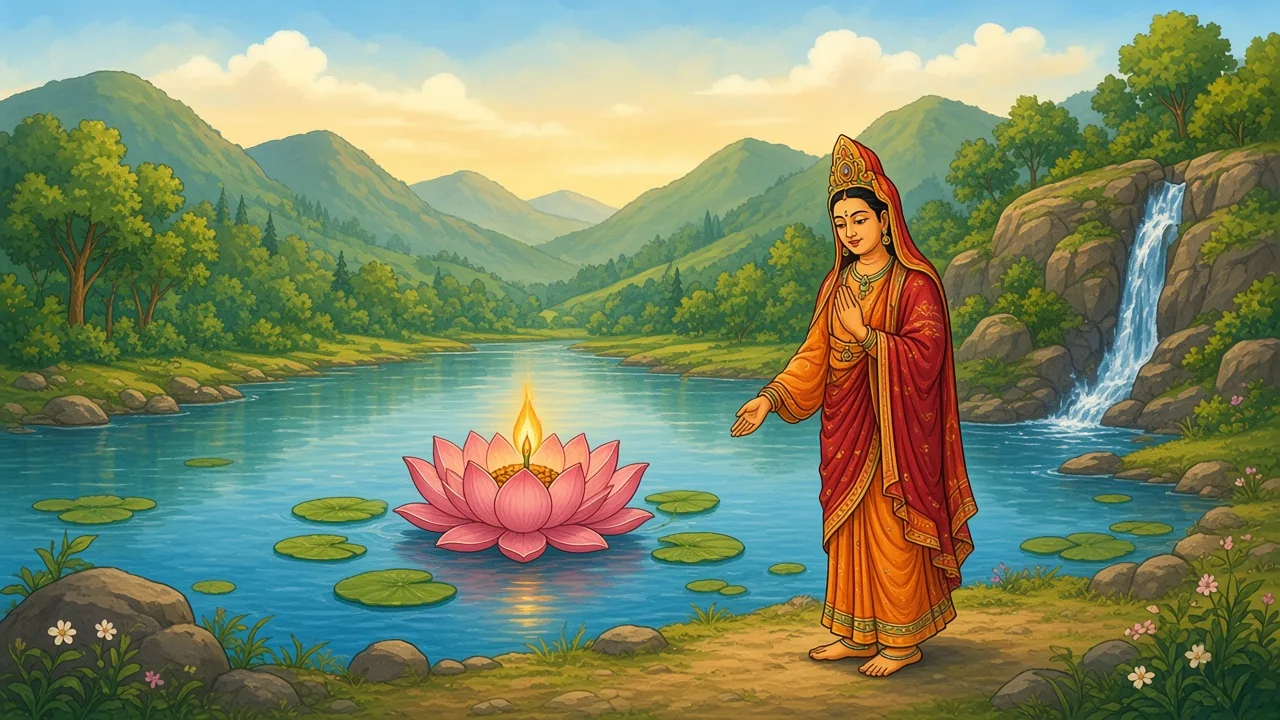
| Geological & Mythic Genesis | Pleistocene tectonic lacustrine basin (Nāgadaha / नागदह); cleft at Chobhar Gorge by the flaming sword (Chandrahrāsa) of Bodhisattva Mañjuśrī; drained in Vaishnava traditions by Pradyumna / Krishna through the southern hills. |
|---|---|
| Primordial Divine Luminescence | The self-manifest light (Svayambhū Jyotirūpa) radiating from a thousand-petaled lotus sown by Buddha Vipaśvī; covered beneath the golden dome of Swayambhunath Stupa by Acharya Shantikara. |
| Subterranean Aquatic Custodians | Governed by King Karkotaka Naga, chief of the water serpents; accommodated in Taudaha Lake with the wealth of the lakebed after the drainage of the primal waters. |
| Sacred Protective Mandala | Guarded by the Four Narayanas (Changu, Ichangu, Bishankhu, Shesh/Sikhara), the Four Vinayakas (Ashok, Jal, Surya, Karya), and the perimeter circuit of Eight Mother Goddesses (Aṣṭa Mātṛkā). |
| Sacred Hydrography | The Bagmati River basin receiving eight sacred tributaries (Aṣṭa-Vaitaraṇī); flowing southward through Chobhar toward the Terai and the holy Ganges. |
| Socio-Cultural Civilization | Cradle of indigenous Newar art, Licchavi stone inscriptions, Malla pagoda courtyards, and deep Hindu-Buddhist syncretic living traditions. |
The story
Before it was a valley of brick temples, tiled courtyards, and terraced rice fields, Kathmandu was a vast, deep alpine lake known in sacred literature as Nāgadaha—the primordial lake of serpents. Surrounded on all horizons by towering, emerald ridges, its still turquoise surface was the undisputed realm of aquatic creatures, presided over by King Karkotaka and myriad divine Nagas. In the Svayambhū Purāṇa, it is recounted that in an earlier cosmic epoch, Buddha Vipaśvī visited the lake from his homeland of Bandhumati. Standing upon the northern ridge, he tossed a single lotus seed into the deep waters, prophesying that when the lotus bloomed, the supreme, self-existing Buddha light (Svayambhū Jyotirūpa) would manifest to illuminate the minds of all sentient beings.
Eras passed, and an exquisite thousand-petaled lotus blossomed at the center of the lake, radiating an uncreated, self-luminous jewel of light that beamed across the heavens. Drawn by this cosmic brilliance from Mount Wutai in China, the Bodhisattva of Transcendent Wisdom, Mañjuśrī, journeyed across the snow passes with his two consorts, Varadā and Mokṣadā. Beholding the self-manifest flame burning upon the water, Mañjuśrī realized that human beings could never approach or venerate the divine light as long as the valley remained an impassable inland sea.
Circling the southern rim of the mountains, Mañjuśrī drew his great sword of discernment (Chandrahrāsa) and cleaved a deep, narrow gorge through the rock wall at Chobhar (Kachhapāla hill). The trapped waters rushed southward in a roaring cataract, draining the immense lake and uncovering the rich, alluvial bed of the valley floor. To console the serpent king Karkotaka, who was distressed by the loss of his aqueous domain, Mañjuśrī guided him into the deep, spring-fed sinkhole of Taudaha, sealing a covenant that human settlers would forever honor the Nagas with offerings of milk, vermilion, and unhusked rice during the festival of Nag Panchami.
Where the primordial lotus took root, the hill of Swayambhu arose above the drying marshes. To shield the radiant flame from the spiritual impurities of the Kali Yuga, King Prachanda Deva (who renounced his throne to become the Vajrayana preceptor Shantikara Acharya) encased the light beneath a monumental stone dome topped with the four compassionate, all-seeing eyes of the Buddha. Around this spiritual navel, the Licchavi and Malla kings laid out the sacred geometry of the valley, stationing the Four Narayanas on the four cardinal hilltops and the Four Vinayakas at the crossroads to guard the valley against famine, pestilence, and demonic disturbance.
Today, the ancient memory of the drained lake lives on in every brick of Kathmandu’s heritage. The rich, black organic soil (Kālīmāṭī) that nourishes valley crops is the fertile residue of ancient lakebed sediments. The holy Bagmati, carving its channel through the cleft at Chobhar, continues to carry the waters of the Himalayas toward the plains, while the hill of Swayambhunath stands as a permanent monument to the supreme wisdom that transformed an inaccessible wilderness of waters into one of Asia’s most fertile crucibles of sacred art, architecture, and living devotion.
कथा
काठमाडौँ उपत्यका मन्दिर, दरबार र बस्तीहरूले सजिनुभन्दा पहिले यो चारैतिर हरिया पहाडहरूले घेरिएको एउटा विशाल र गहिरो दह थियो, जसलाई पौराणिक ग्रन्थहरूमा 'नागदह' भनिएको छ। यस विशाल दहमा जलचर जीवहरू र कर्कोटक नागराजसहित अनगिन्ती नागहरूको निर्बाध साम्राज्य थियो। 'स्वयम्भू पुराण' अनुसार, सत्ययुगमा विपश्वी बुद्धले यस दहको किनारमा आएर एउटा कमलको बीउ रोप्नुभएको थियो, र भविष्यवाणी गर्नुभएको थियो—"यो कमल फुल्नेछ र त्यसबाट जगत्लाई उज्यालो दिने स्वयम्भू ज्योति प्रकट हुनेछ।"
समय बित्दै जाँदा दहको ठीक बीचमा हजार दल भएको एक दिव्य कमल फुल्यो, र त्यसको माझबाट आफैँ उत्पन्न भएको परम दिव्य 'स्वयम्भू ज्योति' प्रकट भयो। त्यस ज्योतिको तेज यति अलौकिक थियो कि त्यसको दर्शन गर्न चीनको पञ्चशीर्ष (वुताइ) पर्वतबाट महामञ्जुश्री आफ्ना दुई शक्ति वरदा र मोक्षदासहित यहाँ आइपुग्नुभयो। जलमग्न दहको माझमा रहेको त्यो दिव्य ज्योतिको दर्शन गर्न मानिसहरूलाई असम्भव देखेर, मञ्जुश्रीले यस दहको पानी बाहिर निकाली मानव बस्ती बसाउने सङ्कल्प गर्नुभयो।
मञ्जुश्रीले उपत्यकाको दक्षिण भेगमा रहेको चोभारको पहाडलाई आफ्नो चन्द्रहास खड्गले एकै प्रहारमा काटेर गहिरो गल्छी बनाइदिनुभयो। दहको सम्पूर्ण जलराशि गर्जनसहित बाग्मती नदी बनेर दक्षिणतर्फ बगेर गयो, र उपत्यकाको मलिलो जमिन बाहिर निस्कियो। आफ्नो बासस्थान गुमेका कारण क्रोधित बनेका नागराज कर्कोटकलाई मञ्जुश्रीले दक्षिणतर्फको टौदहमा सुरक्षित रूपमा बास दिनुभयो, र उपत्यकावासीले हरेक नागपञ्चमीमा नागहरूको पूजा गर्ने वचनबद्धता स्थापित गर्नुभयो।
दह सुकेपछि कमलको फूल रहेको डाँडामा स्वयम्भू महाचैत्यको स्थापना भयो। कलिउगमा पाप बढ्दै जाँदा ज्योतिको तेज हराउन सक्ने देखेर शान्तिकराचार्यले त्यस ज्योतिलाई माटो र ढुङ्गाको महास्तूपभित्र सुरक्षित राखी चारै दिशामा बुद्धका करुणादायी आँखा कुँदिदिए। उपत्यकालाई सुरक्षित राख्न चार दिशामा चार नारायण (चाँगुनारायण, इचङ्गुनारायण, विशङ्खुनारायण, शेषनारायण) र चार विनायक (सूर्य विनायक, जल विनायक, कार्य विनायक, अशोक विनायक) स्थापना गरिए, जसले उपत्यकालाई एक अभेद्य आध्यात्मिक मण्डलको रूप दिए।
काठमाडौँ उपत्यकाको भूगोल र सभ्यता पानीसँगै जन्मिएको सभ्यता हो। यहाँका खेतहरूमा पाइने कालो मलिलो माटो (कालीमाटी) त्यही प्राचीन नागदहको पिँधको अवशेष हो। चोभारको गल्छीबाट बाग्मतीको धार बगेजस्तै यहाँ दुई हजार वर्षदेखि हिन्दू र बौद्ध परम्पराको साझा सङ्गम अविरल बगिरहेको छ। मञ्जुश्रीको खड्गले पानी काटेर सुरु भएको यो उपत्यका आज विश्वकै अनुपम कला, संस्कृति र अध्यात्मको मुटु बनेर उभिएको छ।