Household stories / Paśupati
Pashupatinath (Paśupatinātha / पशुपतिनाथ)श्री पशुपतिनाथ
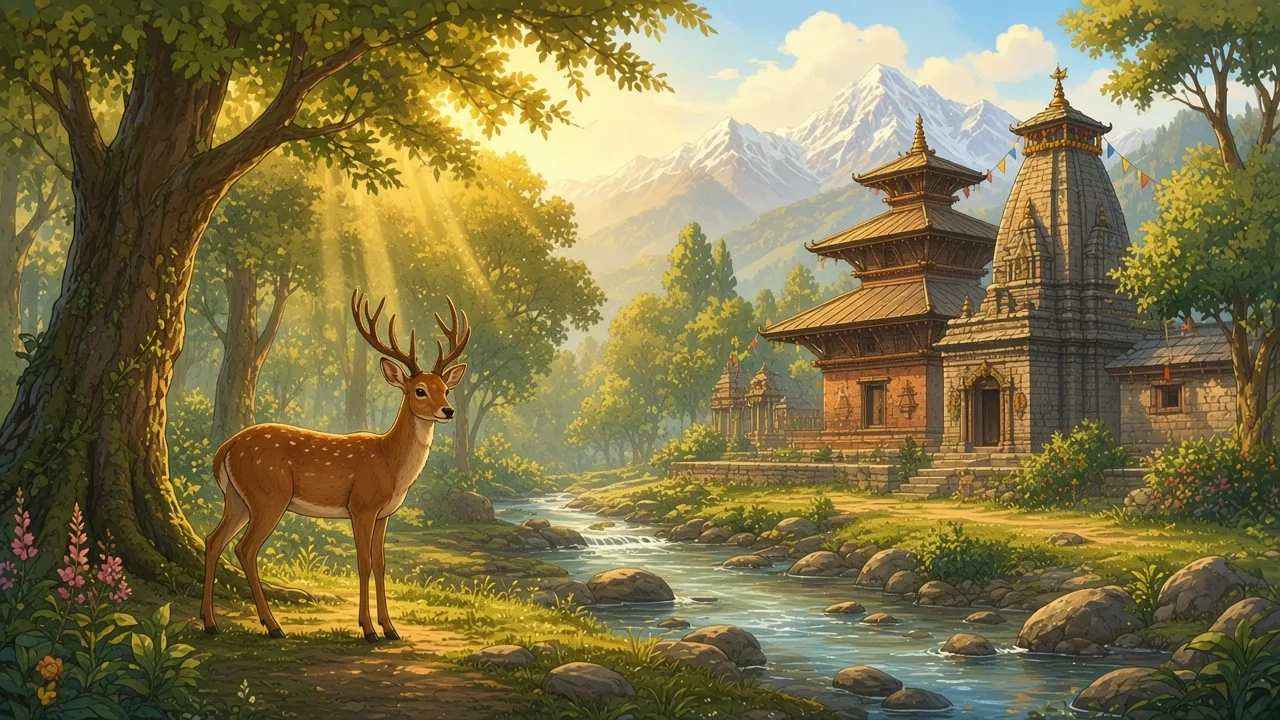
| Canonical Authority & Lore | Skanda Purāṇa (Himavat-khaṇḍa), Nepāl-Māhātmya, and ancient Śivadharmā texts; recount Lord Shiva abandoning Mount Kailash to roam in pure bliss as a radiant one-horned golden deer in the primeval Śleṣmāntaka forest. |
|---|---|
| Iconographic Form & Svarupa | Four-faced black chlorite Lingam (Pañca-vaktra Śiva): Sadyojāta (West / Earth / Varada), Vāmadeva (North / Water / Jñāna), Aghora (South / Fire / Saṁhāra), Tatpuruṣa (East / Wind / Ānanda), crowned by the vertical invisible Īśāna (Zenith / Ether / Mokṣa). |
| Architectural Typology | Classic two-tiered Nepalese pagoda style; gilded copper roofs with wide eaves supported by carved erotic-philosophical struts (Tuṇāls); silver-embossed repoussé entrance portals; enclosed Licchavi-period stone ambulatory quadrangle. |
| Sacred Hydrography & Sannidhi | Flanked by the sacred Bagmati River directly bordering Arya Ghat (state and royal cremation pyres), Rajrajeshwari Ghat, and Brahma Nal (the sanctified stone slab where departing souls have their feet bathed in holy water). |
| Liturgical Calendar & Festivals | Maha Shivaratri (Falgun Krishna Chaturdashi) all-night vigil with hundreds of thousands of pilgrims; Bala Chaturdashi Satbīja sowings across Mrigasthali; Teej vrata gathering; daily dusk Sandhya Arati. |
| Priesthood & Custodianship | Officiated by Vedic Smarta Bhattas from Karnataka initiated in Rigvedic and Pashupata-Shaiva Agamas, assisted by hereditary Newar Rajbhandaris who serve as sanctum caretakers and treasury custodians. |
The story
In the sacred cosmology of the Himalayas, Pashupatinath stands as the sovereign spiritual axis of Nepal and the supreme protector of all living beings (Paśu-pati, the Lord of Souls). According to the Himavat-khaṇḍa of the Skanda Purāṇa, Lord Shiva grew exhausted by the rigid protocol and ceaseless petitions of gods and sages upon Mount Kailash. Desiring absolute freedom, he descended southward into the secluded forested basin of the Kathmandu Valley, assuming the enchanting disguise of an agile, one-horned golden deer. In the cool, dewy glades of the Śleṣmāntaka forest (modern Mrigasthali), he wandered in unencumbered ecstasy, drinking from mountain brooks and reposing among wild blossoms while ignoring the cosmic governance of the universe.
Alarmed by Shiva’s prolonged absence, Brahma, Vishnu, and Indra searched the three worlds until they tracked the divine presence to the valley forest. Recognizing the sovereign majesty radiating from the golden deer, Indra lunged forward to seize the animal by its radiant horn. In the divine struggle that ensued, the cosmic horn snapped into three pieces. Shiva revealed his supreme, non-dual form, declaring that this sacred forest would forever remain his earthly abode, and that the broken horn embedded in the soil would reemerge as a self-manifest stone lingam granting instantaneous liberation to all who venerated it.
Centuries later, during the dawn of recorded history, the hidden lingam was covered beneath alluvial silt and dense grasses. Tradition recalls a Kamadhenu wish-fulfilling cow named Ne (from whom Nepal derives its name) who grazed upon the riverbank. Every afternoon at precisely the same hour, she separated from the herd, climbed a gentle grassy knoll, and voluntarily released a stream of warm, nourishing milk over a solitary spot in the turf. Perplexed by the cow's unmilked udders, the herdsman excavated the earth, uncovering the lustrous four-faced lingam radiating divine heat. Overcome by awe, the Licchavi rulers established the sanctuary, building the first tiered shrine upon the western bank of the sacred Bagmati.
The four carved faces of Pashupatinath look outward to the cardinal directions, embodying the cosmic pancabhuta (five gross elements) and the stages of manifestation: Sadyojata facing west represents the earth element and protective grace; Vamadeva facing north embodies water, healing, and sovereign contemplation; Aghora facing south commands fire, destruction, and spiritual dissolution; and Tatpurusha facing east manifests wind, life-breath (Prana), and illuminated wisdom. Above them rises the smooth, formless dome of Ishana, representing ether, cosmic space, and transcendent silence. Thus, the single stone lingam encapsulates the entire manifest and unmanifest universe.
The spiritual life of Pashupatinath is inseparable from the sacred current of the Bagmati River flowing past its eastern foundations. Here, life and death meet without veil or hesitation. At Arya Ghat and Bhasmeshwar Ghat, the deceased are brought for their final rites, their feet immersed in the gentle river current at Brahma Nal while family members whisper holy names into their ears. Across the water, the bells and drums of the dusk Sandhya Arati resound, their golden butter lamps mirrored in the dark ripples. To visit Pashupatinath is not merely to gaze upon an architectural monument, but to stand at the threshold between temporal existence and eternity, where Shiva remains the compassionate shepherd guiding every soul through the wilderness of Samsara.
कथा
हिमालयी सनातन परम्परामा श्री पशुपतिनाथ नेपालका राष्ट्रदेव तथा चराचर जगत्का सम्पूर्ण प्राणी (पशु) का परम संरक्षक एवं मुक्तिदाता हुनुहुन्छ। स्कन्दपुराणको 'हिमवत्खण्ड' र 'नेपालमाहात्म्य' अनुसार, कैलास पर्वतमा देवी-देवताहरूको भीड र सांसारिक कोलाहलबाट विश्राम लिन भगवान् शिवले एकपटक एकसिङ्गे सुनौलो मृगको रूप धारण गरी काठमाडौँ उपत्यकाको रमणीय श्लेष्मान्तक वन (मृगस्थली) मा प्रवेश गर्नुभयो। हरियालीले ढाकिएको यस शान्त तपोभूमिमा उहाँ प्रकृतिको अगाध सौन्दर्य र एकान्त आनन्दमा लीन भई स्वच्छन्द रूपमा विचरण गर्न थाल्नुभयो, जसले गर्दा ब्रह्माण्डकै सञ्चालन रोकिन पुग्यो।
महादेवको खोजीमा निस्किएका ब्रह्मा, विष्णु र इन्द्रले अन्ततः श्लेष्मान्तक वनको बाक्लो झाडीभित्र दिव्य तेजले चम्किरहेको त्यो विचित्रको मृगलाई फेला पारे। उहाँ साक्षात् महादेव हुनुहुन्छ भन्ने थाहा पाएपछि इन्द्रले मृगलाई समात्न खोज्दा त्यसको दिव्य सिङ भाँचिएर तीन टुक्रा भयो। त्यसपछि महादेव आफ्नो वास्तविक ज्योतिर्मय रूपमा प्रकट हुनुभयो र वरदान दिनुभयो—"यो पवित्र वन मेरो प्रिय वासस्थान हुनेछ, र मेरो सिङ जमिनमा गाडिएको यो ठाउँ पशुपति क्षेत्रका रूपमा त्रैलोक्यमै प्रसिद्ध हुनेछ, जहाँ श्रद्धापूर्वक दर्शन गर्ने कुनै पनि प्राणीले पशुयोनि वा नरक भोग्नुपर्ने छैन।"
कालान्तरमा द्वापर युगको अन्त्यतिर त्यो पवित्र लिङ्ग माटो र झारपातले पुरिन पुग्यो। जनश्रुति अनुसार, त्यहाँ चर्न आउने 'ने' नाम गरेकी कामधेनु गाईले दैनिक रूपमा एउटा निश्चित ढिस्कोमाथि पुगेर आफ्नो थुनबाट आफैँ दूध चढाउने गर्दथिन्। सधैँ गोठ फर्कँदा गाईको थुन रित्तो देखेपछि गोठालाले शङ्का गरी त्यो ठाउँमा खनेर हेर्दा अत्यन्त कान्तिमय पञ्चमुखी ज्योतिर्लिङ्ग फेला पर्यो। त्यसपछि लिच्छवि राजाहरूले त्यस ठाउँमा मन्दिर स्थापना गरी नित्यपूजाको जग बसालेका थिए।
पशुपतिनाथको मुख्य लिङ्गमा चार दिशामा चारवटा मुख र शीर्ष भागमा निराकार ईशान स्वरूप कुँदिएको छ। पश्चिमपट्टिको सद्योजात मुखले पृथ्वी तत्त्व र वरद मुद्रालाई जनाउँछ; उत्तरको वामदेव मुखले जल तत्त्व, शान्ति र ज्ञानको प्रतिनिधित्व गर्दछ; दक्षिणको अघोर मुखले अग्नि तत्त्व, संहार र वैराग्य दर्साउँछ; र पूर्वको तत्पुरुष मुखले वायु तत्त्व, प्राण र ध्यान-दृष्टिलाई सङ्केत गर्दछ। यी चारै मुखभन्दा माथि अवस्थित निराकार शीर्ष भागलाई 'ईशान' भनिन्छ, जसले आकाश तत्त्व र मोक्षको परम चेतनालाई प्रतिविम्बित गर्दछ। यसरी एउटै पाषाण-लिङ्गभित्र सम्पूर्ण पञ्चमहाभूत र ब्रह्माण्डको सृष्टि-स्थिति-लयको रहस्य समाहित छ।
पशुपतिनाथको परिसर नेपाली समाजको जीवन र मृत्युको परम सङ्गम-स्थल हो। मन्दिरको आडैमा बग्ने पवित्र बाग्मती नदीको किनारमा आर्यघाट र भष्मेश्वरघाट अवस्थित छन्, जहाँ मानिसहरू आफ्ना मृत आफन्तलाई ब्रह्मनालमा खुट्टा चोबाएर अन्तिम बिदाइ गर्दछन्। एकातिर चिताको धुवाँ र नश्वरताको बोध, अर्कातिर साँझको शङ्ख-घण्ट र महाआरतीको दिव्य झङ्कार—यी दुवैको प्रत्यक्ष साक्षात्कारले मानिसलाई अहङ्कारबाट मुक्त गराई जीवनको शाश्वत सत्यतर्फ उन्मुख गराउँछ। पशुपतिनाथ केवल एउटा ऐतिहासिक मन्दिर मात्र नभई नेपाली सभ्यताको मुटु र आध्यात्मिक प्राण हो।