From the subterranean springs of the Kathmandu Valley to the wind-swept heights of the trans-Himalaya and the sacred river confluences of the mid-hills, Nepal's sacred topography is an interconnected network of living tirthas. Here, rivers are maternal goddesses, mountain crags are divine citadels, and centuries of syncretic devotion unite Shaiva, Shakta, Vaishnava, and Buddhist veneration across the Himalayas.काठमाडौँ उपत्यकाका भूमिगत जलाधारदेखि हिमालपारिका पावन उच्चभूमि र पहाडी नदी-दोभानहरूसम्म फैलिएको नेपालको पवित्र भूगोल जीवन्त तीर्थहरूको एक विशाल मण्डल हो। यहाँ नदीहरू साक्षात् जगन्माता हुन्, हिमशिखरहरू देवस्थल हुन्, र सदियौँको धार्मिक समन्वयले शैव, शाक्त, वैष्णव तथा बौद्ध परम्परालाई एउटै सनातन प्रवाहमा गाँसेको छ।
Comparative Analytical Frameworks of Sacred Sitesनेपालका पवित्र तीर्थहरूको तुलनात्मक अध्ययन
To appreciate the multifaceted cultural, geographical, and ritual dimensions of Nepal's sacred topography, the following analytical matrices synthesize hydrological watersheds, architectural typologies, and liturgical cycles across the Himalayas.नेपालको पवित्र भूगोलका सांस्कृतिक, भौगोलिक र धार्मिक आयामहरूलाई समग्र रूपमा बुझ्न तलका तुलनात्मक तालिकाहरूमा जल-तीर्थ, मन्दिर वास्तुकला र परिक्रमा चक्रहरूको शास्त्रीय विश्लेषण प्रस्तुत गरिएको छ।
Table 1: Sacred Geographic Grid & Hydro-Pilgrimage Axisतालिका १: पवित्र भूगोल र जल-तीर्थ सङ्गम
Tirtha / Sacred Site
Elevation & Watershed
Sacred Waters & Confluence
Presiding Deity & Tradition
Canonical Covenant & Mythic Origin
Bagmati River (Arya Ghat / Gokarna)
1,350 m • Bagmati River Basin
Sacred Bagmati flowing from Bagdwar (Shivapuri ridge)
Lord Pashupatinath • Shaiva
Sprang from Lord Shiva's divine laughter (Vākmatī); supreme riverway of ancestral tarpan, royal cremations at Arya Ghat, and final liberation (Mokṣa).
Vishnumati River (Teku Dovan)
1,300 m • Central Valley Basin
Confluence of Vishnumati and Bagmati (Cintāmaṇi Tīrtha)
Karunamaya & Ashta Matrika • Syncretic
Arising from Tokha mountain springs; serves as aquatic guardian of western Kathmandu, historic cremation ghats (Kankeshwari, Indrayani), and Jyapu agricultural lifeline.
Pashupatinath
1,350 m • Bagmati Gorge
Bordering Bagmati River, Arya Ghat & Brahma Nal
Pañcamukha Jyotirlingam • Pashupata Shaiva
Shiva roamed as a radiant one-horned golden deer in Mrigasthali; lingam unearthed by Kamadhenu cow; spiritual heart of Nepal.
Gosaikunda
4,380 m • Langtang Himalayan Basin
High-alpine glacial tarn fed by Trisuli snowmelt
Nilakantha Mahadev • Shaiva / Shamanic
Cleaved by Shiva's trident (Trisula) to cool the burning agony of Halahala poison churned from the cosmic ocean; convergence of pilgrims and Jhankris.
Budhanilkantha
1,380 m • Northern Shivapuri Foothills
Natural spring-fed stepped stone basin
Jalasayana Narayana • Vaishnava / Buddhist
Colossal 5-meter Licchavi basalt monolith reclining upon Ananta Shesha; royal taboo prohibiting reigning monarchs from viewing the image.
Changu Narayan
1,540 m • Eastern Valley Promontory
Overlooking Manohara River terraces
Garuda-Vahana Vishnu • Vaishnava / Buddhist
Earliest dated epigraph in Nepal (King Manadeva, 464 CE); Vishnu liberated from the trunk of a champak tree; oldest continuously active pagoda.
Dakshinkali
1,400 m • Pharping Gorge
Confluence of two torrential mountain streams
Four-Armed Smashana Kali • Shakta / Tantric
Consecrated by King Pratap Malla following a prophetic vision to seal the southern boundary against pestilence and enemies; premier sacrificial sanctuary.
Muktinath
3,710 m • Trans-Himalayan Mustang
Catchment of Kali Gandaki & 108 glacial spouts
Sri Hari Narayana / Chenrezig • Hindu-Buddhist
106th Divya Desam; sole global source of sacred Shaligram ammonites; miraculous Jwalamai natural flame burning above subterranean water.
Barahakshetra
150 m • Eastern Terai Churia Gorge
Sacred Sangam of Koka and Sapta Koshi rivers
Varaha Avatar & Bhudevi • Puranic Vaishnavism
Lord Vishnu assumed the cosmic boar incarnation to vanquish the demon Hiranyaksha and lift Mother Earth from the cosmic deluge.
Ridi (Ruru Kshetra)
450 m • Western Mid-Hills Confluence
Sangam of Ridi Khola and sacred Kali Gandaki
Rishikesh Bhagwan & Bhrigu Rishi • Vaishnava
Austerity hermitage of maiden Ruru; holy Shaligram bathing tirtha and elderhood sanctuary celebrated as the Varanasi of western Nepal.
Devghat Sangam
210 m • Central Narayani Basin
Triratna Sangam of Trishuli & Kali Gandaki into Narayani
Hari-Hara & Sage Valmiki • Smarta / Ascetic
Supreme bathing confluence on Makar Sankranti; sacred sanctuary for Vedic sannyasis, ascetics, and Vanaprastha spiritual retirement.
Janakpurdham
70 m • Mithila Plains
Sacred Sarovars (Ganga Sagar, Dhanush Sagar)
Janaki Mata & Sri Rama • Mithila Vaishnava
Ancient capital of King Janaka; birthplace of Sita and realm of the breaking of Shiva's Pinaka bow; epic epicenter of the Ramayana.
तीर्थ तथा पवित्र क्षेत्र
उचाइ तथा जलाधार
पवित्र जल तथा सङ्गम
इष्टदेव तथा परम्परा
पौराणिक उत्पत्ति तथा माहात्म्य
बाग्मती नदी (आर्यघाट / गोकर्ण)
१,३५० मिटर • बाग्मती जलाधार
शिवपुरीको बाग्द्वारबाट उद्गम भएको पवित्र जलप्रवाह
श्री पशुपतिनाथ • शैव परम्परा
भगवान् शिवको दिव्य वाक् (हाँसो) बाट प्रकट; पितृ-तर्पण, आर्यघाटमा अन्तिम संस्कार र मोक्षको सनातन जीवनरेखा।
विष्णुमती नदी (टेकु दोभान)
१,३०० मिटर • मध्य उपत्यका जलाधार
विष्णुमती र बाग्मतीको पावन सङ्गम (चिन्तामणि तीर्थ)
करुणामय, कङ्केश्वरी र अष्टमातृका • समन्वय
टोखाका मूलहरूबाट उत्पन्न; पुरानो काठमाडौँको पश्चिमी जल-रक्षक, ऐतिहासिक दाहसंस्कार घाट र ज्यापू कृषकहरूको प्राण।
श्री पशुपतिनाथ
१,३५० मिटर • बाग्मती खोँच
बाग्मती नदी, आर्यघाट र ब्रह्मनालको सामीप्य
पञ्चमुखी ज्योतिर्लिङ्ग • पाशुपत शैव
मृगस्थलीमा एकसिङ्गे सुनौलो मृगका रूपमा शिवको लीला; कामधेनु 'ने' गाईले दूध चढाएर प्रकट भएको नेपालको राष्ट्रिय ज्योतिर्लिङ्ग।
गोसाइँकुण्ड
४,३८० मिटर • लाङटाङ हिम-जलाधार
त्रिशूलीको मूल मानिने उच्च हिमाली हिमताल
नीलकण्ठ महादेव • शैव तथा झाँक्री परम्परा
समुद्र मन्थनको कालकूट विषको डाह शान्त पार्न शिवले त्रिशूल प्रहार गरी प्रकट गरेको कुण्ड; जनैपूर्णिमामा भव्य मेला।
बुढानीलकण्ठ
१,३८० मिटर • शिवपुरी फेदी
भूमिगत मूलको कञ्चन जलाशय कुण्ड
जलशयन नारायण • वैष्णव तथा बौद्ध
एघारवटा फणा भएका शेषनागमाथि पल्टिएको ५ मिटर लामो लिच्छविकालीन बेसाल्ट मूर्ति; राजाहरूले दर्शन गर्न नहुने परम्परा।
चाँगुनारायण
१,५४० मिटर • पूर्वी उपत्यका डाँडो
मनोहरा नदीको फाँटमाथि चम्पक वन
गरुडारूढ नारायण • वैष्णव र बौद्ध समन्वय
नेपालको सबैभन्दा पुरानो प्रामाणिक अभिलेख (मानदेव, ई.सं. ४६४); चाँपको रुखबाट रगत बगेर विष्णु पापमुक्त हुनुभएको कथा।
दक्षिणकाली
१,४०० मिटर • फर्पिङ गल्छी
दुई पहाडी खोलाहरूको दोभान खोँच
चतुर्भुजा श्मशान काली • शाक्त तथा तन्त्र
उपत्यकालाई महामारी र शत्रुबाट जोगाउन राजा प्रताप मल्ललाई सपनामा आदेश भएपछि स्थापित नेपालको प्रमुख बलि-पीठ।
मुक्तिनाथ
३,७१० मिटर • हिमालपारि मुस्ताङ
कालीगण्डकी जलाधार र १०८ मुक्तिधारा
श्रीहरि नारायण / अवलोकितेश्वर • समन्वय
१०८ दिव्य देशममध्ये १०६औँ धाम; विश्वमै शालिग्राम शिला पाइने एक मात्र क्षेत्र र जलमाथि बल्ने अखण्ड ज्वाला।
वराहक्षेत्र
१५० मिटर • पूर्वी तराई चुरे खोँच
कोका र सप्तकोशी नदीको पवित्र सङ्गम
आदि-वराह अवतार र भूदेवी • वैष्णव महा-तीर्थ
हिरण्याक्ष दैत्यलाई मारेर रसातलबाट पृथ्वीको उद्धार गर्न भगवान् विष्णुले वराह रूप धारण गर्नुभएको पौराणिक महातीर्थ।
रिडी (रुरु क्षेत्र)
४५० मिटर • पश्चिम पहाडी दोभान
रिडी खोला र कालीगण्डकीको पावन सङ्गम
हृषीकेश भगवान् एवं भृगु ऋषि • वैष्णव
रुरु कन्याको तपोभूमि; मुक्तिनाथबाट बगेर आउने शालिग्रामको पवित्र स्नान र पश्चिम नेपालको बनारस मानिने मुक्ति-तीर्थ।
देवघाट सङ्गम
२१० मिटर • मध्य नारायणी जलाधार
त्रिशूली र कालीगण्डकी मिलेर नारायणी बन्ने त्रिवेणी
हरिहर एवं महर्षि वाल्मीकि • स्मार्त तथा सन्न्यास
मकर सङ्क्रान्तिको महा-स्नान तीर्थ; हजारौँ साधु-सन्त र वानप्रस्थीहरूको मोक्ष साधना तथा देहत्यागको पवित्र भूमि।
जनकपुरधाम
७० मिटर • मिथिला समथर भूभाग
गङ्गासागर र धनुषसागरजस्ता ऐतिहासिक सरोवरहरू
माता जानकी र भगवान् श्रीराम • मैथिल वैष्णव
राजा जनकको प्राचीन राजधानी; सीता उत्पत्ति भूमि र शिवधनुष (पिनाक) भङ्ग भएको मर्यादा-भूमि।
Table 2: Architectural Typologies, Divine Iconography & Syncretic Venerationतालिका २: वास्तुकला, मूर्ति-विधान र धार्मिक समन्वय
Pleistocene tectonic lacustrine basin (Nāgadaha / नागदह); cleft at Chobhar Gorge by the flaming sword (Chandrahrāsa) of Bodhisattva Mañjuśrī; drained in Vaishnava traditions by Pradyumna / Krishna through the southern hills.
Primordial Divine Luminescence
The self-manifest light (Svayambhū Jyotirūpa) radiating from a thousand-petaled lotus sown by Buddha Vipaśvī; covered beneath the golden dome of Swayambhunath Stupa by Acharya Shantikara.
Subterranean Aquatic Custodians
Governed by King Karkotaka Naga, chief of the water serpents; accommodated in Taudaha Lake with the wealth of the lakebed after the drainage of the primal waters.
Sacred Protective Mandala
Guarded by the Four Narayanas (Changu, Ichangu, Bishankhu, Shesh/Sikhara), the Four Vinayakas (Ashok, Jal, Surya, Karya), and the perimeter circuit of Eight Mother Goddesses (Aṣṭa Mātṛkā).
Sacred Hydrography
The Bagmati River basin receiving eight sacred tributaries (Aṣṭa-Vaitaraṇī); flowing southward through Chobhar toward the Terai and the holy Ganges.
Socio-Cultural Civilization
Cradle of indigenous Newar art, Licchavi stone inscriptions, Malla pagoda courtyards, and deep Hindu-Buddhist syncretic living traditions.
The story
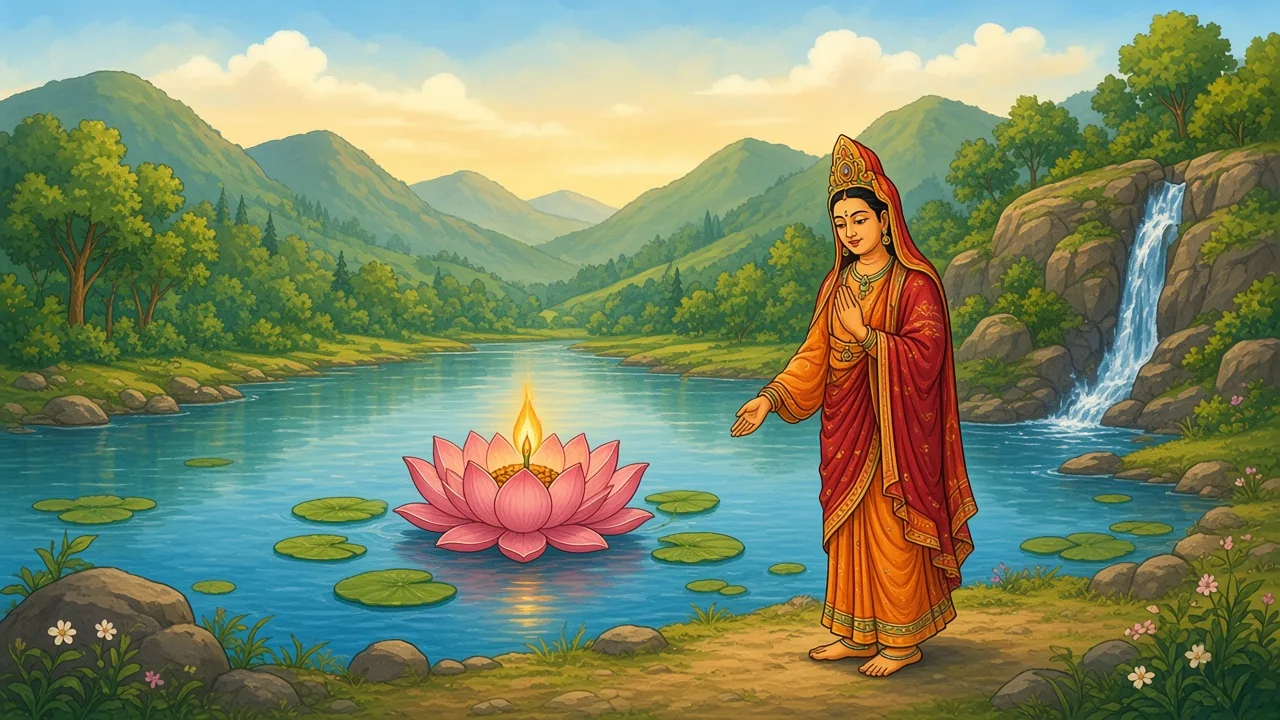
Before it was a valley of brick temples, tiled courtyards, and terraced rice fields, Kathmandu was a vast, deep alpine lake known in sacred literature as Nāgadaha—the primordial lake of serpents. Surrounded on all horizons by towering, emerald ridges, its still turquoise surface was the undisputed realm of aquatic creatures, presided over by King Karkotaka and myriad divine Nagas. In the Svayambhū Purāṇa, it is recounted that in an earlier cosmic epoch, Buddha Vipaśvī visited the lake from his homeland of Bandhumati. Standing upon the northern ridge, he tossed a single lotus seed into the deep waters, prophesying that when the lotus bloomed, the supreme, self-existing Buddha light (Svayambhū Jyotirūpa) would manifest to illuminate the minds of all sentient beings.
Eras passed, and an exquisite thousand-petaled lotus blossomed at the center of the lake, radiating an uncreated, self-luminous jewel of light that beamed across the heavens. Drawn by this cosmic brilliance from Mount Wutai in China, the Bodhisattva of Transcendent Wisdom, Mañjuśrī, journeyed across the snow passes with his two consorts, Varadā and Mokṣadā. Beholding the self-manifest flame burning upon the water, Mañjuśrī realized that human beings could never approach or venerate the divine light as long as the valley remained an impassable inland sea.
Circling the southern rim of the mountains, Mañjuśrī drew his great sword of discernment (Chandrahrāsa) and cleaved a deep, narrow gorge through the rock wall at Chobhar (Kachhapāla hill). The trapped waters rushed southward in a roaring cataract, draining the immense lake and uncovering the rich, alluvial bed of the valley floor. To console the serpent king Karkotaka, who was distressed by the loss of his aqueous domain, Mañjuśrī guided him into the deep, spring-fed sinkhole of Taudaha, sealing a covenant that human settlers would forever honor the Nagas with offerings of milk, vermilion, and unhusked rice during the festival of Nag Panchami.
Where the primordial lotus took root, the hill of Swayambhu arose above the drying marshes. To shield the radiant flame from the spiritual impurities of the Kali Yuga, King Prachanda Deva (who renounced his throne to become the Vajrayana preceptor Shantikara Acharya) encased the light beneath a monumental stone dome topped with the four compassionate, all-seeing eyes of the Buddha. Around this spiritual navel, the Licchavi and Malla kings laid out the sacred geometry of the valley, stationing the Four Narayanas on the four cardinal hilltops and the Four Vinayakas at the crossroads to guard the valley against famine, pestilence, and demonic disturbance.
Today, the ancient memory of the drained lake lives on in every brick of Kathmandu’s heritage. The rich, black organic soil (Kālīmāṭī) that nourishes valley crops is the fertile residue of ancient lakebed sediments. The holy Bagmati, carving its channel through the cleft at Chobhar, continues to carry the waters of the Himalayas toward the plains, while the hill of Swayambhunath stands as a permanent monument to the supreme wisdom that transformed an inaccessible wilderness of waters into one of Asia’s most fertile crucibles of sacred art, architecture, and living devotion.
कथा
काठमाडौँ उपत्यका मन्दिर, दरबार र बस्तीहरूले सजिनुभन्दा पहिले यो चारैतिर हरिया पहाडहरूले घेरिएको एउटा विशाल र गहिरो दह थियो, जसलाई पौराणिक ग्रन्थहरूमा 'नागदह' भनिएको छ। यस विशाल दहमा जलचर जीवहरू र कर्कोटक नागराजसहित अनगिन्ती नागहरूको निर्बाध साम्राज्य थियो। 'स्वयम्भू पुराण' अनुसार, सत्ययुगमा विपश्वी बुद्धले यस दहको किनारमा आएर एउटा कमलको बीउ रोप्नुभएको थियो, र भविष्यवाणी गर्नुभएको थियो—"यो कमल फुल्नेछ र त्यसबाट जगत्लाई उज्यालो दिने स्वयम्भू ज्योति प्रकट हुनेछ।"
समय बित्दै जाँदा दहको ठीक बीचमा हजार दल भएको एक दिव्य कमल फुल्यो, र त्यसको माझबाट आफैँ उत्पन्न भएको परम दिव्य 'स्वयम्भू ज्योति' प्रकट भयो। त्यस ज्योतिको तेज यति अलौकिक थियो कि त्यसको दर्शन गर्न चीनको पञ्चशीर्ष (वुताइ) पर्वतबाट महामञ्जुश्री आफ्ना दुई शक्ति वरदा र मोक्षदासहित यहाँ आइपुग्नुभयो। जलमग्न दहको माझमा रहेको त्यो दिव्य ज्योतिको दर्शन गर्न मानिसहरूलाई असम्भव देखेर, मञ्जुश्रीले यस दहको पानी बाहिर निकाली मानव बस्ती बसाउने सङ्कल्प गर्नुभयो।
मञ्जुश्रीले उपत्यकाको दक्षिण भेगमा रहेको चोभारको पहाडलाई आफ्नो चन्द्रहास खड्गले एकै प्रहारमा काटेर गहिरो गल्छी बनाइदिनुभयो। दहको सम्पूर्ण जलराशि गर्जनसहित बाग्मती नदी बनेर दक्षिणतर्फ बगेर गयो, र उपत्यकाको मलिलो जमिन बाहिर निस्कियो। आफ्नो बासस्थान गुमेका कारण क्रोधित बनेका नागराज कर्कोटकलाई मञ्जुश्रीले दक्षिणतर्फको टौदहमा सुरक्षित रूपमा बास दिनुभयो, र उपत्यकावासीले हरेक नागपञ्चमीमा नागहरूको पूजा गर्ने वचनबद्धता स्थापित गर्नुभयो।
दह सुकेपछि कमलको फूल रहेको डाँडामा स्वयम्भू महाचैत्यको स्थापना भयो। कलिउगमा पाप बढ्दै जाँदा ज्योतिको तेज हराउन सक्ने देखेर शान्तिकराचार्यले त्यस ज्योतिलाई माटो र ढुङ्गाको महास्तूपभित्र सुरक्षित राखी चारै दिशामा बुद्धका करुणादायी आँखा कुँदिदिए। उपत्यकालाई सुरक्षित राख्न चार दिशामा चार नारायण (चाँगुनारायण, इचङ्गुनारायण, विशङ्खुनारायण, शेषनारायण) र चार विनायक (सूर्य विनायक, जल विनायक, कार्य विनायक, अशोक विनायक) स्थापना गरिए, जसले उपत्यकालाई एक अभेद्य आध्यात्मिक मण्डलको रूप दिए।
काठमाडौँ उपत्यकाको भूगोल र सभ्यता पानीसँगै जन्मिएको सभ्यता हो। यहाँका खेतहरूमा पाइने कालो मलिलो माटो (कालीमाटी) त्यही प्राचीन नागदहको पिँधको अवशेष हो। चोभारको गल्छीबाट बाग्मतीको धार बगेजस्तै यहाँ दुई हजार वर्षदेखि हिन्दू र बौद्ध परम्पराको साझा सङ्गम अविरल बगिरहेको छ। मञ्जुश्रीको खड्गले पानी काटेर सुरु भएको यो उपत्यका आज विश्वकै अनुपम कला, संस्कृति र अध्यात्मको मुटु बनेर उभिएको छ।
A deer stands in the trees. The god decides to stay.रुखमा एउटा मृग उभिन्छ। देवता बस्न निधो गर्नुहुन्छ।
Skanda Purāṇa (Himavat-khaṇḍa), Nepāl-Māhātmya, and ancient Śivadharmā texts; recount Lord Shiva abandoning Mount Kailash to roam in pure bliss as a radiant one-horned golden deer in the primeval Śleṣmāntaka forest.
Iconographic Form & Svarupa
Four-faced black chlorite Lingam (Pañca-vaktra Śiva): Sadyojāta (West / Earth / Varada), Vāmadeva (North / Water / Jñāna), Aghora (South / Fire / Saṁhāra), Tatpuruṣa (East / Wind / Ānanda), crowned by the vertical invisible Īśāna (Zenith / Ether / Mokṣa).
Architectural Typology
Classic two-tiered Nepalese pagoda style; gilded copper roofs with wide eaves supported by carved erotic-philosophical struts (Tuṇāls); silver-embossed repoussé entrance portals; enclosed Licchavi-period stone ambulatory quadrangle.
Sacred Hydrography & Sannidhi
Flanked by the sacred Bagmati River directly bordering Arya Ghat (state and royal cremation pyres), Rajrajeshwari Ghat, and Brahma Nal (the sanctified stone slab where departing souls have their feet bathed in holy water).
Liturgical Calendar & Festivals
Maha Shivaratri (Falgun Krishna Chaturdashi) all-night vigil with hundreds of thousands of pilgrims; Bala Chaturdashi Satbīja sowings across Mrigasthali; Teej vrata gathering; daily dusk Sandhya Arati.
Priesthood & Custodianship
Officiated by Vedic Smarta Bhattas from Karnataka initiated in Rigvedic and Pashupata-Shaiva Agamas, assisted by hereditary Newar Rajbhandaris who serve as sanctum caretakers and treasury custodians.
The story
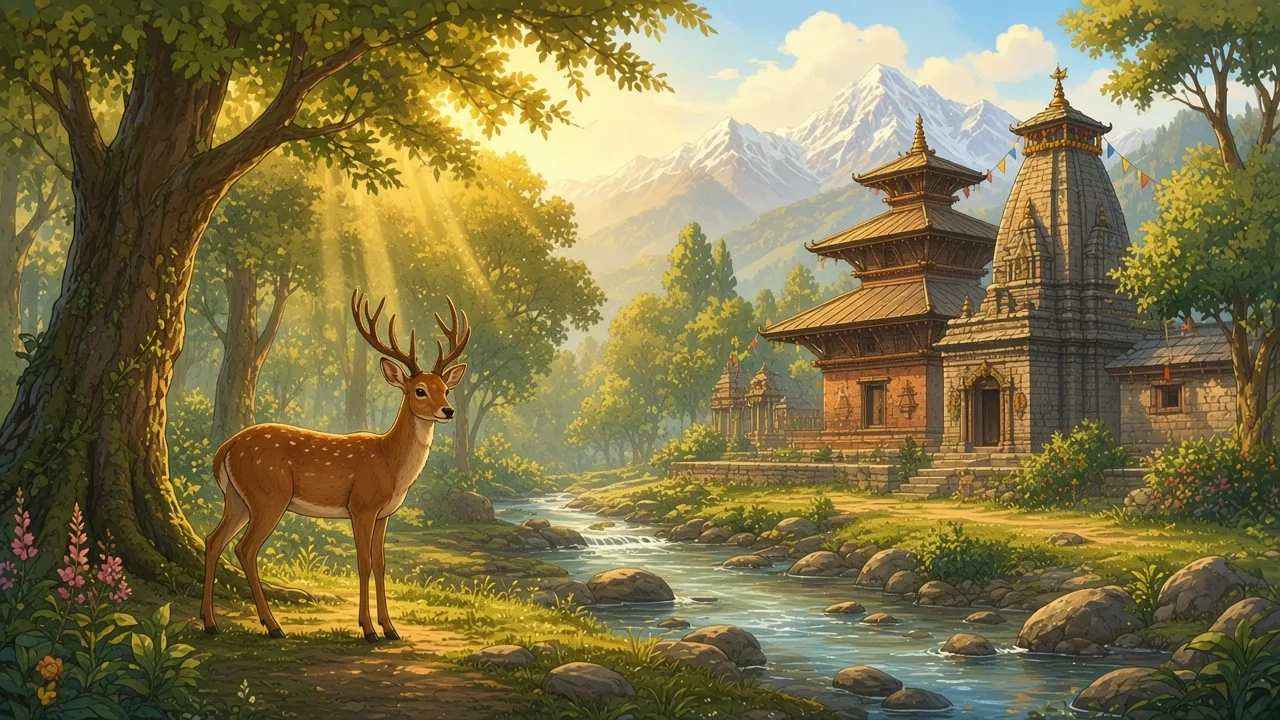
In the sacred cosmology of the Himalayas, Pashupatinath stands as the sovereign spiritual axis of Nepal and the supreme protector of all living beings (Paśu-pati, the Lord of Souls). According to the Himavat-khaṇḍa of the Skanda Purāṇa, Lord Shiva grew exhausted by the rigid protocol and ceaseless petitions of gods and sages upon Mount Kailash. Desiring absolute freedom, he descended southward into the secluded forested basin of the Kathmandu Valley, assuming the enchanting disguise of an agile, one-horned golden deer. In the cool, dewy glades of the Śleṣmāntaka forest (modern Mrigasthali), he wandered in unencumbered ecstasy, drinking from mountain brooks and reposing among wild blossoms while ignoring the cosmic governance of the universe.
Alarmed by Shiva’s prolonged absence, Brahma, Vishnu, and Indra searched the three worlds until they tracked the divine presence to the valley forest. Recognizing the sovereign majesty radiating from the golden deer, Indra lunged forward to seize the animal by its radiant horn. In the divine struggle that ensued, the cosmic horn snapped into three pieces. Shiva revealed his supreme, non-dual form, declaring that this sacred forest would forever remain his earthly abode, and that the broken horn embedded in the soil would reemerge as a self-manifest stone lingam granting instantaneous liberation to all who venerated it.
Centuries later, during the dawn of recorded history, the hidden lingam was covered beneath alluvial silt and dense grasses. Tradition recalls a Kamadhenu wish-fulfilling cow named Ne (from whom Nepal derives its name) who grazed upon the riverbank. Every afternoon at precisely the same hour, she separated from the herd, climbed a gentle grassy knoll, and voluntarily released a stream of warm, nourishing milk over a solitary spot in the turf. Perplexed by the cow's unmilked udders, the herdsman excavated the earth, uncovering the lustrous four-faced lingam radiating divine heat. Overcome by awe, the Licchavi rulers established the sanctuary, building the first tiered shrine upon the western bank of the sacred Bagmati.
The four carved faces of Pashupatinath look outward to the cardinal directions, embodying the cosmic pancabhuta (five gross elements) and the stages of manifestation: Sadyojata facing west represents the earth element and protective grace; Vamadeva facing north embodies water, healing, and sovereign contemplation; Aghora facing south commands fire, destruction, and spiritual dissolution; and Tatpurusha facing east manifests wind, life-breath (Prana), and illuminated wisdom. Above them rises the smooth, formless dome of Ishana, representing ether, cosmic space, and transcendent silence. Thus, the single stone lingam encapsulates the entire manifest and unmanifest universe.
The spiritual life of Pashupatinath is inseparable from the sacred current of the Bagmati River flowing past its eastern foundations. Here, life and death meet without veil or hesitation. At Arya Ghat and Bhasmeshwar Ghat, the deceased are brought for their final rites, their feet immersed in the gentle river current at Brahma Nal while family members whisper holy names into their ears. Across the water, the bells and drums of the dusk Sandhya Arati resound, their golden butter lamps mirrored in the dark ripples. To visit Pashupatinath is not merely to gaze upon an architectural monument, but to stand at the threshold between temporal existence and eternity, where Shiva remains the compassionate shepherd guiding every soul through the wilderness of Samsara.
कथा
हिमालयी सनातन परम्परामा श्री पशुपतिनाथ नेपालका राष्ट्रदेव तथा चराचर जगत्का सम्पूर्ण प्राणी (पशु) का परम संरक्षक एवं मुक्तिदाता हुनुहुन्छ। स्कन्दपुराणको 'हिमवत्खण्ड' र 'नेपालमाहात्म्य' अनुसार, कैलास पर्वतमा देवी-देवताहरूको भीड र सांसारिक कोलाहलबाट विश्राम लिन भगवान् शिवले एकपटक एकसिङ्गे सुनौलो मृगको रूप धारण गरी काठमाडौँ उपत्यकाको रमणीय श्लेष्मान्तक वन (मृगस्थली) मा प्रवेश गर्नुभयो। हरियालीले ढाकिएको यस शान्त तपोभूमिमा उहाँ प्रकृतिको अगाध सौन्दर्य र एकान्त आनन्दमा लीन भई स्वच्छन्द रूपमा विचरण गर्न थाल्नुभयो, जसले गर्दा ब्रह्माण्डकै सञ्चालन रोकिन पुग्यो।
महादेवको खोजीमा निस्किएका ब्रह्मा, विष्णु र इन्द्रले अन्ततः श्लेष्मान्तक वनको बाक्लो झाडीभित्र दिव्य तेजले चम्किरहेको त्यो विचित्रको मृगलाई फेला पारे। उहाँ साक्षात् महादेव हुनुहुन्छ भन्ने थाहा पाएपछि इन्द्रले मृगलाई समात्न खोज्दा त्यसको दिव्य सिङ भाँचिएर तीन टुक्रा भयो। त्यसपछि महादेव आफ्नो वास्तविक ज्योतिर्मय रूपमा प्रकट हुनुभयो र वरदान दिनुभयो—"यो पवित्र वन मेरो प्रिय वासस्थान हुनेछ, र मेरो सिङ जमिनमा गाडिएको यो ठाउँ पशुपति क्षेत्रका रूपमा त्रैलोक्यमै प्रसिद्ध हुनेछ, जहाँ श्रद्धापूर्वक दर्शन गर्ने कुनै पनि प्राणीले पशुयोनि वा नरक भोग्नुपर्ने छैन।"
कालान्तरमा द्वापर युगको अन्त्यतिर त्यो पवित्र लिङ्ग माटो र झारपातले पुरिन पुग्यो। जनश्रुति अनुसार, त्यहाँ चर्न आउने 'ने' नाम गरेकी कामधेनु गाईले दैनिक रूपमा एउटा निश्चित ढिस्कोमाथि पुगेर आफ्नो थुनबाट आफैँ दूध चढाउने गर्दथिन्। सधैँ गोठ फर्कँदा गाईको थुन रित्तो देखेपछि गोठालाले शङ्का गरी त्यो ठाउँमा खनेर हेर्दा अत्यन्त कान्तिमय पञ्चमुखी ज्योतिर्लिङ्ग फेला पर्यो। त्यसपछि लिच्छवि राजाहरूले त्यस ठाउँमा मन्दिर स्थापना गरी नित्यपूजाको जग बसालेका थिए।
पशुपतिनाथको मुख्य लिङ्गमा चार दिशामा चारवटा मुख र शीर्ष भागमा निराकार ईशान स्वरूप कुँदिएको छ। पश्चिमपट्टिको सद्योजात मुखले पृथ्वी तत्त्व र वरद मुद्रालाई जनाउँछ; उत्तरको वामदेव मुखले जल तत्त्व, शान्ति र ज्ञानको प्रतिनिधित्व गर्दछ; दक्षिणको अघोर मुखले अग्नि तत्त्व, संहार र वैराग्य दर्साउँछ; र पूर्वको तत्पुरुष मुखले वायु तत्त्व, प्राण र ध्यान-दृष्टिलाई सङ्केत गर्दछ। यी चारै मुखभन्दा माथि अवस्थित निराकार शीर्ष भागलाई 'ईशान' भनिन्छ, जसले आकाश तत्त्व र मोक्षको परम चेतनालाई प्रतिविम्बित गर्दछ। यसरी एउटै पाषाण-लिङ्गभित्र सम्पूर्ण पञ्चमहाभूत र ब्रह्माण्डको सृष्टि-स्थिति-लयको रहस्य समाहित छ।
पशुपतिनाथको परिसर नेपाली समाजको जीवन र मृत्युको परम सङ्गम-स्थल हो। मन्दिरको आडैमा बग्ने पवित्र बाग्मती नदीको किनारमा आर्यघाट र भष्मेश्वरघाट अवस्थित छन्, जहाँ मानिसहरू आफ्ना मृत आफन्तलाई ब्रह्मनालमा खुट्टा चोबाएर अन्तिम बिदाइ गर्दछन्। एकातिर चिताको धुवाँ र नश्वरताको बोध, अर्कातिर साँझको शङ्ख-घण्ट र महाआरतीको दिव्य झङ्कार—यी दुवैको प्रत्यक्ष साक्षात्कारले मानिसलाई अहङ्कारबाट मुक्त गराई जीवनको शाश्वत सत्यतर्फ उन्मुख गराउँछ। पशुपतिनाथ केवल एउटा ऐतिहासिक मन्दिर मात्र नभई नेपाली सभ्यताको मुटु र आध्यात्मिक प्राण हो।
The glacial waters of Shiva: where the trident struck the rock to cool the burning poison.गोसाईंकुण्डको नीलो जल: कालकूट विषको डाह शान्त पार्न महादेवले त्रिशूल हानेको ताल।
High-altitude alpine glacial cirque lake at 4,380 m (14,370 ft) in Langtang National Park, Rasuwa District; protected internationally as a sacred Ramsar wetland site.
Puranic Genesis & Halahala Lore
Born during the Samudra Manthana (churning of the cosmic ocean); after drinking the lethal Kālakūṭa poison to save creation, Lord Shiva suffered unbearable agony and plunged his trident (Triśūla) into the granite mountain to unleash cooling glacial springs.
Sacred Hydrography
Primary headwater source of the Trisuli River; mythologically connected via subterranean aquifers to Bhairav Kunda, Saraswati Kunda, and the Kumbheshwar temple pond in Lalitpur.
Principal Pilgrimage Cycles
Shrawan Purnima / Janai Purnima (annual sacred thread renewal and purifying immersion) and Ganga Dashahara; historic spiritual communion between Hindu pilgrims and Himalayan Buddhist communities.
Shamanic Initiation (Dhami-Jhankri)
Supreme spiritual proving ground where hundreds of Tamang, Gurung, and Kirat Shamans ascend beating handheld dhyangro drums to graduate into recognized healers before the submerged rock lingam.
Liturgical Vows & Offerings
Ablution in ice-cold glacial waters; dedicating miniature brass and iron tridents (Triśūla) and temple bells; carrying sanctified water bottles back to mid-hill family shrines.
The story
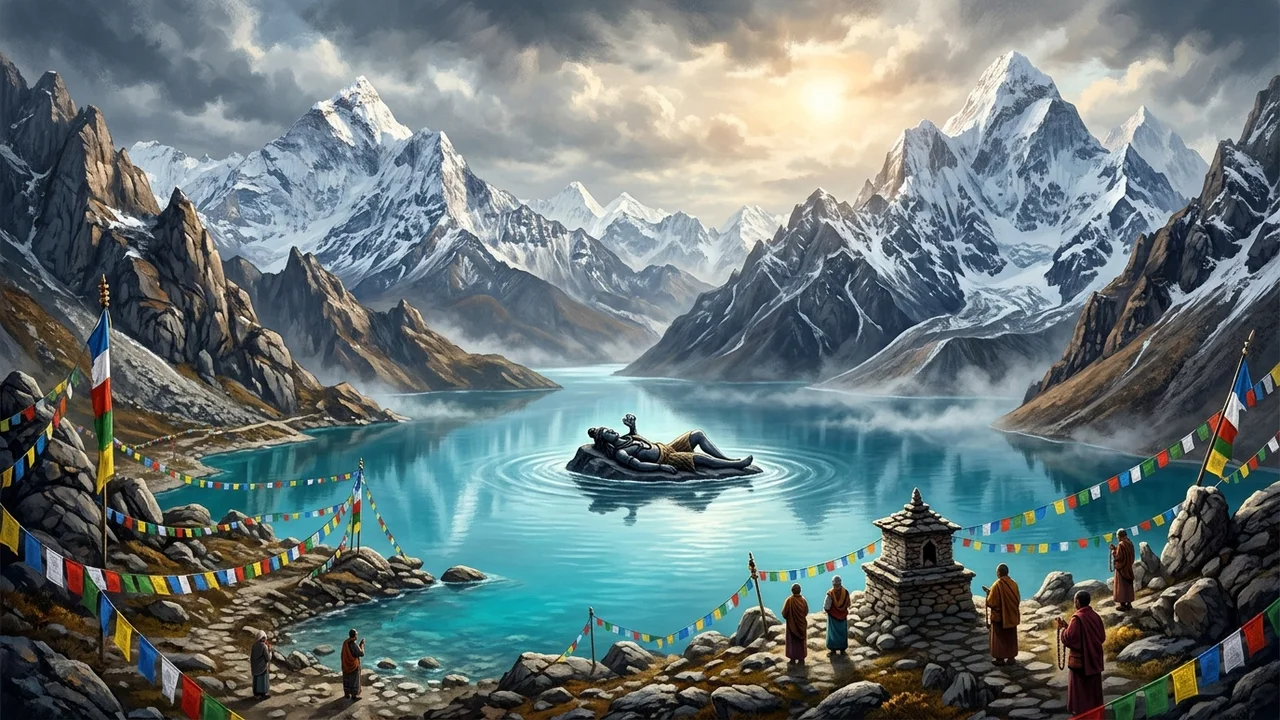
Cradled within an austere amphitheater of jagged Himalayan peaks in Rasuwa, the sacred turquoise waters of Gosaikunda (Gosāīkuṇḍa / गोसाइँकुण्ड) rest at an elevation of 4,380 meters above sea level. In classical Hindu cosmology, the lake’s creation is the dramatic climax of the Samudra Manthana (the churning of the cosmic ocean of milk). When the gods and demons churned the primal waters with Mount Mandara and the serpent Vasuki, the first substance to surface was not ambrosial nectar, but Kālakūṭa—a pitch-black, scorching venom potent enough to extinguish all mortal life and cosmic light.
In desperate panic, the gods pleaded with Lord Shiva for salvation. Moved by compassion for creation, Shiva caught the boiling poison in his palm and swallowed it in a single draught. To prevent the venom from destroying his divine body, Goddess Parvati seized his throat, sealing the poison at the vocal cords. The searing heat turned his neck an indelible lapis-blue, bestowing upon him the eternal epithet Nīlakaṇṭha (the Blue-Throated One). Yet the internal agony was so overwhelming that Shiva fled northward into the snowy recesses of the Himalayas seeking extreme, unmelting cold to quell the burning torment.
Arriving at the desolate granite ridges of the Langtang range, Shiva thrust his massive three-pointed trident (Triśūla) into the living mountain face. Instantly, three subterranean glacial torrents burst through the stone fissures, pooling together to create a deep, crystal basin of ice-melt water. Plunging into the frigid depths, the Lord reclined upon the rocky floor, allowing the freezing currents to soothe his throat. To this day, pilgrims peering into the placid turquoise depths can discern a dark, reclining stone formation resembling Shiva sleeping serenely beneath the crystalline ripples.
The primary pilgrimage to Gosaikunda unfolds during the monsoon full moon of Shrawan (Janai Pūrṇimā). Despite torrential rains, leech-infested forest trails, and thinning oxygen, tens of thousands of pilgrims ascend from Kathmandu, Nuwakot, and Sindhupalchok. For Parbate Hindus, taking a ritual bath in the freezing waters and changing the sacred cotton thread (Janai) purges sins committed across lifetimes. For the indigenous Tamang people, the lake is revered as the sanctified realm of the great ancestral spirit, and hundreds of shamans (Dhāmī-Jhã̄krī) journey uphill in feathered headdresses, chanting archaic invocations to the rhythmic thunder of flat Dhyaṅgro drums.
Beyond its alpine majesty, Gosaikunda forms the mystical hydrographic heart of Central Nepal. Its overflow gives birth to the Trishuli River, while popular belief asserts that a secret subterranean vein carries its glacial waters directly into the holy tank of Kumbheshwar Mahadev in Patan. When the Patan pond fills during Janai Purnima, city elders who could not walk the high mountain passes touch its cold water with bowed heads, experiencing the cooling grace of the high lake within their own valley.
कथा
रसुवा जिल्लाको लाङटाङ राष्ट्रिय निकुञ्जभित्र समुन्द्र सतहबाट ४,३८० मिटरको उचाइमा अवस्थित गोसाइँकुण्ड हिन्दू र बौद्ध दुवै धर्मावलम्बीहरूको परम पावन हिमाली तीर्थ हो। पौराणिक आख्यान अनुसार, देवता र दानवहरू मिलेर अमृत प्राप्तिका लागि समुद्र मन्थन गर्दा सर्वप्रथम ब्रह्माण्डलाई नै भष्म पार्न सक्ने अति भयानक 'कालकूट' विष निस्कियो। त्यो विनाशकारी विषको ज्वालाले समस्त चराचर जगत् आक्रान्त भएपछि सम्पूर्ण देवताहरूले भगवान् शिवको शरण लिई रक्षाको याचना गरे।
सृष्टिको रक्षाका निम्ति महादेवले त्यो हलाहल विषलाई हत्केलामा लिएर सहजै पिएर घाँटीमै रोकिदिनुभयो। विषको भयानक डाहाले उहाँको घाँटी नीलो भयो र उहाँ 'नीलकण्ठ' कहलाउनुभयो। तर कालकूट विषको ज्वाला यति असह्य थियो कि त्यसको जलन र छटपटी शान्त पार्न महादेव शीतल हिमालको खोजीमा उत्तरतर्फ भौँतारिनुभयो। अन्ततः लाङटाङ पर्वतको हिउँले ढाकिएको नाङ्गो चट्टानमा पुगेर उहाँले आफ्नो हातको त्रिशूलले पहाडको छातीमा जोडले प्रहार गर्नुभयो। त्रिशूल लागेको ठाउँबाट तीनवटा निर्मल जलधारा (त्रिशूलधारा) फुटेर निस्किए, जसले एउटा विशाल तालको रूप लियो। त्यही तालको चिसो पानीमा डुबुल्की मारेर महादेवले आफ्नो घाँटीको जलन शान्त पार्नुभयो।
तालको पिँधमा अहिले पनि ध्यानमग्न वा शयन गरिरहनुभएका भगवान् शिवको कालो शिला-स्वरूप स्पष्ट देख्न सकिन्छ भन्ने जनविश्वास छ। तालको वरिपरि भैरवकुण्ड, सरस्वतीकुण्ड र सूर्यकुण्डजस्ता अन्य पवित्र कुण्डहरू रहेका छन्, जसले गर्दा सम्पूर्ण हिमाली उच्चभूमि एउटा पावन मण्डलका रूपमा प्रतिष्ठित छ।
गोसाइँकुण्डको मुख्य तीर्थयात्रा श्रावण शुक्ल पूर्णिमा (जनैपूर्णिमा) को अवसरमा हुन्छ। कठिन उकालो बाटो, लेक लाग्ने जोखिम, र अविरल वर्षाको पर्वाह नगरी नेपाल र भारतबाट हजारौँ भक्तजनहरू यहाँ स्नान गर्न पुग्दछन्। यस दिन कुण्डमा डुबुल्की मारेर नयाँ जनै फेर्नाले र भगवान् शिवलाई त्रिशूल अर्पण गर्नाले जन्मजन्मान्तरको पाप पखालिने र मनोकाङ्क्षा पूरा हुने विश्वास गरिन्छ।
गोसाइँकुण्ड केवल हिन्दूहरूको मात्र नभई स्थानीय तामाङ तथा शेर्पा समुदाय र तान्त्रिक झाँक्रीहरूको पनि महा-तीर्थ हो। जनैपूर्णिमाको अघिल्लो रात यहाँ सयौँ धामी-झाँक्रीहरू मयूरको प्वाँखको शिरपोस लगाएर, हातमा ढ्याङ्ग्रो ठोक्दै तान्त्रिक लयमा नाच्ने गर्दछन्। यस कुण्डमा पुगेर शक्ति सिद्ध गरेपछि मात्र नयाँ झाँक्रीले पूर्णता पाउने जनविश्वास छ। यसै कुण्डबाट त्रिशूली नदीको उद्गम भएको छ, र यसको भूमिगत जलमार्ग पाटनको कुम्भेश्वर महादेवको पोखरीसँग जोडिएको मानिन्छ। गोसाइँकुण्ड प्रकृतिको अनुपम सौन्दर्य र अध्यात्मको सर्वोच्च सङ्गम हो।
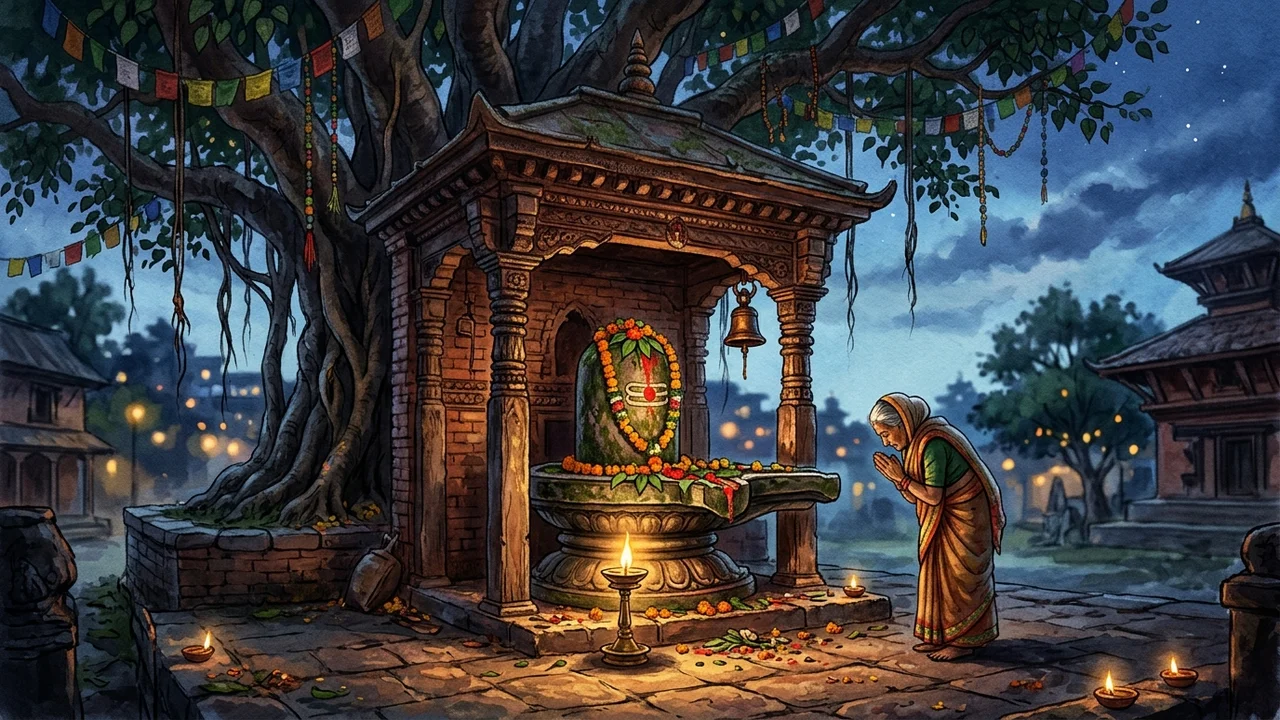
Under the ancient pipal: evening devotion at the sacred stone lingam of Bāṇeśvara.पीपलको छहारीमुनि: बाणेश्वर महादेवको प्राचीन शिवलिंगमा सन्ध्या-आरती।
Honors Lord Shiva as venerated by the thousand-armed Asura king Bāṇāsura (son of Mahābali); recounted in the Bhāgavata Purāṇa, Harivaṁśa, and Nepāl-Māhātmya as a consecrated site of formidable Shaiva penance.
Sacred Geography & Setting
Situated on an elevated river terrace in the eastern sector of Kathmandu, positioned between the holy Bagmati River and the Dhobi Khola (Rudramatī) corridor; traditionally guarded the eastern trade and pilgrimage approach.
Natural Sanctum & Svarupa
Features an ancient, uncarved natural stone Lingam (Svayambhū Bāṇaliṅga) sheltered beneath the majestic canopy of a century-old sacred Pipal tree (Ficus religiosa), emphasizing open-air communion with nature.
Liturgical Observances
Weekly Monday worship (Somavāra Vrata), monthly Pradoṣa twilight libations, and Maha Shivaratri evening lamp offerings by surrounding neighborhood families.
Socio-Cultural Role in Valley Life
Serves as an intimate neighborhood heart where local Parbate and Newar families gather for daily morning water offerings, life-cycle Rudrī rituals, and communal evening recitations.
The story
Amidst the bustling urban thoroughfares of eastern Kathmandu, the ancient sanctuary of Baneshwor Mahadev (Bāṇeśvara Mahādeva / बानेश्वर महादेव) preserves an enduring link to Puranic mythology and the historical topography of the valley. According to the Nepāl-Māhātmya and the Harivaṁśa, this sacred ground is named after King Bāṇāsura, the legendary thousand-armed monarch of the Asuras and eldest son of the virtuous King Bali. Possessed of unbending Shaivite devotion, Banasura performed austere penance in the valley, fashioning natural stone lingams with his thousand hands to entreat the eternal protection of Mahadeva.
Gratified by Banasura’s tireless austerity, Shiva granted him invulnerability against mortals and declared that wherever Banasura established his devotion, the divine presence would abide as Bāṇeśvara—the Lord of Banasura. Historically, the shrine occupied an open, elevated terrace commanding the alluvial plain between the holy Bagmati River and the Dhobi Khola (ancient Rudramati). For centuries, travelers, merchants, and ascetics arriving from the eastern hills or the Mithila plains rested beneath its shade before crossing the river toward the royal cities of Patan and Kathmandu.
Unlike the grand multi-tiered pagodas of the central palace squares, the heart of Baneshwor Mahadev retains the elemental simplicity of an ancient open-air nature shrine. The sanctum sanctorum is sheltered beneath the massive, intertwining roots of a sacred Pipal tree (Ficus religiosa). For traditional Nepali households, the Pipal tree is itself an altar of the Trimurti—its roots representing Brahma, its trunk Vishnu, and its rustling canopy Shiva. Beneath this whispering emerald vault sits the smooth, weather-worn stone lingam, perpetually anointed by early morning libations of spring water, milk, and red vermilion powder.
Throughout the week, and especially upon auspicious Mondays (Somavāra) and monthly twilight fasts (Pradoṣa Vrata), the courtyard awakens before dawn. Elders from surrounding neighborhoods arrive with brass plates laden with Belpatra leaves, sesame seeds, and fragrant garden marigolds. Women circle the stone lingam and the sacred tree seven times, murmuring prayers for domestic harmony, the longevity of their children, and protection against premature adversity. As evening falls, rows of small clay lamps (Pālā) flicker along the stone wall, their gentle glow echoing the ancient vow that divine grace remains ever accessible to the humble householder.
In modern times, though the surrounding agricultural terraces have transformed into a thriving commercial hub and the seat of Nepal's national parliament, the sacred courtyard of Baneshwor Mahadev remains an oasis of contemplative peace. It anchors the daily rhythm of the neighborhood, reminding residents that beneath the transient currents of modern civic life lies an ancient bedrock of devotion that has sanctified the soil of Kathmandu for millennia.
कथा
काठमाडौँको पूर्वी भेगमा अवस्थित बानेश्वर महादेव नेपाली समाज र पौराणिक इतिहाससँग गहिरो सम्बन्ध राख्ने एक प्राचीन एवं जाग्रत तीर्थ हो। 'नेपालमाहात्म्य' र 'हरिवंश' पुराण अनुसार, यस स्थानको नामाकरण हजार हात भएका दैत्यराज बाणासुरको नामबाट भएको हो। महाबलीका जेठा छोरा बाणासुर भगवान् शिवका अनन्य भक्त थिए। उहाँले यस पावन भूमिमा आएर भगवान् शिवलाई प्रसन्न तुल्याउन कठोर तपस्या गर्नुभएको थियो र आफ्ना हजारौँ हातहरूले पार्थिव शिवलिङ्ग निर्माण गरी नित्य आराधना गर्नुभएको थियो।
बाणासुरको अनन्य भक्तिबाट प्रसन्न भई महादेवले उहाँलाई वरदान दिनुभयो र भन्नुभयो—"तिमीले स्थापना गरेको यो लिङ्ग 'बानेश्वर' का नामले संसारमा प्रसिद्ध हुनेछ, र यहाँ श्रद्धापूर्वक पूजा गर्नेहरूको सम्पूर्ण भय र विघ्न नाश हुनेछ।" ऐतिहासिक रूपमा बानेश्वर क्षेत्र पवित्र बाग्मती नदी र धोबीखोला (रुद्रमती) को बीचमा रहेको अग्लो टारमा अवस्थित थियो। पूर्वतर्फबाट काठमाडौँ उपत्यका प्रवेश गर्ने यात्री, व्यापारी र तीर्थयात्रीहरूका लागि यो एक प्रमुख विश्रामस्थल र आध्यात्मिक सुरक्षा-द्वार थियो।
बानेश्वर महादेवको विशेषता यसको खुला र प्राकृतिक स्वरूप हो। यहाँ विशाल र प्राचीन पीपलको रुखको छहारीमुनि खुला आकाशमुनि शिवलिङ्ग अवस्थित छ। नेपाली सनातन परम्परामा पीपललाई साक्षात् त्रिमुर्तिको रूप मानिन्छ—जरामा ब्रह्मा, काण्डमा विष्णु, र पात-पातमा महादेवको वास हुन्छ। त्यही पीपलको फेदमा स्थापित बानेश्वर महादेवमा दैनिक बिहानैदेखि स्थानीय बासिन्दाहरूले जल, पञ्चामृत, बेलपत्र र रातो अक्षता चढाएर पूजाआजा गर्दछन्।
विशेषगरी हरेक सोमबार, एकादशी, प्रदोष व्रत र महाशिवरात्रिका दिन यहाँ भक्तजनहरूको ठूलो भीड लाग्ने गर्दछ। बिहान नुहाइधुवाइ गरी आएका आमा, दिदीबहिनी तथा बुबा-हजुरबुबाहरूले पीपलको रुख र शिवलिङ्गलाई परिक्रमा गर्दै परिवारको सुख, शान्ति र आरोग्यको प्रार्थना गर्दछन्। साँझको समयमा बालिने माटोका पाला र पित्तलका दियोहरूको ज्योतिले मन्दिर परिसरलाई एक शान्त र ध्यानमय तपोभूमिमा रूपान्तरण गरिदिन्छ।
आज बानेश्वर क्षेत्र नेपालको संसद् भवन र व्यस्त व्यापारिक केन्द्रका रूपमा रूपान्तरित भइसकेको भए तापनि, बानेश्वर महादेवको आँगन भने पुरानै आध्यात्मिक शान्ति र आत्मियताको धरोहर बनेर उभिएको छ। यसले सहरको व्यस्त जीवनमा अल्झिएका मानिसहरूलाई दैनिक जीवनमा ईश्वरप्रतिको कृतज्ञता र प्रकृतिको सामिप्यताको स्मरण गराइरहन्छ।
Bagmati River (Bāgmatī Nadī / बाग्मती नदी)बाग्मती नदी
Originating from the pure southern springs of Bagdwar high on the Shivapuri ridge (2,732 meters) in the northern rim of the valley, the sacred Bagmati River is the spiritual spine and civilizational mother of the Kathmandu Valley. According to the Himavat-khaṇḍa of the Skanda Purāṇa, the river sprang from the divine laughter (Vāk-matī / Word of the Divine) of Lord Shiva as he meditated upon the snow peaks, flowing downward to sanctify the Himalayan foothills.काठमाडौँ उपत्यकाको उत्तरी डाँडा शिवपुरीको २,७३२ मिटर उचाइमा रहेको 'बाग्द्वार' बाट उत्पन्न हुने पवित्र बाग्मती नदी उपत्यका सभ्यताको जीवनरेखा एवं आध्यात्मिक प्राण हो। स्कन्दपुराणको 'हिमवत्खण्ड' अनुसार, भगवान् शिवको पवित्र वाक् (वचन/हाँसो) बाट प्रकट भएकी हुनाले यस नदीलाई 'वाग्मती' भनिएको हो, जसले सदियौँदेखि उपत्यकाको माटोलाई सिञ्चित गर्दै हिन्दू र बौद्ध परम्परालाई पावन बनाइरहेको छ।
Descending past the historic forest hermitage of Gokarneshwor—where Brahma performed cosmic tapasya and where sons gather annually on Kushe Aunsi for paternal obsequies—the Bagmati flows southward into the sacred precinct of Pashupatinath. Here, bordering the burning pyres of Arya Ghat and Bhasmeshwar Ghat, the river acts as the supreme conduit of final liberation, washing over the feet of departing souls upon the Brahma Nal.शिवपुरीबाट झरेर गोकर्णेश्वरको प्राचीन वन हुँदै बग्ने बाग्मतीले गोकर्णमा कुशे औंसीको दिन बाबुको मुख हेर्ने र श्राद्ध गर्ने पवित्र तीर्थ प्रदान गर्दछ। त्यहाँबाट अघि बढेर यो नदी पशुपतिनाथको पाउ छुँदै आर्यघाट र भष्मेश्वरघाट भएर बग्दछ, जहाँ मानिसहरू आफ्ना मृत आफन्तलाई ब्रह्मनालमा जल स्पर्श गराएर मोक्षको अन्तिम बिदाइ गर्दछन्।
At the ancient sangam of Teku Dovan, the Bagmati receives the waters of its western sister, the holy Vishnumati. This historic confluence forms one of the valley's primary bathing tirthas (Cintāmaṇi Tīrtha), adorned with Licchavi stone chaityas and Malla-era riverbank ghats where generations of valley householders have performed dawn ablutions, Surya arghya, and ancestor tarpan.काठमाडौँको ऐतिहासिक टेकु दोभानमा पुगेपछि बाग्मतीले पश्चिमबाट आउने विष्णुमती नदीलाई आफ्नो छातीमा अङ्गाल्छ। यो सङ्गम (चिन्तामणि तीर्थ) उपत्यकाको परम पावन स्नान-तीर्थ हो, जहाँ लिच्छवि र मल्लकालीन घाटहरूमा बिहानीपख सूर्यलाई अर्घ्य दिने, स्नान गर्ने र पितृ-तर्पण गर्ने धार्मिक परम्परा सदियौँदेखि चल्दै आएको छ।
Meandering southward toward the edge of the valley, the Bagmati carves through the dramatic, narrow limestone chasm of the Chobhar Gorge—the legendary cut cleaved by Bodhisattva Manjushri's sword to drain the primeval lake of Nagdaha. Flowing onward into the southern Terai and merging eventually into the Koshi and the Ganges, the river links the snow-fed heights of Nepal to the sacred geography of greater South Asia.उपत्यकाको दक्षिणतर्फ अघि बढ्दै बाग्मती चोभारको गहिरो गल्छीबाट बाहिर निस्कन्छ, जुन गल्छी मञ्जुश्रीले आफ्नो खड्गले काटेर प्राचीन नागदहको पानी बाहिर निकालेका थिए। त्यहाँबाट तराईको समथर मैदान हुँदै कोशी र अन्ततः गङ्गा नदीमा मिसिने बाग्मतीले हिमालको पवित्रतालाई सिङ्गो दक्षिण एसियाली तीर्थ-संस्कृतिसँग जोडेको छ।
Though centuries of urban expansion have placed immense ecological pressure upon its urban flow, the Bagmati remains an immortal goddess in the domestic imagination of every Nepali household. From morning bath mantras invoking its name alongside the Ganga and Yamuna, to the evening oil lamps floating down its gentle ripples at dusk, the Bagmati embodies the eternal, unceasing flow of memory, devotion, and eternity.सहरीकरण र प्रदूषणले नदीको भौतिक स्वरूपमा असर पारे तापनि, हरेक नेपालीको हृदयमा बाग्मती साक्षात् देवी गङ्गाकै रूपमा जीवित छिन्। बिहानको पूजामा जल चढाउँदा 'गङ्गे च यमुने चैव गोदावरि सरस्वति नर्मदे सिन्धु कावेरी...' सँगै बाग्मतीलाई स्मरण गर्ने र साँझमा आरतीको ज्योति नदीमा बगाउने परम्पराले बाग्मतीलाई नेपाली समाजको अमर आध्यात्मिक मुटु बनाएको छ।
Vishnumati River (Viṣṇumatī Nadī / विष्णुमती नदी)विष्णुमती नदी
Flowing along the western boundary of the historic city of Kathmandu, the Vishnumati River (Viṣṇumatī / विष्णुमती) is the second great sacred waterway of the valley. Originating from the northern mountain springs of Tokha and the southern slopes of Shivapuri, it descends past the sacred Newar shrines of Karunamaya and Kankeshwari, serving as the aquatic guardian of western Kathmandu.काठमाडौँको ऐतिहासिक पुरानो सहरको पश्चिमी सीमा भएर बग्ने विष्णुमती नदी उपत्यकाको दोस्रो प्रमुख पवित्र नदी हो। टोखा र शिवपुरीका उत्तरी पहाडी मूलहरूबाट उत्पन्न भई यो नदी करुणामय लोकेश्वर, शोभा भगवती, र कङ्केश्वरीजस्ता प्राचीन शक्तिपीठहरूलाई स्पर्श गर्दै दक्षिणतर्फ बग्दछ।
In Newar and Parbate lore, the name Vishnumati celebrates the river as the living grace of Lord Vishnu. The riverbed was historically famous for yielding sacred salagrama-like alluvial stones and clear spring currents that nourished the fertile vegetable gardens and terraced paddy fields of the Jyapu farming communities along its banks.धार्मिक मान्यता अनुसार विष्णुको चरणबाट प्रकट भएकी हुनाले यस नदीलाई 'विष्णुमती' भनिएको हो। प्राचीन कालमा यस नदीको सफा र कञ्चन जलले काठमाडौँका किसानहरू (ज्यापू समुदाय) को खेतबारीलाई सिञ्चित गर्नुका साथै दैनिक घरायसी र धार्मिक प्रयोजनका लागि शुद्ध जल उपलब्ध गराउँदथ्यो।
The western bluffs rising above the river are crowned by the world-renowned stupa of Swayambhunath. Pilgrims circumambulating the base of Swayambhu hill traditionally descended to the banks of the Vishnumati at Bijeshwari to perform ritual ablutions before climbing the 365 ancient stone steps to venerate the primordial self-manifest lotus flame.विष्णुमती नदीको ठीक माथि पश्चिमपट्टिको डाँडामा विश्वप्रसिद्ध स्वयम्भू महाचैत्य विराजमान छ। प्राचीन कालमा स्वयम्भूको दर्शन गर्न जाने बौद्ध र हिन्दू तीर्थयात्रीहरूले सर्वप्रथम विष्णुमतीको विज्येश्वरी घाटमा स्नान गरी, शुद्ध भएर मात्र ३६५ वटा ढुङ्गे सिँढी चढेर माथि स्तूपमा ज्योति दर्शन गर्ने परम्परा थियो।
Along its banks sit two of Kathmandu's most powerful Tantric cremation grounds: Indrayani Ghat and Kankeshwari (Kanga Ajima). Here, adjacent to the bustling urban markets of Asan and Maru, traditional Newar guthi members escort the departed for cremation upon the river steps, while secret nocturnal Tantric rituals are enacted to appease the eight directional protectors (Ashta Matrika).विष्णुमतीको किनारमा इन्द्रायणी, शोभा भगवती र कङ्केश्वरीजस्ता उपत्यकाका अत्यन्त जाग्रत तान्त्रिक पीठ र दाहसंस्कार घाटहरू अवस्थित छन्। सहरको नजिकै रहेर पनि यी घाटहरूमा जीवनको अन्तिम सत्य र संहारकारी शक्तिको साक्षात्कार हुन्छ, जहाँ नेवार समुदायका गुठीहरूले मृत आफन्तको अन्त्येष्टि गर्ने र अष्टमातृकाको साधना गर्ने गर्दछन्।
At Teku Dovan, the Vishnumati gracefully merges into the Bagmati River at a sacred sangam adorned with classical Malla-era stone monuments and Shiva lingams. Together, the two rivers enclose the ancient heart of Kathmandu within a sanctified cradle of waters, demonstrating how river ecology and sacred topography defined the parameters of urban existence in the Himalayas.अन्ततः टेकु दोभानमा पुगेर विष्णुमती बाग्मती नदीमा समाहित हुन्छ। पूर्वमा बाग्मती र पश्चिममा विष्णुमती—यी दुई पवित्र नदीहरूले पुरानो काठमाडौँ सहरलाई दुई हातले अँगालेजस्तै गरी एउटा पवित्र मण्डलको रूपमा घेरेका छन्। विष्णुमती नदी उपत्यकाको इतिहास, कला र तान्त्रिक साधनाको अभिन्न प्रवाह हो।
Situated on the southern bank of the Bagmati River approximately one kilometer northeast of the main Pashupatinath temple, Guhyeshwari (Guhyeśvarī / गुह्येश्वरी) is the primary Adi-Shaktipitha of Nepal and one of the supreme seats of Tantric goddess worship in South Asia. In sacred topography, Pashupati and Guhyeshwari form an inseparable non-dual unity—the divine union of Shiva (consciousness) and Shakti (dynamic cosmic energy).पशुपतिनाथ मन्दिरबाट करिब एक किलोमिटर उत्तर-पूर्व, बाग्मती नदीको किनारमा अवस्थित गुह्येश्वरी नेपालको प्रमुख आदि-शक्तिपीठ एवं तान्त्रिक साधनाको सर्वोच्च तीर्थ हो। दार्शनिक रूपमा पशुपतिनाथ (शिव) र गुह्येश्वरी (शक्ति) लाई एउटै सिक्काका दुई पाटा मानिन्छ, जहाँ शिव विना शक्ति अधुरो र शक्ति विना शिव अचेतन हुन्छन्।
According to the Devī Bhāgavata Purāṇa and the Himavat-khaṇḍa, when Goddess Sati cast off her mortal body in the sacrificial fire of her father Daksha, grief-stricken Shiva hoisted her corpse upon his shoulders and wandered wildly across the universe. As Vishnu dispatched his Sudarshana Chakra to sever the decaying limbs and relieve Shiva's torment, Sati's sacred generative organ (Guhya-pīṭha / secret yoni) fell upon this forested river hollow, causing the earth to tremble and sanctifying the ground forever as a self-manifest Shakti sanctuary.देवी भागवत र स्कन्दपुराण अनुसार, दक्ष प्रजापतिको यज्ञमा सतीदेवीले देहत्याग गरेपछि शोकविह्वल हुनुभएका भगवान् शिवले उहाँको मृत शरीर काँधमा बोकेर त्रैलोक्यमा विलाप गर्दै हिँड्नुभयो। महादेवको मोह शान्त पार्न विष्णुले सुदर्शन चक्रले सतीको मृत देहका अङ्गहरू काट्दै जाँदा, यहाँ सतीदेवीको 'गुह्य अङ्ग' (गुह्य-पीठ) पतन भयो। यसरी सतीको गुह्य भाग पतन भएकाले यस स्थानलाई 'गुह्येश्वरी' भनियो।
The sanctum of Guhyeshwari contains no anthropomorphic idol. Instead, beneath an exquisite repoussé silver canopy supported by four brass serpents, sits an open, natural underground spring pit lined with silver sheets. Filled with subterranean water and covered with sacred vermilion paste, flowers, and bilva leaves, this natural font is venerated as the cosmic womb from which all elements, beings, and universes continuously emerge.गुह्येश्वरी मन्दिरभित्र कुनै मानव-निर्मित मूर्ति छैन। मन्दिरको गर्भगृहमा चारवटा धातुका नागहरूले अड्याएको चाँदीको भव्य छत्रमुनि एउटा प्राकृतिक जलकुण्ड (खाल्डो) छ, जसभित्र भूमिगत मूलको जल सधैँ भरिएको हुन्छ। यही पवित्र जलकुण्डलाई साक्षात् जगन्माताको गर्भ-स्वरूप मानेर अष्टदल कमल, सिन्दूर र फूलहरूले तान्त्रिक विधिबाट पूजा गरिन्छ।
In traditional Newar Vajrayana Buddhism, Guhyeshwari is equally venerated as the root source of the sacred lotus of Swayambhu. According to the Svayambhū Purāṇa, the seed sown by Buddha Vipashwi in the ancient lake took root precisely in this subterranean watery womb, sprouting the stalk that bloomed at Swayambhu. Thus, Buddhist Newars honor the shrine as Nairatmya or Guhya-Prajnaparamita, bridging Shaiva-Shakta and Vajrayana ritualism.नेवार बौद्ध परम्परामा गुह्येश्वरीलाई स्वयम्भूको दिव्य कमलको जरा (उत्पत्ति थलो) मानिन्छ। स्वयम्भू पुराण अनुसार, विपश्वी बुद्धले नागदहमा रोपेको कमलको बीउको जरा यही गुह्येश्वरीको कुण्डमा गाडिएको थियो, जसको काण्ड माथि स्वयम्भूको डाँडामा फुलेर ज्योति प्रकट भएको थियो। त्यसैले बौद्धहरूले यिनलाई 'नैरात्म्या' वा 'गुह्य प्रज्ञापारमिता' का रूपमा अत्यन्त श्रद्धा गर्दछन्।
During the autumn Navaratri of Dashain, Guhyeshwari forms the focal pilgrimage of Kathmandu. Thousands wait in night-long queues through the wooded avenues of Mrigasthali to offer worship at her silver threshold. Her consecrated water (Pādodaka) is reverently sprinkled on foreheads to dispel chronic illness, fear of premature death, and inner discord, reaffirming the goddess as the boundless wellspring of life.बडादशैँको नवरात्रभर यहाँ भक्तजनहरूको ठूलो मेला लाग्दछ। मृगस्थलीको वन छिचोल्दै हजारौँ श्रद्धालुहरू देवीको दर्शन गर्न पुग्दछन्। कुण्डको पावन जल (चरणामृत) ग्रहण गर्नाले रोगव्याधि, भय र पारिवारिक अशान्ति हट्ने र सन्तान सुख प्राप्त हुने विश्वास छ। गुह्येश्वरी मन्दिर शक्ति, सृष्टि र जीवनको गूढ रहस्य बुझाउने एक अमर तीर्थ हो।
Resting in a tranquil open-air stepped pool at the northern base of the Shivapuri hills, approximately ten kilometers from central Kathmandu, Budhanilkantha (Budhānīlakaṇṭha / बुढानीलकण्ठ) is one of the most astonishing masterpieces of monumental stone sculpture in Asia. The sanctuary enshrines the cosmic form of Lord Vishnu reclining upon the serpent of eternity.काठमाडौँको उत्तरमा शिवपुरी डाँडाको फेदीमा अवस्थित बुढानीलकण्ठ मन्दिर खुला आकाशमुनि एउटा पोखरीको माझमा रहेको छ। यो नेपालको मात्र नभई सम्पूर्ण एसियाकै प्राचीन मूर्तिकलाको एक अद्वितीय र विस्मयकारी चमत्कार हो, जहाँ भगवान् विष्णु शेषनागको शय्यामा अनन्त योगनिद्रामा लीन हुनुभएको छ।
Dating to the Licchavi golden age of the sixth or early seventh century CE, the colossal image measures five meters (over sixteen feet) in length, carved with breathtaking anatomical precision from a single massive block of dark purple-black basalt stone. The deity reclines gracefully upon the eleven coiled, protective hoods of the cosmic serpent Ananta Shesha, floating upon the calm surface of a natural spring-fed pool like a lotus leaf.छैटौँ वा सातौँ शताब्दीतिर लिच्छविकालमा निर्मित यो विशाल मूर्ति करिब ५ मिटर (१६ फिटभन्दा बढी) लामो छ, जसलाई एउटै सिङ्गो कालो कसीढुङ्गा (बेसाल्ट) बाट अत्यन्त सुकुमार र कलात्मक रूपमा कुँदिएको छ। एघारवटा फणा फिँजाएका शेषनागको कुण्डलीकृत शरीरमाथि पल्टिनुभएका नारायण शान्त पानीको सतहमाथि कमलको पातझैँ तैरिरहनुभएको देखिन्छ।
In his four hands, Vishnu gracefully holds the classical emblems of cosmic preservation: the conch shell (Śaṅkha, representing primordial cosmic sound), the serrated discus (Cakra, the spinning wheel of cosmic order and time), the heavy mace (Gadā, the power of divine authority), and the tender lotus flower (Padma, the beauty of unfolded consciousness). His calm facial expression conveys transcendental detachment and serene protection.भगवान् नारायणका चार हातहरूमा चारवटा दिव्य आयुधहरू छन्: शङ्ख (ब्रह्माण्डीय अनाहत ध्वनिको प्रतीक), चक्र (काल र ब्रह्माण्डीय व्यवस्थाको प्रतीक), गदा (प्राण र दैवी शक्तिको प्रतीक), र पद्म (सृष्टिको निर्मल चेतनाको प्रतीक)। उहाँको मुहारमा देखिने परम शान्त र करुणामय मुस्कानले सम्पूर्ण संसारको रक्षा गर्ने भगवान्को अभयदानलाई दर्साउँछ।
Intriguingly, the name Budhanilkantha combines Vaishnava iconography with Shaivite nomenclature: 'Nilakantha' (the Blue-Throated One) is traditionally an epithet of Lord Shiva who drank the Halahala poison. Popular tradition asserts that beneath the chest of the stone Vishnu rests a sacred aperture through which Shiva’s cooling presence abides, uniting the preserver and the destroyer within a single divine presence.यस तीर्थको नाम 'बुढानीलकण्ठ' ले वैष्णव र शैव परम्पराको सुन्दर समन्वयलाई जनाउँछ। 'नीलकण्ठ' भगवान् शिवको नाम हो, जसले कालकूट विष पिएर घाँटी नीलो पार्नुभएको थियो। लोकविश्वास अनुसार यस सुतेका नारायणको छातीभित्र महादेवको ज्योतिर्मय स्वरूप समाहित छ, जसले गर्दा हिन्दूहरूले यहाँ विष्णु र शिव दुवैको संयुक्त दर्शन गर्दछन्। बौद्ध धर्मावलम्बीहरूले यिनलाई 'नीलकण्ठ लोकेश्वर' का रूपमा उत्तिकै श्रद्धाका साथ पूजा गर्दछन्।
Throughout the Malla and Shah dynasties, a strict royal taboo prohibited the reigning kings of Nepal from ever viewing the Budhanilkantha image in person, based upon a prophetic curse that any monarch who gazed upon the sleeping god would instantly perish. Instead, surrogate replicas were commissioned at Balaju Water Gardens and the royal palace. During the great festival of Haribodhini Ekadashi in autumn, when Vishnu awakens from his four-month cosmic slumber (Yoga Nidra), hundreds of thousands of pilgrims gather around the pool to offer sugarcane arches, marigolds, and ghee lamps.इतिहासमा एउटा प्रसिद्ध परम्परा के थियो भने, नेपालका गद्दीनसीन राजाहरूले बुढानीलकण्ठको दर्शन गर्न जाँदैनथे। राजाले यो मूर्ति हेरेमा तत्कालै मृत्यु हुने श्रापको भयका कारण राजाहरूका लागि बालाजुको २२ धारामा र हनुमानढोका दरबारभित्र बुढानीलकण्ठकै दुरुस्त प्रतिकृतिहरू स्थापना गरिएका थिए। कात्तिक महिनाको ठूलो एकादशी (हरिबोधिनी एकादशी) मा जब भगवान् चार महिनाको योगनिद्राबाट ब्युँझनुहुन्छ, तब यहाँ लाखौँ भक्तजनहरू उखुको मण्डप बनाएर तोरण टाँग्न र बत्ती बाल्न ओइरिन्छन्।
Commanding a forested promontory at an elevation of 1,540 meters in Bhaktapur, approximately twelve kilometers east of Kathmandu, Changu Narayan is universally recognized as the oldest continuously active Hindu temple in Nepal and a supreme monument of UNESCO World Heritage. Rising above terraced hills where the Manohara River winds along the valley floor, the sanctuary anchors the eastern quadrant of the valley's sacred Char Narayana mandala.भक्तपुर जिल्लाको उत्तरी डाँडामा १,५४० मिटरको उचाइमा चम्पक (चाँप) को घना जङ्गलको शिरमा अवस्थित चाँगुनारायण मन्दिर नेपालको इतिहासमै सबैभन्दा पुरानो अभिलेख भएको मन्दिर एवं युनेस्को विश्व सम्पदा सूचीमा सूचीकृत एक अमूल्य ऐतिहासिक धरोहर हो। तल फेदीमा मनोहरा नदी बग्ने यो डाँडो काठमाडौँ उपत्यकाका चार प्रमुख नारायणहरूमध्ये जेठो नारायणका रूपमा पूजनीय छ।
The courtyard houses Nepal’s most celebrated historical epigraph: the famous Licchavi stone pillar inscription erected in 464 CE by King Manadeva I. Composed in sophisticated Sanskrit metrics (including Śārdūlavikrīḍita and Vasantatilakā), the 24-line inscription documents the king’s victory campaigns and the devout vows of his widowed mother, Queen Rajyavati, providing the earliest verified, dated written record in the history of the Himalayas.यस मन्दिरको आँगनमा नेपालको लिखित इतिहासकै सबैभन्दा महत्त्वपूर्ण सम्पत्ति सुरक्षित छ: वि.सं. ५२१ (ई.सं. ४६४) मा लिच्छवि राजा मानदेव प्रथमले स्थापना गरेको प्रसिद्ध गरुडध्वज स्तम्भ-शिलालेख। संस्कृत भाषाको उच्च शास्त्रीय छन्दमा कुँदिएको यो २४ हरफको शिलालेखले राजा मानदेवको विजय-अभियान र उहाँकी आमा रानी राज्यवतीको धर्मपरायणताको वर्णन गर्दछ, जसले नेपालको प्रामाणिक इतिहासको ढोका खोलेको हो।
According to the temple’s founding legend, a Brahman cowherd noticed that his cow regularly descended into the champak forest to release milk over an ancient tree root. When an enraged herdsman struck the root with an axe, fresh human blood gushed from the wood. Lord Vishnu appeared from the trunk, explaining that he had inadvertently slain the sage Sumati while fighting demons, and had been sentenced to dwell secretly inside the tree until the bloodletting expiated his sin.मन्दिरको उत्पत्तिसँग जोडिएको पौराणिक कथा अनुसार, एक गोठालाको गाईले दैनिक जङ्गलको एउटा चाँपको रुखको फेदमा गएर आफैँ दूध चढाउने गर्दथ्यो। शङ्का लागेर रुख काट्न बन्चरो प्रहार गर्दा रुखबाट रातो रगत बग्न थाल्यो। त्यसपछि भगवान् विष्णु प्रकट भई भन्नुभयो—'मैले अन्जानमा सुमति ऋषिको वध गरेको पापबाट मुक्ति पाउन यस रुखभित्र तपस्या गरिरहेको थिएँ, तिमीहरूले रगत निकालेर मलाई पापमुक्त गरिदियौ।' त्यसपछि त्यहाँ नारायणको मन्दिर स्थापना गरियो।
The two-tiered pagoda of Changu Narayan is an open-air museum of rare Licchavi and Malla stone masterpieces. Facing the western portal kneels a magnificent, life-sized fifth-century stone Garuda statue with folded wings. Within the courtyard stand celebrated free-standing reliefs: Vishnu riding Garuda (Vishnu-Vikranta, famously featured on the ten-rupee bank note), the multi-headed cosmic Vishwarupa, and the ferocious man-lion Narasimha tearing the chest of Hiranyakashipu.चाँगुनारायण मन्दिर लिच्छविकालीन मूर्तिकलाको खुला सङ्ग्रहालय नै हो। मन्दिरको पश्चिम ढोका अगाडि पाँचौँ शताब्दीको घुँडा टेकेर बसेको विशाल ढुङ्गे गरुडको मूर्ति छ। आँगनको वरिपरि पाँचौँदेखि आठौँ शताब्दीका विश्वविख्यात मूर्तिहरू सजाइएका छन्: नेपालको दस रुपैयाँको नोटमा अङ्कित गरुडनारायणको मूर्ति, ब्रह्माण्ड ढाक्ने वामनावतार (त्रिविक्रम), विराट विश्वरूप, र हिरण्यकशिपुको छाती चिरिरहेका भयानक नृसिंह अवतारका दुर्लभ मूर्तिहरू यहाँ देख्न पाइन्छ।
In Newar religious tradition, Changu Narayan is venerated as Hariharihari-Vahan Lokeshvara, uniting Avalokiteshvara with Vishnu in living syncretism. During the annual Changu Jatra and Haribodhini Ekadashi, thousands ascend the stone ridges from Bhaktapur and Kathmandu, circumambulating the ancient sanctuary that has withstood earthquakes, political transitions, and the passing of fifteen centuries without losing its spiritual majesty.नेवार बौद्ध परम्परामा चाँगुनारायणलाई 'हरिहरिहरिवाहन लोकेश्वर' का रूपमा पूजा गरिन्छ। हरिबोधिनी एकादशी र श्रावण महिनाको चाँगु जात्रामा यहाँ भव्य मेला लाग्दछ। वि.सं. २०७२ को महाभूकम्पले मन्दिरलाई क्षति पुर्याए तापनि यसको पुनर्निर्माण सम्पन्न भइसकेको छ। पन्ध्र सय वर्षभन्दा पुरानो इतिहास बोकेको चाँगुनारायण नेपाली राष्ट्रियता, प्राचीन कला र सनातन आस्थाको अमर कीर्तिस्तम्भ हो।
Concealed within a dramatic, mist-filled forested gorge approximately twenty-two kilometers south of Kathmandu, near the ancient town of Pharping, Dakshinkali (Dakṣiṇkālī / दक्षिणकाली) is the most celebrated and frequented animal-sacrifice Shakti sanctuary in the Himalayas. The temple sits at the dark confluence where two mountain streams converge beneath towering limestone crags.काठमाडौँ उपत्यकाको दक्षिण कुनामा, ऐतिहासिक फर्पिङ सहर नजिकै दुईवटा पहाडी खोलाहरूको सङ्गमस्थलमा अवस्थित दक्षिणकाली नेपालकै सबैभन्दा प्रसिद्ध एवं जाग्रत शक्तिपीठ हो। चारैतिर हरियो वनजङ्गल र पहाडले घेरिएको खोँचमा अवस्थित यो मन्दिर तान्त्रिक साधना र शक्तिको भयानक एवं करुणामय केन्द्र हो।
The sanctuary was formally consecrated in the fourteenth century during the reign of Malla King Pratap Malla, following a terrifying prophetic vision. In the dream, Goddess Kali manifested in her fearsome four-armed warrior aspect, demanding an open-air sanctuary on the southern rim of the kingdom to protect the valley from devastating pestilence, enemy invasions, and premature death. The king located the natural stone outcrop in the Pharping gorge and instituted the royal sacrificial cult.यस मन्दिरको स्थापना मल्लकालीन राजा प्रताप मल्लको पालामा भएको मानिन्छ। राजालाई सपनामा साक्षात् कालिका भगवतीले दर्शन दिएर उपत्यकालाई महामारी, अनिकाल र बाह्य आक्रमणबाट बचाउन दक्षिण सीमामा आफ्नो मन्दिर स्थापना गरी नित्य पूजाआजा गर्ने आदेश दिनुभएको थियो। राजाले खोँचभित्र रहेको जाग्रत शिला फेला पारी मन्दिरको निर्माण गराएका थिए।
The open-air sanctum houses an imposing black stone relief of Goddess Kali trampling upon the supine, white body of Lord Shiva. Her four hands brandish a severed demonic head, a blood-filled kapala (skull cup), a curved scimitar (khadga), and the gesture of protective fearlessness (Abhaya Mudra). Adorned with a necklace of severed skulls and draped in scarlet vermilion, the goddess embodies the relentless destruction of human ego and the triumph of pure cosmic consciousness.गर्भगृहमा कालो कसीढुङ्गामा कुँदिएको चार हात भएकी कालीको भव्य मूर्ति छ, जहाँ देवीले श्मशानमा सुतिरहनुभएका भगवान् शिवको छातीमाथि आफ्नो दाहिने पाउ राख्नुभएको छ। उहाँका हातहरूमा रक्तले भरिएको खप्पर, काटिएको असुरको टाउको, तीखो खड्ग, र अभय मुद्रा छन्। गलामा नरमुण्डको माला लगाएकी दक्षिणकालीले मानव अहङ्कारको संहार र अज्ञानताको विनास गरी भक्तजनलाई अभयदान दिने शक्तिको प्रतिनिधित्व गर्दछन्।
Dakshinkali is internationally renowned for its intense sacrificial liturgy. Every Tuesday and Saturday, and with volcanic fervor throughout the fifteen days of autumn Dashain, thousands of Parbate and Newar devotees descend the stone forest staircases bearing unblemished black he-goats, fighting roosters, and ducks. The blood is ritually presented to the goddess, after which families prepare communal feasts (Bhoj) in the surrounding forest picnic groves, transforming sacred violence into communal kinship and renewal.दक्षिणकाली मन्दिर बलि-पूजाका लागि प्रख्यात छ। हरेक मङ्गलबार र शनिबार, तथा बडादशैँको नवरात्रभर यहाँ हजारौँ भक्तजनहरू बोका, भाले र हाँसको बलि चढाउन आउँछन्। बलि चढाएपछि वरपरको हरियाली जङ्गलमा परिवार र आफन्तहरू बसेर वनभोज (भोज) खाने र देवीको प्रसाद ग्रहण गर्ने परम्परा नेपाली संस्कृतिको एक जीवन्त सामाजिक उत्सव बनेको छ।
Directly above the gorge on the surrounding ridges of Pharping sit the sacred Asura Cave and Gorakhnath shrine, where the Buddhist master Guru Padmasambhava attained Mahamudra enlightenment in the eighth century. Thus, while blood and vermilion flow below at Dakshinkali, Buddhist prayer flags flutter on the heights above, harmonizing wrathful Shakti protection with transcendent Buddhist meditation along the valley's southern gate.दक्षिणकालीको नजिकै फर्पिङको डाँडामा गुरु पद्मसम्भवले ध्यान गरी सिद्धि प्राप्त गर्नुभएको प्रसिद्ध 'असुर गुफा' र बौद्ध गुम्बाहरू अवस्थित छन्। यसरी तल खोँचमा हिन्दू शाक्त परम्पराको बलि-पूजा र माथि डाँडामा बौद्ध लामाहरूको शान्त ध्यान र मन्त्र-ध्वनि—यी दुवैले दक्षिणकाली क्षेत्रलाई हिन्दू र बौद्ध दुवैको एक साझा, शक्तिशाली एवं पवित्र तपोभूमि बनाएका छन्।
Perched upon a prominent, isolated mountain ridge at an elevation of 1,302 meters in Gorkha District, overlooking the roaring confluences of the Trishuli and Marshyangdi river valleys, Manakamana (Manakāmanā / मनकामना) is the supreme wish-fulfilling goddess of Nepal. Revered across the mid-hills as an incarnation of Goddess Bhagawati, the shrine's very name proclaims its divine covenant: Mana-kāmanā ('The Desires of the Heart').गोरखा जिल्लामा त्रिशूली र मर्स्याङ्दी नदीको गहिरो खोँचमाथि १,३०२ मिटरको उचाइमा एउटा सुन्दर डाँडाको शिरमा अवस्थित मनकामना मन्दिर नेपालकै सबैभन्दा प्रसिद्ध एवं जाग्रत शक्तिपीठ हो। आफ्नो नाम अनुसार नै मनले चिताएको मनोकाङ्क्षा (मन-कामना) पूरा गरिदिने देवीका रूपमा यिनलाई सम्पूर्ण नेपाली जनताले श्रद्धापूर्वक पुज्दछन्।
The foundational lore of Manakamana originates in the seventeenth century during the reign of King Ram Shah of Gorkha. His queen was endowed with divine spiritual powers, known to be a secret incarnation of Goddess Kali. The king's trusted royal steward, Lakhan Thapa (a devout ascetic of the Magar ethnic group), alone witnessed her divine celestial form. When the king died and the queen ascended the funeral pyre as a Sati, she comforted the weeping Lakhan Thapa with a solemn prophecy: 'Weep not, faithful Lakhan; I shall reemerge soon in your village atop this ridge, and only you and your descendants shall serve as my priests.'मनकामनाको उत्पत्ति सत्रौँ शताब्दीमा गोरखाका राजा राम शाहको पालासँग जोडिएको छ। राजाकी रानी साक्षात् देवीको अवतार थिइन्, जसको रहस्य उनका परम भक्त लखन थापा (मगर जातिको सिद्ध सन्त) लाई मात्र थाहा थियो। राजाको मृत्युपछि जब रानी सती जान लागिन्, तब रुँदै गरेका लखन थापालाई उनले भनिन्—'हे लखन, नरूऊ, म तिम्रो गाउँको डाँडामा फेरि प्रकट हुनेछु, र तिम्रो वंशले मात्र मेरो सेवा गर्नेछ।' सोही वचन अनुसार रानी सती गएको केही समयपछि डाँडामा अनौठो ढुङ्गा निस्कियो।
Months later, a local Magar farmer plowing the rocky ridge struck a buried boulder with his iron plowshare. To his horror, fresh milk and crimson blood welled up from the gash in the stone. Remembering the queen's dying promise, Lakhan Thapa arrived, recognized the self-manifest stone of the goddess, and established her worship using esoteric Tantric rites. To this day, in unbroken fidelity to the queen’s covenant, the chief priests of Manakamana are exclusively hereditary descendants of Lakhan Thapa Magar.खेत जोत्दा हलोको फाली ढुङ्गामा ठोक्किएर दूध र रगत बग्न थालेपछि लखन थापाले त्यहाँ पुगेर पूजाआजा गरी भगवतीको थलो स्थापित गरेका थिए। देवीले दिएको वरदान अनुसार आज पनि मनकामना मन्दिरको मूल पुजारी केवल लखन थापा मगरका सन्तान (मगर जाति) मात्र हुने अत्यन्त दुर्लभ र ऐतिहासिक परम्परा छ, जसले नेपालको जातीय सद्भाव र समावेशी धार्मिक एकतालाई प्रमाणित गर्दछ।
The four-tiered pagoda of Manakamana features intricate wood-carved struts, brass repoussé roofs, and an open stone ambulatory platform. Thousands of pilgrims arrive daily seeking divine intervention: couples longing for children, students sitting for national examinations, merchants launching new commercial enterprises, and families celebrating new marriages. Devotees dedicate bells, tridents, coconuts, and animal offerings, bathing the stone threshold in scarlet vermilion.चारतले परम्परागत नेपाली प्यागोडा शैलीमा निर्मित मनकामना मन्दिर काठको उत्कृष्ट बुट्टा र तामाको सुनौलो छानाले सजिएको छ। यहाँ दैनिक हजारौँ भक्तजनहरू आ-आफ्नो मनोकाङ्क्षा लिएर पुग्दछन्: सन्तान नभएकाहरू सन्तान माग्न, विद्यार्थीहरू परीक्षामा सफलता पाउन, र नयाँ जोडीहरू सुखद दाम्पत्य जीवनको आशीर्वाद लिन यहाँ आउँछन्। मनोकाङ्क्षा पूरा भएपछि भक्तजनहरूले यहाँ बोकाको बलि चढाउने, परेवा उडाउने र घण्टी चढाउने गर्दछन्।
In 1998, Nepal's first modern passenger cable car began operation from the Prithvi Highway at Kurintar, sweeping pilgrims over steep river canyons and emerald terraced hills up to the summit in just ten minutes. While the technological ascent has modernized the pilgrimage, the elemental faith of the shrine remains timeless: an unshakeable mountain sanctuary where maternal grace answers the silent prayers of the heart.वि.सं. २०५५ (सन् १९९८) मा चितवनको कुरिनटारबाट मन्दिरसम्म नेपालकै पहिलो केवलकार सञ्चालनमा आएपछि घण्टौँको कठिन उकालो हिँड्नुपर्ने बाध्यता हटेर यात्रा निकै सहज बनेको छ। प्रविधिको विकास भए तापनि पहाडको टुप्पोमा हावाको सुसाइ र घण्टीको मधुर ध्वनिबीच मनकामना भगवतीको पाउमा शिर झुकाउँदा प्राप्त हुने आत्मिक शान्ति र भरोसा आज पनि उत्तिकै शाश्वत छ।
Perched in the trans-Himalayan rain-shadow region of Lower Mustang at an altitude of 3,710 meters (12,172 feet), beneath the towering snow-covered massifs of Thorong La and Nilgiri, Muktinath (Muktinātha / मुक्तिनाथ) is one of the highest and most sacred pilgrimage destinations in the world. Revered as the northern pillar of the Nepal Char Dham, it is celebrated as the supreme place of spiritual liberation (Mokṣa-kṣetra).मुस्ताङ जिल्लामा समुन्द्र सतहबाट ३,७१० मिटरको उचाइमा थोराङ ला पास र नीलगिरि हिमालको काखमा अवस्थित मुक्तिनाथ संसारकै सबैभन्दा उच्च र पावन तीर्थहरूमध्ये एक हो। नेपालका चार धाममध्ये उत्तरको प्रमुख धाम मानिने यो क्षेत्र सनातन हिन्दू र तिब्बती बौद्ध धर्मावलम्बी दुवैका लागि मोक्ष (मुक्ति) प्राप्त गर्ने परम पवित्र तपोभूमि हो।
In Hindu tradition, Muktinath is revered as the 106th of the 108 Divya Desams—the supreme earthly abodes of Lord Vishnu praised by the Tamil Alwar saints. The temple is situated along the upper catchment of the Gandaki River, the sole global source of the sacred black fossil ammonites known as Śāligrāmas. These self-manifest stones bearing the golden spiral marks of the discus (Sudarśana Cakra) are worshipped on domestic altars across the world as living embodiments of Narayana.सनातन वैष्णव परम्परामा मुक्तिनाथलाई १०८ दिव्य देशमहरूमध्ये १०६औँ परम धाम मानिन्छ। यो मन्दिर कालीगण्डकी नदीको उद्गम क्षेत्रमा पर्दछ, जहाँ विश्वकै दुर्लभ र पवित्र 'शालिग्राम' शिलाहरू पाइन्छन्। शालिग्रामको चक्रलाई भगवान् विष्णुको सुदर्शन चक्रको साक्षात् स्वरूप मानिने भएकाले यस क्षेत्रमा पाइने हरेक शिला आफैँमा पूजनीय छ।
The three-tiered pagoda temple enshrines a cast gold-and-copper icon of Lord Vishnu standing in graceful benediction. Surrounding the semi-circular stone wall behind the temple are the celebrated 108 Muktidhārās—one hundred and eight brass gargoyles sculpted in the likeness of sacred bull (or boar) heads, continuously gushing freezing glacial spring water. Despite sub-zero winds, pilgrims strip to their dhotis to run beneath all 108 spouts before plunging into the two holy cleansing ponds, an ordeal believed to wash away the accumulated sins of 108 human lifetimes.तीनतले प्यागोडा शैलीको मुख्य मन्दिरभित्र भगवान् विष्णुको सुनौलो मूर्ति प्रतिष्ठित छ। मन्दिरको पछाडि अर्धचन्द्राकार पर्खालमा गाईको मुखको आकार भएका '१०८ मुक्तिधारा' हरू छन्, जहाँ बाह्रै महिना हिउँजस्तै चिसो पानी निरन्तर बगिरहन्छ। कठाङ्गग्रिँदो चिसोको पर्वाह नगरी भक्तजनहरू यी १०८ वटै धाराहरूमुनि दौडेर स्नान गर्दछन् र अगाडिका दुईवटा कुण्डमा डुबुल्की मार्छन्, जसले १०८ जुनीको पाप पखाली मोक्ष दिलाउने विश्वास गरिन्छ।
For Tibetan and Himalayan Buddhists, the sanctuary is renowned as Chumig Gyatsa ('The Hundred Sacred Springs'). In Vajrayana history, the great eighth-century Indian master Guru Padmasambhava meditated at Muktinath while journeying to establish Buddhism in Tibet. Buddhists venerate the central deity as Avalokiteshvara (Chenrezig), the Bodhisattva of Boundless Compassion, and hereditary Buddhist nun caretakers (Chhumas) have tended the lamps and altars alongside Hindu priests for over a millennium.बौद्ध परम्परामा यस स्थानलाई 'छुमिग ग्यात्सा' (सयवटा पानीका मूलहरू) भनिन्छ। आठौँ शताब्दीमा गुरु पद्मसम्भवले तिब्बत जाँदा यसै पवित्र भूमिमा साधना गर्नुभएको थियो। बौद्धमार्गीहरूले यहाँको मूल मूर्तिलाई करुणाका प्रतीक 'अवलाकितेश्वर' (चेन्रेजिग) का रूपमा पूजा गर्दछन्। मन्दिरको नित्यपूजा र दीप प्रज्वलन स्थानीय बौद्ध आनीहरू (झुमा) र हिन्दू पुजारीहरूले मिलेर गर्ने अनुपम धार्मिक सहिष्णुता यहाँ देख्न पाइन्छ।
A short walk from the main pagoda sits the miraculous shrine of Jwalamai (the Mother of Flames). Inside the ancient stone sanctum, a continuous natural flame of burning subterranean methane gas flickers directly above a bubbling freshwater spring, harmonizing the primal elements of water, earth, fire, and sky into an unceasing miracle. Muktinath stands as an eternal beacon of spiritual synthesis where all human divisions dissolve before the majesty of the Himalayas.मुख्य मन्दिरको छेवैमा 'ज्वालामाई' को अद्भुत मन्दिर छ, जहाँ ढुङ्गाको फेदबाट पानी बगिरहेको स्थानमा प्राकृतिक ग्यासका कारण अनादिकालदेखि नीलो आगोको ज्वाला (अखण्ड ज्योति) निरन्तर बलिरहेको छ। जल, अग्नि, पृथ्वी र आकाश—यी विपरीत तत्त्वहरूको यस्तो प्रत्यक्ष सङ्गम संसारमा विरलै देख्न पाइन्छ। मुक्तिनाथ केवल एउटा तीर्थ मात्र नभई सम्पूर्ण अहङ्कार त्यागेर आत्मिक मुक्ति पाउने पृथ्वीकै स्वर्ग हो।
Pilgrimagesतीर्थ
Char Dham of Nepal (Nepāl Cār Dhām / नेपालका चार धाम)नेपालका चार धाम
Across the Indian subcontinent, the four cardinal seats of Sanatana pilgrimage (the Maha Char Dham: Badrinath in the north, Rameswaram in the south, Puri in the east, and Dwarka in the west) define the cosmic horizon of Hindu sacred geography. Within the geographic sanctuary of the Himalayas, Nepal establishes its own sovereign quaternary mandala—the Nepal Char Dham: Pashupatinath in the central valley, Muktinath in the northern high Himalayas, Barahakshetra in the eastern river basin, and Janakpurdham in the southern Mithila plains.भारतीय उपमहाद्वीपमा बद्रीनाथ, रामेश्वरम, जगन्नाथ पुरी र द्वारकालाई 'महा चार धाम' मानिएजस्तै, हिमालयको काखमा अवस्थित नेपालले पनि आफ्नै चारवटा विशिष्ट तीर्थहरूको आध्यात्मिक मण्डल खडा गरेको छ, जसलाई 'नेपालका चार धाम' भनिन्छ: मध्य उपत्यकाका श्री पशुपतिनाथ, उत्तर हिमालका श्री मुक्तिनाथ, पूर्व कोशी किनारका श्री वराहक्षेत्र, र दक्षिण मिथिला भूमिको श्री जनकपुरधाम।
These four holy citadels construct a sacred compass guarding the kingdom. Pashupatinath embodies the supreme Shaivite axis of dissolution, grace, and eternal asceticism; Muktinath represents the non-dual heights of Vaishnava and Vajrayana salvation where natural flames and freezing sacred waters emerge side by side; Barahakshetra celebrates the primeval rescue of the earth from the cosmic deluge by Lord Vishnu's boar incarnation; and Janakpurdham stands as the cultural citadel of devotion, filial virtue, and the divine wedding of Rama and Sita.यी चार धामले नेपालको भूगोललाई चारै दिशाबाट आध्यात्मिक सुरक्षा प्रदान गर्दछन्। पशुपतिनाथले शैव दर्शनको वैराग्य र संहार-अनुग्रहको केन्द्रलाई जनाउँछन्; मुक्तिनाथले वैष्णव र बौद्ध बज्रयानको साझा मुक्ति-भूमिको प्रतिनिधित्व गर्दछ जहाँ प्राकृतिक ज्वाला र १०८ जलधारा सँगै बग्दछन्; वराहक्षेत्रले जलमग्न पृथ्वीको उद्धार गर्ने भगवान् विष्णुको वराह अवतारको आदिम लीला स्मरण गराउँछ; र जनकपुरधामले राम-जानकीको वैवाहिक सम्बन्ध तथा मिथिला संस्कृतिको आदर्श मर्यादालाई जीवन्त राख्छ।
For generations of Nepali households who lacked the means, health, or leisure to undertake the arduous cross-border journey to Rameshwaram or Dwarka, completing the Nepal Char Dham pilgrimage constitutes a lifetime spiritual ambition. Elders set aside silver coins in small cloth bundles over decades, hoping to circumambulate these four shrines before their strength wanes.विशाल भारतवर्षका टाढा-टाढाका चार धामसम्म पुग्न नसक्ने आम नेपाली परिवारका लागि आफ्नै देशका यी चार धामको दर्शन गर्नु जीवनकै सबैभन्दा ठूलो अभीष्ट मानिन्छ। हाम्रा हजुरबुबा-हजुरआमाहरूले वर्षौँसम्म थैलीमा सिक्का जोगाएर यी चार धामको यात्रा गर्ने र जीवनलाई धन्य बनाउने सङ्कल्प राख्ने प्राचीन पारिवारिक परम्परा अद्यापि जीवित छ।
Liturgically, the pilgrimage circuit also links with regional sister sanctuaries: those venerating Kedarnath in Uttarakhand recognize the sacred hump of the celestial bull at Doleshwor Mahadev in Bhaktapur, while pilgrims traveling to Muktinath collect the self-manifest black ammonite stones (Śāligrāma) that are worshipped on domestic altars as direct embodiments of Vishnu.धार्मिक दृष्टिले यो चार धामको सम्बन्ध अन्य क्षेत्रीय तीर्थहरूसँग पनि गाँसिएको छ: भारतको केदारनाथको शिरोभाग भक्तपुरको सिपाडोलस्थित डोलेश्वर महादेवमा रहेको मान्यताले गर्दा काठमाडौँ उपत्यकाको सम्बन्ध सिधै उत्तराञ्चलसँग जोडिन्छ भने, मुक्तिनाथको यात्रा गर्नेहरूले कालीगण्डकीको किनारबाट ल्याएका शालिग्राम शिलाहरू हरेक नेपाली घरको पूजाकोठामा साक्षात् नारायणका रूपमा पूजिन्छन्।
The Nepal Char Dham is thus not merely a travel itinerary, but a living sacred geography that unifies the geographical diversity of Nepal—linking the snows of Mustang, the wooded hills of Kathmandu, the eastern river confluences of Sunsari, and the fertile plains of the Terai into an unbroken tapestry of living devotion.यसरी नेपालका चार धाम केवल भूगोलको यात्रा मात्र नभई हिमालको चिसो बतास, पहाडको श्लेष्मान्तक वन, पूर्वको कोशी सङ्गम, र तराईको मिथिला भूमिलाई एउटै सांस्कृतिक र आध्यात्मिक सूत्रमा बाँध्ने नेपालको जीवन्त पहिचान हो।
Ridi Rishikesh & Ruru Kshetra (Ruru Kṣetra / रुरु क्षेत्र रुरु–रिडी)रुरु क्षेत्र (रिडी)
Nestled at the dramatic eastward bend where the emerald torrents of the Ridi Khola merge with the sacred Kali Gandaki, Ruru Kshetra (popularly known as Ridi) is one of the most venerated river-confluence tirthas of Western Nepal, straddling the border of Palpa, Gulmi, and Syangja districts. In Puranic geography, it is celebrated as the western pillar of the Nepal Char Dham.गुल्मी, पाल्पा र स्याङ्जाको सङ्गमस्थलमा रिडी खोला र पवित्र कालीगण्डकी नदीको दोभानमा अवस्थित रुरु क्षेत्र (रिडी) पश्चिम नेपालको सबैभन्दा पावन एवं ऐतिहासिक तीर्थस्थल हो। पौराणिक शास्त्रहरूमा यसलाई नेपालको पश्चिम धामका रूपमा उच्च सम्मान दिइएको छ, जहाँ नदी पूर्वतर्फ मोडिएर पवित्र चक्राकार रूप धारण गर्दछ।
The sanctuary derives its classical name from the legendary ascetic maiden Ruru Kanya. According to the Varāha Purāṇa, a celestial nymph was cursed to be born in the forest as a deer; she gave birth to a radiant human infant who was nourished by wild forest deer and grew into an austere yogini named Ruru. Her relentless tapasya moved Lord Vishnu to appear in his four-armed form, granting that this holy confluence would forever grant liberation to any creature dying within its perimeter.यस तीर्थको नाम पौराणिक तपस्विनी 'रुरु कन्या' को नामबाट जुरेको हो। वराहपुराण अनुसार, देवराज इन्द्रको अप्सरा मृगीको गर्भबाट जन्मिएकी रुरु कन्याले यहाँ कठोर तपस्या गरी भगवान् विष्णुलाई साक्षात् प्रकट गराएकी थिइन्। उनको निस्वार्थ भक्तिबाट प्रसन्न भई नारायणले यस क्षेत्रलाई 'रुरु क्षेत्र' को नाम दिनुभयो र वरदान दिनुभयो कि यस दोभानमा स्नान र श्राद्ध गर्ने प्राणीले बैकुण्ठ लोक प्राप्त गर्नेछ।
The spiritual heart of Ridi is the historic temple of Rishikeshwar (Ṛṣikeśa). Local chronicles relate that during the sixteenth century, King Mukunda Sen of Palpa was bathing in the Gandaki when his hands caught a massive, self-manifest black stone image submerged in the current. Recognizing the four-armed iconography of Lord Vishnu bearing the conch, discus, mace, and lotus, the king consecrated the murti in the riverside temple, establishing an unbroken line of royal and public patronage.रिडीको मुटु ऋषिकेश मन्दिर हो। सोह्रौँ शताब्दीमा पाल्पाका राजा मुकुन्द सेन प्रथमले कालीगण्डकीमा स्नान गर्दा नदीको गहिरो दहमा हात लाग्न गएको शङ्ख, चक्र, गदा, र पद्म लिएको साक्षात् चार हाते कालो शिलाको नारायण मूर्ति फेला पारेका थिए। राजाले सोही स्थानमा भव्य मन्दिर निर्माण गरी ऋषिकेश नारायणको स्थापना गरेका थिए, जसको दर्शन गर्न आज पनि हजारौँ भक्तजन पुग्दछन्।
Every year on the winter solstice festival of Maghe Sankranti (Makar Sankranti), Ridi transforms into a vibrant spiritual confluence. Over three consecutive days, pilgrims from across the western hills plunge into the freezing river before sunrise to wash away seasonal transgressions, while families conduct ancestral sraddha and tarpan along the stone ghats. The sandy riverbanks fill with brassware vendors, herbal traders, and traditional weavers selling Palpali Dhaka textiles.हरेक वर्ष माघे सङ्क्रान्तिको अवसरमा यहाँ तीन दिनसम्म विशाल धार्मिक मेला लाग्दछ, जसलाई 'रिडी मेला' भनिन्छ। अत्यधिक चिसो पानीको पर्वाह नगरी भक्तजनहरू बिहानै कालीगण्डकी र रिडीको सङ्गममा मकर स्नान गर्दछन् र आफ्ना पितृहरूको तृप्तिका लागि पिण्डदान गर्दछन्। मेलामा पाल्पाली ढाका, काँसका भाँडा, राडीपाखी र जडीबुटीको भव्य व्यापार हुने गर्दछ।
Because the Kali Gandaki is the exclusive global source of the sacred Shaligram stones, Ridi acts as the great collector of these divine ammonite fossils. For dying souls, having the sacred water of Ridi poured over the lips and dying upon the river's rocky shore is believed to ensure an immediate transition to Vaikuntha, making Ridi the premier holy cremation ground of Western Nepal.कालीगण्डकी नदी पवित्र शालिग्राम शिला पाइने विश्वकै एक मात्र नदी भएकाले रिडीको बालुवामा शालिग्रामको विशेष महत्त्व रहन्छ। यस घाटमा अन्तिम सास फेर्न पाउनु र कालीगण्डकीको जल मुखमा पर्नुलाई मोक्षको सर्वोच्च द्वार मानिन्छ, जसले गर्दा रिडी पश्चिम नेपालको महा-श्मशान एवं शान्त मुक्ति-धामका रूपमा पूजनीय छ।
Commanding the majestic gorge in Sunsari where the tributary Koka River flows into the roaring expanse of the Sapta Koshi, Barahakshetra stands as one of the four principal pilgrimage citadels of the Himalayas and the ancient eastern anchor of Nepal's sacred geography. Here, the Himalayan foothills meet the northern perimeter of the fertile Terai plains.सुनसरी जिल्लाको चतरा नजिक, जहाँ पहाडको छाती चिरेर कङ्का (कोका) नदी विशाल सप्तकोशी नदीसँग मिसिन्छ, त्यहीँ अवस्थित छ सनातन संस्कृतिको प्राचीन महा-तीर्थ—वराहक्षेत्र। नेपालका चार धाममध्ये पूर्वको प्रमुख धाम मानिने यो क्षेत्र पहाड र तराईको सङ्गम-विन्दुमा रहेको एक अलौकिक तपोभूमि हो।
In classical Vaishnava mythology, this consecrated ground is the historic site of Lord Vishnu’s third incarnation—the cosmic boar, Varaha. According to the Brahma Purāṇa and Varāha Purāṇa, the demon Hiranyaksha plunged the entire terrestrial globe (Bhudevi) into the depths of the cosmic primeval ocean. Taking the form of an immense, shining white boar with tusks like crescent moons, Vishnu dived to the ocean floor, slew the demon, and hoisted the drowning earth back into the light of the sun upon his ivory tusks.पौराणिक आख्यान अनुसार, यो स्थल भगवान् विष्णुको तेस्रो अवतार—'वराह' सँग प्रत्यक्ष जोडिएको छ। जब दैत्यराज हिरण्याक्षले पृथ्वीलाई रसातल (समुद्रको पिँध) मा डुबाइदियो, तब भगवान् विष्णुले विशाल सेतो बँदेल (वराह) को रूप धारण गरी पातालमा पुगेर हिरण्याक्षको वध गर्नुभयो र आफ्ना तीखा दाह्रामाथि पृथ्वीलाई अड्याएर बाहिर निकाली यसै स्थानमा सुरक्षित राख्नुभएको थियो।
The principal temple enshrines an ancient, dark stone icon of Varaha standing with his boar countenance turned gracefully toward Goddess Earth resting upon his elbow. Beside the central shrine stands the smaller, poignant temple of Gurubaraha, where local tradition preserves the stone imprint of the boar's hooves pressed into the bedrock during the primordial struggle.यहाँको मुख्य मन्दिरभित्र भगवान् वराहको भव्य कालो प्रस्तर मूर्ति प्रतिष्ठित छ, जहाँ उहाँले आफ्ना दाह्रामा पृथ्वीमातालाई उठाएर अभय मुद्रामा दर्शन दिइरहनुभएको छ। मुख्य मन्दिरको छेवैमा गुरुवराहको प्राचीन मन्दिर रहेको छ, जहाँ वराह अवतारले पृथ्वीलाई स्पर्श गर्दा बनेको खुट्टाको डोब (पादचिह्न) अद्यापि सुरक्षित रहेको विश्वास गरिन्छ।
The preeminent festival of Barahakshetra gathers on the auspicious full moon of Kartik (Kārtika Pūrṇimā), concluding the four sacred months of Chaturmas. Tens of thousands of pilgrims from across Eastern Nepal, Sikkim, Darjeeling, and Bihar camp along the sandy confluence of the Koka and Koshi, performing purifying dawn baths and offering traditional oblations of sesame, barley, and raw sugar.वराहक्षेत्रको सबैभन्दा ठूलो धार्मिक उत्सव कात्तिक शुक्ल पूर्णिमा (हरिबोधिनी एकादशीदेखि पूर्णिमासम्म) लाग्ने गर्दछ, जसलाई 'वराहक्षेत्र मेला' भनिन्छ। चतुर्मास व्रतको समापन हुने यस पावन तिथिमा पूर्वका पहाडी जिल्लाहरू, दार्जिलिङ, सिक्किम र बिहारबाट समेत लाखौँ भक्तजनहरू कोका-कौशिकी सङ्गममा मकर स्नान र पितृ-श्राद्ध गर्न आइपुग्दछन्।
Beyond its Puranic lore, Barahakshetra serves as an ecological sanctuary preserving the virgin sal forests of the Dharan foothills. The convergence of the seven alpine tributaries of the Koshi into a single mighty gorge creates a thundering acoustic presence that evokes the primordial churning of the universe, reminding pilgrims that divine preservation perpetually sustains the fragile earth.प्राकृतिक रूपमा वराहक्षेत्र सालको घना जङ्गल र सप्तकोशीको सुसाइले घेरिएको एक अनुपम प्राकृतिक तपोभूमि हो। सातवटा नदीको सङ्गमबाट बनेको सप्तकोशीको गर्जनले तीर्थालुहरूलाई प्रकृतिको विशालता र सृष्टिको रक्षा गर्ने दैवी शक्तिको अनन्त उपस्थितिको साक्षात्कार गराउँछ।
Tucked within the pine-forested slopes of Sipadol in southeastern Bhaktapur, Doleshwor Mahadev holds a unique and celebrated position in modern trans-Himalayan Shaivism. In 2009, through historic liturgical and scriptural consensus led by the Chief Priest (Rawal) of Kedarnath, Doleshwor was officially consecrated and declared the long-lost head of the holy Kedarnath bull.भक्तपुर जिल्लाको सूर्यविनायक नगरपालिकाअन्तर्गत सिपाडोलको शान्त र रमणीय सल्लाघारीभित्र अवस्थित डोलेश्वर महादेव सनातन शैव परम्पराको एक परम पावन तीर्थ हो। वि.सं. २०६६ (सन् २००९) मा उत्तराखण्डस्थित केदारनाथ मन्दिरका मुख्य रावल (मूल पुजारी) भीमशङ्कर लिङ्ग शिवाचार्यले शास्त्रीय प्रमाणका आधारमा यस मन्दिरलाई केदारनाथको पवित्र 'शिर' का रूपमा विधिवत् घोषणा गरेका थिए।
The mythological connection originates in the aftermath of the devastating Kurukshetra war of the Mahābhārata. Burdened by the catastrophic sin of fratricide (Gotra-hatyā), the five Pandava brothers traveled to the Himalayas seeking Lord Shiva's absolution. Evading the guilt-ridden brothers, Shiva disguised himself as a colossal bull grazing among cattle in the Himalayan pastures of Garhwal.यसको पौराणिक सम्बन्ध महाभारतको महायुद्धसँग जोडिएको छ। आफ्नै दाजुभाइ र गुरुजनहरूको रक्तपातबाट उत्पन्न भएको 'गोत्र-हत्या' को महापापबाट मुक्ति पाउन पाण्डवहरू भगवान् शिवको खोजीमा हिमालतर्फ लागेका थिए। तर पाण्डवहरूसँग रुष्ट भएका महादेवले उनीहरूलाई दर्शन नदिनका लागि विशाल राँगा (नन्दी) को रूप धारण गरी गाईबस्तुको बथानमा लुक्नुभयो।
When the mighty Bhima recognized the divine beast and attempted to restrain it by straddling two mountains, the bull dived into the earth to escape. His hump remained trapped in the rock at Kedarnath, his arms surfaced at Tungnath, his face at Rudranath, his hair at Kalpeshwar, and his navel at Madhyamaheshwar—establishing the holy Pancha Kedar. According to Himalayan tradition, the severed head was driven underground across the mountain divide, surfacing in the forested hollow of Sipadol in the Kathmandu Valley.जब भीमसेनले महादेवको रूप चिनेर दुई पहाडमा खुट्टा फैलाएर राँगालाई समात्न खोजे, तब महादेव जमिनभित्र भासिनुभयो। त्यस क्रममा राँगाको पिठ्युँको जुरो केदारनाथमा, हात तुङ्गनाथमा, मुख रुद्रनाथमा, जटा कल्पेश्वरमा र नाभि मध्यमद्महेश्वरमा रह्यो, जसलाई उत्तराखण्डमा 'पञ्चकेदार' भनिन्छ। सोही आख्यान अनुसार राँगाको शिरोभाग जमिनमुनिबाटै बगेर काठमाडौँ उपत्यकाको सिपाडोलमा प्रकट भयो, जसलाई डोलेश्वर भनियो।
The sanctum of Doleshwor enshrines a massive, uncarved natural black stone formation that resembles the anatomical crown of a bovine head, devoid of any conventional facial carvings. For centuries, valley residents venerated the stone as a self-manifest lingam, maintaining a traditional prohibition against touching the core stone directly with bare metal or shoes.डोलेश्वरको गर्भगृहमा कुनै मानव-निर्मित मूर्ति छैन, बरु राँगाको शिरको आकारसँग ठ्याक्कै मिल्दोजुल्दो एउटा विशाल प्राकृतिक कालो शिला प्रतिष्ठित छ। सदियौँदेखि स्थानीय नेवार र क्षेत्री-ब्राह्मण समुदायले यसलाई एक जाग्रत शिवलिङ्गका रूपमा पूजा गर्दै आएका थिए, जहाँ मूल शिलालाई फलामको औजारले छुन निषेध गरिएको प्राचीन परम्परा थियो।
Today, a complete pilgrimage to Kedarnath is considered spiritually incomplete without offering worship at Doleshwor. The two shrines observe twin liturgical cycles: during the winter months when Kedarnath is buried beneath Himalayan blizzards and its gates are sealed, the spiritual presence of Mahadeva is kept vibrant and accessible at Doleshwor, symbolizing the unbroken umbilical cord connecting the sacred geography of Nepal and the Himalayas.आजको समयमा केदारनाथको दर्शन गर्ने हरेक तीर्थयात्रीका लागि डोलेश्वरको दर्शन अनिवार्य मानिन्छ, जसले केदारनाथको यात्रालाई पूर्णता प्रदान गर्दछ। हिउँदमा जब हिउँका कारण उत्तराखण्डको केदारनाथ मन्दिरको ढोका बन्द हुन्छ, तब डोलेश्वरमा भक्तजनहरूको घुइँचो लाग्दछ। डोलेश्वरले नेपाल र भारतका हिमालयी तीर्थहरू बीचको प्राचीन आध्यात्मिक एकतालाई एक बलियो सेतुका रूपमा जोडेको छ।
Pathibhara Devi (Pāthibharā Devī / पाथिभरा देवी)पाथिभरा देवी
Perched upon a windswept mountain peak in Taplejung at an altitude of 3,794 meters (12,448 feet), Pathibhara Devi is the supreme guardian goddess of Eastern Nepal and one of the most powerful living Shakti shrines in the Himalayas. The temple gazes directly across deep alpine ravines toward the towering white massifs of Mount Kanchenjunga, the third highest peak on earth.ताप्लेजुङ जिल्लामा समुन्द्र सतहबाट ३,७९४ मिटरको उचाइमा एउटा नाङ्गो डाँडाको टुप्पोमा अवस्थित पाथिभरा देवी पूर्व नेपालकी सर्वोच्च संरक्षक एवं जाग्रत शक्तिपीठ हुन्। यहाँबाट विश्वको तेस्रो अग्लो शिखर कञ्चनजङ्घा हिमालको लर्कन सिधै अगाडि देखिन्छ, जसले गर्दा यस स्थानमा पुग्ने जो-कोहीले पनि प्रकृतिको विराट रूप र शक्तिको प्रत्यक्ष अनुभूति गर्दछन्।
The shrine derives its indigenous name from the distinctive topographical contour of the hill, which resembles a towering, brimming grain vessel—a Pāthī filled to overflowing with harvest grain. In the regional cosmology, this natural shape signifies unceasing abundance, agricultural prosperity, and the boundless maternal nourishment of the Great Mother.यस तीर्थको नाम डाँडाको प्राकृतिक बनोटसँग जोडिएको छ। टाढाबाट हेर्दा यो डाँडो अनाज नाप्ने 'पाथी' मा अन्न टम्म भरिएर पोखिएजस्तो (पाथी-भरा) देखिन्छ। पूर्वी पहाडी समाजमा यस आकृतिलाई कहिल्यै अनिकाल नपर्ने, धनधान्य र अन्नपूर्णा भगवतीको अनन्त आशीर्वादको प्रतीक मानिन्छ।
According to local folklore, centuries ago a group of local Limbu shepherds were grazing their vast flock of sheep across the high ridge. One evening, after gathering the flock into a stone pen, hundreds of sheep vanished without a trace into the gathering fog. Distraught, the chief shepherd received a night vision from the goddess demanding an offering of clean water and sacrifice at a specific rock. When the oblation was performed at dawn, the entire flock reappeared healthy and unharmed, establishing the mountain crest as a potent locus of divine grace.स्थानीय जनश्रुति अनुसार, सयौँ वर्षअघि भेडा चराउन गएका गोठालाहरूको सयौँ भेडाको बथान यस डाँडाको बाक्लो कुहिरोमा अचानक हरायो। चिन्तित गोठालालाई राति सपनामा देवीले दर्शन दिएर भन्नुभयो—'म यस डाँडामा बसेकी छु, मलाई शुद्ध मनले पुकारेर पूजा गर, तिम्रो बथान सकुशल भेटिनेछ।' भोलिपल्ट बिहान गोठालाहरूले पूजाआजा गर्दा हराएका सबै भेडाहरू सकुशल फेला परे। त्यसै बेलादेखि यस डाँडामा देवीको साक्षात् वास रहेको विश्वास स्थापित भयो।
Pathibhara embodies an extraordinary, organic synthesis between classical Shakta Hinduism and indigenous Limbu Mundhum religious philosophy. The goddess is venerated simultaneously as a manifestation of Adi Shakti Durga and as Muktuhang, the supreme ancestral female divinity of the Kirat people. Both Vedic Brahmans and traditional Limbu priests (Fedangba) participate in her ritual cycles without sectarian conflict.पाथिभरा धाम सनातन हिन्दू शाक्त परम्परा र किराँत लिम्बू मुन्धुम संस्कृतिको एक अद्वितीय सङ्गम हो। यहाँ देवीलाई एकातिर साक्षात् काली, दुर्गा र चण्डीका रूपमा वैदिक मन्त्रले पूजा गरिन्छ भने अर्कातिर किराँतीहरूले आफ्नी कुलदेवी 'मुक्कुमलुङ' का रूपमा सेवा गर्दछन्। फेदाङ्बा र ब्राह्मण पुरोहित दुवैले यस पवित्र डाँडामा आ-आफ्नो विधिबाट भक्ति चढाउने अनुपम धार्मिक सहिष्णुता यहाँ देख्न पाइन्छ।
Pilgrims endure steep stone staircases climbing through mist-shrouded rhododendron and bamboo forests to reach the summit shrine. Devotees dedicate brass and silver temple bells, tridents, and colorful cotton banners, creating an open-air forest of vibrating metal bells that chime in the Himalayan gale. Pathibhara is renowned as a 'Mano-kāmanā' shrine where prayers for childless couples, scholastic success, and commercial prosperity are believed to find immediate divine answer.हजारौँ तीर्थयात्रीहरू गुराँस र निगालोको बाक्लो जङ्गल छिचोल्दै कठिन उकालो चढेर डाँडाको टुप्पोमा पुग्दछन्। मनोकाङ्क्षा पूरा भएपछि भक्तजनहरूले यहाँ तामा र काँसका घण्टी, त्रिशूल र पञ्चरङ्गी ध्वजा चढाउने गर्दछन्, जसले गर्दा मन्दिर परिसर घण्टीहरूको सुमधुर ध्वनिले गुञ्जायमान भइरहन्छ। पाथिभरा देवीलाई चिताएको कुरा तत्कालै पूरा गरिदिने अत्यन्त जाग्रत भगवती मानिन्छ।
Perched atop a modest hillock in Miruwa at the northern edge of the historic old bazaar of Pokhara, Bindhyabasini is the supreme guardian goddess and spiritual patron of the Kaski region. The open marble courtyard commands an awe-inspiring, unobstructed panorama of the snow-clad peaks of Mount Machhapuchhre (the sacred Fishtail) and the Annapurna mountain range.पोखराको पुरानो बजार मिरुवाको एउटा सुन्दर ढिस्कोमाथि अवस्थित विन्ध्यवासिनी मन्दिर कास्की जिल्ला र गण्डकी प्रदेशकै प्रमुख धार्मिक धरोहर हो। मन्दिरको खुला सङ्गमर्मरको आँगनबाट उत्तरतर्फ हेर्दा चाँदीझैँ चम्किने माछापुच्छ्रे र अन्नपूर्ण हिमशृङ्खलाको मनमोहक दृश्य सिधै अगाडि देखिन्छ।
The sacred lore of Bindhyabasini connects Pokhara directly to the ancient Śrīmad Devī Bhāgavata and the birth of Lord Krishna. When Kamsa attempted to slay the newborn infant exchanged for Krishna in Mathura, the baby girl slipped from his grasp, ascended into the celestial firmament as the eight-armed Goddess Durga, and prophesied Kamsa's doom before descending to abide in the Vindhya mountains of Central India as Vindhyavāsinī ('She who dwells in the Vindhyas').विन्ध्यवासिनीको पौराणिक उत्पत्ति भगवान् श्रीकृष्णको जन्म र देवी भागवतसँग जोडिएको छ। मथुराको कारागारमा कंशले देवकीको आठौँ सन्तान ठानेर जुन कन्यालाई मार्न खोज्यो, ती कन्या हातबाट फुत्किएर आकाशमा उड्दै अष्टभुजाधारी देवीका रूपमा प्रकट भइन् र कंशको वध गर्ने कृष्ण जन्मिसकेको घोषणा गरिन्। त्यसपछि ती देवी भारतको विन्ध्याचल पर्वतमा गएर बसिन्, र उहाँलाई 'विन्ध्यवासिनी' भनियो।
During the eighteenth century, King Siddhi Narayan Shah of the Kingdom of Kaski was instructed in a dream to bring an image of the goddess from the Vindhya mountains to fortify his realm. His emissaries brought a consecrated salagrama stone image northward; while journeying, the carriers set the heavy palanquin down upon the Miruwa hillock to rest for the night. The following dawn, the sacred stone could not be lifted by any mortal effort, revealing the goddess's divine desire to make this Himalayan hill her permanent northern seat.वि.सं. १८४० को दशकमा कास्कीका अन्तिम राजा सिद्धिनारायण शाहले सपनामा देवीको आदेश पाएपछि भारतको विन्ध्याचलबाट देवीको शालिग्राम शिला ल्याउन मानिसहरू पठाएका थिए। डोलीमा बोकेर ल्याइएको त्यो पवित्र शिलालाई राति विश्राम गर्न मिरुवाको डाँडामा बिसाइयो। तर भोलिपल्ट बिहान जति प्रयास गर्दा पनि डोली जमिनबाट उठाउन सकिएन। देवीले यसै डाँडामा बस्ने इच्छा देखाउनुभएको बुझेर राजाले त्यहीँ मन्दिर स्थापना गरिदिए।
The inner sanctum houses an uncarved salagrama stone emblem enveloped in silver ornamentation and draped in sacred red silks. On Tuesdays and Saturdays, and throughout the grand autumn festival of Dashain, the temple steps overflow with thousands of devotees conducting animal sacrifices, vehicle consecrations (Vahana Puja), and traditional Hindu weddings in the stone courtyards.मन्दिरको गर्भगृहमा शालिग्रामको पवित्र प्राकृतिक शिलालाई चाँदीको आवरण र रातो वस्त्रले सजाएर पूजा गरिन्छ। हरेक मङ्गलबार र शनिबार, तथा बडादशैँको नवरात्रभर यहाँ हजारौँ भक्तजनहरूको घुइँचो लाग्दछ। नयाँ सवारी साधन किन्नेहरूले गाडीको पूजा गराउन र विवाहका लगन जुराउन विन्ध्यवासिनीको आँगन पोखराकै सबैभन्दा लोकप्रिय केन्द्र हो।
Bindhyabasini serves as the civic soul of Pokhara, anchoring the city’s identity beneath the mountain shadow. A morning visit to her peaceful courtyard, accompanied by the ringing of brass bells and the drifting fragrance of incense against the backdrop of glowing Himalayan glaciers, remains the quintessential spiritual experience of the Western mid-hills.विन्ध्यवासिनी मन्दिर पोखरेली जीवनशैलीको अभिन्न अङ्ग हो। बिहानीको समयमा शङ्ख-घण्टको मधुर ध्वनि, धूपको सुगन्ध, र आँखै अगाडि मुस्कुराउने माछापुच्छ्रेको हिउँ—यी सबैको सङ्गमले विन्ध्यवासिनीलाई नेपालकै सबैभन्दा शान्त, सुन्दर र दिव्य शक्तिपीठ बनाएको छ।
Perched majestically upon an elongated mountain ridge in Kavrepalanchok District, approximately 55 kilometers east of Kathmandu, Palanchok Bhagawati is universally celebrated as the apex of classical Licchavi stone sculpture and one of the most potent historic Shakta shrines of Nepal.काठमाडौँ उपत्यकाबाट करिब ५५ किलोमिटर पूर्व, काभ्रेपलाञ्चोक जिल्लाको हरियाली डाँडामा अवस्थित पलाञ्चोक भगवती प्राचीन लिच्छविकालीन मूर्तिकलाको सर्वोत्कृष्ट नमुना एवं नेपालकी अत्यन्त जाग्रत भगवती हुन्।
The centerpiece of the sanctuary is an astonishing, three-foot-tall monolithic relief of Goddess Mahishasuramardini, meticulously carved from a single slab of smooth, fine-grained black chlorite during the reign of Licchavi King Manadeva in the late fifth century CE (c. 503 CE). Commissioned by a pious matriarch named Vijaya Swamini, the masterpiece depicts the eighteen-armed goddess in dynamic, triumphant combat against the water-buffalo demon Mahisha.यस मन्दिरको मुख्य आकर्षण करिब तीन फिट अग्लो कालो कसीढुङ्गामा कुँदिएको अठार हात भएकी 'महिषासुरमर्दिनी' भगवतीको अद्वितीय मूर्ति हो। वि.सं. ५६० (ई.सं. ५०३) तिर लिच्छवि राजा मानदेवको शासनकालमा रानी विजयस्वामिनीले यस मूर्तिको स्थापना गराएकी थिइन्। १८ वटा हातमा विभिन्न दिव्य आयुध लिएर राँगाको रूप धारण गरेको महिषासुर दैत्यलाई त्रिशूलले प्रहार गरिरहेको यो मूर्तिलाई नेपाली मूर्तिकलाकै शिखर मानिन्छ।
Art historians and devotees alike marvel at the unparalleled balance of ferocious martial power and serene maternal compassion expressed in the sculpture. While her eighteen hands brandish cosmic weapons—the discus, trident, bow, arrows, sword, and shield—and her foot pins the writhing buffalo, the face of Bhagawati remains exquisitely tranquil, radiating an unperturbed smile of supreme transcendental grace.यस मूर्तिको कलात्मक सौन्दर्य विश्वप्रसिद्ध छ। एकातिर अठारवटा हातहरूमा चक्र, खड्ग, त्रिशूल, धनुष, बाण र ढालजस्ता भयानक अस्त्रहरू लिएर दैत्यको वध गरिरहेको संहारक रूप, अर्कातिर देवीको मुहारमा देखिने परम शान्त, करुणामय र सौम्य मुस्कान—यी दुई विपरीत भावहरूको यति जीवन्त सङ्गम संसारको कुनै पनि मूर्तिकलामा विरलै देख्न पाइन्छ।
Local folklore preserves a tragic and evocative legend regarding the anonymous master sculptor. It is told that the Malla rulers of the valley, overwhelmed by the statue’s peerless beauty, severed the master craftsman's right hand to prevent him from replicating the masterpiece elsewhere. Undaunted, the devoted artist carved the renowned image of Nala Bhagawati using his left hand; when the authorities severed his left hand, he carved Shova Bhagawati in Kathmandu with his feet, establishing the valley’s triad of sister goddesses.जनश्रुतिमा यस मूर्तिकारको एउटा मार्मिक कथा अझै सुन्न पाइन्छ। यति सुन्दर मूर्ति बनाएपछि अर्को त्यस्तो मूर्ति नबनाओस् भनेर तत्कालीन शासकले मूर्तिकारको दाहिने हात काटिदिए। तर अनन्य भक्त मूर्तिकारले देब्रे हातले बनेपा नजिकको 'नाला भगवती' को मूर्ति कुँदे। जब देब्रे हात पनि काटियो, तब उनले खुट्टाले काठमाडौँको 'शोभा भगवती' को मूर्ति बनाए भन्ने लोककथाले यी तीन भगवतीहरूलाई दिदीबहिनीका रूपमा जोडेको छ।
Throughout the autumn Navaratri of Dashain and the spring full moon of Chaitra Dashain, thousands of pilgrims travel along the Arniko Highway to offer sacrifices of unblemished goats, ducks, and coconuts at her altar. Palanchok Bhagawati remains the unshakeable protector of the eastern mid-hills, demonstrating how ancient stone art and living faith remain completely unified across fifteen centuries.हरेक वर्ष बडादशैँको नवरात्र र चैते दशैँमा यहाँ भक्तजनहरूको ठूलो मेला लाग्दछ। मानिसहरू आफ्ना मनोकाङ्क्षा पूरा गर्न यहाँ बोका र कुखुराको बलि चढाउनुका साथै नरिवल र रातो अक्षता अर्पण गर्दछन्। पन्ध्र सय वर्ष पुरानो लिच्छविकालीन इतिहास बोकेको यो मन्दिर आज पनि नेपालको प्राचीन धर्म र कलाको जीवित साक्षी बनेर उभिएको छ।
Perched upon a knife-edge limestone pinnacle in Dolakha District at an astonishing altitude of 3,842 meters (12,605 feet), Kalinchowk Bhagawati is one of the highest and most dramatically situated Shakti sanctuaries in the world. The shrine overlooks sheer vertical abysses dropping thousands of feet into mist, with unbroken vistas of the Gaurishankar and Langtang Himalayan ranges.दोलखा जिल्लामा समुन्द्र सतहबाट ३,८४२ मिटरको उचाइमा एउटा ठाडो चट्टानी डाँडाको टुप्पोमा अवस्थित कालिञ्चोक भगवती विश्वकै सबैभन्दा अग्लो र रोमाञ्चक स्थानमा रहेको शक्तिपीठहरूमध्ये एक हो। मन्दिरको चारैतिर हजारौँ फिट गहिरो भीर र अगाडि गौरीशङ्कर हिमालको विशाल हिमपर्खाल सिधै आँखा अगाडि देखिन्छ।
The sanctum of Kalinchowk possesses no enclosed walls, tiled roofs, or carved marble images. Instead, the goddess manifests as a natural, subterranean sacred stone pit (Kuṇḍa) embedded in the open bedrock of the wind-raked summit. Filled perpetually with natural spring water that never freezes entirely despite sub-zero alpine blizzards, this open cleft is venerated as the cosmic womb of Kali, directly receiving the raw elements of mountain and sky.कालिञ्चोक मन्दिरको कुनै भव्य छाना वा पर्खाल छैन। डाँडाको खुला चुचुरोमा एउटा प्राकृतिक ढुङ्गे कुण्ड (खाल्डो) छ, जसभित्र सधैँ सफा पानी भरिएको हुन्छ। माइनस डिग्रीको चिसो र हिउँ पर्दा पनि यो कुण्डको पानी पूर्ण रूपमा कहिल्यै जम्दैन भन्ने जनविश्वास छ। यही खुला जलकुण्डलाई साक्षात् कालिका भगवतीको जाग्रत स्वरूप मानेर पूजा गरिन्छ।
Surrounding the open water pit is a dense, metallic forest of tens of thousands of iron, copper, and brass tridents (Triśūla), swords (Khaḍga), and heavy bells planted into the rock by generations of grateful pilgrims. When the howling Himalayan winds whip across the peak, the metal weapons and bells vibrate in a resonant, thunderous chime that echoes across the valleys below like the primordial sound of creation.यस पवित्र जलकुण्डको चारैतिर भक्तजनहरूले चढाएका हजारौँ त्रिशूल, खड्ग र घण्टीहरूको अनौठो धातु-वन खडा भएको छ। जब हिमालको तेज बतास डाँडामा ठोक्किन्छ, तब यी त्रिशूल र घण्टीहरू एकसाथ बजेर एउटा भयानक र दिव्य झङ्कार पैदा गर्दछन्, जसले तीर्थयात्रीहरूलाई प्रकृतिको संहारक एवं कल्याणकारी शक्तिको प्रत्यक्ष आभास दिलाउँछ।
Kalinchowk holds a deeply interwoven syncretic reverence among Hindu pilgrims and indigenous Tamang and Sherpa communities. During the winter festival of Bala Chaturdashi and the spring festival of Janai Purnima, hundreds of Tamang shamans (Dhāmī-Jhã̄krī) journey up from surrounding river valleys beating their flat drums, entering intense spiritual trances to commune with the mountain goddess and channel her protective blessings.कालिञ्चोक केवल सनातन हिन्दूहरूको मात्र नभई स्थानीय तामाङ, शेर्पा र थामी समुदायको पनि महा-तीर्थ हो। जनैपूर्णिमा र बालाचतुर्दशीका अवसरमा यहाँ सयौँ झाँक्रीहरू आफ्ना परम्परागत पोसाकमा ढ्याङ्ग्रो ठोक्दै नाच्ने गर्दछन्। यस उचाइमा पुगेर शक्ति साधना गरेपछि मात्र झाँक्री विद्या पूर्ण हुने जनविश्वास छ।
In recent decades, with the arrival of a modern cable car ascending from the highland settlement of Kuri, Kalinchowk has also become a renowned winter wonderland where valley residents travel to witness thick snowfalls blanket the high ridges. Yet amidst modern tourism, the core mystery of the open, windswept stone cistern remains intact—a primeval sanctuary where heaven, earth, and divine power meet in unadorned majesty.पछिल्ला वर्षहरूमा कुरी बजारबाट केवलकार सञ्चालनमा आएपछि हिउँदमा हिउँ खेल्न जानेहरूका लागि पनि कालिञ्चोक निकै लोकप्रिय बनेको छ। तर जतिसुकै आधुनिकता आए पनि चुचुरोको त्यो आदिम जलकुण्ड, हिउँको सेतो साम्राज्य, र त्रिशूलहरूको दिव्य आवाजले कालिञ्चोकको आध्यात्मिक गरिमालाई युगौँदेखि अक्षुण्ण राखेको छ।
Sprawling across the fertile, mango-fringed plains of the southern Terai in Dhanusha District, Janakpurdham is the ancient capital of the historic Kingdom of Videha (Mithila) and the celebrated southern pillar of the Nepal Char Dham. Renowned in the Rāmāyaṇa as the home of the philosopher-king Janaka, it is revered throughout the Hindu world as the sacred birthplace of Goddess Sita (Janaki).धनुषा जिल्लाको समथर तराईमा आँपका बगैँचा र ऐतिहासिक पोखरीहरूका बीच अवस्थित जनकपुरधाम प्राचीन विदेह (मिथिला) राज्यको राजधानी तथा नेपालका चार धाममध्ये दक्षिणको प्रमुख धाम हो। रामायणको युगदेखि नै राजर्षि जनकको ज्ञानभूमि र जगज्जननी सीता (जानकी) को पावन जन्मभूमिका रूपमा यो संसारभरिका हिन्दूहरूको परम पूज्य तीर्थ हो।
The architectural crown jewel of the city is the magnificent Janaki Mandir, constructed between 1895 and 1911 by Queen Vrisha Bhanu of the Indian princely state of Tikamgarh at a staggering cost of nine hundred thousand silver coins (earning it the beloved title of Nau Lakha Mandir). Blending Islamic Mughal domes, Rajput palace lattices, and classical Maithil motifs, the three-storied white stone and marble complex spans nearly five thousand square meters, presenting one of the grandest temple facades in South Asia.जनकपुरको मुटु 'जानकी मन्दिर' हो, जसलाई स्थानीय भाषामा 'नौलखा मन्दिर' पनि भनिन्छ। भारतको टिकमगढकी महारानी वृषभानु कुँवरीले वि.सं. १९५२ देखि १९६८ सम्म लगाएर नौ लाख चाँदीका असर्फी खर्चेर यो मन्दिर निर्माण गराएकी थिइन्। मुगल र राजपूत दरबारिया वास्तुकलाको अनुपम समिश्रणबाट बनेको यो तीनतले सेतो भव्य मन्दिर दक्षिण एसियाकै सबैभन्दा सुन्दर धार्मिक संरचनाहरूमध्ये एक मानिन्छ।
The inner sanctum enshrines radiant gold and marble images of Sita and Rama, flanked by Lakshmana, Bharata, and Shatrughna. Adjacent to the main palace sits the Vivaha Mandap, an ornate pillared courtyard commemorating the divine marriage of Rama and Sita following the breaking of Shiva’s celestial bow (Pināka) at nearby Dhanushadham.मन्दिरको मुख्य गर्भगृहभित्र माता सीता र भगवान् श्रीरामका मनमोहक मूर्तिहरू प्रतिष्ठित छन्। मुख्य मन्दिरको छेवैमा ऐतिहासिक 'विवाह मण्डप' रहेको छ, जहाँ धनुषाधाममा शिवको पिनाक धनुष भाँचेपछि राम र सीताको वैवाहिक समारोह सम्पन्न भएको पौराणिक दृश्यलाई कलात्मक रूपमा सजाइएको छ।
Janakpur is equally famed as the 'City of Fifty-Two Ponds' (Bāvan Pokharī), centered upon ancient sacred reservoirs such as Ganga Sagar, Dhanush Sagar, and Ratna Sagar. In the evenings, the stone ghats of Ganga Sagar come alive with the mesmerizing synchronized flame choreography of the Maha Ganga Arati, drawing thousands of devotees who chant Maithili devotional hymns under the twilight stars.जनकपुरलाई 'बाउन्न पोखरी र बहत्तर कुण्डको सहर' पनि भनिन्छ। गङ्गासागर, धनुषसागर, र रत्नसागरजस्ता पवित्र पोखरीहरू यस सहरका ऐतिहासिक जल-धरोहर हुन्। हरेक साँझ गङ्गासागरको किनारमा हुने भव्य महाआरती र मैथिली भजन-कीर्तनले जनकपुरको सन्ध्याकालीन वातावरणलाई अत्यन्त भक्तिमय र अलौकिक बनाउँछ।
The liturgical life of Janakpur culminates in two monumental annual gatherings: Vivaha Panchami in November-December (re-enacting the royal wedding procession with thousands of sadhus from Ayodhya) and the grueling fifteen-day Mithila Madhya Parikrama in spring, wherein barefoot pilgrims walk a 133-kilometer circular circuit tracing the ancient boundaries of King Janaka's realm. Janakpur remains the living, pulsing heart of Mithila civilization, art, and tender marital devotion.जनकपुरका दुईवटा महा-उत्सव विश्वप्रसिद्ध छन्: मङ्सिरको 'विवाह पञ्चमी' (जहाँ भारतको अयोध्याबाट आउने जन्तीसहित राम-सीताको विवाह उत्सव मनाइन्छ) र फागुनको १५ दिने 'मिथिला मध्य परिक्रमा' (जसमा १,३३ किलोमिटर लामो प्राचीन मिथिलाको सीमा हिँडेर परिक्रमा गरिन्छ)। जनकपुर केवल एउटा सहर मात्र नभई मिथिला कला, ज्ञान र भक्ति संस्कृतिको जीवित मुटु हो।
Located at the dramatic geographic tri-junction of Chitwan, Tanahun, and Nawalparasi districts, Devghat is the supreme river-confluence tirtha of Central Nepal. Here, the raging alpine torrent of the Trishuli River (flowing south from Gosaikunda) merges with the holy, salagrama-bearing waters of the Kali Gandaki (flowing from Mustang and Muktinath) to form the mighty Narayani River as it bursts into the Terai plains.चितवन, तनहुँ र नवलपरासी (बर्दघाट-सुस्ता पूर्व) को सङ्गमस्थलमा अवस्थित देवघाट मध्य नेपालको सर्वोच्च एवं पवित्र नदी-दोभान तीर्थ हो। यहाँ गोसाइँकुण्डबाट बगेर आउने त्रिशूली नदी र मुक्तिनाथबाट शालिग्राम बोकेर आउने पवित्र कालीगण्डकी नदीको भव्य सङ्गम हुन्छ, जसपछि यो नदी 'नारायणी' का नामले विशाल रूप धारण गरी तराईतर्फ अघि बढ्छ।
In classical Puranic literature, Devghat is celebrated in the Himavat-khaṇḍa as the playground of the gods and the hermitage of great Vedic rishis. It was here that Maharshi Vashistha conducted solemn Vedic sacrifices, and where Maharshi Valmiki’s ashram flourished on the downstream banks. Local lore affirms that Goddess Sita spent her final days of exile in this forested river basin, ultimately praying to Mother Earth (Bhudevi) to split open and receive her back into the soil at the climax of her mortal life.स्कन्दपुराणको 'हिमवत्खण्ड' मा देवघाटलाई देवी-देवताहरूको तपोभूमि र महर्षिहरूको ध्यान-स्थल भनिएको छ। यहाँ महर्षि वशिष्ठले अग्निहोत्र यज्ञ गर्नुभएको थियो भने downstream मा महर्षि वाल्मीकिको आश्रम रहेको थियो। रामायणको उत्तरकाण्ड अनुसार माता जानकीले आफ्नो निर्वासनको अन्तिम समय यसै पवित्र वनमा बिताउनुभएको थियो र अन्ततः धर्तीमाताको काखमा समाहित हुनुभएको थियो भन्ने पावन विश्वास यस भूमिसँग जोडिएको छ।
Devghat is synonymous with peaceful renunciation and spiritual retirement (Vānaprastha). For centuries, aging householders, widows, and yogis from across Nepal have migrated to Devghat to spend their final years residing in modest riverbank hermitages (Vṛddhāśramas), subsisting on modest alms and immersing themselves in round-the-clock kirtan and contemplation.देवघाट नेपाली समाजमा 'वानप्रस्थ' र संन्यास जीवनको परम विश्रामस्थल मानिन्छ। जीवनको उत्तरार्धमा सांसारिक मोह त्यागेर मोक्षको खोजीमा निस्किएका वृद्ध-वृद्धा, साधु-सन्त र संन्यासीहरू यहाँका आश्रमहरूमा बसेर नित्य भजन-कीर्तन र नदी स्नान गर्दै आफ्नो अन्तिम समय बिताउने गर्दछन्।
The liturgical pinnacle of Devghat occurs on the first day of the solar month of Magh—the festival of Maghe Sankranti (Makar Sankranti). Beginning at midnight, hundreds of thousands of pilgrims descend to the sandy spit known as the Beli Sangam, plunging into the sacred waters as the sun enters the tropic of Capricorn. This holy Makar bath is scripturally declared to eradicate negative karma accumulated across three lifetimes.देवघाटको सबैभन्दा ठूलो मेला माघे सङ्क्रान्ति (मकर सङ्क्रान्ति) का दिन लाग्दछ। मध्यरातदेखि नै लाखौँ भक्तजनहरू त्रिशूली र गण्डकीको दोभान 'वेणी सङ्गम' मा मकर स्नान गर्न ओइरिन्छन्। यस दिनको पवित्र स्नानले तीन जन्मको पाप नाश भई सूर्यलोक प्राप्त हुने धार्मिक विश्वास छ।
As the supreme cremation tirtha of the mid-hills outside Kathmandu, Devghat offers departing souls the ultimate spiritual transition. Performing funeral rites upon its pebbled banks and releasing ashes into the swirling currents of the Narayani ensures that the deceased is carried by holy waters toward the Ganges, granting immediate liberation from the endless wheel of rebirth.काठमाडौँ बाहिरको सबैभन्दा ठूलो मुक्ति-धामका रूपमा देवघाटमा अन्तिम संस्कार गर्नुलाई अत्यन्त पुण्यमय मानिन्छ। यहाँको वेणीमा दाहसंस्कार गर्दा नदीको पवित्र जलले मृत शरीरलाई स्पर्श गर्ने र खरानी सिधै गङ्गासागरतर्फ बग्ने भएकाले यसलाई मोक्षको अचुक द्वार मानिन्छ। देवघाट प्रकृतिको शान्ति र अध्यात्मको गहिरो सङ्गम हो।
Carved deep into the jagged limestone karst hills of Khotang District in Eastern Nepal, Halesi Mahadev is one of the most mysterious and awe-inspiring subterranean cavern sanctuaries in Asia. Situated between the Dudh Koshi and Sun Koshi rivers at an elevation of 1,400 meters, it is universally revered as the 'Pashupatinath of the East' by Hindus, and as the sacred 'Maratika Cave' by Vajrayana Buddhists worldwide.खोटाङ जिल्लाको हलेसी तुवाचुङ नगरपालिकामा दुधकोशी र सुनकोशी नदीको बीचमा अवस्थित हलेसी महादेव एक अत्यन्त प्राचीन, रहस्यमय र विशाल प्राकृतिक गुफा-तीर्थ हो। हिन्दूहरूले यसलाई 'पूर्वको पशुपतिनाथ' का रूपमा र विश्वभरिका बौद्ध धर्मावलम्बीहरूले यसलाई 'मारातिका गुफा' (अमृत गुफा) का रूपमा उत्तिकै श्रद्धापूर्वक पूजा गर्दछन्।
In Hindu tradition, the cavern is the refuge where Lord Shiva hid from the demon Bhasmasura. According to the Śiva Purāṇa, the demon performed severe penance to obtain the deadly boon that anyone upon whose head he placed his hand would instantly turn to ashes. When the ungrateful demon immediately attempted to test the boon on Shiva himself, Mahadeva fled into the earth at Halesi, drilling deep subterranean chambers through the limestone rock until Lord Vishnu assumed the form of the enchanting enchantress Mohini, tricking Bhasmasura into dancing and placing his own hand on his head.हिन्दू पौराणिक कथा अनुसार, भष्मासुर राक्षसबाट बच्नका लागि भगवान् शिव यस गुफाभित्र लुक्नुभएको थियो। महादेवबाटै 'जसको टाउकोमा हात राख्यो उही भष्म हुने' वरदान पाएपछि कृतघ्न भष्मासुरले महादेवलाई नै भष्म पार्न खोजेको थियो। महादेव यस गुफाको गहिरो सुरुङभित्र पसेर बस्नुभयो, र पछि भगवान् विष्णुले 'मोहिनी' रूप धारण गरी नृत्यको बहानामा भष्मासुरलाई आफ्नै टाउकोमा हात राख्न लगाएर भष्म पारिदिनुभएको थियो।
For Vajrayana Buddhists across Tibet, Bhutan, and the Himalayas, the cave is renowned as Maratika—the supreme pilgrimage site where the second Buddha, Guru Padmasambhava (Guru Rinpoche), and his consort Princess Mandarava meditated for three months upon Buddha Amitayus (the Buddha of Boundless Life) and attained the siddhi of immortal life (Chime Tshe-bum), conquering the illusion of death.बौद्ध परम्परामा यसलाई 'मारातिका गुफा' भनिन्छ। आठौँ शताब्दीमा महान् बौद्ध गुरु पद्मसम्भव (गुरु रिन्पोछे) र मन्दरावा राजकुमारीले यस गुफाभित्र तीन महिनासम्म दीर्घायुका बुद्ध 'अमितायुस' को कठोर साधना गरी अजर-अमर हुने सिद्धि (आयुष सिद्धि) प्राप्त गर्नुभएको थियो। त्यसैले विश्वभरिका लामा र बौद्धमार्गीहरू आयु लामो बनाउन र दीर्घायुको आशीर्वाद लिन यहाँ ध्यान गर्न आउँछन्।
The complex consists of three colossal natural chambers: the central Mahadev Cave, the Basaha Cave, and the Bhairav Cave. Within the darkened, cathedral-like vaults, towering stalagmites and stalactites have naturally formed into the likeness of Shiva lingams, the udders of the celestial wish-fulfilling cow Kamadhenu, and the coiled hoods of serpent guardians. Pilgrims squeeze through narrow limestone crevices known as the 'Pap-Dwar' (Sin Door) and 'Dharma-Dwar' (Virtue Door) to test their spiritual purity.हलेसी गुफा परिसरभित्र तीनवटा विशाल गुफाहरू छन्: मुख्य महादेव गुफा, बसाहा गुफा, र भैरव गुफा। गुफाको विशाल छानाबाट चुनढुङ्गाका प्राकृतिक बुट्टाहरू झरेर गाईका थुन, हात्तीको सुँड र शिवलिङ्गका अद्भुत स्वरूपहरू बनेका छन्। यहाँ भित्र रहेका साँघुरा ढुङ्गे छिद्रहरूलाई 'पाप-द्वार', 'धर्म-द्वार', र 'स्वर्ग-द्वार' भनिन्छ, जसबाट छिरेर भक्तजनहरूले आफ्नो निष्पापता र आध्यात्मिक शुद्धताको परीक्षा लिने गर्दछन्।
Halesi also holds foundational importance for the indigenous Kirati Rai people as a sanctified ancestral realm connected to their primal ancestors, Tayama and Khiyama. The confluence of Shivaratri, Bala Chaturdashi, and Buddhist Tsok offerings fills the subterranean caverns with the fragrant smoke of juniper incense and the glow of butter lamps, creating a powerful testament to the interfaith harmony that characterizes the sacred geography of Nepal.हलेसी किराँती राई समुदायको पनि आदिम सांस्कृतिक थलो हो, जहाँ उनीहरू आफ्ना पुर्खा तायामा-खियामाको स्मृतिमा मुन्धुम अनुसार पूजा गर्दछन्। महाशिवरात्रि, रामनवमी, र बालाचतुर्दशीका अवसरमा यहाँ हिन्दू, बौद्ध र किराँत धर्मावलम्बीहरूको साझा सङ्गम देख्न सकिन्छ। धूपको सुगन्ध र हजारौँ घिउका दियोहरूले जगमगाउने यो गुफा नेपालको गहिरो धार्मिक सहिष्णुताको सर्वोच्च प्रतीक हो।
The Four Sacred Vinayakas (Upatyakākā Cār Vināyaka / उपत्यकाका चार विनायक)उपत्यकाका चार विनायक
Guarding the four cardinal quadrants of the Kathmandu Valley, the Four Sacred Vinayakas (Char Ganesha) form an ancient protective spiritual perimeter established during the Licchavi and early Malla dynasties. No domestic rite, agricultural cycle, scholastic examination, or royal coronation could proceed in traditional Newar society without first invoking the grace of these four elephant-headed guardians.काठमाडौँ उपत्यकाको चार दिशामा चार कुनामा अवस्थित 'चार विनायक' (चार गणेश) ले उपत्यकालाई चारैतिरबाट सुरक्षा प्रदान गर्ने प्राचीन आध्यात्मिक मण्डल खडा गरेका छन्। लिच्छवि र मल्लकालदेखि नै नेवार समुदाय र उपत्यकावासीको कुनै पनि शुभकार्य, विवाह, व्रतबन्ध वा नयाँ उद्यम सुरु गर्दा यी चार विनायकको अग्रपूजा गर्ने अनिवार्य परम्परा छ।
The northern quadrant is anchored by Surya Vinayak, perched upon a forested hillock southeast of Bhaktapur. Known as the 'Rising Sun Ganesha', its sanctum receives the first rays of the dawn sun. Parents from across the valley bring young children who are late in learning to speak to this shrine, offering sweets and praying for the gift of clear speech and scholastic intellect.उपत्यकाको पूर्व-दक्षिण कोणमा भक्तपुरको हरियाली डाँडामा 'सूर्य विनायक' अवस्थित छन्। बिहानीको झुल्के घामको पहिलो किरण मन्दिरको गर्भगृहमा पर्ने भएकाले यिनलाई सूर्य विनायक भनिएको हो। बोली नफुटेका साना बालबालिकाहरूलाई यहाँ ल्याएर दर्शन गराउँदा छिट्टै बोली फुट्ने र बुद्धि-विवेक बढ्ने गहिरो लोक-विश्वास छ।
The western quadrant is guarded by Jal Vinayak (also known as Koyena Ganesh), positioned along the rocky gorge of Chobhar where the Bagmati River leaves the valley. Because it sits beside the rock cut cleft by Manjushri to drain the ancient lake, Jal Vinayak is revered as the master of the valley's waters and the healer of waterborne illnesses, enshrined as an uncarved natural boulder resembling an elephant's trunk.दक्षिण-पश्चिममा चोभारको गल्छी नजिक बाग्मती नदीको किनारमा 'जल विनायक' (कोयना गणेश) अवस्थित छन्। मञ्जुश्रीले खड्गले काटेर पानी निकालेको ठाउँ नजिकै रहेकाले यिनलाई जलका स्वामी मानिन्छ। यहाँ कुनै मानव-निर्मित मूर्ति छैन, बरु एउटा विशाल प्राकृतिक ढुङ्गालाई गणेशको सुँडको आकारमा पूजा गरिन्छ।
The southern quadrant is safeguarded by Karya Vinayak, situated upon an emerald ridge in Bungamati. True to his name ('The Granter of Enterprise'), Karya Vinayak is the patron deity of craftsmen, woodcarvers, farmers, and business founders. Valley residents visit Bungamati to conduct pujas before commencing the construction of a new house, signing a business contract, or harvesting the autumn paddy.दक्षिण भेगमा ललितपुरको बुङमती डाँडामा 'कार्य विनायक' अवस्थित छन्। आफ्नो नाम अनुसार नै यिनी नयाँ कामको थालनी, सफलता र कार्य-सिद्धिका देवता हुन्। उपत्यकाका किसानहरू बाली लगाउनुअघि र नयाँ घरको जग हाल्नुअघि वा व्यापार सम्झौता गर्नुअघि कार्य विनायकको दर्शन गरी आशीर्वाद लिने गर्दछन्।
The heart of the old city is guarded by Ashok Vinayak (popularly known as Maru Ganesh), located at the corner of Kathmandu Durbar Square beneath an ancient Ashoka tree. Uniquely, the temple has no roof (Gajura), symbolizing that the deity's presence fills the open cosmos. Kings were traditionally crowned only after paying homage at Maru Ganesh, and valley merchants open their daily account ledgers only after offering vermilion and unhusked rice at his open street altar.सहरको मुटु काठमाडौँ दरबार स्क्वायरको मरु टोलमा 'अशोक विनायक' (मरु गणेश) अवस्थित छन्। यो मन्दिरको विशेषता के हो भने यसको कुनै गजुर वा छाना छैन, जसले गणेशको शक्ति खुला आकाशझैँ सर्वव्यापी छ भन्ने जनाउँछ। काठमाडौँका राजाहरूको गद्दीनसीन हुँदा यहाँ दर्शन गर्ने परम्परा थियो भने, आज पनि असन र इन्द्रचोकका व्यापारीहरू बिहान पसल खोल्नुअघि मरु गणेशलाई सिन्दूर चढाएर मात्र दिनको सुरुआत गर्दछन्।
Gorkha Kalika & Gorakhnath (Gorkhā Kālikā Gorakhanātha / गोर्खा कालिका र गोरखनाथ)गोर्खा कालिका र गोरखनाथ
Commanding a sheer, knife-edge granite ridge in Central Nepal at an altitude of 1,060 meters, the historic palace-fortress of Gorkha Durbar enshrines the twin spiritual foundations of modern Nepal: the ferocious warrior-goddess Gorkha Kalika and the ancestral cave of the Kanphata Nath yogi, Baba Gorakhnath.गोरखा जिल्लाको एउटा ठाडो र रणनीतिक पहाडको चुचुरोमा अवस्थित गोरखा दरबार नेपालको इतिहास र अध्यात्मको मुटु हो। यहीँबाट आधुनिक नेपालको एकीकरणको अभियान सुरु भएको थियो, र यस दरबारभित्र दुईवटा महान् आध्यात्मिक शक्तिहरू प्रतिष्ठित छन्: कुलदेवी 'गोरखा कालिका' र नाथ परम्पराका सिद्ध महायोगी 'बाबा गोरखनाथ' को पवित्र गुफा।
According to royal chronicles, the kingdom derives its very name from Baba Gorakhnath (the eleventh-century Nath mahasiddha who founded Hatha Yoga). It is related that Prince Prithvi Narayan Shah encountered the yogi in his cliffside cave beneath the palace. Gorakhnath produced curd from his begging bowl and instructed the prince to swallow it; when the startled prince hesitated and the curd fell upon his feet, the yogi prophesied that while the prince would not rule the entire earth, every land his feet walked upon would be united under his sovereign crown.गोरखा राज्यको नामाकरण नै सिद्ध गोरखनाथको नामबाट भएको मानिन्छ। इतिहास अनुसार, नेपाल एकीकरणका प्रणेता राजा पृथ्वीनारायण शाहले बाल्यकालमा दरबारमुनिको गुफामा तपस्यारत गोरखनाथ बाबाको दर्शन गरेका थिए। बाबाले दिएको दही खान हिचकिचाउँदा त्यो दही पृथ्वीनारायणको खुट्टामा पर्यो, र बाबाले भविष्यवाणी गर्नुभयो—'जहाँ जहाँ तिम्रो खुट्टा पर्नेछ, त्यो सम्पूर्ण भूभाग तिम्रो राज्यमा गाभिनेछ।' सोही आशीर्वादले नेपालको एकीकरण सम्भव भएको जनविश्वास छ।
The eastern sanctum of the palace houses Gorkha Kalika, the supreme martial tutelary deity (Ishta-Devi) of the Shah dynasty. Enshrined behind sealed carved portals, only initiated royal priests and Newar custodians are permitted to enter the inner sanctum. The goddess is invoked through powerful Tantric Shakta rituals, receiving traditional animal offerings (Pañcabali) to safeguard the state against foreign invasion and civic fracture.दरबारको पूर्वी भागमा 'गोरखा कालिका' को जाग्रत मन्दिर छ, जो शाह वंशकी कुलदेवी हुन्। तान्त्रिक विधिबाट नित्यपूजा हुने यस मन्दिरको गर्भगृहभित्र मूल पुजारीबाहेक अरूलाई प्रवेश निषेध छ। बडादशैँको महाअष्टमी र महानवमीको रात यहाँ पञ्चबलि चढाएर राज्यको रक्षा र शक्तिको संचय गर्ने अत्यन्त प्राचीन र कठोर परम्परा अद्यापि जीवित छ।
Directly beneath the palace foundations, a natural limestone cleft marks the sacred cave of Gorakhnath. Here burns an eternal flame (Akhaṇḍa Dhūnī) that has been kept continuously alight with sacred wood for centuries by resident Nath ascetics. Pilgrims venerate the holy footprint (Caraṇa Pādukā) of the saint, receiving sacred ash (Vibhūti) believed to cure stubborn ailments and shield against negative sorcery.दरबारको तल्लो भागमा प्राकृतिक चट्टानभित्र बाबा गोरखनाथको गुफा छ। यहाँ सयौँ वर्षदेखि निरन्तर बलिरहेको 'अखण्ड धुनी' रहेको छ, जसको खरानी (विभूति) लाई भक्तजनहरूले रोगव्याधि र अनिष्टबाट बचाउने परम प्रसादका रूपमा ग्रहण गर्दछन्। गुफाभित्र गोरखनाथको पवित्र चरण-पादुका प्रतिष्ठित छ।
During the annual Dashain festival, the historic Phulpati procession departs from Gorkha Kalika, carried on foot by traditional Magar runners along ancient mountain trails to the capital at Hanumandhoka in Kathmandu. This living ritual unbroken across three centuries reminds modern Nepal that statecraft, territorial unity, and spiritual asceticism remain inextricably entwined in its national foundations.हरेक बडादशैँको सातौँ दिन (फूलपाती) गोरखा दरबारको कालिका मन्दिरबाट धागोले बाँधिएको फूलपाती डोलीमा राखेर परम्परागत मगर धावकहरूले हिँडेर काठमाडौँको हनुमानढोका दरबारसम्म पुर्याउने ऐतिहासिक परम्परा आज पनि जीवित छ। गोरखा कालिका र गोरखनाथ केवल इतिहासका पाना मात्र नभई नेपालको स्वाभिमान, साहस र आध्यात्मिक शक्तिका अमर स्तम्भ हुन्।
Situated in the historic Newar trading town of Dolakha in Eastern Nepal, Dolakha Bhimeshwor is one of the most enigmatic, feared, and venerated deities in the Himalayan kingdom. Known colloquially as 'Bhimsen of Dolakha', the shrine possesses an extraordinary theological identity: the single stone represents Bhima (the mighty Pandava warrior) in the morning, Lord Mahadeva (Shiva) during midday rites, and Goddess Narayana (Vishnu) during evening devotion.दोलखा जिल्लाको ऐतिहासिक नेवार बस्तीभित्र अवस्थित दोलखा भीमेश्वर नेपालकै सबैभन्दा शक्तिशाली, चमत्कारी र जाग्रत देवताहरूमध्ये एक हुनुहुन्छ। स्थानीय रूपमा 'दोलखाको भीमसेन' भनिने यस मन्दिरको धार्मिक स्वरूप निकै अद्वितीय छ: एउटै शिलालाई बिहान 'भीमसेन' (महाभारतका महाबली पाण्डव), दिउँसो 'महादेव' (शिव), र साँझमा 'नारायण' (विष्णु) का रूपमा पूजा गरिन्छ।
The sanctum of Bhimeshwor is unique across the Himalayas: it has no enclosed ceiling directly over the deity. The central object of worship is a smooth, triangular black stone roughly two feet high, completely exposed to the open sky. Legend relates that in ancient times, local Porcupine-caste farmers were husking grain on the rock when the stone began bleeding crimson blood; when milk was poured to staunch the wound, the stone revealed its miraculous nature.भीमेश्वर मन्दिरको गर्भगृहको माथि कुनै छाना छैन, अर्थात् भगवान् खुला आकाशमुनि विराजमान हुनुहुन्छ। मन्दिरको बीचमा करिब दुई फिट अग्लो कालो त्रिकोणात्मक शिला छ। जनश्रुति अनुसार, प्राचीन कालमा भरियाहरूले भात पकाउन तीनवटा ढुङ्गाको चुलो बनाउँदा एउटा ढुङ्गाबाट रगत बग्न थाल्यो। पछि दूध चढाएर क्षमापूजा गर्दा त्यो शिला साक्षात् भीमसेनको जाग्रत स्वरूप भएको प्रकट भयो।
Throughout Nepali history, Dolakha Bhimeshwor is renowned for the terrifying and verified phenomenon of the 'Sweating Stone' (Pasinā Āune). On rare, historic occasions, droplets of moisture spontaneously exude from the surface of the black stone, pooling on the altar. The phenomenon is viewed with solemn dread across the nation, as every documented instance of sweating has historically presaged catastrophic national upheavals, royal deaths, or major political transformations in Nepal.दोलखा भीमेश्वरको सबैभन्दा ठूलो अलौकिक विशेषता 'पसिना आउने' चमत्कार हो। इतिहासका विभिन्न कालखण्डमा यस कालो शिलाको बाहिरबाट अचानक पानीका थोपाहरू (पसिना) चुहिने गर्दछ। नेपाली समाज र राजदरबारमा यसलाई राष्ट्रिय विपत्ति वा ठूलो ऐतिहासिक परिवर्तनको पूर्वसङ्केत मानिन्छ। वि.सं. १९९० को भूकम्प, २००७ सालको क्रान्ति, २०४६ सालको जनआन्दोलन, र २०५८ सालको दरबार हत्याकाण्ड हुनुअघि भीमेश्वरको शिलामा पसिना आएको प्रत्यक्ष अभिलेख छ।
Whenever the stone sweats, temple priests perform urgent purificatory rites (Mahāpūjā), and cotton swabs dampened with the sacred perspiration are dispatched to the head of state to ward off national calamity. For the merchants and traders of the Newar community, Bhimeshwor is also the supreme patron of commerce; in earlier centuries, caravans crossing the treacherous mountain passes to Lhasa in Tibet never departed without offering bells and receiving prasad from Dolakha.जब भीमसेनलाई पसिना आउँछ, तब पुजारीहरूले कपासले त्यो पसिना पुछेर राष्ट्रप्रमुख (पहिले राजा, अहिले राष्ट्रपति) कहाँ पठाउने र राष्ट्रिय शान्ति-स्वस्ति पूजा गर्ने अनिवार्य नियम छ। नेवार समुदायका लागि भीमसेन व्यापारका पनि अधिष्ठाता देवता हुन्। तिब्बतको ल्हासासम्म व्यापार गर्न जाने प्राचीन नेपाली साहुहरू दोलखा भीमसेनको दर्शन गरेर मात्र हिमाल पार गर्दथे।
Devotees flock to Dolakha on Bala Chaturdashi, Chaitra Dashain, and Bhimsen Ekadashi, offering sacrifices and ringing the dozens of heavy brass bells that hang from the temple eaves. Dolakha Bhimeshwor remains an awe-inspiring symbol of divine retribution and fierce protection—a living deity whose stone heartbeat reflects the pulse and destiny of Nepal.दोलखा भीमेश्वरको परिसरमा भक्तजनहरूले मनोकाङ्क्षा पूरा भएपछि चढाएका सयौँ काँसका घण्टीहरू झुण्डिएका छन्। बालाचतुर्दशी र भीम एकादशीमा यहाँ विशाल मेला लाग्दछ। दोलखा भीमेश्वर केवल एक मन्दिर मात्र नभई नेपाली इतिहासको उतार-चढाव, राजनीतिक भविष्य र जनताको अगाध आस्थाको प्रत्यक्ष साक्षी बनेर उभिएको छ।
Nestled amidst the tranquil, mist-shrouded pine and rhododendron forests of Gunbaha hill, approximately three kilometers north of the ancient Licchavi town of Sankhu in the northeastern corner of the Kathmandu Valley, Sankhu Bajrayogini is the supreme mother-tantra sanctuary of Newar Buddhism and Shakta Hinduism alike.काठमाडौँ उपत्यकाको उत्तर-पूर्वी कुनामा अवस्थित प्राचीन लिच्छविकालीन सहर साँखुबाट करिब तीन किलोमिटर उत्तर, मणिचूड पर्वतको हरियाली जङ्गल (गुँविहार) बीचमा अवस्थित 'साँखु वज्रयोगिनी' नेपालको तान्त्रिक जगतकै सर्वोच्च एवं प्राचीन शक्तिपीठ हो।
The sanctuary is dedicated to Ugra-Tara (Vajrayogini), the fierce, transcendental feminine embodiment of supreme enlightenment in Vajrayana Buddhism. The temple complex comprises four multi-tiered pagodas, with the primary three-tiered shrine housing the principal image: a gilded copper masterpiece depicting the goddess in a dynamic, dancing stance, her right hand brandishing a flaming scimitar (Khaḍga) to sever the roots of ignorance and egoism, while her left hand cradles a skull cup (Kapāla) brimming with divine nectar.यो मन्दिर बज्रयान बौद्ध धर्मकी प्रमुख इष्टदेवी 'उग्रतारा' (वज्रयोगिनी) लाई समर्पित छ। यहाँ चारवटा मन्दिरहरू छन्, जसमध्ये मुख्य तीनतले मन्दिरभित्र अद्भूत सुनौलो मूर्ति प्रतिष्ठित छ। देवीले आफ्नो दाहिने हातमा अज्ञानताको जरा काट्ने अग्निरूपी खड्ग र देब्रे हातमा अमृतले भरिएको खप्पर (कपाल) लिएर नृत्य मुद्रामा दर्शन दिइरहनुभएको छ। उहाँको दायाँ-बायाँ बाघिनी र सिंहिनी नाम गरेका दुई योगिनीहरू उपस्थित छन्।
Sankhu Bajrayogini is a radiant exemplar of the deep syncretic harmony that defines Newar religious culture. While Newar Buddhist Vajracharyas perform secret tantric rites within the sanctum according to the Cakrasaṃvara Tantra, Hindu Shakta devotees worship the same image as an embodiment of Goddess Chandi or Durga. Neither community views the other as separate; the goddess transcends all sectarian labels as the primordial cosmic mother.साँखु वज्रयोगिनी हिन्दू र बौद्ध धर्मको गहिरो सहअस्तित्वको अनुपम नमुना हो। एकातिर बज्रयानी बज्राचार्य पुरोहितहरूले चक्रसंवर तन्त्र अनुसार गुह्य पूजा गर्दछन् भने अर्कातिर हिन्दूहरूले यिनलाई साक्षात् नवदुर्गा, चण्डी र कालीको स्वरूप मानेर बलि र अक्षता चढाउँछन्। दुवै धर्मावलम्बीहरूले एउटै मूर्तिलाई आ-आफ्नो सर्वोच्च शक्तिका रूपमा पूजा गर्ने यस्तो सहिष्णुता विश्वमै दुर्लभ छ।
According to the Swayambhū Purāṇa, the sanctuary is linked to the legendary king Shankha Deva, who founded the conch-shaped city of Sankhu under the direct instruction of the goddess. Beside the main temple burns an eternal natural spring and an unquenchable sacred flame (Akhaṇḍa Jyoti), which has been maintained uninterrupted through centuries by hereditary Newar Gubhaju caretakers.स्वयम्भू पुराण अनुसार, कलिउगको सुरुआतमा देवीकै प्रत्यक्ष आज्ञाले राजा शङ्खदेवले शङ्खको आकारमा ऐतिहासिक साँखु सहरको स्थापना गरेका थिए। मन्दिर परिसरमा एउटा पवित्र गुफा छ, जहाँ सिद्ध योगीहरूले तपस्या गरेका थिए। मन्दिरको आडैमा सधैँ बलिरहने 'अखण्ड ज्योति' र पवित्र जलकुण्ड रहेको छ, जसको रेखदेख पुस्तौँदेखि स्थानीय बज्राचार्यहरूले गर्दै आएका छन्।
The liturgical climax of the shrine is the grand eight-day Sankhu Bajrayogini Jatra, celebrated every spring during the month of Chaitra. The golden palanquin of the goddess is carried down the stone forest staircases in a joyous musical procession to circumambulate every historic quarter of Sankhu before returning to her mountain heights. Sankhu Bajrayogini remains an unshakeable bastion of ancient wisdom, blessing the valley with spiritual clarity, protection, and boundless compassionate grace.हरेक वर्ष चैत महिनामा यहाँ आठ दिनसम्म चल्ने प्रसिद्ध 'साँखु वज्रयोगिनी जात्रा' हुन्छ। देवीको भव्य खटलाई जङ्गलको लामो ढुङ्गे सिँढीबाट बाजागाजासहित तल साँखु बजारमा झारिन्छ र सम्पूर्ण टोल-टोलमा घुमाएर पूजाआजा गरिन्छ। शान्त हरियाली डाँडामा अवस्थित यो मन्दिर आध्यात्मिक ध्यान, मानसिक शान्ति र तान्त्रिक साधनाका लागि विश्वकै एक अद्वितीय केन्द्र हो।