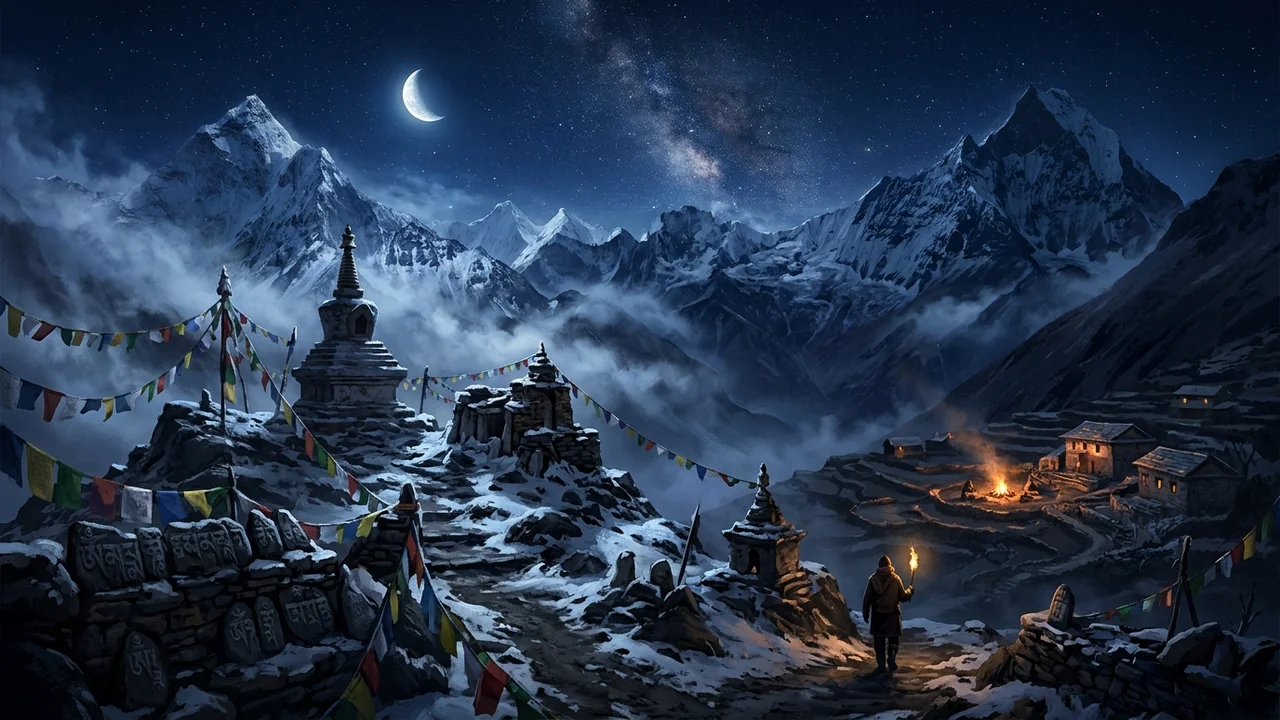
Nepali traditional belief systems comprise a rich tapestry of localized house spirits, ancestral ghosts, wilderness deities, and protective tantric entities. Across the Kathmandu Valley (काठमाडौं उपत्यका), the High Himalayas (हिमाल), and the southern Tarai (तराई) plains, these beings inhabit a shared worldview where the line between natural phenomena, psychological experiences, and spiritual manifestations remains fluid. Unlike standardized pantheons, supernatural beings in Nepalese folklore are distinguished by their specific domains, associated geographical locations, ritual remediations, and distinct iconographic markers.नेपाली परम्परागत विश्वासमा घरका स्थानीय आत्मा, पितृका भूत, वनका देवता र रक्षा गर्ने तान्त्रिक प्राणीको बाक्लो जालो छ। काठमाडौं उपत्यका, उच्च हिमाल र दक्षिणको तराईमा यी प्राणी एउटै विश्वदृष्टिमा बस्छन्, जहाँ प्राकृतिक घटना, मनका अनुभव र आध्यात्मिक देखाइको रेखा तरल रहन्छ। एउटै ढाँचाको देवमण्डलभन्दा फरक, नेपाली लोककथाका अलौकिक प्राणी आफ्नो क्षेत्र, जोडिएको भूगोल, विधिले गर्ने उपचार र छुट्टै रूपचिह्नले चिनिन्छन्।
A monastery keeps a scalp. A girl stands on a night road. A horn sounds at a shut door.गुम्बामा खप्पर राखिन्छ। रातको बाटोमा केटी उभिन्छिन्। बन्द ढोकामा सिङ बज्छ।
Introduction: Epistemology of the Unseenपरिचय: नदेखिएको कुराको ज्ञान
In Nepalese traditional belief systems, reality is understood through an epistemology where the seen and unseen realms exist in continuous dialogue. Rather than treating physical topography, psychological states, and spiritual entities as discrete categories, indigenous worldviews frame them as interconnected expressions of a singular, dynamic environment. Natural phenomena—such as sudden mountain storms, dense river fogs, or subterranean springs—are rarely perceived as purely mechanical processes; instead, they are experienced as the tangible presence or agency of localized non-human entities.नेपाली परम्परागत विश्वासमा देखिने र नदेखिने लोक निरन्तर कुराकानीमा छन् भनेर वास्तविकता बुझिन्छ। भौतिक भूगोल, मनको अवस्था र आध्यात्मिक प्राणीलाई छुट्टाछुट्टै कोटी नमानी, स्थानीय विश्वदृष्टिले तिनलाई एउटै चल्दो वातावरणका जोडिएका रूप मान्छ। अचानकको पहाडी आँधी, बाक्लो नदीको हुस्सु, वा जमिनमुनि निस्किने मुहान जस्ता प्राकृतिक घटनालाई केवल यान्त्रिक प्रक्रिया मात्र भनिँदैन। तिनलाई स्थानीय, मान्छे नभएका प्राणीको छाम्न सकिने उपस्थिति वा काम मानिन्छ।
This fluid ontology is directly reflected across the varied topography of Nepal. In the high-altitude Himalayan frontiers, harsh ecological conditions give rise to guardians and cryptid entities bound to sacred mountain passes and hidden valleys. In the middle hills, dense forests and ancient trees are governed by tutelary nature spirits, while the low-lying Tarai marshlands foster nocturnal phantoms tied to the landscape. Across these distinct geographical zones, spatial boundaries act as liminal thresholds where human consciousness and spiritual presence meet, shaping daily rituals, community protections, and local understandings of the sacred.यो तरल बुझाइ नेपालको फरक-फरक भूगोलमा सिधै देखिन्छ। उच्च हिमाली सिमानामा कठोर वातावरणले पवित्र भञ्ज्याङ र लुकेका उपत्यकामा बाँधिएका रक्षक र गूढ प्राणी जन्माउँछ। मध्य पहाडमा बाक्लो वन र पुराना रूख प्रकृतिका कुल-रक्षक आत्माले हेर्छन्। होचो तराईको सिमसारले भूगोलसँग बाँधिएका रात्री प्रेत हुर्काउँछ। यी छुट्टाछुट्टै भूगोलमा ठाउँको सीमा त्यो छेउको ठाउँ हो, जहाँ मानिसको चेत र आध्यात्मिक उपस्थिति भेटिन्छन्, र दैनिक विधि, समुदायको रक्षा, र पवित्र कुराको स्थानीय बुझाइ बन्छन्।
Nomenclature and Taxonomy of Spiritsआत्माहरूको नाम र वर्गीकरण
Divinities and Protective Guardians: Higher-order deities, boar-headed mother goddesses (Barāhī / बाराही), tutelary forest guardians (Airi / ऐरी, Ban Devī / वन देवी/Deutā / वन देवता), and element-bound entities (Nāga / नाग, Simīlā / सिमिला) who oversee specific natural domains, waterways, and settlement frontiers.देवता र रक्षा गर्ने रक्षक: माथिल्ला देवता, बँदेलको मुख भएका माता (बाराही), वनका कुल-रक्षक (ऐरी, वन देवी/देवता), र तत्त्वमा बाँधिएका प्राणी (नाग, सिमिला), जसले निश्चित प्राकृतिक क्षेत्र, पानीका बाटा र बस्तीको सिमाना हेर्छन्।
Tantric and Urban Protectors: Wrathful deities, sky-dancing wisdom entities (Ḍākinī / डाकिनी), skeletal attendants, and integrated demon-guardians (Kāla Bhairava / कालभैरव, Ākāśa Bhairava / आकाश भैरव, Lākhe / लाखे, Kawañ / कवं, Gurumāpā / गुरुमापा) that safeguard urban centers, sacred enclosures, and civic order.तान्त्रिक र सहरका रक्षक: उग्र देवता, आकाशमा नाच्ने ज्ञानका प्राणी (डाकिनी), कङ्काल सेवक, र जोडिएका राक्षस-रक्षक (कालभैरव, आकाश भैरव, लाखे, कवं, गुरुमापा), जसले सहरका केन्द्र, पवित्र घेरा र नागरिक व्यवस्था जोगाउँछन्।
Restless and Spectral Entities: Earthbound human souls, general spirits (Bhūt / भूत, Preta / प्रेत), nocturnal phantoms, low-crawling field spirits (Khuṭṭa-Kāṭuwā / खुट्टा-काटुवा), spectral shadows (Kālo Sāyo / कालो सायो), and erudite demons (Kichkandi / किचकन्नी, Chudel / चुडेल, Brahmarākṣasa / ब्रह्मराक्षस, Murkaṭṭā / मुरकट्टा, Rā̃ke / राँके) tied to traumatic deaths, liminal spaces, or unfulfilled desires.अशान्त र प्रेत प्राणी: जमिनमा बाँधिएका मानव आत्मा, सामान्य आत्मा (भूत, प्रेत), रातका प्रेत, होचो घस्रिने खेतका आत्मा (खुट्टा-काटुवा), छाया-प्रेत (कालो सायो), र विद्वान राक्षस (किचकन्नी, चुडेल, ब्रह्मराक्षस, मुरकट्टा, राँके), जो आघातपूर्ण मृत्यु, सीमाका ठाउँ, वा अपूरो इच्छासँग बाँधिएका छन्।
Domestic and Household Spirits: Entities intimately tied to domestic living spaces, controlling sleep phenomena, household wealth, and indoor environments (Khāyā / खाया, Khyāḥ / ख्याः).घरका आत्मा: घरेलु बसाइँसँग गाढा गाँसिएका प्राणी, जसले निद्राका घटना, घरको धन र भित्री वातावरण चलाउँछन् (खाया, ख्याः)।
Infancy Afflictions and Folk Ailments: Spiritual disturbances, non-physical conditions, and subtle energy imbalances affecting vulnerable infants and children, including persistent crying (Runche Lagnu / रुन्चे लाग्नु), the malefic gaze (Āṅkhā Lāgnu / आँखा लाग्नु), and sudden fright or soul-loss (Sāto jānu / सातो जानु / Tarsinu / तर्सिनु).शिशुका कष्ट र लोकका रोग: कमजोर शिशु र बालबालिकालाई लाग्ने आध्यात्मिक गडबडी, शारीरिक नभएका अवस्था, र मसिनो शक्तिको असन्तुलन। यसमा नरोकिने रुवाइ (रुन्चे लाग्नु), अशुभ दृष्टि (आँखा लाग्नु), र अचानकको तर्स वा सातो छुटिने (सातो जानु / तर्सिनु) पर्छन्।
Shamanic Initiators and Apotropaic Practitioners: Ancestral forest shamans (Van-Jhāṅkrī / वन-झाँक्री) and their fearsome consorts (Van-Jhāṅkrīnī / वन-झाँक्रिनी) who initiate human practitioners, alongside living female practitioners of malevolent sorcery (Bokṣī / बोक्सी) and nocturnal ascetics (Pherī / फेरी) who establish protective acoustic boundaries around homes.झाँक्री दीक्षा दिने र रक्षा विधि गर्ने: मानव साधकलाई दीक्षित गर्ने पितृ वन-झाँक्री (वन-झाँक्री) र उनकी डरलाग्दी पत्नी (वन-झाँक्रिनी), अशुभ टुना गर्ने जीवित स्त्री (बोक्सी), र घरको वरिपरि आवाजको रक्षा-घेरा खडा गर्ने रात्री साधु (फेरी)।
Wilderness Cryptids and Mountain Beings: Primordial creatures and ursine guardians (Yeti / येती) bound to high mountain passes and hidden sacred valleys (beyul / बेयुल), along with the Mirka (मिरका, or Migyur), a smaller, elusive ape-like wild man of the subalpine forests.वनका गूढ प्राणी र हिमालका जीव: उच्च भञ्ज्याङ र लुकेका पवित्र उपत्यका (बेयुल) मा बाँधिएका आदिम जीव र भालु-रक्षक (येती), र मिरका (मिग्युर पनि भनिने), उपहिमाली वनको सानो, लुक्ने, बाँदरजस्तो जङ्गली मानिस।
Esoteric Tantric Implements and Cremation Guardians: Esoteric tantric practices (Chöd / छोद्) and specialized ritual implements (Kāṅgliṅ / काङलिङ thighbone trumpets) interact with skeletal cremation guardians (Chitipati / चितिपती, Kaṅkāla / कङ्काल), martial spirits (Bīr / वीर), fierce pyre entities (Masānī / मसानी), and parasitic wasting attachments (Masāne Sukās / मसाने सुकास) to transcend mortal attachment and purify sacred spaces.गुप्त तान्त्रिक बाजा र मसानका रक्षक: गुप्त तान्त्रिक अभ्यास (छोद्) र विशेष विधि-बाजा (काङलिङ, तिघ्राको तुरही) कङ्काल मसान-रक्षक (चितिपती, कङ्काल), योद्धा आत्मा (वीर), उग्र चिता-प्राणी (मसानी), र टाँसिएर सुकाउने कष्ट (मसाने सुकास) सँग जोडिन्छन्, नश्वर आसक्ति नाघ्न र पवित्र ठाउँ शुद्ध पार्न।
Divinities and Protective Guardiansदेवता र रक्षा गर्ने रक्षक
Barāhīबाराही
The goddess Barāhī (बाराही, also written वाराही) is a formidable boar-headed mother goddess who occupies a pivotal position in both Hindu and Vajrayāna Buddhist traditions across Nepal. As the female counterpart (śakti / शक्ति) of Varāha (वराह), the boar avatar of Vishnu (विष्णु), she is enumerated among the Aṣṭamātṛkā (अष्टमातृका), the eight divine mother goddesses who safeguard the sacred perimeter of traditional settlements. Represented iconographically with the dark, fierce head of a wild boar, three eyes, and multiple arms wielding tantric weapons such as the skull cup (kapāla / कपाल), sword, and plow, Barāhī embodies the raw, unbridled protective power of the Earth.देवी बाराही (वाराही पनि लेखिन्छ) बँदेलको मुख भएकी शक्तिशाली माता हुन्। नेपालभरि हिन्दू र वज्रयान बौद्ध परम्परा दुवैमा उहाँको ठाउँ केन्द्रमा छ। उहाँ वराहकी शक्ति हुनुहुन्छ। वराह विष्णुको बँदेल अवतार हुन्। उहाँ अष्टमातृकामा गनिन्छिन्, परम्परागत बस्तीको पवित्र घेरा जोगाउने आठ दिव्य माता। जङ्गली बँदेलको कालो, उग्र टाउको, तीन आँखा, र कपाल, तरवार र हलो जस्ता तान्त्रिक हतियार समात्ने धेरै हात लिएर उहाँको रूप बन्छ। बाराही पृथ्वीको कच्चा, नबाँधिएको रक्षा-शक्ति हुन्।
In the urban layout of the Kathmandu Valley (काठमाडौं उपत्यका), Barāhī shrines are strategically situated at boundary thresholds, river confluences, and city perimeters to deflect spiritual pestilence and foreign incursions. One of her most famous pilgrimage centers is the Tāl Barāhī (ताल बाराही) temple, located on a small island in Phewa Lake (फेवा ताल), Pokhara (पोखरा). Phewa is not the lake on the valley page. Here, her sanctuary bridges the domain of mountain wilderness and aquatic space, drawing thousands of devotees who offer sacrifices and prayers for physical protection, agricultural fertility, and victory over adversaries. During major festivals like Dashain (दशैं), elaborate esoteric rites and animal sacrifices are conducted to propitiate her formidable energy and maintain cosmic balance.काठमाडौं उपत्यकाको सहरको बनोटमा बाराहीका थान सीमाको ढोका, नदीको दोभान र सहरको घेरामा राखिन्छन्, आध्यात्मिक महामारी र बाहिरी आक्रमण फर्काउन। उहाँका प्रसिद्ध तीर्थमध्ये पोखराको फेवा तालको एउटा सानो टापुमा रहेको ताल बाराही मन्दिर हो। फेवा उपत्यकाको पृष्ठको ताल होइन। यहाँ उहाँको थानले पहाडी वन र पानीको ठाउँ जोड्छ। हजारौँ भक्त शारीरिक रक्षा, खेतीको उर्वरता र शत्रुमाथि विजयका लागि बलि र प्रार्थना चढाउँछन्। दशैं जस्ता ठूला चाडमा उहाँको ठूलो शक्ति मनाउन र ब्रह्माण्डीय सन्तुलन राख्न विस्तृत गुप्त विधि र पशुबलि गरिन्छ।
Airiऐरी
In the rugged, forested landscapes of far-western Nepal—particularly across the Sudurpashchim province (सुदूरपश्चिम)—Airī (ऐरी) is venerated as a fierce, wild hunting deity and master of forest ecosystems. Belonging to the localized pantheon of territorial guardian spirits (such as Lāṭo Dhāmī / लाटो धामी and Kālīnāg / कालीनाग), Airī is envisioned as a towering, martial hunter who roams deep mountain ridges, dense pine forests, and uncultivated wilderness accompanied by a pack of divine, invisible hounds. His domain spans the high forest trails, where he exercises absolute authority over game animals, wild predators, and human travelers venturing into his territory.सुदूरपश्चिम प्रदेशका खाल्डा परेका, वनले ढाकिएका भूगोलमा ऐरी उग्र, जङ्गली सिकारी देवता र वनको मालिकका रूपमा पूजिन्छन्। लाटो धामी र कालीनाग जस्ता क्षेत्रीय रक्षक आत्माको स्थानीय मण्डलमा उहाँ पर्नुहुन्छ। ऐरी अग्लो, योद्धा शिकारीका रूपमा देखिनुहुन्छ। दैवी, नदेखिने शिकारी कुकुरको बथानसँगै गहिरो पहाडी डाँडा, बाक्लो सल्लाको वन र नजोतिएको जङ्गल डुल्नुहुन्छ। उच्च वनका गोरेटो उहाँको क्षेत्र हो। शिकारका जनावर, जङ्गली सिकारी जनावर र उहाँको क्षेत्रमा पस्ने यात्रीमाथि उहाँको पूरा अधिकार चल्छ।
Culturally, Airī plays a central role in shamanic traditions (dhāmī-jhāṅkrī / धामी-झाँक्री) and pastoral subsistence practices. Villagers and hunters erect stone cairns or small shrines (thān / थान) adorned with iron tridents, bow-and-arrow replicas, and red cloth strips along forest passes to seek his permission before harvesting timber or hunting. Neglecting to appease Airī before entering his realm is believed to cause severe disorientation, attacks by wild beasts, or sudden afflictions. Through shamanic trance rituals, possessed mediums (dhāmī / धामी) channel Airī’s voice to resolve community disputes, heal mysterious illnesses, and ensure the safety of livestock grazing on remote pastures. He is kept as a god of the forest, not as a ghost.संस्कृतिमा ऐरी धामी-झाँक्री परम्परा र गोठालाको जीविकामा केन्द्रमा हुनुहुन्छ। गाउँले र सिकारीले वनका भञ्ज्याङमा ढुङ्गाको थुप्रो वा सानो थान खडा गर्छन्। फलामको त्रिशूल, धनुष-बाणका नक्कल, र रातो कपडाका टुक्राले थान सिंगारिन्छ, काठ काट्नु वा शिकार गर्नुअघि उहाँको अनुमति माग्न। उहाँको क्षेत्रमा पस्नुअघि मनाएन भने दिशा कडा बिग्रन्छ, जङ्गली जनावरले आक्रमण गर्छ, वा एककासि रोग लाग्छ भनिन्छ। झाँक्री समाधिमा धामीले ऐरीको बोली चलाउँछन्, समुदायको झगडा मिलाउन, नबुझिने रोग निको पार्न, र टाढाको खर्कमा चर्ने पशु जोगाउन। उहाँलाई भूत होइन, वनका देवता मानेर राखिन्छ।
Ban Devī and Ban Deutāवन देवी र वन देवता
Throughout the middle hills and dense forest tracts of Nepal, Ban Devī (वन देवी) and Ban Deutā (वन देवता) represent the female and male tutelary guardians of the wilderness. Operating as the supreme spiritual custodians of uncultivated natural spaces, they exercise territorial sovereignty over wild animals, medicinal herbs, timber resources, and forest footpaths. Rural communities view the forest not as an unowned resource to be exploited at will, but as the private domain of these divine guardians, where human entry requires strict adherence to customary ecological protocols.नेपालका मध्य पहाड र बाक्लो वनमा वन देवी र वन देवता वनका स्त्री र पुरुष कुल-रक्षक हुन्। नजोतिएको प्राकृतिक ठाउँका सर्वोच्च आध्यात्मिक संरक्षक भएर उहाँहरूले जङ्गली जनावर, जडीबुटी, काठका स्रोत र वनका गोरेटोमा क्षेत्रीय अधिकार चलाउनुहुन्छ। ग्रामीण समुदायले वनलाई जथाभावी टिप्ने, कसैको नभएको स्रोत मान्दैन। त्यो यी दिव्य रक्षकको निजी क्षेत्र हो। मानिस पस्दा चलनको पारिस्थितिक नियम मान्नुपर्छ।
In folk belief, Ban Devī and Ban Deutā enforce a system of ecological governance over the forest’s flora and fauna. Wild beasts—ranging from leopards and bears to poisonous snakes—are regarded as their personal livestock or guardians. Hunters, woodcutters, and herbalists (bāidhya / बैद्य) must seek spiritual permission before harvesting resources. Indiscriminate felling of trees, hunting during breeding seasons, or overharvesting rare medicinal plants such as Yarsagumba (यार्सागुम्बा) or Sarpagandha (सर्पगन्धा) is believed to provoke immediate divine retribution, manifesting as sudden disorientation, attacks by wild predators, or persistent sickness.लोकविश्वासमा वन देवी र वन देवताले वनका बोट र जनावरमाथि पारिस्थितिक शासन चलाउनुहुन्छ। चितुवा र भालुदेखि विषालु सर्पसम्मका जङ्गली जनावर उहाँहरूका निजी पशु वा रक्षक मानिन्छन्। सिकारी, दाउरा काट्ने र बैद्यले स्रोत टिप्नुअघि आध्यात्मिक अनुमति माग्नुपर्छ। जथाभावी रूख ढाल्ने, बच्चा हुर्किने मौसममा शिकार गर्ने, वा यार्सागुम्बा र सर्पगन्धा जस्ता दुर्लभ जडीबुटी अति टिप्ने कामले तुरुन्तै दैवी दण्ड ल्याउँछ भनिन्छ। दिशा एककासि बिग्रन्छ, जङ्गली सिकारी जनावरले आक्रमण गर्छ, वा रोग लागिरहन्छ।
To maintain cosmic harmony and ensure safe passage, travelers, pastoral herders, and foragers make humble offerings at small shrines erected at forest frontiers or beneath ancient trees. These shrines (thān / थान) are usually simple stone cairns adorned with red vermilion powder (sindur / सिन्दूर), strips of red cloth, wild flowers, and unbaked clay lamps. Before entering deep woods, travelers place a small stone on the cairn or offer a fresh leaf as a gesture of respect, requesting protection from animal attacks, falling trees, and disorienting forest spirits.ब्रह्माण्डीय मेल राख्न र बाटो सुरक्षित बनाउन यात्री, गोठाला र वनका कुरा टिप्ने मानिसले वनको सिमाना वा पुराना रूखमुनि खडा गरिएका साना थानमा सादा चढाइ गर्छन्। थान प्रायः सादा ढुङ्गाको थुप्रो हो। रातो सिन्दूर, रातो कपडाका टुक्रा, जङ्गली फूल र नपोलेको माटाको दियोले सिंगारिन्छ। गहिरो वन पस्नुअघि यात्रीले थुप्रोमा सानो ढुङ्गा राख्छ, वा ताजा पात चढाउँछ, आदर देखाउन। जनावरको आक्रमण, ढल्ने रूख र दिशा बिगार्ने वनका आत्माबाट रक्षा माग्छ।
Seasonal communal rituals, known as Ban Pūjā (वन पूजा) or Sansāri Pūjā (संसारी पूजा), are performed at the start of agricultural cycles or timber-gathering seasons. Led by local healers or village elders, these ceremonies involve chanting invocations, offering rice, incense, and occasionally blood sacrifices or liberated poultry to appease the deities. Through these rituals, communities reinforce a sustainable ethic of resource management, recognizing that human survival relies directly on maintaining a respectful equilibrium with the guardians of the wild.मौसमी सामूहिक विधिलाई वन पूजा वा संसारी पूजा भनिन्छ। खेतीको चक्र वा काठ टिप्ने मौसम सुरु हुँदा गरिन्छ। स्थानीय उपचारक वा गाउँका जेष्ठाले अगुवाइ गर्छन्। बोलावट जपिन्छ, चामल र धूप चढाइन्छ, र कहिलेकाहीँ रक्तबलि वा छाडिएको कुखुरा चढाएर देवता मनाइन्छ। यी विधिले स्रोत चलाउने दिगो चाल बलियो पार्छ। मानिस बाँच्न जङ्गलका रक्षकसँगको आदरको सन्तुलन चाहिन्छ भन्ने कुरा समुदायले चिन्छ।
Nāgaनाग
In Nepalese mythic geography, the Nāga (नाग) are semi-divine serpent entities presiding over underground aquifers, natural springs, wells, ponds, and monsoon precipitation. The Kathmandu valley was a lake. Mañjuśrī (मञ्जुश्री) cut the gorge at Chobhar (चोभार), and the water ran out. One telling, the Svayambhū Purāṇa (स्वयम्भू पुराण), names that lake Nāgadaha (नागदह) and says serpent lords lived in it before the cut. The valley page says some houses tell it that way. The long telling stays there.नेपाली पौराणिक भूगोलमा नाग अर्धदैवी सर्प प्राणी हुन्। जमिनमुनिको पानी, प्राकृतिक मुहान, इनार, पोखरी र मनसुनको वर्षा उनीहरूले हेर्छन्। काठमाडौं उपत्यका ताल थियो। मञ्जुश्रीले चोभारमा खोंच काट्नुभयो, र पानी बग्यो। एउटा भनाइ, स्वयम्भू पुराण, त्यो ताललाई नागदह भन्छ, र काट्नुअघि तालमा सर्प स्वामी बस्थे भन्छ। उपत्यकाको पृष्ठले केही घरले यसरी भन्छन् भन्छ। लामो कथा त्यहीँ रहन्छ।
Nāgas are venerated as benevolent patrons of agriculture who ensure timely rainfall, yet they possess volatile temperaments; disturbing their aquatic or subterranean domains triggers severe droughts, skin afflictions, or destructive flooding. On the annual festival of Nag Panchami (नाग पञ्चमी), the bright fifth of Shrawan (साउन), householders paste woodblock-printed posters of serpent kings above main entrance doorways and offer milk, dubo grass (दूबो), and rice at sacred stone spouts (hiti / हिटी) to secure protection against lightning strikes and waterborne ailments.नागलाई खेतीका कल्याणकारी संरक्षक मानेर पूजिन्छ, जसले समयमै वर्षा दिन्छन्, तर स्वभाव चञ्चल हुन्छ। पानीको वा जमिनमुनिको क्षेत्र बिथोले कडा खडेरी, छालाको रोग, वा विनाशकारी बाढी आउँछ। वार्षिक चाड नाग पञ्चमी, साउनको शुक्ल पञ्चमी, मा घरले मुख्य ढोकामाथि काठको छापाका सर्प राजाका चित्र टाँस्छ, र हिटीमा दूध, दूबो र चामल चढाउँछ, चट्याङ र पानीबाट आउने रोगबाट जोगिन।
Simīlāसिमिला
The Simīlā (सिमिला) represents an arboreal nature spirit inhabiting prominent, ancient, or isolated trees—particularly banyan (bar / बर), peepal (pipaḷ / पीपल), and cottonwood (simal / सिमल) trees situated near crossroads or village boundaries. Unlike standardized pan-Hindu divinities, Simīlā are localized genius loci who guard the immediate ecological balance of the surrounding settlement.सिमिला रूखमा बस्ने प्राकृतिक आत्मा हो। प्रमुख, प्राचीन वा एक्लो रूखमा बस्छ, खास गरी दोबाटो वा गाउँको सिमाना नजिकका बर, पीपल र सिमल। सर्व-हिन्दू मानक देवताभन्दा फरक, सिमिला स्थानीय ठाउँका आत्मा हुन्, जसले वरपरको बस्तीको तत्कालीन पारिस्थितिक सन्तुलन हेर्छन्।
Villagers avoid felling, pruning, or defiling trees identified as Simīlā dwellings to prevent incurring sudden fevers or localized agricultural misfortunes. Periodic appeasement rituals (pūjā / पूजा) involving bloodless offerings of vermilion powder, rice grains, and unbaked clay lamps are performed at the tree base during agricultural transitions to maintain harmonious relations with the entity.गाउँलेले सिमिलाको बास भनिएका रूख काट्दैनन्, हाँगा छाँट्दैनन्, र अपवित्र पार्दैनन्, ताकि एककासि ज्वरो वा स्थानीय खेतीको बिपत्ति नआओस्। खेतीको ऋतु फेरिँदा रूखको फेदमा समय-समयको पूजा गरिन्छ। सिन्दूर, चामलका दाना र नपोलेको माटाको दियो जस्ता रक्तहीन चढाइले प्राणीसँगको मेल कायम राख्छ।
Tantric and Urban Protectorsतान्त्रिक र सहरका रक्षक
Ḍākinīडाकिनी
In Tantric and Vajrayāna Buddhist traditions, the Ḍākinī (डाकिनी / མཁའ་འགྲོ་མ)—translating literally to “sky-dancer” or “she who traverses space”—occupies a supreme position as the feminine embodiment of enlightened energy, transcendent wisdom (prajñā / प्रज्ञा), and the unconditioned nature of reality (śūnyatā / शून्यता). Rather than being viewed as worldly spirits or demonesses, Ḍākinīs represent dynamic spiritual catalysts essential for removing obstacles, safeguarding secret teachings (terma / གཏེར་མ), and granting spiritual accomplishments (siddhi / सिद्धि) to advanced practitioners along the esoteric path.तान्त्रिक र वज्रयान बौद्ध परम्परामा डाकिनी (མཁའ་འགྲོ་མ) को शाब्दिक अर्थ “आकाशमा नाच्ने” वा “आकाश छिचोल्ने” हो। उनी प्रबुद्ध शक्तिको स्त्री रूप, पारलौकिक ज्ञान (प्रज्ञा), र वास्तविकताको अशर्त स्वभाव (शून्यता) का सर्वोच्च स्थानमा बस्छिन्। सांसारिक आत्मा वा राक्षसी स्त्रीका रूपमा होइन। डाकिनी चल्दा आध्यात्मिक उत्प्रेरक हुन्, बाधा हटाउन, गुप्त शिक्षा (तेर्मा, གཏེར་མ) जोगाउन, र अघि बढेका साधकलाई सिद्धि दिन।
Iconographically, Ḍākinīs are depicted as fiercely radiant, youthful entities poised in energetic, dancing postures atop corpses or prostrate ego-figures, symbolizing the absolute triumph over dualistic delusion and mortal attachment. They are traditionally portrayed semi-nude or adorned with bone ornaments and skull crowns, representing complete freedom from worldly conventions and emotional obscurations. In their right hands, they typically brandish a curved flaying knife (kartikā / कर्तरिका) to sever ego-clinging and ignorance, while their left hands hold a skull cup (kapāla / कपाल) filled with nectar or blood, signifying the transmutation of poisonous afflictions into the nectar of primordial awareness.रूपमा डाकिनी उग्र तेज भएकी युवा प्राणीका रूपमा देखिन्छिन्। लाश वा ढलेको अहम्-आकृतिमाथि ऊर्जावान् नाचको मुद्रामा उभिन्छिन्। यो द्वैध भ्रम र नश्वर आसक्तिमाथिको पूरा विजयको चिह्न हो। परम्पराले उनलाई अधनग्न, वा हाडका गहना र खप्परको मुकुट लगाएको देखाउँछ। यो सांसारिक चलन र मनका आवरणबाट पूरा मुक्तिको रूप हो। दाहिने हातमा प्रायः बाङ्गो छाला काट्ने छुरा (कर्तरिका) हुन्छ, अहम्को टाँसाइ र अज्ञान काट्न। देब्रे हातमा अमृत वा रगतले भरिएको कपाल हुन्छ, विषालु क्लेशलाई आदि चेतनाको अमृतमा बदल्ने चिह्न।
At an esoteric level, the Ḍākinī operates across four distinct manifestation realms: outer, inner, secret, and ultimate. In her outer form, she manifests as a physical female teacher or spiritual companion (karmamudrā / कर्ममुद्रा); inwardly, she represents the subtle energy channels (nāḍī / नाडी), vital winds (prāṇa / प्राण), and subtle drops (bindu / बिन्दु) within the practitioner’s psycho-physical body; secretly, she arises as the wrathful or peaceful meditational deity (yi-dam / यि-दम); and ultimately, she is the unobstructed, primordial clarity of the mind itself (dharmakāya / धर्मकाय). Through tantric meditation and Chöd practices, Ḍākinīs catalyze the transformation of mental obscurations—such as anger, attachment, and ignorance—into the five transcendent wisdoms.गुप्त तहमा डाकिनी चार छुट्टाछुट्टै देखा पर्ने लोकमा चल्छिन्: बाहिर, भित्र, गुप्त, र अन्तिम। बाहिरी रूपमा उनी शारीरिक स्त्री गुरु वा आध्यात्मिक साथी (कर्ममुद्रा) भएर देखिन्छिन्। भित्री रूपमा उनी साधकको मन-शरीरका मसिना नाडी, प्राण र बिन्दु हुन्। गुप्त रूपमा उनी उग्र वा शान्त ध्यान-देवता (यि-दम) भएर उठ्छिन्। अन्तिम रूपमा उनी मनकै नरोकिएको आदि स्पष्टता (धर्मकाय) हुन्। तान्त्रिक ध्यान र छोद् अभ्यासबाट डाकिनीले रिस, आसक्ति र अज्ञान जस्ता मनका आवरणलाई पाँच पारलौकिक ज्ञानमा बदल्छिन्।
Furthermore, Ḍākinīs serve as essential guardians and spiritual guides for consciousness navigating liminal thresholds, including the intermediate state between death and rebirth (bardo / བར་དོ). In Himalayan death rituals and bardo guidebooks, Ḍākinīs appear in peaceful and wrathful aspects to strip away subtle attachments, dissolve phantom projections of the deceased person’s karmic impressions, and guide the liberated mind-stream toward pure Buddha realms or favorable rebirths, securing the continuity of awakening across esoteric domains.डाकिनी सीमाका ठाउँ काट्ने चेतनाका अनिवार्य रक्षक र आध्यात्मिक बाटो देखाउने हुन्, मृत्यु र पुनर्जन्मबीचको बीचको अवस्था (बार्दो, བར་དོ) समेत। हिमाली मृत्यु-विधि र बार्दोका पुस्तकमा डाकिनी शान्त र उग्र रूपमा देखा पर्छिन्, मसिनो आसक्ति खोस्न, मरेको व्यक्तिको कर्म-छापका प्रेत प्रक्षेपण विघटन गर्न, र मुक्त मन-धारालाई शुद्ध बुद्ध लोक वा शुभ पुनर्जन्मतिर लैजान। यसले गुप्त क्षेत्रमा बोधको निरन्तरता राख्छ।
Lākheलाखे
In Newar (नेवार) mythology and urban folk traditions, the Lākhe (लाखे) occupies a singular space as a terrifying, carnivorous forest demon who transformed into an indispensable, protective urban guardian. According to foundational oral histories, Lākhes originally inhabited the dense, uncultivated wilderness surrounding the Kathmandu Valley, preying on travelers and cattle. Through divine intervention, tantric bindings, or emotional bonds with human communities, these fearsome entities crossed the threshold from wild chaos to civil order, pledging their immense strength to defend urban courtyard settlements against epidemics, negative spiritual forces, and external invasions.नेवार कथा र सहरका लोक परम्परामा लाखे एउटा छुट्टै ठाउँ ओगट्छ। ऊ डरलाग्दो, मांसाहारी वन-राक्षस हो, जो अपरिहार्य, रक्षा गर्ने सहरको रक्षक बन्यो। आधारभूत मौखिक इतिहासले भन्छ, लाखे सुरुमा काठमाडौं उपत्यका वरिपरिको बाक्लो, नजोतिएको जङ्गलमा बस्थे, यात्री र गाईवस्तुको शिकार गर्थे। दैवी हस्तक्षेप, तान्त्रिक बन्धन, वा मानव समुदायसँगको भावको नाताले यी डरलाग्दा प्राणी जङ्गली अस्तव्यस्तताबाट नागरिक व्यवस्थातिर छिर्ए। महामारी, नकारात्मक आध्यात्मिक शक्ति र बाहिरी आक्रमणबाट सहरका चोक-बस्ती जोगाउन आफ्नो ठूलो बल दिने बचन दिए।
The most celebrated of these protective demons is the Majipā Lākhe (मजिपा लाखे) of Kathmandu (काठमाडौं), widely revered as the peace-loving demon king of the ancient city. According to Newar legends, the Majipā Lākhe fell deeply in love with a young human girl from the city. To live alongside her within the urban precinct, he agreed to abide by strict civic rules, forsaking human flesh and accepting a guardian role. This transition established a unique, affectionate bond with the city’s youth. Often accompanied in street processions by a small, nimble child attendant known as the Jhayaliā (झ्यालिया) or Jhyālincha (झ्यालिंचा), the Majipā Lākhe engages in playful teasing during festivals, symbolizing the nurturing and protective stance the monster adopts toward children.यी रक्षा गर्ने राक्षसमध्ये सबैभन्दा चर्चित काठमाडौंको मजिपा लाखे हो, पुरानो सहरको शान्ति मन पराउने राक्षस राजाका रूपमा व्यापक रूपमा पूजिएको। नेवार कथाले भन्छ, मजिपा लाखे सहरकी युवा केटीमा गहिरो मायामा परे। सहरको घेराभित्र उनीसँगै बस्न उनले कडा नागरिक नियम माने, मानवी मासु छाडे, र रक्षकको भूमिका लिए। यो मोडले सहरका युवासँग एउटा छुट्टै, मायालु नाता खडा गर्यो। सडकको जुलुसमा प्रायः झ्यालिया वा झ्यालिंचा भनिने सानो, फुर्तिलो बाल सेवक साथमा हुन्छ। चाडमा मजिपा लाखेले खेलेर जिस्क्याउँछ। यो राक्षसले बच्चातिर लिने हुर्काउने र रक्षा गर्ने मुद्राको चिह्न हो।
In contrast to the gentle guardian demeanor of Kathmandu’s demon king, the ancient city of Bhaktapur (भक्तपुर) preserves exceptionally fierce and martial Lākhe traditions. Bhaktapur’s dance variations, such as the famous Pulikī Lākhe (पुलिकी लाखे) and local neighbourhood-specific Lākhes, emphasize raw, untamed energy and aggressive martial prowess. During major seasonal celebrations like Indra Jātrā (इन्द्रजात्रा) in autumn and Bisket Jātrā (बिस्केट जात्रा) in spring, these masked performers charge through narrow brick alleys, executing thunderous jumps and sweeps to drive evil spirits beyond the city boundaries.काठमाडौंको राक्षस राजाको नरम रक्षक स्वभावभन्दा फरक, भक्तपुरको पुरानो सहरले असाधारण उग्र र योद्धा लाखे परम्परा जोगाएको छ। भक्तपुरका नाचका रूप, जस्तै चर्चित पुलिकी लाखे र टोल-टोलका लाखे, कच्चा, नबाँधिएको ऊर्जा र आक्रामक योद्धा सीपमा जोड दिन्छन्। शरदको इन्द्रजात्रा र वसन्तको बिस्केट जात्रा जस्ता ठूला मौसमी चाडमा यी मुकुण्डोधारी साँघुरा इँटाका गल्लीमा दगुर्छन्। गर्जनका उफ्राइ र झम्टाइले अशुभ आत्मालाई सहरको सिमानाबाहिर धपाउँछन्।
The visual appearance and ritual accoutrements of the Lākhe are designed to induce awe and spiritual purification. Performers wear heavy, hand-painted papier-mâché or wooden masks featuring bulging eyes, protruding fangs, flared nostrils, and a third eye indicating heightened tantric perception. Cascading from the mask is a long, wild mane of coarse yak hair, traditionally dyed brilliant crimson or deep red. Dancers are clad in voluminous multi-colored silken tunics and carry heavy brass anklets (gūṅgurū / गुँगुरु) that clang rhythmically with every step. Guided by complex, syncopated drum rhythms played on the traditional Dhimay (धिमे) drum and accompanied by brass cymbals (bhuṣyāḥ / भुस्याः), the trance-like, acrobatic dance purifies sacred urban geography, renewing the ancient covenant between human settlements and the wild spirits of the valley. The festival page tells this dance as well.लाखेको देखिने रूप र विधिको साजसज्जा आश्चर्य र आध्यात्मिक शुद्धिका लागि बनाइएको हो। नाच्नेहरूले भारी, हातले रँगिएका कागज वा काठका मुकुण्डो लगाउँछन्। फुलेका आँखा, अगाडि निस्केका दाँत, फिँजिएका नाक, र तेस्रो आँखा हुन्छ, जसले बढेको तान्त्रिक दृष्टि देखाउँछ। मुकुण्डोबाट मोटो याकको रौंको लामो, जङ्गली जुरो झर्छ, परम्पराले चम्किलो रातो वा गाढा रातो रँगिएको। नाच्नेहरूले फुकेका बहुरङ्गी रेशमी अंगरखा लगाउँछन्, र प्रत्येक कदममा ताल मिलाएर बज्ने गह्रौँ पित्तलका गुँगुरु बोक्छन्। परम्परागत धिमेको जटिल, ताल तोड्ने ढोल र पित्तलका भुस्याःको साथमा समाधि जस्तो, कलाबाजीको नाचले पवित्र सहरको भूगोल शुद्ध पार्छ। यसले मानव बस्ती र उपत्यकाका जङ्गली आत्माबीचको पुरानो करार फेरि नवीकरण गर्छ। चाडको पृष्ठले पनि यही नाच भन्छ।
Kāla Bhairavaकालभैरव
At the pinnacle of the tantric wrathful hierarchy stands Kāla Bhairava (कालभैरव), the terrifying manifestation of Śiva (शिव) associated with ultimate cosmic time, destruction, and supreme urban guardianship. Depicted iconographically with bulging bloodshot eyes, a gaping mouth revealing sharp fangs, a garland of severed human heads, a skull cup (kapāla / कपाल), and multiple arms wielding lethal tantric weaponry, his colossal open-air stone relief at Kathmandu Durbar Square (हनुमानढोका) serves as a central locus of divine authority and civic protection. His supreme wrathful nature is not merely destructive, but serves as an absolute apotropaic force, warding off demonic threats, epidemics, and cosmic disorder from the heart of the city.तान्त्रिक उग्र क्रमको शिखरमा कालभैरव हुनुहुन्छ, शिवको डरलाग्दो रूप, जो अन्तिम ब्रह्माण्डीय समय, संहार र सहरको सर्वोच्च रक्षासँग जोडिनुहुन्छ। फुलेका रगतले राता आँखा, तिखो दाँत देखाउने बाएको मुख, काटिएका मानवी टाउकाको माला, कपाल, र प्राण लिने तान्त्रिक हतियार समात्ने धेरै हात लिएर उहाँको रूप बन्छ। हनुमानढोकाको खुला आकाशमुनि रहेको विशाल शिला दैवी अधिकार र नागरिक रक्षाको केन्द्र हो। उहाँको सर्वोच्च उग्र स्वभाव केवल संहार होइन। यो पूरा रक्षा-शक्ति हो, जसले सहरको मुटुबाट राक्षसी खतरा, महामारी र ब्रह्माण्डीय अस्तव्यस्तता धपाउँछ।
Historically, Kāla Bhairava functioned as the ultimate legal arbiter within the Newar governance system. Oaths were sworn directly before his formidable image under the deeply held belief that bearing false witness or committing perjury in his presence would provoke immediate fatal hemorrhaging or divine retribution, underscoring his role as the unyielding guardian of truth, justice, and civic integrity.ऐतिहासिक रूपमा कालभैरव नेवार शासन व्यवस्थाभित्र कानुनको अन्तिम निर्णायक हुनुहुन्थ्यो। शपथ उहाँको डरलाग्दो मूर्तिअघि नै खाइन्थ्यो। उहाँको सामुन्ने झुटो साक्षी वा झुटो शपथ दिए तुरुन्तै प्राण लिने रक्तस्राव वा दैवी दण्ड हुन्छ भन्ने गहिरो विश्वास थियो। यसले उहाँलाई सत्य, न्याय र नागरिक इमानको नझुक्ने रक्षकका रूपमा देखाउँछ।
Ākāśa Bhairavaआकाश भैरव
In Newar traditional folklore and urban mythos, Ākāśa Bhairava (आकाश भैरव)—revered as the “Sky God” or the Lord of the Firmament—occupies a vital position as an urban protector. Uniquely enshrined at Indrachowk (इन्द्रचोक) in Kathmandu, his idol consists of a colossal, fearsome mask rather than a full bodily icon, symbolizing his pervasive presence looking down from the cosmos to protect the human realm below.नेवार परम्परागत लोककथा र सहरको कथामा आकाश भैरव, “आकाशका देवता” वा आकाशका स्वामीका रूपमा पूजिएका, सहरको रक्षकका रूपमा अनिवार्य ठाउँमा हुनुहुन्छ। काठमाडौंको इन्द्रचोकमा उहाँको थान छुट्टै छ। मूर्ति पूरा शरीरको होइन, विशाल, डरलाग्दो मुकुण्डो हो। यसले माथि ब्रह्माण्डबाट तलको मानव लोक हेरेर रक्षा गर्ने उहाँको व्यापक उपस्थिति देखाउँछ।
According to popular oral traditions, Ākāśa Bhairava is identified with the legendary Kirat (किरात) king Yalamber (यलम्बर), who traveled to witness the Mahabharata (महाभारत) war. During the grand annual festival of Indra Jātrā (इन्द्रजात्रा), his massive mask is taken out of the temple and placed on a high pedestal in the city square. Continuously offered rice beer (Arak / अरक / Thwon / थ्वँ) through a tube protruding from his mouth, Ākāśa Bhairava grants blessings of health, security, and prosperity to the city, standing vigil alongside Kāla Bhairava as an indispensable pillar of civic protection.लोकप्रिय मौखिक परम्पराले आकाश भैरवलाई किरात राजा यलम्बरसँग चिनाउँछ, जसले महाभारत युद्ध हेर्न यात्रा गरे भनिन्छ। वार्षिक ठूलो चाड इन्द्रजात्रामा उहाँको विशाल मुकुण्डो मन्दिरबाट निकालेर सहरको चोकको अग्लो आसनमा राखिन्छ। मुखबाट निस्केको नलीबाट निरन्तर चामलको जाँड (अरक / थ्वँ) चढाइन्छ। आकाश भैरवले सहरलाई स्वास्थ्य, सुरक्षा र समृद्धिको आशीर्वाद दिनुहुन्छ, र कालभैरवसँगै नागरिक रक्षाको अपरिहार्य खम्बा भएर पहरा बस्नुहुन्छ।
Gurumāpāगुरुमापा
In Newar mythology, Gurumāpā (गुरुमापा) was a terrifying cannibalistic giant who abducted children from urban courtyard settlements in Kathmandu.नेवार कथामा गुरुमापा डरलाग्दो नरभक्षी दानव थिए, जसले काठमाडौंका सहरका चोक-बस्तीबाट बालबालिका लग्थे।
The merchant Keśacandra (केशचन्द्र) mediated a pact with the demon at the Itum Bāhāḥ (इतुम् बाहाल) courtyard. In exchange for residing in the open field of Tuṇḍikhel (टुँडिखेल) and receiving an annual feast of boiled rice and buffalo meat, Gurumāpā agreed to cease preying on the city’s children.व्यापारी केशचन्द्रले इतुम् बाहालको चोकमा दानवसँग सम्झौता गराए। टुँडिखेलको खुला मैदानमा बस्ने, र वर्षको एक पटक उसिनेको भात र भैंसीको मासुको भोज पाउने सर्तमा गुरुमापाले सहरका बालबालिकालाई सिकार गर्न छाड्ने मन्जुर गरे।
To this day, on the new moon that ends Chaitra (चैत), after Rāma Navamī (राम नवमी), horses gallop across Tuṇḍikhel during Ghode Jātrā (घोडे जात्रा) to trample the earth, so Gurumāpā stays under the ground. The army run is the public form of that gallop.आजसम्म पनि चैत सकिने औंसीमा, राम नवमीपछि, घोडे जात्रामा घोडा टुँडिखेल काटेर दौडन्छन्, जमिन कुल्चन, ताकि गुरुमापा जमिनमुनि रहून्। सेनाको दौड त्यही दौडको सार्वजनिक रूप हो।
Kawañकवं
The Kawañ (कवं) is a grinning skeletal attendant intimately connected with Bhairava (भैरव) and the mother goddesses (Aṣṭamātṛkā / अष्टमातृका). Far from being purely terrifying, the Kawañ serves a vital protective function within Newar sacred urban geography, acting as a spiritual guardian of temple enclosures and boundary thresholds.कवं मुस्कुराउने कङ्काल सेवक हो, भैरव र माताहरू (अष्टमातृका) सँग गाँसिएको। केवल डरलाग्दो मात्र होइन। नेवार पवित्र सहरको भूगोलमा कवंले मन्दिरको घेरा र सीमाको ढोकाको आध्यात्मिक रक्षकको काम गर्छ।
During Indra Jātrā (इन्द्रजात्रा), ritual dancers perform the Kawañ Pyākhan (कवं प्याखं) wearing bone-patterned costumes to cleanse urban centers of lingering pestilence.इन्द्रजात्रामा विधि-नाच्नेहरूले हाडको ढाँचाको पोसाक लगाएर कवं प्याखं गर्छन्, जसले सहरका केन्द्रबाट अडिएको महामारी सफा गर्छ।
Restless and Spectral Entitiesअशान्त र प्रेत प्राणी
Bhūt and Pretaभूत र प्रेत
In Nepalese cosmology, Bhūt (भूत) and Preta (प्रेत) denote general classes of earthbound human souls and restless wandering spirits. A soul typically transitions into a Bhūt or Preta following an untimely death, sudden trauma, unfulfilled intense desires, or the improper execution of mandatory mortuary rites (kriyā / क्रिया). These spirits linger near liminal, unbound spatial locations such as remote crossroads, abandoned structures, dark forest edges, and riverbank cremation grounds (masān / मसान).नेपाली विश्वदृष्टिमा भूत र प्रेत जमिनमा बाँधिएका मानव आत्मा र अशान्त घुम्ने आत्माका सामान्य वर्ग हुन्। अकाल मृत्यु, अचानकको आघात, अपूरो तीव्र इच्छा, वा अनिवार्य अन्त्येष्टि (क्रिया) अधुरो हुँदा आत्मा प्रायः भूत वा प्रेत बन्छ। यी आत्मा टाढाको दोबाटो, छाडिएका घर, अँध्यारो वनको छेउ, र नदी किनारको मसान जस्ता नबाँधिएका सीमाका ठाउँमा अड्किन्छन्।
Pretas are depicted as tormented entities trapped in a state of severe suffering, driven by insatiable hunger and agonizing thirst due to subtle karmic afflictions and tiny, needle-sized throats that prevent nourishment. Bhūts, in contrast, manifest as subtle disembodied presence causing sudden drops in ambient temperature, oppressive chills, disorientation, or localized domestic disturbances. To pacify these restless spirits and facilitate their eventual transition to the ancestral realm (Pitr Loka / पितृलोक), families conduct annual Śrāddha (श्राद्ध) rites, offer consecrated rice balls (piṇḍa / पिण्ड), deploy protective amulets, and engage shamanic practitioners for spatial cleansings.प्रेत कडा दुःखमा अड्किएका पीडित प्राणीका रूपमा देखिन्छन्। मसिनो कर्म-क्लेश र सियो जत्रो घाँटीले पोषण रोक्छ, त्यसैले नअघाउने भोक र पिरोलिने तृषाले चलाउँछ। भूत भने मसिनो निराकार उपस्थिति भएर देखिन्छ, वरिपरिको तापक्रम एककासि घटाउने, दबाइको चिसो, दिशाबिगार, वा घरको स्थानीय गडबडी ल्याउने। यी अशान्त आत्मालाई मनाउन र पितृलोकतिर पठाउन परिवारले वार्षिक श्राद्ध गर्छ, पवित्र पिण्ड चढाउँछ, रक्षाको जन्तर लगाउँछ, र ठाउँ सफा गर्न झाँक्री बोलाउँछ।
Kichkandiकिचकन्या
The Kichkandi (किचकन्या)—often referred to as Kichkanyā, and also written किचकन्नी and किच्कन्डी—is a legendary restless spectral entity originating from a woman who died an untimely, violent, or unfulfilled death, particularly during childbirth or pregnancy. Bound to the physical plane by intense sorrow and unresolved attachments, she haunts liminal spatial boundaries such as solitary crossroads, riverbank cremation grounds, old wooden bridges, and overgrown forest trails late at night.किचकन्या, जसलाई किचकन्नी र किच्कन्डी पनि लेखिन्छ, अशान्त प्रेत हो। अकाल, हिंसात्मक वा अपूरो मृत्यु भएकी स्त्रीबाट उठ्छिन्, खास गरी सुत्केरी वा गर्भावस्थामा। कडा शोक र नटुटेको आसक्तिले उनी भौतिक लोकमा अड्किन्छिन्। ढिलो रातमा एक्लो दोबाटो, नदी किनारको मसान, पुरानो काठको पुल र झाडीले ढाकेका वनका बाटो जस्ता सीमाका ठाउँमा डुल्छिन्।
Iconographically, the Kichkandi appears as an extraordinarily beautiful young woman draped in shimmering white or red bridal garments, calling out with seductive laments to lure lone male travelers. However, her true spectral form is revealed by two distinct physical markers: her feet are completely inverted—with heels facing forward and toes pointing backward—and she casts no shadow under moonlight. Once an unsuspecting traveler is enticed, the Kichkandi siphons their vital life force (ojas / ओजस्), leaving the victim severely debilitated, feverish, or suffering from gradual mental decay.रूपमा किचकन्या असाधारण सुन्दर युवती देखिन्छिन्, चम्किने सेतो वा रातो दुलहीको लुगा लगाएर। एक्लै हिँड्ने पुरुष यात्रीलाई लोभ्याउन मोहिनी विलापले बोलाउँछिन्। साँचो प्रेत रूप दुई शारीरिक चिह्नले खुल्छ। खुट्टा पूरै उल्टा हुन्छन्, कुर्कुच्चा अगाडि र औंला पछाडि। जूनको उज्यालोमा उनको छाया पर्दैन। अनजान यात्री लोभिएपछि किचकन्याले जीवनशक्ति (ओजस्) तान्छिन्। पीडित कडा दुर्बल, ज्वरोले ग्रस्त, वा बिस्तारै मन क्षय हुँदै जान्छ।
To protect against or liberate a Kichkandi, families must ensure proper mortuary rites (kriyā / क्रिया) and funerary offerings (piṇḍa / पिण्ड) are meticulously performed to lay her troubled soul to rest. Travelers protect themselves on lonely night roads by carrying iron blades, reciting apotropaic protective mantras, and inspecting the shadow and feet of any mysterious nocturnal figure before approaching.किचकन्याबाट जोगिन वा उनलाई छुटाउन परिवारले क्रिया र पिण्ड मिहिनतासाथ पूरा गर्नुपर्छ, उनको अशान्त आत्मालाई बसाउन। एक्लो रातको बाटोमा यात्रीले फलामको हतियार बोक्छन्, रक्षा मन्त्र जप्छन्, र नजिक जानुअघि कुनै रहस्यमय रात्री आकृतिको छाया र खुट्टा हेर्छन्।
Chudel and Khaisचुडेल र खैस्
In the folk belief systems of the southern Tarai plains and rural middle hills, the Chudel (चुडेल) and Khais (खैस्) represent deeply feared classes of female spectral entities arising from women who passed away during pregnancy, labor, or within the sacred post-partum confinement period (sutkerī / सुत्केरी). Tormented by unfulfilled maternal instincts and tragic loss, these spirits wander near village boundaries, dense jungle edges, and agricultural fields on dark nights.दक्षिण तराई र ग्रामीण मध्य पहाडका लोकविश्वासमा चुडेल र खैस् डरलाग्दा स्त्री प्रेतका वर्ग हुन्। गर्भावस्था, प्रसव, वा पवित्र सुत्केरीको बसाइभित्र मरेकी स्त्रीबाट उठ्छन्। अपूरो मातृ वृत्ति र दुःखद क्षतिले पीडित भएर यी आत्मा अँध्यारो रातमा गाउँको सिमाना, बाक्लो जङ्गलको छेउ र खेतमा डुल्छन्।
A Chudel possesses shape-shifting abilities, transforming from a haggard phantom with pendulous breasts, wild tangled hair, and inverted feet into an enchanting damsel to entice young men and male relatives. Once a victim falls under her influence, she inflicts wasting sickness, severe anemia, and sudden high fevers. The Khais, specifically feared in the western Tarai regions, is regarded as a localized, aggressive variant that targets newborn infants and young fathers, projecting invisible spiritual arrows or malefic sickness across village thresholds.चुडेल रूप फेर्न सक्छिन्। झुन्डिएका स्तन, जङ्गली अल्झेका कपाल र उल्टा खुट्टा भएकी शिथिल प्रेतबाट युवक र पुरुष नातेदार लोभ्याउने मोहिनी केटी बन्छिन्। पीडित उनको प्रभावमा परेपछि सुक्ने रोग, कडा रक्तअल्पता र एककासि उच्च ज्वरो लाग्छ। खैस् पश्चिम तराईमा विशेष डर मानिन्छ। त्यो स्थानीय, आक्रामक रूप हो, जसले नवजात शिशु र युवा बाबुलाई निशाना बनाउँछ, र गाउँको ढोका काटेर नदेखिने आध्यात्मिक बाण वा अशुभ रोग छोड्छ।
Traditional apotropaic practices are employed at the time of burial or cremation to prevent a deceased mother’s spirit from rising as a Chudel. Priests and elders place mustard seeds along the funerary pathway, drive iron nails into the threshold of the home, or bind protective iron amulets and black threads around family members. Shamanic practitioners (jhāṅkrī / झाँक्री) conduct counter-exorcisms using mustard oil lamps, chanting protective spells (phūknu / फूक्नु), and making ritual offerings at crossroads to placate the entity and safeguard the community.मरेकी आमाको आत्मा चुडेल भएर नउठोस् भनेर गाड्ने वा जलाउने बेला परम्परागत रक्षा विधि गरिन्छ। पुजारी र जेष्ठाले अन्त्येष्टिको बाटोमा तोरीका दाना राख्छन्, घरको चौकाथमा फलामका किला ठोक्छन्, अथवा परिवारका सदस्यमा रक्षाको फलामको जन्तर र कालो धागो बाँध्छन्। झाँक्रीले तोरीको तेलको दियो, फूक्नु, र दोबाटोको विधि-चढाइले उल्टो विधि गर्छन्, प्राणी मनाउन र समुदाय जोगाउन।
Brahmarākṣasaब्रह्मराक्षस
The Brahmarākṣasa (ब्रह्मराक्षस) represents a formidable class of demonic entity originating from a learned Brahmin, scholar, or priest who misused their sacred knowledge, died in a state of unfulfilled intellectual pride, or suffered an improper death before completing essential spiritual duties. Possessing fierce intellect along with immense magical power, a Brahmarākṣasa haunts ancient banyan trees, ruined temples, and abandoned scholarly centers.ब्रह्मराक्षस शक्तिशाली राक्षसी वर्ग हो। यो त्यस्तो विद्वान ब्राह्मण, पण्डित वा पुजारीबाट उठ्छ, जसले पवित्र ज्ञानको दुरुपयोग गर्यो, अपूरो बौद्धिक गर्वमा मर्यो, अथवा अनिवार्य आध्यात्मिक कर्तव्य पूरा हुनुअघि अनुचित मृत्यु भयो। तीखो बुद्धि र ठूलो जादु शक्तिसहित ब्रह्मराक्षस प्राचीन वर, भत्किएका मन्दिर र छाडिएका विद्याकेन्द्रमा बस्छ।
Unlike ordinary restless spirits, this entity manifests possessing erudite speech and can recite complex Vedic mantras or scriptural verses in reverse. Travelers and scholars who encounter a Brahmarākṣasa are challenged to intellectual debates or scriptural riddles; failing to answer correctly results in severe mental affliction or physical harm. Remediation requires elaborate Vedic expiatory rites (prāyaścitta / प्रायश्चित्त) and specialized tantric rituals performed by high-ranking priests to liberate the tormented scholar’s soul.साधारण अशान्त प्रेतभन्दा फरक, यो प्राणी विद्वान बोली लिएर देखा पर्छ, र जटिल वैदिक मन्त्र वा शास्त्रका पङ्क्ति उल्टो पढ्न सक्छ। भेट्ने यात्री र पण्डितलाई बौद्धिक बहस वा शास्त्रको पहेली दिइन्छ। सही उत्तर नआए कडा मानसिक कष्ट वा शारीरिक हानि हुन्छ। उपचारका लागि विस्तृत वैदिक प्रायश्चित्त र उच्च पुजारीले गर्ने विशेष तान्त्रिक विधि चाहिन्छ, जसले पीडित विद्वानको आत्मालाई छुटाउँछ।
Murkaṭṭāमुरकट्टा
The Murkaṭṭā (मुरकट्टा, also written मुर्कट्टा) is a terrifying, headless spectral entity native to the southern Tarai plains and rural agricultural frontiers, originating from individuals who suffered violent decapitation, workplace accidents, or traumatic death during wartime or field disputes. Wandering through sprawling sugarcane fields and tall paddy crops late on dark winter nights, its facial features—such as glowing eyes and a gaping mouth—are eerily embedded directly into its chest, allowing it to stalk unsuspecting farmhands and lone travelers.मुरकट्टा (मुर्कट्टा पनि लेखिन्छ) दक्षिण तराई र ग्रामीण खेतीको सिमानाको डरलाग्दो, टाउको नभएको प्रेत हो। हिंसात्मक टाउको-काटाइ, कामको दुर्घटना, वा युद्ध वा खेतको झगडामा आघातपूर्ण मृत्यु भएका मानिसबाट उठ्छ। अँध्यारो जाडो रातमा ढिलो, फैलिएका उखुका खेत र अग्लो धानमा डुल्छ। आँखा र बाएको मुख जस्ता अनुहारका अङ्ग अनौठो गरी सिधै छातीमा हुन्छन्, अनजान खेताला र एक्लो यात्रीलाई पछ्याउन।
The presence of a Murkaṭṭā is portended by heavy, thumping footsteps, rustling vegetation without wind, or guttural vocalizations emanating from chest level. Farmworkers navigating night pathways carry protective iron implements like sickles, maintain active torch fires, and travel in groups to deter the entity from cornering isolated individuals in dark fields.मुरकट्टाको उपस्थिति भारी, धम्मक पाइला, हावाबिनाको बोटको सरसराहट, वा छातीको तहबाट निस्किने घाँटीको आवाजले सङ्केत गर्छ। रातको बाटो काट्ने खेताले हँसिया जस्ता रक्षाका फलामका औजार बोक्छन्, मसालको आगो बलिरहन्छ, र समूहमा हिँड्छन्, अँध्यारो खेतमा एक्लो मानिसलाई कुनामा पार्न नदिन।
Khuṭṭa-Kāṭuwāखुट्टा-काटुवा
The Khuṭṭa-Kāṭuwā (खुट्टा-काटुवा)—literally translating to “ankle-cutter”—is a low-crawling phantom hiding in dense sugarcane fields, tall elephant grass (काँस), and irrigation ditches along rural pathways. Operating exclusively near the ground, it darts out from the brush to grab, slash, or trip the lower legs of nocturnal travelers, inducing sudden falls, severe lacerations, or disorienting panic in complete darkness.खुट्टा-काटुवा को शाब्दिक अर्थ “गोलीगाँठो काट्ने” हो। बाक्लो उखु, अग्लो काँस, र ग्रामीण बाटोका सिँचाइ कुलोमा लुक्ने होचो घस्रिने प्रेत हो। जमिनकै छेउमा मात्र चल्छ। झाडीबाट निस्केर रात्री यात्रीको तल्लो खुट्टा समात्छ, काट्छ, वा ठेस लगाउँछ। एककासि लडाइ, कडा चिराइ, वा पूरै अँध्यारोमा दिशा बिगार्ने त्रास आउँछ।
Night travelers in the Tarai region guard against the Khuṭṭa-Kāṭuwā by wearing thick leather leg gaiters, carrying lit lanterns, and striking iron sickles or heavy walking sticks rhythmically against the ground to create defensive acoustic barriers while traversing overgrown fields.तराईका रात्री यात्रीले बाक्लो छालाको खुट्टा ढाक्ने कपडा लगाएर, बलिरहेको लाल्टिन बोकेर, र फलामको हँसिया वा गह्रौँ लौरो जमिनमा ताल मिलाएर बजाइरहेको बाक्लो खेत काट्छन्। यसले आवाजको रक्षा-घेरा खडा गर्छ।
Rā̃keराँके
The Rā̃ke (राँके) is a spectral luminescent phenomenon observed near riverbanks, marshy bogs, and dense sal (साल) forests. Taking its name from rā̃ko (राँको), meaning torch, this floating orb glows blue or deep crimson, vanishing abruptly in brush only to reignite fifty yards away.राँके नदी किनार, सिमसार र बाक्लो सालको वनमा देखिने प्रेत उज्यालो हो। नाम राँको बाट आउँछ, जसको अर्थ मसाल हो। यो तैरने गोला नीलो वा गाढा रातो बल्छ, झाडीमा एककासि हराउँछ, र करिब पचास गज पर फेरि बल्छ।
Travelers exposed to the jumping light experience severe disorientation, wandering in circles through swamps and thorn thickets until dawn when the morning cock crow dissipates the illusion.उफ्रने उज्यालो देख्ने यात्रीको दिशा कडा बिग्रन्छ। भाले नबाजुन्जेल ऊ सिम र काँडे झाडीमा गोलो घुम्छ। बिहानको भालेको डाकले भ्रम हटाउँछ।
While rational science explains the light as marsh gas (combustive methane from organic decay), local oral tradition holds that the light is an unliberated soul carrying the embers of its cremation pyre.तर्कको विज्ञानले यो उज्यालोलाई सिमको ग्यास भन्छ, जैविक कुहिनाइबाट निस्केको बल्ने मिथेन। स्थानीय मौखिक परम्पराले यो उज्यालोलाई मुक्ति नपाएको आत्मा भन्छ, जसले आफ्नो चिताको आगोको अवशेष बोकेको छ।
Kālo Sāyoकालो सायो
The Kālo Sāyo (कालो सायो) is a sinister, pitch-black shadow entity or spectral double, a doppelgänger, encountered on lonely mountain passes and dense wilderness trails. Manifesting without a physical source or casting light, it matches the traveler’s movements step-for-step, growing taller as night falls and draining the victim’s sense of orientation and stamina.कालो सायो एक्लो पहाडी भञ्ज्याङ र बाक्लो वनको बाटोमा भेटिने अमङ्गल, पूरै कालो छाया, वा यात्रीको हमशक्ल हो। कुनै भौतिक स्रोतबिना, उज्यालो नफाली देखा पर्छ। यात्रीको चाल खुट्टा-खुट्टामा मिल्छ, रात गहिरिँदै उचाइ बढ्छ, र पीडितको दिशाबोध र बल घटाउँछ।
Travelers protect themselves by carrying active torches or iron blades, reciting protective mantras, and avoiding looking directly backward when a heavy presence or phantom footsteps are felt behind them.यात्रीले बलिरहेको मसाल वा फलामको हतियार बोकेर, रक्षा मन्त्र जपेर, र पछाडि भारी उपस्थिति वा प्रेतका पाइलाको आभास हुँदा सिधै पछाडि नहेरेर आफूलाई जोगाउँछन्।
Domestic and Household Spiritsघरका आत्मा
Khāyāखाया
In traditional Newar urban folklore, the physiological phenomenon of sleep paralysis is personified by Khāyā (खाया) or Bhuñjā (भुञ्जा), broadly known across Nepal as Añṭhan (ऐंठन). Rather than understanding the experience merely as a temporary motor-cognitive disconnect during REM sleep, cultural memory frames it as an active invasion of domestic sleeping spaces by a shadowy nocturnal presser.परम्परागत नेवार सहरका लोककथामा निद्राको पक्षाघातलाई खाया वा भुञ्जा को रूप दिइन्छ। नेपालभरि यसलाई ऐंठन भनिन्छ। अनुभवलाई आरईएम निद्राको क्षणिक शरीर-मनको छुटाइ मात्र नमानी, सांस्कृतिक सम्झनाले यसलाई छायाको रात्री थिच्नेले घरको सुत्ने ठाउँमा गरेको सक्रिय आक्रमण मान्छ।
Described as an amorphous, weight-bearing shadow entity or a dense, featureless phantom, the Khāyā is believed to slip silently into bedrooms through keyholes, window lattices (sañjhyā / सँझ्याः), or narrow wall fissures late at night. Once inside, it sits or kneels directly upon the sleeper’s chest, inflicting an overwhelming physical pressure that renders the victim completely immobilized. While fully conscious of their immediate surroundings, the afflicted person finds themselves unable to move their limbs, open their eyes, or call out for help, often experiencing auditory hallucinations of low murmurs, heavy breathing, or rustling cloth.खायालाई आकार नभएको, वजन बोक्ने छाया, वा बाक्लो, अनुहार नभएको प्रेत भनिन्छ। ढिलो रातमा साँचोको प्वाल, सँझ्याः, वा भित्ताको साँघुरो चिराबाट चुपचाप सुत्ने कोठामा पस्छ भनिन्छ। भित्र पसेपछि सुत्नेको छातीमा सिधै बस्छ वा घुँडा टेक्छ। भारी शारीरिक चापले पीडितलाई पूरै अड्काउँछ। वरिपरि होश रहन्छ, तर हातगोडा चलाउन, आँखा खोल्न, वा सहायता बोलाउन सकिँदैन। प्रायः होचो फुसफुसाइ, गहिरो सास, वा कपडाको सरसराहट सुनिन्छ।
In Newar cultural interpretation, the onset of Añṭhan is frequently attributed to subtle household disharmony, spatial impurities, or sleeping in improper directions—such as aligning one’s head toward the north. To deter the entity and safeguard sleeping chambers, households employ a range of traditional apotropaic rituals. These include placing iron implements (such as keys, small blades, or nail trimmers) or a small pouch of coarse rock salt beneath the pillow, placing a small iron bowl or a vessel of clean water near the bed frame, and marking bedroom thresholds with protective soot (kājal / काजल) or mustard oil lamps to repel shadowy intruders.नेवार सांस्कृतिक व्याख्यामा ऐंठन प्रायः मसिनो घरेलु बेमेल, ठाउँको अशुद्धि, वा गलत दिशामा सुत्नुसँग जोडिन्छ, जस्तै टाउको उत्तरतिर राखेर सुत्नु। प्राणी रोक्न र सुत्ने कोठा जोगाउन घरले परम्परागत रक्षा विधि गर्छ। सिरानीमुनि फलामका औजार (साँचो, सानो हतियार, वा नङ काट्ने) वा मोटो सिला नुनको सानो थैली राखिन्छ। खाटको छेउमा सानो फलामको कचौरा वा सफा पानीको भाँडो राखिन्छ। सुत्ने कोठाको चौकाथमा रक्षाको काजल वा तोरीको तेलको दियो लगाइन्छ, छायाका पस्नेलाई धपाउन।
Khyāḥख्याः
In Newar folklore, the Khyāḥ (ख्याः) is a short, plump, hair-covered house goblin. Far from being a purely terrifying monster, the Khyāḥ occupies a complex, revered place within traditional Newar domestic culture as an essential guardian of household prosperity, grain storerooms, and ancestral treasuries.नेवार लोककथामा ख्याः होचो, मोटो, रौंले ढाकिएको घरको सानो भूत हो। केवल डरलाग्दो राक्षस मात्र होइन। परम्परागत नेवार घरेलु संस्कृतिमा ख्याःको ठाउँ जटिल र आदरणीय छ। ऊ घरको समृद्धि, अन्नको भण्डार र पितृको ढुकुटीको अनिवार्य रक्षक हो।
Iconographically, two primary forms of the Khyāḥ are recognized in Newar tradition: the Tuyu Khyāḥ (तुयु ख्याः, White Khyāḥ) and the Hāku Khyāḥ (हाकु ख्याः, Black Khyāḥ). The Tuyu Khyāḥ is portrayed as a gentle, white-furred entity bringing good fortune, health, and financial abundance to the home. In contrast, the Hāku Khyāḥ is depicted with dark, matted fur and is associated with unpredictable pranks, midnight noises, or terrifying night encounters when domestic harmony is disrupted.रूपमा नेवार परम्पराले ख्याःका दुई मुख्य रूप चिन्छ: तुयु ख्याः (सेतो ख्याः) र हाकु ख्याः (कालो ख्याः)। तुयु ख्याःलाई नरम, सेतो रौं भएको प्राणी भनिन्छ, जसले घरमा शुभ, स्वास्थ्य र धन ल्याउँछ। हाकु ख्याःलाई गाढा, झुत्रो रौंले देखाइन्छ। घरेलु मेल बिग्रँदा अनपेक्षित चलखेल, मध्यरातको आवाज, वा डरलाग्दो रातको भेटसँग जोडिन्छ।
Culturally, the Khyāḥ plays a central role during major festival celebrations, particularly during Lakṣmī Pūjā (लक्ष्मी पूजा) in Tihar (तिहार) and annual family rituals. Depictions of the Khyāḥ holding coins or sacks of wealth are frequently placed alongside images of Goddess Lakṣmī (लक्ष्मी), reflecting its role as the practical custodian of family riches. During traditional Newar dance performances (Khyāḥ Pyākhan / ख्याः प्याखं), masked dancers dressed in thick fur costumes enact playful movements alongside the demon Lākhe, symbolizing the balance of terrifying power and benevolent protection within urban households.संस्कृतिमा ख्याः ठूला चाडमा केन्द्रमा हुन्छ, खास गरी तिहारको लक्ष्मी पूजा र वार्षिक पारिवारिक विधिमा। सिक्का वा धनका बोरा समातेको ख्याःको चित्र प्रायः देवी लक्ष्मीको चित्रसँगै राखिन्छ। यसले परिवारको धनको व्यावहारिक रखवालाको भूमिका देखाउँछ। परम्परागत नेवार नाच (ख्याः प्याखं) मा बाक्लो रौंको पोसाक लगाएका मुकुण्डोधारीले लाखे राक्षससँगै खेलेका चाल देखाउँछन्। यो सहरका घरभित्र डरलाग्दो शक्ति र कल्याणकारी रक्षाको सन्तुलनको चिह्न हो।
Infancy Afflictions and Folk Ailmentsशिशुका कष्ट र लोकका रोग
In Nepalese folk traditions, infants and young children are considered particularly vulnerable to spiritual disturbances due to their subtle life force and undeveloped spiritual defenses. Communities rely on shamanic diagnosis and traditional remedies to protect children from non-physical afflictions.नेपाली लोक परम्परामा शिशु र साना बालबालिकालाई आध्यात्मिक गडबडीप्रति विशेष कमजोर मानिन्छ। उनीहरूको जीवनशक्ति मसिनो हुन्छ, र आध्यात्मिक रक्षा अझै बनेको हुँदैन। समुदायले शारीरिक नभएका कष्टबाट बच्चालाई जोगाउन झाँक्रीको निदान र परम्परागत उपचारमा भर पर्छ।
Runche Lagnuरुन्चे लाग्नु
The condition known as Runche Lagnu (रुन्चे लाग्नु) refers to persistent, uncontrollable crying and inconsolable distress in infants. Traditional belief attributes this phenomenon to lingering spectral shadows, unseen disturbances caused by wandering spirits, or unfulfilled desires of passing entities affecting the child’s delicate aura.रुन्चे लाग्नु शिशुको नरोकिने रुवाइ र नसामिने कष्ट हो। परम्परागत विश्वासले यसलाई अडिएको प्रेत छाया, घुम्ने आत्माको नदेखिने गडबडी, वा बितेका प्राणीको अपूरो इच्छाले बच्चाको मसिनो आभालाई छोएको भन्छ।
Symptoms include chronic night crying, loss of appetite, irritability, and sudden refusal to nurse despite showing no physical signs of illness. To counter the affliction, family members or local shamans (jhāṅkrī / झाँक्री) perform protective rituals using soot (kājal / काजल) applied behind the ears, waving broom reeds (कुचो) or mustard seeds (तोरी) over the infant while chanting protective spells (phūknu / फूक्नु), and tying protective threads (dorā / डोरा) or iron amulets around the wrists.लक्षणमा रातभरिको रुवाइ, भोक हराउनु, छटपटी, र शरीरमा रोगको चिह्न नदेखिँदा पनि एककासि दूध नखानु पर्छन्। परिवार वा स्थानीय झाँक्रीले रक्षा विधि गर्छन्। कानपछाडि काजल लगाइन्छ। शिशुमाथि कुचो वा तोरीका दाना हल्लाइन्छ, र रक्षा मन्त्र फुकिन्छ (फूक्नु)। नाडीमा डोरा वा फलामको जन्तर बाँधिन्छ।
Āṅkhā Lāgnuआँखा लाग्नु
The concept of Āṅkhā Lāgnu (आँखा लाग्नु), or the malefic gaze (evil eye), is a widely recognized folk affliction affecting children who receive intense admiration, envy, or unsolicited praise. It is believed that jealous thoughts channel subtle negative energies that disrupt the child’s well-being. The bokṣī section uses this same name when a house blames a person’s gaze.आँखा लाग्नु, अशुभ दृष्टि, व्यापक रूपमा चिनिने लोककष्ट हो। तीव्र प्रशंसा, ईर्ष्या, वा नमागिएको तारिफ पाएका बच्चालाई लाग्छ भनिन्छ। डाहका विचारले मसिनो नकारात्मक शक्ति चल्छ, र बच्चाको सुख बिग्रन्छ। बोक्सी खण्डले यही नाम तब चलाउँछ, जब घरले कुनै व्यक्तिको दृष्टिलाई दोष दिन्छ।
Manifesting as sudden lethargy, unexplained fever, vomiting, or fussiness, the condition is treated by ritual blowing of sacred mantras, burning dried red chilies (खुर्सानी) and salt (नुन) on charcoal embers while circling the child’s body, and marking the infant’s forehead with protective black soot.एककासि शिथिलता, नबुझिने ज्वरो, वमन, वा छटपटी देखिन्छ। उपचारमा पवित्र मन्त्र फुकिन्छ। कोइलाको आगोमा सुकेको रातो खुर्सानी र नुन बालेर बच्चाको शरीर वरिपरि घुमाइन्छ। शिशुको निधारमा रक्षाको कालो काजल लगाइन्छ।
Tarsinu / Sāto jānuतर्सिनु / सातो जानु
The condition of Tarsinu (तर्सिनु) or Sāto jānu (सातो जानु) describes sudden fright or spiritual soul-loss caused by unexpected loud noises, encounters with shadows, or frightening dreams. In Nepalese lore, intense fear can cause the child’s vital spirit energy (sāto / सातो) to momentarily detach from the body.तर्सिनु वा सातो जानु अचानकको तर्स, वा आध्यात्मिक रूपमा सातो छुटिने अवस्था हो। अनपेक्षित ठूलो आवाज, छायासँगको भेट, वा डरलाग्दो सपनाले यस्तो हुन्छ भनिन्छ। नेपाली लोकविश्वासमा कडा डरले बच्चाको जीवनशक्ति, सातो, क्षणभर शरीरबाट छुटिन्छ।
Afflicted children exhibit sleep startles, sudden screaming upon waking, pale complexion, and cold extremities. Traditional elders perform the soul-calling ritual (sāto bolāune / सातो बोलाउने), calling out the child’s name at night near thresholds while gently striking brass plates (पित्तलको थाल) or holding sacred herbs to recall the wandering spirit back to the body.लागेका बच्चा निद्रामा तर्सिन्छन्, बिउँझँदा एककासि कराउँछन्, अनुहार फिक्का हुन्छ, र हातखुट्टा चिसो हुन्छ। परम्परागत जेष्ठाले सातो बोलाउने विधि गर्छन्। रातमा ढोकाको छेउमा बच्चाको नाम बोलाउँछन्, पित्तलको थाल बिस्तारै बजाउँछन्, वा पवित्र जडी समात्छन्, घुमेको आत्मालाई शरीरमा फर्काउन।
Shamanic Initiators and Apotropaic Practitionersझाँक्री दीक्षा दिने र रक्षा विधि गर्ने
Van-Jhāṅkrī and the Shamanic Cave Initiationवन-झाँक्री र गुफाको दीक्षा
Across Tamang (तामाङ), Rai (राई), Limbu (लिम्बू), Gurung (गुरुङ), and Magar (मगर) ethnic traditions, the primordial master and ancestral progenitor of all shamanic lineages is the Van-Jhāṅkrī (वन-झाँक्री), the supernatural “Forest Shaman.” Described as a dwarf-like entity standing approximately three feet tall, he is distinguished by long golden hair covering his body, a brilliant crown of forest flora, and feet reversed at the ankles. Inhabiting secluded cave sanctuaries hidden deep behind roaring waterfalls in primary mountain wilderness, the Van-Jhāṅkrī serves as the divine guardian of botanical medicine, esoteric spirit languages, and sacred drumming rhythms.तामाङ, राई, लिम्बू, गुरुङ र मगर जातीय परम्परामा सबै झाँक्री वंशका आदि गुरु र पितृ-उत्पत्तिकर्ता वन-झाँक्री हुन्, अलौकिक “वनका झाँक्री”। करिब तीन फिट अग्लो, पुड्को जस्तो रूपमा बताइन्छ। शरीर ढाक्ने लामा सुनौला रौं, वनका बोटको चम्किलो मुकुट, र गोलीगाँठोबाट उल्टा खुट्टाले चिनिन्छन्। मानिसले नछोएको पहाडी वनमा गर्जने झरनापछाडि लुकेका एकान्त गुफा-तीर्थमा बस्छन्। वन-झाँक्री बोटका औषधि, गुप्त आत्मा-भाषा र पवित्र ढोलको तालका दैवी रक्षक हुन्।
Unlike worldly teachers who recruit disciples, the Van-Jhāṅkrī initiates shamans through ritual abduction. Targeting young boys—typically between seven and twelve years of age who possess innate spiritual sensitivity (sātvik / सात्विक nature)—he carries them off under cover of twilight to his subterranean waterfall cave. During this period of disappearance, which can last from several days to several months, the candidate’s family conducts diagnostic rituals with local healers to determine whether the child was taken by the forest master or lost to malevolent spirits.चेला खोज्ने सांसारिक गुरुभन्दा फरक, वन-झाँक्रीले विधिगत अपहरणबाट झाँक्री दीक्षित गर्छन्। जन्मजात आध्यात्मिक संवेदन (सात्विक स्वभाव) भएका केटाहरूलाई निशाना बनाउँछन्, प्रायः सातदेखि बाह्र वर्षका। साँझको छाहारीमा उनलाई आफ्नो झरनामुनि गुफामा लैजान्छन्। बेपत्ताको यो अवधि केही दिनदेखि केही महिनासम्म जान सक्छ। त्यतिन्जेल उम्मेदवारको परिवारले स्थानीय उपचारकहरूसँग निदान गर्ने झाँक्री विधि गराउँछ, केटा वनका गुरुले लगेका हुन् कि अशुभ आत्माले हराएका।
Within the cave, the initiate undergoes rigorous sensory and dietary trials. The Van-Jhāṅkrī offers the child a choice of provisions: consuming cooked grains or salted human food results in immediate rejection, where the unfit candidate is returned home disoriented or mute. Conversely, accepting raw wilderness foods—such as wild tubers, unpolished rice, and fresh forest berries—marks the candidate as a true vessel, permitting their instruction in esoteric lore, diagnostic pulse reading, and the craftsmanship of the sacred double-headed drum (dhyāṅgro / ढ्याङ्ग्रो).गुफाभित्र दीक्षितले कडा इन्द्रिय र आहारको परीक्षा दिन्छ। वन-झाँक्रीले केटालाई खानेकुराको छनोट दिन्छन्। पकाएको अन्न वा नुन हालेको मानवी भोजन खाए तुरुन्तै अस्वीकार हुन्छ, र अयोग्य उम्मेदवार दिशा बिग्रेर वा बोली हराएर घर फर्किन्छ। कच्चा वनको भोजन, जस्तै जङ्गली गिठा, नकुटेको चामल र ताजा वनका फल, स्वीकारे उम्मेदवार साँचो भाँडो ठहरिन्छ। तब गुप्त विद्या, निदानको नाडी हेर्ने काम, र पवित्र दुईमुखे ढोल (ढ्याङ्ग्रो) बनाउने सीप सिकाइन्छ।
The primary existential peril during cave seclusion stems from the master’s ferocious consort, the Van-Jhāṅkrīnī (वन-झाँक्रिनी), an ogre-like entity possessing long sagging breasts, wild tangled black hair, and an insatiable appetite for raw human flesh. While her husband acts as a benevolent mentor, the Van-Jhāṅkrīnī constantly seeks to devour the young initiate. To safeguard the boy, the Van-Jhāṅkrī conceals him in dark rock crevices, smears him with protective ash, or transforms him into inanimate forest objects whenever his wife returns from hunting, forcing the initiate to maintain complete physical and mental composure amid terror.गुफाको एकान्तमा मुख्य अस्तित्वको खतरा गुरुकी उग्र पत्नी वन-झाँक्रिनी बाट आउँछ। उनी राक्षसी रूपकी हुन्, लामा झुन्डिएका स्तन, जङ्गली अल्झेका काला कपाल, र काँचो मानवी मासुको नअघाउने भोक लिएर। पति कल्याणकारी गुरु भए पनि वन-झाँक्रिनीले युवा दीक्षितलाई निरन्तर खान खोज्छिन्। केटालाई जोगाउन वन-झाँक्रीले पत्नी सिकारबाट फर्किँदा उसलाई अँध्यारो चट्टानको चिरामा लुकाउँछन्, रक्षाको खरानी दल्छन्, अथवा निर्जीव वनका वस्तुमा बदलिदिन्छन्। दीक्षितले त्रासका बीच पूरा शारीरिक र मानसिक संयम राख्नुपर्छ।
Once the initiate masters the secret drumbeats, herbal formulas, and trance-inducing chants, the Van-Jhāṅkrī safely escorts the newly empowered healer back to the periphery of his home village. Emerging from the wilderness clad in moss and bearing sacred instruments, the young shaman undergoes formal integration rites (khulaune / खुलाउने) overseen by senior village practitioners, stepping into his community role as a recognized human shaman (jhāṅkrī / झाँक्री) capable of mediating between mortal settlements and the supernatural realm.दीक्षितले गुप्त ढोलको ताल, जडीबुटीको सूत्र र समाधि जगाउने मन्त्र सिकेपछि वन-झाँक्रीले नयाँ शक्ति पाएको उपचारकलाई सुरक्षित रूपमा घर गाउँको छेउसम्म पुर्याउँछन्। झ्याउँ लागेको शरीर र पवित्र बाजा लिएर वनबाट निस्केको युवा झाँक्रीले गाउँका वरिष्ठ साधकको रेखदेखमा औपचारिक मिलाउने विधि (खुलाउने) गर्छ। तब ऊ मान्य मानव झाँक्रीका रूपमा समुदायको भूमिकामा उभिन्छ, नश्वर बस्ती र अलौकिक लोकबीच मध्यस्थता गर्न सक्ने।
Bokṣīबोक्सी
In Nepalese agrarian society, the figure of the Bokṣī (बोक्सी) represents a living female practitioner of malevolent sorcery (ṭūnā-mūnā / टुनामुना) and dark tantric arts. Unlike disembodied ghosts or spectral entities, a Bokṣī is an active member of the local community whose powers are believed to be inherited or acquired through secret nocturnal initiations under dark moon nights (Aunshī / औंसी) at river confluences (dobhān / दोभान), crossroads, or remote cremation grounds.नेपाली कृषक समाजमा बोक्सी अशुभ टुनामुना र अँध्यारो तान्त्रिक विद्या गर्ने जीवित स्त्री हुन्। निराकार भूत वा प्रेतभन्दा फरक, बोक्सी स्थानीय समुदायकै सक्रिय सदस्य हुन्। उनको शक्ति वंशबाट आएको, वा औंसीको अँध्यारो रातमा दोभान, दोबाटो, वा टाढाको मसानमा गरिने गुप्त रात्री दीक्षाबाट प्राप्त भएको मानिन्छ।
Societally, accusations of being a Bokṣī have historically targeted marginalized, elderly, or widowed women, reflecting deep-seated social anxieties, rural gender dynamics, and community scapegoating during unexplainable crises. Her harmful influence is primarily transmitted through the malefic gaze (āṅkhā lāgnu / आँखा लाग्नु) or enchanted food offerings (mohinī / मोहिनी), allegedly causing sudden infant illness, unexplained crop failure, livestock death, or chronic wasting afflictions.समाजमा बोक्सी भन्ने आरोप ऐतिहासिक रूपमा किनारामा परेका, वृद्धा, वा विधवा स्त्रीमाथि लागेको छ। यसले गहिरो सामाजिक चिन्ता, ग्रामीण लैङ्गिक चाल, र नबुझिने संकटमा समुदायले एउटा मानिसलाई दोष दिने चलन देखाउँछ। उनको हानिकारक प्रभाव मुख्य रूपमा आँखा लाग्नु वा मोहिनी खानाबाट सर्छ भनिन्छ। एककासि शिशुको रोग, नबुझिने बालीको असफलता, पशुको मृत्यु, वा लामो सुक्ने कष्ट आउँछ भनिन्छ।
To counteract suspected Bokṣī malevolence, villagers employ various traditional protection mechanisms. Families apply protective black soot (kājal / काजल) behind infants’ ears, bind iron amulets (jantar / जन्तर) or black threads around wrists, and hang protective cactus branches or garlic cloves over doorways. When severe afflictions occur, shamanic healers (jhāṅkrī / झाँक्री) are summoned to perform counter-exorcisms, using diagnostic rice grains (akṣatā / अक्षता) and chanting protective mantras to neutralize the spell and safeguard the household.शङ्का गरिएको बोक्सीको अशुभ रोक्न गाउँलेले परम्परागत रक्षाका उपाय गर्छन्। परिवारले शिशुको कानपछाडि रक्षाको कालो काजल लगाउँछ, नाडीमा फलामको जन्तर वा कालो धागो बाँध्छ, र ढोकामाथि रक्षाको सिउँडीको हाँगा वा लसुनको केसा झुन्ड्याउँछ। कडा कष्ट आए झाँक्री बोलाइन्छ, उल्टो विधि गर्न। निदानको अक्षता र रक्षा मन्त्रले टुना निस्तेज पारिन्छ, र घर जोगाइन्छ।
The Pherī Ritualफेरी विधि
During the dark, transitionary fortnights of Kartik (Kārtik Wāḍiyā / कात्तिक वडिया) in autumn and Chaitra (Chaitra Wāḍiyā / चैत वडिया) in spring, wandering ascetics perform the nocturnal acoustic protection ritual known as Pherī (फेरी). Rooted in the esoteric traditions of the Kāpālī (कापाली) and Kānphaṭā (कानफाटा) Nath (नाथ) yogi lineages, these ascetics act as ritual cleansers who patrol human settlements during hours when negative spiritual entities are believed to roam freely.शरदको कात्तिक वडिया र वसन्तको चैत वडिया, ती अँध्यारो संक्रमणका पक्षमा, घुम्ने साधुले रातको आवाजको रक्षा विधि फेरी गर्छन्। यो कापाली र कानफाटा नाथ योगी वंशका गुप्त परम्परामा जरा गाडेको छ। नकारात्मक आध्यात्मिक प्राणी स्वतन्त्र डुल्छन् भनिने घडीमा यी साधुले मानव बस्तीको गस्ती गर्छन्, विधिले सफा गर्ने भएर।
Operating between midnight and dawn, the jogī (जोगी) circles individual homes, blowing a specialized ritual horn crafted from blackbuck horn (कृष्णसार) or human bone (śṛṅgī / शृङ्गी) at each corner of the building. The piercing, resonant blast of the śṛṅgī is believed to establish a protective acoustic perimeter, dispelling nocturnal phantoms, disease-bearing spirits, and malevolent energies before they can cross domestic thresholds.मध्यरातदेखि बिहानसम्म जोगीले घर-घर घुम्छन्। भवनको प्रत्येक कुनामा कृष्णसारको सिङ वा मानिसको हाडबाट बनेको विशेष विधि-सिङ (शृङ्गी) फुक्छन्। शृङ्गीको तिखो, गुञ्जिने आवाजले आवाजको रक्षा-घेरा खडा गर्छ भनिन्छ। रात्री प्रेत, रोग बोक्ने आत्मा र अशुभ शक्ति घरेलु चौकाथ नकाटून् भनी धपाइन्छ।
Strict cultural taboos govern the Pherī: householders must keep doors and windows firmly closed throughout the night and avoid looking outside while the horn sounds, preventing direct visual contact with the displaced entities being driven away. The ritual concludes the following morning when the ascetic returns in daylight wearing saffron robes; householders open their doors to offer grains, uncooked rice, salt, and money on winnowing trays (nāṅglo / नाङ्लो), receiving sacred ashes (vibhūti / विभूति) and auspicious blessings invoked in the name of Guru Gorakhnāth (गोरखनाथ).फेरीमा कडा सांस्कृतिक निषेध छ। घरले रातभरि ढोका र झ्याल कडा बन्द राख्नुपर्छ, र सिङ बज्दा बाहिर हेर्नु हुँदैन, धपाइएका प्राणीसँग सिधै आँखा नजुधोस् भनेर। भोलिपल्ट बिहान साधु दिउँसो गेरु लुगामा फर्किँदा विधि सकिन्छ। घरले ढोका खोलेर नाङ्लोमा अन्न, नपकाएको चामल, नुन र पैसा चढाउँछ, र गुरु गोरखनाथको नाममा विभूति र शुभ आशीर्वाद लिन्छ।
Wilderness Cryptids and Mountain Beingsवनका गूढ प्राणी र हिमालका जीव
Yetiयेती
The term Yeti (येती) derives from the Tibetan phrase Yeh-Teh (གཡའ་དྲེད, ये-ते), translating directly to “bear of the rocky cliffs”—where Yeh signifies high mountain crags and loose scree, and Teh denotes a bear. High-altitude Himalayan communities historically distinguished between three distinct animals based on their habitat, size, and behavioral patterns. Mid-twentieth-century Western expeditions popularized the umbrella epithet “Abominable Snowman” (अबोमिनेबल स्नोम्यान), conflating these distinct creatures into a single mythological cryptid. Traditional Himalayan classifications identify three specific cryptids:येती शब्द तिब्बती पदावली ये-ते (གཡའ་དྲེད) बाट आउँछ, जसको सीधा अर्थ “चट्टानको भीरको भालु” हो। ये उच्च हिमालको चट्टान र खुकुलो गेग्रान हो, र ते भालु हो। उच्च हिमाली समुदायले वासस्थान, उचाइ र बानीका आधारमा तीन छुट्टाछुट्टै जनावर चिन्दथे। बीसौँ शताब्दीको मध्यतिरका पश्चिमी अभियानले “अबोमिनेबल स्नोम्यान” भन्ने साझा उपाधि चर्काए, र यी छुट्टाछुट्टै जीवलाई एउटै पौराणिक प्राणीमा मिसाए। परम्परागत हिमाली वर्गीकरणले तीन वटा निश्चित प्राणी चिन्छ:
Dzu-Tehजु-ते
The largest variant, the Dzu-Teh (རྫུ་དྲེད, जु-ते), commonly known as the “yak-killer,” stands eight to nine feet in height. Possessing long, shaggy hair ranging from yellowish-black to reddish-brown, it typically moves quadrupedally but adopts an erect bipedal posture when confronting yak caravans or entering herders’ stone shelters (goth / गोठ).सबैभन्दा ठूलो रूप जु-ते (རྫུ་དྲེད) हो, जसलाई प्रायः “याक मार्ने” भनिन्छ। उचाइ आठदेखि नौ फिट हुन्छ। रौं लामो र झुत्रो हुन्छ, पहेँलो-कालोदेखि रातो-खैरोसम्म। ऊ प्रायः चार खुट्टामा हिँड्छ, तर याकको लामको सामुन्ने आउँदा वा गोठालाको ढुङ्गे गोठभित्र पस्दा दुई खुट्टामा उभिन्छ।
Thel-Tehथेल-ते
The Thel-Teh (ཐེལ་དྲེད, थेल-ते) is a smaller, agile cryptid standing four to five feet tall. Identified by reddish-brown fur, it inhabits subalpine birch (bhojpatra / भोजपत्र) and juniper (धुपी) forests near the snow line, agilely moving through branches and uttering high-pitched whistling calls resembling bird vocalizations.थेल-ते (ཐེལ་དྲེད) सानो र फुर्तिलो प्राणी हो, चारदेखि पाँच फिट अग्लो। रातो-खैरो रौंले चिनिन्छ। हिउँको रेखानजिकैको उपहिमाली भोजपत्र र धुपीको वनमा बस्छ, हाँगाहरूमा फुर्तिलो हिँड्छ, र चराको जस्तो तीखो सिठी निकाल्छ।
Mi-Tehमी-ते
The Mi-Teh (མི་དྲེད, मी-ते), or “man-bear,” is a strictly bipedal entity with a distinctively pointed sagittal crest along its skull. Covered in coarse, matted dark-red fur, it features a flat ape-like face and leaves single linear tracks across hard-packed snowfields.मी-ते (མི་དྲེད), अथवा “मानिस-भालु”, सधैँ दुई खुट्टामा हिँड्ने प्राणी हो। खप्परको माथि तिखो हड्डीको डाँडो हुन्छ। रौं मोटो, झुत्रो र गाढा रातो हुन्छ। अनुहार चेप्टो, बाँदरजस्तो हुन्छ। कडा हिउँमा पाइलाको एउटै लहर छोड्छ।
In regional folklore, the feet of the Mi-Teh are reversed—with heels facing forward and toes pointing backward. This morphological inversion tricks travelers into following prints that lead directly toward perilous cliff drop-offs.क्षेत्रीय लोककथामा मी-तेका खुट्टा उल्टा हुन्छन्। कुर्कुच्चा अगाडि फर्किन्छन् र औंला पछाडि सोझिन्छन्। यो उल्टो रूपले यात्रीलाई पाइला पछ्याउन लोभ्याउँछ, र ती पाइला सिधै खतरनाक भीरतिर लैजान्छन्।
Local lore connects the long, echoing whistle of the Mi-Teh across high passes (la / ला) with impending blizzards and avalanches. Herders advise fleeing downhill if pursued, as the long chest hair of the creature falls over its eyes on steep descents, causing it to trip and tumble.स्थानीय कथाले मी-तेको लामो, गुञ्जिने सिठीलाई उच्च भञ्ज्याङ (ला) मा आउन लागेको हिमआँधी र हिमपहिरोसँग जोड्छ। गोठालाले भन्छन्, लखेट्यो भने ओरालो मात्र भाग्नु। भीरालो ओरालोमा छातीको लामा रौं आँखामाथि झर्छ, र प्राणी लडेर गड्छ।
Beyond pastoral folklore, Nyingma (निङ्मा) traditions of Tibetan Buddhism incorporate the Yeti into sacred geography. When Guru Padmasambhava (गुरु पद्मसम्भव) bound native mountain spirits under oaths of protection (damcan / दम्चन), certain entities were designated guardians of hidden sacred valleys (beyul / बेयुल). In these esoteric traditions, the Yeti stands vigil along the frontiers of secret sanctuaries.गोठालाको कथाभन्दा पर, तिब्बती बौद्ध धर्मको निङ्मा परम्पराले येतीलाई पवित्र भूगोलमा राख्छ। गुरु पद्मसम्भवले स्थानीय पहाडी आत्मालाई रक्षाको शपथ (दम्चन) मा बाँध्नुहुँदा केही प्राणी लुकेका पवित्र उपत्यका (बेयुल) का रक्षक तोकिए। यी गुप्त परम्परामा येती गुप्त तीर्थको सिमानामा पहरा बस्छ।
Physical relics preserved at high-altitude monasteries, such as the scalps and skeletal hands housed at Khumjung (खुम्जुङ) and Pangboche (पाङबोचे), long served as tangible proof for visitors and villagers alike.उच्च गुम्बामा राखिएका भौतिक अवशेष, जस्तै खुम्जुङ र पाङबोचेमा राखिएका खप्पर र कङ्काल हात, लामो समयसम्म आगन्तुक र गाउँले दुवैका लागि छाम्न सकिने प्रमाण बने।
In 2017, evolutionary biologist Charlotte Lindqvist (शार्लट लिन्डक्विस्ट) performed comprehensive DNA analysis on nine historical biological samples attributed to the Yeti. The research established that eight of the samples belonged to indigenous bear species—specifically the Himalayan brown bear (Ursus arctos isabellinus, उर्सस आर्क्टोस इसाबेलिनस) and the Asian black bear (Ursus thibetanus, उर्सस थिबेटानस)—whose lineage diverged during the Pleistocene epoch (प्लेइस्टोसिन), grounding the mythical cryptid in ancient ursine biology.सन् २०१७ मा विकासवादी जीववैज्ञानिक शार्लट लिन्डक्विस्टले येती भनिएका नौ ऐतिहासिक जैविक नमूनाको विस्तृत डीएनए विश्लेषण गरिन्। अनुसन्धानले आठ नमूना स्थानीय भालु प्रजातिका देखाए। ती हिमाली खैरो भालु (उर्सस आर्क्टोस इसाबेलिनस) र एसियाली कालो भालु (उर्सस थिबेटानस) हुन्, जसको वंश प्लेइस्टोसिन युगमा छुट्टियो। यसले पौराणिक प्राणीलाई पुरानो भालुको जीवविज्ञानमा अड्याउँछ।
Esoteric Tantric Implements and Cremation Guardiansगुप्त तान्त्रिक बाजा र मसानका रक्षक
The Bīrवीर
In shamanic and esoteric tantric traditions, the Bīr (वीर) represents an extraordinarily martial spirit inhabiting funeral pyres and cremation grounds. Master shamans (jhāṅkrī / झाँक्री) attempt complex nocturnal binding rituals (bīr-sādhanā / वीर-साधना) to subjugate the entity into a protective spiritual ally, utilizing its formidable strength against malefic curses; however, an unbound or angered Bīr induces sudden madness, severe mental turmoil, and fatal afflictions among livestock.झाँक्री र गुप्त तान्त्रिक परम्परामा वीर चिता र मसानमा बस्ने असाधारण योद्धा आत्मा हो। दक्ष झाँक्रीले जटिल रात्री बाँध्ने विधि (वीर-साधना) गरेर यसलाई रक्षा गर्ने आध्यात्मिक साथी बनाउन खोज्छन्, र अशुभ श्रापविरुद्ध यसको ठूलो बल चलाउँछन्। नबाँधिएको वा रिसाएको वीरले भने एककासि पागलपन, कडा मानसिक खलबल, र पशुभाउमा प्राण लिने रोग ल्याउँछ।
Kaṅkālaकङ्काल
The Kaṅkāla (कङ्काल) refers to the animated skeletal remains or ghastly bone phantoms encountered near cremation grounds (masān / मसान) and dense bamboo groves (bā̃sghārī / बाँसघारी). Emerging late at night when the veil between realms thins, these skeletal entities manifest with burning eye sockets and rattling bones, serving as terrifying physical reminders of mortal impermanence and the dangers of disturbing liminal spaces.कङ्काल चल्ने कङ्काल अवशेष वा डरलाग्दो हाड-प्रेत हो, मसान र बाक्लो बाँसघारी नजिक भेटिने। लोकहरूको पर्दा पातलिने ढिलो रातमा निस्कन्छन्। बल्ने आँखाका खाडल र हड्डीको खटखट लिएर देखा पर्छन्। यी नश्वर अनित्यता र सीमाका ठाउँ बिथोल्नुको खतराका डरलाग्दा शारीरिक सम्झना हुन्।
Chitipatiचितिपती
In Himalayan Buddhist monastic dances (cham / छम), the skeletal lords of the funeral ground are known as the Chitipati (चितिपती, དུར་ཁྲོད་བདག་པོ). Representing a yogi and yoginī who were beheaded during deep meditation, their grinning skeletal masks serve as profound symbols of impermanence and ultimate emptiness (śūnyatā / शून्यता).हिमाली बौद्ध गुम्बा नाच (छम) मा मसानका कङ्काल स्वामीलाई चितिपती (དུར་ཁྲོད་བདག་པོ) भनिन्छ। गहिरो ध्यानमा टाउको काटिएका योगी र योगिनीको प्रतिनिधित्व गर्छन्। मुस्कुराउने कङ्काल मुकुण्डो अनित्यता र परम शून्यताका गहिरा चिह्न हुन्।
Monastic oral tradition relates that the Chitipati were originally a devoted yogi and yoginī who achieved such profound states of meditative absorption in cremation grounds that they remained completely oblivious when thieves decapitated them. Transcending physical death through their uninterrupted meditation, they awakened as skeletal guardians sworn to protect secret tantric teachings and cremation spaces.गुम्बाको मौखिक परम्पराले भन्छ, चितिपती सुरुमा समर्पित योगी र योगिनी थिए। मसानमा यति गहिरो ध्यानमा पुगे कि चोरले टाउको काट्दा पनि पत्तै पाएनन्। नटुटेको ध्यानले शारीरिक मृत्यु नाघे, र गुप्त तान्त्रिक शिक्षा र मसानको रक्षा गर्ने कङ्काल रक्षक भएर ब्यूँझिए।
During ritual dances at Tengboche (त्याङबोचे) and Mustang (मुस्ताङ), monastics wield bone staves (kaṅkāla-daṇḍa / कङ्कालदण्ड) and skull cups (kapāla / कपाल) to instruct observers in the transient nature of mortal existence.त्याङबोचे र मुस्ताङका विधि-नाचमा गुम्बाका मानिसले हाडको लठ्ठी (कङ्कालदण्ड) र कपाल समात्छन्, र हेर्नेलाई नश्वर जीवनको क्षणभङ्गुर स्वभाव सिकाउँछन्।
Masāne Sukāsमसाने सुकास
Severe wasting illnesses and chronic physical debility are folk-diagnosed as Masāne Sukās (मसाने सुकास / मसान लाग्नु). This condition occurs when a cremation spirit attaches itself directly to a living host, gradually siphoning off their vital energy (ojas / ओजस्) and requiring intensive shamanic extraction rituals (chokho-pāno / चोखो-पानी) at riverbank confluences (dobhān / दोभान) to sever the parasitic bond.कडा सुक्ने रोग र लामो शारीरिक दुर्बलतालाई लोकले मसाने सुकास (मसान लाग्नु) भन्छ। मसानको आत्माले जीवित शरीरमा सिधै टाँसिएर जीवनशक्ति (ओजस्) बिस्तारै तान्दा यो अवस्था आउँछ। परजीवी गाँठो काट्न नदीको दोभानमा गहन झाँक्री निकाल्ने विधि (चोखो-पानी) चाहिन्छ।
Masānīमसानी
The Masānī (मसानी) is a fierce, dark female entity tied directly to the cremation grounds (masān / मसान) and riverbank funeral pyres. She is viewed either as a localized manifestation of the wrathful goddess Kālī (काली) or as a powerful ambient spirit feeding on the residual energy of burnt mortal remains.मसानी मसान र नदी किनारको चितासँग सिधै बाँधिएकी उग्र, कालो स्त्री प्राणी हुन्। उनलाई उग्र देवी कालीको स्थानीय रूप मानिन्छ, अथवा जलेका नश्वर अवशेषको बाँकी शक्ति खाने शक्तिशाली वरिपरिको आत्मा।
Villagers strictly avoid traversing cremation grounds at dusk or carrying cooked food across riverbanks without protective iron implements, as encountering Masānī induces sudden high fevers, delirium, or severe wasting. Shamanic practitioners (jhāṅkrī / झाँक्री) perform elaborate night rituals involving offerings of dark cloth, mustard oil lamps, and animal sacrifices at cremation sites to appease her wrath, purify the patient’s spiritual aura, and safely sever her attachment to the afflicted individual.गाउँलेले साँझ मसान काट्दैनन्, र रक्षा गर्ने फलामका औजारबिना नदी किनारमा पकाएको खाना लैजाँदैनन्, किनकि मसानीको भेटले एककासि उच्च ज्वरो, बौलाहा, वा कडा सुक्ने रोग ल्याउँछ। झाँक्रीले मसानमा कालो कपडा, तोरीको तेलको दियो र पशुबलि चढाउने विस्तृत रात्री विधि गर्छन्, उनको रिस मेटाउन, रोगीको आध्यात्मिक आभालाई शुद्ध पार्न, र पीडितसँगको उनको टाँसाइ सुरक्षित काट्न।
The Kāṅgliṅ Trumpet and Chöd Practicesकाङलिङ र छोद् अभ्यास
The Kāṅgliṅ (काङलिङ, རྐང་གླིང), translating literally to “leg trumpet,” is a ceremonial thighbone trumpet fundamental to esoteric Himalayan Buddhist rituals. Crafting the instrument traditionally involves selecting the femur of a respected master, an unblemished maiden, or an individual who met a sudden death, which is then meticulously bound in silver, copper, and leather fittings to channel spiritual resonances.काङलिङ (རྐང་གླིང) को शाब्दिक अर्थ “खुट्टाको तुरही” हो। यो विधिगत तिघ्राको तुरही हो, गुप्त हिमाली बौद्ध विधिका लागि आधारभूत। बाजा बनाउँदा परम्पराले सम्मानित गुरु, निष्कलङ्क कन्या, वा अचानक मृत्यु भएको व्यक्तिको तिघ्राको हाड छान्छ, अनि चाँदी, तामा र छालाका जोर्नीले मिहिनतासाथ बाँधेर आध्यात्मिक प्रतिध्वनि चलाउँछ।
In the esoteric practice of Chöd (छोद्, གཅོད), monastics blow the Kāṅgliṅ at night in sky burial grounds and cremation sites. The trumpet’s piercing sound summons hungry ghosts (preta / प्रेत) and local deities to a meditative feast where the practitioner offers their own ego and physical vessel, using the ritual to cultivate detachment and realize ultimate emptiness.गुप्त अभ्यास छोद् (གཅོད) मा गुम्बाका मानिसले रातमा चरा खुवाउने शवस्थल र मसानमा काङलिङ फुक्छन्। तुरहीको तिखो आवाजले भोका प्रेत र स्थानीय देवतालाई ध्यानको भोजमा बोलाउँछ, जहाँ साधकले आफ्नै अहम् र शारीरिक भाँडो चढाउँछ। विधिले वैराग्य बढाउँछ र परम शून्यताको बोध गराउँछ।
Regional Folklore Nuances Across Ethnic Communitiesजातीय समुदायका लोककथा
Nepal’s supernatural tapestry is deeply interwoven with the distinct socio-cultural contexts, geographies, and historical trajectories of its diverse ethnic groups. While pan-regional concepts exist, the manifestations, interpretations, and ritual practices surrounding spirits vary significantly across ecological zones and community traditions.नेपालको अलौकिक जालो जातीय समूहका छुट्टाछुट्टै सामाजिक-सांस्कृतिक सन्दर्भ, भूगोल र ऐतिहासिक बाटोसँग गहिरो गाँसिएको छ। क्षेत्र काट्ने साझा अवधारणा छन्। आत्माको देखा पर्नु, अर्थ र विधि भने पारिस्थितिक क्षेत्र र समुदायको परम्पराअनुसार उल्लेखनीय रूपमा फरक हुन्छन्।
Newar Urban Traditions and Esoteric Enclosuresनेवार सहरका परम्परा र गुप्त घेरा
In the ancient urban centers of the Kathmandu Valley, Newar (नेवार) folklore integrates Vajrayāna Buddhist Tantra and Hindu ritualism into a meticulously structured, sacred urban geography. Supernatural entities here are systematically integrated into civic protections, caste hierarchies, and spatial boundaries. Fearsome figures like the Lākhe demon or the skeletal Kawañ are bound by ancient tantric pacts, transforming potential chaotic threats into urban guardians who actively participate in festival cycles (such as Indra Jātrā) and defend historical city courtyards (bāhāḥ / बाहः and bahī / बही) against pestilence and cosmic disharmony. These entities inhabit specific urban thresholds, crossroads (chwāsa / छ्वासा), and river confluences, ensuring that every precinct of the city remains spiritually fortified through complex guthi (गुथि) rituals and masked dance performances.काठमाडौं उपत्यकाका पुराना सहर केन्द्रमा नेवार लोककथाले वज्रयान बौद्ध तन्त्र र हिन्दू विधिलाई मिहिनतासाथ बनेको पवित्र सहरको भूगोलमा गाँस्छ। यहाँका अलौकिक प्राणी नागरिक रक्षा, जातको क्रम र ठाउँको सीमामा व्यवस्थित रूपमा जोडिन्छन्। लाखे राक्षस वा कङ्काल कवं जस्ता डरलाग्दा रूप पुराना तान्त्रिक करारमा बाँधिन्छन्। सम्भावित अस्तव्यस्त खतरा सहरका रक्षक बन्छन्, चाडको चक्रमा (जस्तै इन्द्रजात्रा) सक्रिय सहभागी हुन्छन्, र ऐतिहासिक सहरका चोक (बाहः र बही) लाई महामारी र ब्रह्माण्डीय बेमेलबाट जोगाउँछन्। यी प्राणी सहरका निश्चित चौकाथ, दोबाटो (छ्वासा) र नदीको दोभानमा बस्छन्। जटिल गुथि विधि र मुकुण्डो नाचले सहरको प्रत्येक टोल आध्यात्मिक रूपमा बलियो रहन्छ।
Tamang, Rai, Limbu, and Kirat Mountain Shamanismतामाङ, राई, लिम्बू र किराँत पहाडका झाँक्री
Across the eastern and central middle hills, the Tamang (तामाङ, combining Bon / बोन and Buddhist elements), along with Rai (राई) and Limbu (लिम्बू) (Kirat Mundhum / किरात मुन्धुम) traditions, view the supernatural realm through an intricate shamanic and ancestral lens. In these high-altitude forest ecosystems, deities, territorial nature spirits, and ancestral lineages (Pitri / पितृ) govern natural resources and human well-being. The primordial Van-Jhāṅkrī (वन-झाँक्री) serves as the supreme initiator of human shamans (Jhāṅkrī / झाँक्री / Phedangba / फेदाङ्बा / Bijuwa / बिजुवा / Yeba / येबा), kidnapping chosen disciples to teach them how to navigate multi-layered spiritual worlds, perform soul-retrieval (sāto bolāune / सातो बोलाउने) ceremonies, and appease mountain deities through rhythmic drumbeats (dhyāṅgro / ढ्याङ्ग्रो) and oral epic recitations (Mundhum).पूर्वी र मध्य पहाडमा तामाङ (बोन र बौद्ध तत्त्व मिसाएको), राई र लिम्बू (किरात मुन्धुम) परम्पराले अलौकिक लोकलाई जटिल झाँक्री र पितृको आँखाले हेर्छन्। यी उच्च वनका पारिस्थितिक तन्त्रमा देवता, क्षेत्रीय प्राकृतिक आत्मा र पितृ वंशले प्राकृतिक स्रोत र मानिसको सुख हेर्छन्। आदि वन-झाँक्री मानव झाँक्री (झाँक्री / फेदाङ्बा / बिजुवा / येबा) का सर्वोच्च दीक्षा दिने हुन्। छानिएका चेलाहरूको अपहरण गरेर तह-तहका आध्यात्मिक लोक काट्न, सातो बोलाउने विधि गर्न, र ढ्याङ्ग्रोको ताल र मुन्धुमको मौखिक महाकाव्यले पहाडका देवता मनाउन सिकाउँछन्।
Tharu Agrarian and Plains Beliefsथारू खेती र तराईका विश्वास
In the southern Tarai plains, the indigenous Tharu (थारू) community maintains an agrarian belief system deeply tied to seasonal farming cycles, riverine environments, forest frontiers, and village deities (Bhurahar / भुराहार / Dih / दिह). Folklore in this flatland landscape emphasizes nocturnal field spirits, low-crawling phantoms (Khuṭṭa-Kāṭuwā), headless entities (Murkaṭṭā), and maternal phantoms (Chudel/Khais) inhabiting dense sugarcane fields, tall elephant grass, and marshy bogs. Community protection relies on traditional village priests (Gurubā / गुरुबा / Dhami / धामी) who conduct collective appeasement rites and establish protective spiritual perimeters around settlements using consecrated clay figurines, iron implements, and mustard seed boundaries.दक्षिण तराईमा थारू समुदायले मौसमी खेतीको चक्र, नदीको वातावरण, वनको सिमाना र गाउँका देवता (भुराहार / दिह) सँग गहिरो गाँसिएको कृषक विश्वास राख्छ। यो समथर भूगोलको लोककथाले रात्री खेतका आत्मा, होचो घस्रिने प्रेत (खुट्टा-काटुवा), टाउको नभएका प्राणी (मुरकट्टा), र मातृ प्रेत (चुडेल/खैस्) मा जोड दिन्छ, बाक्लो उखु, अग्लो काँस र सिमसारमा बस्ने। समुदायको रक्षा परम्परागत गाउँका पुजारी (गुरुबा / धामी) मा भर पर्छ। उनीहरूले सामूहिक मनाउने विधि गर्छन्, र पवित्र माटाका मूर्ति, फलामका औजार र तोरीका दानाको सिमानाले बस्ती वरिपरि आध्यात्मिक रक्षा-घेरा खडा गर्छन्।
Sudurpashchim Regional Traditionsसुदूरपश्चिमका क्षेत्रीय परम्परा
In far-western Nepal (Sudurpashchim / सुदूरपश्चिम), regional folklore is dominated by fierce martial deities, forest guardians, and powerful ancestral mediumship traditions. Deities like Airī, Lāṭo Dhāmī (लाटो धामी), Malikārjun (मलिकार्जुन), and Kālīnāg (कालीनाग) exercise strict territorial authority over remote mountain passes, sacred peaks, and wilderness tracts. Rather than relying solely on static temple icons, these entities directly possess living human mediums (Dhāmī / धामी / Bhāram / भारम) during intense trance rituals (Jāgar / जागर) to deliver divine judgments, resolve long-standing community disputes, heal mysterious illnesses, and enforce customary ecological laws across pastoral settlements.सुदूरपश्चिममा क्षेत्रीय लोककथामा उग्र योद्धा देवता, वनका रक्षक र शक्तिशाली पितृ माध्यम परम्परा हावी छन्। ऐरी, लाटो धामी, मलिकार्जुन र कालीनाग जस्ता देवताले टाढाका भञ्ज्याङ, पवित्र चुचुरा र जङ्गलका खण्डमा कडा क्षेत्रीय अधिकार चलाउँछन्। केवल अचल मन्दिर मूर्तिमा भर नपरी यी प्राणी तीव्र समाधि विधि (जागर) मा जीवित मानव माध्यम (धामी / भारम) मा सिधै चढ्छन्, दैवी न्याय दिन, लामो समुदायको झगडा मिलाउन, नबुझिने रोग निको पार्न, र गोठाला बस्तीमा चलनको पारिस्थितिक कानुन लगाउन।
Chronological Festival Cyclesचाडको कालक्रम
Across the Kathmandu Valley and broader Nepalese society, seasonal festivals and sacred calendar cycles serve as essential ritual mechanisms to negotiate boundaries between mortal communities and spiritual entities, ensuring communal harmony and cosmic balance.काठमाडौं उपत्यका र फराकिलो नेपाली समाजमा मौसमी चाड र पवित्र पात्रोका चक्र नश्वर समुदाय र आध्यात्मिक प्राणीबीचको सीमा मिलाउने अनिवार्य विधि हुन्। यिनले सामुदायिक मेल र ब्रह्माण्डीय सन्तुलन राख्छन्।
Ghode Jātrāघोडे जात्रा
Observed on the new moon that ends Chaitra (चैत), after Rāma Navamī (राम नवमी), Ghode Jātrā (घोडे जात्रा) centers on keeping the demonic cannibal Gurumāpā (गुरुमापा) beneath the open grounds of Tuṇḍikhel. Horses run across the field so he stays under the ground. The army parade is the modern form of that run, and the older rite is the run itself.चैत सकिने औंसीमा, राम नवमीपछि, मनाइने घोडे जात्रा नरभक्षी दानव गुरुमापा लाई टुँडिखेलको खुला मैदानमुनि राख्ने काममा केन्द्रित छ। घोडा मैदान काटेर दौडन्छन्, ताकि ऊ जमिनमुनि रहोस्। सेनाको परेड त्यही दौडको आधुनिक रूप हो, र पुरानो विधि दौड आफैँ हो।
Nag Panchamiनाग पञ्चमी
Occurring on the bright fifth of Shrawan (साउन), Nag Panchami (नाग पञ्चमी) is dedicated to propitiating subterranean serpent lords. Householders paste woodblock-printed images of Nāgas above doorway entrances with cow dung (गोबर) and offer milk, dubo grass (दूबो), and rice at sacred stone spouts (hiti / हिटी) to appease serpent deities, safeguarding households against lightning strikes, droughts, and skin ailments.साउनको शुक्ल पञ्चमीमा पर्ने नाग पञ्चमी जमिनमुनि सर्प स्वामीलाई प्रसन्न पार्न अर्पित छ। घरले गोबरले ढोकाको मुखमाथि नागका काठ-छापा चित्र टाँस्छ, र हिटीमा दूध, दूबो र चामल चढाउँछ, सर्प देवता मनाउन। यसले घरलाई चट्याङ, खडेरी र छालाको रोगबाट जोगाउँछ।
Gai Jātrāगाईजात्रा
Celebrated on the day following the full moon of Shrawan (साउन), which is the first day of Bhadra’s (भदौ) dark half, Gai Jātrā (गाईजात्रा) honors family members who passed away during the preceding year. Bereaved families lead processions with decorated cows or young boys dressed as sacred cows through city streets, assisting newly deceased souls in crossing the Vaitaraṇī (वैतरणी) to reach the realm of the ancestors.साउनको पूर्णिमाको भोलिपल्ट, भदौको कृष्ण पक्षको पहिलो दिन, मनाइने गाईजात्रा ले अघिल्लो वर्ष बितेका परिवारका सदस्यलाई सम्झन्छ। शोकमा रहेका परिवारले सजिएका गाई, वा पवित्र गाईको भेषका केटा, लिएर सहरका गल्लीमा जुलुस निकाल्छन्। नयाँ मरेका आत्मालाई वैतरणी तारेर पितृलोक पुर्याउन यो जुलुसले साथ दिन्छ।
Indra Jātrāइन्द्रजात्रा
Taking place in the month of Bhadra (भदौ), Indra Jātrā (इन्द्रजात्रा) brings wrathful guardians and ancestral spirits into urban thoroughfares. Masked dancers embodying the protective demon Majipā Lākhe (मजिपा लाखे) and the skeletal Kawañ Pyākhan (कवं प्याखं) perform frantic routines through historic city squares, cleansing urban spaces of pestilence, lingering ghosts, and negative influences.भदौमा पर्ने इन्द्रजात्रा ले उग्र रक्षक र पितृ आत्मालाई सहरका मूलबाटोमा ल्याउँछ। रक्षा गर्ने राक्षस मजिपा लाखे र कङ्काल कवं प्याखंका मुकुण्डो नाच्नेहरू ऐतिहासिक चोकमा हतारका चाल देखाउँछन्। सहरको ठाउँबाट महामारी, अडिएका भूत र नकारात्मक प्रभाव सफा हुन्छ।
Tihar / Yamapañcakaतिहार / यमपञ्चक
Tihar (तिहार), or Yamapañcaka (यमपञ्चक), runs five days from the dark thirteenth of Kartik (कात्तिक). It centers on the veneration of Yama (यम), the lord of death, and his messengers. The crow (kāg / काग), Yama’s messenger, comes first. The dog (kukur / कुकुर) comes next. On the new moon the cow is honored by day and Lakṣmī (लक्ष्मी) by night. The ox has the next morning. Bhai Ṭīkā (भाइ टीका) closes the five. The days invoke protection from premature death.तिहार, अथवा यमपञ्चक, कात्तिकको कृष्ण त्रयोदशीदेखि पाँच दिन चल्छ। यो मृत्युका स्वामी यम र उनका दूतको पूजामा केन्द्रित छ। पहिले काग आउँछ, यमको दूत। त्यसपछि कुकुर। औंसीमा दिउँसो गाई र राति लक्ष्मी को सम्मान हुन्छ। भोलिपल्ट बिहान गोरु को पालो हुन्छ। भाइ टीका ले पाँच दिन बन्द गर्छ। यी दिनले अकाल मृत्युबाट रक्षा माग्छन्।
Bālā Chaturdaśīबाला चतुर्दशी
Falling on the dark fourteenth of Mangsir (मंसिर), Bālā Chaturdaśī (बाला चतुर्दशी) remembers Bālā (बाला), also called Bālānanda (बालानन्द). He ate from a pyre without knowing what he ate, and he became a danger. A friend ended that danger. The stories do not agree how. Devotees keep an all-night oil-lamp vigil at Paśupati (पशुपति), then at dawn scatter seven kinds of grain (satbīja / सतबीज) across the forest paths at Mṛgasthalī (मृगस्थली). The seven kinds are not named here as a list. The scattering offers a way for restless preta (प्रेत) and deceased relatives.मंसिरको कृष्ण चतुर्दशीमा पर्ने बाला चतुर्दशी ले बाला लाई सम्झन्छ, जसलाई बालानन्द पनि भनिन्छ। उनले चिताबाट खाए, के खाए थाहा थिएन, र उनी खतरा बने। एक मित्रले त्यो खतरा अन्त्य गरे। त्यो खतरा कसरी अन्त्य भयो, कथाहरू त्यसमा मिल्दैनन्। भक्तले पशुपति मा रातभरि तेलको दियो बालेर बस्छन्, अनि बिहान मृगस्थली का वनका बाटोमा सात थरी अन्न (सतबीज) छर्छन्। सात थरी यहाँ सूची बनाएर नामिँदैन। छराइले अशान्त प्रेत र बितेका आफन्तका लागि बाटो दिन्छ।