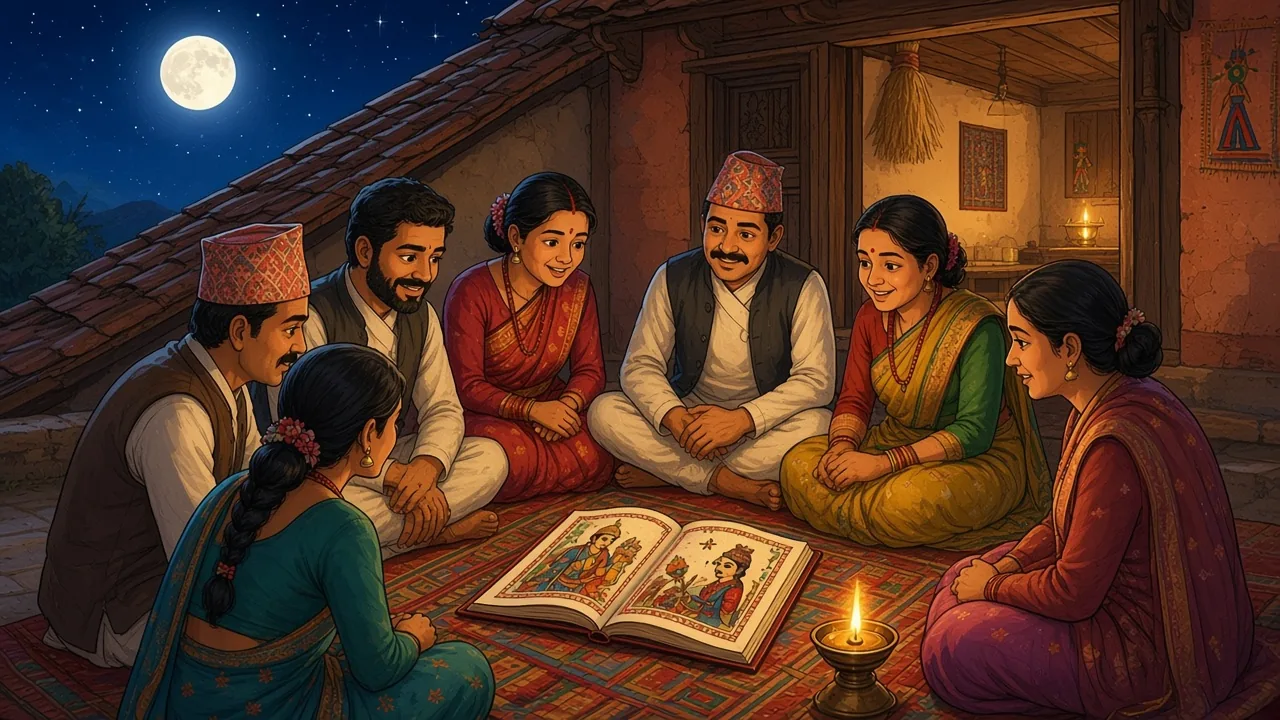
A household puja in Nepal is the living sacred rhythm through which a family sanctifies physical dwelling space, renews covenants of gratitude, remembers its ancestral lineage, and seeks protective equilibrium amidst the unpredictable currents of time and mortality. Structured across four natural movements, this collection traces the spiritual lifecycle of the home: opening with the everyday bread-and-butter rites of the dawn water vessel, the evening threshold lamp, and the courtyard Tulsi altar; advancing through the founding of walls, architectural harmony, and the universal full-moon parables of Satya Narayan; and culminating in the solemn duties owed to ancestral Gotra seers, planetary transits, and the ancient Vedic and Puranic shields of the Shukla Yajurveda, Chandi, and the Mahamrityunjaya.नेपाली जनजीवनमा पूजा केवल औपचारिकता वा पुरोहितको कर्मकाण्ड मात्र नभई, मानव-गृहस्थीले आफ्नो बसोबास गर्ने माटो, चुलो र आँगनलाई पवित्र बनाउने, ईश्वरसँगको कृतज्ञता-भाकल नवीकरण गर्ने र अनिश्चित जीवनका संकटहरूबाट परिवारलाई जोगाउने जीवन्त आध्यात्मिक आधारशिला हो। चारवटा स्वाभाविक खण्डमा विभाजित यो सङ्ग्रहले घरको दैनन्दिन नित्यकर्म (जल, दियो-बत्ती, तुलसी मोठ र विवाह) बाट सुरु भई, घडेरीको भूमिपूजा, वास्तु, गृहप्रवेश, सत्यनारायण व्रतकथाको सर्वसुलभ सन्देश, कुल र श्राद्धको पुर्ख्यौली कर्तव्य, हुँदै ग्रहशान्ति, रुद्री, चण्डी र मृत्युञ्जय जस्ता वेदोक्त तथा पौराणिक महामन्त्रहरूको दार्शनिक गहिराइसम्मको यात्रालाई क्रमबद्ध रूपमा प्रस्तुत गर्दछ।
The Living Hearth & Spatial Genesisगृह, औजार तथा नित्य कर्म
Ganesha Puja (Agrapūjā)गणेश पूजा र अग्रपूजा
In the Vedic and Smarta traditions of Nepal, no sacred rite, commercial venture, domestic milestone, or personal journey can commence without first invoking Lord Ganesha (Gaṇeśa / गणेश), who stands as the presiding guardian of beginnings and the remover of all seen and unseen obstacles (Vighnahartā). Known liturgically as Agrapūjā (the first invocation), this foundational prerequisite establishes that divine wisdom and cosmic order must precede all worldly ambition.वैदिक तथा सनातन परम्परामा कुनै पनि धार्मिक अनुष्ठान, नयाँ गृह-निर्माण, व्यापारिक यात्रा वा पारिवारिक मांगलिक कार्य सुरु गर्नुअघि सर्वप्रथम विघ्नहर्ता भगवान् गणेशको अग्रपूजा गर्ने अनिवार्य शास्त्रीय नियम छ। सबै विघ्नबाधाहरूलाई पन्छाएर कार्यलाई निर्विघ्न सम्पन्न गराउने अधिष्ठाता देवताका रूपमा गणेशको स्मरण नगरी गरिएको कुनै पनि कर्म अपूर्ण मानिन्छ।
Across the Kathmandu Valley and the mid-hills, Tuesday (Maṅgalavāra / मङ्गलबार) serves as the primary day of domestic Ganesha veneration. Families worship the deity on their home altars with fresh three-pronged grass (Dūrvā / Dūbo / दूबो), red vermilion powder (Sindūra), and round gram-flour sweets (Laddū / Modaka), often visiting local guardian shrines—such as the four historic Vinayakas of the valley (Ashok Vinayak of Maru, Jal Vinayak of Chobhar, Surya Vinayak of Bhaktapur, and Karya Vinayak of Bungamati)—before initiating lawsuits, land purchases, or scholastic examinations.काठमाडौँ उपत्यका र पहाडी भेगमा मङ्गलबारलाई गणेश आराधनाको विशेष दिन मानिन्छ। घरको पूजाकोठामा रातो सिन्दूर, ताजा दूबो र लड्डु (मोदक) चढाएर आराधना गर्नुका साथै उपत्यकाका चार प्रमुख विनायकहरू—मरु गणेश (अशोक विनायक), जल विनायक, सूर्य विनायक र कार्य विनायक—को दर्शन गरी परीक्षा, जग्गा-किनबेच वा नयाँ उद्यमको सफलताका लागि आशीर्वाद लिने गहिरो लोक-विश्वास छ।
The liturgical primacy of Ganesha derives from the Puranic cosmology wherein the elephant-headed deity circumnavigated his divine parents, Shiva and Parvati, demonstrating that devotion to the root of existence surpasses endless geographic pilgrimages. In every household puja, the priest first molds a conical betel-nut or clay emblem of Ganesha, consecrating it upon a bed of uncooked rice grains to sanctify the sacred space before any other divinity is called down.गणेशको अग्रपूजाको दार्शनिक आधार आफ्ना मातापिता शिव-पार्वतीको परिक्रमा गरी सम्पूर्ण ब्रह्माण्डको सार तत्त्वलाई आत्मसात् गरेको पौराणिक आख्यानसँग जोडिएको छ। हरेक घरेलु पूजामा पुरोहितले सर्वप्रथम शुद्ध चामलको पुञ्जमाथि सुपारी वा माटोको गणेश स्थापना गरी, कलशको मुखमा जल र पञ्चामृतले अभिसिञ्चित गरेर मात्र अन्य देवताहरूको आह्वान गर्दछन्।
Nitya Puja & Diyo-Battiनित्य पूजा र दियो-बत्ती
Before morning food is prepared or worldly affairs are undertaken, the daily spiritual rhythm of a traditional Nepali household awakens through Nitya Pūjā (नित्य पूजा) in the family prayer room (Pūjā Koṭhā). Having bathed and draped clean unstitched garments, the householder offers cold spring water from a brass vessel (Lauṭā), fresh unboiled cow milk, red vermilion rice (Akṣatā), seasonal garden flowers, and sandalwood paste to the consecrated family deities, accompanied by the clear reverberation of the brass bell (Ghaṇṭī).बिहानको चुलो बल्नु र सांसारिक कामकाज सुरु हुनुअघि नुहाइधुवाइ गरी घरको पूजाकोठामा गरिने नित्यपूजा नेपाली परिवारको दैनिक आध्यात्मिक प्राण हो। तामा वा पित्तलको लोटाबाट शुद्ध जल, पञ्चामृत, अक्षता, चन्दन र बारीका ताजा फूलहरू कुलदेवता तथा इष्टदेवतालाई अर्पण गर्दै शङ्ख र घण्टको मधुर ध्वनिले घरको वातावरणलाई सात्त्विक बनाइन्छ।
As twilight descends upon the mid-hills (Sandhyā / सन्ध्या), the counterpart domestic ritual of Diyo-Battī (दियो-बत्ती) takes place. A polished brass lamp containing hand-rolled cotton wicks immersed in pure mustard or sesame oil is illuminated and placed reverently at the main entrance threshold (Chā̃dī / Dhukuṭī / चाँदी / मूलढोका). The golden flame serves as a beacon welcoming Lakshmi (the goddess of auspicious light and nourishment) while erecting a spiritual barrier that repels twilight shadows, malevolent omens, and poverty.साँझ पख गोधूलि बेलामा घरकी गृहिणी वा छोरी-बुहारीले कपासको हातले बाटेको बत्तीलाई तोरी वा तिलको तेलमा भिजाएर पित्तलको दियो बाल्ने परम्परा छ। मूलढोकाको सङ्घार (चाँदी) र तुलसीको मोठमा बालिएको यो दियोले घरभित्र महालक्ष्मीको स्वागत गर्दछ भने सन्ध्याकालीन अन्धकार, अशान्ति र दरिद्रतालाई घरको सीमाबाहिरै रोक्ने विश्वास गरिन्छ।
A household that neglects its morning water offering and evening lamp is culturally perceived as cold, unsettled, and vulnerable to spiritual decay (Andhakāra). Beyond ritualism, Nitya Puja and Diyo-Batti act as daily meditative bookends, anchoring the domestic family within an unbroken continuum of cosmic gratitude between the rising of the sun and the falling of night.दैनिक नित्यकर्म र साँझको बत्ती छुट्नुलाई नेपाली समाजमा घर 'अशान्त र अँध्यारो' भएको सङ्केत मानिन्छ। यो केवल पूजा मात्र नभई सूर्योदय र सूर्यास्तको प्राकृतिक चक्रसँग परिवारलाई जोड्ने, मनलाई शान्त राख्ने र घरको वास्तुलाई नित्य ऊर्जावान् बनाइराख्ने दैनिक जीवन-पद्धति हो।
Tulsi Puja & The Aangan Mothतुलसी पूजा र मोठ
In traditional mid-hill domestic architecture, the sacred sanctuary does not begin at the doorway, but at the exact geometric center of the open courtyard (Āṅgana / आँगन), where a four-sided masonry altar—the Tulasī Moṭha (तुलसी मोठ)—houses the sacred sweet basil plant (Ocimum sanctum). Revered as the living botanical manifestation of Vrinda and Mahalakshmi, the Tulsi serves as the spiritual and physical purifier of the homestead, emitting continuous oxygen and medicinal potency.नेपाली परम्परागत घरको आँगनको ठीक बीचमा चारैतिर बुट्टा कुँदिएको वा रातो माटोले पोतिएको तुलसीको मोठ हुन्छ। हिन्दु दर्शनमा तुलसीलाई भगवान् विष्णुकी अनन्य शक्ति, वृन्दा र महालक्ष्मीको साक्षात् वनस्पति-स्वरूप मानिन्छ। आँगनको केन्द्रमा रहेको तुलसीले घरको वास्तुदोष निवारण गर्नुका साथै वायुलाई शुद्ध र रोगमुक्त बनाउने काम गर्दछ।
Each morning following Nitya Puja, the householder waters the green leaves with fresh well water, circumambulating the altar thrice in reverence while chanting the sacred *Tulasi Stotram*. The ritual reaches its liturgical crescendo during the four holy months of Cāturmāsa (beginning on Hariśayanī Ekādaśī in Ashadh), during which householders observe strict dietary austerities, light the evening lamp unfailingly beside the plant, and nurture the shrub until the cosmic awakening of Vishnu in autumn.हरेक बिहान पूजाकोठाको जल ल्याएर तुलसीको जरामा चढाउने, तीन पटक परिक्रमा गर्ने र 'वृन्दायै तुलसीदेव्यै प्रियायै केशवस्य च' मन्त्रले प्रणाम गर्ने परम्परा छ। विशेषगरी असारको हरिशयनी एकादशीदेखि सुरु हुने चार महिनाको 'चातुर्मास' अवधिभर तुलसीको विशेष स्याहार, दीप-प्रज्वलन र सात्त्विक नियमहरू पालन गरिन्छ।
Tulsi Vivaha & The Saligramतुलसी विवाह र शालिग्राम
On the auspicious eleventh lunar day of Kartik (Haribodhinī Ekādaśī / हरिबोधिनी एकादशी, popularly known as Thulo Ekadashi), the four-month vow of Chaturmasa concludes with the celebrated domestic pageant of Tulsi Vivaha (Tulasī Vivāha / तुलसी विवाह). Lord Vishnu, having rested upon the cosmic serpent Shesha since midsummer, is said to awaken on this day, whereon the household conducts his formal Vedic wedding to the Tulsi plant.कार्तिक शुक्ल एकादशी अर्थात् हरिबोधिनी एकादशी (ठूलो एकादशी) का दिन चार महिनाको चातुर्मास व्रतको समापनसँगै भव्य रूपमा 'तुलसी विवाह' सम्पन्न गरिन्छ। क्षीरसागरमा चार महिना शयन गर्नुभएका भगवान् विष्णु यसै दिन ब्युँझनुहुने धार्मिक विश्वासका साथ तुलसीको विवाह वैदिक विधिपूर्वक भगवान् शालिग्रामसँग गराइन्छ।
The domestic courtyard is transformed into a miniature Vedic wedding pavilion: four tall, leafy sugarcane stalks (Ukhu / उखु) are cut and planted around the masonry moth, their green crowns bent and tied together to form a verdant canopy. The Tulsi bush is draped in red bridal silks, vermilion powder (Sindūra), glass bangles, and sacred yellow threads. Across from the bride, the family brings out their sacred black ammonite fossil—the **Saligram (Śālagrāma / शालिग्राम)** gathered from the glacial bed of the Kali Gandaki river, which embodies Vishnu's cosmic presence.तुलसी विवाहको दिन आँगनको मोठवरिपरि चारवटा लामा उखुका बोटहरू गाडेर, तिनका टुप्पालाई एकआपसमा बाँधी रमणीय मण्डप (छाप्रो) बनाइन्छ। तुलसीको बोटलाई रातो चुनरी, सिन्दूर, चुरा र पोतेले दुलहीझैँ सिङ्गारिन्छ भने कालीगण्डकीको पवित्र जलबाट प्राप्त शालिग्रामलाई बेहुलाका रूपमा स्थापना गरी वैदिक विवाह मन्त्रद्वारा लगनगाँठो जोडिन्छ।
A family priest chants the nuptial hymns (*Vivāha Sūkta*), tying the ceremonial bridal knot (*Lagan-gā̃ṭho*) between the Saligram and the Tulsi plant. Crucially in Nepali social custom, householders who have not been blessed with a biological daughter convene Tulsi Vivaha with deep emotion, thereby earning the supreme spiritual merit of **Kanyādān (कन्यादान)**—the sacred gift of a daughter in marriage. Following the wedding, the fast is broken with autumn harvest tubers: boiled forest yam (Bana Tarul), sweet potato (Sakharkhanda), and sweet sugarcane stalks.छोरी नहुने बाबुआमाले तुलसीलाई आफ्नै छोरी मानेर कन्यादान गरी ठूलो पुण्य आर्जन गर्ने यो एक अत्यन्त मार्मिक सामाजिक-धार्मिक अनुष्ठान हो। विवाह सम्पन्न भएपछि परिवारले व्रत समापन गर्दै पिँडालु, घर तरुल, वन तरुल, सखरखण्ड र उखुका टुक्राहरू प्रसादका रूपमा ग्रहण गर्दछन्, जसले हिउँदको आगमनसँगै मौसमी कन्दमूल खाने प्राकृतिक विधिलाई पनि दर्साउँछ।
Naga Puja & The Doorframe Talismanनाग पूजा र ढोकामा नाग टाँस्ने विधि
On the fifth lunar day of the bright fortnight of Shrawan (Nāga Pañcamī / नाग पञ्चमी), every traditional home in Nepal fortifies its physical threshold through Nāga Pūjā. The ritual addresses the ancient subterranean serpent deities who govern the underground moisture, the tectonic bedrock of the hills, and the lightning currents of monsoon skies.साउन शुक्ल पञ्चमी अर्थात् नागपञ्चमीका दिन नेपालका हरेक घरमा नागको विशेष पूजाआजा गरी मूलढोकामा नागको चित्र टाँस्ने प्राचीन परम्परा छ। पातालका अधिपति, भूमिको आर्द्रता, पानीका मुहान र आकाशको मेघ-विद्युत्लाई नियन्त्रण गर्ने शक्तिका रूपमा नाग देवताको आराधना गरिन्छ।
Early in the morning, the male householder bathes, prepares a mixture of fresh cow dung (Gobara), unboiled cow milk, and red paste, and adheres an illustrated polychrome print of the **Eight Serpent Kings (Aṣṭa Nāga / अष्टनाग)**—Ananta, Vasuki, Shesha, Padmanabha, Kambala, Shankhapala, Dhritarashtra, and Takshaka—directly above the upper lintel of the main entrance door. The image is consecrated with sprigs of *Dūrvā* grass, parched unhusked rice (Lāvā / लावा), and cow milk poured in an earthen cup.बिहानै नुहाएर गाईको शुद्ध गोबरले मूलढोकाको माथिल्लो दलिनमा अनन्त, वासुकी, शेष, पद्मनाभ, कम्बल, शङ्खपाल, धृतराष्ट्र र तक्षक गरी आठ प्रमुख नागहरूको चित्र टाँसिन्छ। चित्रमा दूबो, अक्षता, सिन्दूर र काँचो गाईको दूध अर्पण गर्दै लाभा (भुटेको धान) चढाएर मन्त्रोच्चारण गरिन्छ।
The consecrated paper talisman remains permanently affixed above the lintel throughout the year, weathered by the seasons until replaced on the subsequent Naga Panchami. Cultural tradition holds that a house bearing the consecrated Eight Serpents is immune to lightning strikes (*Caṭyāṅga*), structural earthquakes, venomous reptiles, and fire, establishing the serpent not as a creature of dread, but as the primordial architectural guardian of the home.दलिनमा टाँसिएको यो नागको चित्र वर्षभरि त्यहीँ रहन्छ र अर्को वर्षको नागपञ्चमीमा फेरि नयाँ चित्रले प्रतिस्थापन गरिन्छ। यसरी विधिपूर्वक नाग टाँसेको घरमा चट्याङ नपर्ने, आगो र भूकम्पको भय नहुने र विषालु सर्पको डर नहुने गहिरो विश्वास छ, जसले प्रकृति र जीवजन्तुसँगको सहअस्तित्वलाई उजागर गर्दछ।
Bhumi Pujaभूमि पूजा
Before a foundation trench is excavated, a boulder laid, or a shovel driven into virgin ground, the householder kneels upon the bare earth to conduct Bhūmi Pūjā (भूमि पूजा). The rite is fundamentally an act of reverence and contrition: an acknowledgment that human settlement inevitably cuts through subterranean ecosystems, roots, insects, and waterways, wherefore the family formally seeks the permission and pardon of Mother Earth (Bhūmi Mātā).कुनै पनि घडेरीमा जग खन्नु, इँटा-ढुङ्गा राख्नु वा खन्ती चलाउनुअघि खाली जमिनमा बसेर गरिने अनुष्ठान भूमिपूजा हो। मानव बसोबासका लागि भवन निर्माण गर्दा पृथ्वीको छाती चिरिने, कीरा-फट्याङ्ग्रा र वनस्पति नासिने भएकाले प्रकृतिकी साक्षात् जननी भूमिमातासँग क्षमा माग्दै निर्माणको अनुमति लिनु यस पूजाको मूल दर्शन हो।
Conducted at the northeastern corner (Īśāna Koṇa) of the plot, the priest conducts offerings to the subterranean serpent deity **Vastu Naga (Vāstu Nāga / वास्तु नाग)**, who is believed to lie beneath the earth carrying the burden of the terrain. Offerings of milk, unbroken grains, copper coins, and sacred mustard seeds are deposited into the first foundation pit, asking the ground to bear the weight of walls, timber, slate roofs, and the generations who will sleep within.घडेरीको ईशान कोण (उत्तर-पूर्व) मा पुरोहितले वास्तुनागको पूजा गर्दछन्, जसले जमिनमुनि रहेर सम्पूर्ण भूभागलाई धारण गरेको विश्वास गरिन्छ। जगको पहिलो खाडलमा पञ्चरत्न, तामाको पैसा, शुद्ध दूध र जौ-तिल राखेर पूजा गरिन्छ, ताकि पृथ्वीले बन्ने घरको भित्ता, छानो र त्यहाँ बस्ने मानिसहरूको भारलाई सदा सुरक्षित रूपमा थेग्न सकून्।
Bhumi Puja bridges the wilderness with human dwelling. By consecrating the soil before construction begins, the ritual strips the site of wild, chaotic astral influences, transforming raw territory into a sanctified, willing bedrock that will support the family through seasonal storms and the passage of time.भूमिपूजाले प्रकृतिको जङ्गली भूगोललाई मानवीय वासस्थानमा रूपान्तरण गर्दछ। जमिन खन्नुअघि गरिने यो पूजाले त्यस ठाउँका नकारात्मक ऊर्जा र भूत-प्रेतलाई शान्त पारी, धर्तीलाई परिवारको सुख-समृद्धि र सुरक्षाको अटल आधारशिला बनाउँछ।
Vastu Pujaवास्तु पूजा
As the stone foundations rise and the rooms take form, the spatial geometry of the building is harmonized with cosmic law through Vāstu Pūjā (वास्तु पूजा). Rooted in ancient geomantic science (*Vāstu Śāstra*), the ritual recognizes that physical architecture is an energetic body governed by **Vastu Purusha (Vāstu Puruṣa / वास्तु पुरुष)**—the cosmic being who lies pinned face-down across the earth, his limbs and organs corresponding to the directional cardinal compass.घरको जग उठिसकेपछि र कोठाहरूको संरचना निर्माण हुने क्रममा प्राकृतिक ऊर्जा र दिक्पालहरूसँग सामञ्जस्य मिलाउन 'वास्तु पूजा' गरिन्छ। प्राचीन वास्तुशास्त्रअनुसार हरेक जमिनमा 'वास्तुपुरुष' अधोमुख (घोप्टो) परेर सुतेका हुन्छन्, जसका विभिन्न अङ्गहरूले पूर्व, पश्चिम, उत्तर, दक्षिण र चारवटै कोणहरूलाई प्रतिनिधित्व गर्दछन्।
The layout of the dwelling is designed to align with the five primordial cosmic elements (Pañcamahābhūta): the sacred kitchen hearth must sit in the southeast quadrant governed by the god of fire (Agni Koṇa), the pure water reservoir and meditation room in the northeast corner of divine wisdom (Īśāna Koṇa), the heavier master bedrooms in the southwest earth sector (Nairṛtya Koṇa), and the windows open to the northwest air currents (Vāyavya Koṇa).वास्तु पूजाले घरलाई पञ्चमहाभूत (पृथ्वी, जल, तेज, वायु, आकाश) को सन्तुलनसँग जोड्दछ। आगोको शक्ति चाहिने भान्सालाई आग्नेय कोण (दक्षिण-पूर्व) मा, शुद्ध जल र पूजाकोठालाई ईशान कोण (उत्तर-पूर्व) मा, भारी शयनकक्षलाई नैऋत्य कोण (दक्षिण-पश्चिम) मा र हावाको सञ्चार हुने कोठाहरूलाई वायव्य कोण (उत्तर-पश्चिम) मा राखेर पूजा गरिन्छ।
Whenever a home suffers from architectural discord—such as a misplaced doorway, a well dug in an inauspicious sector, or structural renovations that disrupt circulation—the family convenes Vastu Puja with sacrificial oblations (*Homa*). By pacifying Vastu Purusha and burying consecrated copper pyramids and energized yantras beneath the floorboards, the family restores balance, ensuring that health, wealth, and mental tranquility circulate freely through the corridors.ढोका, झ्याल वा भान्साको दिशा नमिल्दा घरमा अशान्ति, आर्थिक हानि वा रोगव्याधि आउन सक्छ भन्ने मान्यता छ। त्यस्ता वास्तुदोषहरूलाई शान्त पार्न हवनसहित वास्तुपूजा गरी, जमिनमुनि पञ्चधातु वा तान्त्रिक यन्त्रहरू प्रतिस्थापन गरेर घरभित्र सकारात्मक ऊर्जाको प्रवाह पुनः स्थापित गरिन्छ।
Griha Praveshगृह प्रवेश
The climactic transition from an empty construction shell into a sanctified home occurs during Griha Pravesh (Gṛha Praveśa / गृह प्रवेश). Undertaken only upon an astrologically verified auspicious day (Śubha Muhūrta) extracted from the traditional lunar calendar (*Pātro*), the ritual requires that the building be entered before any profane domestic furniture, bedding, or cookware cross the threshold.नयाँ बनेको घरलाई बस्नयोग्य, पवित्र र मांगलिक बनाउन शुभ साइतमा गरिने मुख्य अनुष्ठान 'गृह प्रवेश' हो। पात्रो हेरेर पञ्चाङ्ग निर्णायक समितिले तोकेको शुभ लग्न र मुहूर्तमा, घरभित्र खाट, भाँडाकुँडा वा अन्य सामान भित्र्याउनुअघि नै यो विधिवत् पूजा सम्पन्न गर्नुपर्छ।
The threshold is purified with cow dung wash and decorated with geometric rice-flour mandalas and mango leaf toranas. Before any human footsteps enter, a sacred cow (*Gau-Mātā*) is led across the main threshold, followed by family members carrying the consecrated *Kalaśa* vessel, a burning brass lamp, and sacred scriptures. The right foot must be the first to cross the doorway, symbolizing forward spiritual momentum and moral rectitude.मूलढोकामा तोरण टाँगेर, गाईको गोबरले लिपेर र चामलको पीठोले स्वस्तिक तथा अष्टदल कमलको मण्डल बनाएर सजावट गरिन्छ। सबैभन्दा पहिले साक्षात् लक्ष्मीस्वरूपा गाईलाई घरभित्र प्रवेश गराउने र त्यसपछि परिवारका मूलीले पूर्णकलश, दियो र शालिग्राम लिएर दाहिने खुट्टा अगाडि सारी घरभित्र पाइला टेक्ने शास्त्रीय परम्परा छ।
Inside the pristine kitchen, the inaugural hearth fire is kindled, whereon fresh cow milk is boiled in a shining vessel until it froths and deliberately spills over the brim across all sides. This joyous overflow (*Dudh Pokhine Vidhi*) is interpreted as an auspicious augury that grain, wealth, prosperity, and guests will eternally overflow the capacity of the home. The ceremony concludes with the performance of *Vāstu Homa* and the feeding of invited priests, neighbors, and clan kinfolk.भान्साको नयाँ चुलोमा पहिलो पटक आगो बालेर दूध उमालिन्छ र त्यो दूध उम्लेर भाँडोको चारैतिर पोखिन दिइन्छ। दूध पोखिनुलाई घरमा सधैँ अन्न, धन, सन्तान र पाहुनाहरूको भरिपूर्णता रहने शुभ शकुन मानिन्छ। त्यसपछि वास्तु होम सम्पन्न गरी कुलकुटुम्ब र छिमेकीहरूलाई भोज खुवाएर घरको बसाइ विधिवत् सुरु हुन्छ।
Ghar Shantiघर शान्ति
Over the decades of human habitation, a dwelling absorbs the psychic turbulence of life—protracted illnesses, bitter domestic quarrels, sudden financial reversals, and the solemn grief of bereavement. Whenever a home feels heavy, ominous, or persistently discordant, the household convenes Ghar Shanti (Ghara Śānti / घर शान्ति) to cleanse the rooms of accumulated emotional and astral residue.लामो समय बसोबास गर्दै जाँदा घरभित्र अशान्ति, परिवारका सदस्यहरूबीच कलह, लगातार बिरामी, आर्थिक संकट वा कसैको मृत्युपछिको शोकले घरको वातावरण भारी र अशान्त बन्न सक्छ। त्यस्ता नकारात्मक प्रभावहरूलाई हटाएर घरका कोठा-चोटालाई पुनः शान्त र आनन्दमय बनाउन 'घर शान्ति' पूजा गरिन्छ।
The ritual is most universally requested following the formal conclusion of funeral rites (Kriyā / क्रिया), after the twelve or thirteen days of deep mourning have elapsed. While the funeral ceremonies liberate the departed soul toward the ancestral realm (*Pitri Loka*), Ghar Shanti purifies the living rooms, bedchambers, and corridors, ensuring that the heavy shadow of death departs and the house feels once more like a warm sanctuary for the living.विशेषगरी परिवारमा कसैको देहावसान भई १३ दिनको किरियाकर्म सकिएपछि घरलाई शुद्ध बनाउन यो पूजा अनिवार्य मानिन्छ। किरियाले मृतकको आत्मालाई सद्गति दिन्छ भने घर शान्तिले बाँचेका पारिवारिक सदस्यहरूलाई शोकबाट मुक्त गरी, घरको वातावरणलाई फेरि सामान्य र मंगलमय बनाउन मद्दत गर्दछ।
During the rite, the priest sprinkles consecrated water purified with five sacred products of the cow (*Pañcagavya*) and *Śānti Mantras* across every ceiling, doorpost, and dark alcove. Distinct from the astrological propitiation of the nine planets (*Graha Śānti*), Ghar Shanti focuses directly upon the physical walls, thresholds, and interior air of the home, realigning the domestic sanctuary with harmony and peace.पुरोहितले पञ्चगव्य (गाईको दूध, दही, घ्यू, गहुँत र गोबर) ले अभिमन्त्रित गरेको शान्ति-जल घरका सबै कोठा, दलिन र कुनाकाप्चामा छर्कन्छन्। ग्रहशान्ति चिनाका ग्रहहरूसँग सम्बन्धित हुन्छ भने घरशान्ति प्रत्यक्ष रूपमा घरको भौतिक वातावरण, भित्ता र ढोकाहरूको शुद्धिसँग सम्बन्धित हुन्छ, जसले मनमा नयाँ उत्साह भर्छ।
Vishwakarma & Ayudha Pujaविश्वकर्मा तथा आयुध पूजा
On the first day of the autumn month of Ashwin (Kanyā Saṅkrānti / कन्या सङ्क्रान्ति) and during the martial rites of Mahā Navamī in Dashain, the family gathers to conduct Vishwakarma & Ayudha Puja (Viśvakarmā tathā Āyudha Pūjā / विश्वकर्मा तथा आयुध पूजा). Rooted in the sacred worship of the divine cosmic architect Vishwakarma, the ceremony is an act of deep reverence toward the physical instruments, machinery, and tools through which human beings sustain life and labor.असोज १ गते कन्या सङ्क्रान्तिको दिन र दशैँको महानवमीका अवसरमा घर-घरमा 'विश्वकर्मा तथा आयुध पूजा' गरिन्छ। ब्रह्माण्डका दिव्य शिल्पकार र वास्तुकार भगवान् विश्वकर्माको स्मरण गर्दै, मानिसले आफ्नो जीविकोपार्जन, श्रम र सुरक्षाका लागि प्रयोग गर्ने औजार, यन्त्र र सवारी साधनहरूको पूजा गर्नु यसको मूल उद्देश्य हो।
The family brings out and cleans all metal implements of sustenance: kitchen knives and sickles (Khukurī and Hãsiyā / खुकुरी र हँसिया), blacksmith anvils, carpenter planes, sewing machines, writing pens, computers, and especially **family vehicles (motorcycles, cars, tractors, and bicycles)**. Everything is washed with spring water, garlanded with bright orange marigold flowers (Sayapatrī), dabbed with vermilion paste, and consecrated with the cracking of fresh coconuts or the offering of sacred red sweets.दैनिक जीवनमा प्रयोग हुने खुकुरी, हँसिया, कोदालो, मेसिन, कम्प्युटरदेखि लिएर मोटरसाइकल, गाडी र साइकललाई राम्ररी धोएर सफा गरिन्छ। ती सबै यन्त्रहरूमा सयपत्री फूलको माला, अबिर, केशरी र चन्दन लगाई, नरिवल फुटाएर वा पूजा गरेर प्राविधिक सुरक्षा र यात्राको निर्विघ्नताका लागि प्रार्थना गरिन्छ।
The philosophy underlying Ayudha Puja teaches that inert tools are not mere dead matter, but sacred extensions of human consciousness and divine creative energy. By honoring the instruments of craft and travel with gratitude, the family prays against mechanical breakdown, road accidents, workplace injuries, and structural failures, sanctifying modern technology as an instrument of righteousness and peace.यस पूजाको दार्शनिक पक्षले औजार र मेसिनहरू केवल निर्जीव धातु मात्र नभई मानव श्रम र सिर्जनशीलताका दिव्य माध्यम हुन् भन्ने सिकाउँछ। साधनहरूको नियमित सम्मान र कृतज्ञताले सडक दुर्घटना, यन्त्रको खराबी र कार्यस्थलका चोटपटकबाट जोगाउँछ भन्ने विश्वासले प्रविधिलाई धर्म र जीवनको सुरक्षासँग जोडेको छ।
Votive Covenants, Harvest & Enterpriseभाकल, व्रत, नवान्न र व्यापार
The domestic full-moon altar of Satya Narayan (Satyanārāyaṇa / सत्यनारायण), featuring the sacred Kalasha, banana leaf canopies, and Kasar prasad.पूर्णिमाको साँझ घर-आँगनमा रचिने सत्यनारायण पूजाको वेदी, जहाँ कलश, केराको थाम र घ्यूमा भुटेको कसारको प्रसादले भगवान् विष्णुको आराधना गरिन्छ।
Across the terraced foothills and ancient courtyards of Nepal, the worship of Satya Narayan (Satyanārāyaṇa / सत्यनारायण) represents the most widespread and democratic devotional liturgy in the Hindu domestic tradition. While monumental Vedic sacrifices historically demanded elaborate royal patronage, rigid caste prerequisites, and exorbitant retinues of priests, the Satyanārāyaṇa Vratakathā—drawn from the Revā-khaṇḍa of the Skanda Purāṇa—emerged as a universal covenant of grace. It requires no aristocratic wealth or ascetic withdrawal, but merely sincere faith, domestic harmony, seasonal fruits, and the shared distribution of roasted wheat-flour prasad (Kasār / कसार) among family, kinfolk, and wandering neighbors.
Conducted typically upon the luminous rise of the full moon (Pūrṇimā / पूर्णिमा), on monthly solar transitions (Saṅkrānti), or following the successful resolution of illness, examination, or perilous travel, the puja transforms the home into a sacred threshold. A square mandala altar is demarcated with rice flour, bounded by four auspicious banana saplings (*Kadali-stambha*), and centered upon a consecrated copper vessel (*Kalaśa*). As twilight settles and conch shells reverberate through the rooms, the family priest or household elder recites the five didactic chapters (*Adhyāyas*), weaving an allegorical drama of poverty, commerce, moral forgetfulness, and divine redemption.
The Five Parables of the Vratakathā
Chapter I: The Celestial Inquiry in Vaikuntha. The narrative opens in the primeval forest of Naimisharanya, where the sage Shaunaka asks Suta Goswami how mortals in the troubled age of Kali (*Kaliyuga*) may cross the ocean of suffering without complex rituals. Suta recounts how the celestial wanderer Narada Muni (Nārada / नारद), witnessing mankind racked by chronic sickness and unquenchable worldly desires, approached Lord Vishnu in the celestial realm of Vaikuntha. Moved by human distress, Vishnu revealed this supreme vow of truth: whenever human beings find themselves besieged by sorrow or wish to offer thanks for prosperity, gathering kinfolk to recite these parables and partake of consecrated offerings with an honest heart will dissolve worldly anxieties and awaken spiritual clarity.
Chapter II: The Destitute Brahmin of Kashi. In the sacred alleyways of Varanasi (Kāśī / काशी), an impoverished Brahmin spent his life wandering barefoot in search of alms, perpetually tormented by hunger and the humiliation of an empty kitchen. Observing his unblemished character, Lord Vishnu assumed the mortal guise of a radiant, elderly sage and inquired about his weeping. When the Brahmin confessed his unending destitution, the divine elder revealed the simple observance of Satya Narayan. The following morning, resolving with renewed hope to perform the vow, the Brahmin set forth into the city; through divine grace, he received far more alms than ever before. Purchasing unrefined sugar, ghee, fresh milk, and wheat flour, he convened his household and observed the rite. His poverty immediately dissolved, his hearth was replenished with abundant grain, and he attained lifelong spiritual peace.
Chapter III: The Woodcutter's Spontaneous Faith. While the Kashi Brahmin was joyfully distributing *Kasār* prasad to his neighbors, a weary woodcutter (Kāṣṭha-vikretā / काष्ठविक्रेता), carrying a heavy bundle of firewood upon his shoulders, entered the courtyard to quench his thirst. Struck by the serene radiance of the congregation, he set down his timber, prostrated before the altar, and asked the meaning of the worship. The Brahmin explained the vow without condescension. Deeply moved, the humble laborer made an immediate, unhesitating vow: he pledged that whatever money he earned from selling his wood in the city bazaar that afternoon would be spent entirely on the worship of Satya Narayan. In the town square, wealthy merchants competed for his dry timber, paying him double the customary price. Weeping with gratitude, the woodcutter purchased ripe bananas, pure cow ghee, flour, and brown sugar, returned to his humble hut, gathered his family, and kept the promise—thereafter enjoying plentiful sustenance and freedom from fear.
Chapter IV: The Merchant Sadhu, Lilavati, and Kalavati. The narrative transitions from poverty to the far more subtle perils of wealth and commercial pride. A wealthy merchant named Sadhu, endowed with immense maritime fleets yet grieving his childlessness, witnessed a righteous king performing the vrata. Inspired by desire rather than pure devotion, the merchant vowed to observe Satyanarayan if blessed with an heir. Soon after, his devoted wife Lilavati gave birth to a radiant daughter named Kalavati (Kalāvatī / कलावती). Yet when reminded of his promise, the merchant repeatedly deferred it—first until her weaning, then until her schooling, and finally until her wedding day. When Kalavati was married to an accomplished young merchant from Kanchannagar, Sadhu celebrated the lavish nuptials but dismissed his vow once more, boarding his cargo vessels with his new son-in-law to trade in the coastal kingdom of Ratnasara (ruled by King Chandraketu).
Displeased by this cynical procrastination, divine providence tested the merchant's pride. Real thieves robbed the royal treasury of King Chandraketu and fled through the seaport, accidentally dropping the stolen gold inside Sadhu's warehouse. The royal guards apprehended the innocent merchants, who were immediately dragged in chains before the king and thrown into subterranean dungeons without a hearing, their entire wealth confiscated. Meanwhile, back at their home, thieves plundered Lilavati's mansion, reducing mother and daughter to destitute beggars. One evening, wandering the streets in search of scrap food, Kalavati stumbled upon a neighborhood house performing the Satyanarayan Vrata. She sat among the devotees, listened to the holy stories, and received the sweet *Kasār* prasad. Returning home, she tearfully urged her mother to fulfill their long-forgotten pledge. Lilavati immediately gathered humble ingredients and performed the worship with genuine tears of repentance.
That very night, Lord Vishnu appeared in a dream to King Chandraketu, declaring the merchants innocent and warning him of catastrophe unless they were freed. The king released them at dawn, restored twice their wealth, and sent them home in triumph. Yet on the open river, Vishnu appeared in the guise of a wandering mendicant ascetic, testing the elder merchant's heart: "O merchant, what cargo carries your great ships?" Fearing that the beggar would demand charity or taxes, Sadhu sneered derisively: "Why do you ask, beggar? Do you seek our gold? There is nothing in our hulls but dried leaves and straw!" The ascetic smiled gently and said: "So may your words be true," and walked away. When the merchant inspected the holds, every casket of pearls and gold had transformed into dry straw! Falling prostrate in the mud before the ascetic, Sadhu wept bitterly, confessing his duplicity. Compassionate to the contrite, the Lord restored his treasures, admonishing him that truth alone sustains life.
As their ships neared their home harbor, the merchant sent a messenger to announce their safe arrival. Overjoyed, Lilavati and Kalavati completed their domestic worship and hurried toward the docks. In her ecstatic haste to embrace her returning husband, Kalavati committed a fatal error: she rushed out the door before tasting her portion of the sacred Prasāda. Instantly, an inexplicable tempest roared across the harbor, capsizing the son-in-law's ship and plunging it beneath the waves before their horrified eyes! As Kalavati prepared to drown herself in grief, a celestial voice echoed from the sky: "Your daughter abandoned the sacred food of the Lord in her thoughtless haste. Let her return home, eat the consecrated Prasad with folded hands, and her husband shall be restored." Racing home, Kalavati partook of the prasad with profound reverence; upon her return to the shoreline, the storm parted, the waters smoothed, and her husband stepped safely onto the sand amidst his floating cargo.
Chapter V: King Tungadhvaja and the Cowherds. The fifth chapter warns against the ruinous illusion of social superiority. A proud monarch named King Tungadhvaja (Tuṅgadhvaja / तुङ्गध्वज), riding through his royal hunting reserves, came upon poor village cowherd children (Gopālas) gathered under the shade of a banyan tree, conducting the Satyanarayan Vrata with wild jungle fruits and water. Bound by royal arrogance, the king refused to dismount, looked down upon the peasant children with contempt, and rode away without accepting the offered prasad. Upon returning to his capital, he found his empire in smoking ruins: his hundred sons lay lifeless on their beds, his royal treasury was empty, and his cattle herds had vanished. Recognizing that his contempt for humble devotion was the cause of his downfall, the king cast aside his crown, walked barefoot into the forest, knelt in the dust with the cowherd boys, and ate the humble prasad with heartfelt tears. Through his surrender, his sons were restored to life, his herds returned, and his kingdom flourished in lasting righteousness.
सत्यनारायण व्रतकथा: दार्शनिक समीक्षा र सामाजिक चेतना
नेपाली जनजीवन र सनातन पारम्परिक समाजमा भगवान् सत्यनारायणको पूजा केवल एउटा धार्मिक अनुष्ठान मात्र नभई, पारिवारिक एकता, नैतिक जागरण र सत्यप्रतिको अटल समर्पणको शाश्वत प्रतीक हो। स्कन्दपुराणको रेवाखण्डअन्तर्गत वर्णित यो पाँच अध्यायको कथाले मानिसलाई सांसारिक लोभ, अहंकार र विस्मृतिबाट मुक्त भई सत्यको मार्गमा अडिग रहन निरन्तर सन्देश दिन्छ। वेदका जटिल कर्मकाण्ड र राजसूय-अश्वमेध जस्ता खर्चिला यज्ञहरू जनसामान्यको पहुँचमा नहुँदा, कलियुगमा सत्यको आराधना नै समस्त दुःख निवारणको सर्वसुलभ माध्यम हो भनी यो व्रतकथाले उद्घोष गरेको छ।
यो व्रतकथाका पाँचवटै अध्यायहरूले मानव जीवनका विभिन्न वर्ग र मनोवृत्तिको गहिरो सामाजिक तथा मनोवैज्ञानिक विश्लेषण प्रस्तुत गर्दछन्। काशीका गरिब ब्राह्मण र दाउरा बेच्ने घाँसी (काष्ठविक्रेता) को प्रसङ्गले देखाउँछ कि भगवान् केवल भाव, निष्कपट श्रद्धा र सरलताका भोका हुनुहुन्छ; त्यहाँ विपन्नता कहिल्यै ईश्वरप्राप्तिको बाधक बन्दैन। दाउरा बेचेर आएको दैनिक ज्यालाबाटै प्रसाद जोहो गर्ने घाँसीको निष्काम समर्पणले श्रमको मर्यादा र भक्तिमा रहने समानतालाई उजागर गर्दछ।
साधु साहु, लीलावती र कलावतीको आख्यानले समृद्धिसँगै आउने मानवीय कमजोरी, प्रतिज्ञा बिर्सने बानी र धनको दम्भलाई उदाङ्गो पार्दछ। सन्तानको चाहनामा राखिएको भाकल धन र सुख पाएपछि पटक-पटक पन्छाउने साहुको प्रवृत्ति आधुनिक उपभोक्तावादी समाजकै विम्ब हो। झुटो बोल्दा हिजोको सुन परालमा परिणत हुनु र सत्य स्वीकारेपछि पुनः सम्पन्नता फर्कनुले कर्मको अनिवार्य फल र सत्यको विजयलाई स्थापित गर्छ। त्यस्तै, प्रसादको अनादर गरी पति भेट्न हतारिँदा डुङ्गा डुब्नु र प्रसाद ग्रहण गरेपछि पुनः पति फेला पर्नुले ईश्वरको प्रसाद अर्थात् कृपा र आशीर्वादप्रतिको गहिरो आदरभावलाई सङ्केत गर्दछ।
अन्तिम अध्यायमा वर्णित राजा तुङ्गध्वजको कथा सत्ता, पद र जातीय अहंकारविरुद्धको शक्तिशाली प्रहार हो। जङ्गलमा गोठाला बालकहरूले रुखमुनि बसेर गरेको पूजालाई हेय दृष्टिले हेर्ने र प्रसाद अस्वीकार गर्ने राजाको सम्पूर्ण राज्य र सय छोराहरू नष्ट हुनुले सन्देश दिन्छ—सत्यको दरबारमा राजा र रङ्क सबै समान हुन्। जब राजाले मुकुट उतारेर गोठालाहरूसँगै धुलोमा बसी प्रसाद ग्रहण गर्छन्, तब मात्र उनको राज्य र सन्तान बौरिन्छन्। यसरी घ्यूमा भुटेको कसार, पञ्चामृत र केराको पातमा सजाइएको प्रसाद सबैलाई समान रूपमा बाँड्ने यो पूजा नेपाली समाजको लोकतान्त्रिक र समतामूलक आध्यात्मिक आधारशिला हो।
Lakh Batti & Sawa Lakhलाख बत्ती / सवा लाख
When a monumental life vow (Bhākal) is fulfilled—such as recovery from a critical illness, the birth of an heir after long trials, or the celebration of an elder's milestone birthday (Jankū / Caurāsī)—a family convenes the dazzling spectacle of Lakh Batti (Lākha Battī / लाख बत्ती), or its amplified variation *Savā Lākha* (one hundred and twenty-five thousand wicks). The ritual represents the physical summit of votive gratitude, transforming human thankfulness into a vast sea of consecrated golden flame.परिवारमा कुनै ठूलो भाकल पूरा हुँदा, प्राणघातक रोगबाट मुक्ति पाउँदा, वा ज्येष्ठ नागरिकको चौरासी पूजा (जङ्कू) जस्ता जीवनका ठूला उत्सवहरूमा 'लाख बत्ती' वा 'सवा लाख' बत्ती बाल्ने भव्य अनुष्ठान गरिन्छ। मनले चिताएको मनोकांक्षा पूरा गरिदिएकोमा भगवान्प्रति अपार कृतज्ञता प्रकट गर्दै, अन्धकारमाथि प्रकाशको विजय उत्सवका रूपमा यो पूजा गरिन्छ।
For weeks leading up to the ceremony, the women of the household and neighborhood gather in companionable circles to hand-roll one hundred thousand individual wicks from fine, clean cotton. On the day of the ceremony, either within the domestic courtyard or at an ancient sacred tirtha (such as Pashupatinath, Guhyeshwari, or Muktinath), thousands of wicks are arranged meticulously in concentric geometric patterns inside clay pots or iron trays, completely drenched in pure melted cow ghee or fragrant sesame oil.यस पूजाका लागि हप्तौँ अघिदेखि घरका आमा-दिदीबहिनीहरू मिलेर शुद्ध कपासबाट हातले बाटेर एक लाख वा सवा लाख बत्ती तयार पार्छन्। पूजाको दिन तामा वा माटोको ठूलो दियोमा शुद्ध गाईको घ्यू वा तिलको तेल खन्याएर ती सबै बत्तीहरूलाई कलात्मक मण्डलाकार रूपमा सजाइन्छ र पशुपतिनाथ, गुह्येश्वरी वा आफ्नै घरको आँगनमा प्रज्वलित गरिन्छ।
As the priest recites the consecration mantras, the sea of wicks is ignited simultaneously with camphor. The night sky is illuminated by a towering golden radiance, and the rich scent of burning ghee wafts across the courtyard. The ritual does not calculate material merit by numbers alone, but offers an awe-inspiring physical meditation: that just as thousands of fragile individual cotton threads unite into a brilliant blaze that banishes the darkness, so too does a family's collective devotion burn away worldly impurities and karmic debts.कपूरको सहायताले एकैचोटि बालिने लाखौँ बत्तीको दिव्य ज्योतिले वरपरको सम्पूर्ण अन्धकारलाई हटाएर वातावरणलाई अलौकिक बनाउँछ। घ्यूको सुगन्ध र हजारौँ ज्वालाहरूको एकताबद्ध प्रकाशले देखाउँछ कि जसरी एउटा-एउटा धागो मिलेर महादीप बन्छ, त्यसरी नै परिवारको साँचो श्रद्धाले जीवनका सबै पाप र कष्टहरूलाई भष्म गरी मोक्षको मार्ग खोल्दछ।
Bhimsen Pujaभीमसेन पूजा
In merchant, artisan, and entrepreneurial households across the Kathmandu Valley and historical mid-hill trading crossroads (such as Patan, Bhaktapur, Bandipur, and Tansen), Bhimsen Puja (Bhīmasena Pūjā / भीमसेन पूजा) stands as the supreme protector of commerce, contract fidelity, and mercantile prosperity. Though revered epic-wide in the Mahabharata as the second Pandava renowned for superhuman strength, in Nepali domestic religion Bhimsen is elevated to the divine patron deity of business, wealth, and hazardous travel.काठमाडौँ उपत्यकाका नेवार समुदाय तथा पहाडी व्यापारिक केन्द्रहरू (पाटन, भक्तपुर, बन्दीपुर, दोलखा) मा भीमसेनलाई केवल महाभारतका वीर योद्धा मात्र नभई, व्यापार, वाणिज्य, शक्ति र समृद्धिका प्रमुख कुलदेवता तथा रक्षकका रूपमा अत्यन्त निष्ठापूर्वक पूजा गरिन्छ।
In traditional merchant houses and shops, Bhimsen's fierce, mace-bearing image or carved wooden altar sits prominently above the accounting desk, the safe (Dhukuṭī), or the storefront entrance. Businessmen worship him every Saturday with offerings of raw alcohol, red vermilion, black lentils, roasted meats, and sweet confections. Before embarking on perilous trans-Himalayan trade caravans to Tibet or modern business ventures, merchants pray to Bhimsen to protect their cargo from bandits, ensure timely debt recovery, and grant courage against economic adversity.व्यापारीहरूले आफ्नो गद्दी, ढुकुटी वा पसलको मुख्य भागमा भीमसेनको मूर्ति वा चित्र स्थापना गरी हरेक शनिबार विशेष पूजा गर्दछन्। भोट (तिब्बत) सँगको व्यापारिक यात्रामा निस्कनुअघि वा ठूला आर्थिक कारोबार गर्दा भीमसेनको स्मरण गरिन्छ, ताकि बाटोमा डाँका र विपत्तिबाट धनको रक्षा होस्, उधारो रकम समयमै उठोस् र व्यापारमा निरन्तर नाफा होस्।
The theology of Bhimsen Puja embodies the practical householder's ethic: that spiritual virtue must be fortified by physical strength, moral valor, and commercial diligence. By invoking Bhimsen, the entrepreneurial household sanctifies its financial ambitions, ensuring that wealth is earned with boldness and protected with unyielding integrity.भीमसेन पूजाले गृहस्थ जीवनमा धन कमाउनु र त्यसको रक्षा गर्नु पनि धर्मकै एक अङ्ग हो भन्ने व्यावहारिक दर्शन सिकाउँछ। भीमसेनको आराधनाले भयलाई हटाएर आत्मविश्वास बढाउँछ र परिवारलाई आर्थिक संकट तथा अन्यायविरुद्ध लड्ने दृढ शक्ति प्रदान गर्दछ।
Nuagi / Navannaन्वागी / नवान्न
When the autumn paddy harvest (Dhāna / धान) is reaped across the Himalayan terraces, no family member may taste the new rice until the sacred domestic thanksgiving of Nuāgī (न्वागी / Navānna / नवान्न) is observed. Celebrated across Brahmin, Chhetri, Newar, Magar, Gurung, and Kirati households, this agrarian rite bridges the family table directly to the soil, the rainfall, and the departed ancestors whose sweat cleared the ancestral terraces.हिउँदको सुरुमा खेतबाट नयाँ धान भित्र्याएपछि, त्यस धानबाट बनेको नयाँ चामल परिवारले खानुअघि पितृ र कुलदेवतालाई अर्पण गर्ने महान् कृषिमूलक पारिवारिक पर्व 'न्वागी' हो। ब्राह्मण, क्षेत्री, नेवार, मगर, गुरुङदेखि किराँत समुदायसम्म पहाडी समाजमा नयाँ अन्नको स्वागत गर्ने यो अत्यन्त प्राचीन परम्परा हो।
The head of the household flattens the freshly threshed paddy into fragrant green beaten rice (Chiurā / चिउरा), which is mixed meticulously in a bronze bowl with fresh cow milk, thick curd, wild forest ginger, raw honey, and sliced bananas. Before any living mouth partakes, portions are set aside upon fresh leaves and offered to the household deities (*Iṣṭadevatā*), the territorial serpent (*Vāstu Nāga*), and the lineage ancestors (*Pitṛ*).नयाँ धानलाई भुटेर ओखलमा कुटी ताजा चिउरा बनाइन्छ। त्यस चिउरामा शुद्ध गाईको दूध, दही, अदुवा, मह, सख्खर र केरा मिसाएर स्वादिष्ट 'न्वागी' तयार पारिन्छ। परिवारका सदस्यहरूले खानुअघि केराको पातमा यो पवित्र नवान्न राखेर पूजाकोठाका देवता, घरको मूलढोका र पितृहरूका नाममा भाग छुट्याइन्छ।
Only after the ancestors and crows have received their share does the family gather upon woven straw mats to eat the new grain together. Nuagi is the mid-hills' supreme festival of gratitude—a culinary declaration that nourishment is not a human entitlement, but an annual gift of divine grace earned through patient labor and ancestral blessing.पितृ र प्रकृतिका प्राणीहरूलाई खुवाएपछि मात्र परिवारका सबै सदस्यहरू एकै ठाउँमा बसेर नयाँ अन्नको न्वागी खान्छन्। यसले किसानको कठोर श्रमको सम्मान गर्दछ र आफूलाई जन्म दिने धर्ती तथा पितृहरूप्रति कृतज्ञ रहन सिकाउने नेपाली संस्कृतिको अनुपम सौन्दर्यलाई प्रकट गर्दछ।
When an extended family seeks collective spiritual liberation for departed forebears, celebrates a grandfather's golden jubilee, or fulfills a generational vow of gratitude, they host the grand courtyard festival of Purāṇa Pāṭha (पुराण पाठ). Observed as a single-day dawn-to-dusk recitation (Ekāha / एकाह), a seven-day community festival (Saptāha / सप्ताह, typically focusing on the Śrīmad Bhāgavata Purāṇa), or a nine-day goddess liturgy (Nawāha / नवाह, centered upon the Devī Bhāgavata or Rāmāyaṇa), this is the largest domestic milestone a householder can convene.परिवारमा पितृहरूको मोक्ष, कुलको कल्याण वा कुनै ठूलो संकल्प पूरा गर्न घरको आँगनमा पण्डाल (छाप्रो) हालेर गरिने महायज्ञ नै 'पुराण पाठ' हो। यो एक दिनमा सकिने 'एकाह', सात दिनसम्म श्रीमद्भागवत महापुराणको कथावाचन गरिने 'सप्ताह', वा नौ दिनसम्म देवीभागवत तथा रामायण पाठ गरिने 'नवाह' का रूपमा आयोजना गरिन्छ।
A large ceremonial marquee is erected across the courtyard, adorned with marigold garlands, mango leaf streamers, and sacred painted pots. Renowned spiritual orators (Vācaka) and scholar-priests chant the thousands of Sanskrit verses from dawn to dusk, accompanied by the harmonium, tabla, and choral kirtan. The sacred sacrificial fire (Homa) burns continuously in a brick-lined altar pit, infusing the neighborhood air with the rich aroma of clarified ghee, camphor, and herbal incense.आँगनमा बनाइएको भव्य मण्डपमा पण्डितहरूले बिहानदेखि साँझसम्म सुललित सङ्गीतमय स्वरमा पुराणका श्लोकहरूको वाचन र नेपालीमा व्याख्या गर्दछन्। भजन-कीर्तन र शङ्ख-घण्टको ध्वनिले पूरै गाउँ गुञ्जयमान हुन्छ। मण्डपको छेउमा बनाइएको हवनकुण्डमा लगातार सात दिनसम्म घ्यू र जौ-तिलको आहुति दिइन्छ।
Beyond private merit, a Saptaha or Nawaha is a massive community feast and social reunion. Kinfolk travel from distant districts, old family estrangements are mended, and hundreds of invited neighbors, sadhus, and passersby are fed hot feast prasad every afternoon. It transforms private household devotion into a grand public festival of scriptural wisdom, hospitality, and communal harmony.सप्ताह केवल व्यक्तिगत पूजा मात्र नभई सम्पूर्ण छरछिमेक, इष्टमित्र र नातागोतालाई एकै ठाउँमा बाँध्ने ठूलो सामाजिक उत्सव हो। टाढा-टाढाबाट आएका आफन्तहरूको पुनर्मिलन हुने, दैनिक सयौँ भक्तजनहरूलाई निःशुल्क भण्डारा (प्रसाद) खुवाइने र ज्ञानको प्रचार हुने भएकाले यसलाई गृहस्थ जीवनको सर्वोच्च धार्मिक महोत्सव मानिन्छ।
Kinship, Preceptors & Cosmic Matrixकुल, पितृ, गुरु र नवग्रह
Kul Puja / Dewaliकुल पूजा / देवाली
Beyond the daily prayer room and the full-moon vrata lies the most intimate and secretive ritual in Nepali kinship: Kul Pūjā (कुल पूजा), known widely across the mid-hills as Devālī (देवाली). Worshipped biennially or annually, this rite honors the agnatic clan deity (Kuladevatā / Kulāyana / कुलदेवता / कुलायन)—the ancestral protector whose covenant belongs exclusively to the patrilineal bloodline sharing a common sacred Gotra.नेपाली समाजमा कुलपूजा (देवाली) वंश, रक्त-सम्बन्ध र पुर्ख्यौली पहिचानसँग जोडिएको सबैभन्दा गोप्य र महत्त्वपूर्ण अनुष्ठान हो। हरेक एक वा दुई वर्षमा आयोजना गरिने यो पूजाले एउटै गोत्र र वंशका दाजुभाइहरूलाई आफ्नो साझा कुलदेवताको पाउमा जोड्ने काम गर्दछ।
Unlike public temples with gold-plated roofs, the shrine of the Kuladevata is almost always an unassuming, unroofed earthen mound (Thāna / थान) situated on an ancestral hilltop, beneath an ancient tree, or in the original ancestral village homestead. Strict clan taboos govern the gathering: only agnatic sons, their wedded wives (who have formally entered the husband's kul), and unmarried daughters may attend. Married daughters, having crossed into their husband's lineage, cannot partake of the primary ancestral prasad.कुलपूजा भव्य मन्दिरमा नभई प्रायः पुर्ख्यौली गाउँको खुला डाँडा, जङ्गलको फेद वा रुखमुनि रहेको साधारण ढुङ्गाको थानमा गरिन्छ। यस पूजामा वंशका दाजुभाइ, बुहारीहरू र अविवाहित छोरीहरू मात्र सहभागी हुन पाउँछन्। बिहे भएर गइसकेकी छोरी पतिको कुलमा समावेश हुने भएकाले उनलाई कुलको गुप्त प्रसाद दिइँदैन।
Offerings range from pure milk, beaten rice, and unblemished male goats (among non-vegetarian clans) to whole coconuts and unrefined brown sugar (among strictly vegetarian lineages). The name of the Kuladevata is rarely uttered aloud to outsiders, preserved as a sacred lineage secret. By kneeling together in the open air, scattered brothers and cousins renew their ancient blood-tie, reaffirming that whatever individual fortunes they achieve in distant cities, they remain rooted in one unbroken ancestral tree.कुनै कुलमा बोकाको बलि दिएर पूजा गरिन्छ भने कुनै कुलमा नरिवल, खीर र घ्यू-रोटीको चढावा गरिन्छ। कुलदेवताको वास्तविक नाम प्रायः वंशबाहिरका मानिसलाई भनिँदैन। सहर र परदेशमा छरिएका दाजुभाइहरू कुलपूजाको दिन आफ्ना पुराना पुर्खाको थानमा भेला भएर आफ्नो उद्गम र वंश-परम्परालाई जीवित राख्दछन्।
Shraddha & Pitri Tarpanaश्राद्ध र पितृ-तर्पण
Filial duty in the Hindu household does not terminate with the physical passing of parents; it is elevated and sustained across time through Śrāddha (श्राद्ध)—a rite rooted in Śraddhā (श्रद्धा, meaning unwavering love, faith, and memory). Conducted annually upon the precise lunar death anniversary (Ekoddiṣṭa Śrāddha / एकोद्दिष्ट श्राद्ध) and during the sixteen-day autumn ancestral fortnight of Sohra Śrāddha (पार्वण / सोह्र श्राद्ध), the ritual repays the eternal debt owed to parents (*Pitṛ-ṛṇa*).आमाबाबुको भौतिक अवसानपछि पनि उनीहरूप्रतिको सेवा, कृतज्ञता र प्रेमलाई निरन्तरता दिने महान् पुर्ख्यौली अनुष्ठान 'श्राद्ध' हो। हरेक वर्ष आमा वा बाबु बितेको तिथिका दिन गरिने 'एकोद्दिष्ट श्राद्ध' र बडादशैँअघिको सोह्र दिनको पितृपक्षमा गरिने 'सोह्र श्राद्ध' ले पितृऋणबाट मुक्त हुन सन्तानलाई प्रेरित गर्दछ।
Having fasted and purified himself, the eldest son wears a sacred three-bladed ring of holy grass (Kuśa Pavitrī / कुशको पवित्रो) upon his ring finger, seating himself before banana leaves to prepare offerings of white rice or barley flour mixed with black sesame seeds, honey, and fresh cow milk, rolled into sacred spheres called **Piṇḍa (पिण्ड)**. Libations of clear spring water and sesame are poured from the palm (*Tarpaṇa*) along the thumb line, directed south toward the realm of the ancestors (*Pitṛ Loka*).श्राद्धको दिन छोराले उपवास बसी, हातको अनामिका औंलामा कुशको पवित्रो लगाएर, कालो तिल, जौ, मह र गाईको दूध मिसाएर चामलको पिण्ड बनाउँछ। हातको बुढीऔंलाको फेद (पितृतीर्थ) बाट कालो तिल र जल खन्याउँदै तर्पण दिइन्छ, जसले पितृलोकमा रहेका तीन पुस्तासम्मका पूर्वजहरूलाई तृप्ति र शान्ति प्रदान गर्दछ।
Before the family consumes the memorial meal, portions of food and pinda are placed upon roof cornices and open meadows for the crows (Kāga), cows, and dogs—messengers of the underworld who bridge the visible world with the unseen. Far from a mournful ceremony, Shraddha is an act of solemn dignity and filial gratitude, reaffirming that the living and the dead remain bonded within a single unbroken family continuum. *(For the complete life-cycle liturgy, explore the Life Rites Archive.)*परिवारले भोजन गर्नुअघि पिण्ड र श्राद्धको भाग काग, गाई र कुकुरलाई खुवाइन्छ, जसलाई यमदूत र पितृका सन्देशवाहक मानिन्छ। श्राद्ध शोक मनाउने दिन नभई पितृहरूप्रति श्रद्धाञ्जली अर्पण गर्ने, उनीहरूको योगदानलाई सम्झने र आफ्नो वंशको जरालाई कृतज्ञतापूर्वक नमन गर्ने दिन हो।
Guru Puja & Guru Gorakhnathगुरु पूजा, पादुका र रोट पूजा
Within every traditional Nepali prayer room, alongside the bronze statues of deities, stands a framed portrait or carved wooden sandals (Pādukā / पादुका) representing the family's spiritual preceptor. Guru Pūjā (गुरु पूजा) acknowledges that while deities represent cosmic principles, it is the living human Guru who transmits the secret *Gāyatrī* or initiation mantra (*Dīkṣā*) during Bratabandha, awakening the spiritual eye from the darkness of ignorance ('Gu' meaning darkness, 'Ru' meaning the dispeller of darkness).नेपाली घरको पूजाकोठामा भगवान्का मूर्तिहरूसँगै परिवारका दीक्षा-गुरुको तस्बिर वा काठको पाउ (पादुका) सधैँ श्रद्धाका साथ राखिएको हुन्छ। 'गु' को अर्थ अन्धकार र 'रु' को अर्थ प्रकाश भएकाले, अज्ञानको अन्धकारबाट ज्ञानको ज्योतिमा डोहोर्याउने र व्रतबन्धमा गायत्री मन्त्र दिने गुरुलाई साक्षात् ईश्वरतुल्य मानेर पूजा गरिन्छ।
The rite reaches its national celebration on Guru Pūrṇimā (गुरु पूर्णिमा) in the month of Ashadh. Disciples travel across districts to touch their Guru's feet (*Caraṇa-sparśa*), offering the ceremonial yellow shawl (*Dośallā*), fresh fruits, and dakshina. Daily in the home, the householder offers incense to the Guru's sandals while reciting the venerable *Guru Vandana* (*'Gurur Brahmā Gurur Viṣṇu Gurur Devo Maheśvaraḥ'*), acknowledging the teacher as the living embodiment of the divine trinity.असार शुक्ल पूर्णिमा अर्थात् गुरुपूर्णिमाका दिन चेलाहरू आफ्ना गुरुको दर्शन गर्न टाढा-टाढाबाट पुग्दछन्, दोसल्ला ओढाउँछन् र चरण-स्पर्श गरी आशीर्वाद लिन्छन्। दैनिक पूजामा पनि 'गुरुर्ब्रह्मा गुरुर्विष्णुः गुरुर्देवो महेश्वरः' मन्त्र उच्चारण गर्दै गुरुपादुकामा धूप-दीप अर्पण गर्ने सनातन संस्कार छ।
Complementing personal preceptor worship is the pan-Himalayan veneration of **Guru Gorakhnath (गुरु गोरखनाथ)**, the primordial Nath Siddha master and patron saint of the Shah kings and the Gorkha realm. In thousands of households, families observe Roṭ Pūjā (रोट पूजा) for spiritual fortitude and protection: kneading 52 or 108 thick, sweetened whole-wheat flatbreads seasoned with fennel, cloves, and thickened milk, frying them in pure cow ghee, and offering them to the sacred yogic hearth fire (Dhūnī).गुरुपरम्पराकै सर्वोच्च स्थानमा नेपालका राष्ट्रिय संरक्षक सिद्ध गुरु गोरखनाथ हुनुहुन्छ। गोरखनाथ र मत्स्येन्द्रनाथको कृपाका लागि धेरै परिवारले 'रोट पूजा' गर्दछन्। ५२ वा १०८ वटा शुद्ध गहुँको पिठो, घ्यू, दूध र सुगन्धित मसलाबाट बनेका बाक्ला 'रोट' लाई धुनीको आगो र घ्यूमा पकाएर गोरखनाथलाई चढाउने यो विधिले परिवारलाई अदम्य आत्मबल र सुरक्षा प्रदान गर्दछ।
Saptarshi Puja & Gotra Tarpanaसप्तर्षि पूजा र गोत्र-तर्पण
Every Hindu family traces its patrilineal ancestral lineage back thousands of years to one of the **Seven Celestial Sages (Saptarṣi / सप्तर्षि)**: Kaśyapa, Atri, Bharadvāja, Viśvāmitra, Gautama, Jamadagni, and Vasiṣṭha. Saptarṣi Pūjā represents the annual renewal of communion with these founding seers of Vedic consciousness, celebrated in two profound seasonal rituals.हरेक सनातन परिवारको पुर्ख्यौली जरो वैदिक कालका सात महान् ऋषिहरू (सप्तर्षि)—कश्यप, अत्रि, भारद्वाज, विश्वामित्र, गौतम, जमदग्नि र वशिष्ठसँग प्रत्यक्ष जोडिएको हुन्छ। आफ्नो 'गोत्र' का प्रवर्तक ती आदि-ऋषिहरूप्रति कृतज्ञता व्यक्त गर्न वर्षमा दुई पटक विशेष पूजा गरिन्छ।
On Rishi Panchami (ऋषि पञ्चमी) in the month of Bhadra, women observe a rigorous day of purification. Bathing with red clay, cow dung, and 360 twigs of the wild medicinal Apāmārga (*Dattīvan* / दत्तीवन), they cleanse mouth and body before crafting an altar of the Seven Sages adorned with sacred grass and flowers. They fast on wild, uncultivated grains (Sāmā / Khasre), offering humble jungle roots to the seers in prayer for bodily purification and release from inadvertent transgressions.भाद्र शुक्ल पञ्चमी अर्थात् ऋषिपञ्चमीका दिन दिदीबहिनीहरूले ३६० वटा दत्तीवनका डाँठले दाँत माझ्ने, माटो, गोबर र पञ्चगव्यले स्नान गरी शरीर र मनलाई शुद्ध बनाउँछन्। आँगनमा सप्तर्षिको मण्डप बनाएर हलो नजोतिएको जङ्गली अन्न (सामा/मार्सी) र कन्दमूलको फलफूल चढाएर ऋषिहरूको पूजा गरिन्छ, जसले अन्जानमा भएका शारीरिक तथा मानसिक पापहरूबाट मुक्ति दिन्छ।
Conversely, on Janai Purnima / Rishi Tarpani (ऋषि तर्पणी) on the full moon of Shrawan, the men of the household bathe in holy rivers, discard the old sacred cotton cord (*Janai*), and invest themselves with the newly consecrated thread. They pour libations of cold water, white flowers, and sacred Kusha grass (Gotra-Tarpaṇa) to their Gotra rishis, honoring the rishis not as distant myths, but as the unbroken fountainheads of their intellectual and spiritual heritage.साउनको जनैपूर्णिमाका दिन पुरुषहरूले नदी वा पोखरीमा स्नान गरी नयाँ जनै फेर्दछन् र आफ्ना गोत्रका ऋषिहरूलाई कुश, तिल र जलले 'ऋषितर्पणी' दिन्छन्। यसरी सप्तर्षि पूजाले आधुनिक मानवलाई आफ्ना हजारौँ वर्ष पुराना वैज्ञानिक र दार्शनिक पूर्वजहरूसँग निरन्तर जोडेर राख्दछ।
Graha Shantiग्रह शान्ति
When the familial birth chart (Cinā / चिना) indicates conflicting celestial alignments, an individual experiences the relentless pressure of Saturn's seven-and-a-half-year transit (Sāḍhe-sātī / साढेसाती), or malefic nodes such as Rahu and Ketu cause domestic turmoil, the family convenes Graha Shanti (Graha Śānti / ग्रह शान्ति). Rooted in Vedic astrology (*Jyotiṣa*), the ritual recognizes that human lives do not operate in a vacuum, but within the energetic gravitational matrix of the celestial bodies.कुनै व्यक्तिको जन्मकुण्डली (चिना) मा ग्रहहरूको प्रतिकूल दशा चल्दा, शनिको 'साढेसाती' वा अढैयाको समयमा, अथवा राहु-केतुको अशुभ प्रभावले गर्दा परिवारमा लगातार विघ्नबाधा आउँदा 'ग्रह शान्ति' पूजा गरिन्छ। ज्योतिषशास्त्रअनुसार ब्रह्माण्डका ग्रहहरूको गति र किरणले मानव शरीर र भाग्यलाई प्रत्यक्ष प्रभावित गर्दछन्।
The ritual propitiates the **Nine Celestial Regents (Navagraha / नवग्रह)**: Sūrya (Sun), Candra (Moon), Maṅgala (Mars), Budha (Mercury), Bṛhaspati (Jupiter), Śukra (Venus), Śani (Saturn), Rāhu (the ascending lunar node), and Ketu (the descending node). A multi-colored rice-flour mandala is demarcated on the floor, wherein nine distinct grains, colored cloths, and specific metallic coins are placed to represent the energetic signature of each planet.यो पूजामा नवग्रहहरू—सूर्य, चन्द्र, मङ्गल, बुध, बृहस्पति, शुक्र, शनि, राहु र केतुको विधिवत् आह्वान गरिन्छ। वेदीमा नौ प्रकारका अन्न (गहुँ, चामल, मास, मुङ, चना, सेतो तिल, कालो तिल आदि), नौ रङ्गका कपडा र धातुका सिक्काहरू राखेर मण्डप बनाइन्छ र प्रत्येक ग्रहको आ-आफ्नो मन्त्रद्वारा पूजा गरिन्छ।
Distinct from *Ghar Shanti* (which cleanses physical walls and rooms), Graha Shanti addresses the cosmic dimensions of time and destiny. Through the sacrificial offerings of *Navagraha Homa*, where samidha twigs of specific trees (such as *Pipal*, *Shami*, and *Palasha*) are fed into the consecrated fire, planetary friction is neutralized, bringing the individual's mental and physical vitality into harmonious alignment with the cosmos.घरशान्तिले भौतिक घरको वातावरणलाई शान्त पार्छ भने ग्रहशान्तिले व्यक्तिको समय र भाग्यका ग्रहहरूलाई सन्तुलनमा ल्याउँछ। पिपल, शमी, पलास जस्ता पवित्र काठहरूको समिधा हवनकुण्डमा आहुति दिएर नवग्रह होम गर्नाले ग्रहहरूको नकारात्मक प्रभाव शान्त भई जीवनमा उन्नति, सुस्वास्थ्य र मानसिक शान्ति प्राप्त हुन्छ।
High Scriptural Citadelsवेदोक्त तथा पौराणिक पाठ
Rudri & Rudrabhishekaरुद्री र रुद्राभिषेक
When a household is besieged by protracted illness, lingering anxieties, or seeks to offer thanks for the gift of life, it turns to the supreme Vedic liturgy of Lord Shiva: Rudrī (रुद्री), more formally designated as *Rudrābhiṣeka* (रुद्राभिषेक). Originating in the ancient fifth chapter of the *Śukla Yajurveda* (the celebrated *Rudrāṣṭādhyāyī*), this sublime recitation recognizes Shiva not merely as the cosmic destroyer, but as *Rudra*—the divine physician who removes inner agony and heals the universe.लामो रोगव्याधि, अनिष्टको भय वा जीवनमा ठूलो आध्यात्मिक शान्तिको कामना गर्दा वैदिक सनातन परम्पराको सर्वोच्च अनुष्ठान 'रुद्री' (रुद्राभिषेक) गरिन्छ। शुक्लयजुर्वेदको प्रसिद्ध 'रुद्राष्टाध्यायी' अन्तर्गत रचित यो पाठले भगवान् शिवको उग्र र करुणामय दुवै स्वरूपको स्तुति गर्दै, सम्पूर्ण रोग र संकष्ट निवारण गर्ने दिव्य वैद्योंका पनि वैद्य (भिषक्तम) का रूपमा रुद्रको आराधना गर्दछ।
The liturgical core of the worship is the continuous, loving bath (Abhiṣeka) poured over the sacred Shiva Linga. While scholar-priests chant the hypnotic rhythms of the *Namakam* (three hundred prostrations to the all-pervading divinity in nature) and the *Camakam* (prayers for human welfare, grain, and strength), the family pours eleven continuous streams of raw cow milk, yogurt, pure ghee, wild honey, sugarcane juice, and holy Gangajal through a perforated brass vessel (Abhiṣeka-pātra).रुद्रीको मुख्य आकर्षण शिवलिङ्गमाथि निरन्तर गरिने पञ्चामृत र जलको अभिषेक हो। पुरोहितहरूले वेदका दिव्य 'नमक' (भगवान्को सर्वव्यापी रूपलाई नमन) र 'चमक' (मानव कल्याणका सम्पूर्ण वस्तुहरूको प्रार्थना) का मन्त्रहरू सस्वर पाठ गर्दा, अभिषेक-पात्रबाट दूध, दही, घ्यू, मह, उखुको रस र गंगाजलको अखण्ड धारा शिवलिङ्गमाथि बगाइन्छ।
A standard reading is repeated eleven times to constitute the formidable Ekādaśa Rudrī (एकादश रुद्री). The hypnotic cadence of the Vedic Sanskrit, the coolness of the milk streaming over the dark stone, and the scent of crushed bilva leaves combine to lower household anxiety, purifying the subtle atmosphere of the rooms and bathing the family in meditative peace.एघार पटक पाठ गर्दा 'एकादश रुद्री' र त्यसभन्दा माथि लघु रुद्री तथा महा रुद्री सम्पन्न हुन्छ। वैदिक मन्त्रहरूको गम्भीर कम्पन, जलधाराको शीतलता र बेलपत्रको सुगन्धले घरको सम्पूर्ण नकारात्मक ऊर्जालाई नष्ट गरी, परिवारका सदस्यहरूलाई दीर्घायु, निरोगिता र अगाध मानसिक शान्ति प्रदान गर्दछ।
Chandi & Durga Saptashatiचण्डी र दुर्गा सप्तशती
In times of acute existential crisis, legal oppression, paralyzing fear, or during the autumn equinox of Dashain (Navarātri), the household invokes the supreme Mother Goddess through Caṇḍī (चण्डी), also celebrated as the *Durgā Saptaśatī* (दुर्गा सप्तशती). Enshrined within thirteen chapters of the ancient *Mārkaṇḍeya Purāṇa*, this monumental text of seven hundred verses recounts the cosmic battle between the primordial feminine force (*Mahāmāyā*) and the demonic forces of ego, delusion, and tyranny.जीवनमा ठूलो संकट, भय, मुद्दा-मामिला वा शत्रुबाधा आइपर्दा, तथा बडादशैँको नौरथा (नवरात्र) भरि घर-घरमा 'चण्डी' अर्थात् 'दुर्गा सप्तशती' को पाठ गरिन्छ। मार्कण्डेय पुराणअन्तर्गतका १३ अध्याय र ७०० श्लोकमा समेटिएको यो ग्रन्थले महिषासुर, शुम्भ-निशुम्भ जस्ता दानवी शक्तिहरूलाई संहार गरी धर्मको रक्षा गर्ने साक्षात् जगज्जननी भगवती महामायाको विजयगाथा प्रस्तुत गर्दछ।
The family sits in hushed devotion as the priest reads the verses aloud, invoking the goddess in her threefold manifestations: the tranquil wisdom of Mahasaraswati, the sustaining nourishment of Mahalakshmi, and the terrifying, warrior rage of Mahakali. The recitation can be performed as a single reading, as nine readings (Navacaṇḍī / नवचण्डी), or as a hundred collective recitations (*Śatacaṇḍī* / शतचण्डी) accompanied by a massive protective fire ceremony (Caṇḍī Homa).पुरोहितले चण्डीको पाठ गर्दा घरका सबै सदस्यहरू ध्यानमग्न भएर देवीको चरित्र श्रवण गर्दछन्। महाकाली (शक्तिको संहार), महालक्ष्मी (समृद्धिको पालन) र महासरस्वती (ज्ञानको प्रकाश) गरी तीन चरित्रमा विभाजित यो पाठ १ पटक, ९ पटक (नवचण्डी), वा १०८ पटक (शतचण्डी) हवनसहित गरिन्छ, जसले घरको सुरक्षाका लागि अभेद्य आध्यात्मिक कवच निर्माण गर्दछ।
Chandi is the supreme liturgy of divine courage. It reassures the besieged householder that no matter how overwhelming the forces of chaos and injustice appear, the divine feminine consciousness continuously intervenes in human history to protect the righteous, dismantle tyranny, and restore light to the world.चण्डीपाठ केवल स्तुति मात्र नभई अन्याय र अन्धकारविरुद्ध लड्ने अदम्य आत्मिक शक्तिको आह्वान हो। यसले जस्तोसुकै कठिन परिस्थितिमा पनि देवीको कृपाले भयमुक्त भई विजय प्राप्त गर्न सकिन्छ भन्ने अटल विश्वास र ऊर्जा परिवारमा सञ्चार गर्दछ।
Mahamrityunjaya Japaमहामृत्युञ्जय जप
When life hangs precariously in the balance, a critical surgery looms, or an elder battles terminal illness, all other worldly concerns fall away before the supreme Rigvedic prayer: Mahāmṛtyuñjaya (महामृत्युञ्जय जप). Originating in the sage Vamadeva's hymn to the Three-Eyed Lord (*Rigveda 7.59.12*), this thirty-two-syllable Sanjeevani mantra is the apex healing liturgy of the Hindu tradition, translating literally as 'the victory over death'.परिवारमा कोही गम्भीर बिरामी पर्दा, अकाल मृत्यु वा दुर्घटनाको भय हुँदा, वा जटिल शल्यक्रिया (अपरेशन) को घडीमा जीवनरक्षाका लागि गरिने सर्वोच्च वैदिक अनुष्ठान 'महामृत्युञ्जय जप' हो। ऋग्वेदको सातौँ मण्डलअन्तर्गत महर्षि वशिष्ठद्वारा दृष्ट यो ३२ अक्षरको मन्त्रलाई मृत्युमाथि विजय प्राप्त गराउने साक्षात् संजीवनी साधना मानिन्छ।
The mantra invokes Lord Shiva as *Tryambakam*—the Three-Eyed One whose vision encompasses past, present, and eternity: 'Oṃ Tryambakaṃ yajāmahe sugandhiṃ puṣṭi-vardhanam / Urvārukam iva bandhanān mṛtyor mukṣīya māmṛtāt'. The prayer compares the human soul to a sweet, ripe cucumber resting beneath its vine; it does not ask for violent immortality, but prays that just as the ripe melon detaches effortlessly from its stem without tearing, so too may the soul be released from illness, suffering, and premature mortality into the nectar of eternal life.'ॐ त्र्यम्बकं यजामहे सुगन्धिं पुष्टिवर्धनम्। उर्वारुकमिव बन्धनान्मृत्यौर्मुक्षीय मामृतात्॥' यस मन्त्रमा जसरी लहरामा पाकेको काँक्रो (उर्वारुक) बिनाकुनै कष्ट डाँठबाट आफैँ छुट्टिन्छ, त्यसरी नै हामी पनि अकाल मृत्यु र रोगको बन्धनबाट मुक्त भएर अमृतमय मोक्ष प्राप्त गर्न सकौँ भनी त्रिनेत्रधारी शिवको प्रार्थना गरिन्छ।
Priests chant the mantra in disciplined counts—one thousand, ten thousand, or the monumental *Savā Lākha* (125,000 recitations)—touching consecrated water and sacred durva grass to the sick individual's brow. Far from a desperate superstition, Mahamrityunjaya acts as an immense reservoir of vibrational prana, fortifying the patient's biological vitality, calming the terror of mortality, and grounding the anxious household in the timeless grace of the eternal.पुरोहितहरूले सङ्कल्प गरेर १,१००, ११,००० वा सवा लाख पटक यो मन्त्रको जप गर्दछन् र अभिमन्त्रित जल बिरामीलाई खुवाइन्छ। यस मन्त्रको निरन्तर जपले शरीरमा नयाँ प्राणशक्तिको सञ्चार गराउँछ, बिरामीको आत्मबल बढाउँछ र सम्पूर्ण परिवारलाई मृत्युको भयबाट मुक्त गरी ईश्वरको शरणमा शान्ति प्रदान गर्दछ।