Household stories / Gomā
Gomā (गोमा)
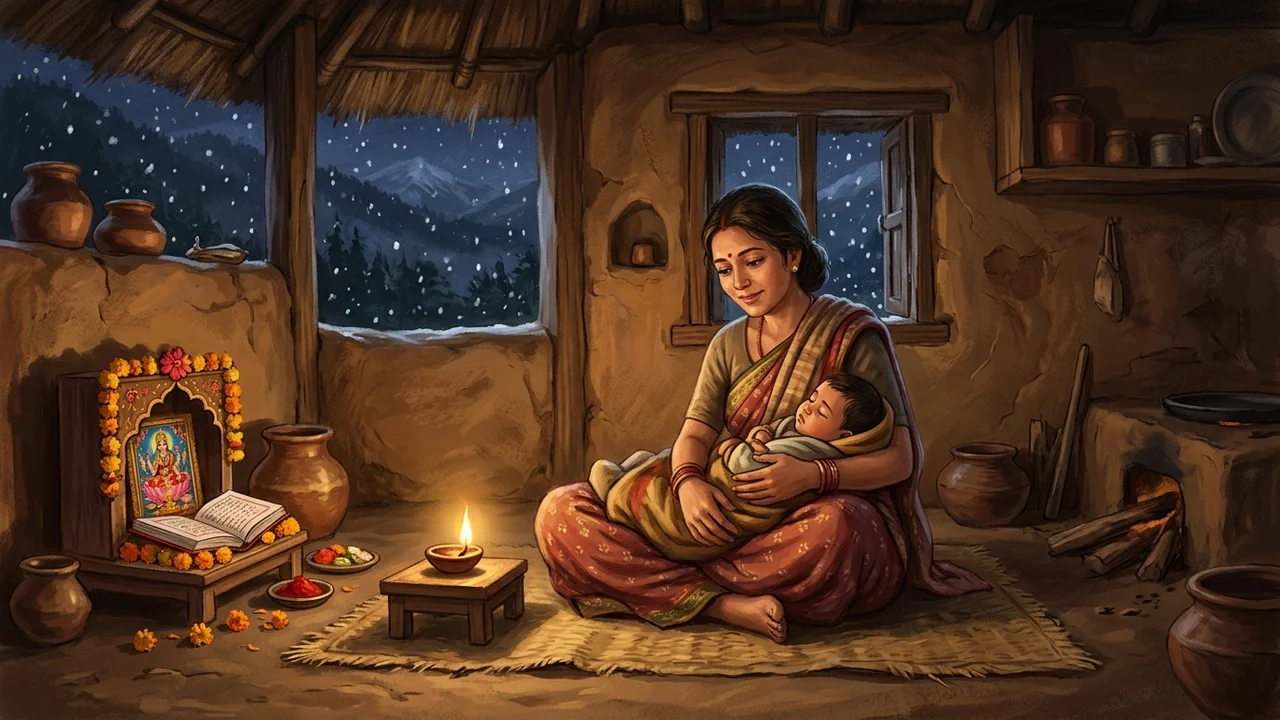
The story
The gods have had their wedding. The Swasthānī (स्वस्थानी) comes down from the mountain, into a brāhmaṇa's house. A brāhmaṇa is a person from a house of learning and ritual. The daughter of that house is Gomā (गोमा). She is the person the month of Magh (माघ) is remembered by. The feast, the death, the return, and the wedding all lead to her door. Someone hearing the book for the first time does not know that yet. The book already knows.
The book's order is on the thirty-one chapters. Gomā's nights are the nineteenth through the twenty-fourth. She is born to the brāhmaṇa Śivabhaṭṭa and to Satī, from a heap of cow dung, after they have served Gaṇeśa. While she is still a child, Śiva comes as a beggar and curses her. She will marry a man ten times her age. At seven she is given to Śiva Śarmā (शिव शर्मा), who is seventy. He is old and poor. The marriage itself is the hardship. This page does not add a second cruelty on top of that one.
She goes to his house and is soon with child. Śiva Śarmā goes out to beg. He climbs a tree to pick flowers for the pūjā, falls, and dies. The boy is Navarāj (नवराज). Gomā is left a widow with him. The two of them have nothing saved. The month still belongs to the mother. Later the kathā will put its whole hope on the boy.
She keeps the month. That is her answer to the life she has been given. The seven sages come and teach her the vow the goddess's own story already knew. Gomā takes it up inside a house that has little to spare. Night after night, through Magh, she stays with it.
She does not drop it.
This page does not give the steps of the vow. This page says only that she keeps the vow.
The result is the next page, and it is his. It is not a comfort brought to her door in the same chapter. This chapter asks for less. She does not drop the vow when the husband is gone. She does not drop it when the house has no food and no respect left. The lack is plain. The keeping is plain. The kathā lets that plainness be enough.
A listener can picture a small courtyard, a woman, and a boy who stays near her. There is a book, because the month has a book. There are neighbors. People in the lane see a poor woman who has been left alone. Some of them are kind. The story does not rest on their kindness. It rests on this: the vow goes on in a life that has become very small.
The chapters before her house, including Kumāra (कुमार), are on the Swasthānī page. Gomā's life is the part people wait to hear when Magh begins. The gods open the book. She is why it is still open in the second half of the month. People still say her name for a woman who kept a hard vow. No crowd was there to praise her. The praise, when it comes, comes as her son's story. She does not become a queen on this page. She remains the mother. The story does not let her month go to waste.
Magh is a cold month for a poor courtyard. The sun sits low. Water in the lane is biting in the morning. Nothing grand is added to her day. She wakes. She keeps the month. She feeds the boy with whatever the day allows. She sleeps. The story does not praise her in a speech. It stays with that ordinary hard life.
The day
Gomā's chapters are the ones a Magh night waits to reach. They are read aloud with the rest of the book, in the same room, over the same month. At Sānkhu the same chapters are heard by the Sālinadī. There is no separate Gomā festival outside that month. The fast's food, the count of flowers, and the drawing of the maṇḍala stay in the printed book. A maṇḍala is a sacred drawing. This page does not copy them. This page does not give the steps.
Also Recommended
Her vow is like Pārvatī's tapas, lived in a human house. A goddess refuses every other husband. A woman refuses to drop the month. The son who carries the result is Navarāj. Other household stories on these pages make the same turn. A vow is kept, and a result arrives. The brāhmaṇa, the merchant, and the king inside Satya Nārāyaṇa are named here and not told. Those parts change from printing to printing.
नेपालीमा
देवताको विवाह भइसक्यो। स्वस्थानी हिमालबाट ओर्लिन्छ, एउटा ब्राह्मणको घरमा। ब्राह्मण सिकाइ र पूजाको घरका मानिस हुन्। त्यो घरकी छोरी गोमा हुन्। माघको महिना उनकै नामले सम्झिइन्छ। भोज, मृत्यु, फर्काइ र विवाह सबै उनको ढोकामा पुग्छन्। पहिलो पटक सुन्नेलाई त्यो अझै थाहा हुँदैन। किताबलाई थाहा हुन्छ।
किताबको क्रम एकतीस अध्यायमा छ। गोमाका रात उन्नाइसौँदेखि चौबीसौँसम्म हुन्। शिवभट्ट ब्राह्मण र सतीले गणेशको सेवा गरेपछि गोमा गोबरको थुप्रोबाट जन्मिन्छिन्। उनी अझै सानी हुँदा शिव भिक्षुक बनेर आउनुहुन्छ र श्राप दिनुहुन्छ। उनी आफूभन्दा दस गुणा उमेरका मानिससँग विवाह गर्नेछिन्। सात वर्षमा उनलाई सत्तरी वर्षका शिव शर्मालाई दिइन्छ। उनी बूढा हुन्। उनी गरिब हुन्। विवाह आफैँ दुःख हो। यो पृष्ठले त्यो दुःखमाथि अर्को दुःख थप्दैन।
उनी पतिको घर जान्छिन् र चाँडै गर्भवती हुन्छिन्। शिव शर्मा भिक्षा माग्न जान्छन्। पूजाका लागि फूल टिप्न रुख चढ्दा खसेर मर्छन्। केटाको नाम नवराज हो। गोमा उससँग विधवा रहन्छिन्। दुई जनासँग जम्मा गरेको केही छैन। महिना अझै आमाको हो। पछि कथाले आफ्नो सारा आशा केटैमाथि राख्नेछ।
उनले महिना राख्छिन्। उनलाई दिइएको जीवनप्रति उनको जवाफ यही हो। सप्तऋषि आएर देवीकै कथाले जानेको व्रत सिकाउँछन्। गोमाले त्यो व्रत थोरै भएको घरभित्र लिन्छिन्। माघभरि, हरेक रात, उनी त्यसैमा बस्छिन्।
उनी छोड्दिनन्।
यो पृष्ठले व्रतको चरण दिँदैन। यो पृष्ठले यति मात्र भन्छ। उनले व्रत राख्छिन्।
नतिजा अर्को पृष्ठ हो, र त्यो छोराको हो। उही अध्यायमा उनको ढोकामा सान्त्वना पुग्दैन। यो अध्यायले कम माग्छ। लोग्ने गएपछि पनि उनी व्रत छोड्दिनन्। घरमा खान र इज्जत दुवै सकिएपछि पनि छोड्दिनन्। अभाव प्रस्ट छ। व्रत राख्ने कुरा पनि प्रस्ट छ। कथा त्यो प्रस्ट कुरालाई पर्याप्त मान्छ।
सुन्नेले सानो आँगन, एउटी स्त्री, र नजिकै बस्ने केटा देख्न सक्छ। महिनाको किताब हुन्छ, त्यसैले किताब छ। छिमेकी छन्। एक्लै छोडिएकी गरिब स्त्रीलाई गलीले देख्छ। कोही दयालु छन्। कथा उनीहरूको दयामा अड्दैन। कथा यसमा अड्छ। जीवन एकदम सानो भइसक्दा पनि व्रत अघि बढिरहन्छ।
उनको घरभन्दा अघिका अध्याय, कुमारसहित, स्वस्थानीको पृष्ठमा छन्। माघ सुरु हुँदा मानिसले सुन्न पर्खने भाग गोमाको जीवन हो। किताब देवताले खोल्नुहुन्छ। महिनाको दोस्रो आधामा किताब अझै खुला हुनुको कारण उनी हुन्। भीडले प्रशंसा नगरेको गाह्रो व्रत राख्ने स्त्री भन्न खोज्दा मानिसले अझै उनको नाम लिन्छन्। प्रशंसा आउँदा छोराको कथा भएर आउँछ। यो पृष्ठमा उनी रानी हुँदिनन्। उनी त्यही आमा रहन्छिन्। कथाले उनको महिना खेर जान दिँदैन।
गरिब आँगनका लागि माघ चिसो महिना हो। घाम होचो बस्छ। बिहान गलीको पानी काट्ने जस्तो चिसो हुन्छ। उनको दिनमा ठूलो वीरता थपिँदैन। उनी उठ्छिन्। महिना राख्छिन्। दिनले दिएजति केटालाई खुवाउँछिन्। सुत्छिन्। कथा भाषण दिएर उनको प्रशंसा गर्दैन। कथा त्यो साधारण कठिन जीवनमै बस्छ।
गोमाका अध्याय माघको रातले पुग्न पर्खेका अध्याय हुन्। किताबको बाँकीसँगै, उही कोठामा, उही महिनाभर सुनाएर पढिन्छन्। साँखुमा ती अध्याय सालिनदीको किनारमा सुनिन्छन्। त्यो महिनाबाहिर छुट्टै गोमा चाड छैन। व्रतको खाना, फूलको गन्ती, र मण्डलको चित्र छापिएको किताबमा बस्छन्। मण्डल पवित्र चित्र हो। यो पृष्ठले तिनलाई सार्दैन। यो पृष्ठले चरण दिँदैन।
उनको व्रत पार्वतीको तप जस्तै हो, मान्छेको घरमा बाँचिएको। देवीले अरू हरेक पति अस्वीकार गर्नुहुन्छ। एउटी स्त्रीले महिना छोड्न अस्वीकार गर्छिन्। नतिजा बोक्ने छोरा नवराज हो। यी पृष्ठका अरू घरकथामा पनि उही मोड छ। व्रत राखिन्छ, र नतिजा आइपुग्छ। सत्य नारायणभित्रका ब्राह्मण, व्यापारी र राजा यहाँ नाम लिइन्छन्, भनिँदैनन्। ती भाग छपाइपिच्छे फेरिन्छन्।
Where it sits
This is the heart of the Nepali kathā. The son's rise is the next page.