Household stories / 4. Sri Swasthani Bartakatha
4. Sri Swasthani Bartakatha (४. श्री स्वस्थानी व्रतकथा)
The storyकथा
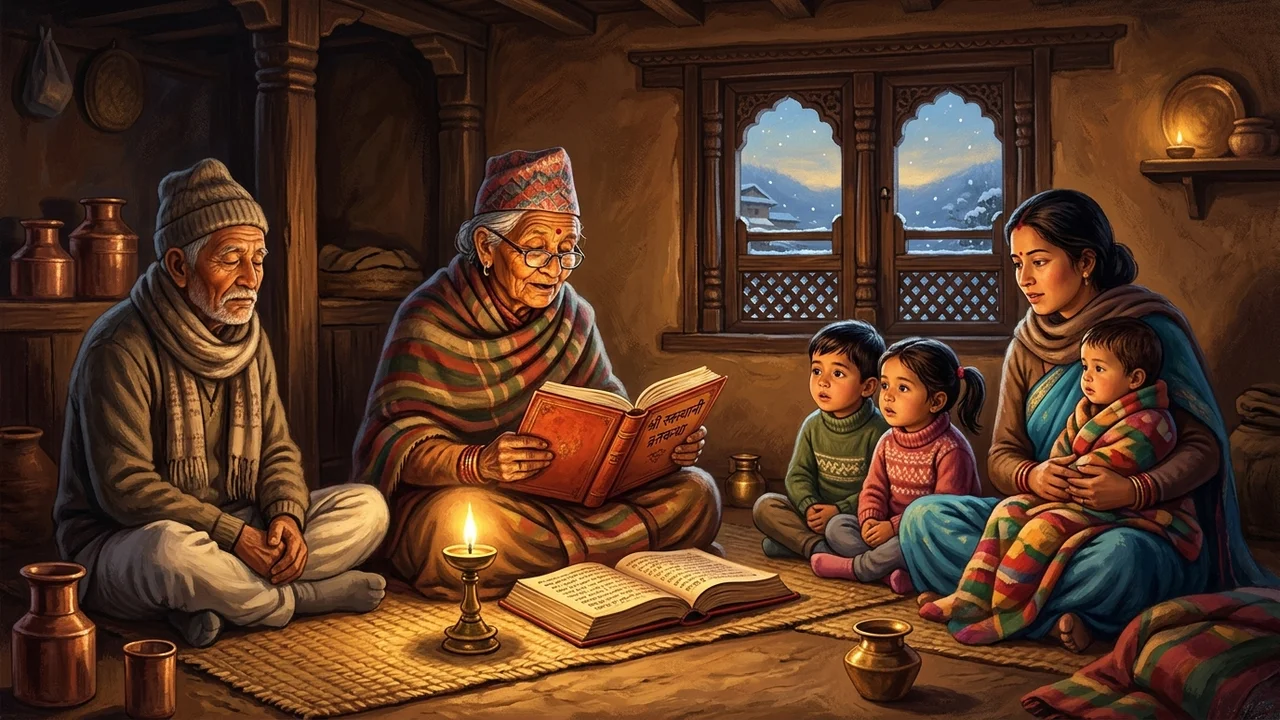
Throughout the freezing winter month of Magh—spanning thirty sacred days from the full moon of Poush to the full moon of Magh—domestic households across the hills and valleys of Nepal gather each twilight around the glowing hearth to recite the thirty-one chapters of the Sri Swasthānī Bratakathā. Cleansing the domestic shrine and lighting pure cotton wicks in brass butter lamps, family members sit in disciplined silence as a designated reader intones the sacred verses, offering fresh marigold petals, unbroken rice grains (akṣatā), and fruits to Goddess Swasthānī—the sovereign deity of self-abiding cosmic harmony (sve sthāne sthitā yā sā swasthānī)—who grants auspicious fortune, marital peace, and liberation from worldly suffering.
पौष शुक्ल पूर्णिमादेखि माघ शुक्ल पूर्णिमासम्म एक महिनाभरि कठ्याङ्ग्रिँदो जाडोको साँझमा नेपाली हिन्दु परिवारहरू आफ्ना पूजाकोठा वा भान्साको न्यानो चुल्होवरिपरि भेला भएर श्री स्वस्थानी व्रतकथाका एकतीस अध्यायहरूको भक्तिपूर्वक वाचन र श्रवण गर्दछन्। घरआँगन शुद्ध गरी तामाको दियोमा घिउको बत्ती बाल्ने, पुस्तकमा चन्दन, अक्षता, र सुगन्धित फूल चढाउने, र परिवारका सबै सदस्यहरू निष्ठाका साथ बसेर कथा सुन्ने परम्परा नेपाली जनजीवनको अभिन्न अङ्ग हो। आफ्नै दिव्य स्वरूपमा स्थित रहने सर्वशक्तिमती परमेश्वरी स्वस्थानीको आराधना गर्नाले सम्पूर्ण मनोकांक्षा पूर्ण हुने, कष्ट निवारण हुने, र पारिवारिक सुखसमृद्धि प्राप्त हुने दृढ धार्मिक विश्वास छ।
Structured across three expansive thematic movements, the sacred scripture begins with cosmic cosmogony and the primordial exploits of Lord Shiva—narrating the tragic self-immolation of Satī at her father Dakṣa's sacrificial altar, the scattering of her sacred limbs across the subcontinent to form the fifty-one Śaktipīṭhas, and her glorious rebirth as Pārvatī, whose unyielding Himalayan penance wins Shiva in celestial marriage. The narrative then shifts to mortal realms, recounting the poignant tribulations of the Brahmin matriarch Gomā, the divine coronation of her righteous son Navarāj as king of Lāvaṇya Deśa (Sānkhu), and the severe purgatorial retribution visited upon the arrogant queen Candrāvatī until she embraces humble devotion. Below is the comprehensive chapter-by-chapter directory of the thirty-one chapters in their traditional liturgical sequence, synthesizing their theological and moral revelations.
यो पवित्र ग्रन्थ तीनवटा प्रमुख खण्डहरूमा विभाजित छ। पहिलो खण्डमा सृष्टिको उत्पत्ति तथा भगवान् शिव र सतीदेवीको कथा आउँछ, जसमा प्रजापति दक्षको यज्ञमा सतीको देहत्याग, पृथ्वीभरि सतीका अङ्ग पतन भई एकाउन्न शक्तिपीठहरूको स्थापना, तथा पार्वतीका रूपमा पुनर्जन्म लिई कठोर तपस्याद्वारा शिवजीसँग भएको दिव्य विवाहको वर्णन छ। दोस्रो खण्डमा मनुष्य लोकको मार्मिक कथा सुरु हुन्छ, जसमा गरिब गोमा ब्राह्मणीको संघर्ष, उनका सुपुत्र नवराजको लावण्य देशको राज्यारोहण, र अहङ्कारी चन्द्रावतीले भोग्नुपरेको भयानक दण्ड तथा अन्ततः स्वस्थानी व्रतबाट प्राप्त गरेको मुक्ति र पश्चात्तापको कथा वर्णित छ। तल यस ग्रन्थका एकतीस अध्यायहरूको आधिकारिक संक्षेप प्रस्तुत गरिएको छ, जसले यस व्रतको नैतिक र आध्यात्मिक रहस्यलाई प्रष्ट पार्दछ।
The prayer at the beginningसुरुको प्रार्थना
Before the story, the reader bows to Ganesh, to Saraswati, and to Swasthānī, and says these lines. They bow to the one the gods praise and the yogis look for. They ask Saraswati to stay in the mouth. They bow to Madhav and to Vyāsa. They make a full-body bow to Swasthānī, and they picture her: four arms, three eyes, a sword and a trident above, a boon and a blue lotus below. Then the telling begins.
कथाभन्दा पहिले पाठकले गणेश, सरस्वती, र स्वस्थानीलाई ढोगेर यी हरफ भन्छन्। देवताले स्तुति गर्ने र योगीले खोज्ने उहाँलाई ढोग्छन्। सरस्वती मुखमा बसुन् भन्छन्। माधव र व्यासलाई ढोग्छन्। स्वस्थानीलाई साष्टाङ्ग ढोग्छन्, र उहाँको रूप सम्झन्छन्। चार हात, तीन आँखा, माथि खड्ग र त्रिशूल, तल वर र नीलो कमल। अनि कथन सुरु हुन्छ।
ॐ श्रीगणेशाय नमः । श्रीसरस्वत्यै नमः । श्रीस्वस्थानीपरमेश्वर्यै नमः ।
यं ब्रह्मा वरुणेन्द्ररुद्रमरुतः स्तुन्वन्ति दिव्यैः स्तवैः ।
वेदैः साङ्गपदक्रमोपनिषदैर् गायन्ति यं सामगाः ।
ध्यानावस्थिततद्गतेन मनसा पश्यन्ति यं योगिनः ।
यस्यान्तं न विदुः सुरासुरगणा देवाय तस्मै नमः ॥
श्रीमच्चन्दनचर्चितोज्ज्वलवपुः शुक्लाम्बरा मल्लिका-
मालाऽलंकृतकुण्डला प्रविलसन्मुक्तावलीशोभिता ।
सर्वज्ञाननिदानपुस्तकधरा रुद्राक्षमालाकरा ।
वाग्देवी वदनाम्बुजे वसतु मे त्रैलोक्यमाता चिरम् ॥
मूकं करोति वाचालं पङ्गुं लङ्घयते गिरिम् ।
यत्कृपा तमहं वन्दे परमानन्दमाधवम् ॥
नमो भगवते तस्मै व्यासायामिततेजसे ।
यस्य प्रसादाद् वक्ष्यामि नारायणकथामिमाम् ॥
नारायणं नमस्कृत्य नरं चैव नरोत्तमम् ।
देवीं सरस्वतीं व्यासं ततो जयमुदीरयेत् ॥
साष्टाङ्गं नमनं कृत्वा स्वस्थानीं परमेश्वरीम् ।
कथां सुधोपमां देव्याः श्रुत्वाभीष्टफलं लभेत् ॥
ॐ अष्टासु च दलेष्वेषु मातृकाष्टस्थितास्तथा ।
खड्गं त्रिशूलं चोर्ध्वं च वामे च वरमुत्पलम् ॥
चतुर्भुजा त्रिनेत्रा च सर्वालङ्कारभूषिता ।
सुवर्णवद्विकासाभा स्वस्थानी परमेश्वरी ॥
The same book gives a longer picture of her, and asks that the vow be completed by her leave. She is bright as gold, three-eyed, seated, and four-armed. Below, one hand holds a blue lotus and one gives a boon. Above, one hand holds a sword and one a shield. Shiva, whose sign is the bull, is worshipped beside her.
उही किताबले उहाँको लामो रूप दिन्छ, र व्रत उहाँको आज्ञाले पूरा होस् भन्छ। उहाँ सुन जस्तो उज्यालो, तीन आँखा, सिंहासनमा, र चार हात हुनुहुन्छ। तल एउटा हातमा नीलो कमल छ, अर्कोले वर दिन्छ। माथि एउटा हातमा खड्ग छ, अर्कोमा ढाल। साँढेको चिह्न भएका शिवलाई उहाँको छेउमा पूजिन्छ।
सुवर्णवर्णां दीप्ताभां त्रिनेत्रां कमलाननाम् ।
सिंहासनसमासीनां सर्वालङ्कारभूषिताम् ॥
नीलोत्पलधरां वामे दक्षिणे वरदां शुभाम् ।
खड्गचर्मधरां चोर्ध्वं वामदक्षिणयोः क्रमात् ॥
चतुर्भुजां च मां तत्र पूजयेद् वृषकेतुनाम् ।
एवं ध्यात्वा महादेवीं स्वस्थानीं जगदीश्वरीम् ॥
नमस्तेऽस्तु जगन्मातः स्वस्थानी सर्वमङ्गले ।
तव प्रसादाद् देवेशि व्रतं पूर्णं तवाज्ञया ॥
The thirty-one chaptersएकतीस अध्याय
- The making of the worldसृष्टिक्रम
- Madhu, Kaitabha, and the fourteen worldsमधु-कैटभ र चौध भुवन
- Dakṣa's daughtersदक्षका छोरी
- Satī's marriageसतीको विवाह
- The three citiesत्रिपुर
- Dakṣa's sacrificeदक्ष यज्ञ
- Vīrabhadra and Mahākālīवीरभद्र र महाकाली
- The goat's headबोकाको टाउको
- The body fallsशरीर खस्छ
- The other seatsअरू पीठ
- The gods at Mrigasthaliमृगस्थली
- Pārvatī is bornपार्वतीको जन्म
- Pārvatī's weddingपार्वतीको विवाह
- The Kirat formsकिरात रूप
- Ganesh, Kumar, and Tārakaगणेश, कुमार, र तारकासुर
- The deerमृगरूप
- Vṛndāवृन्दा
- The serpent wivesनागिनीहरू
- Gomā is bornगोमाको जन्म
- The wedding at sevenसात वर्षको विवाह
- Leave from her parentsआमाबाबुको बिदा
- The death, and the searchमृत्यु र खोज
- The seven sagesसप्तऋषि
- The vow, and the returnव्रत र फर्किने
- King of Lāvaṇyaलावण्यका राजा
- The bearers and the apsarasडोले र अप्सरा
- The Śālīशालीनदी
- She keeps the vowचन्द्रावतीको व्रत
- The serpent pairनाग दम्पती
- Candrāvatī tells itचन्द्रावतीको वृत्तान्त
- Gomā tells hersगोमाको वृत्तान्त
1. The making of the world१. सृष्टिक्रम
कुमारजी आज्ञा गर्नुहुन्छ, हे अगस्त्यमुनि । Before any person, there is the unmoving one, and from that one a stirring. The stirring becomes three tempers, the clear, the restless, and the heavy. From the heavy come the five great things, space, wind, fire, water, and earth. From them come the moving and the still. When the work inside the egg is finished, the knower in that egg is called Brahmā. He is the first to wear a body. That one is called Puruṣa, the person. The same one stands as three: Brahmā makes, Vishnu keeps, and Maheśvara brings the end. The world starts there. The next night is the age of that making.
कुमारजी आज्ञा गर्नुहुन्छ, हे अगस्त्यमुनि । कुनै मानिसभन्दा पहिले निश्चल हुनुहुन्छ, र त्यहाँबाट हलचल हुन्छ। हलचल तीन भाव बन्छ, सात्त्विक, राजस, र तामस। तामसबाट पाँच महाभूत आउँछन्, आकाश, वायु, तेज, जल, र पृथ्वी। तिनबाट चल्ने र नचल्ने जगत् बन्छ। अण्डभित्रको काम सिद्ध हुँदा त्यो अण्डको ज्ञातालाई ब्रह्मा भनिन्छ। उहाँ नै पहिलो शरीरधारी हुनुहुन्छ। त्यसलाई पुरुष भनिन्छ। उही एक जना तीन रूपमा उभिनुहुन्छ। ब्रह्माले बनाउनुहुन्छ, विष्णुले पाल्नुहुन्छ, र महेश्वरले संहार गर्नुहुन्छ। संसार त्यहीँबाट सुरु हुन्छ। अर्को रात त्यो बनाइको कल्प हो।
2. Madhu, Kaitabha, and the fourteen worlds२. मधु-कैटभ र चौध भुवन
कुमारजी आज्ञा गर्नुहुन्छ, हे अगस्त्यमुनि । The world is still water. From Vishnu's ear come two demons, Madhu and Kaitabha. They seize the lotus where Brahmā sits. Yogamāyā wakes Vishnu. The fight in the water lasts five thousand divine years. They boast, and they tell him to ask a boon of them. He asks to kill them, and he kills them on his own lap, the one place with no water. From their fat the earth sets. From their flesh come mountains, and from their bones, stone. Brahmā then makes the fourteen worlds, seven above, from the earth up to the world of truth, and seven below, down to Pātāla. He makes the guardians of the directions, the gods, the demons, the birds, and the four kinds of people. Satī's birth waits for the next night.
कुमारजी आज्ञा गर्नुहुन्छ, हे अगस्त्यमुनि । संसार अझै जलमय छ। विष्णुको कानबाट दुई दानव आउँछन्, मधु र कैटभ। उनीहरूले ब्रह्मा बसेको कमल समात्छन्। योगमायाले विष्णुलाई जगाउनुहुन्छ। जलको युद्ध दिव्य पाँच हजार वर्ष चल्छ। उनीहरूले घमण्ड गर्छन्, र विष्णुलाई आफूसँग वर माग्न भन्छन्। उहाँले उनीहरूलाई मार्ने वर माग्नुहुन्छ, र जल नभएको आफ्नै काखमा मार्नुहुन्छ। तिनको बोसोबाट पृथ्वी जम्छ। मासुबाट पर्वत बन्छ, हाडबाट ढुङ्गा। त्यसपछि ब्रह्माले चौध भुवन बनाउनुहुन्छ, माथि सात, भूलोकदेखि सत्यलोकसम्म, र तल सात, पातालसम्म। दिशाका पालक, देवता, दानव, पक्षी, र चार थरी मानिस बनाउनुहुन्छ। सतीको जन्म अर्को रात पर्खन्छ।
3. Dakṣa's daughters३. दक्षका छोरी
कुमारजी आज्ञा गर्नुहुन्छ, हे अगस्त्यमुनि । Dakṣa is the eldest of the lords of creatures. His wife is Viraṇī. Their first daughter is born with a light like a thousand suns, eyes like lotus petals, and a red color. The sages name her Satī. After her, Viraṇī bears daughters in a multitude, as many as the gods. The gods have no wives. They send Nārada to Dakṣa's house to ask for those daughters. The match of the many is arranged. The match of Satī herself is the hard one. Mahādeva asks for her, and Dakṣa will not give his daughter to that god in the ordinary way. Vishnu takes the wedding in hand. The longer telling of her begins here. The giving of the bride is the next night.
कुमारजी आज्ञा गर्नुहुन्छ, हे अगस्त्यमुनि । दक्ष प्रजापतिहरूमा जेठा हुन्। उनकी पत्नी विरणी हुन्। पहिली छोरी हजार सूर्य जस्तो तेज, कमलको पात जस्ता आँखा, र रातो वर्ण लिएर जन्मिन्छिन्। ऋषिहरूले नाम सती राख्छन्। उहाँपछि विरणीले देवता जति छोरी जन्माउनुहुन्छ। देवतासँग पत्नी छैन। उनीहरूले नारदलाई दक्षको घरमा ती छोरी माग्न पठाउँछन्। धेरैको विवाह मिल्छ। सती आफ्नो विवाह गाह्रो हो। महादेवले माग्नुहुन्छ, र दक्षले छोरीलाई त्यो देवतालाई साधारण किसिमले दिन मान्नुहुन्न। विष्णुले विवाह आफ्नो हातमा लिनुहुन्छ। उहाँको लामो कथन यहीँबाट सुरु हुन्छ। कन्यादान अर्को रात हो।
4. Satī's marriage४. सतीको विवाह
कुमारजी आज्ञा गर्नुहुन्छ, हे अगस्त्यमुनि । The day of the giving comes. Vishnu is at Dakṣa's house, and the hour is passing. Mahādeva has forgotten the wedding. He has taken poison, hemp, and thorn apple, and he is lost to the room. He wakes to the day, takes the form of an old renouncer, and comes to the door to beg. He says that if the bride is given before he is fed, he will curse both houses. Vishnu seats him beside the throne. Viraṇī pours the water. Dakṣa is about to place Satī's hand in Vishnu's hand. Vishnu covers the parents' eyes and places her hand in the old man's hand. Dakṣa sees it and calls Vishnu a trickster. He tells Satī to go with the husband she has been given. She asks leave and follows the old man. Far along the road he shows her a grass hut on Kailāsa and calls it their house. He sleeps outside. She sweeps the cobwebs, finds the store empty, and sits at his feet. Four days pass. He wakes angry, and then he tells her to tear the grass wall. Behind it is Kailāsa, set with jewels. In the courtyard he shows his own form. She knows her husband is Mahādeva, garlands him, and bows.
कुमारजी आज्ञा गर्नुहुन्छ, हे अगस्त्यमुनि । कन्यादानको दिन आउँछ। विष्णु दक्षको घरमा हुनुहुन्छ, र लग्नको बेला बित्दै छ। महादेवले विवाह बिर्सनुभएको छ। विष, भाङ, र धतुरो खाएर उहाँ कोठाबाट हराउनुभएको छ। दिन सम्झेर उहाँ वृद्ध संन्यासीको रूप लिनुहुन्छ, र भिक्षा माग्न ढोकामा आउनुहुन्छ। भिक्षा नदिई कन्यादान गरे लिने र दिने दुवैलाई श्राप दिनेछु भन्नुहुन्छ। विष्णुले उहाँलाई सिंहासनको छेउमा बसाउनुहुन्छ। विरणीले जल खन्याउनुहुन्छ। दक्षले सतीको हात विष्णुको हातमा राख्न लाग्नुहुन्छ। विष्णुले आमाबाबुको आँखा छल्नुहुन्छ र हात वृद्धको हातमा राखिदिनुहुन्छ। दक्षले देखेर विष्णुलाई छली भन्नुहुन्छ। सतीलाई पाएको स्वामीसँग जान भन्नुहुन्छ। उहाँ बिदा मागेर वृद्धको पछि लाग्नुहुन्छ। बाटो पर पुगेपछि उहाँले कैलासमा खरको झुप्रो देखाएर हाम्रो घर भन्नुहुन्छ। उहाँ बाहिर सुत्नुहुन्छ। उहाँले माकुराको जालो बढार्नुहुन्छ, भण्डार रित्तो पाउनुहुन्छ, र खुट्टामा बस्नुहुन्छ। चार दिन बित्छ। उहाँ रिसाएर ब्युझनुहुन्छ, अनि खरको भित्ता च्यात्न भन्नुहुन्छ। पछाडि मणि जडिएको कैलास छ। चोकमा उहाँले आफ्नै रूप देखाउनुहुन्छ। सतीले स्वामी महादेव हुनुहुन्छ भनेर चिन्नुहुन्छ, माला लगाउनुहुन्छ, र ढोग्नुहुन्छ।
5. The three cities५. त्रिपुर
कुमारजी आज्ञा गर्नुहुन्छ, हे अगस्त्यमुनि । Before the sacrifice, the book tells an older victory. The demon Maya performs austerities and wins a boon of near invincibility. He builds Tripura, three cities that the gods can hardly breach. The gods and the demons fight. Mahādeva burns the three cities. Dakṣa's feast comes next.
कुमारजी आज्ञा गर्नुहुन्छ, हे अगस्त्यमुनि । यज्ञभन्दा पहिले किताबले एउटा पुरानो विजय भन्छ। दानव मयले तप गरेर लगभग नमारिने वर पाउँछ। उसले त्रिपुर बनाउँछ, तीन शहर, जसलाई देवताले मुश्किलले भत्काउन सक्छन्। देवता र दानव लड्छन्। महादेवले तीन शहर जलाउनुहुन्छ। दक्षको भोज त्यसपछि आउँछ।
6. Dakṣa's sacrifice६. दक्ष यज्ञ
कुमारजी आज्ञा गर्नुहुन्छ, हे अगस्त्यमुनि । Dakṣa holds a great sacrifice and invites the gods, the sages, and his other daughters and sons-in-law. He does not invite Mahādeva or Satī. Satī hears of her father's feast and goes without her husband's leave. Dakṣa insults Shiva in front of the guests. Satī cannot bear it. She enters the sacrificial fire. The Satī page stays with this hall.
कुमारजी आज्ञा गर्नुहुन्छ, हे अगस्त्यमुनि । दक्षले ठूलो यज्ञ गर्छन् र देवता, ऋषि, र अरू छोरी-ज्वाइँलाई बोलाउँछन्। महादेव र सतीलाई बोलाउँदैनन्। सतीले पिताको भोज सुन्नुहुन्छ र पतिको आज्ञाबिना जानुहुन्छ। दक्षले पाहुनाका अगाडि शिवको निन्दा गर्छन्। सतीले सहनुहुन्न। उहाँ यज्ञको आगोमा पस्नुहुन्छ। सतीको पृष्ठ यही सभामा बस्छ।
7. Vīrabhadra and Mahākālī७. वीरभद्र र महाकाली
कुमारजी आज्ञा गर्नुहुन्छ, हे अगस्त्यमुनि । Nārada carries the news to Kailāsa. Mahādeva's grief and anger give rise to Vīrabhadra and Mahākālī. They destroy Dakṣa's sacrifice. Vishnu comes to the aid of Dakṣa's failing army. The feast does not finish in the shape the host wanted.
कुमारजी आज्ञा गर्नुहुन्छ, हे अगस्त्यमुनि । नारदले खबर कैलास पुर्याउनुहुन्छ। महादेवको शोक र रिसबाट वीरभद्र र महाकाली उत्पन्न हुनुहुन्छ। उनीहरूले दक्षको यज्ञ नाश गर्छन्। विष्णु दक्षको हारिरहेको सेनाको सहायतामा आउनुहुन्छ। भोज आयोजकले चाहेको रूपमा सकिँदैन।
8. The goat's head८. बोकाको टाउको
कुमारजी आज्ञा गर्नुहुन्छ, हे अगस्त्यमुनि । The fire cannot burn Satī's body. Vīrabhadra cuts off Dakṣa's head. Viraṇī weeps and praises her son-in-law until Dakṣa is given a goat's head and his life is returned.
कुमारजी आज्ञा गर्नुहुन्छ, हे अगस्त्यमुनि । आगोले सतीको शरीर जलाउन सक्दैन। वीरभद्रले दक्षको शिर काट्छन्। विरणीले विलाप गर्छिन् र ज्वाइँको स्तुति गर्छिन्, अनि दक्षलाई बोकाको टाउको जोडेर ज्यान फर्काइन्छ।
9. The body falls९. शरीर खस्छ
कुमारजी आज्ञा गर्नुहुन्छ, हे अगस्त्यमुनि । Mahādeva, wild with grief, sets Satī's body on his shoulder and walks the earth. The body falls as he roams, and the first twenty-five seats of the goddess arise where it falls. Fifty seats will be named across this night and the next. This page does not name the pieces, and it does not walk them from shrine to shrine. The valley keeps two of those names on other pages, Guhyeśvarī and Lalitā at Baneshwor.
कुमारजी आज्ञा गर्नुहुन्छ, हे अगस्त्यमुनि । शोकले बहुलाएका महादेवले सतीको शरीर काँधमा राखेर पृथ्वी डुल्नुहुन्छ। डुल्दै जाँदा शरीर खस्छ, र खसेका ठाउँमा देवीका पहिला पच्चीस पीठ बन्छन्। पचास पीठ यो रात र अर्को रातमा नामिनेछन्। यो पृष्ठले टुक्राको नाम लिँदैन, र मन्दिर-मन्दिर डुलाउँदैन। उपत्यकाले ती नाममध्ये दुई अरू पृष्ठमा राख्छ, गुह्येश्वरी र बानेश्वरकी ललिता।
10. The other seats१०. अरू पीठ
कुमारजी आज्ञा गर्नुहुन्छ, हे अगस्त्यमुनि । The wandering goes on. The remaining twenty-five seats are named. The chapter is a list of places the story was set down. A house can know that the list finishes at fifty. This page still does not recite it place by place.
कुमारजी आज्ञा गर्नुहुन्छ, हे अगस्त्यमुनि । डुलुवाइ अघि बढ्छ। बाँकी पच्चीस पीठको नाम आउँछ। अध्याय कथा राखिएका ठाउँको सूची हो। घरले सूची पचासमा सकिन्छ भनेर चिन्न सक्छ। यो पृष्ठले अझै ठाउँ-ठाउँ सुनाउँदैन।
11. The gods at Mrigasthali११. मृगस्थली
कुमारजी आज्ञा गर्नुहुन्छ, हे अगस्त्यमुनि । Satī's death has been carried across the land. In her absence the demon Tārakāsura seizes Indra's city, Amarāvatī. Mahādeva has come to Mrigasthali, the forest the valley still keeps beside Pashupati. The gods find him there and plead with him to return and protect them. The war itself waits. Her return, as Pārvatī, is the next night.
कुमारजी आज्ञा गर्नुहुन्छ, हे अगस्त्यमुनि । सतीको मृत्यु देशभरि पुगिसकेको छ। उहाँ नहुँदा दानव तारकासुरले इन्द्रको शहर अमरावती कब्जा गर्छ। महादेव मृगस्थली आइपुग्नुभएको छ, पशुपतिछेउको वन, जुन उपत्यकाले अझै राख्छ। देवताले उहाँलाई त्यहीँ भेट्छन् र फर्केर बचाउन बिन्ती गर्छन्। युद्ध आफैँ पर्खन्छ। उहाँको फर्काइ, पार्वती भएर, अर्को रात हो।
12. Pārvatī is born१२. पार्वतीको जन्म
कुमारजी आज्ञा गर्नुहुन्छ, हे अगस्त्यमुनि । Mahādeva is in the pine forest. The wives of the sages leave their husbands and follow him. The sages curse him, and the curse becomes a column of fire that nearly covers the world. Vishnu is asked to bring that fire to rest. After that, Menakā, wife of the mountain Himālaya, bears a daughter. Her name is Pārvatī. She wants no husband but Shiva. Vishnu teaches her the Swasthānī vow, the vow she will keep in order to win him. The Pārvatī page stays with her on the mountain. This page does not give the steps of that vow.
कुमारजी आज्ञा गर्नुहुन्छ, हे अगस्त्यमुनि । महादेव देवदारुको वनमा हुनुहुन्छ। ऋषिहरूकी पत्नीले पति छोडेर उहाँलाई पछ्याउँछन्। ऋषिहरूले श्राप दिन्छन्, र श्राप आगोको खम्बा बन्छ, जसले संसार ढाक्न लाग्छ। विष्णुलाई त्यो आगो थाम्न भनिन्छ। त्यसपछि हिमालयकी पत्नी मेनाले छोरी जन्माउनुहुन्छ। नाम पार्वती हो। उहाँले शिवबाहेक पति मान्नुहुन्न। विष्णुले उहाँलाई स्वस्थानी व्रत सिकाउनुहुन्छ, जुन व्रत उहाँले शिव पाउन राख्नुहुन्छ। पार्वतीको पृष्ठ हिमालमै बस्छ। यो पृष्ठले त्यो व्रतको चरण दिँदैन।
13. Pārvatī's wedding१३. पार्वतीको विवाह
कुमारजी आज्ञा गर्नुहुन्छ, हे अगस्त्यमुनि । Pārvatī keeps the vow. Indra wants Mahādeva brought back into the world's affairs, and he sends Kamadeva, the god of desire. Kamadeva shoots, and Mahādeva opens the third eye and burns him to ash. Kamadeva's wife Rati weeps. Mahādeva tells her that her husband will be born again. Then Pārvatī is given in marriage. The bride is set on the bull and taken away. The wedding party that came from Kailāsa takes its leave and turns back. The marriage page stays with this night.
कुमारजी आज्ञा गर्नुहुन्छ, हे अगस्त्यमुनि । पार्वतीले व्रत राख्नुहुन्छ। इन्द्रले महादेवलाई संसारको काममा फर्काउन चाहनुहुन्छ, र इच्छाका देवता कामदेवलाई पठाउनुहुन्छ। कामदेवले बाण हान्छन्, र महादेवले तेस्रो आँखा खोलेर उनलाई खरानी बनाउनुहुन्छ। कामदेवकी पत्नी रति रुन्छिन्। महादेवले उनलाई भन्नुहुन्छ, पति फेरि जन्मिनेछन्। त्यसपछि पार्वतीको कन्यादान हुन्छ। दुलहीलाई साँढेमा राखेर लगिन्छ। कैलासबाट आएको जन्ती बिदा भएर फर्कन्छ। विवाहको पृष्ठ यही रातमा बस्छ।
14. The Kirat forms१४. किरात रूप
कुमारजी आज्ञा गर्नुहुन्छ, हे अगस्त्यमुनि । Pārvatī has won Shiva by the vow. She sends the sage Aśvatthāmā to teach that same vow in the underworld, so that those who suffer there can hear it. Then Mahādeva and Pārvatī go to the Sleshmanataka forest and take the forms of a Kirat and a Kirat woman, a hunter of the forest and his wife. The mountain Himālaya praises Mahādeva. Husband and wife return to Kailāsa. The valley still knows that forest beside Pashupati.
कुमारजी आज्ञा गर्नुहुन्छ, हे अगस्त्यमुनि । पार्वतीले व्रतले शिव पाउनुभएको छ। उहाँले ऋषि अश्वत्थामालाई त्यही व्रत पातालमा सिकाउन पठाउनुहुन्छ, ताकि त्यहाँ दुःख पाएकाले सुन्न सकून्। त्यसपछि महादेव र पार्वती श्लेष्मान्तक वनमा गएर किरात र किरातिनीको रूप लिनुहुन्छ, वनको शिकारी र उसकी पत्नी। हिमालयले महादेवको स्तुति गर्छ। पति-पत्नी कैलास फर्कनुहुन्छ। उपत्यकाले पशुपतिछेउको त्यो वन अझै चिन्छ।
15. Ganesh, Kumar, and Tāraka१५. गणेश, कुमार, र तारकासुर
कुमारजी आज्ञा गर्नुहुन्छ, हे अगस्त्यमुनि । Pārvatī makes a boy and sets him to guard the door. Mahādeva comes home and the boy will not let him in. Mahādeva cuts off the boy's head, and then he sets an elephant's head on the body. That son is Ganesh. The other son is Kumar, six-faced, and he is the same Kumar who is telling Agastya this book. The two brothers set out to circle Mount Sumeru. When Kumar does not come back, Gaṅgā keeps Swasthānī's vow. The demon Tārakāsura, who took Amarāvatī, has a boon and a war. The gods ask Mahādeva for help. Kumar leads the army, and Tāraka is killed. The teller has now told his own birth and his own war.
कुमारजी आज्ञा गर्नुहुन्छ, हे अगस्त्यमुनि । पार्वतीले एउटा केटो बनाउनुहुन्छ र ढोकाको पहरेदारीमा राख्नुहुन्छ। महादेव घर आउनुहुन्छ र केटोले भित्र पस्न दिँदैन। महादेवले केटाको शिर काट्नुहुन्छ, अनि शरीरमा हात्तीको शिर राख्नुहुन्छ। त्यो छोरा गणेश हुनुहुन्छ। अर्का छोरा कुमार हुनुहुन्छ, छ मुखका, र उहाँ नै त्यो कुमार हुनुहुन्छ, जसले अगस्त्यलाई यो किताब सुनाउँदै हुनुहुन्छ। दुई दाजुभाइ सुमेरु पर्वत घुम्न निस्किन्छन्। कुमार नफर्किँदा गङ्गाले स्वस्थानीको व्रत राख्नुहुन्छ। अमरावती कब्जा गर्ने दानव तारकासुरसँग वर छ र युद्ध छ। देवताले महादेवसँग सहायता माग्छन्। कुमारले सेना लैजानुहुन्छ, र तारका मारिन्छ। भन्नेले अब आफ्नै जन्म र आफ्नै युद्ध भन्नुभयो।
16. The deer१६. मृगरूप
कुमारजी आज्ञा गर्नुहुन्छ, हे अगस्त्यमुनि । Mahādeva roams the Sleshmanataka forest as a deer. Brahmā and Vishnu try to catch him. At Gokarṇa, Rāvaṇa tries to carry Pārvatī away, and Vishnu prevents it. Mahādeva then takes the form of a royal swan and sports at Mānasarovara, the high lake. While he is away, the demon Jalandhara comes to Pārvatī. The valley's own deer story, at Pashupati, is a different telling of a god who stayed.
कुमारजी आज्ञा गर्नुहुन्छ, हे अगस्त्यमुनि । महादेव श्लेष्मान्तक वनमा मृग बनेर डुल्नुहुन्छ। ब्रह्मा र विष्णुले उहाँलाई समात्न खोज्नुहुन्छ। गोकर्णमा रावणले पार्वतीलाई लैजान खोज्छ, र विष्णुले रोक्नुहुन्छ। त्यसपछि महादेव राजहंसको रूप लिएर मानसरोवरमा विहार गर्नुहुन्छ, अग्लो ताल। उहाँ टाढा हुँदा दानव जलन्धर पार्वतीकहाँ आउँछ। पशुपतिको उपत्यकाको मृगकथा, बसेर रहेका देवताको अर्को कथन हो।
17. Vṛndā१७. वृन्दा
कुमारजी आज्ञा गर्नुहुन्छ, हे अगस्त्यमुनि । Mahādeva means to kill Jalandhara. Vṛndā's faithfulness protects her husband. Vishnu is sent to break that protection. He comes in her husband's form. The first time she sees through the disguise and the protection holds. The next time it fails. The killing, and her curse, are the next night. The tulasī plant is what a later telling makes of her. This night stays with the loss of the protection.
कुमारजी आज्ञा गर्नुहुन्छ, हे अगस्त्यमुनि । महादेवले जलन्धरलाई मार्न खोज्नुहुन्छ। वृन्दाको पतिव्रताले उनका पतिलाई बचाउँछ। विष्णुलाई त्यो रक्षा तोड्न पठाइन्छ। उहाँ पतिको रूपमा आउनुहुन्छ। पहिलो पटक उनले भेष चिन्छिन् र रक्षा टिक्छ। अर्को पटक रक्षा टुट्छ। वध र उनको श्राप अर्को रात हुन्। तुलसीको बोट पछिको कथनले उनलाई बनाएको हो। यो रात रक्षाको हानिमा बस्छ।
18. The serpent wives१८. नागिनीहरू
कुमारजी आज्ञा गर्नुहुन्छ, हे अगस्त्यमुनि । Mahādeva kills Jalandhara. Vṛndā curses Vishnu. The vow then leaves heaven. Pārvatī had already sent Aśvatthāmā toward the underworld. He teaches a company of nāginīs to keep Swasthānī's vow. They keep it. She is pleased, and she appears before them, bright as a thousand suns, and grants them a boon. In the whole book this is the night she shows herself. This page does not give the steps of what they offered. The book now comes down from the gods to a house.
कुमारजी आज्ञा गर्नुहुन्छ, हे अगस्त्यमुनि । महादेवले जलन्धरलाई मार्नुहुन्छ। वृन्दाले विष्णुलाई श्राप दिन्छिन्। त्यसपछि व्रत स्वर्ग छोड्छ। पार्वतीले अश्वत्थामालाई पातालतिर पठाइसक्नुभएको थियो। उहाँले नागिनीहरूको समूहलाई स्वस्थानीको व्रत सिकाउनुहुन्छ। उनीहरूले राख्छन्। उहाँ प्रसन्न हुनुहुन्छ, हजार सूर्य जस्तो उज्यालो भएर उनीहरूका अघि प्रकट हुनुहुन्छ, र वर दिनुहुन्छ। पूरै किताबमा उहाँ देखिनुभएको रात यही हो। यो पृष्ठले उनीहरूले के चढाए भन्ने चरण दिँदैन। किताब अब देवताबाट एउटा घरमा झर्छ।
19. Gomā is born१९. गोमाको जन्म
कुमारजी आज्ञा गर्नुहुन्छ, हे अगस्त्यमुनि । The book comes down to a brāhmaṇa's house. Śivabhaṭṭa and Satī serve Ganesh, and a girl is born to them from a heap of cow dung. Her name is Gomā. Their devotion unsettles Indra. He asks Mahādeva for help. While Gomā is still a child, Shiva comes as a beggar and curses her. She will marry a man ten times her age. The Gomā page stays with her from this night on.
कुमारजी आज्ञा गर्नुहुन्छ, हे अगस्त्यमुनि । किताब ब्राह्मणको घरमा झर्छ। शिवभट्ट र सतीले गणेशको सेवा गर्छन्, र गोबरको थुप्रोबाट छोरी जन्मिन्छिन्। नाम गोमा हो। तिनको भक्तिले इन्द्रलाई अशान्त पार्छ। उहाँले महादेवसँग सहायता माग्नुहुन्छ। गोमा अझै सानी हुँदा शिव भिक्षुक बनेर आउनुहुन्छ र श्राप दिनुहुन्छ। उनी आफूभन्दा दस गुणा उमेरका मानिससँग विवाह गर्नेछिन्। गोमाको पृष्ठ यो रातदेखि उनैमा बस्छ।
20. The wedding at seven२०. सात वर्षको विवाह
कुमारजी आज्ञा गर्नुहुन्छ, हे अगस्त्यमुनि । Gomā is seven. Her father looks for a brāhmaṇa and finds Shiva Śarmā, who is seventy. Gomā consoles her mother. She is given to him. The curse has become a wedding. The hardship of her life is this marriage.
कुमारजी आज्ञा गर्नुहुन्छ, हे अगस्त्यमुनि । गोमा सात वर्षकी हुन्छिन्। बुबाले ब्राह्मण खोज्छन् र सत्तरी वर्षका शिव शर्मा भेट्छन्। गोमाले आमालाई सम्झाउँछिन्। उनलाई उनीकहाँ दिइन्छ। श्राप विवाह भएको छ। उनको जीवनको दुःख यही विवाह हो।
21. Leave from her parents२१. आमाबाबुको बिदा
कुमारजी आज्ञा गर्नुहुन्छ, हे अगस्त्यमुनि । Shiva Śarmā and Gomā ask her parents' leave to go. She is still in her father's house. She consoles Śivabhaṭṭa and Satī, and she takes her leave. The husband's door is the next night.
कुमारजी आज्ञा गर्नुहुन्छ, हे अगस्त्यमुनि । शिव शर्मा र गोमाले आमाबाबुसँग जाने बिदा माग्छन्। उनी अझै बुबाको घरमै छिन्। उनी शिवभट्ट र सतीलाई सम्झाउँछिन्, र बिदा लिन्छिन्। पतिको ढोका अर्को रात हो।
22. The death, and the search२२. मृत्यु र खोज
कुमारजी आज्ञा गर्नुहुन्छ, हे अगस्त्यमुनि । Śivabhaṭṭa and Satī die. Shiva Śarmā and Gomā reach his house. She is soon with child. He leaves her to beg in another region. He climbs a tree to pick flowers for the puja, falls, and dies. Navarāj is born. He grows, receives the sacred thread, and marries Candrāvatī, daughter of Agnisvāmī of Varuṇapura. He goes looking for his father, learns that the old man is dead, finds the bones, and completes the funeral. His road from here is the Navarāj page.
कुमारजी आज्ञा गर्नुहुन्छ, हे अगस्त्यमुनि । शिवभट्ट र सतीको मृत्यु हुन्छ। शिव शर्मा र गोमा उनको घर पुग्छन्। उनी चाँडै गर्भवती हुन्छिन्। उनी अर्को देशमा भिक्षा माग्न जान्छन्। पूजाका लागि फूल टिप्न रुख चढ्दा खसेर मर्छन्। नवराज जन्मिन्छ। ऊ हुर्कन्छ, व्रतबन्ध गर्छ, र वरुणपुरका अग्निस्वामीकी छोरी चन्द्रावतीसँग विवाह गर्छ। ऊ बाबु खोज्न जान्छ, बूढा मानिस मरिसकेको थाहा पाउँछ, हाड फेला पार्छ, र दाहसंस्कार सक्छ। यहाँदेखिको बाटो नवराजको पृष्ठ हो।
23. The seven sages२३. सप्तऋषि
कुमारजी आज्ञा गर्नुहुन्छ, हे अगस्त्यमुनि । Candrāvatī tells Gomā she will go to her parents' house. There is no food and no clothing, and a call can bring her back when the son returns. She leaves. Gomā remembers the beggar's curse and walks, weeping. On Kailāsa, Pārvatī asks that Gomā be taught the vow. The seven sages come to her door, outside the town, and teach her what Pārvatī once kept. Gomā has nothing to offer them. She goes out to buy a small gift. They leave seven gold cowries under the seat, and they go.
कुमारजी आज्ञा गर्नुहुन्छ, हे अगस्त्यमुनि । चन्द्रावतीले गोमालाई माइत जाने कुरा भन्छिन्। खान अन्न छैन, लगाउन लुगा छैन, र छोरा फर्केपछि बोलावटले उनलाई फर्काउन सक्छ। उनी जान्छिन्। गोमाले भिक्षुकको श्राप सम्झन्छिन् र रुनुहुँदै हिँड्छिन्। कैलासमा पार्वतीले गोमालाई व्रत सिकाउन बिन्ती गर्नुहुन्छ। सप्तऋषि सहरबाहिर उनको ढोकामा आउँछन्, र पार्वतीले राखेको व्रत सिकाउँछन्। गोमासँग दिन केही छैन। उनी सानो कोसेली किन्न निस्किन्छिन्। उनीहरूले बसेको पिरकामुनि सात सुनका कौडी छोडेर जान्छन्।
24. The vow, and the return२४. व्रत र फर्किने
कुमारजी आज्ञा गर्नुहुन्छ, हे अगस्त्यमुनि । Gomā keeps the vow. One night, while the story is being read, Navarāj comes home. He bathes in a river. Harihara appears and grants him a boon: he will be king of Lāvaṇya. He eats the prasād of the vow. The crowning is the next night.
कुमारजी आज्ञा गर्नुहुन्छ, हे अगस्त्यमुनि । गोमाले व्रत राख्छिन्। एक रात कथा पढिँदै गर्दा नवराज घर आइपुग्छ। ऊ नदीमा स्नान गर्छ। हरिहर प्रकट हुनुहुन्छ र वर दिनुहुन्छ, ऊ लावण्यका राजा हुनेछ। ऊ व्रतको प्रसाद खान्छ। राज्याभिषेक अर्को रात हो।
25. King of Lāvaṇya२५. लावण्यका राजा
कुमारजी आज्ञा गर्नुहुन्छ, हे अगस्त्यमुनि । The king of Lāvaṇya has died without a child. An elephant is to choose the next king. Navarāj goes, and he and his mother stand aside. The elephant finds him, garlands him, and carries him. A golden jar pours the water of a coronation. Gomā anoints her son. Navarāj is king.
कुमारजी आज्ञा गर्नुहुन्छ, हे अगस्त्यमुनि । लावण्यका राजा सन्तानबिना मरेका छन्। हात्तीले अर्को राजा छान्ने हो। नवराज जान्छ, र ऊ र उसकी आमा छेउमा उभिन्छन्। हात्तीले उसलाई भेट्छ, माला लगाइदिन्छ, र बोक्छ। सुनको कलशले अभिषेकको पानी खन्याउँछ। गोमाले छोरालाई अभिषेक गर्छिन्। नवराज राजा हुन्छ।
26. The bearers and the apsaras२६. डोले र अप्सरा
कुमारजी आज्ञा गर्नुहुन्छ, हे अगस्त्यमुनि । The new king sends bearers with a palanquin to bring Candrāvatī to Lāvaṇya. On the way back they find apsarases in a forest, keeping Swasthānī's vow. The bearers join that keeping. They come back to the palanquin with flowers and the mark of the vow on their foreheads.
कुमारजी आज्ञा गर्नुहुन्छ, हे अगस्त्यमुनि । नयाँ राजाले चन्द्रावतीलाई लावण्य ल्याउन डोले र डोली पठाउँछन्। फर्कँदा उनीहरूले वनमा अप्सरा भेट्छन्, स्वस्थानीको व्रत राख्दै। डोलेहरू त्यो व्रतमा बस्छन्। उनीहरू फूल र निधारको टीका लिएर डोलीमा फर्कन्छन्।
27. The Śālī२७. शालीनदी
कुमारजी आज्ञा गर्नुहुन्छ, हे अगस्त्यमुनि । The bearers offer Candrāvatī the prasād. She is angry. She has not heard of Swasthānī, and she throws the flowers and the fruit. A wind throws the palanquin into the Śālī. Her body is stricken, and she is left in the river's misery. In Lāvaṇya the king feeds the brāhmaṇas of the kingdom. Sages of the Kapila line, on their way to that meal, find her and she begs them for food. When they go to send something, the storehouse is dry.
कुमारजी आज्ञा गर्नुहुन्छ, हे अगस्त्यमुनि । डोलेहरूले चन्द्रावतीलाई प्रसाद दिन्छन्। उनी रिसाउँछिन्। उनले स्वस्थानीको नाम सुनेकी छैनन्, र फूल र फल फ्याँक्छिन्। हावाले डोली शालीनदीमा खसाल्छ। उनको शरीर बिग्रन्छ, र उनी नदीको दुःखमा रहन्छिन्। लावण्यमा राजाले राज्यका ब्राह्मणलाई भोजन गराउँछन्। त्यो भोजनमा जाँदै गरेका कपिल गोत्रका ऋषिहरूले उनलाई भेट्छन् र उनी खान बिन्ती गर्छिन्। केही पठाउन जाँदा ढुकुटी सुकेको हुन्छ।
28. She keeps the vow२८. चन्द्रावतीको व्रत
कुमारजी आज्ञा गर्नुहुन्छ, हे अगस्त्यमुनि । They bring her a little food and tell her she is the cause, since even the king's store has dried. She is taught the vow. Apsarases keep it with her by the Śālī and tell the story. In her poverty the sand and the river mud she sets out become a real offering. She understands that her scorn did this. She repents, keeps the month, asks pardon, and is restored. This page does not give the steps.
कुमारजी आज्ञा गर्नुहुन्छ, हे अगस्त्यमुनि । उनीहरूले अलिकति खानेकुरा ल्याउँछन् र भन्छन्, कारण उनी हुन्, किनकि राजाको ढुकुटी पनि सुक्यो। उनलाई व्रत सिकाइन्छ। अप्सराहरू शालीनदीमा उनसँगै व्रत राख्छन् र कथा सुनाउँछन्। गरिबीमा उनले राखेको बालुवा र नदीको माटो साँच्चैको भोग बन्छ। उनले बुझ्छिन्, उनको हेलाबाट यो भयो। उनी पछुतो मान्छिन्, महिना राख्छिन्, क्षमा माग्छिन्, र पहिले जस्तै हुन्छिन्। यो पृष्ठले चरण दिँदैन।
29. The serpent pair२९. नाग दम्पती
कुमारजी आज्ञा गर्नुहुन्छ, हे अगस्त्यमुनि । Candrāvatī's offering from the vow reaches a nāginī who has been separated from her husband. The pair is reunited, and the nāginī blesses her. Word of the woman by the Śālī reaches the king. Navarāj sends his people to bring Candrāvatī home.
कुमारजी आज्ञा गर्नुहुन्छ, हे अगस्त्यमुनि । चन्द्रावतीको व्रतको भोग पतिबाट छुट्टिएकी नागिनीकहाँ पुग्छ। दम्पती मिल्छन्, र नागिनीले उनलाई आशीर्वाद दिन्छिन्। शालीनदीकी स्त्रीको खबर राजाकहाँ पुग्छ। नवराजले चन्द्रावतीलाई घर ल्याउन आफ्ना मानिस पठाउँछन्।
30. Candrāvatī tells it३०. चन्द्रावतीको वृत्तान्त
कुमारजी आज्ञा गर्नुहुन्छ, हे अगस्त्यमुनि । Candrāvatī arrives at the palace. She bows at Gomā's feet. Navarāj, Gomā, and Candrāvatī sit together. They ask why she was living by the Śālī. She tells it herself: the scorn, the river, the brāhmaṇas, the apsarases, and the vow that restored her.
कुमारजी आज्ञा गर्नुहुन्छ, हे अगस्त्यमुनि । चन्द्रावती दरबार आइपुग्छिन्। उनी गोमाको खुट्टामा ढोग्छिन्। नवराज, गोमा, र चन्द्रावती सँगै बस्छन्। उनीहरू सोध्छन्, शालीनदीकिनार किन बसिन्। उनी आफैँ भन्छिन्। हेला, नदी, ब्राह्मण, अप्सरा, र उनलाई फर्काएको व्रत।
31. Gomā tells hers३१. गोमाको वृत्तान्त
कुमारजी आज्ञा गर्नुहुन्छ, हे अगस्त्यमुनि । Gomā receives her daughter-in-law and tells her own road. Navarāj and Candrāvatī both left her. The seven sages came. She kept the vow. Her son returned the next morning. Harihara gave the boon, and Lāvaṇya chose him and crowned him. She puts the charge of the house, the key of the storehouse, into Candrāvatī's hands. The goddess is praised. The vow has been told, from the making of the world to this key. The month of reading is complete. Agastya has heard what Kumar was asked to tell.
कुमारजी आज्ञा गर्नुहुन्छ, हे अगस्त्यमुनि । गोमाले बुहारीलाई स्वागत गर्छिन् र आफ्नै बाटो भन्छिन्। नवराज र चन्द्रावती दुवैले उनलाई छोडे। सप्तऋषि आए। उनले व्रत राखिन्। छोरा भोलिपल्ट बिहान फर्क्यो। हरिहरले वर दिए, र लावण्यले उसलाई छानेर अभिषेक गर्यो। उनले घरको जिम्मा, ढुकुटीको साँचो, चन्द्रावतीको हातमा राख्छिन्। देवीको प्रशंसा हुन्छ। व्रत भनियो, संसार बनेदेखि यो साँचोसम्म। पढाइको महिना पूरा हुन्छ। अगस्त्यले कुमारलाई भन्न लगाइएको कुरा सुने।
The prayer at the endअन्त्यको प्रार्थना
When the night's chapter is finished, the house says these lines and offers the hearing. They ask for auspiciousness, for rain in its season, for a country without panic, for children where there are none, for wealth where there is none, and for a hundred autumns of life. Wherever this story is heard, the great rivers are said to be present. Saraswati is asked to clear dullness. What was done and what was heard is offered to Narayan, and to Sri Swasthānī.
रातको अध्याय सकिएपछि घरले यी हरफ भन्छ र सुनेको चढाउँछ। मङ्गल, बेलामा पानी, नआत्तिने देश, सन्तान नभएकालाई सन्तान, धन नभएकालाई धन, र सय शरदको आयु माग्छ। यो कथा जहाँ सुनिन्छ, त्यहाँ ठूला नदी छन् भनिन्छ। सरस्वतीलाई जडता हटाउन भनिन्छ। गरेको र सुनेको नारायणलाई, र श्री स्वस्थानीलाई चढाइन्छ।
उपनयतु मङ्गलं वः सकलजगन्मङ्गलालयः श्रीमान् ।
दिनकरकिरणनिबोधितनवनलिनदलनिभेक्षणः कृष्णः ॥
काले वर्षतु पर्जन्यः पृथिवी शस्यशालिनी ।
देशोऽयं क्षोभरहितो ब्राह्मणाः सन्तु निर्भयाः ॥
अपुत्राः पुत्रिणः सन्तु पुत्रिणः सन्तु पौत्रिणः ।
निर्धनाः सधनाः सन्तु जीवन्तु शरदां शतम् ॥
तत्रैव गङ्गा यमुना च तत्र गोदावरी सिन्धुः सरस्वती च ।
तीर्थानि सर्वाणि वसन्ति तत्र यत्राच्युतोदारकथाप्रसङ्गः ॥
या कुन्देन्दुतुषारहारधवला या शुभ्रवस्त्रावृता ।
या वीणावरदण्डमण्डितकरा या श्वेतपद्मासना ॥
या ब्रह्माच्युतशङ्करप्रभृतिभिर् देवैः सदा वन्दिता ।
सा मां पातु सरस्वती भगवती निःशेषजाड्यापहा ॥
कायेन वाचा मनसेन्द्रियैर्वा बुद्ध्यात्मना वा प्रकृतिस्वभावात् ।
करोमि यद्यत् सकलं परस्मै नारायणायेति समर्पयामि ॥
अनन्यचेतसा भक्त्या श्रुतं यच्च कथामृतम् ।
समर्पयामि तत्सर्वं स्वस्थानीं परमेश्वरीम् ॥
श्रीस्वस्थानीदेव्यै अर्पणमस्तु ।
ॐ श्रीस्वस्थानीपरमेश्वर्यै नमो नमः ।
Where it sitsकहाँ बस्छ
The thirty-one chapters are this page. Satī, Pārvatī, the marriage, Gomā, and Navarāj are the longer nights inside that order. The same month at Sānkhu, by the river, is Madhav Narayan. The lines about divine love remain the Nārada sūtras and Gītā 12.
एकतीस अध्याय यही पृष्ठ हुन्। सती, पार्वती, विवाह, गोमा, र नवराज त्यही क्रमभित्रका लामो रात हुन्। साँखुमा उही महिना, नदीकिनारमा, माधव नारायण हो। दिव्य प्रेमका हरफ नारदका सूत्र र गीता १२मै रहन्छन्।