Household stories / Satī
Satī (सती) at the sacrifice
The story
The first long story in the book of Magh (माघ) is a feast that goes wrong. Magh is the cold month of the reading. What goes wrong is the guest list. Dakṣa (दक्ष) is a father. He is also the host of a sacrifice. He calls the gods. He does not call Śiva (शिव). The share that would have been set for Śiva is never set. The hall fills with the guests he wanted. One name is left out on purpose. The empty place is why he gave the feast.
Satī (सती) is Dakṣa's daughter. She is also Śiva's wife. People in Nepal read this story at night. In that story, news of the feast reaches her at home. She wants to go to her father's door. The god she lives with does not want her to go. She goes anyway. A daughter can still believe her father's house will know her when she arrives.
The door opens. No welcome follows. Dakṣa speaks of her husband as a guest who was never worth a seat. The kathā, the told story, keeps the hurt in that one room. There is the father. There is the daughter who came anyway. There is the name of Śiva, treated as a name the sacrifice can do without. Around them the feast is already going on. This page does not give the list of that feast.
She gives up her body in that hall.
That is the sentence the story uses. This page does not say how she gives up her body. It does not name parts of a body.
When the news comes, Śiva has grief. He was not in the hall. His wife is gone. Out of that grief comes Vīrabhadra (वीरभद्र). Vīrabhadra breaks the sacrifice. The feast Dakṣa began does not finish in the shape Dakṣa wanted. This page does not turn that breaking into a fight. It does not give a scene for anyone to copy. It keeps the quiet afterward. Satī is gone. The god is left alone.
Later books carry that death from place to place. People in the valley still walk to two of those places. Guhyeśvarī (गुह्येश्वरी) stands beside Paśupati (पशुपति). Lalitā (ललिता), also called Devīkoṭ (देवीकोट), is remembered at Baneshwor. A household can know the names. This page does not name parts of a body. It does not follow a body from shrine to shrine. Two names are enough to say that the valley kept the story.
The Swasthānī (स्वस्थानी) tells this hard beginning because the goddess of the later nights is the one who comes back. If the book closed here, the month would have nothing left to tell. Satī's death is why the next part begins. Pārvatī (पार्वती) is born again as the mountain's daughter. She will not take any husband but the one she has lost. That return is the next page. This page ends with the god alone.
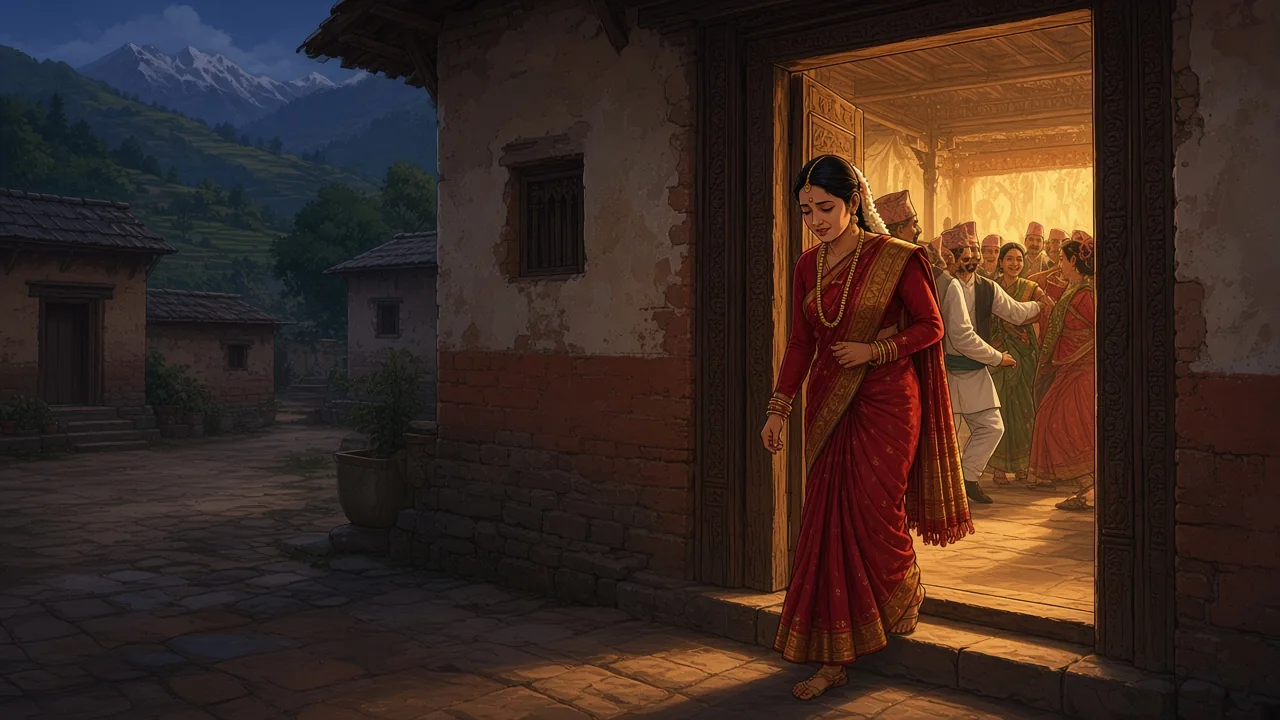
On those Magh nights the room around the book is an ordinary room. Someone reads. Someone listens. Often that listener was supposed to be asleep, and is not. The lamp on the floor belongs to the house. Outside, the month is cold. The year has just turned toward longer days. Inside, the story is still at the beginning. The purāṇas tell the same death at greater length. Purāṇas are old books of these stories. These pages do not copy those chapters in. What the Magh book needs from Satī is the reason Pārvatī will not look at any other husband. A parent can say the chapter in a few sentences. There was a feast. A daughter was insulted. She gave up her body. The sacrifice was broken. The god was left alone. The picture that stays is a woman in red turning away from a bright hall.
The day
Satī has no festival night of her own on these pages. She is read inside the Magh book, near the beginning. That reading gives a reason for Pārvatī's tapas. Tapas is a long, hard practice. Households who go to Guhyeśvarī stand where a later story set the story down. This page does not give the steps of that visit.
Also Recommended
What comes back from this death is Pārvatī, daughter of Himālaya. Then comes the marriage. Then come the women's festivals of that marriage, Tīj and Gaurā. The goddess who fights at Dashain is another story of the same great goddess. Devī means goddess. That story is a battle with a buffalo demon. This page is Dakṣa's sacrifice. The ground of Guhyeśvarī is also the ground of the deer and of the drained lake.
नेपालीमा
माघको किताबको पहिलो लामो कथा बिग्रिएको भोज हो। माघ पढाइको जाडो महिना हो। बिग्रिएको कुरा पाहुनाको सूची हो। दक्ष पिता हुन्। उनी यज्ञका यजमान पनि हुन्। उनले देवतालाई बोलाए। शिवलाई बोलाएन। शिवका लागि राखिने भाग राखिएन। उनले चाहेका पाहुनाले सभा भरियो। एउटा नाम जानीजानी छुट्यो। खाली ठाउँ नै उनले भोज दिएको कारण हो।
सती दक्षकी छोरी हुनुहुन्छ। उहाँ शिवकी पत्नी पनि हुनुहुन्छ। नेपाली घरले रातमा पढ्ने कथामा त्यो भोजको खबर उहाँको घरमा पुग्छ। उहाँ पिताको ढोकामा जान चाहनुहुन्छ। सँगै बस्नुभएका देवता जान चाहनुहुन्न। तैपनि उहाँ जानुहुन्छ। छोरीलाई अझै लाग्न सक्छ, पुग्दा पिताको घरले चिन्नेछ।
ढोका खुल्यो। स्वागत आएन। दक्षले सतीका पति शिवबारे सभामा बस्न नलायक पाहुनाबारे जस्तै गरी बोले। कथाले घाउ त्यही एक कोठामा राख्छ। त्यहाँ पिता छन्। तैपनि आएकी छोरी हुनुहुन्छ। त्यहाँ शिवको नाम छ, जसलाई यज्ञले बिना पनि चल्ने नामझैँ ठान्यो। वरिपरि भोज चलिरहेको छ। यो पृष्ठले त्यो भोजको सूची दिँदैन।
उहाँले त्यहीँ सभामा शरीर छोड्नुभयो।
कथाले यति वाक्य भन्छ। यो पृष्ठले शरीर कसरी छोड्नुभयो भनेर भन्दैन। शरीरका अङ्गको नाम पनि दिँदैन।
खबर आउँदा शिव शोकमा हुनुहुन्छ। उहाँ सभामा हुनुहुन्नथ्यो। उहाँकी पत्नी जानुभयो। त्यही शोकबाट वीरभद्र निस्कनुहुन्छ। उहाँले यज्ञ भङ्ग गर्नुहुन्छ। दक्षले थालेको भोज दक्षले चाहेको रूपमा सिद्ध हुँदैन। यो पृष्ठले त्यो भङ्गलाई लडाइँ बनाउँदैन। कसैले सार्न मिल्ने दृश्य पनि दिँदैन। भङ्गपछिको सन्नाटा राख्छ। सती जानुभयो। देवता एक्लै रहनुभयो।
पछिका किताबले त्यो मृत्युलाई ठाउँठाउँमा पुर्याउँछन्। उपत्यकाका मानिस अझै दुई ठाउँ हिँड्छन्। गुह्येश्वरी पशुपतिको छेउमा हुनुहुन्छ। ललितालाई देवीकोट पनि भनिन्छ। बानेश्वरमा उहाँको सम्झना गरिन्छ। घरले नाम चिन्न सक्छ। यो पृष्ठले शरीरका अङ्गको नाम लिँदैन। शरीरलाई मन्दिर-मन्दिर पनि लैजाँदैन। दुई नाम पर्याप्त छन्। उपत्यकाले कथा राख्यो।
स्वस्थानीले यो कठिन सुरुवात भन्छ, किनभने पछिका रातकी देवी फर्केर आउनुहुन्छ। किताब यहीँ बन्द गरे महिनासँग भन्न केही बाँकी रहँदैन। सतीको मृत्युले पछिको भाग सुरु गराउँछ। पार्वती पर्वतकी छोरी भएर फेरि जन्मनुहुन्छ। हराउनुभएको पतिबाहेक अर्को वर उहाँ स्वीकार्नुहुन्न। त्यो फर्काइ अर्को पृष्ठ हो। यो पृष्ठ एक्लो देवतामा टुङ्गिन्छ।
ती माघका रातमा किताब वरिपरिको कोठा साधारण कोठा हो। कोही पढ्छ। कोही सुन्छ। प्रायः सुत्नुपर्ने मान्छे सुतेको हुँदैन। भुइँको बत्ती घरकै हो। बाहिर महिना चिसो छ। वर्ष अलि लामा दिनतिर फर्केको छ। भित्र कथा अझै सुरुमा छ। पुराणले यही मृत्यु लामो गरेर भन्छन्। पुराण यी कथाका पुराना किताब हुन्। यी पृष्ठले ती अध्याय यहाँ सार्दैनन्। माघको किताबलाई सतीबाट चाहिएको कुरा यति हो। पार्वतीले अर्को वरतिर किन हेर्नुहुन्न। अभिभावकले अध्याय केही वाक्यमा भन्न सक्छन्। भोज थियो। छोरीलाई अपमान भयो। उहाँले शरीर छोड्नुभयो। यज्ञ भङ्ग भयो। देवता एक्लै रहनुभयो। रहने तस्बिर रातो लुगाकी स्त्री हो, उज्यालो सभाबाट फर्किँदै।
सतीका यी पृष्ठमा आफ्नै चाडको रात छैन। उहाँ माघको किताबभित्र, सुरुतिर पढिनुहुन्छ। त्यो पढाइले पार्वतीको तपको कारण दिन्छ। तप लामो र कठिन साधना हो। गुह्येश्वरी जाने घरहरू पछिको कथाले कथा राखेको ठाउँमा उभिन्छन्। यो पृष्ठले त्यो यात्राको कदम दिँदैन।
यो मृत्युबाट फर्केर आउनुहुने पार्वती हुनुहुन्छ, हिमालयकी छोरी। त्यसपछि विवाह आउँछ। त्यसपछि त्यो विवाहका स्त्रीहरूका चाड आउँछन्, तीज र गौरा। दशैँमा लड्नुहुने देवी उही महादेवीको अर्को कथा हुनुहुन्छ। देवी भनेको स्त्रीरूपी देवता हो। त्यो कथा भैँसे दानवसँगको युद्ध हो। यो पृष्ठ दक्षको यज्ञ हो। गुह्येश्वरीको जमिन मृगको जमिन पनि हो, र सुकाइएको तालको जमिन पनि हो।
Where it sits
This is the opening of the Swasthānī. The same death is told in the purāṇas. Here it only leads into Pārvatī's tapas.