The festivals of Magh are on this page. A name at the top jumps to that story. Sri Swasthani Bartakatha keeps its own page, and its days stay with it.माघका चाड यसै पृष्ठमा छन्। माथिको नामले त्यो कथामा लैजान्छ। श्री स्वस्थानी व्रतकथाको आफ्नै पृष्ठ छ, र त्यसका दिन त्यही चाडसँगै रहन्छन्।
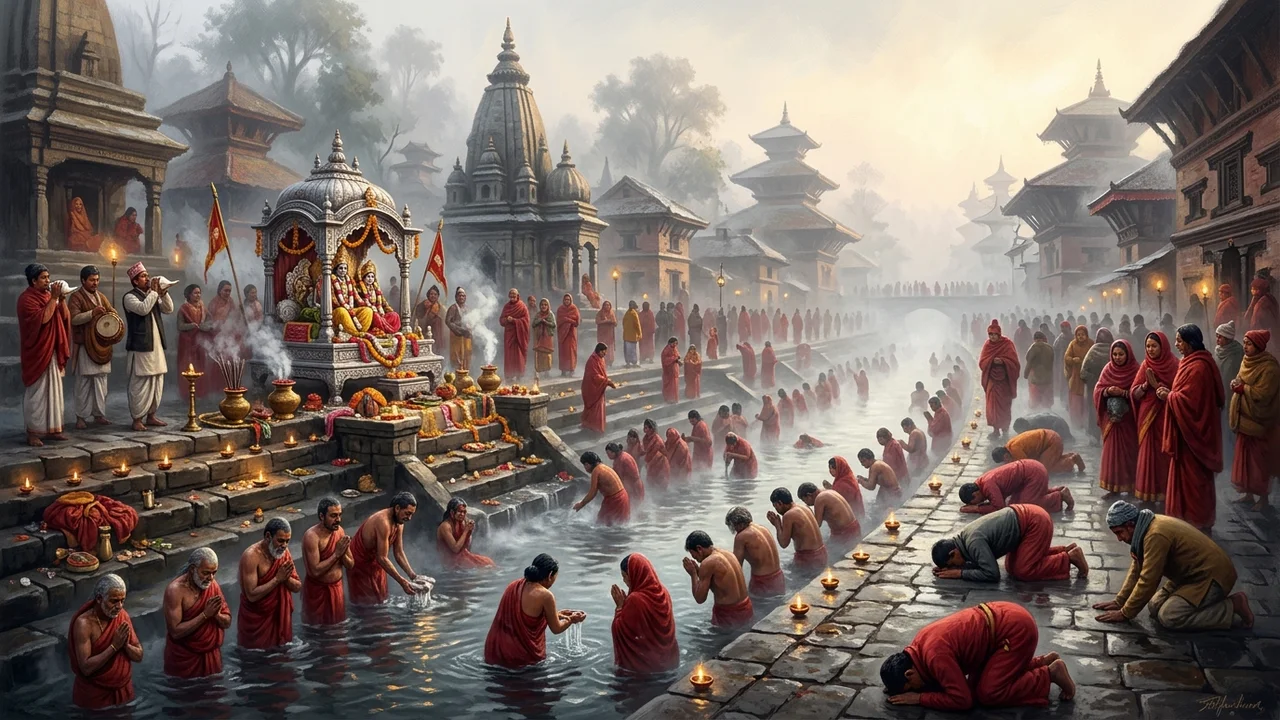
The holy bath is taken where the rivers meet.नदीहरू जोडिने ठाउँमा पवित्र स्नान हुन्छ।
Dimension
Details
Astronomical & Nutritional Significance
Astronomical Event
Transit of Sun into Capricorn (मकर राशिमा प्रवेश)
Inauguration of Uttarāyaṇa (northward solar path), lengthening the daylight.
Epic Association
Ascension of Bhīṣma Pitāmaha
Grandfather Bhīṣma selecting the auspicious solar turn to depart his mortal frame.
Sacred Confluences
Devghāt, Ridī, Dolālghāt, Barāhachetra
Predawn holy river immersions absolving accumulated sins and granting spiritual merit.
Thermal Gastronomy
Chāku, Til ko Laḍḍu, Ghee, Khicaḍī
High-calorie, mineral-dense winter foods stimulating digestive fire (agni).
Subterranean Tubers
Forest Yams (Ban-tarul) & Sweet Potatoes
Ancient root foods embodying intimate seasonal connection with forest foraging.
The story
Marking the astronomical first day of Magh (Māgha Sankranti), this solar festival celebrates the precise celestial moment when the Sun departs the constellation of Sagittarius (Dhanu) and enters Capricorn (Makara), inaugurating the sacred six-month northward celestial transit known as Uttarāyaṇa. In classical cosmology, this turning point signifies the dawn of the cosmic day for the gods, ending the dark, inward, southward-moving cycle of Dakṣiṇāyana. Associated with the epic Mahābhārata legend of Grandfather Bhīṣma—who exercised his yogic boon of chosen death (icchā-mṛtyu) to lie upon a bed of arrows until the sun turned north on this auspicious day before ascending to liberation—the occasion invites mortals to shed physical and spiritual torpor through ritual purification.
माघ महिनाको पहिलो दिन अर्थात् माघे सङ्क्रान्ति सूर्य धनु राशिबाट मकर राशिमा प्रवेश गर्ने पावन खगोलीय क्षण हो, जसलाई 'मकर सङ्क्रान्ति' पनि भनिन्छ। यसै दिनदेखि सूर्यको गति दक्षिणायनबाट उत्तरायणतर्फ लाग्दछ, जसलाई शास्त्रहरूमा 'देवताहरूको दिन' सुरु भएको मानिन्छ। यसपछि दिनहरू क्रमशः लामा र रातहरू छोटा हुँदै जान्छन् भने चिसो कम भएर न्यानोपन बढ्न थाल्छ। महाभारतका महाबली भीष्म पितामहले आफ्नो इच्छामृत्युको वरदान प्रयोग गरी सूर्य उत्तरायण नहुञ्जेल वाणको शय्यामा प्रतीक्षा गरेर यसै पुण्य तिथिमा देहत्याग गरी मोक्ष प्राप्त गरेको पौराणिक आख्यान यस पर्वसँग जोडिएको छ।
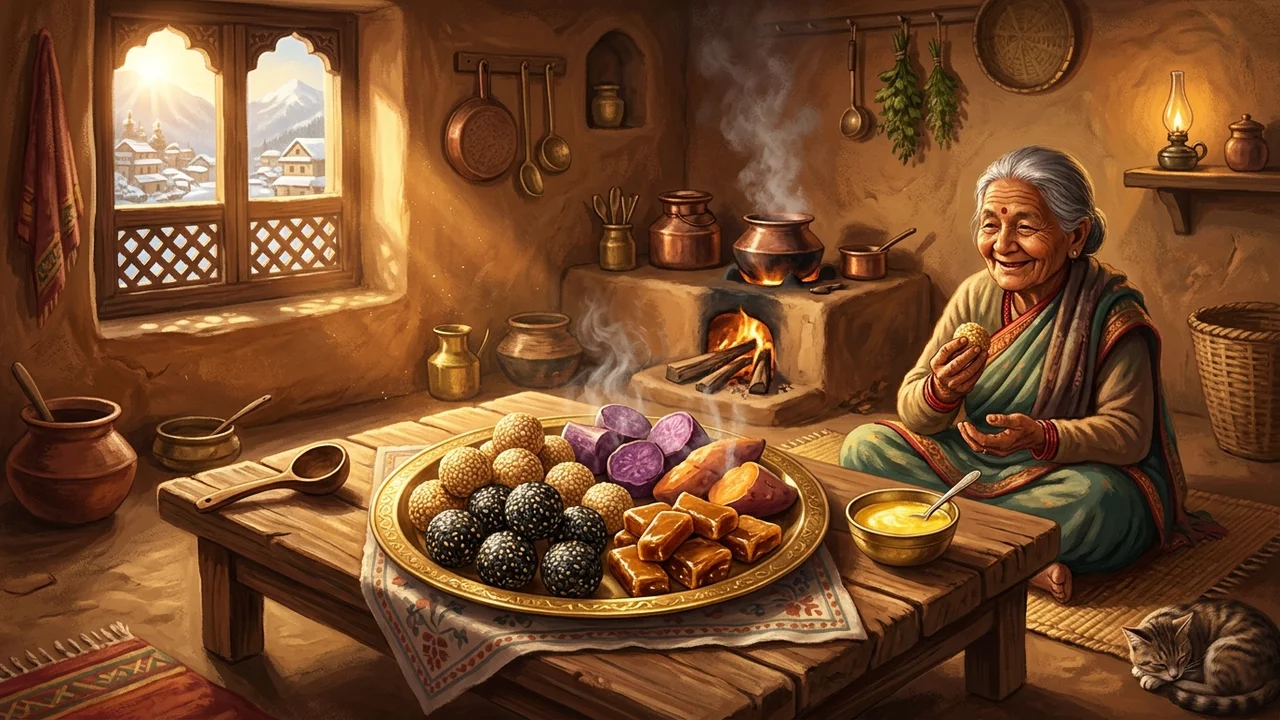
At predawn, hundreds of thousands of pilgrims gather at sacred river confluences (triveṇī) across Nepal—most famously at Devghat (where the Trisuli, Kali Gandaki, and Seti rivers merge), Ridi in Palpa, Dolalghat, and Barahachhetra—braving near-freezing waters for holy ablutions that dissolve karmic impurities. Domestically, the holiday centers upon an ancient therapeutic diet specifically engineered to kindle the body's internal digestive fire (agni) and protect the skin against harsh winter dryness. Families feast on thick, sweet sugarcane molasses (chāku), toasted black sesame seed spheres (til ko laḍḍu), clarified butter (ghee), rich lentil-and-rice porridge (khicaḍī), and a lavish variety of boiled subterranean tubers, including domestic yams (ghar-tarul), wild forest vines (ban-tarul), and sweet potatoes (sakarkhaṇḍa), while Newar mothers gently massage warmed mustard oil into the scalps and limbs of children to seal in warmth for the turning year.
यस दिन बिहानै चितवनको देवघाट, पाल्पाको रिडी, दोलालघाट, र बराहक्षेत्रजस्ता पवित्र नदी सङ्गमहरूमा हजारौँ श्रद्धालुहरूले मकर स्नान गर्दछन्। यस्तो स्नानले जन्म-जन्मान्तरका पाप पखालिने र आरोग्य प्राप्त हुने विश्वास छ। घरभित्र भने शरीरलाई न्यानो राख्ने र पाचन शक्ति बढाउने विशेष परिकारहरू खाइन्छ। कालो तिलको लड्डु, चाकु, घिउ, खिचडी, र तरुल यस पर्वका अपरिहार्य परिकार हुन्। घर-तरुल, वन-तरुल, र सखरखण्ड उसिनेर घिउ-चाकुसँग खाइन्छ। नेवार समुदायमा आमाहरूले छोराछोरीको टाउको र शरीरमा तोरीको तेल लगाइदिने र घाममा बस्ने सुन्दर पारिवारिक परम्परा छ, जसले हिउँदको चिसोबाट छाला र हाडजोर्नीलाई सुरक्षित राख्दछ।
Tharu women dance at the Maghi fire, and the feast is laid out.थारू महिला माघीको आगोमा नाच्छन्, र भोज राखिन्छ।
Dimension
Details
Democratic & Emancipatory Significance
Calendar Occasion
1st of Magh (माघ १ / Tharu New Year)
Astronomical threshold of freedom and civic renewal across the Western Tarai.
Democratic Governance
Barghar / Bhadghar Village Council
Participatory village assembly re-electing chieftains and allocating communal duties.
Historic Liberation
Abolition of Kamaiyā Bonded Labor
Transformation of an oppressive contract deadline into a national Emancipation Day.
Sacred Gastronomy
Dhikrī (steamed rice sticks) & Ghonghī
Indigenous riverine delicacies symbolizing purity, resilience, and ancestral identity.
Cultural Expression
Maghautā dance & Dhamār folk epics
Joyous group choreography reaffirming indigenous cultural solidarity and rights.
The story
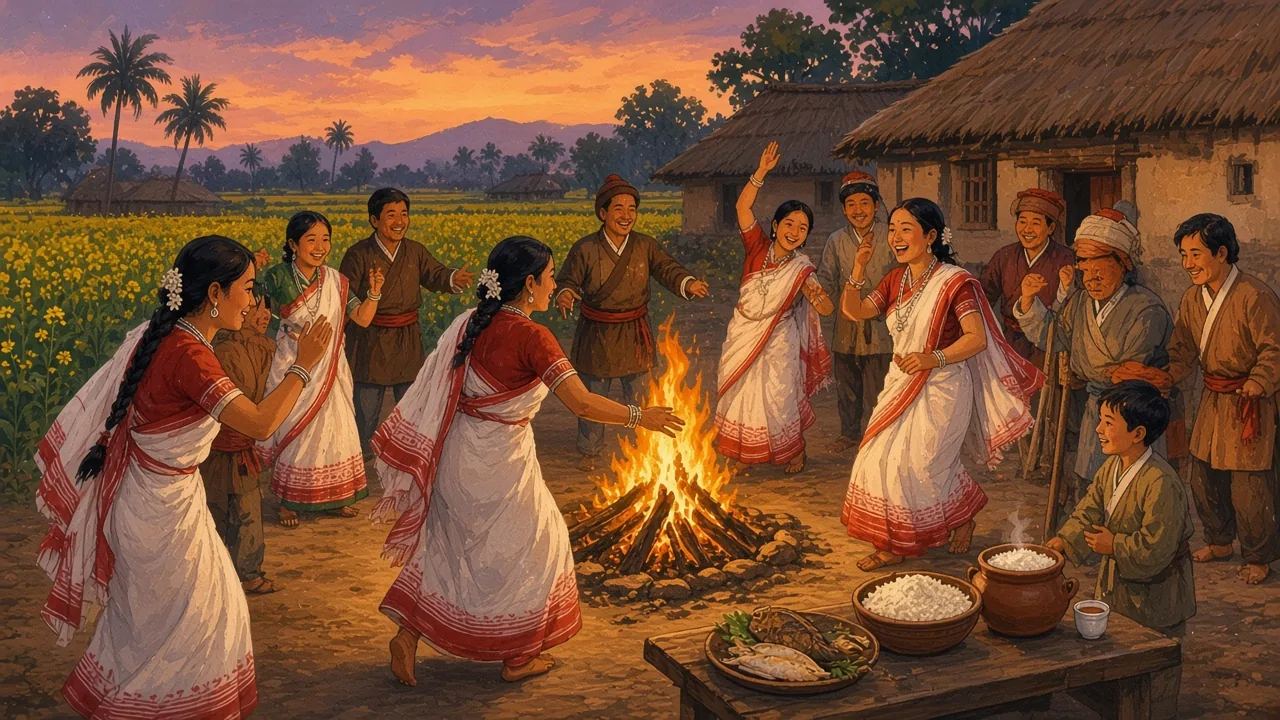
Celebrated synchronously with the solar transit of Magh 1, Maghī stands as the supreme national festival and constitutional new year of the indigenous Thāru nation across the fertile lowlands of the western Tarai, particularly throughout Dang, Banke, Bardiya, Kailali, and Kanchanpur. Far more than an agrarian harvest jubilee, Maghī serves as the annual democratic parliament of the village commune. Under the traditional Barghar (or Bhadghar) governance system, entire villages convene in a public assembly known as Khozjī or Bhurbhurā to review community expenditures, settle civil disputes, and democratically elect or re-affirm village leaders—including the chief judicial arbiter (Barghar), the civic messenger (Chaukidār), and the irrigation superintendent—re-allocating shared forest and water stewardship for the coming year.
माघ १ गतेका दिन दाङ, बाँके, बर्दिया, कैलाली, र कञ्चनपुरलगायत सम्पूर्ण तराई-मधेसका जिल्लाहरूमा थारू समुदायले आफ्नो सबैभन्दा ठूलो राष्ट्रिय सांस्कृतिक पर्व 'माघी' नयाँ वर्षका रूपमा मनाउँछन्। यो केवल चाड मात्र नभई थारू समुदायको लोकतान्त्रिक स्वशासन र सामाजिक व्यवस्थापनको अनुपम आधार हो। यस दिन गाउँभरिका मानिसहरू भेला भएर वर्षभरिको कामको समीक्षा गर्ने र गाउँको प्रमुख 'बरघर' वा 'भलमन्सा', चौकीदार, र कुलोपानीको हेरचाह गर्ने व्यक्तिको नयाँ निर्वाचन वा अनुमोदन गर्ने ऐतिहासिक परम्परा (खोजनी-बोजनी) सम्पन्न गर्दछन्।
Maghī carries immense modern historical resonance as the Day of Emancipation (Mukti Divas). Under the feudal bonded labor system known as Kamaiyā, Magh 1 was historically the tragic annual deadline when indebted farmhands were forced to renew bonded labor contracts or sign away their children into servitude. Following decades of grassroots mobilization and the historic official abolition of the bonded labor system on July 17, 2000, the Tharu nation reclaimed Maghī as a sacred festival of freedom, autonomy, and cultural renaissance. Villages resound with the rhythmic steps of the Maghautā dance, accompanied by large Madal drums and copper cymbals, as families feast on steamed sticky-rice cylinders (dhikrī), aromatic pond-snail curry (ghonghī), and roasted meats, welcoming the new dawn with profound dignity.
माघी पर्वको ऐतिहासिक महत्त्व थारू समुदायको 'मुक्ति दिवस' सँग पनि गहिरोसँग जोडिएको छ। सामन्ती 'कमैया' प्रथा कायमै रहँदा, हरेक वर्ष माघ १ गतेकै दिन गरिब किसानहरूले साहुको ऋण तिर्न नसकेर आफू र आफ्ना छोराछोरीलाई बँधुवा मजदुरका रूपमा नयाँ साहुकहाँ साट्ने वा सम्झौता नवीकरण गर्ने अत्यन्त पीडादायी दिन थियो। वि.सं. २०५७ साउन २ गते कमैया मुक्तिको ऐतिहासिक घोषणा भएपछि, थारूहरूले माघीलाई आफ्नो आत्मसम्मान, स्वतन्त्रता, र पुनर्जागरणको महान् उत्सवका रूपमा मनाउन थाले। यस दिन मादल र मजुराको तालमा 'मघौटा' नाच नाचिन्छ र चामलको पिठोबाट बाफमा पकाइने 'ढिक्री', पोखरीको 'घोङ्घी' को स्वादिष्ट परिकार, र लोकल रक्सी खाएर नयाँ वर्षको भव्य स्वागत गरिन्छ।
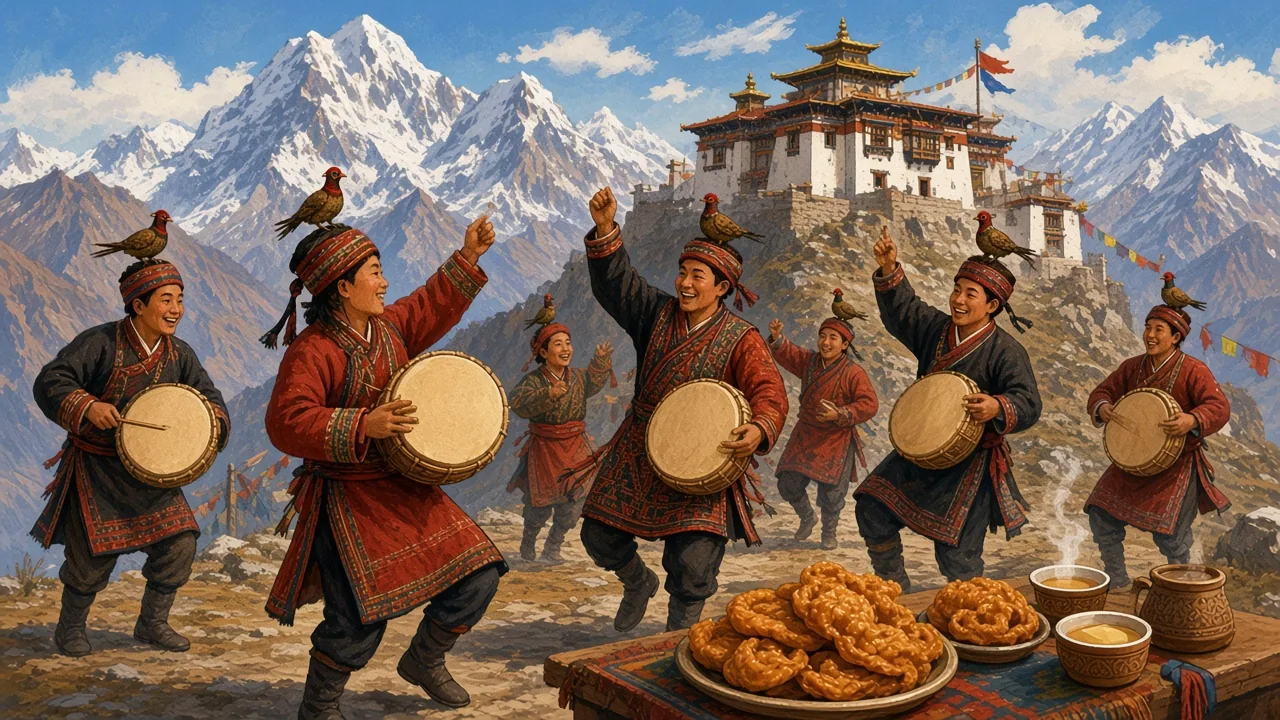
Sonam Lhosār (सोनम ल्होसार) is the agricultural new year of the indigenous Tamang nation, arriving on the first lunar day of the waxing moon of Magh (Māgha Śukla Pratipadā). Historically settled across the high ridges enclosing the Kathmandu Valley and the rugged eastern hills of Kavre, Makwanpur, Sindhupalchok, and Nuwakot, Tamang communities welcome the awakening of the spring earth after winter hibernation. Dressed in vibrant red and black handwoven tunics, devotees gather at local monasteries (ghyāng) to the hypnotic, resonant cadence of the damphu—the circular wooden frame-drum surmounted by a carved wooden pheasant. Village bards known as Tambā chant the encyclopedic oral history of the cosmos (Tambā Kaiten), instructing the younger generation in clan lineages, ethical humility, and agrarian wisdom while families savor deep-fried twisted pastries (khapsay), sweet rice breads (bābar), and butter tea.
सोनम ल्होसार तामाङ समुदायको मौलिक नयाँ वर्ष हो, जुन माघ शुक्ल प्रतिपदाका दिन मनाइन्छ। काठमाडौँ उपत्यकावरिपरिका पहाडहरू तथा काभ्रे, मकवानपुर, सिन्धुपाल्चोक, र नुवाकोटका तामाङ बस्तीहरूमा यसको विशेष रौनक देखिन्छ। यो मूलतः किसानहरूको नयाँ वर्ष भएकाले प्रकृतिको न्यानोपन र नयाँ पालुवाको आगमनलाई स्वागत गरिन्छ। यस दिन तामाङहरू परम्परागत रातो-कालो लुगामा सजिएर गुम्बामा लामाको दर्शन गर्न जान्छन्। डाँफेको काठको प्रतीक भएको घेराउदार बाजा 'डम्फु' बजाउँदै ताम्बा (इतिहास र वंशका ज्ञाता) ले 'ताम्बा काइतेन' गाएर सृष्टिको उत्पत्ति र पुर्खाका कथाहरू सुनाउँछन्, र खाप्से, बाबर, तथा नुनिलो चिया खाएर उल्लास मनाउँछन्।
The Gurung new year is Tamu Lhosar, on the fifteenth of Poush. The Sherpa new year is Gyalpo Lhosar, in Falgun.
The house reads by the lamp.घरले दियोको उज्यालोमा पढ्छ।
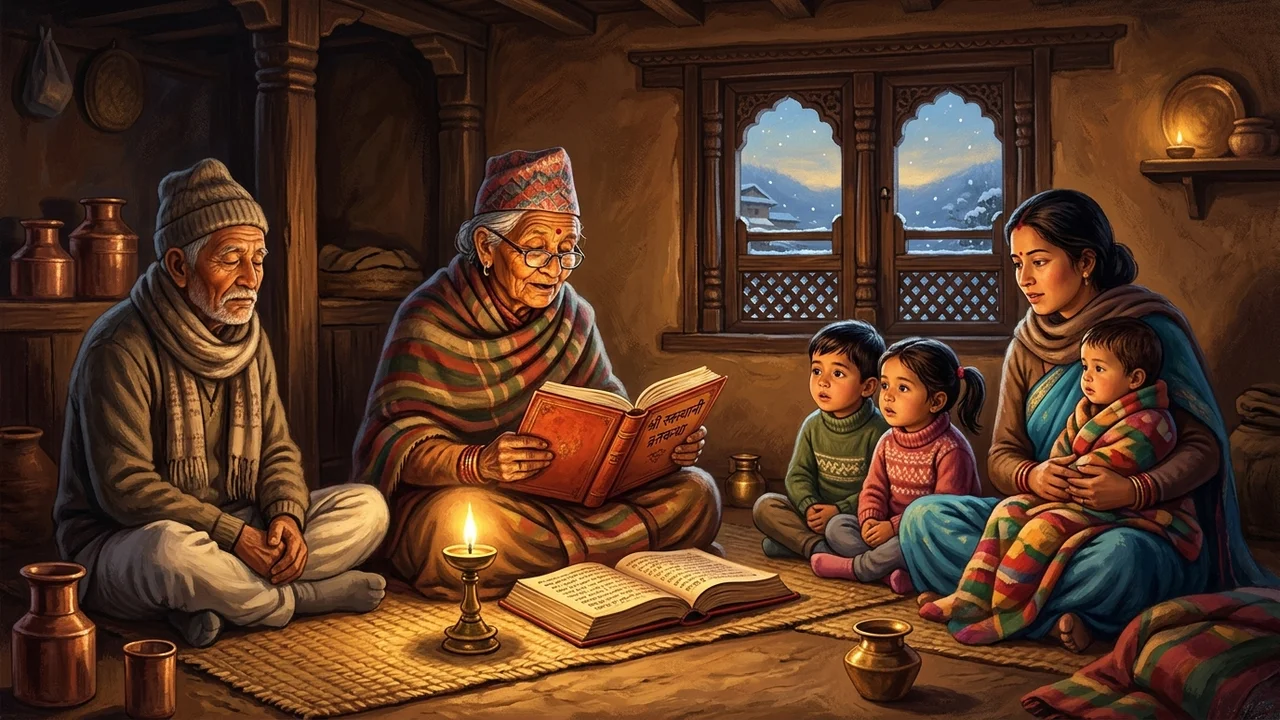
The house reads this through Magh. The thirty-one chapters are on their own page.घरले यो माघभरि पढ्छ। एकतीस अध्यायको आफ्नै पृष्ठ छ।
5. Mādhav Nārāyaṇ
५. माधव नारायण
The cold river of devotion: holy ablutions in the Sālinadī during the month of Madhav Narayan.माधव नारायण र सालिनदी: माघको चिसो पानीमा पवित्र स्नान र निष्ठाको व्रत।
Dimension
Details
Theological & Ascetic Significance
Calendar Duration
Poush Shukla Purnima to Magh Shukla Purnima
One full lunar month coinciding with the reading of the Swasthānī scripture.
Presiding Deities
Lord Madhav Narayan & Goddess Swasthānī
Sovereign solar Vishnu and the goddess of inner sovereignty and wish-fulfillment.
Sacred Geography
Sānkhu (Sankharapura) & the Sālinadī River
Mythic setting of Lāvaṇya Deśa, where Gomā and Navarāj performed their penance.
Ascetic Regimen
Freezing river immersions & Haviṣyānna meal
Physical mortification transcending winter cold to achieve mental purification.
Penitential Prostrations
Dandavat Parikrama & Barefoot Treks
Body-rolling over temple stones and arduous foot pilgrimages to valley shrines.
The story
Spanning an entire lunar month from the full moon of Poush through the full moon of Magh, the pilgrimage of Madhav Narayan transforms the ancient historic town of Sānkhu—known classically as Sankharapura, the conch-shaped city at the northeastern edge of the Kathmandu Valley—into an epic theater of riverine asceticism and devotion. Perched along the historic trans-Himalayan caravan route beneath the forested ridge of the Vajrayogini sanctuary, Sānkhu's narrow cobblestone alleys and frost-dusted tiled eaves lead down to the sacred banks of the Sālinadī river. While domestic households across Nepal gather each evening around kitchen hearths to read the Sri Swasthānī Bratakathā, Sānkhu brings the sacred myth to living physical reality upon the very sands where the celestial epic is set.
According to the sacred text, Sānkhu and the surrounding valley correspond to the ancient mythic realm of Lāvaṇya Deśa. It was upon these cold riverbanks that the destitute Brahmin matriarch Gomā and her abandoned son Navarāj were instructed by Sage Nārada to observe the thirty-day fast of Goddess Swasthānī and Lord Madhav Narayan (a sovereign solar form of Vishnu). Purifying their bodies in the crystalline winter waters and offering one hundred and eight sacred items, their agonizing poverty and social ostracism dissolved, culminating in the divine elephant selecting Navarāj as the crowned sovereign of the realm. Drawing from this timeless narrative of redemption, hundreds of thousands of pilgrims assemble at the Sālinadī to bathe in the freezing waters, seeking healing for chronic afflictions, liberation from past karma, and domestic harmony.
The heart of the festival is upheld by a consecrated monastic order of several hundred male and female votaries (vratālus) who take strict vows of absolute purity for the thirty-day duration. Clad only in unstitched cotton garments—red wraps for women and white dhotis for men—these devotees wake hours before dawn to perform complete immersions in the icy river currents, partaking of only a solitary daily meal of unboiled rice and clarified butter (haviṣyānna) cooked by their own hands. Devotees perform Dandavat Parikrama, rolling their prone bodies along the freezing cobblestones of the riverbank and town squares, before embarking on barefoot pilgrimages to Pashupatinath, Changunarayan, and Panauti, embodying supreme spiritual transcendence over physical hardship.
The sacred fair runs continuously from the full moon of Poush to the full moon of Magh. Each dawn, devotees plunge into the rushing mountain waters of the Salinadi, while the evenings fill the ancient squares with Vedic conch calls, burning camphor lamps, and the chanting of the thirty-one chapters of the Swasthani scripture.
Also Recommended
The liturgical source for this pilgrimage is the Swasthānī, whose chapters recount the trials of Gomā and the coronation of Navarāj. In this same cold month of Magh, households across the hills celebrate the solar transit of Maghe Sankranti, while the Tharu nation welcomes its new year during Maghī.
नेपालीमा
पौष शुक्ल पूर्णिमादेखि सुरु भई माघ शुक्ल पूर्णिमासम्म एक महिनासम्म काठमाडौँको उत्तर-पूर्वी प्राचीन सहर साँखुस्थित पवित्र सालिनदी किनारमा लाग्ने ऐतिहासिक मेला श्री माधव नारायण तथा स्वस्थानी व्रत मेला हो। शङ्ख आकारमा बनेको प्राचीन मल्लकालीन सहर साँखु बज्रयोगिनीको छत्रछायाँमा रहेको छ। माघको कठ्याङ्ग्रिँदो चिसोमा देशभरका घरहरूमा बेलुकीपख स्वस्थानी व्रतकथा पाठ भइरहँदा, साँखुको सालिनदी किनारमा भने हजारौँ श्रद्धालुहरूले प्रत्यक्ष रूपमा कथाको जीवन्त आध्यात्मिक धरातललाई अनुभव गर्दछन्।
स्वस्थानी व्रतकथाअनुसार साँखु नै प्राचीन 'लावण्य देश' हो। गरिबी, दुःख, र अभिशापमा परेकी सती गोमा ब्राह्मणी र उनका सुपुत्र नवराजले देवर्षि नारदको सल्लाहअनुसार यही सालिनदीको किनारमा एक महिनासम्म निराहार रही श्री स्वस्थानी परमेश्वरी र माधव नारायणको कठोर व्रत गरेका थिए। त्यही व्रतको प्रभावले उनीहरूको सम्पूर्ण कष्ट नाश भयो र नवराज लावण्य देशका राजा बने। यसै धार्मिक विश्वासका आधारमा आज पनि रोगव्याधि, निःसन्तानपन, पारिवारिक कलह, र अनिष्ट ग्रहदोष निवारणका लागि लाखौँ भक्तजनहरू सालिनदीमा स्नान गर्न पुग्दछन्।
यस मेलाको सबैभन्दा कठोर र निष्ठावान् पक्ष भनेको एकमहिने अवधिसम्म सालिनदीमै बसेर व्रत गर्ने सयौँ व्रतालुहरू (पुरुष र महिला) को साधना हो। सिलाइएको लुगा नलगाई केवल सेतो र रातो धोती बेरेर, बिहानै मिर्मिरेमा चिसो पानीमा डुबुल्की मार्ने, आफैँले पकाएको एक छाक नुनबिनाको हविष्यान्न (अतृप्त चामल र घिउ) मात्र खाने, र छाती तथा पेटले जमिन कुल्चिँदै मन्दिर वरिपरि 'दण्डवत् परिक्रमा' (घस्रिएर गरिने परिक्रमा) गर्ने गरिन्छ। यसका साथै व्रतालुहरू खाली खुट्टा पशुपतिनाथ, चाँगुनारायण, बज्रयोगिनी, र पनौतीसम्मको कठिन पैदल तीर्थयात्रा गर्दछन्, जसले मानव संकल्प र भक्तिको अतुलनीय उदाहरण प्रस्तुत गर्दछ।
Where it sits
The month-long fair takes place throughout Magh at the Salinadi river in Sankhu, concluding on the Maghi Purnima alongside the reading of Sri Swasthani Bartakatha.
6. Saraswati Puja/Basanta Panchami
६. सरस्वती पूजा / वसन्त पञ्चमी
Books and instruments are set before Saraswati.सरस्वतीका अगाडि किताब र बाजा राखिन्छ।
Dimension
Details
Epistemological & Seasonal Significance
Calendar Tithi
Magh Shukla Panchami (माघ शुक्ल पञ्चमी / श्रीपञ्चमी)
Auspicious fifth lunar day inaugurating the vernal spring season.
Goddess of Learning
Devi Saraswati (वाग्देवी, शारदा, वीणावादिनी)
Embodiment of transcendent wisdom, sacred speech, literature, and melody.
Pedagogical Rite
Akṣarārambha / Vidyārambha (अक्षरारम्भ)
Child's ceremonial first inscription of letters upon consecrated temple stones.
Civic & Royal Rite
Basanta Śravaṇa at Hanumān Dhokā
Formal state recitation of vernal Sanskrit poetry greeting the change of seasons.
Seasonal Hue
Vāsantī (Yellow) vestments and marigolds
Radiant solar color representing blooming mustard fields, intellect, and renewal.
The story
Celebrated on the fifth day of the waxing moon of Magh (Māgha Śukla Panchami), Basanta Panchami heralds the first subtle stirrings of the vernal season (Basanta Ṛtu) and honors Devi Saraswati, the supreme goddess of wisdom, learning, eloquence, and the creative arts. In classical iconography, the radiant goddess is depicted seated upon an immaculate white lotus, garbed in pure moonlight-white robes, holding a book of sacred Vedic wisdom, a rosary of crystal beads, and the melodic vīṇā, embodying the primordial harmonic vibration of creation (Nāda Brahma). Devotees and students flock to shrines across Nepal—most notably to Saraswati Sthan atop the western slope of Swayambhunath, Nil Saraswati at Gairidhara in Kathmandu, and Maitidevi—to consecrate textbooks, inkpots, musical instruments, and paintbrushes at the goddess's feet.
माघ शुक्ल पक्षको पञ्चमी तिथिका दिन वसन्त ऋतुको आगमनको सङ्केत गर्दै विद्या, बुद्धि, सङ्गीत, र कलाकी अधिष्ठात्री देवी भगवती सरस्वतीको पावन जन्मोत्सव अर्थात् सरस्वती पूजा (श्रीपञ्चमी / वसन्त पञ्चमी) देशभर श्रद्धापूर्वक मनाइन्छ। सेतो कमलको आसनमा विराजमान, हातमा वीणा, पुस्तक, र स्फटिकको माला लिएकी माता सरस्वतीलाई वाग्देवी, भारती, र शारदाका नामले पनि पुजिन्छ। उहाँले अज्ञानताको अन्धकारलाई हटाएर ज्ञान र विवेकको उज्यालो प्रदान गर्नुहुन्छ भन्ने विश्वास छ। यस दिन स्वयम्भूको सरस्वती स्थान, काठमाडौँको गैरीधारास्थित नीलसरस्वती, र पाटनको लेलेलगायत देशभरका सरस्वती मन्दिर तथा विद्यालयहरूमा विद्यार्थी, शिक्षक, र स्रष्टाहरूले आफ्ना पुस्तक, कापी, कलम, र बाजागाजा मन्दिरमा राखेर देवीको पूजा गर्दछन्।
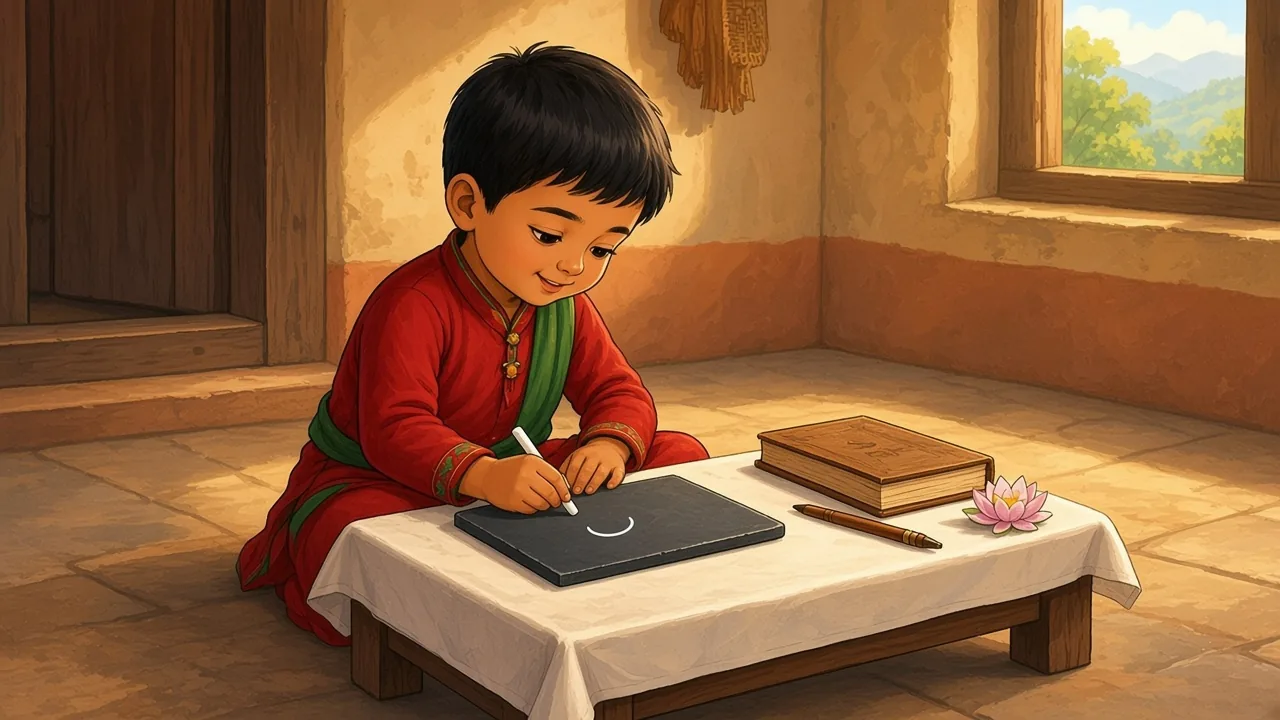
For young children taking their first steps into the intellectual realm, the day is celebrated with the sacred pedagogical rite of Akṣarārambha (or Vidyārambha). Parents bring their toddlers to temple sanctums or classroom blackboards, guiding their small hands with a piece of chalk to trace the sacred primordial syllable Oṃ and the foundational letters of the alphabet onto stone walls or slates, marking the auspicious commencement of literacy and lifelong learning. Simultaneously, royal court musicians and state officials assemble at the historic Nasal Chowk of Hanuman Dhoka Palace for the ancient recital of the vernal ode (Basanta Śravaṇa), draped in radiant mustard-yellow garments (Vāsantī), offering yellow marigolds and sweet saffron rice to celebrate the awakening of the fertile earth after the long winter slumber.
यस पावन दिनको सबैभन्दा सुन्दर सामाजिक र शैक्षिक संस्कार 'अक्षरारम्भ' (खरीपूजा) हो। आफ्ना साना बालबालिकाहरूलाई पहिलो पटक अक्षर चिनाउन मन्दिरको भित्ता वा स्लेटमा चकले 'ॐ' र वर्णमालाका अक्षरहरू लेखाउने गरिन्छ। यस दिनबाट सुरु गरिएको पढाइ कहिल्यै असफल हुँदैन र सरस्वतीको अनुकम्पा सदैव रहिरहन्छ भन्ने गहिरो विश्वास छ। यसका साथै वसन्त पञ्चमीका दिन हनुमानढोकाको नासलचोकमा राष्ट्राध्यक्षको उपस्थितिमा ऐतिहासिक 'वसन्त श्रवण' कार्यक्रम सम्पन्न हुन्छ, जहाँ वसन्त ऋतुको स्तुतिगान गाइन्छ। मानिसहरूले पहेँलो वस्त्र पहिरिने, पहेँलो रङ्गको टीका लगाउने, र सरस्वतीलाई पहेँलो फूल तथा केसरी भात चढाएर नयाँ वसन्तको स्वागत गर्दछन्।