Household stories / Pārvatī
Pārvatī (पार्वती)
The story
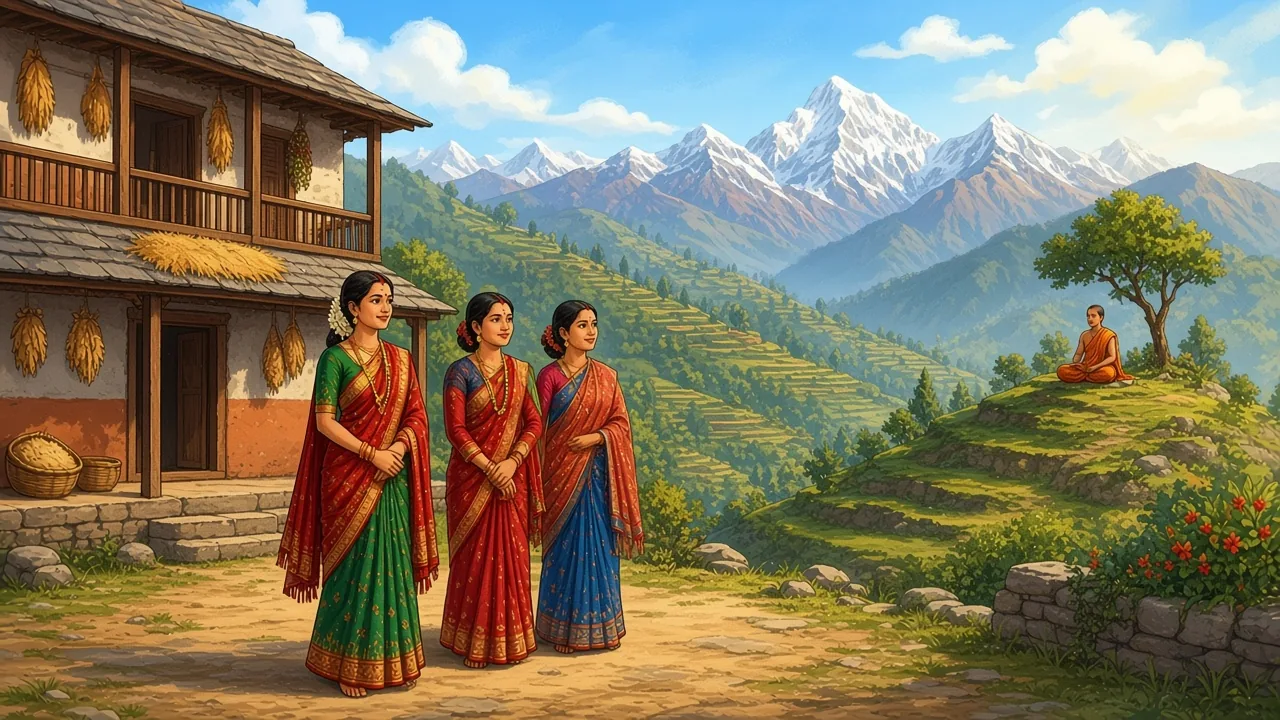
The room is the same Magh (माघ) room. People wear wool. A cup has gone cold. Fog is still in the lane. The book has said the name Satī (सती). Her death waits on its own page. What comes next is a birth. You can see the place of that birth. On a clear day this month, the white line of Himālaya (हिमालय) stands behind the near hills. Those peaks are older than any house in the valley. There is snow, rock, and a high wind. The story moves up there. In the morning someone looks from a window. At night those same peaks are named aloud. The far snow becomes a place in the story.
A daughter is born in that high house. Her name is Pārvatī (पार्वती). A household hears her as the daughter of the mountain. She grows where the air is thin and the paths are steep. The rooms of her childhood are one place the stories do not agree. One voice gives her a palace on the peaks. Another gives her a quieter roof, and a father who is the mountain itself. The birth stays the same. The height stays the same. The name stays the same.
Umā (उमा) is the other name a house uses. An aunt may say it softly, the way a family says a girl's everyday name. Pārvatī means the daughter of the mountain. Umā is short enough to say while people work in the kitchen. Both names are the same girl. The story answers to either name. A small child tries both and keeps the one that is easier to say. An elder lets either name stand.
She grows up, and what she wants is plain. She will take no husband but Śiva (शिव).
That line is said once here, and it is enough. Her life turns toward him. She has already chosen. Nothing on the peaks changes her mind. Her father in the tale may worry, as fathers do. The answer she gives him does not change. When she says it, the room goes quiet.
She undertakes tapas. Tapas means a long, hard staying with one aim. She stays in the high places. She stays with the one want. Days in the story pass in cold and in patience. The stories do not agree on how hard those days look. One book makes the mountain harsher. Another makes her stillness the whole test. These pages name the tapas and do not describe the way it is done. A listener can picture a girl on a high slope. The choice is already made. Snow light sits on the rock. This page does not give the steps of that fast.
Tīj (तीज) carries the same want on a day of its own. Tīj comes at the end of the rains, long after Magh has gone. In the city, women walk toward a gathering. Songs come down the lane. Those songs belong to Tīj. They have their own chapter. This night is a winter night. The book in the hands is still the Swasthānī (स्वस्थानी). The story is still on the mountain. The two days are not the same day. A person who loves both keeps them apart.
This page follows her as far as the wedding door. It leaves the door shut. Some books, before that door, tell a part about Kāma (काम). Kāma is the god of desire. He tried to hurry a god who would not be hurried. Tonight that part stays out. The two who will meet are near each other in the tale. They are still on opposite sides of the doorway. The last sound of the chapter is the mountain wind.
The day
Her tapas is remembered on its own day as Haritālikā. Women leave with their friends. They will not eat until the vow is sealed. Inside the Magh reading, the same tapas is only the road to the wedding. The vow is one vow. The pages are two pages. In the far west, Gaurā keeps what came after the wedding. The married goddess comes home to her mother's house. There are swings, and there is deuda. Deuda is a dance and song of the far west.
Also Recommended
Before her is Satī. After her is the marriage. Along the way of that marriage, Kāma is burned. The throat she later holds, so the poison stays in it, is Gosāīkuṇḍa. In another story, the boy she forms to guard her door is Gaṇeśa. Many other stories on these pages pass through the daughter of the mountain.
नेपालीमा
कोठा उही माघको कोठा हो। मानिसले ऊन लगाएका हुन्छन्। कप सेलाएको हुन्छ। गलीमा अझै कुहिरो छ। किताबले सतीको नाम भनिसकेको छ। उहाँको मृत्यु आफ्नै पृष्ठमा पर्खन्छ। अब आउने कुरा जन्म हो। त्यो जन्मको ठाउँ आँखाले देखिन्छ। यो महिनाको सफा दिनमा हिमालयको सेतो धर्सो नजिकका डाँडापछाडि उभिन्छ। ती चुचुरा उपत्यकाको कुनै घरभन्दा पुराना छन्। हिउँ छ, चट्टान छ, र तेज हावा छ। कथा त्यहीँ माथि सर्छ। बिहान कसैले झ्यालबाट हेर्छ। राति ती नै टाकुराको नाम लिइन्छ। टाढाको हिउँ कथाको ठाउँ बन्छ।
त्यो उच्च घरमा एक छोरी जन्मनुहुन्छ। उहाँको नाम पार्वती हो। घरमा उहाँ हिमालकी छोरीका रूपमा चिनिनुहुन्छ। हावा पातलो र बाटो भिरालो भएको ठाउँमा उहाँ हुर्कनुहुन्छ। बाल्यकालका कोठाको कुरामा कथा मिल्दैनन्। एक स्वरले उहाँलाई चुचुरामा दरबार दिन्छ। अर्कोले शान्त छानो दिन्छ, र हिमाल नै भएका बाबु दिन्छ। जन्म उही रहन्छ। उचाइ उही रहन्छ। नाम उही रहन्छ।
उमा घरले प्रयोग गर्ने अर्को नाम हो। काकीले बिस्तारै भन्न सक्छिन्, जसरी परिवारले केटीको दैनिक नाम भन्छ। पार्वतीको अर्थ हिमालकी छोरी हो। उमा भान्सामा काम गर्दा भन्न सकिने छोटो नाम हो। दुवै नाम उही केटी हुन्। कथाले दुवै नाम चिन्छ। सानो बच्चाले दुवै नाम भन्छ, र भन्न सजिलो नाम राख्छ। घरका ठूलाले जुन नाम पनि चल्न दिनुहुन्छ।
उहाँ हुर्कनुहुन्छ, र उहाँको चाहना प्रस्ट छ। उहाँले शिवबाहेक अर्कोलाई पति बनाउनुहुन्न।
त्यो वाक्य यहाँ एक पटक भनिन्छ, र त्यति काफी छ। उहाँको जीवन शिवतिर फर्कन्छ। उहाँले चुनिसक्नुभएको छ। चुचुराका कुनै कुराले उहाँको मन बदल्दैन। कथाका बाबु चिन्ता गर्न सक्छन्, बाबुहरूले जस्तै। उहाँले दिने जवाफ बदलिँदैन। त्यो बोलिँदा कोठा शान्त हुन्छ।
उहाँ तप गर्नुहुन्छ। तप भनेको एउटै लक्ष्यमा लामो र कठिन बसाइ हो। उहाँ उच्च ठाउँमा रहनुहुन्छ। उहाँ एउटै चाहनामा रहनुहुन्छ। कथाका दिन चिसो र धैर्यमा बित्छन्। ती दिन कति कठोर देखिन्छन् भन्नेमा कथा मिल्दैनन्। एक किताबले हिमाललाई अझ कठोर बनाउँछ। अर्कोले उहाँको स्थिरता नै सारा परीक्षा बनाउँछ। यी पृष्ठले तपको नाम राख्छन्, र गर्ने तरिका भन्दैनन्। सुन्नेले चुचुराको भिरालोमा केटी देख्न सक्छ। उहाँको निधो भइसकेको हुन्छ। चट्टानमा हिउँको उज्यालो हुन्छ। यो पृष्ठले त्यो व्रतको विधि दिँदैन।
तीजले उही चाहना आफ्नै दिनमा राख्छ। तीज वर्षा सकिँदा आउँछ, माघ गएको धेरै पछि। सहरमा महिलाहरू भेलातिर हिँड्छन्। गलीमा गीत आउँछ। ती गीत तीजका हुन्। तिनीहरूको आफ्नै अध्याय छ। यो रात जाडोको रात हो। हातको किताब अझै स्वस्थानी हो। कथा अझै हिमालमै छ। ती दुई दिन एउटै दिन होइनन्। दुवै मन पराउनेले छुट्याएर राख्छ।
यो पृष्ठ उहाँलाई विवाहको ढोकासम्म लैजान्छ। ढोका बन्द छोड्छ। कति किताबले त्यो ढोकाअघि कामदेवको भाग भन्छन्। कामदेव इच्छाका देवता हुनुहुन्छ। उहाँले हतार नगर्ने देवतालाई हतार गराउन खोज्नुभयो। आज त्यो भाग बाहिर रहन्छ। भेट हुने दुई कथामा नजिक हुनुहुन्छ। उहाँहरू अझै ढोकाको दुईतिर हुनुहुन्छ। अध्यायको अन्तिम आवाज हिमालको हावा हो।
उहाँको तप आफ्नै दिनमा हरितालिकाका रूपमा सम्झिइन्छ। महिलाहरू साथीसँग निस्किन्छन्। भाकल नबाँधिञ्जेल खाँदैनन्। माघको पढाइभित्र त्यही तप विवाहको बाटो मात्र हो। भाकल एउटै हो। पृष्ठ दुई हुन्। सुदूरपश्चिमको गौराले विवाहपछिको कुरा राख्छ। विवाहित देवी माइत आउनुहुन्छ। पिङ हुन्छ। देउडा पनि हुन्छ। देउडा सुदूरपश्चिमको नाच र गीत हो।
उहाँभन्दा अघि सती हुनुहुन्छ। उहाँपछि विवाह हो। त्यो विवाहको बाटोमा कामदेव जल्नुहुन्छ। उहाँले पछि कण्ठ समात्नुहुन्छ, ताकि विष त्यहीँ रहोस्। त्यो गोसाईंकुण्ड हो। अर्को कथामा उहाँले ढोकाको पहरेदारीका लागि बनाउनुभएको केटा गणेश हुनुहुन्छ। यी पृष्ठका धेरै अरू कथा पर्वतकी छोरी हुँदै जान्छन्। यो पृष्ठ सतीपछि र विवाहअघि आउँछ। तीजको कथामा उही देवी हरितालिका हुनुहुन्छ।
Where it sits
This page comes after Satī and before the marriage. The Tīj story of the same goddess is Haritālikā.