Household stories / Navarāj
Navarāj (नवराज)
The story
By the time the Magh (माघ) reading reaches him, the gods have had their turn. The tale now has a human kitchen. The listeners already know his mother's name. His own name is Navarāj (नवराज), son of Gomā (गोमा). He is young. The house inside the story is unkind to him. The stories call that unkindness his scorn. Scorn means people look down on him. A listener feels it as a house that gives him little welcome.
Scorn, here, means the rooms of the tale make him small. People speak as if he barely has a place. He stands in a courtyard with little welcome in it. This page does not invent the sentences they use. Houses remember the hurt in different words. The hurt itself is what stays. One taunt the stories share is plain. He has no father at home. A person who has been left out can recognize that hurt. The story keeps its own reasons. His mother's month is already behind him in the book. It was hard, and she kept it.
He leaves to look for his father. The picture is simple. A boy stands at a doorway. A lane goes out of a town. Dust is on his feet. A valley family hears that leaving on a winter night, with fog in their own lane. The two leavings feel alike. Nobody in the room needs a map. The book says he goes. The listeners go quiet, because a leaving is easy to feel. Someone looks at the shut door of the real house, and then back at the page.
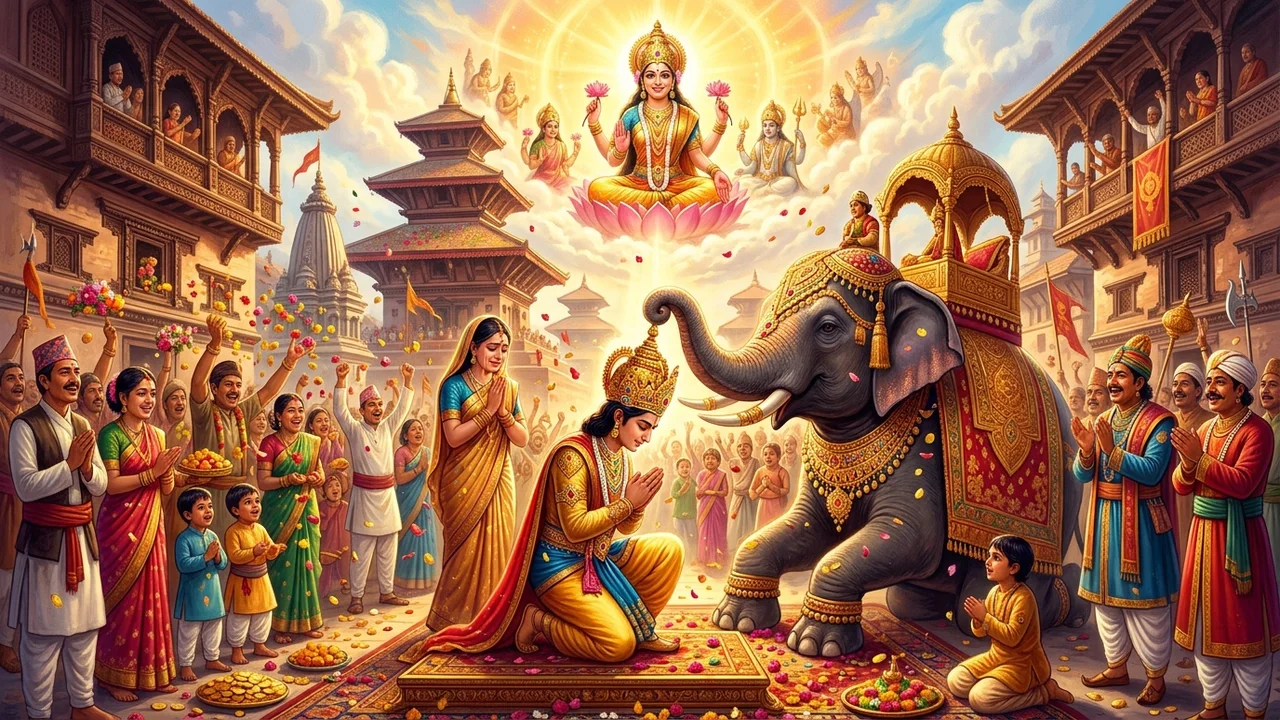
The book's road is plain, and the chapters keep it. He finds his father's bones and finishes the funeral. His mother keeps the vow, and he comes home while she is reading. At a river, Harihara grants him a boon. On the way to Lāvaṇya an elephant garlands him, and he is crowned. He sends for his wife Candrāvatī. She scorns the goddess's prasād. The palanquin falls at the Śālī river, and she suffers there until she keeps the same vow and is brought home.
What the stories share is plainer, and it is what the night is for. The result of his mother's month comes and finds him, on whatever road the speaker has given him. Listeners explain that meeting in different pictures. One says a kindness arrives. Another says a door that had been shut comes open. They agree on the thing that reaches him. It is the month she kept. The road is the part that changes.
The kathā makes him a king.
After the scorn and the leaving, the story gives him that high place. Houses do not settle which kingdom, which court, or which crown. A listener hears king and understands a person set high, with room to stand. That unkind treatment is gone from his life. After that, the voice in the tale has to speak his name with care. Palace furniture changes from one grandfather to the next. The high place does not.
A printed pothi carries more chapters between the wedding and this boy. A pothi is an old-style book. Kumāra (कुमार) is among those names. They are named in their own places. On this night they stay closed. Someone may ask who that other son of the gods is. The reader can say the name and point somewhere else. This page stays with Gomā's son. The month is remembered by him, and by her, more than by the chapters that stand between.
The scorn stays. The leaving stays. The mother's month comes to find him. He remains the king of Lāvaṇya. Candrāvatī's nights by the Śālī, and the night she tells Gomā what happened, are the last chapters of the book. Kumāra's chapters come earlier, on the Swasthānī page.
The day
Navarāj is not a separate festival. He is the last part of the Magh reading. After this chapter a household feels the book has arrived. The printed book has more chapters between the wedding and this boy. Kumāra is one of them. Those are told on the Swasthānī page, and they are not told here. Kumāra's day on the valley calendar is a different page, Sithi Nakha. That page tells the god's birth. This page tells Navarāj.
Also Recommended
The mother is Gomā. The god whose marriage opened the book is not this king. The king is the human result of a human month. The same shape appears in other stories. A child is scorned and is not destroyed. Inside Holi that child is Prahlāda. Inside Janmāṣṭamī that child is the baby Kaṃsa cannot kill. Those are other births. The stories are alike.
नेपालीमा
माघको पढाइ उसम्म पुग्दा देवताको मोड बितिसकेको हुन्छ। कथाको भान्सा अब मान्छेको हुन्छ। सुन्नेहरूले आमाको नाम जानिसकेका हुन्छन्। उसको आफ्नै नाम नवराज हो, गोमाको छोरा। ऊ सानो छ। कथाभित्रको घर उसप्रति कठोर छ। कथाले त्यो कठोरतालाई उसको हेला भन्छन्। हेला भनेको मानिसले उसलाई हेप्नु हो। सुन्नेले त्यो घरलाई उसलाई कमै स्वागत गर्ने घर जस्तो महसुस गर्छ।
यहाँ हेला भनेको कथाका कोठाले उसलाई सानो पार्नु हो। मानिसहरू उसका लागि मुस्किलले मात्र ठाउँ छ भने झैँ बोल्छन्। ऊ कम स्वागत भएको आँगनमा उभिन्छ। यो पृष्ठले उनीहरूको वाक्य रच्दैन। घरहरूले पीडा फरक शब्दमा सम्झन्छन्। रहने कुरा पीडा हो। कथाले बाँड्ने एउटा गिज्याइ प्रस्ट छ। घरमा उसका बाबु छैनन्। बाहिर पारिएको मानिसले त्यो पीडा चिन्न सक्छ। कथाले आफ्नै कारण राख्छ। आमाको महिना किताबमा उसको पछाडि परिसकेको हुन्छ। त्यो कठिन थियो, र उनले राखिन्।
ऊ बाबु खोज्न हिँड्छ। तस्बिर सरल छ। केटा ढोकामा उभिन्छ। गली सहरबाट बाहिर जान्छ। खुट्टामा धुलो हुन्छ। उपत्यकाको परिवारले त्यो हिँडाइ जाडोको रातमा सुन्छ, आफ्नै गलीमा कुहिरो भएको बेला। ती दुई हिँडाइ मिल्दाजस्ता लाग्छन्। कोठामा कसैलाई नक्सा चाहिँदैन। किताबले ऊ जान्छ भन्छ। सुन्नेहरू शान्त हुन्छन्, किनकि हिँडाइ महसुस गर्न सजिलो छ। कोही वास्तविक घरको बन्द ढोका हेर्छ, अनि पानातिर फर्कन्छ।
किताबको बाटो प्रस्ट छ, र अध्यायहरूले त्यो क्रम राख्छन्। उसले बाबुको हाड फेला पार्छ र दाहसंस्कार सक्छ। आमाले व्रत राख्दा ऊ कथा पढिरहेको बेला घर आइपुग्छ। नदीमा हरिहरले वर दिनुहुन्छ। लावण्य जाँदा हात्तीले माला लगाइदिन्छ, र उसको राज्याभिषेक हुन्छ। उसले पत्नी चन्द्रावतीलाई बोलाउँछ। उनले देवीको प्रसादलाई हेला गर्छिन्। डोली शालीनदीमा खस्छ, र उनी त्यही व्रत नराखेसम्म त्यहाँ दुःख भोग्छिन्, अनि घर ल्याइन्छिन्।
कथाले बाँड्ने कुरा अझ प्रस्ट छ, र रात त्यसैका लागि हो। आमाको महिनाको नतिजा आएर उसलाई भेट्छ, वक्ताले दिएको जुनसुकै बाटोमा। सुन्नेहरूले त्यो भेट फरक तस्बिरमा भन्छन्। एकले कृपा आइपुग्छ भन्छ। अर्काले बन्द ढोका खुल्छ भन्छ। उसलाई पुग्ने कुरामा उनीहरू मिल्छन्। त्यो उनले राखेको महिना हो। बाटो चाहिँ बदलिने भाग हो।
कथाले उसलाई राजा बनाउँछ।
हेला र हिँडाइपछि कथाले उसलाई त्यो उच्च ठाउँ दिन्छ। कुन राज्य, कुन दरबार, कुन मुकुट, घरहरूले टुङ्गो लगाउँदैनन्। सुन्नेले राजा सुन्छ र उचाइमा राखिएको मान्छे बुझ्छ, उभिने ठाउँ भएको। त्यो कठोर व्यवहार उसको जीवनबाट हट्छ। त्यसपछि कथाको स्वरले उसको नाम सावधानीले भन्नुपर्छ। महलको सामान एक हजुरबाबाट अर्को हजुरबासम्म फेरिन्छ। उच्च ठाउँ फेरिँदैन।
छापिएको पोथीले विवाह र यो केटाको बीचमा अझै अध्याय बोक्छ। पोथी पुरानो ढङ्गको किताब हो। ती नाममा कुमार पनि हुनुहुन्छ। ती आफ्नै ठाउँमा नाम लिइन्छन्। यो रात तिनीहरू बन्द रहन्छन्। देवताका त्यो अर्को छोरा को हुनुहुन्छ भनेर कोही सोध्न सक्छ। पाठकले नाम भन्न सक्छन् र अर्कोतिर देखाउन सक्छन्। यो पृष्ठ गोमाको छोरासँग बस्छ। बीचका अध्यायभन्दा महिना उसैले र उसकी आमाले सम्झिन्छन्।
हेला रहन्छ। हिँडाइ रहन्छ। आमाको महिना उसलाई भेट्न आउँछ। ऊ लावण्यको राजा रहन्छ। शालीनदीका चन्द्रावतीका रात, र गोमालाई भएको कुरा सुनाएको रात, किताबका अन्तिम अध्याय हुन्। कुमारका अध्याय त्योभन्दा अघि, स्वस्थानीको पृष्ठमा छन्।
नवराज छुट्टै चाड होइन। ऊ माघको पढाइको अन्तिम भाग हो। त्यो अध्यायपछि घरलाई किताब आइपुगेको लाग्छ। छापिएको किताबमा विवाह र यो केटाको बीचमा अरू अध्याय छन्। कुमार पनि तीमध्ये हुनुहुन्छ। ती स्वस्थानीको पृष्ठमा भनिएका छन्, र यहाँ भनिँदैनन्। उपत्यकाको पात्रोमा कुमारको दिन अर्को पृष्ठ हो, सिठी नख। त्यो पृष्ठले देवताको जन्म भन्छ। यो पृष्ठले नवराज भन्छ।
आमा गोमा हुन्। किताब खोल्ने विवाहका देवता यो राजा होइनन्। राजा एक मानवीय महिनाको मानवीय नतिजा हो। उही आकार अरू कथामा पनि आउँछ। बालक हेपिन्छ, र नष्ट हुँदैन। होलीभित्र त्यो बालक प्रह्लाद हुनुहुन्छ। जनमाष्टमीभित्र त्यो बालक कंसले मार्न नसकेको शिशु हुनुहुन्छ। ती अरू जन्म हुन्। कथा मिल्दाजुल्दा छन्। यो पृष्ठ गोमापछि आउँछ। छापिएको पोथीमा विवाह र यो केटाको बीचमा कुमारसहित अरू अध्याय छन्। ती अध्याय स्वस्थानीमा भनिएका छन्। यो पृष्ठले तिनीहरू भन्दैन। साँखुको त्यही महिना अर्को पृष्ठ हो।
Where it sits
This page comes after Gomā. The printed pothi has more chapters between the wedding and this boy, including Kumāra (कुमार). Those chapters are named on the Household stories page and are not told here. The same month at Sānkhu is the next page.