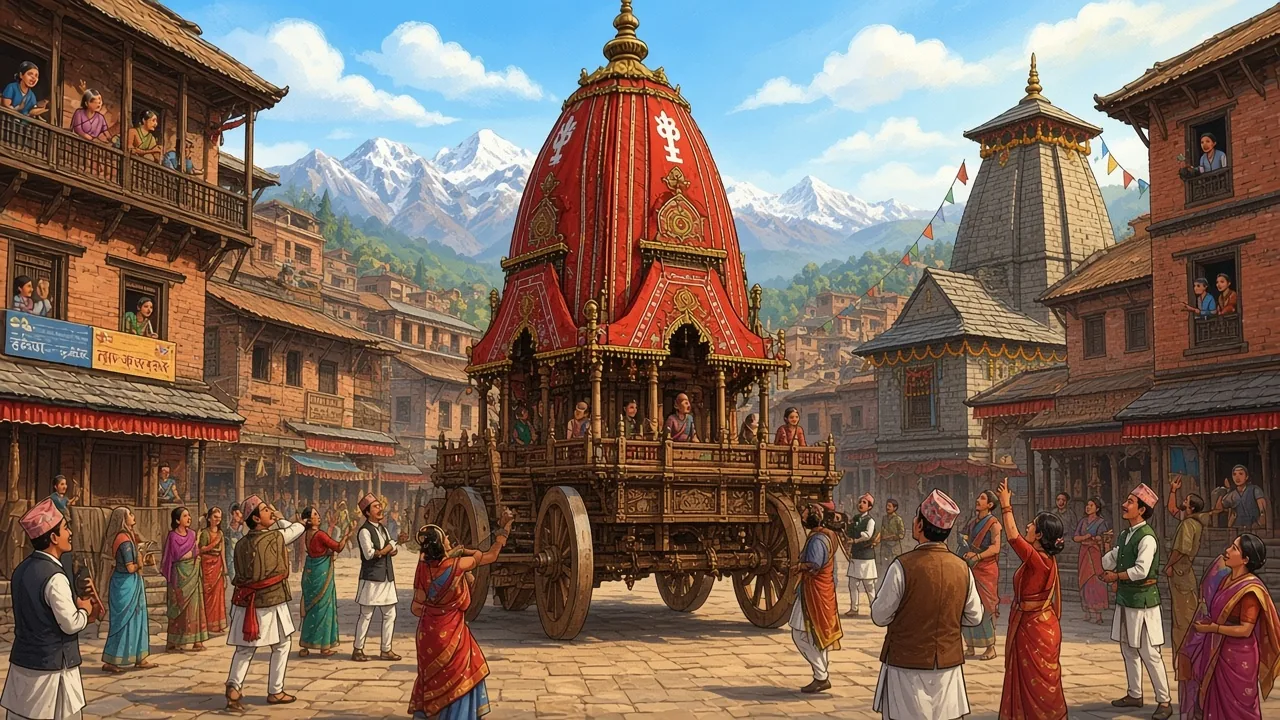
Panauti keeps the Bārahī Jātrā (बाराही जात्रा) on the full moon of Jestha, and the festival runs a few days into Ashad. There too, one quarter of the town is set against another, sometimes in a chariot tug-of-war.पनौतीले बाराही जात्रा जेठको पूर्णिमामा मनाउँछ, र त्यो जात्रा असारका केही दिनसम्म चल्छ। त्यहाँ पनि सहरको एक भाग अर्को भागसँग जुध्छ, र कहिले रथको तानतैन हुन्छ।
1. Sithi Nakha
१. सिठी नखः
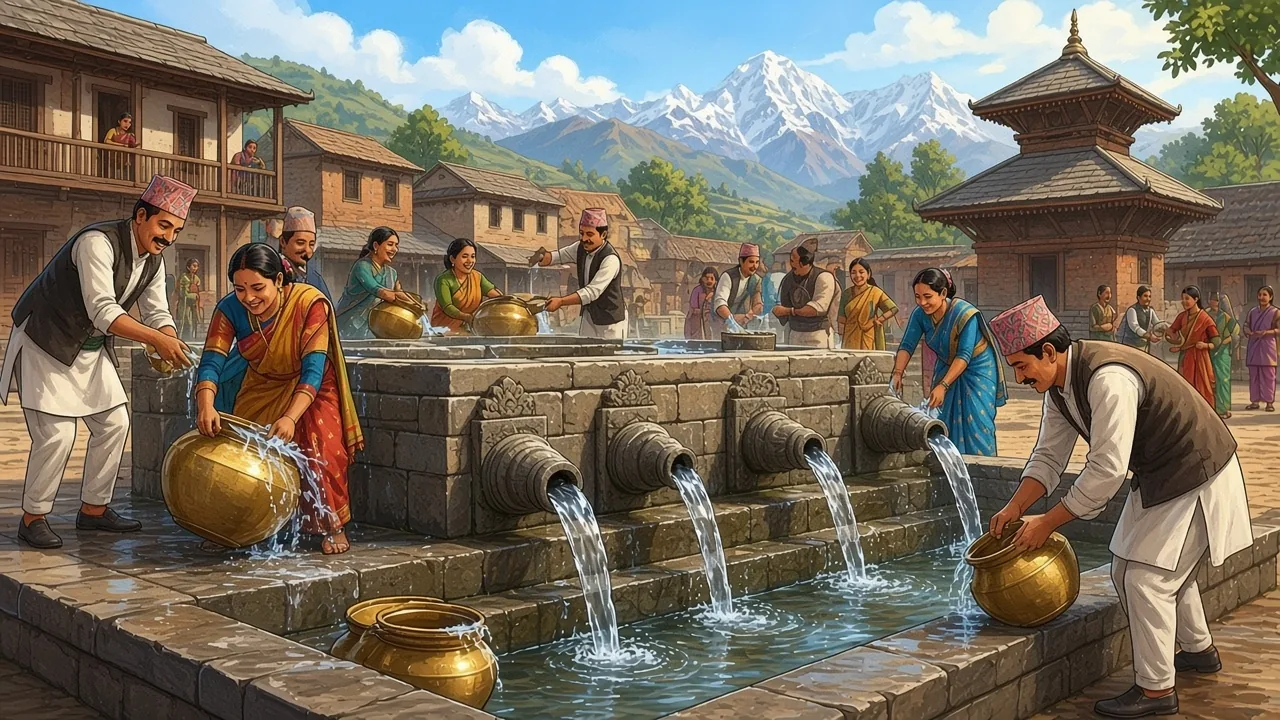
Neighbors clean the stone spout, and a plate of bara sits by the water.टोलले ढुङ्गेधारा सफा गर्छ, र पानीको छेउमा बाराको थाल बस्छ।
Dimension
Details
Cultural & Theological Significance
Calendar Tithi
Jestha Shukla Shashthi (कुमार षष्ठी)
Auspicious lunar day marking the birthday of Kumār Kartikeya and pre-monsoon watershed renewal.
Presiding Deities
Kumār Kartikeya (Skanda), Jaladevata, Nāgas
Veneration of martial discipline, youthful vigor, and sovereign custodians of subterranean waters.
High-protein pulse gastronomy designed to stoke digestive fire (agni) before rice transplantation.
Social Framework
Hereditary Guthī lineages & neighborhood tvāḥ
Decentralized civic autonomy sustaining historic urban infrastructure across the Newar cosmos.
The story
Celebrated on the sixth day of the waxing lunar fortnight of Jestha, a date known across the classical calendar as Kumār Ṣaṣṭhī, Sithi Nakha inaugurates the sacred pre-monsoon ecological transition across the ancient urban settlements of the Kathmandu Valley. Dedicated to Kumār Kartikeya, the youthful commander of the celestial armies and guardian of martial discipline, this festival weaves heroic veneration directly into civic stewardship, transforming the seasonal turn into a collective mobilization for municipal purification. Before the torrential summer rains descend to swell the subterranean aquifers, Newar communities turn outward to dredge their public reservoirs and restore the sacred waters that sustain domestic life through the long dry season.
जेठ महिनाको शुक्ल पक्षको षष्ठी तिथि, जसलाई सनातन परम्परामा कुमार षष्ठी भनिन्छ, त्यसै दिन काठमाडौँ उपत्यकाका प्राचीन बस्तीहरूमा सिठी नखःको पावन पर्व मनाइन्छ। भगवान् शिव र पार्वतीका ज्येष्ठ सुपुत्र एवम् देवसेनापति कुमार कार्तिकेयको आराधना गरिने यो चाडले वीरताको सम्मानलाई नागरिक कर्तव्य र वातावरणीय सरसफाइसँग प्रत्यक्ष जोड्दछ। दक्षिण एसियाली मनसुनको भीषण झरी सुरु हुनुभन्दा ठीक अगाडि, जमिनमुनिका जलस्रोतहरू फोहोर नहुन् भनी नेवार समुदाय आफ्ना इनार, ढुङ्गेधारा, र पोखरीहरूको सरसफाइमा एकताबद्ध भएर जुट्ने गर्दछन्।
Under the collective organization of neighborhood wards and hereditary trusts (guthī), urban households assemble at dawn to scrub stone spouts (hiti), desilt sunken wells (inār), clean brick conduits, and clear the public ponds (pukhu) that serve as retention basins for the valley. Theological tradition holds that during this brief astrological interlude, the serpent-deities (Nāgas) and subterranean aquatic spirits temporarily retreat to deeper underworld springs or depart on pilgrimage, permitting human hands to dig deep into the silt and extract accumulated mud without incurring divine wrath. By unblocking the intricate medieval network of underground terracotta pipes (rājkulo), the townspeople guarantee that the incoming monsoon deluges will recharge clear, filtered aquifers rather than washing stagnant surface filth back into the drinking supply.
टोलटोलका गुठीयार र स्थानीय बासिन्दाहरू बिहानै भेला भएर ढुङ्गेधारा (हिति), इनार, कुवा, र पोखरी (पुखु) को मर्मतसम्भार एवम् सरसफाइमा लाग्दछन्। धार्मिक विश्वासअनुसार यस विशिष्ट तिथिमा जलका स्वामी नागराज तथा अन्य जलचरहरू गहिरो पाताल वा तीर्थाटनतर्फ प्रस्थान गर्ने हुँदा, मानिसले जलस्रोतको हिलो र लेदो खनेर सफा गर्दा नागदोष लाग्दैन भन्ने मान्यता छ। प्राचीन मल्लकालीन राजकुलो र माटोका भूमिगत नलिकाहरूको फोहोर पन्छाएर सफा गरिएपछि मात्र मनसुनको नयाँ वर्षाले शुद्ध र कञ्चन जल भूमिगत मुहानसम्म भर्न पाउँछ।
Complementing this communal sanitation is a domestic culinary tradition that fortifies the body for the grueling physical labor of the agricultural season ahead. Kitchens across the valley fill with the aroma of smoking mustard oil as mothers fry deep, savory patties known as wo or bara, made from finely ground pastes of black lentils, green mung, and yellow split peas, served alongside thin rice-flour crepes (chatānmari). Offered first to the household deity and to Kartikeya at open-air shrines marked by six-petaled lotuses, these protein-dense legumes balance the bodily humors, rekindle the digestive fire (agni), and impart lasting stamina to farmhands who must soon spend weeks wading knee-deep in freezing mud during the monsoon rice transplantation.
यस सामूहिक सरसफाइका साथसाथै घरको भान्सामा शरीरलाई तागत दिने विशेष परिकारहरू पकाइन्छन्, जसले आउँदो खेतीपातीको कठोर परिश्रमका लागि आवश्यक ऊर्जा प्रदान गर्दछ। मास, मुगी, केराउ, र चनाका पिठोबाट बनाइएका बाक्ला र स्वादिला बारा (वः) तथा चामलको पीठोबाट बनेका पातला चटामरी तोरीको तेलमा पकाइन्छन्। षट्कोण वा ६ वटा कमलको पातले सजिएका मण्डलहरूमा कुमार कार्तिकेय र कुलदेवतालाई यी परिकार चढाएपछि परिवारका सबै सदस्य बसेर प्रसाद ग्रहण गर्दछन्। यस्ता प्रोटिनयुक्त दालका परिकारले वर्षायामको हिलो र चिसोमा खटिने किसानहरूको पाचन शक्ति र शारीरिक बललाई मजबुत बनाउँछन्।
Sacred circumambulation through ancient Patan neighbourhoods accompanied by musical *guthi*s.
Key Ritual Climax
Coconut drop (नारिवल खसाल्ने) & Bhoto Jatra
Lagankhel blessing ritual followed by the public judicial vest display before the Living Goddess Kumari.
The story
Standing as Nepal's longest and most intricate communal festival, the chariot procession of Rato Machhendranath—venerated by Newar Buddhists as the Bodhisattva Padmapāṇi Avalokiteśvara (Karunamaya or Bungadyah) and by Hindus as an incarnation of Lord Shiva and the progenitor of the Natha yogic lineage—spans months of ritual journeying across the sacred urban topography of Patan (Lalitpur). The origin of this colossal civic rite traces back to a catastrophic twelve-year drought during the seventh-century reign of Licchavi King Narendra Deva. According to historical chronicle, the ascetic master Gorakhnāth arrived in the Kathmandu Valley and, having received no alms or ceremonial welcome from the inhabitants, gathered the sovereign serpent kings (Ashta Nāgas) and bound them beneath his yogic meditation seat on Mrigasthali hill, thereby freezing the celestial waters and starving the land of rain.
नेपालकै सबैभन्दा लामो र भव्य जात्राका रूपमा स्थापित रातो मच्छिन्द्रनाथको रथयात्रा ललितपुर (पाटन) को सांस्कृतिक जीवनको मेरुदण्ड हो। बौद्ध धर्मावलम्बीहरूले करुणाका सागर बोधिसत्व पद्मपाणि अवलोकितेश्वर (बुंगद्यः) का रूपमा तथा हिन्दुहरूले आदिगुरु गोरखनाथका गुरु एवम् वर्षा र सहकालका देवताका रूपमा उहाँलाई समान श्रद्धाका साथ पुज्दछन्। यस जात्राको ऐतिहासिक पृष्ठभूमि सातौँ शताब्दीका लिच्छवि राजा नरेन्द्रदेवको शासनकालसँग जोडिन्छ, जतिखेर उपत्यकामा बाह्र वर्ष लामो भीषण अनिकाल र खडेरी परेको थियो। जनविश्वासअनुसार योगी गोरखनाथले उपत्यकावासीबाट यथोचित आदर-सत्कार नपाएपछि कुपित भई नवनागहरूलाई आफ्नो आसनमुनि थुनेर समाधिमा बसेका थिए, जसका कारण आकाशबाट वर्षाको एक थोपा पनि खस्न सकेको थिएन।
Realizing that Gorakhnāth would rise from his seat only to pay homage to his own spiritual master, King Narendra Deva joined forces with the Tantric preceptor Bandhudatta of Chobhar and a humble Jyapu farmer named Rathakar Lalit of Patan, undertaking a perilous mystical journey under the guidance of Karkotak Nagraj to Kamakhya (Kamarupa in Assam). Through esoteric mantras, Bandhudatta summoned the compassionate spirit of Matsyendranath, who entered a consecrated golden vessel (kalasa) in the form of a black bumblebee. When the sacred party returned to the valley and carried the deity toward Patan, Gorakhnāth instantly leapt up in reverence to bow before his guru, freeing the captive serpents who immediately surged into the skies and drenched the parched earth with torrential, life-restoring rain.
आफ्ना पूज्य गुरु उपस्थित भएपछि मात्र गोरखनाथ आसनबाट उठ्नेछन् र नागहरू मुक्त हुनेछन् भन्ने रहस्य बुझेर, राजा नरेन्द्रदेव, चोभारका तान्त्रिक बन्धुदत्त वज्राचार्य, र पाटनका ज्यापु किसान ललित रथकार कर्कोटक नागको सहयोगमा असमको कामरु-कामाख्या पुगे। त्यहाँ बन्धुदत्तले कठिन तन्त्र साधनाद्वारा करुणामय मच्छिन्द्रनाथको आत्मालाई भमराको रूप धारण गराई आफ्नो स्वर्ण कलशमा बन्दी बनाएर ल्याए। जब बुंगद्यःलाई उपत्यकामा प्रवेश गराइयो, गोरखनाथ आफ्ना गुरुको दर्शनका लागि आदरपूर्वक उठ्न बाध्य भए। उनी उठ्नासाथ आसनमुनि थुनिएका नागहरू मुक्त भई आकाशमा उडे र उपत्यकामा मुसलधारे वर्षा भई सम्पूर्ण खडेरी र संकट सदाका लागि समाप्त भयो।
In enduring thanksgiving, the valley constructs a staggering thirty-two cubit (approx. sixty-foot) towering wooden chariot at Pulchowk, assembled entirely with interlocking timber joints and thick cane lashings without a single iron nail. Resting upon four colossal wooden wheels painted with the terrifying, all-seeing eyes of Bhairav, the spire is festooned with fragrant branches of juniper and crowned with the resplendent metallic crest of Vajrasattva, while its forward beam projects like the fierce equine visage of Hayagrīva. Propelled by hundreds of chanting devotees hauling massive braided ropes, the chariot crawls methodically through Gabahal, Sundhara, and Lagankhel—where a consecrated coconut is hurled from the chariot summit to bless the assembly—before concluding at the wide, historic esplanade of Jawalakhel for Bhoto Jatra.
त्यही उपकारको सम्झनामा प्रत्येक वर्ष पुल्चोकमा ३२ हात अग्लो विशाल काठको रथ निर्माण गरिन्छ, जुन फलामको एउटा पनि कीला प्रयोग नगरी केवल बेत र काठका जोर्नीहरूबाट बाँधिन्छ। भैरवका भयङ्कर आँखा अङ्कित चारवटा ठूलाठूला काठका पाङ्ग्रामाथि उभिने यो रथको शिरमा वज्रसत्त्वको धातुको मुकुट र वरिपरि धुपीका सुगन्धित हाँगाहरू सजाइन्छन्, भने रथको अगाडिको भाग हयग्रीवको स्वरूपमा अगाडि बढ्छ। सयौँ भक्तजनहरूले लामो डोरी तानेर रथलाई गाबहाल, सुन्धारा हुँदै लगनखेल पुर्याउँछन्, जहाँ रथको टुप्पोबाट नरिवल खसाल्ने प्रसिद्ध अनुष्ठान सम्पन्न हुन्छ। अन्ततः यो रथ जावलाखेलको फराकिलो मैदानमा पुगेर प्रसिद्ध भोटो जात्रासँगै विश्राम लिन्छ।
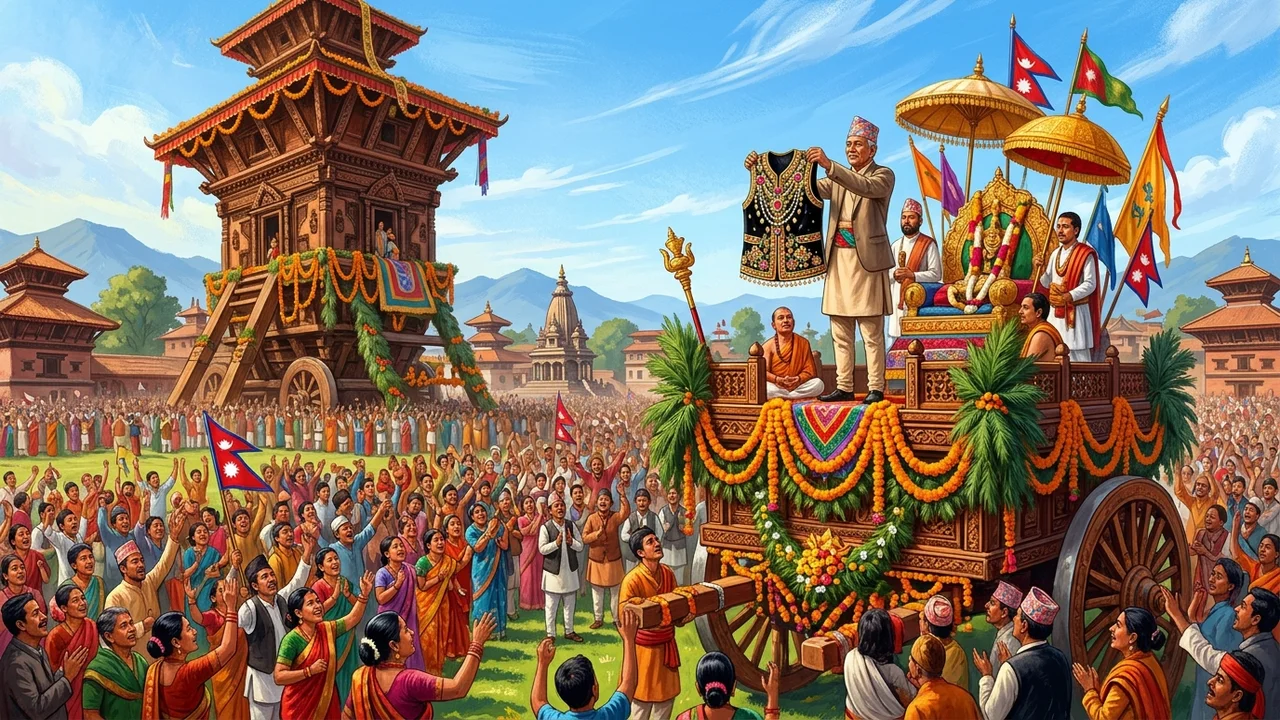
The vest is held up from the chariot, and Kumari watches.रथबाट भोटो देखाइन्छ, र कुमारी हेर्नुहुन्छ।
Dimension
Details
Cultural & Legal Significance
Sacred Artifact
Jeweled Black Velvet Vest (रत्नजडित भोटो)
Celestial gift of Karkotak Nāgrāj adorned with diamonds, emeralds, and ocean pearls.
The Claimants
Patan Jyapu farmer vs. Mythic possessor / Lakhe
Unresolved property dispute brought before royal and divine arbitration.
Custodial Decree
Held in trust by Rato Machhendranath
Sacred escrow status overseen by the hereditary Panju priests of Bungamati.
The Proclamation
4-directional showing at Jawalakhel
Public judicial transparency displayed thrice to North, South, East, and West before the Kumari.
Conclusion of Season
Dismantling of the 32-cubit chariot
Deity returns to his maternal temple in Bungamati or Patan, concluding the monsoon welcome.
The story
Marking the grand liturgical climax of the months-long Rato Machhendranath chariot procession, Bhoto Jatra gathers the people of the Kathmandu Valley upon the sprawling green meadows of Jawalakhel for a centuries-old public judicial reckoning. The provenance of the legendary black velvet vest—thickly studded with luminous diamonds, pearls, and celestial jewels—stems from a miraculous encounter between a humble Newar Jyapu farmer and Karkotak Nāgrāj, the serpent sovereign of Taudaha Lake. When the serpent queen was afflicted with a seemingly incurable eye cataract, Karkotak assumed human form to seek mortal aid, bringing the devout farmer into his subterranean crystal palace where the farmer applied his simple natural remedy and body heat, miraculously restoring the queen's sight. In boundless gratitude, Karkotak presented the farmer with the shimmering, priceless bhoto, instructing him to safeguard it as an eternal heirloom.
महिनाौँसम्म चल्ने रातो मच्छिन्द्रनाथको रथयात्राको सबैभन्दा भव्य र अन्तिम दिनका रूपमा जावलाखेलको फराकिलो खुला मैदानमा भोटो जात्रा सम्पन्न हुन्छ। बहुमूल्य हिरा, मोती, र मणिमाणिक्य जडित कालो मखमली भोटोको कथा टौदहका नागराज कर्कोटक र एक साधारण ज्यापु किसानबीचको अनौठो सम्बन्धबाट सुरु हुन्छ। किम्वदन्तीअनुसार नागकी रानीको आँखामा गम्भीर रोग लागेपछि, कर्कोटकले मानवरूप धारण गरी पाटनका एक वैद्य किसानलाई पाताल दरबारमा पुर्याए। किसानले आफ्नो हातको पसिना र घरेलु औषधिको तातोले रानीको आँखा सकुशल निको पारिदिएपछि, प्रसन्न भएका नागराजले उनलाई अमूल्य रत्नहरूले सजिएको दैवी भोटो उपहारस्वरूप प्रदान गरे।
One sweltering afternoon, while tilling his terraced field in Patan, the farmer took off the heavy jewel-encrusted garment and draped it carefully upon a nearby ridge, only for a wandering demon (Lakhe or forest spirit) to seize the unguarded treasure and vanish into the shadows. Heartbroken, the farmer searched in vain until months later, amidst the dense crowd gathered around Bungadyah's chariot at Jawalakhel, he suddenly recognized his stolen vest glistening upon the shoulders of the brazen demon. When the farmer gripped the fabric and demanded the return of his royal gift, the demon adamantly counter-claimed ownership, sparking a fierce dispute that reverberated through the assembly and was brought directly before the presiding monarch, King Narendra Deva, and the living presence of Rato Machhendranath.
एकदिन खेतमा काम गर्दा गर्मी भएपछि किसानले त्यो बहुमूल्य भोटो फुकालेर आलीमा राखेका थिए। त्यही मौका छोपेर एउटा भूत वा लाखेले त्यो भोटो चोरेर भाग्यो। किसानले धेरै खोजे तर भोटो फेला परेन। धेरै महिनापछि, जावलाखेलमा मच्छिन्द्रनाथको रथ हेर्न आएको भीडमा किसानले आफ्नै भोटो एउटा अपरिचित व्यक्तिको जीउमा टल्किरहेको देखे। जब किसानले आफ्नो भोटो दाबी गर्दै समाते, त्यो व्यक्तिले पनि भोटो आफ्नै भएको जिकिर गर्यो। दुवै पक्षबीच चर्को विवाद उत्पन्न भएपछि यो मुद्दा राजा नरेन्द्रदेव र स्वयं रातो मच्छिन्द्रनाथको अगाडि पेश गरियो।
Because neither the farmer nor the spirit possessed independent witnesses or physical documentation to prove undeniable title to the celestial heirloom, the king and high priests decreed that the contested vest would be placed in the sacred custody of Rato Machhendranath until indisputable evidence could be presented. To this day, the vest is preserved in the god's care, and every year at Jawalakhel—in an august assembly witnessed by the head of state, foreign dignitaries, and the Living Goddess Kumari—a designated government official ascends the high platform of the chariot and holds the gleaming vest aloft three times toward each of the four cardinal directions, solemnly asking the people of Nepal whether its true owner has arrived with evidence to reclaim it.
किसान र अर्को पक्ष दुवैसँग आफ्नो स्वामित्व प्रमाणित गर्ने ठोस प्रमाण वा साक्षी नभएकाले, राजा र पञ्च भलाद्मीहरूले उक्त अमूल्य भोटो कसैलाई नदिई प्रमाण नजुटुञ्जेल स्वयं श्री रातो मच्छिन्द्रनाथको जिम्मामा सुरक्षित राख्ने फैसला गरे। त्यसै बेलादेखि भोटो सरकारी संरक्षण र गुठीयारहरूको जिम्मामा राखिँदै आएको छ। हरेक वर्ष जावलाखेलमा राष्ट्राध्यक्ष, जीवित देवी श्री कुमारी, र हजारौँ जनताको साक्षीमा सरकारी अधिकारीले रथको चारै दिशाबाट तीन-तीन पटक त्यो भोटो देखाउँदै "यो कसको हो? प्रमाणसहित लिन आउनुहोस्" भनी सार्वजनिक घोषणा गर्ने परम्परा आजसम्म पनि उत्तिकै जीवन्त रूपमा चल्दै आएको छ।