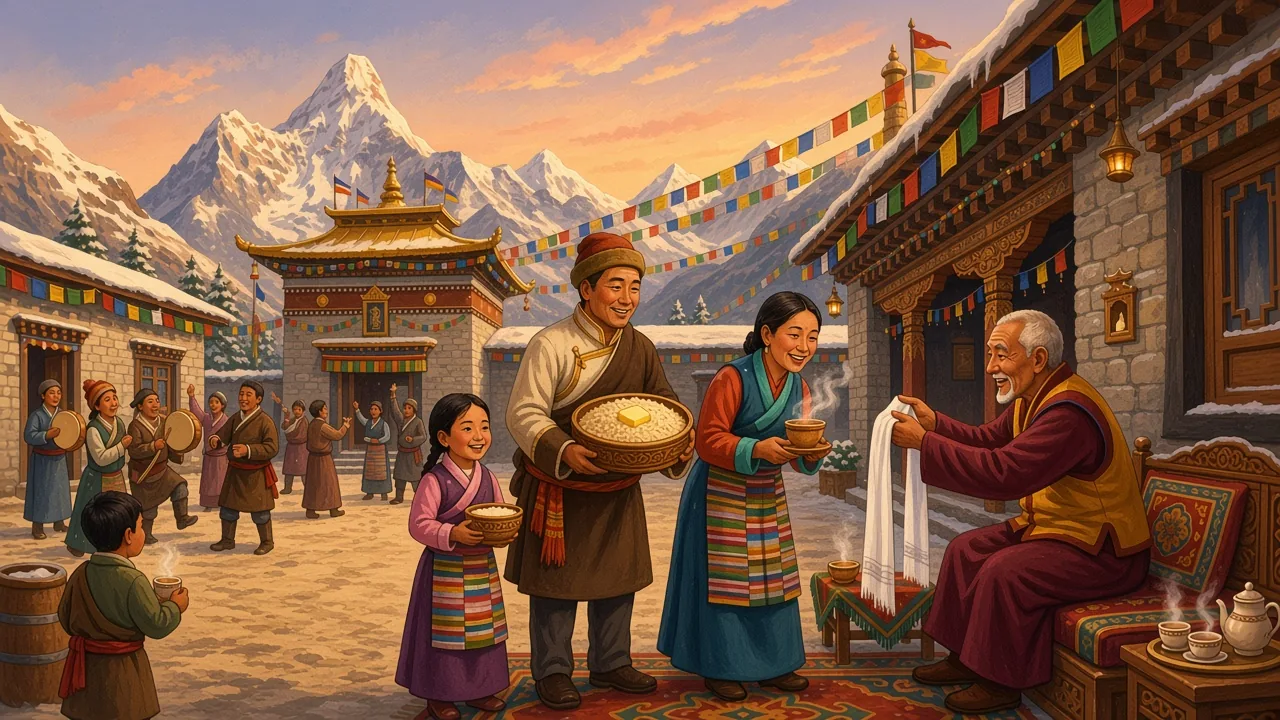
Gyalpo Lhosār (ग्याल्पो ल्होसार) is the royal and monastic new year observed by the Sherpa, Hyolmo, and Bhutia peoples of the high Himalayan highlands of Solukhumbu, Mustang, and Manang on the first day of the waxing moon of Falgun. Tracing its lineage back to the coronation of the ancient kings of Tibet, the festival spans two weeks of intense spiritual purification. On the twenty-ninth night of the departing year, families cleanse their homes of negative energies by consuming Guthuk—a hearty nine-ingredient broth containing dough dumplings concealing playful symbolic tokens (such as wool indicating a pure heart, chili denoting a sharp tongue, or charcoal representing a dark mind) that reveal the diner's karmic disposition. At dawn on New Year's Day, families place offerings of roasted barley flour (tsampā) and fresh butter upon domestic altars in a sacred container called Chemar, hoisting vibrant new lungtā prayer flags over stone roofs and exchanging white silk blessing scarves (khatā) with the sacred greeting: "Tashi Delek!".
ग्याल्पो ल्होसार शेर्पा, ह्योल्मो, र तिब्बती मूलका हिमाली समुदायहरूको नयाँ वर्ष हो, जुन फागुन शुक्ल प्रतिपदाका दिन सुरु हुन्छ। सोलुखुम्बु, मनाङ, र मुस्ताङका उच्च हिमाली भेगमा मनाइने यो पर्व प्राचीन तिब्बती राजाको राज्यारोहण परम्परासँग जोडिन्छ। नयाँ वर्ष सुरु हुनुभन्दा अघिल्लो रात (२९ औँ दिन) नौ प्रकारका अन्न मिसाएर बनाइएको तातो झोल 'गुथुक' खाइन्छ। यसभित्र पिठोको डल्लाभित्र कोइला, उन, खुर्सानीजस्ता प्रतीकहरू लुकाइएका हुन्छन्, जसले मानिसको स्वभावलाई रमाइलो ढङ्गले दर्शाउँछ। नयाँ वर्षको बिहानै घरको छानामा पञ्चरङ्गी 'लुङ्दर' (प्रार्थनाका झण्डा) फेरिन्छ, काठको कचौरा 'छेमार' मा सातु र नौनी घिउ चढाएर पूजा गरिन्छ, र घाँटीमा सेतो रेशमी 'खादा' ओढाएर "टासी देलेक!" भन्दै शुभकामना साटासाट गरिन्छ।
The Gurung new year is Tamu Lhosar, on the fifteenth of Poush. The Tamang new year is Sonam Lhosar, in Magh.
गुरुङको नयाँ वर्ष तमु ल्होसार हो, पुसको पन्ध्र गते। तामाङको नयाँ वर्ष सोनम ल्होसार हो, माघमा।
Themes:#GyalpoLhosarAndGuthuk#ChemarAndKhata
2. Maha Shivaratri
२. महाशिवरात्रि
The fire burns through the night at Pashupatinath.पशुपतिनाथमा आगो रातभरि बल्छ।
Dimension
Details
Theological & Monastic Significance
Calendar Tithi
Falgun Krishna Chaturdashi (फागुन कृष्ण चतुर्दशी)
The darkest fourteenth lunar night preceding the new moon.
Cosmic Event
Shiva's Tāṇḍava Nṛtya & Wedding with Pārvatī
Cosmic dance of eternal dissolution and harmonious divine reconciliation.
Sanctuary Center
Pashupatināth Temple, Kathmandu
Sovereign temple complex hosting monastic gatherings of Nāgā and Aghorī sadhus.
Four-Watch Liturgy
Cāri Prahara Puja (चार प्रहर पूजा)
Sequential nocturnal ablutions with Panchamrita, Belpatra, and holy water.
Sacred Fire
Dhunī bonfires & fasting vigils
Internal purification consuming worldly desires in the fire of spiritual consciousness.
The story
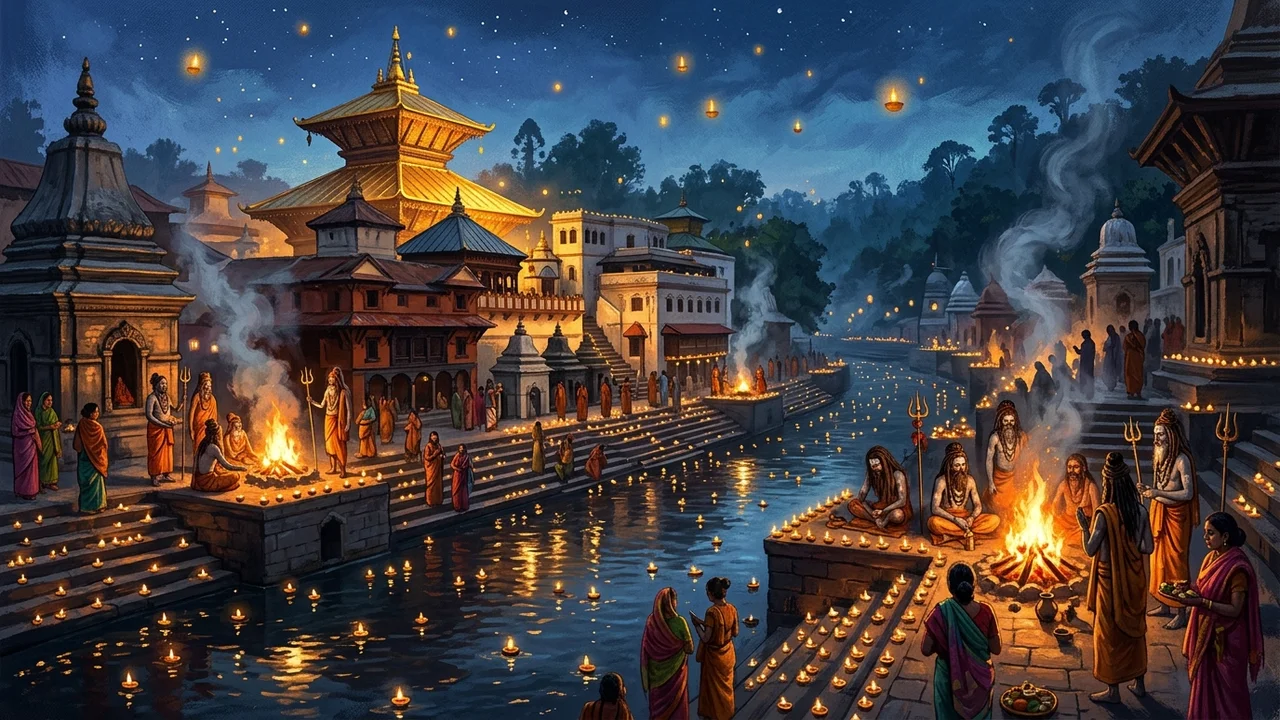
Falling on the fourteenth night of the dark lunar fortnight of Falgun (Phālguna Krishna Chaturdashi), Maha Shivaratri stands as the most profound, spiritually intense nocturnal vigil of the Hindu liturgical year. In classical Puranic theology, this darkest night of the month marks the cosmic performance of Lord Shiva's cosmic dance of creation, preservation, and dissolution (Tāṇḍava Nṛtya), as well as the celestial anniversary of his divine wedding to Goddess Pārvatī. Scripture additionally recounts that upon this midnight, Shiva manifested as the beginningless, endless pillar of cosmic fire (Jyotirliṅga) to humble the pride of Brahmā and Vishnu, revealing that the ultimate reality transcends all spatial boundaries and mortal comprehension.
फागुन महिनाको कृष्ण पक्षको चतुर्दशीको रात सनातन परम्परामा देवाधिदेव महादेवको आराधना गरिने सबैभन्दा महान् र पावन रात हो, जसलाई महाशिवरात्रि भनिन्छ। शिव पुराणअनुसार यसै रात भगवान् शिवले सम्पूर्ण ब्रह्माण्डको सृष्टि, स्थिति, र संहारको प्रतीकका रूपमा दिव्य ताण्डव नृत्य प्रस्तुत गर्नुभएको थियो भने यसै दिन भगवान् शिव र माता पार्वतीको पवित्र वैवाहिक मिलन भएको थियो। यसका साथै ब्रह्मा र विष्णुबीच श्रेष्ठताको विवाद हुँदा, उहाँहरूको अहङ्कार शान्त पार्न भगवान् शिव आदि र अन्त्य नभएको अनन्त ज्योतिर्लिङ्गका रूपमा प्रकट हुनुभएको पावन इतिहास यस पर्वको मूल दार्शनिक आधार हो।
As the supreme guardian deity of Nepal, Lord Pashupatinath transforms the banks of the sacred Bagmati river in Kathmandu into the epic global crossroad of Shaivism. Hundreds of thousands of devotees, yogis, and ascetics—ranging from ash-smeared Nāgā Babas and skull-bearing Aghorīs to serene forest hermits—journey from across the subcontinent to camp beneath the ancient pines of Mrigasthali. Throughout the freezing night, priests conduct the four sequential watches of worship (Cāri Prahara Puja), bathing the four-faced Lingam with continuous oblations of raw milk, curd, honey, clarified butter, and sugarcane juice. Devotees offer trifoliate leaves of the sacred wood-apple tree (Belpatra) representing Shiva's three cosmic eyes, keeping vigil around glowing logs of sacred bonfires (dhunī) whose fragrant smoke drifts into the starlit mountain sky.
नेपालका राष्ट्रदेव श्री पशुपतिनाथ मन्दिरमा यस दिन संसारभरिका लाखौँ हिन्दु धर्मावलम्बीहरू, नागा बाबा, अघोरी, र साधु-सन्तहरूको विशाल कुम्भमेला लाग्दछ। दिनभर उपवास बसेका भक्तजनहरूले रातभर जाग्राम (अनिँदो) बसेर भगवान् शिवको ध्यान र भजनकीर्तन गर्दछन्। रातको चारै प्रहरमा पशुपतिनाथको चारमुखे लिङ्गमा दूध, दही, घिउ, मह, र उखुको रसले पञ्चामृत अभिषेक गरिन्छ। शिवजीलाई अत्यन्त प्रिय लाग्ने तीनवटा पात भएको बेलपत्र (जसले ब्रह्मा, विष्णु, र महेश तथा तीन नेत्रलाई जनाउँछ), धतुरो, र चन्दन अर्पण गरिन्छ। चिसो रातमा भक्तजनहरूले ठाउँठाउँमा 'धुनी' (पवित्र आगो) बालेर न्यानो लिँदै आफ्ना सम्पूर्ण विकार र पापहरूलाई भष्म गर्ने प्रार्थना गर्दछन्।
Falgun Shukla Purnima (फागुन शुक्ल पूर्णिमा / चैत प्रतिपदा)
Full moon festival heralding the warm arrival of the vernal equinox.
Puranic Paradigm
Deliverance of Prahlada & Burning of Holika
Triumph of pure devotion (Bhakti) over autocratic demonic hubris.
Civic Mast Consecration
Cīra Utthāna at Hanumān Dhokā
Formal erection and subsequent midnight cremation of the multicolored pole.
Ritual Colors
Abir (red, yellow, green, and indigo)
Chromotherapy and social equalization through radiant botanical pigments.
Social Dissolution
Erasing barriers of caste, age, and class
Carnivalesque renewal cementing forgiveness, mutual reconciliation, and joy.
The story
Celebrated on the full moon of Falgun (Phālguna Śukla Purnima) across the hills and Kathmandu Valley, and on the following dawn across the southern Tarai plains, Holi—classically known as Fāgu Purnima—is the joyous, carnivalesque vernal festival of colors, communal reconciliation, and social rejuvenation. The theological heart of the festival recounts the triumphant Puranic deliverance of the child-devotee Prahlada. Despite the cruel persecutions of his demonic father, King Hiranyakashipu, Prahlada remained steadfast in his devotion to Lord Narayan. When the king's demoness sister Holika—who possessed a celestial boon rendering her immune to fire—led the child into a blazing inferno to consume him, Prahlada's pure devotion summoned the cosmic winds; the protective shawl flew from Holika's shoulders to envelop the boy, reducing the demoness to ashes and demonstrating that unwavering spiritual integrity transcends mortal malice.
फागुन महिनाको शुक्ल पक्षको पूर्णिमा तिथिमा नेपालका पहाडी भेगमा र त्यसको भोलिपल्ट तराई-मधेसमा हर्षोल्लासका साथ मनाइने रङ्गहरूको महान् वसन्तोत्सव होली अर्थात् फागु पूर्णिमा हो। यस चाडको मूल सन्देश असत्यमाथि सत्यको र अधर्ममाथि धर्मको विजय हो। पौराणिक कथाअनुसार भगवान् नारायणका अनन्य भक्त बालक प्रह्लादलाई मार्न उनका नास्तिक पिता हिरण्यकशिपुले अनेकौँ यातना दिए। अन्ततः आगोले कहिल्यै नजल्ने वरदान पाएकी आफ्नी बहिनी होलिकाको काखमा प्रह्लादलाई राखेर दन्किँदो आगोमा जलाउन खोज्दा, प्रह्लादको निश्चल भक्तिका कारण आगोबाट होलिका स्वयम् भष्म भइन् तर प्रह्लादलाई आगोको एक झिल्काले पनि छोएन। त्यसैले होलिका दहनको खुसीयालीमा यो पर्व मनाइन्छ।
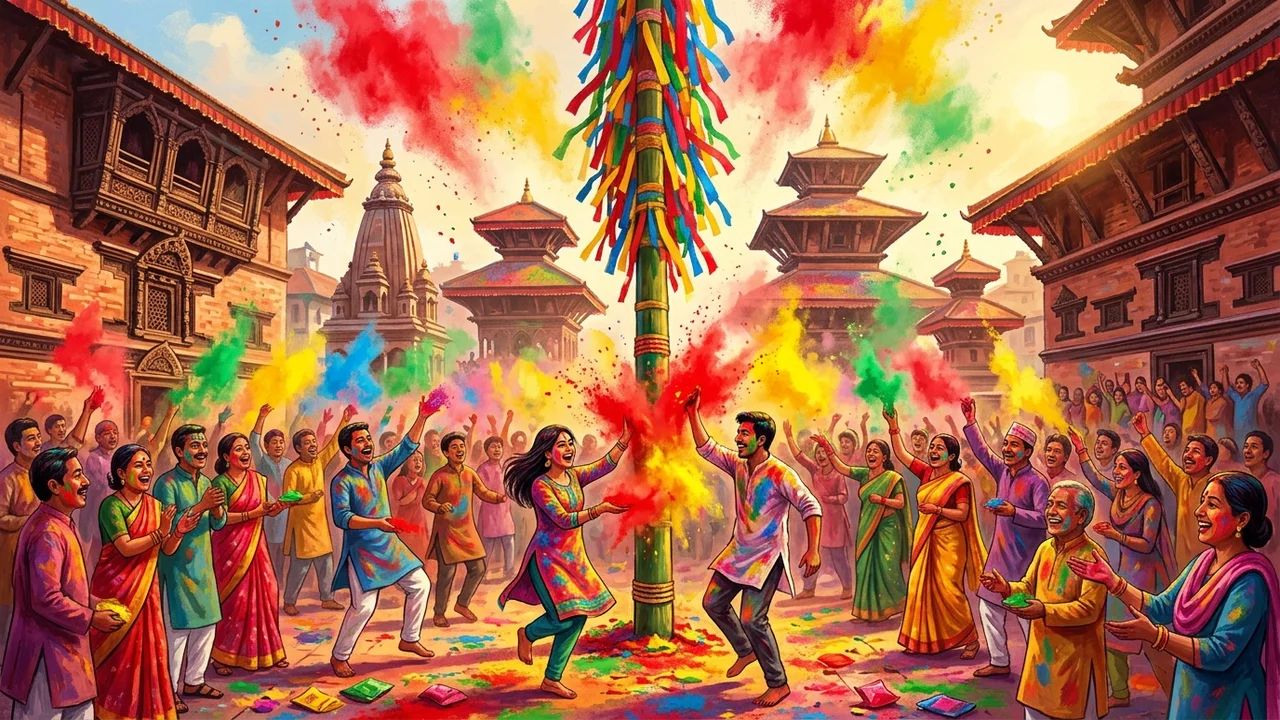
In the Kathmandu Valley, the celebration formally commences eight days prior when a ceremonial wooden mast (Cīra), adorned with multicolored silk streamers, is erected before the ancient palace of Hanuman Dhoka in Basantapur. On the day of Fāgu Purnima, the entire nation dissolves social hierarchies and everyday restraints in an explosion of radiant dry powders (abīra) in brilliant scarlet, emerald green, saffron yellow, and indigo blue, accompanied by playful splashing of water (picakārī). As the Cīra is toppled and consumed in a midnight bonfire, friends and strangers embrace, forgiving past enmities while sharing festive sweet pastries (gujiyā) and cooling cannabis-infused almond milk (bhaṅga), welcoming the fragrant fertility of spring in an unbroken symphony of joy.
काठमाडौँमा होलीको विधिवत् सुरुवात वसन्तपुर दरबार अगाडि तीनतले रङ्गीचङ्गी कपडाहरूले सजिएको बाँसको लिङ्गो (चीर) ठड्याएपछि हुन्छ। पूर्णिमाका दिन सहर-गाउँका गल्लीहरू रङ्ग, पानी, र सङ्गीतको उल्लासमा डुब्छन्। रातो, पहेलो, हरियो, र नीलो अबीर एकअर्कालाई दलेर पुरानो रिसराग, द्वन्द्व, र मतभेद बिर्सी अङ्कमाल गरेर भाइचारा साटासाट गरिन्छ। पिचकारीले रङ्गीन पानी छ्याप्ने, मादल र ढोलकको तालमा फागुका गीत गाउने, र गुझिया तथा भाङको चिसो लस्सी खाने यो रमाइलो परम्पराले समाजका सम्पूर्ण भेदभाव र पर्खालहरूलाई पन्छाएर प्रेम र सद्भावको रङ्गमा एकाकार बनाउँछ। साँझपख वसन्तपुरमा चीर ढालेर जलाइन्छ र होलीको औपचारिक समापन हुन्छ।