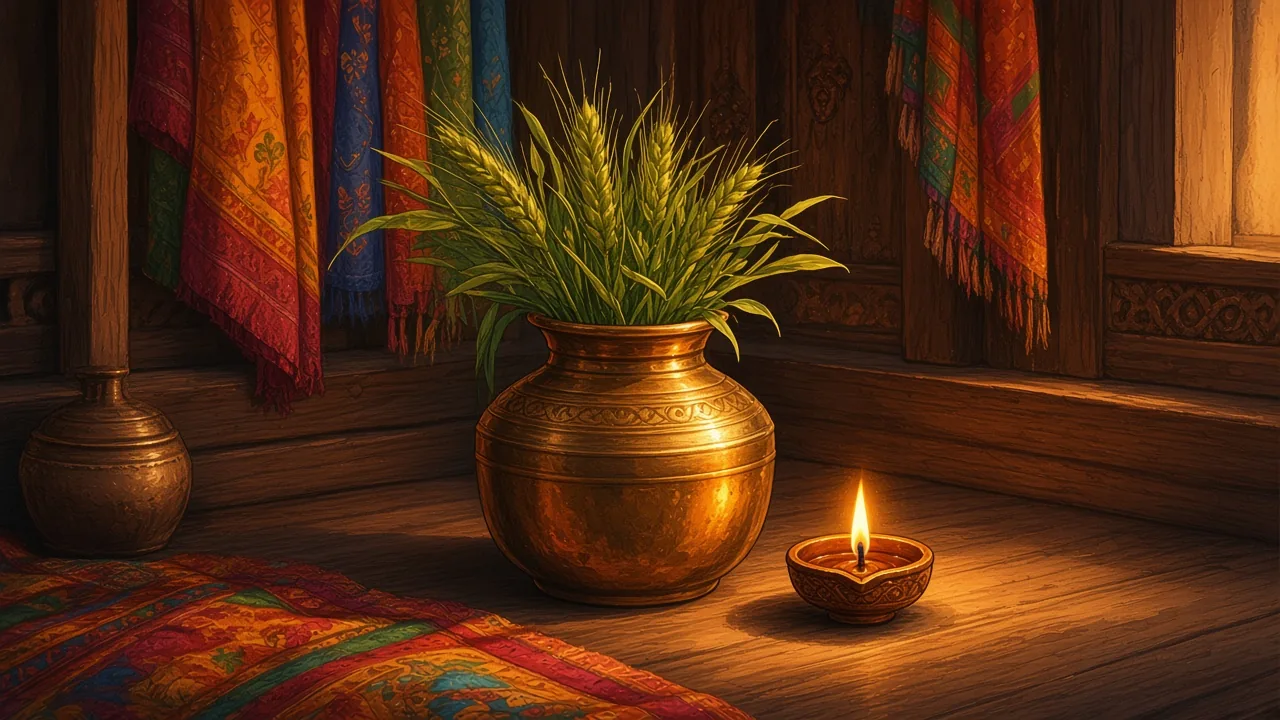
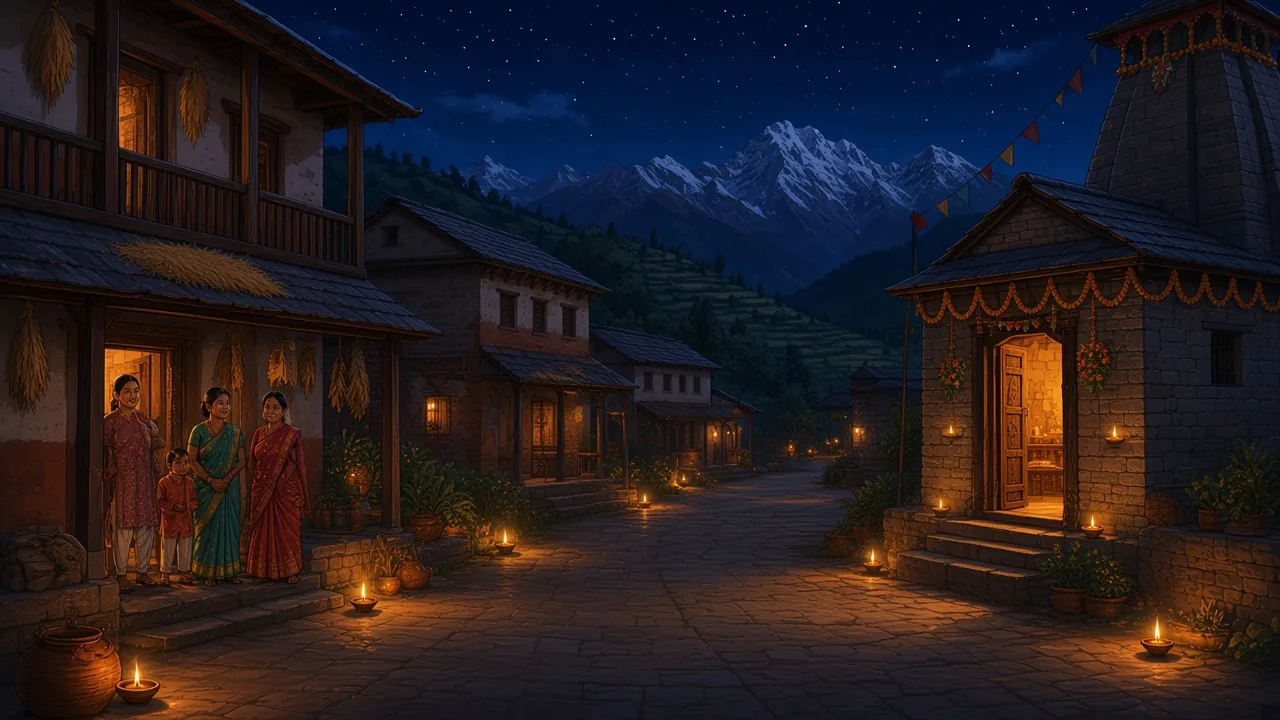
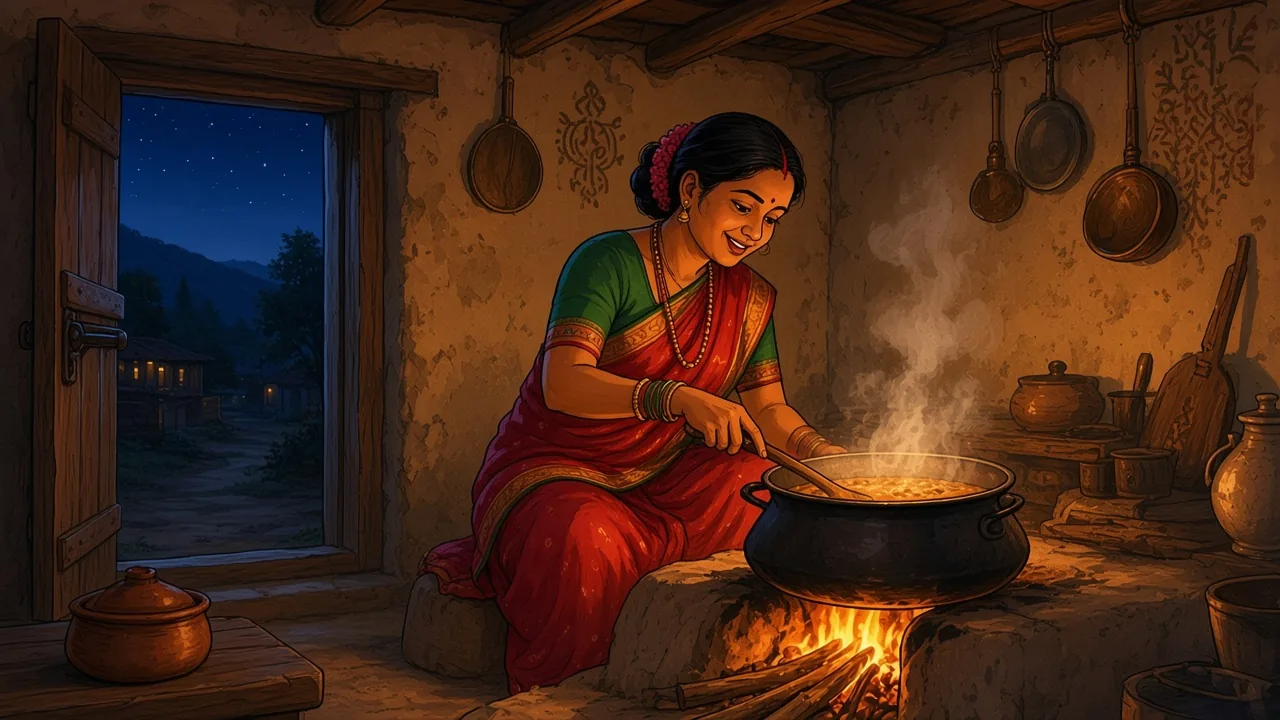
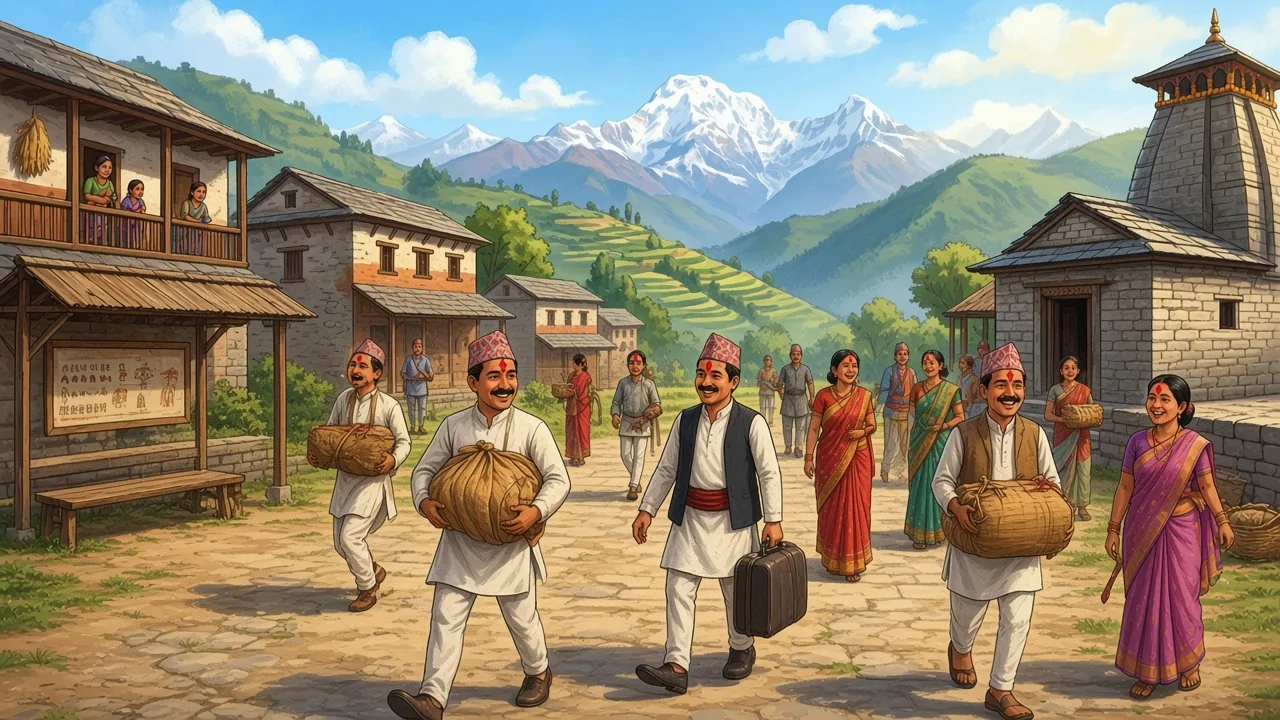
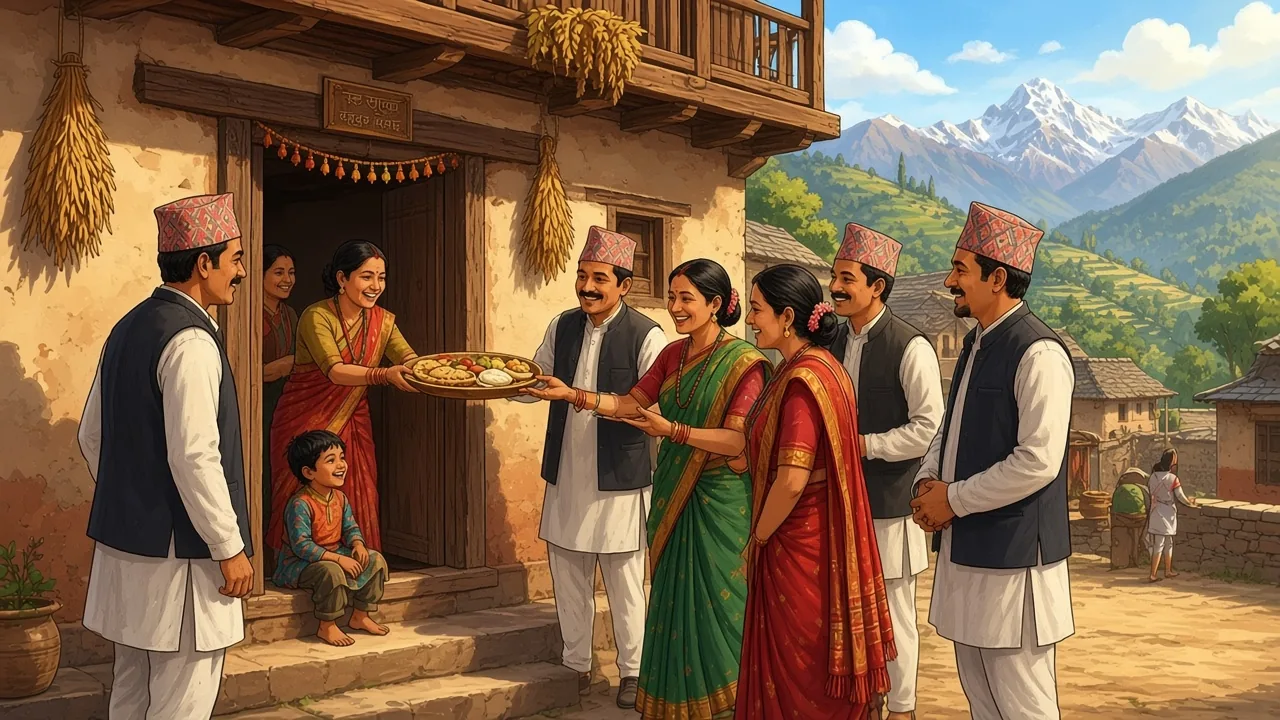
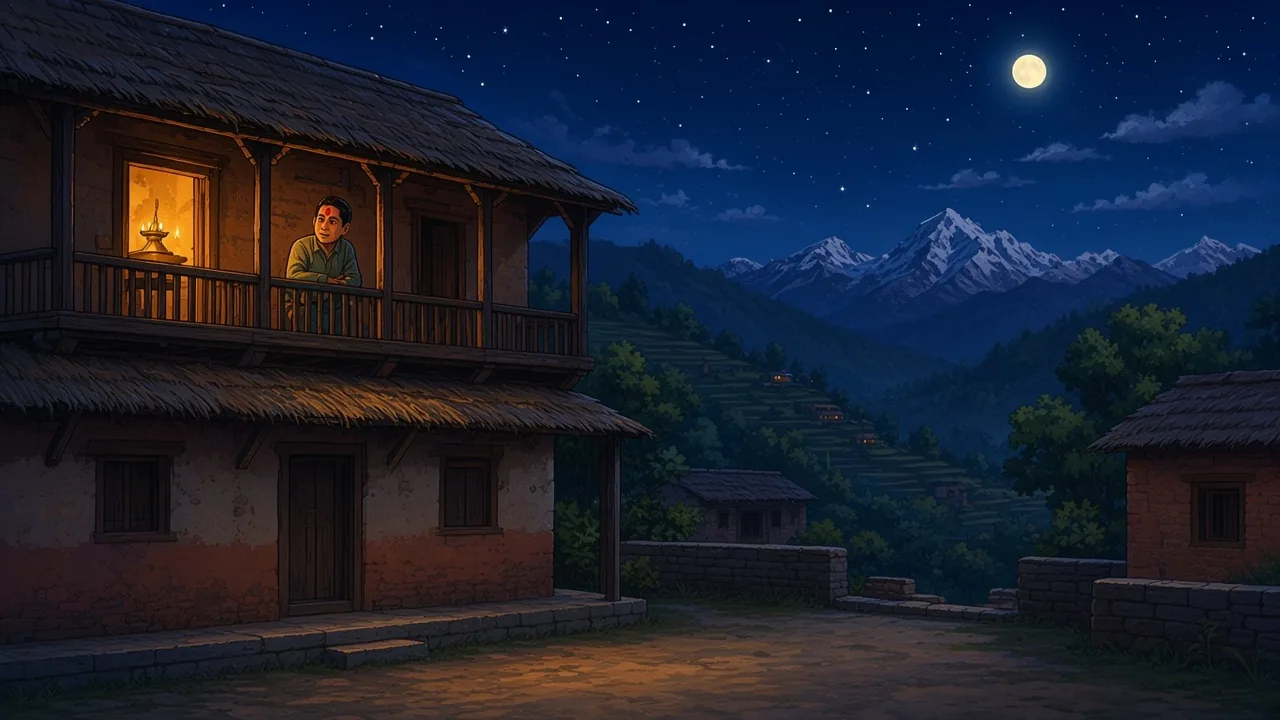
Nocturnal vigil for Goddess Lakṣmī circling the earth, formally concluding the festival of victory.
The story
Reigning as the longest, most auspicious, and emotionally unifying festival in the Nepali cultural universe, Bada Dashain—the grand Sharadīya Navaratri—spans fifteen days of the waxing moon of Ashoj, celebrating the cosmic triumph of divine righteousness over demonic tyranny. Centered upon the celestial battlefield where Goddess Durga Bhavānī, embodying the concentrated splendor and weapons of all thirty-three crore deities, waged a relentless nine-night war against the shape-shifting buffalo demon Mahiṣāsura, Dashain honors the supreme power of the feminine divine (Śakti) to restore cosmic equilibrium when mortal kings and celestial gods had failed. Synchronously celebrated as the season when Lord Sri Rama invoked Durga's primordial energy before vanquishing the ten-headed demon king Rāvaṇa in Lankā, the festival fuses the warrior ethos of ancient kingdoms with intimate domestic reunions, drawing millions of travelers across high mountain passes and swollen rivers back to their ancestral hearths.
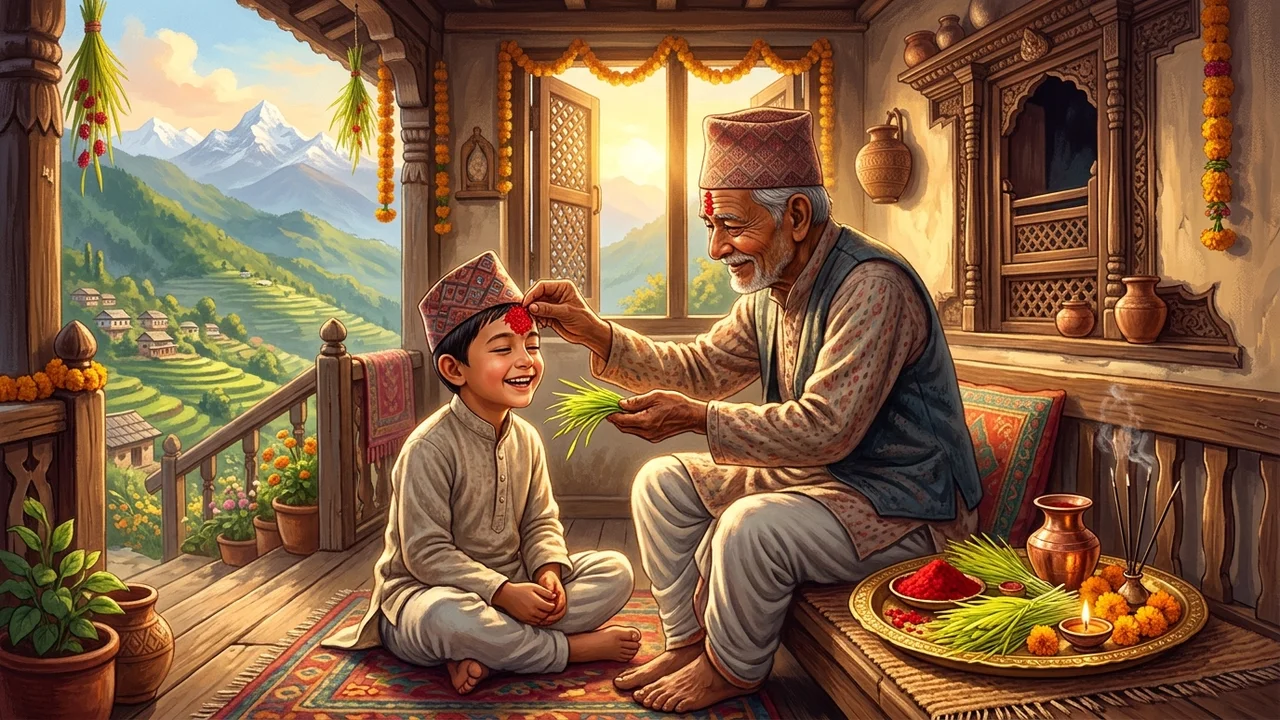
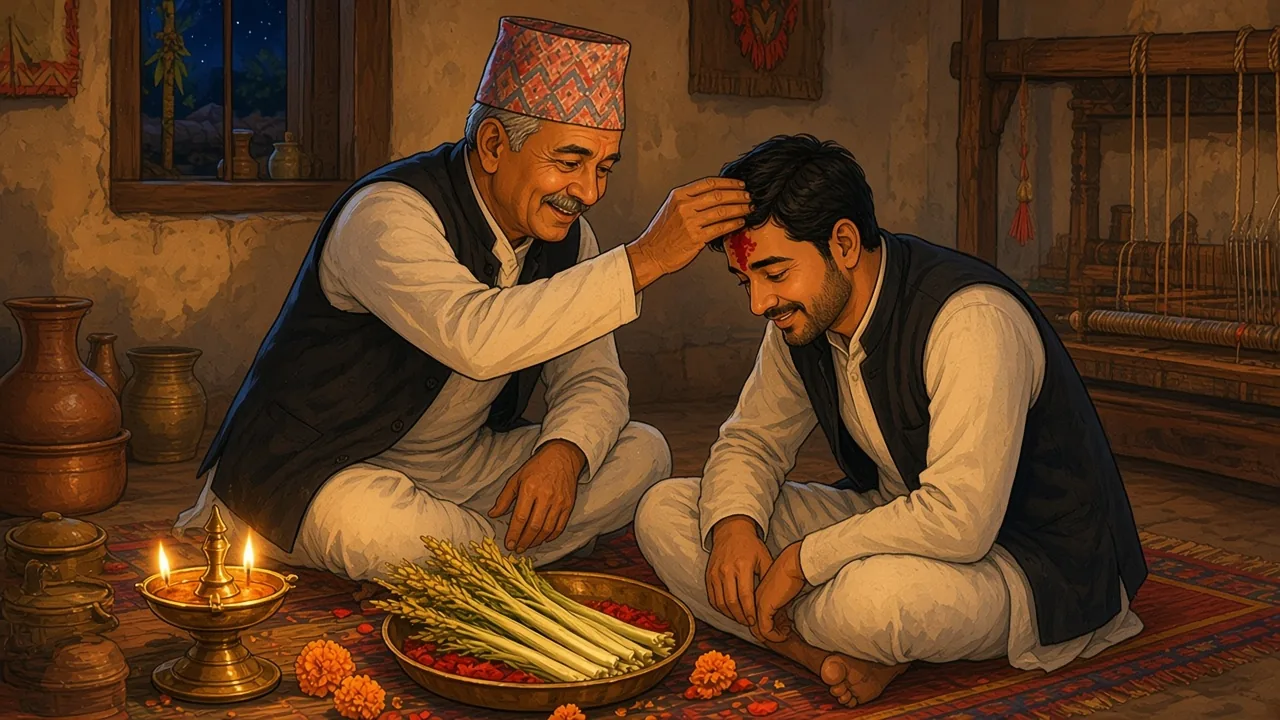
Throughout the golden autumn days when monsoon cloudbursts recede to reveal azure skies and ripening rice paddies, the festival gathers momentum through its sequential sacred acts: from the planting of golden barley shoots (jamarā) in sanctified darkness on Ghaṭasthāpanā, through the martial gun salutes of Phūlpātī and the fierce midnight tantric oblations of Mahāṣṭamī (Kālarātri), to the royal weapon blessings of Mahānavamī. The spiritual climax arrives on the tenth morning, Vijayā Daśamī, when extended families assemble before their eldest living patriarch and matriarch to receive the sacred crimson tīkā—a paste of unboiled rice grains, vermilion powder, and mountain curd—placed upon the forehead alongside plumes of fragrant yellow jamara, bestowing profound blessings of longevity, moral courage, and prosperity.
When an elder blesses male kin, they recite the monumental classical benediction from the Mahābhārata and Puranas, invoking the supreme heroic attributes of mythological paragons to protect the recipient throughout his earthly journey:
This ancient verse invokes boundless longevity like that of the deathless Aśvatthāmā (son of Droṇa), royal wealth like that of King Daśaratha, total destruction of adversaries like Lord Rāghava (Rama), celestial majesty like King Nahuṣa, unyielding physical strength like Haladhara (Balarāma), unshakeable truthfulness like the son of Kuntī (King Yudhiṣṭhira), magnanimous generosity like the son of Surya (Karṇa), unwavering pride and honor like Duryodhana, supreme martial valor like the son of Śāntanu (Bhīṣma), and eternal, transcendent glory like Lord Narayan. Alternatively, when blessing daughters, sisters, and female relatives, elders recite the sublime invocatory hymn from the Argala Stotra of the Devi Māhātmya, conferring the boundless virtues of the primordial Mother:
Invoking the Goddess through her eleven supreme emanations—as Jayantī (the Ever-Victorious), Maṅgalā (the Bestower of Auspiciousness), Kālī (the Dissolver of Time), Bhadrakali (the Compassionate Protector), Kapālinī (the Bearer of the Cosmic Skull), Durga (the Inaccessible Savior), Kṣamā (the Embodiment of Forgiveness), Śivā (the Auspicious Benevolence), Dhātrī (the Nurturing Mother of Creation), Svāhā (the Offering to the Deities), and Svadhā (the Sustenance of Ancestors)—this blessing wraps the daughter in protective divine grace, wishing her lifelong dignity, wisdom, and flourishing.
The fifteen days are on this page. Ghaṭasthāpanā opens the festival on the bright first day of Ashoj directly after Pitru Paksha ends. Days two through six mark the quiet tender growth of the golden jamara in the domestic dark. Phūlpātī brings the royal floral procession from historic Gorkha Palace into Hanuman Dhoka. The eighth and the ninth days invoke the fierce protective vigilance of Kālarātri and Viśvakarmā. The tenth day, Vijayā Daśamī, anchors the receiving of tika, jamara, and paternal blessings, while reciprocal family visits extend through the eleventh day and days twelve to fourteen, culminating on the full moon night of Kojāgrat Purnima. The vernal equivalent of this rite is celebrated in spring as Chaite Dashain, preceding Rama Navami.
Also Recommended
The goddess venerated throughout this great victory is Mahādevī. In these household stories, Satī narrates her primordial sacrifice, Pārvatī celebrates her steadfast ascetic penance to win Lord Shiva, and Dashain reveals her terrifying cosmic martial power. Following Kojāgrat Purnima comes the festival of lamps, Tihar, while the women of the Tarai anticipate the autumn by observing their thirty-six-hour maternal fast during Jitiya.
नेपालीमा
नेपाली संस्कृतिको सबैभन्दा विशाल, गौरवमय, र आत्मीय चाड बडा दशैं (शारदीय नवरात्र) आश्विन महिनाको शुक्ल पक्षको प्रतिपदादेखि पूर्णिमासम्म पन्ध्र दिनसम्म हर्षोल्लासका साथ मनाइन्छ। सत्ययुगमा समस्त देवताहरूको दिव्य तेज र अस्त्रशस्त्रबाट प्रादुर्भूत भएकी महाशक्ति भगवती दुर्गा भवानीले महिषासुर नाम गरेको दुर्धर्ष दानवको संहार गरी संसारमा धर्म र शान्ति स्थापना गर्नुभएको पावन विजयोत्सव नै दशैं हो। यसका साथै त्रेतायुगमा मर्यादा पुरुषोत्तम भगवान् श्रीरामले रावणमाथि विजय प्राप्त गर्न नवरात्रभरि दुर्गादेवीको कठोर अनुष्ठान गरी दशमीका दिन विजय प्राप्त गर्नुभएको हुनाले यसलाई 'विजया दशमी' भनिएको हो।
घटस्थापनाका दिन घरको पूजाकोठामा विधिपूर्वक कलश स्थापना गरी जौ, मकै, र गहुँको जमरा राखिन्छ। अँध्यारो कोठामा माटो र बालुवाको वेदीमा शुद्ध जल सिञ्चन गर्दै उमारिएको पहेँलो जमरालाई देवीको कृपा र समृद्धिको प्रतीक मानिन्छ। फूलपातीका दिन गोरखा दरबारबाट धादिङ हुँदै काठमाडौँको हनुमानढोका दरबारमा फूलपाती भित्र्याइन्छ। महाअष्टमीको रात 'कालरात्रि' को विशेष तान्त्रिक पूजा गरी शक्तिपीठहरूमा बलि र पञ्चामृत अर्पण गरिन्छ भने, महानवमीका दिन विश्वकर्माको पूजा गरी कलकारखाना, हातहतियार, र सवारीसाधनको पूजा गरिन्छ। यसै दिन वर्षमा एकपटक मात्र खुल्ने तलेजु भवानीको मन्दिर सर्वसाधारणका लागि खुला हुन्छ।
दशैंको मुख्य आकर्षण विजया दशमीको दिन बिहानै परिवारका सम्पूर्ण सदस्यहरू नयाँ वस्त्रमा सजिएर घरका मान्यजन, हजुरबुवा-हजुरआमा, र आमाबुवाको हातबाट रातो टीका (अक्षता) र पहेंलो जमरा ग्रहण गर्दछन्। मान्यजनले पुरुषहरूलाई आशीर्वाद दिँदा अठार पुराण र महाभारतका महान् पात्रहरूको दीर्घायु, ऐश्वर्य, र वीरताको कामना गर्दै यो प्रसिद्ध मन्त्र वाचन गर्दछन्:
विजया दशमीदेखि सुरु भएको टीका लगाउने र आशीर्वाद लिने क्रम कोजाग्रत पूर्णिमासम्म चल्छ। यस अवधिमा मानिसहरू मामाघर, ससुराली, र टाढा-टाढाका आफन्तजनकहाँ पुग्छन्। गाउँघरमा बाँसको अग्लो लिङ्गे पिङ हालेर जमिन छाड्ने, चङ्गा उडाउने, मिठामिठा परिकार (खसीको मासु, सेलरोटी, दही) खाने, र तास खेलेर रमाइलो गर्ने यो चाडले वर्षभरिका दुःखकष्ट बिर्साएर सम्पूर्ण नेपाली समाजलाई प्रेम, सद्भाव, र एकताको सूत्रमा बाँध्दछ। पूर्णिमाको रात माता लक्ष्मीले "को जागा छ?" (कोजाग्रत) भनी पृथ्वीको भ्रमण गरी रातभर जाग्राम बस्नेलाई धनधान्यको वरदान दिएपछि बडा दशैंको औपचारिक समापन हुन्छ।
Where it sits
Bada Dashain spans the bright waxing fortnight of Ashoj, falling directly between ancestral Pitru Paksha and the lamps of Tihar, while its spring counterpart arrives in Chaitra as Chaite Dashain.
Ghaṭasthāpanā (घटस्थापना)
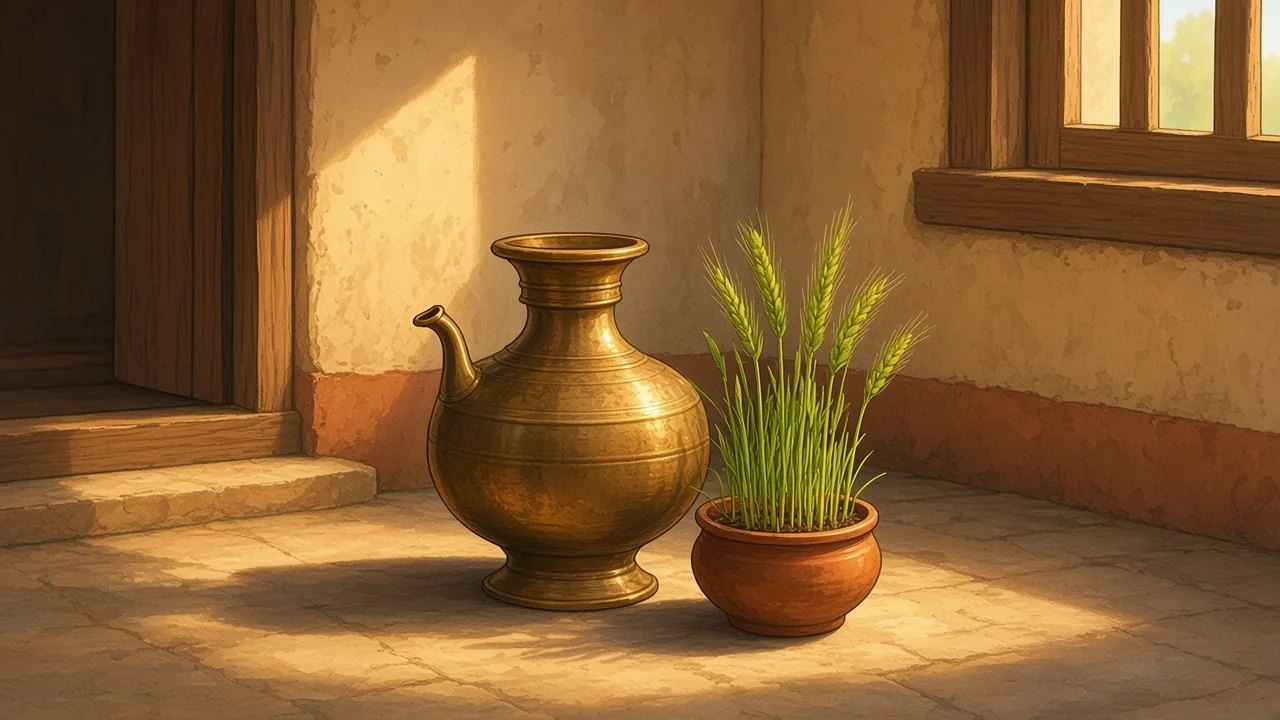
The water jar, in a dark corner.पानीको भाँडो अँध्यारो कुनामा छ।
The story
Dashain starts when the family plants seeds in a dark corner so the shoots stay pale.
The morning is called Ghaṭasthāpanā (घटस्थापना). The name means setting down a water jar. It is the first day of the bright half of Ashoj. The bright half is the two weeks when the moon grows. It is the day after the fifteen days of the dead have closed. Yesterday the house was speaking to ancestors. Today someone clears a room and fills a water jar. The family plants barley, wheat, or maize in sand. Ghaṭa (घट) is the jar. Sthāpanā (स्थापना) means setting it down.
The room is one the house has chosen and cleaned. The seed often goes into a dark corner, on a bed of sand or soil. Those shoots are called jamara. They stay pale because they get no sun. On the tenth morning those pale shoots go into people's hair with the red tika. Tika is the red mark on the forehead. The shoots stay in the dark for nine mornings. Then the pale grass comes out into a room full of people.
In the wider Navarātri, the nine nights of the goddess, the first night is Śailaputrī (शैलपुत्री). She is the daughter of the mountain. A Nepali family may say her name. Many families never do. The family keeps the pot and the sown seed. The family also decides that these nine nights belong to the goddess. Someone in the family does the watering. The family uses the shoots to count the days. Nobody uses them as decoration yet.
Compared with the tenth, this day is quiet. Offices are still open. School may still be in session. Shoes come off at the door of that one room. Someone lights a lamp. People do not act out the war with the buffalo demon in the courtyard. That war is why the jar is there. The Dashain page tells that war. This morning, the family starts to wait.
People who work away from home hear this date as the day to ask for leave. The tenth is the morning that must not be missed. On the first morning the house starts without them. The family trusts they will arrive before the jamara is brought out of the dark.
What families do
A room is cleared. The jar is filled and set down. The family plants the seed in a dark corner so the shoots stay pale. An elder, often a woman of the house, lights the lamp. Some houses give up meat from this morning until the tenth. Some do not. Neighbors do not have to come. The work is inside the house. Children are shown the dark corner and told not to open it every hour. The sprouts need the dark, water, and the nine days.
This page does not give the steps.
Also Recommended
Yesterday was the close of Pitṛ Pakṣa, the fifteen days of the dead. Tomorrow begins the quiet middle, days two through six. The flowers come on the seventh. The red tika comes on the tenth. The bright 1 is a tithi. The patro page says why this morning is still Ashoj.
नेपालीमा
परिवारले मुना फिक्का रहून् भनेर अँध्यारो कुनामा बीउ रोप्दा दशैं सुरु हुन्छ।
बिहानको नाम घटस्थापना हो। नामको अर्थ पानीको भाँडो राख्नु हो। यो आश्विनको शुक्ल पक्षको पहिलो दिन हो। शुक्ल पक्ष भनेको चन्द्रमा बढ्ने दुई हप्ता हो। यो पितृका पन्ध्र दिन सकिएको भोलिपल्ट हो। हिजो घर पितृसँग बोलिरहेको थियो। आज कोही कोठा सफा गर्छ र पानीको भाँडो भर्छ। परिवारले जौ, गहुँ, अथवा मकै बालुवामा रोप्छ। घट भाँडो हो। स्थापनाको अर्थ राख्नु हो।
कोठा घरले छानेको र सफा गरेको हुन्छ। बीउ प्रायः अँध्यारो कुनामा जान्छ, बालुवा वा माटोको ओछ्यानमा। ती मुनालाई जमरा भनिन्छ। घाम नपाएकाले फिक्का रहन्छन्। दशमीको बिहान ती फिक्का मुना रातो टीकासँगै मानिसको कपालमा राखिन्छ। टीका निधारको रातो चिह्न हो। मुना नौ बिहान अँध्यारोमा बस्छन्। अनि फिक्का घाँस मानिसले भरिएको कोठामा निस्कन्छ।
फराकिलो नवरात्रमा, देवीका नौ रातमा, पहिलो रात शैलपुत्रीको हो। उहाँ पर्वतकी छोरी हुनुहुन्छ। नेपाली परिवारले उहाँको नाम लिन सक्छ। धेरै परिवारले कहिल्यै लिँदैनन्। परिवारले कलश र रोपिएको बीउ राख्छ। यी नौ रात देवीका हुन् भन्ने निर्णय पनि राख्छ। परिवारको कोहीले पानी हाल्छ। परिवारले मुनाबाट दिन गन्छ। अझै कसैले तिनलाई सजावटमा लगाउँदैन।
दशमीको तुलनामा यो दिन शान्त हुन्छ। अफिस खुला हुन सक्छ। विद्यालय चल्न सक्छ। त्यो एउटा कोठाको ढोकामा जुत्ता उतारिन्छ। कोहीले बत्ती बाल्छ। मानिसले महिषासुरसँगको युद्ध आँगनमा देखाउँदैनन्। त्यो युद्ध नै भाँडो राखिनुको कारण हो। दशैंको पृष्ठले त्यो युद्ध भन्छ। यो बिहान परिवारले पर्खन थाल्छ।
टाढा काम गर्ने मानिसले यो मिति बिदा माग्ने दिन सुन्छ। दशमीको बिहान छुटाउनु हुँदैन। पहिलो बिहान घर उनीबिना सुरु हुन्छ। जमरा अँध्यारोबाट बाहिर आउनुअघि उनी आइपुग्छन् भन्ने परिवारले भरोसा राख्छ।
कोठा खाली गरिन्छ। भाँडो भरिन्छ र राखिन्छ। परिवारले अँध्यारो कुनामा बीउ रोप्छ, ताकि मुना फिक्का रहून्। घरका ठूलाबडाले, प्रायः घरकी महिलाले, बत्ती बाल्नुहुन्छ। कुनै घरले यो बिहानदेखि दशमीसम्म मासु छोड्छ। कुनैले छोड्दैन। छिमेकी आउनै पर्दैन। काम घरभित्र हुन्छ। बालकलाई अँध्यारो कुना देखाइन्छ, र हरेक घण्टा नखोल्न भनिन्छ। मुनालाई अँध्यारो चाहिन्छ, पानी चाहिन्छ, र नौ दिन चाहिन्छ।
यो पृष्ठले तरिका दिँदैन।
Days two to six
Five mornings with the same water jar.उही पानीको भाँडाका पाँच बिहान।
The story
After Ghaṭasthāpanā, Dashain has five quiet days. They do not look like a festival. They are the second, third, fourth, fifth, and sixth of the bright half of Ashoj. The bright half is the two weeks when the moon grows. No procession comes through the city. The tenth is still ahead. Each morning, the jamara in the dark is a little taller. Jamara means the pale shoots. The house also talks about who is arriving, and on which bus.
The wider Navarātri, the nine nights of the goddess, gives each of these mornings a name. The second is Brahmacāriṇī (ब्रह्मचारिणी). She is the goddess living a hard, simple life for worship. The third is Caṇḍraghaṇṭā (चन्द्रघण्टा). Her name means the goddess with the moon and the bell. The fourth is Kūṣmāṇḍā (कूष्माण्डा). The world is said to have come from her. The fifth is Skandamātā (स्कन्दमाता). She is the mother of Skanda. The sixth is Kātyāyanī (कात्यायनी). She is the form the gods asked for when they could not finish the war. A temple priest may say the name of the day. A Nepali kitchen often does not. A house that waters the shoots and goes to work is keeping the festival. The nine names are a list. The pot is what a family keeps.
These are the days when the roads fill in one direction. Students book seats. A son working in a Gulf city counts the nights until he leaves. His house has already set the jar. He needs to be home on the tenth morning. The days look ordinary. People cook rice. Offices open. One door stays closed. The seed grows behind it.
Children feel the waiting more than the names. They ask when they can see the jamara. They are told, not yet. The dark keeps the shoots pale. On the tenth morning, people put that pale grass on a person's head. Green grass cut from the yard is a different plant. It is the wrong one.
The sixth evening is the last quiet night. In the morning, the flowers come. Kathmandu watches a procession from Gorkha. A village house cuts leaves and brings them to the same room. The quiet middle ends. The festival no longer stays in one closed room.
What families do
Someone waters the jar. Someone lights the lamp again, in the morning or the evening, as that house does it. Houses that gave up meat on the first morning are still careful about meals. Houses that did not give it up eat as they always eat. People shop for the tenth. They buy new clothes for a child, and fruit. They buy the red for the tika if it is not already in the tin. Tika is the red mark on the forehead. They call relatives. The question is which day they will be home. For many, the true answer is the ninth night, or dawn on the tenth.
These five mornings do not each have their own public rite. This page does not give the steps.
घटस्थापनापछि दशैंका पाँच शान्त दिन हुन्छन्। ती चाड जस्ता देखिँदैनन्। ती आश्विन शुक्लको दोस्रो, तेस्रो, चौथो, पाँचौँ, र छैटौँ दिन हुन्। शुक्ल पक्ष भनेको जून बढ्ने दुई हप्ता हो। सहरमा जुलुस आउँदैन। दशमी अझै अगाडि छ। हरेक बिहान अँध्यारोमा राखेको जमरा अलि अग्लो हुन्छ। जमरा भनेको फिक्का मुना हो। घरमा को कुन बसबाट आउँदै छ भन्ने कुरा पनि चल्छ।
नवरात्र, अर्थात् देवीका नौ रातले, यी हरेक बिहानलाई नाम दिन्छ। दोस्रो ब्रह्मचारिणी हुनुहुन्छ। उहाँ पूजाका लागि कठिन र सादा जीवन बिताउनुहुने देवी हुनुहुन्छ। तेस्रो चन्द्रघण्टा हुनुहुन्छ। नामको अर्थ चन्द्रमा र घण्टी भएकी देवी हो। चौथो कूष्माण्डा हुनुहुन्छ। संसार उहाँबाट आएको भनिन्छ। पाँचौँ स्कन्दमाता हुनुहुन्छ। उहाँ स्कन्दकी आमा हुनुहुन्छ। छैटौँ कात्यायनी हुनुहुन्छ। देवताहरूले युद्ध सक्न नसकेपछि माग्नुभएको रूप उहाँ हुनुहुन्छ। मन्दिरका पुजारीले दिनको नाम भन्न सक्नुहुन्छ। नेपाली भान्सा प्रायः भन्दैन। मुनामा पानी हालेर काममा जाने घरले चाड राखिरहेको हुन्छ। नौ नाम एउटा सूची हुन्। परिवारले राख्ने चाहिँ कलश हो।
यी दिन बाटो एउटै दिशामा भरिन्छ। विद्यार्थीले सिट काट्छन्। खाडीको सहरमा काम गर्ने छोराले निस्कन कति रात बाँकी छन् भनेर गन्छ। उनको घरले कलश पहिले नै राखिसकेको छ। दशमीको बिहान उनी घरमा हुनुपर्छ। दिन साधारण देखिन्छन्। भात पकाइन्छ। अफिस खुल्छ। एउटा ढोका बन्द रहन्छ। त्यसभित्र बीउ उम्रिँदै छ।
बालबालिकाले नामभन्दा पर्खाइ बढी महसुस गर्छन्। जमरा कहिले हेर्न पाइन्छ भनेर सोध्छन्। अझै होइन भनिन्छ। अँध्यारोले मुना फिक्का राख्छ। दशमीको बिहान त्यो फिक्का घाँस मानिसको टाउकोमा राखिन्छ। आँगनबाट काटिएको हरियो घाँस अर्कै बिरुवा हो। त्यो जमरा होइन।
छैटौँ साँझ अन्तिम शान्त रात हो। बिहान फूल आउँछ। काठमाडौंले गोरखाबाट जुलुस हेर्छ। गाउँको घरले पात काटेर त्यही कोठामा ल्याउँछ। शान्त बीचको समय सकिन्छ। चाड अब एउटा बन्द कोठामा मात्र रहँदैन।
कसैले कलशमा पानी हाल्छ। घरले जसरी गर्छ, बिहान वा बेलुका कोहीले बत्ती फेरि बाल्छ। पहिलो बिहान मासु छाडेको घरले खानामा अझै होसियार गर्छ। नछाडेको घरले जसरी खान्थ्यो, त्यसरी खान्छ। दशमीका लागि किनमेल हुन्छ। बालकको नयाँ लुगा, फल, र टिनमा नभए टीकाको रातो किनिन्छ। टीका निधारको रातो चिह्न हो। नातेदारलाई फोन गरिन्छ। प्रश्न यो हो, उनीहरू कुन दिन घर पुग्छन्। धेरैको साँचो जवाफ नवमीको रात, अथवा दशमीको उज्यालो हुन्छ।
यी पाँच बिहानमध्ये हरेकको आफ्नै सार्वजनिक विधि छैन। यो पृष्ठले तरिका दिँदैन।
Leaves and flowers are on their way to the jar.पात र फूल भाँडातिर लगिँदै छन्।
The story
Phūlpātī is the day Dashain is no longer only a closed room. It is the seventh day, the bright seventh of Ashoj. The bright half is the two weeks when the moon grows. The name is two words. Phūl (फूल) means flower. Pātī (पाती) means leaf. People bring flowers and leaves to the goddess. Leaves matter as much as flowers. That is why the name includes both. A load of them can be wider than the door.
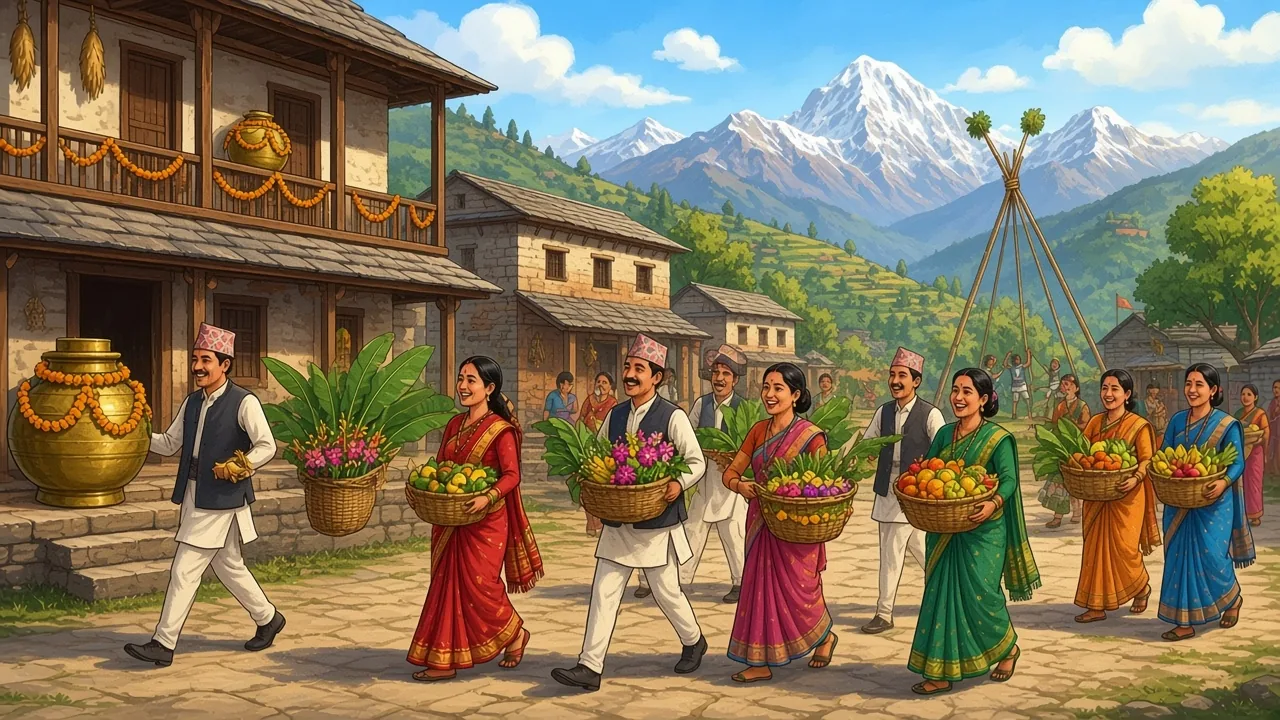
In Kathmandu, the public bringing is a procession. The kalash and the flowers leave Gorkha. The kalash is the water jar. People carry them to Hanuman Dhoka. The old palace fills. People stand on the road to see them arrive. This is the day Dashain becomes a city event. The room with the jar still goes on. The street joins the festival. The Gorkha procession is what the government does. Every house does the same thing on a smaller scale.
A house brings its own phūlpātī. People carry banana leaves, sugarcane, bel leaves, marigolds, and other flowers of the season into the room. Bel is a tree. The pot has stood in that room since the first morning. The jamara is still in the dark. Jamara means the pale shoots. They do not go in this bunch. The flowers are for the goddess today. The pale shoots are for foreheads on the tenth.
In the list of nine names, this day is often Kālarātrī (कालरात्री). Her name means the fierce night. Nepal's own name for the day is Phūlpātī. The name means the bringing. A child in the valley may see both things. At the palace there are soldiers, officials, and a crowd. In the courtyard, an uncle comes in with a load of leaves too big for the door.
The sixth was the last private day. The eighth will be a hard day. The seventh stands between them. It is full of green leaves, and it is public. Kitchens start the longer cooking. The house smells of cut sugarcane. Someone sweeps the yard. Guests are no longer only talk. They are on the road.
What families do
In the morning, people cut or buy leaves and flowers. They wash them, tie them, and set them beside the jar. In the valley, people who can go to Hanuman Dhoka go. The rest hear that the Gorkha kalash has arrived. In the hills, the same plants come to the household shrine. The walk does not end at a palace. Children are given a stalk to carry. The room that was closed is opened wider. The room is full of green leaves and flowers. The pot is still in the room.
This page does not list every leaf. This page does not give the steps.
फूलपाती त्यो दिन हो, जब दशैं बन्द कोठा मात्र रहँदैन। यो सातौँ दिन हो, आश्विन शुक्ल सप्तमी। शुक्ल पक्ष भनेको जून बढ्ने दुई हप्ता हो। नाम फूल र पात मिलेर बनेको हो। पाती भनेको पात हो। मानिसले देवीकहाँ फूल र पात ल्याउँछन्। पात फूल जत्तिकै चाहिन्छ। त्यसैले नाममा दुवै छन्। भारी ढोकाभन्दा चौडा हुन सक्छ।
काठमाडौंमा फूलपाती सार्वजनिक रूपमा जुलुसमा ल्याइन्छ। कलश र फूल गोरखाबाट निस्कन्छन्। कलश पानीको भाँडो हो। मानिसले ती हनुमानढोका पुर्याउँछन्। पुरानो दरबार भरिन्छ। मानिस बाटोमा उभिएर आइपुगेको हेर्छन्। दशैं सहरको घटना बन्ने दिन यही हो। कलश भएको कोठा अझै चल्छ। सडक चाडमा मिसिन्छ। गोरखाको जुलुस सरकारले गर्छ। हरेक घरले त्यही काम सानो रूपमा गर्छ।
घरले आफ्नै फूलपाती ल्याउँछ। मानिसले केराको पात, उखु, बेलपत्र, सयपत्री, र यामका अरू फूल कोठामा लैजान्छन्। बेल एउटा रूख हो। कलश पहिलो बिहानदेखि त्यो कोठामा बसेको छ। जमरा अझै अँध्यारोमा छ। जमरा भनेको फिक्का मुना हो। त्यो यो मुठामा पर्दैन। फूल आज देवीका लागि हुन्। फिक्का मुना दशमीका निधारका लागि हुन्।
नौ नामको सूचीमा यो दिन प्रायः कालरात्रीको हो। उहाँको नामको अर्थ उग्र रात हो। नेपालको आफ्नै नाम फूलपाती हो। नामको अर्थ ल्याउनु हो। उपत्यकाको बालकले दुवै कुरा देख्न सक्छ। दरबारमा सैनिक, कर्मचारी, र भीड हुन्छन्। आँगनमा काका आउँछन्, ढोकाभन्दा ठूलो पातको भारी बोकेर।
छैटौँ दिन अन्तिम निजी दिन थियो। आठौँ गाह्रो दिन हुनेछ। सातौँ त्यसको बीचमा उभिन्छ। त्यो हरिया पातले भरिएको हुन्छ, र सार्वजनिक हुन्छ। भान्सामा लामो पकाइ सुरु हुन्छ। घरमा काटिएको उखुको गन्ध आउँछ। कोही आँगन बढार्छ। पाहुना अब कुरा मात्र होइनन्। उनीहरू बाटोमा छन्।
बिहान मानिसले पात र फूल काट्छन् वा किन्छन्। पखाल्छन्, बाँध्छन्, र कलशछेउ राख्छन्। उपत्यकामा हनुमानढोका जान सक्ने जान्छन्। अरूले गोरखाको कलश आइपुग्यो भन्ने सुन्छन्। पहाडमा त्यही बोट घरको पूजा ठाउँमा आउँछ। हिँडाइ दरबारमा पुगेर सकिँदैन। बालकलाई एउटा डाँठ बोक्न दिइन्छ। बन्द कोठा अलि फराकिलो खोलिन्छ। कोठा हरिया पात र फूलले भरिन्छ। कलश कोठामा अझै छ।
यो पृष्ठले हरेक पातको सूची दिँदैन। यो पृष्ठले तरिका दिँदैन।
शान्त दिन दोस्रोदेखि छैटौँसम्म हुन्। गाह्रो रात आठौँ हो। गोरखाबाट काठमाडौंसम्मको ल्याइ त्यही देवीको सार्वजनिक रूप हो। उहाँको युद्ध दशैंको पृष्ठमा भनिएको छ।
Mahasthami (महाअष्टमी)
Temples stay open late. The house is careful.मन्दिर अबेरसम्म खुला रहन्छन्। घर होसियार हुन्छ।
The story
Mahāṣṭamī is the night when Dashain no longer feels like waiting. It is the eighth day. People call it the great eighth. It is the bright eighth of Ashoj. The bright half is the two weeks when the moon grows. In the list of nine names, the day belongs to Mahāgaurī (महागौरी). The night is hard. So is the time when the eighth day meets the ninth. Nepal treats that time as the goddess at her most serious. Temples stay open late. A goddess temple's courtyard is crowded. The first morning was not like this.
Some temples offer a life on this night, or on the ninth. Some houses do. Many temples do not. Many houses do not. The offering is old. Many families never do it. Many people who grew up with it no longer do it. Choosing not to is a real choice. A family that offers no life still worships this goddess. This page does not describe the offering. This page does not give the steps.
People are afraid on this night. That fear is one reason the tenth morning feels easier. In the story, the demon was not stopped in a gentle way. The Dashain page tells that war. This courtyard does not act the war out.
Families who fast, do fast. Families who visit a temple come home again. The jamara is still hidden. Jamara means the pale shoots. New clothes may already be bought. People do not wear them yet. Children are often sent to bed, or kept near a parent, while the elders are at the temple. The morning those children are waiting for is the tenth.
Kālarātrī (कालरात्री) means the black night. Some people place her on the seventh. Some feel her on this night. The names move from day to day. The night stays hard. A person who has only seen Dashain as tika and jamara has not yet heard about these hours. Tika is the red mark on the forehead. For some houses, the temple yard is part of the hard night before the victory. The hard part of the story is on the other page.
What families do
The house is quieter than on Phūlpātī. Lamps stay lit. Someone goes to the goddess temple if that is what the family does. The people who will cook the tenth day's feast start the long work, or they wait until the ninth. Elders decide, house by house, whether this night includes an offering of a life. A guest does not ask to watch. A child who asks what happens at the temple can be told that people worship the goddess through the night. This page does not give the steps. The tenth morning, with the red tika, is one day away.
Also Recommended
Yesterday the flowers came, on Phūlpātī. Tomorrow is Mahānavamī. The victory these nights are for is told on the Dashain page. An elder may say blessing verses. Those verses are on that page too. They are not copied here.
नेपालीमा
महाअष्टमी त्यो रात हो, जब दशैं अब पर्खाइ जस्तो लाग्दैन। यो आठौँ दिन हो। मानिसले यसलाई ठूलो आठौँ भन्छन्। यो आश्विन शुक्ल अष्टमी हो। शुक्ल पक्ष भनेको जून बढ्ने दुई हप्ता हो। नौ नामको सूचीमा दिन महागौरीको हो। रात गाह्रो छ। आठौँ दिन नवौँ दिनसँग जोडिने बेला पनि गाह्रो छ। नेपालले त्यो बेलालाई देवीको सबैभन्दा गम्भीर घडी मान्छ। मन्दिर अबेरसम्म खुला रहन्छन्। देवी मन्दिरको आँगनमा भीड हुन्छ। पहिलो बिहान यस्तो थिएन।
कुनै मन्दिरले यो रात एउटा जीवन चढाउँछ, अथवा नवमीमा। कुनै घरले पनि चढाउँछ। धेरै मन्दिरले चढाउँदैनन्। धेरै घरले चढाउँदैनन्। यो चढाउने चलन पुरानो हो। धेरै परिवारले कहिल्यै गर्दैनन्। त्यसैमा हुर्केका धेरै मानिसले अब गर्दैनन्। नचढाउनु साँचो रोजाइ हो। जीवन नचढाउने परिवारले पनि यही देवीलाई मानिरहेको हुन्छ। यो पृष्ठले चढाउने काम लेख्दैन। यो पृष्ठले तरिका दिँदैन।
यो रातमा मानिस डराउँछन्। त्यो डर नै दशमीको बिहान अलि सजिलो लाग्नुको एउटा कारण हो। कथामा राक्षसलाई नरम तरिकाले रोकिएन। दशैंको पृष्ठले त्यो युद्ध सुनाउँछ। यो आँगनमा त्यो युद्ध देखाइँदैन।
व्रत बस्ने परिवार बस्छ। मन्दिर जाने परिवार जान्छ र घर फर्कन्छ। जमरा अझै लुकेको छ। जमरा भनेको फिक्का मुना हो। नयाँ लुगा किनिसकिएको हुन सक्छ। मानिसले अझै लगाएका हुँदैनन्। जेठा मन्दिरमा हुँदा बालकलाई प्रायः सुताइन्छ, अथवा आमाबाबुको नजिक राखिन्छ। ती बालकले पर्खेको बिहान दशमीको हो।
कालरात्रीको अर्थ कालो रात हो। कतिले उहाँलाई सातौँमा राख्छन्। कतिले यसै रात महसुस गर्छन्। नाम दिनपिच्छे सर्छ। रात गाह्रो नै रहन्छ। दशैंलाई टीका र जमराका रूपमा मात्र देखेका मानिसले यी घडीबारे अझै सुनेका हुँदैनन्। टीका निधारको रातो चिह्न हो। कुनै घरका लागि मन्दिरको आँगन विजयअघिको गाह्रो रातको भाग हो। कथाको गाह्रो भाग अर्को पृष्ठमा छ।
घर फूलपातीमा भन्दा शान्त हुन्छ। बत्ती बलिरहन्छ। परिवारले गर्ने भए कोही देवी मन्दिर जान्छ। दशमीको भोज पकाउनेले लामो काम थाल्छ, अथवा नवमीसम्म पर्खन्छ। यो रातमा जीवन चढाउने कि नचढाउने, घरपिच्छे जेठाले छुट्याउनुहुन्छ। पाहुनाले हेर्न पाऊँ भनेर माग्दैन। मन्दिरमा के हुन्छ भनेर सोध्ने बालकलाई भन्न सकिन्छ कि मानिसले रातभरि देवीको पूजा गर्छन्। यो पृष्ठले तरिका दिँदैन। रातो टीकाको दशमी बिहान एक दिन टाढा छ।
हिजो फूल आए, फूलपातीमा। भोलि महानवमी हो। यी रात जुन विजयका लागि हुन्, त्यो दशैंको पृष्ठमा भनिएको छ। जेठाले आशीर्वादका श्लोक भन्न सक्नुहुन्छ। ती श्लोक त्यही पृष्ठमा छन्। यहाँ सारिएका छैनन्।
Mahanavami (महानवमी)
The last hard night. The kitchen is already at work.अन्तिम गाह्रो रात। भान्सामा काम सुरु भइसकेको छ।
The story
Mahānavamī is the ninth day of Dashain. It is the bright ninth of Ashoj. The bright half is the two weeks when the moon grows. For a Nepali family, this day is a deadline. In the list of nine names, she is Siddhidātrī (सिद्धिदात्री). She is the goddess who gives accomplishment. Accomplishment here means the victory. Tomorrow is the tenth. The jamara comes out in the morning. Jamara means the pale shoots. The elder has to be home. Or the family has to have walked the road to that elder. The ninth is the last night of the serious goddess. It is also the night when the feast becomes real.
Some temples offer a life today. Some offer it across the hours that began last night, where the eighth meets the ninth. Some houses offer a life. Many temples do not. Many houses do not. Choosing not to is a real choice, on this day as on the eighth. Temples that do offer a life often do the main offering today. This page does not describe the offering. This page does not give the steps.
Houses that never offer a life often spend the ninth on the things people work with. Those things are vehicles, tools, pens, and instruments. In the wider tradition, this honoring is called āyudha pūjā (आयुध पूजा). It means the worship of tools. A bus company puts a tika on a windshield. Tika is the red mark. A student puts a flower on a notebook. Someone washes a kitchen knife and sets it aside. The idea is the same in each case. People honor the tools they work with, because of the victory in the story.
The real center of a family ninth is the kitchen. People start the cooking on the ninth. The tenth morning is too late to start. Houses that eat meat start that cooking. They also start the sweets. A daughter who arrived at dusk is put to work, or told to sleep. It depends on how long her road was. The house is full. It was not full on the second day. People have borrowed beds. They already know where they will bow tomorrow.
Children feel the ninth as the night before. They are shown the jamara at last, or they are told to wait until dawn. They try on new clothes and fold them again. The hard night turns into the red morning. Families who went to the temple on the eighth may go again. They may stay home and finish the cooking. Both are ordinary ways to spend the day.
What families do
Houses that keep the custom put a tika on tools and vehicles. The shrine room gets a last cleaning. People start food for more guests than the house usually holds. Someone checks who has arrived and who is still on a night bus. Someone waters the jamara one last time, in the dark. Elders sleep early if they can. The tenth morning starts with a bath and a line of people waiting for tika. Guests who came for tika already know which doorway they will stand in. The accomplishment in the day's name is the victory. An elder may say blessing verses over a bowed head. Those verses are written on the Dashain page. They stay there.
This page does not give the steps.
Also Recommended
The hard night was the eighth. This night's cooking is for the morning of Vijayā Daśamī. An elder may say blessing verses. They are written on the Dashain page.
नेपालीमा
महानवमी दशैंको नवौँ दिन हो। यो आश्विन शुक्ल नवमी हो। शुक्ल पक्ष भनेको जून बढ्ने दुई हप्ता हो। नेपाली घरले यो दिनलाई म्यादजस्तै महसुस गर्छ। नौ नामको सूचीमा उहाँ सिद्धिदात्री हुनुहुन्छ। उहाँ सिद्धि दिनुहुने देवी हुनुहुन्छ। यहाँ सिद्धि भनेको विजय हो। भोलि दशमी हो। बिहान जमरा बाहिर आउँछ। जमरा भनेको फिक्का मुना हो। जेठो मानिस घरमा हुनुपर्छ। अथवा परिवार त्यो जेठाकहाँ पुगिसक्नुपर्छ। नवमी गम्भीर देवीको अन्तिम रात हो। यो भोज साँच्चै सुरु हुने रात पनि हो।
कुनै मन्दिरले आज एउटा जीवन चढाउँछ। कुनैले हिजो रात सुरु भएको बेलाभरि चढाउँछ, जहाँ आठौँ नवौँसँग जोडिन्छ। कुनै घरले एउटा जीवन चढाउँछ। धेरै मन्दिरले चढाउँदैनन्। धेरै घरले चढाउँदैनन्। नचढाउनु साँचो रोजाइ हो, आठौँमा जस्तै यो दिनमा पनि। जीवन चढाउने मन्दिरले मुख्य चढाइ प्रायः आज गर्छ। यो पृष्ठले चढाउने काम लेख्दैन। यो पृष्ठले तरिका दिँदैन।
जीवन कहिल्यै नचढाउने घरले नवमी प्रायः मानिसले काम गर्ने चिजमै बिताउँछ। ती चिज सवारी, औजार, कलम, र बाजा हुन्। फराकिलो परम्परामा यसरी सम्मान गर्नुलाई आयुध पूजा भनिन्छ। यसको अर्थ औजारको पूजा हो। बस कम्पनीले विन्डस्क्रिनमा टीका लगाउँछ। टीका रातो चिह्न हो। विद्यार्थीले कापीमा फूल राख्छ। कोहीले भान्साको चक्कु पखाल्छ र छुट्याएर राख्छ। हरेकमा विचार एउटै हो। मानिसले आफूले काम गर्ने औजारलाई कथाको विजयका कारण सम्मान गर्छन्।
परिवारको नवमीको साँचो केन्द्र भान्सा हो। मानिसले पकाइ नवमीमा थाल्छन्। दशमीको बिहान थाल्न ढिलो हुन्छ। मासु खाने घरले त्यो पकाइ सुरु गर्छ। मिठाई पनि सुरु गर्छ। बेलुका आइपुगेकी छोरीलाई काम दिइन्छ, अथवा सुत्न भनिन्छ। त्यो उनको बाटो कति लामो थियो भन्नेमा भर पर्छ। घर भरिएको हुन्छ। दोस्रो दिन यसरी भरिएको थिएन। मानिसले खाट सापटी मागेका हुन्छन्। भोलि कहाँ निहुरिने हो, उनीहरूलाई पहिले नै थाहा छ।
बालकहरूले नवमीलाई अघिल्लो रात ठान्छन्। जमरा अन्ततः देखाइन्छ, अथवा उज्यालोसम्म पर्खन भनिन्छ। उनीहरू नयाँ लुगा लगाएर हेर्छन् र फेरि पट्याउँछन्। गाह्रो रात रातो बिहानमा बदलिन्छ। आठौँमा मन्दिर गएको परिवार फेरि जान सक्छ। भित्रै बसेर पकाइ सक्न पनि सक्छ। दिन बिताउने दुवै तरिका साधारण हुन्।
यो चलन राख्ने घरले औजार र सवारीमा टीका लगाउँछ। पूजा कोठा अन्तिम पटक सफा हुन्छ। घरमा सधैँ अटाउनेभन्दा धेरै पाहुनाका लागि मानिसले खाना पकाउन थाल्छन्। को आइपुग्यो र को अझै रातको बसमा छ, कसैले हेर्छ। कोहीले जमरा अँध्यारोमा अन्तिम पटक पानी हाल्छ। सके जेठा चाँडै सुत्नुहुन्छ। दशमीको बिहान नुहाइ र टीका पर्खने मानिसको लाइनबाट खुल्छ। टीका लिन आएका पाहुनालाई कुन ढोकामा उभिने थाहा हुन्छ। दिनको नामको सिद्धि विजय हो। जेठाले निहुरिएको टाउकोमाथि आशीर्वादका श्लोक भन्न सक्नुहुन्छ। ती श्लोक दशैंको पृष्ठमा लेखिएका छन्। त्यहीँ रहन्छन्।
यो पृष्ठले तरिका दिँदैन।
गाह्रो रात आठौँ थियो। यो रातको पकाइ विजया दशमीको बिहानका लागि हो। जेठाले आशीर्वादका श्लोक भन्न सक्नुहुन्छ। ती दशैंको पृष्ठमा लेखिएका छन्।
Vijaya Dashami (विजयादशमी)
By evening the red tika is darker. The pale shoots grew with no sun.बेलुकासम्म रातो टीका गाढा हुन्छ। फिक्का मुना घामबिना उम्रिएका हुन्छन्।
The story
Vijayā Daśamī is the bright tenth of Ashoj. The bright tenth is the tenth day while the moon is growing. Vijayā means victory. On this morning an elder puts a red tika on each person for that victory. Tika is the red mark on the forehead.
By evening a forehead is darker than it was at dawn. The red has been put on again for every person who came in.
The elder also tucks jamara into the hair, or behind the ear. Jamara is the pale shoots. They grew in the dark, so they got no sun. The younger person bows. The blessing is said out loud. In many houses a little money comes with the words. That money is called dakṣiṇā, a gift that goes with the blessing.
Cousins come. Neighbors come. So do people who arrived before daylight. They all use the same door. The line can last for hours.
Houses do not all say the same words. A Nepali family is most likely to hear two Sanskrit verses. One starts āyur droṇa-sute. In the words most people in Nepal use, it asks for Karṇa's generosity, his way of giving. In another version, it asks for Bhīṣma's valor, his bravery. The other verse starts with the names of the goddess, jayantī maṅgalā kālī. Both are written out, word by word, on the Dashain page. This page is the morning people say them.
Under the tika is the story of the ten days. A buffalo demon could not be ended by a man. The goddess took the field. What reaches the courtyard is the red tika and a handful of pale shoots.
Someone watered those shoots for nine days. They were kept in a dark corner. They got no sun. They come out as grass. The grass shows that the first morning happened, when the seeds were planted.
A tika from a parent is one thing. A tika from a grandparent who may not give many more is another. If you miss the morning, the year can feel unfinished. A house that gathers late can still give the tika. It can be given the next day, and on through the full moon. The tenth is the day everyone tries to be home. The house is as full as it will be.
People also remember kites, new clothes, and a bigger meal. The far west, the hills, the valley, and the Tarai do not cook the same food. They all use the same red mark. The season separates this morning from the smaller Dashain in Chaitra. That one is Chaite Dashain. It is the goddess's spring Navarātri, her nine nights. It falls on the bright eighth of Chaitra, the day before Rāma Navamī. Many families also say it remembers Rāma's victory. This morning is the autumn Dashain.
What families do
The day starts with a bath. The jamara is brought into the light. An elder sits. The household bows in an order it already knows. Among the people who give the tika, the oldest goes first. Among the people who receive it, the youngest often goes early.
A married daughter may take the tika in her parents' house. Later she may give it in her own house. Neighbors come with no invitation. Each new tika is wet and bright. That is why the forehead is a darker red at dusk than at dawn. Plates of food keep coming out as long as people keep coming in. In the afternoon the first visitors leave for the next house. They bow again there.
The order of the pūjā, the worship, stays with the family. This page does not give the steps.
विजया दशमी आश्विन शुक्ल दशमी हो। विजयाको अर्थ विजय हो। यो बिहान जेठाले त्यो विजयका लागि हरेकलाई रातो टीका लगाइदिन्छन्। टीका निधारको रातो चिह्न हो।
बेलुकासम्म निधार बिहानभन्दा गाढा हुन्छ। भित्र आएका हरेक मानिसका लागि रातो फेरि लगाइएको हुन्छ।
जेठाले जमरा पनि कपालमा वा कानपछाडि राख्छन्। जमरा फिक्का मुना हो। मुना अँध्यारोमा उम्रिएका हुन्छन्, त्यसैले घाम पाएका हुँदैनन्। कान्छो निहुरिन्छ। आशीर्वाद मुखैले भनिन्छ। धेरै घरमा शब्दसँगै अलिकति पैसा आउँछ। त्यो पैसालाई दक्षिणा भनिन्छ। दक्षिणा आशीर्वादसँगै जाने दान हो।
नाताका मानिस आउँछन्। छिमेकी आउँछन्। उज्यालो हुनुअघि आएका मानिस पनि आउँछन्। सबै एउटै ढोका छिर्छन्। लाइन घण्टौँ चल्न सक्छ।
घरपिच्छे एउटै शब्द हुँदैन। नेपाली घरले सबैभन्दा बढी सुन्ने दुई श्लोक छन्। एउटा आयुर्द्रोणसुतेबाट सुरु हुन्छ। नेपालमा धेरैले भन्ने शब्दले कर्णको दान माग्छ, दिन रुचाउने बानी। अर्को रूपले भीष्मको शौर्य माग्छ, उहाँको बहादुरी। अर्को श्लोक देवीका नामबाट सुरु हुन्छ, जयन्ती मङ्गला काली। दुवै श्लोक शब्दैशब्द दशैंको पृष्ठमा लेखिएका छन्। यो पृष्ठ ती श्लोक भनिने बिहान हो।
टीकामुनि दस दिनको कथा छ। महिषलाई मानिसले सिध्याउन सक्दैनथ्यो। देवी मैदानमा उत्रिनुभयो। आँगनसम्म आइपुग्ने कुरा रातो टीका र मुठ्ठीभर फिक्का मुना हो।
कसैले ती मुनालाई नौ दिन पानी हालेको थियो। मुना अँध्यारो कुनामा राखिएका थिए। घाम लागेको थिएन। बाहिर आउँदा त्यो घाँस हुन्छ। घाँसले पहिलो बिहान भएको देखाउँछ, बीउ रोपिएको बिहान।
आमाबाबुको टीका एउटा कुरा हो। धेरै पटक नदिन सक्ने हजुरबाआमाको टीका अर्को कुरा हो। बिहान छुट्यो भने वर्ष अधुरो लाग्न सक्छ। ढिलो जम्मा हुने घरले पनि टीका दिन सक्छ। भोलि पनि दिन सकिन्छ। पूर्णिमासम्मै दिन सकिन्छ। दशमी सबै घर आउने दिन हो। घर जति भरिन सक्छ, त्यति भरिन्छ।
मानिसले चङ्गा, नयाँ लुगा, र अलि ठूलो खाना पनि सम्झन्छन्। सुदूरपश्चिम, पहाड, उपत्यका, र तराईले एउटै खाना पकाउँदैनन्। सबैले एउटै रातो चिह्न लगाउँछन्। यामले यो बिहानलाई चैतको सानो दशैंबाट छुट्याउँछ। त्यो चैते दशैं हो। त्यो देवीको वासन्त नवरात्र हो, उहाँका नौ रात। त्यो चैत्र शुक्ल अष्टमी हो, राम नवमीको अघिल्लो दिन। त्यो दिन रामको विजयको सम्झना पनि हो भनेर धेरै परिवार भन्छन्। यो बिहान शरदको दशैं हो।
दिन नुहाइबाट सुरु हुन्छ। जमरा उज्यालोमा ल्याइन्छ। जेठा बस्छन्। घरले चिनेकै क्रममा निहुरिन्छ। टीका दिनेहरूमध्ये जेठो पहिले जान्छन्। टीका लिनेहरूमध्ये कान्छो प्रायः चाँडै जान्छ।
बिहे भएकी छोरी माइतीमा टीका लिन सक्छिन्। पछि आफ्नै घरमा दिन सक्छिन्। छिमेकी निमन्त्रणाबिना आउँछन्। हरेक नयाँ टीका भिजेको र चम्किलो हुन्छ। त्यसैले बेलुकाको निधार बिहानको भन्दा गाढा रातो हुन्छ। मानिस आइरहुन्जेल खानाको थाल निस्किरहन्छ। दिउँसो पहिले आएका पाहुना अर्को घर जान्छन्। त्यहाँ फेरि निहुरिन्छन्।
पूजाको क्रम परिवारसँगै बस्छ। पूजा भनेको पूज्ने काम हो। यो पृष्ठले त्यो क्रम दिँदैन।
The eleventh day - Ekadasi (एघारौँ दिन — एकादशी)
Yesterday's red tika is still on people who travel today.हिजोको रातो टीका आज हिँड्ने मानिसमा अझै हुन्छ।
The story
On the eleventh, people leave one house and go to other houses. The date is the bright ekādaśī of Ashoj. Ekādaśī means the eleventh day of the moon, in the half when the moon is growing. In a quieter month, some houses fast for Viṣṇu on this day. During Dashain it is also the day after Vijayā. For most families, the visits come first.
The tika can still be given after sunset on the tenth. Tika is the red mark on the forehead. Someone was not visited yesterday. That person is the reason for today's bus.
A family that spent the tenth in one house spends the eleventh in another. Yesterday it was the parents. Today it is the mother's parents. If the afternoon still has daylight, they may go to an uncle. The tika is given again. Whatever jamara is left goes with it. Jamara is the pale shoots. The blessing may be shorter. The room may be simpler. People are still putting on the mark for the victory. They go to the person who may put the tika on a forehead. They go while this season still allows it.
Some houses keep the ekādaśī fast while they visit. They travel. They may eat once, or they may eat without grain. They follow their own custom. Dashain does not cancel the fast. The fast does not cancel the travel. Some houses keep the kitchen closed. That closed kitchen is their fast. This moon-day is part of the festival. The house is quiet for that reason.
The fast has its own rules. This page does not teach them.
The city has opened up more than it had yesterday. A shop that was shut may be open. An office may expect its people back and not get them. On the bus, you can see a red tika on a stranger's forehead. A child who got five tikas yesterday gets a sixth today. The child starts to treat the whole thing as ordinary.
What families do
People leave the house. Some carry fruit, or a packet of sweets. An empty hand feels wrong in one family. In the next family it is perfectly usual. They sit. They bow. They eat if the kitchen is cooking. They ask about the people who were not in the room.
The question has changed. On the tenth, people asked whether the house would be full. On the eleventh, they ask whether anyone has been to see her yet. She is an elder. That question goes on until the full moon.
This page does not give a pūjā. Pūjā means the worship.
Also Recommended
Yesterday was Vijayā Daśamī. The next three days are one stretch of visiting. The full moon that ends the season is Kojāgrat. In other months, Viṣṇu's ekādaśī falls inside the four months he is said to sleep. This eleventh is that same kind of moon-day. It is also Dashain.
नेपालीमा
एघारौँ दिन मानिस एउटा घर छाडेर अरू घर जान्छन्। मिति आश्विन शुक्ल एकादशी हो। एकादशी भनेको चन्द्रमाको एघारौँ दिन हो। शान्त महिनामा कति घरले यो दिन विष्णुका लागि व्रत बस्छन्। दशैंमा यो विजयाको भोलिपल्ट पनि हो। धेरै परिवारका लागि पहिले डुलिहिँडाइ आउँछ।
दशमीको साँझपछि पनि टीका दिन सकिन्छ। टीका निधारको रातो चिह्न हो। हिजो नपुगिएको कोही छ। आजको बस त्यही मानिसका लागि हो।
दशमी एउटा घरमा बिताएको परिवार एघारौँ दिन अर्को घरमा बिताउँछ। हिजो आमाबाबुकहाँ थियो। आज आमाको माइत हो। अपराह्नमा उज्यालो बाँकी छ भने मामाघर जान सकिन्छ। टीका फेरि दिइन्छ। जमरा जति बाँकी छ, सँगै जान्छ। जमरा फिक्का मुना हो। आशीर्वाद छोटो हुन सक्छ। कोठा सादा हुन सक्छ। मानिस अझै विजयका लागि टीका लगाइरहेका हुन्छन्। निधारमा टीका लगाउन पाउने मानिसकहाँ पुगिन्छ। यो यामले दिँदासम्म पुगिन्छ।
कुनै घरले डुलिहिँडाइसँगै एकादशीको व्रत पनि राख्छ। हिँड्छन्। एक पटक खान सक्छन्, अथवा अन्नबिना खान सक्छन्। आफ्नै चलनअनुसार गर्छन्। दशैंले व्रत हटाउँदैन। व्रतले हिँडाइ हटाउँदैन। कुनै घरले भान्सा बन्द राख्छ। त्यो बन्द भान्सा नै उनीहरूको व्रत हो। यो चन्द्रको दिन चाडभित्रै पर्छ। घर त्यसैले शान्त हुन्छ।
व्रतका आफ्नै नियम छन्। यो पृष्ठले ती नियम सिकाउँदैन।
सहर हिजोभन्दा बढी खुलेको हुन्छ। बन्द पसल खुलेको हुन सक्छ। अफिसले आफ्ना मानिस फर्कलान् भनेर आशा गर्न सक्छ, तर नफर्कन पनि सक्छन्। बसमा अपरिचित मानिसको निधारमा रातो टीका देखिन्छ। हिजो पाँच टीका लगाएको बालकले आज छैटौँ लगाउँछ। बालकले सिंगै कुरालाई साधारण मान्न थाल्छ।
मानिस घरबाट निस्कन्छन्। कोही फल लैजान्छ। कोही मिठाईको पोको लैजान्छ। रित्तो हात कुनै परिवारमा अप्ठ्यारो लाग्छ। अर्को परिवारमा त्यो साधारण हुन्छ। बस्छन्। निहुरिन्छन्। भान्सा चलिरहेको छ भने खान्छन्। कोठामा नभएका मानिसको हाल सोध्छन्।
प्रश्न फेरिएको छ। दशमीमा घर भरिन्छ कि भनेर सोधिन्थ्यो। एघारौँ दिन ती जेठीकहाँ कोही पुग्यो कि भनेर सोधिन्छ। उनी जेठी हुन्। त्यो प्रश्न पूर्णिमासम्म रहन्छ।
यो पृष्ठले पूजा दिँदैन। पूजा भनेको पूज्ने काम हो।
हिजो विजया दशमी थियो। अर्का तीन दिन एउटै डुलिहिँडाइ हुन्। याम बन्द गर्ने पूर्णिमा कोजाग्रात हो। अरू महिनामा विष्णुको एकादशी उहाँ सुत्नुहुन्छ भनिएका चार महिनाभित्र पर्छ। यो एघारौँ त्यही खालको चन्द्रको दिन हो। दशैं पनि हो।
The twelfth, thirteenth, and fourteenth
These are the middle days of the visits. They have no festival name of their own.यी डुलिहिँडाइका बीचका दिन हुन्। यिनको आफ्नै चाडको नाम छैन।
The story
The twelfth, thirteenth, and fourteenth of the bright half of Ashoj are quiet days. Their moon names are dvādaśī, trayodaśī, and caturdaśī. Those names mean the twelfth, thirteenth, and fourteenth. The bright half is the part of the month when the moon grows. These days are the middle of the visiting. The tenth was the day everyone tried to be home. The eleventh was the first day for catching up. A large family finishes the visits, when it finishes, on these three days.
If the buses are running, people now reach an elder in another district. A daughter who could not leave her own tenth comes back on the twelfth. She bows in the house where she grew up. The tika is still given. Tika is the red mark on the forehead. Nobody tells her she is too late. The season runs to the full moon. The full moon is not today. It is enough that today is still inside the season.
The mark fades on the road. At the next house it is put on fresh. A person crossing the city can get three tikas in one day. Each one comes from a different person's hand. The jamara runs out. Jamara is the pale shoots. Later houses give the tika alone, or with a few blades saved on a plate. The seed was planted once, on the first morning. It does not grow a new batch for every uncle.
Work starts again, but not all at once. A shop opens in the morning. By noon the owner has gone to a parent's house. A school may already be calling teachers in. The students may still be somewhere on a highway. Ordinary days have started again. The visiting keeps going at the same time, until the full moon ends it. These three dates share one page for that reason.
What families do
People remember the rest of the visits. This aunt is on the twelfth. The grandparents in the other town are on the thirteenth, if the road is open. On the fourteenth comes the neighbor who gave the children tika on the tenth. That neighbor should be visited in return. The food is simpler than on the tenth. Tea and a plate are enough. The visit is for talk. Who has not been well. Who had a child. Who may not give tika next year.
On the fourteenth evening, the next day is the full moon. Tomorrow a lamp will matter in a different way. The tika will be given for the last time. Today people are still giving the tika.
This page does not give the steps of a pūjā. Pūjā means the worship.
Also Recommended
The day before these three is the eleventh. The day after them is Kojāgrat Pūrṇimā. Pūrṇimā means the full moon. It is the last day the tika is given. Tihar has not started.
नेपालीमा
आश्विन शुक्लको बाह्रौँ, तेह्रौँ, र चौधौँ दिन शान्त दिन हुन्। तिथिका नाम द्वादशी, त्रयोदशी, र चतुर्दशी हुन्। ती नामको अर्थ बाह्रौँ, तेह्रौँ, र चौधौँ हो। यी डुलिहिँडाइका बीचका दिन हुन्। दशमी सबै घर आउने दिन थियो। एघारौँ बाँकी भेटको पहिलो दिन थियो। ठूलो परिवारले भेट सक्छ भने यी तीन दिनमा सक्छ।
बस चलेमा अब अर्को जिल्लाका जेठासम्म पुगिन्छ। आफ्नै दशमी छोड्न नसकेकी छोरी बाह्रौँ दिन फर्किन्छिन्। उनी हुर्केको घरमा निहुरिन्छिन्। टीका अझै दिइन्छ। टीका निधारको रातो चिह्न हो। ढिलो भयो भनेर कोही भन्दैन। यो याम पूर्णिमासम्म चल्छ। पूर्णिमा आज होइन। आज यामभित्रै छ भने पुग्छ।
बाटोमा टीका फिक्का हुन्छ। अर्को घरमा ताजा लगाइन्छ। सहर काट्ने मानिसले एक दिनमा तीन टीका लिन सक्छ। हरेक टीका फरक मानिसको हातबाट आउँछ। जमरा सकिन्छ। जमरा फिक्का मुना हो। पछिल्ला घरले टीका मात्र दिन्छन्। अथवा थालमा जोगाइएका केही पातसँग दिन्छन्। बीउ पहिलो बिहान एक पटक रोपिएको थियो। हरेक मामाका लागि नयाँ मुना उम्रँदैन।
काम फेरि सुरु हुन्छ, तर सबैतिर एकैचोटि होइन। पसल बिहान खुल्छ। दिउँसोसम्म पसलका धनी आमाबाबुकहाँ गइसकेका हुन्छन्। विद्यालयले शिक्षक बोलाइसकेको हुन सक्छ। विद्यार्थी अझै कतै राजमार्गमा हुन सक्छन्। साधारण दिन फेरि चलेका हुन्छन्। डुलिहिँडाइ पनि सँगै चलिरहन्छ, पूर्णिमामा नसकिएसम्म। यी तीन मिति एउटै पृष्ठमा हुनुको कारण यही हो।
बाँकी भेट मानिसले सम्झिरहन्छन्। बाह्रौँ दिन यी काकीकहाँ जाने पालो हो। बाटो खुल्यो भने तेह्रौँ दिन अर्को सहरका हजुरबाआमाकहाँ जाने पालो हो। चौधौँ दिन दशमीमा बालकलाई टीका दिने छिमेकीको पालो आउँछ। उनीकहाँ फर्केर जानुपर्छ। खाना दशमीभन्दा सादा हुन्छ। चिया र थाल पुग्छ। भेट कुरा गर्नका लागि हो। को निको छैन। कसको बच्चा भयो। अर्को वर्ष टीका कसले नदिन सक्छ।
चौधौँ साँझको भोलिपल्ट पूर्णिमा हो। भोलि बत्तीको अर्कै महत्त्व हुन्छ। टीका अन्तिम पटक दिइन्छ। आज मानिस अझै टीका दिइरहेका हुन्छन्।
यो पृष्ठले पूजाको क्रम दिँदैन। पूजा भनेको पूज्ने काम हो।
यी तीन दिनभन्दा अघिल्लो दिन एघारौँ हो। यसपछि कोजाग्रात पूर्णिमा हो। पूर्णिमा भनेको पूर्ण चन्द्रको दिन हो। त्यो टीकाको अन्तिम दिन हो। तिहार सुरु भएको छैन।
Kojagrat Purnima (कोजाग्रत पूर्णिमा)
The name asks who is awake. This day has the last tika, and a lamp in an upper room.नामले सोध्छ, को जागेको छ? यो दिनमा अन्तिम टीका हुन्छ, र माथिल्लो कोठामा बत्ती हुन्छ।
The story
The name Kojāgrat comes from a question. Ko jāgrati (को जाग्रति) means who is awake. The day is the full moon of Ashoj. It is the fifteenth of the bright half. The bright half is the part of the month when the moon grows. It is the last day of Dashain.
The answer the houses give is Lakṣmī. People say she moves through the night. They say she stays where someone has stayed awake for her. A lamp in an upper room is the sign. The courtyard was swept in the afternoon. The Dashain days of red tika end on this full moon. Tika is the red mark on the forehead.
Tihar's five days have not begun. This full moon comes before them. It has its own name. It is Dashain's last day.
In ordinary Nepali custom, the tika season ends here. An elder nobody managed to reach can still give the tika this morning. After tonight the season is closed. People say it in a plain way. Tika until Kojāgrat.
A forehead marked today is the last tika of this Dashain. If a blade of jamara is left from the visits, it is used. Jamara is the pale shoots. Often none is left. The tika alone finishes what began when the seed was planted in the sand.
The night has a second custom. Many houses keep it. Nobody has to. Houses play cards or dice. On another night that game would be called gambling. On this night people explain it as staying awake with the goddess. They also say she likes the risk. Some families play for money. Some play for sweets. Some do not play at all. They only keep the lamp. Children remember that they were allowed to watch. Adults loosen the usual rules.
This page does not recommend a stake. A stake is money you can lose in the game.
For fifteen days the house has been with the warrior goddess and the demon. Tonight people wait for Lakṣmī. She is fortune. People say she is awake and walking. After this full moon, the dark half begins. A crow will stand on a roof then. He is Yama's messenger. He opens the next group of days. He does not belong to this night. Lamps and Lakṣmī's name make the two nights easy to mix up. This full moon ends Dashain. When the crow's morning comes, Tihar begins.
What families do
In the morning, people make the last visits, if any elder is left. In the afternoon, they sweep. They set a lamp where the lane can see it. They leave an upper window bright. In the evening the family is home. Food is shared. A game may start once the children are told they may watch. A house that stays awake does not follow steps from this page. At dawn the lamp is out. The game is over. The bright half is finished. The next named morning in these pages is the crow's morning.
This page does not give a pūjā, the worship. It does not count the lamps.
Also Recommended
The three days before are the visiting days. The days that opened on the first morning end here. The story of that fight is Dashain. Once the dark half of the month begins, the five days are Tihar. Lakṣmī on this full moon is the same fortune. She will be welcomed in a lit house on Lakṣmī's night. Those are two nights.
नेपालीमा
कोजाग्रात नाम एउटा प्रश्नबाट आउँछ। को जाग्रति (को जाग्रति) को अर्थ को जागेको छ भन्ने हो। यो दिन आश्विनको पूर्णिमा हो। शुक्ल पक्षको पन्ध्रौँ दिन हो। शुक्ल पक्ष चन्द्र बढ्ने पक्ष हो। दशैंको अन्तिम दिन हो।
घरले दिने उत्तर लक्ष्मी हुनुहुन्छ। मानिस भन्छन्, उहाँ रातभरि हिँड्नुहुन्छ। उहाँका लागि जाग्राम बसेको ठाउँमा उहाँ बस्नुहुन्छ भनिन्छ। संकेत माथिल्लो कोठाको बत्ती हो। दिउँसो आँगन बढारिएको हुन्छ। दशैंका रातो टीकाका दिन यसै पूर्णिमामा सकिन्छन्। टीका निधारको रातो चिह्न हो।
तिहारका पाँच दिन सुरु भएका छैनन्। यो पूर्णिमा तिनीहरूभन्दा अघि आउँछ। यसको आफ्नै नाम छ। यो दशैंको अन्तिम दिन हो।
सामान्य नेपाली चलनमा टीकाको याम यहीँ सकिन्छ। भेट्न नभ्याइएका ठूलाबडाले यो बिहान अझै टीका दिन सक्छन्। यो रातपछि याम बन्द हुन्छ। मानिस सरल भाषामा भन्छन्। टीका कोजाग्रातसम्म।
आज निधारमा लगाइने टीका यो दशैंको अन्तिम टीका हो। डुलिहिँडाइबाट जमराको पात बाँकी छ भने त्यही प्रयोग गरिन्छ। जमरा फिक्का मुना हो। प्रायः बाँकी हुँदैन। बालुवामा बीउ रोपेदेखि सुरु भएको काम टीकाले नै पूरा गर्छ।
रातको दोस्रो चलन छ। धेरै घरले राख्छन्। राख्नै पर्छ भन्ने छैन। घरले तास खेल्छ, अथवा पासा। अर्को रात त्यो खेललाई जुवा भनिन्छ। यो रात देवीसँग जाग्राम बस्ने खेल भनेर बुझाइन्छ। उहाँलाई जोखिम मन पर्छ पनि भनिन्छ। कुनै परिवार पैसामा खेल्छ। कुनै मिठाईमा खेल्छ। कुनै खेल्दै खेल्दैन। बत्ती मात्र राख्छ। बालकले सम्झन्छ, हेर्न पाइयो। ठूलाले सधैँका नियम खुकुलो पार्छन्।
यो पृष्ठले बाजी सिफारिस गर्दैन। बाजी भनेको खेलमा हार्न सकिने पैसा हो।
पन्ध्र दिन घर योद्धा देवी र राक्षससँग बस्यो। आज मानिस लक्ष्मीको पर्खाइमा हुन्छन्। उहाँ भाग्य हुनुहुन्छ। उहाँ जागिरहनुभएको छ र हिँड्दै हुनुहुन्छ भनिन्छ। यो पूर्णिमापछि कृष्ण पक्ष सुरु हुन्छ। त्यसपछि काग छतमा बस्नेछ। काग यमको सन्देशवाहक हो। कागले अर्को समूहका दिन खोल्छ। काग यो रातको होइन। बत्ती र लक्ष्मीको नाम हुँदा दुई रात मिसिन सजिलो हुन्छ। यो पूर्णिमामा दशैं सकिन्छ। कागको बिहान आउँदा तिहार सुरु हुन्छ।
बिहान, ठूलाबडा बाँकी छन् भने, अन्तिम भेट गरिन्छ। दिउँसो बढारिन्छ। गलीले देख्ने ठाउँमा बत्ती राखिन्छ। माथिल्लो झ्याल उज्यालो छाडिन्छ। बेलुका परिवार घरमा हुन्छ। खाना बाँडिन्छ। बालकलाई हेर्न पाइन्छ भनिएपछि खेल सुरु हुन सक्छ। रातभर जाग्राम बस्ने घरले यो पृष्ठका कुनै क्रम पछ्याउँदैन। उज्यालो हुँदा बत्ती निभेको हुन्छ। खेल सकिएको हुन्छ। शुक्ल पक्ष सकिएको हुन्छ। यसपछि नाम दिइएको अर्को बिहान कागको हो।
यो पृष्ठले पूजा दिँदैन। पूजा भनेको पूज्ने काम हो। यो पृष्ठले दियो गन्दैन।
अघिल्ला तीन दिन डुलिहिँडाइका दिन हुन्। पहिलो बिहान खुलेका दिन यहीँ सकिन्छन्। त्यो लडाइँको कथा दशैं हो। महिनाको कृष्ण पक्ष सुरु भएपछि पाँच दिन तिहार हुन्। यो पूर्णिमाकी लक्ष्मी र लक्ष्मी पूजामा उज्यालो घरमा स्वागत गरिने भाग्य एउटै हुनुहुन्छ। ती दुई रात हुन्।