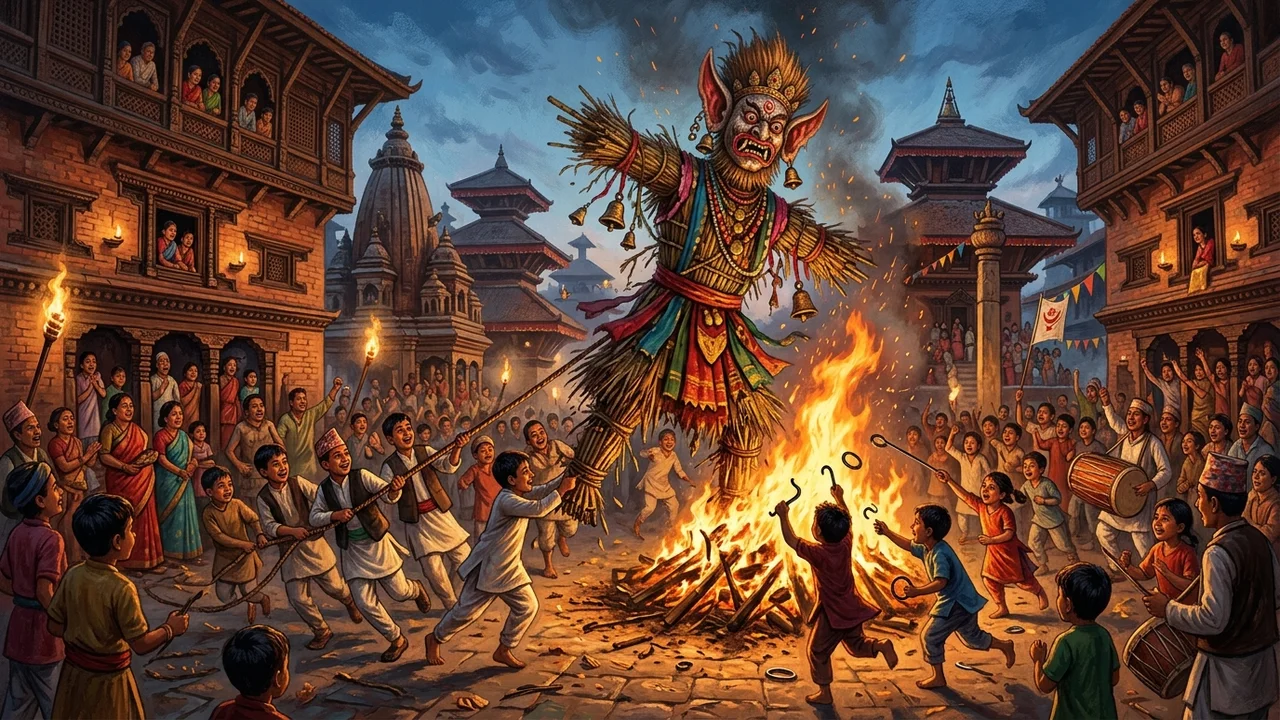
Children drag the straw effigy out of the lane.बालबालिकाले परालको पुतलो गल्लीबाट तान्छन्।
Dimension
Details
Sanitary & Exorcistic Significance
Calendar Tithi
Shrawan Krishna Chaturdashi (साउन कृष्ण चतुर्दशी)
Dark moon threshold marking the peak of monsoon sanitation and insect control.
Demon Effigy
Green river reeds (narkat), bamboo, and wooden masks
Anthropomorphic vessel absorbing neighborhood contagion, epidemics, and miasma.
Civic Toll
Jagat collection by local children
Neighborhood micro-fund financing the symbolic cremation and riverbank disposal.
Folk Intermediary
The clever frog (Bhyāguto)
Mythic guide leading agrarian farmers to trap the demon in flooded paddies.
Apotropaic Protection
Iron nails in lintels & iron rings (Pau)
Ferrous talismanic shields repelling ghosts, night-wandering spirits, and sickness.
The story
Falling on the fourteenth day of the dark lunar fortnight of Shrawan (Śrāvaṇa Krishna Chaturdashi), the ancient Newar festival of Gathemmangal—popularly known as Ghantakarṇa—enacts a theatrical ritual of communal demon-exorcism and environmental pest-purification. According to valley legend, Ghantakarṇa was an imposing, anti-theistic titan who held such fierce aversion to the name of Lord Vishnu (Hari) that he suspended heavy brass bells (ghaṇṭā) from both ears (karṇa), drowning out holy words with their deafening clatter whenever sacred mantras were spoken. Because the saturated mid-monsoon atmosphere fosters stagnant pools, waterborne epidemics, and fungal plagues across the dense medieval courtyards, the festival channels the demonic archetype into an environmental scapegoat, purging the city of physical decay and malevolent spirits in one cathartic civic bonfire.
साउन महिनाको कृष्ण पक्षको चतुर्दशी तिथिमा काठमाडौँ उपत्यकाका नेवार बस्तीहरूमा गठेमङ्गल अर्थात् घण्टाकर्णको प्राचीन चाड मनाइन्छ। पौराणिक किम्वदन्तीअनुसार घण्टाकर्ण नाम गरेको एक विशाल र भयानक राक्षस भगवान् विष्णुको नाम सुन्न यति घृणा गर्थ्यो कि कसैले हरिको नाम लिँदा आफ्नो कानमा नपरोस् भनेर उसले दुवै कानमा ठूलाठूला घण्ट झुन्ड्याएको थियो। मध्य-वर्षाको ओसिलो मौसममा बस्तीभित्र फैलने लामखुट्टे, किरा-फट्याङ्ग्रा, र हैजा-झाडापखालाजस्ता संक्रामक रोगहरूलाई राक्षसको स्वरूप मानी, टोलवासीहरू मिलेर त्यसको पुत्ला बनाई दहन गर्ने र बस्तीलाई प्राकृतिक तथा आध्यात्मिक विकारबाट मुक्त गराउने यो एउटा अनुपम लोक-वैज्ञानिक अनुष्ठान हो।
At every major crossroads (dovāṭo) and intersection (chovāṭo), neighborhood youths construct towering three-legged effigies crafted from thick bundles of green river reeds (narkat), bamboo scaffolding, and a grotesque painted wooden mask representing the demon. Throughout the day, children playfully obstruct passing pedestrians, demanding a token toll known as jagat to finance the monster's imminent funeral rites, while narrating how a clever frog lured the giant into a waterlogged rice marsh where the villagers finally overpowered him. At dusk, after an outcast or designated actor daubed in charcoal and ash performs funeral rites, the colossal straw effigy is toppled, dragged through the winding stone alleys down to the riverbank, and consumed by roaring flames, while domestic households hammer iron nails into exterior doorways and slip protective iron rings (pau) onto their fingers to shield themselves against wandering ghosts.
टोलटोलका दोबाटो र चौबाटोहरूमा स्थानीय युवाहरूले नर्कटको घाँस, बाँस, र काठका भयानक मुखुण्डो प्रयोग गरी तीनखुट्टे अग्ला घण्टाकर्णका पुत्ला ठड्याउँछन्। दिनभर साना नानीहरूले बटुवाहरूसँग "जगात दे!" भन्दै राक्षसको दाहसंस्कार खर्चका लागि पैसा माग्ने गर्दछन्, र एउटा चलाख भ्यागुतोले बाटो देखाई घण्टाकर्णलाई हिलो दलदलमा फसाएर मारेको रोचक कथा सुनाउँछन्। साँझ परेपछि, शरीरभरि कालो पोतेको व्यक्तिले अन्तिम संस्कारको अभिनय गरेपछि, त्यो विशाल पुत्लालाई लछारपछार पार्दै खोलाको बगरमा लगेर जलाइन्छ। घरभित्र भूतप्रेत र पिशाच नपसुन् भनी हरेक घरको मूलढोकामा तीनवटा फलामे कीला ठोक्ने र हातका औँलामा फलामे औँठी (पौ) लगाउने चलन आजसम्म उत्तिकै लोकप्रिय छ।
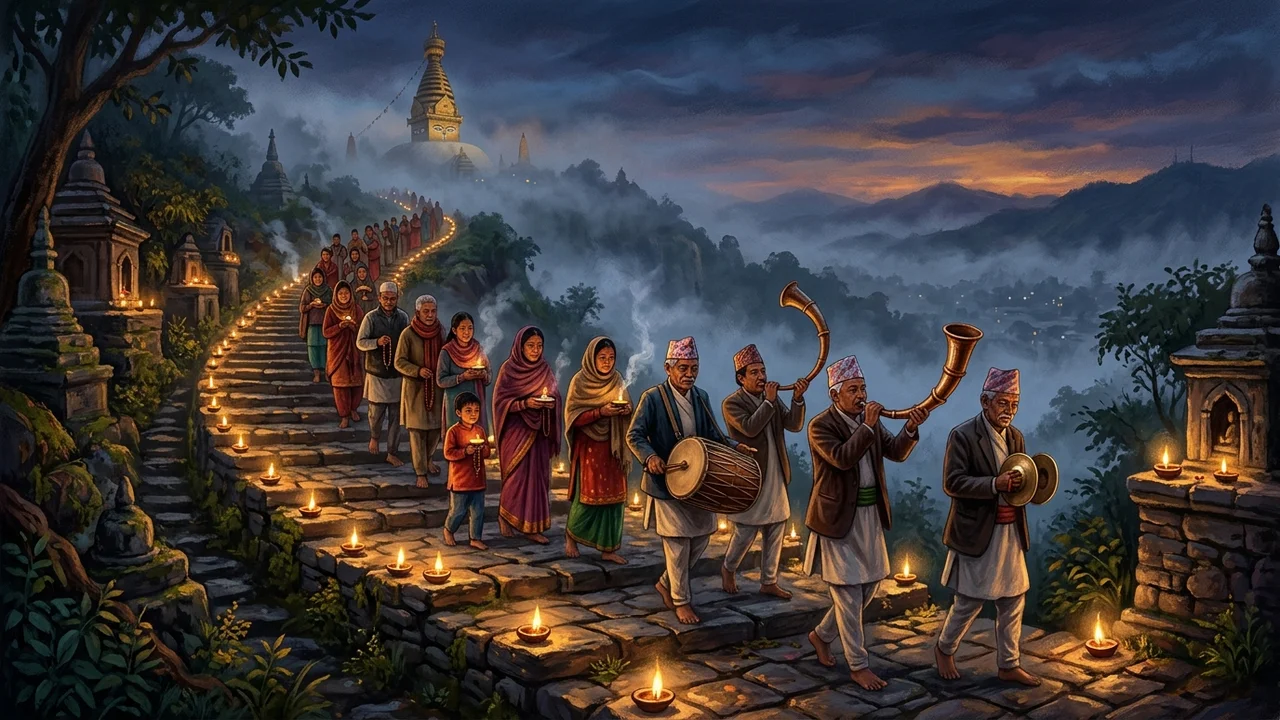
The line of monks walks, and the monsoon cloud is behind them.भिक्षुहरूको लाम हिँड्छ, र पछाडि मनसुनको बादल छ।
Dimension
Details
Monastic & Devotional Significance
Calendar Duration
Entire 10th month of Nepal Sambat (Shrawan–Bhadra)
One-month liturgical retreat harmonizing with monsoonal introspective seclusion.
Sacred Soundscape
Gunlā Bājan (धिमे, ताः, काँहा, धाँ)
Traditional percussive and wind hymns guiding predawn pilgrimages to hilltop stupas.
Primary Pilgrimage Sites
Swayambhūnāth, Mahābauddha, Bijeshwarī
Circumambulation of primordial self-arisen caityas across the urban periphery.
Monastic Exhibitions
Bahidyah Bwayegu (बहिद्यः ब्वयेगु)
Annual unveiling of hidden medieval Paubhā art, bronze Bodhisattvas, and relic caskets.
Merit Clay Rites
Dyāḥ Thāyegu (साना चैत्य निर्माण)
Hand-pressing thousands of miniature clay stupas to cultivate mindfulness and karmic merit.
The story
Spanning the entire tenth month of the traditional Nepal Sambat lunar calendar—coinciding with the mid-monsoon rains of Shrawan and Bhadra—Gunlā represents the sacred season of intensified spiritual discipline, scriptural illumination, and communal pilgrimage for Newar Buddhists. Rooted in the ancient Mahayana and Vajrayana traditions of the Kathmandu Valley, Gunlā invites both monastic initiates (Shakyas and Vajracharyas) and lay devotees (Uray and Jyapu) to step outside worldly concerns, undertaking daily predawn circumambulations to hilltop caityas while purifying their minds through liturgical music, philosophical recitation, and ethical restraint.
नेपाल संवत्को दशौँ महिनाका रूपमा पर्ने गुँला पर्व साउन र भदौको मध्य-वर्षाभरि मनाइने नेवार बौद्ध समुदायको एक महिने अत्यन्त पवित्र आध्यात्मिक उत्सव हो। प्राचीन महायान र वज्रयान परम्परामा आधारित यो महिना आत्मशुद्धि, ध्यान-साधना, बुद्ध-धर्मको श्रवण, र तीर्थाटनका लागि समर्पित रहन्छ। शाक्य, वज्राचार्य, उदास, र ज्यापु समुदायलगायत सम्पूर्ण श्रद्धालुहरूले बिहानको उज्यालो नहुँदै उठेर दैनिक रूपमा स्वयम्भू महाचैत्य तथा अन्य प्राचीन तीर्थहरूको पदयात्रा गरी पुण्य सञ्चय गर्दछन्।
Each morning before dawn breaks over the mist-covered valley, devotional guthi ensembles assemble with traditional Gunlā Bājan instruments—resonating with the hollow boom of double-headed dhimey drums, the sharp clank of bronze tāḥ cymbals, and the haunting, high-pitched wails of curved silver horns (kahan or nāykhīñ)—as long processions climb the three hundred and sixty-five stone steps of Swayambhunath Mahācaitya. Simultaneously, historic monasteries (bāhās and bahīs) across Kathmandu, Patan, and Bhaktapur throw open their inner sanctums for the sacred public exhibition of heirlooms known as Bahidyah Bwayegu, unveiling monumental gilded copper Buddhas, antique scroll paintings (Paubhā), and ancient bone-relic caskets. Devotees also gather in quiet cloisters to practice dyāḥ thāyegu, pressing thousands of miniature unbaked clay caityas around a single grain of consecrated barley, embodying the impermanence of mortal form and the infinite proliferation of awakened mind.
हरेक दिन बिहानै उपत्यकाका गल्लीगल्लीबाट परम्परागत गुँला बाजाको गुञ्जन सुरु हुन्छ। धिमे, धाँ, ताः, र काँहा बाजाको सुरिलो तालमा बालबालिकादेखि वृद्धवृद्धासम्म स्वयम्भूको ३६५ वटा ढुङ्गे सिँढी चढेर महाचैत्यको परिक्रमा गर्दछन्। यस पवित्र महिनामा काठमाडौँ, पाटन, र भक्तपुरका प्राचीन बौद्ध बहाल र बहीहरूमा 'बहिद्यः ब्वयेगु' अर्थात् ऐतिहासिक धातुका ठूला बुद्धमूर्ति, पौभा चित्र, र अस्थि-धातुका कलशहरूको भव्य सार्वजनिक प्रदर्शनी गरिन्छ। यसका साथै श्रद्धालुहरूले 'द्यः थायेगु' विधिअन्तर्गत माटोको सानो पिण्डभित्र एक गेडा चामल वा जौ राखेर हजारौँको संख्यामा साना चैत्यहरू बनाउने गर्दछन्, जसले अनित्यताको बोध र बुद्धत्व प्राप्तिको सङ्कल्पलाई दर्शाउँछ।
Custodians of subterranean aquifers, fertility, mineral wealth, and monsoon rainfall.
Threshold Talisman
Woodblock-printed poster pasted with cow dung and dūbo grass
Apotropaic shield guarding the home from lightning strikes and venomous incursions.
Sacred Libations
Unboiled cow's milk, popped paddy (lāvā), vermilion, and kheer
Pacifying offerings presented at domestic doorways, sacred ponds, and springs.
Sacred Reservoirs
Taudaha, Nāgdaha, Dhāpākhāsi
Pilgrimages to ancient lacustrine sanctuaries where serpent spirits permanently reside.
The story
Celebrated on the fifth day of the waxing moon of Shrawan (Śrāvaṇa Śukla Panchami), Nag Panchami establishes a sacred pact of reciprocity between human households and the sovereign serpent-lords (Nāgas) who govern subterranean waters, underground treasure, and atmospheric fertility. In Himalayan and valley cosmology, serpents are not merely subterranean reptiles but sentient divine caretakers of the aquifer; when venerated with purity, they grant gentle, nourishing rains and protect foundations, but if neglected or provoked by ecological degradation, they withhold water, unleash lightning bolts, and transmit severe skin afflictions.
साउन महिनाको शुक्ल पक्षको पञ्चमी तिथिमा पर्ने नाग पञ्चमी मानिस र भूमिगत जलका स्वामी मानिने नागराजहरूबीचको गहिरो सम्बन्ध र कृतज्ञताको पर्व हो। सनातन एवम् बौद्ध परम्परामा नागहरूलाई केवल विषालु सर्पका रूपमा नहेरी पानीका मुहान, भूमिगत खजाना, र वर्षाका दिव्य संरक्षकका रूपमा पुजिन्छ। वातावरण स्वच्छ राखेर नागको पूजा गर्दा समयमै वर्षा हुने, बाढी-पहिरो र चट्याङको डर नहुने, र रोगव्याधिबाट मुक्ति मिल्ने धार्मिक विश्वास रहिआएको छ।
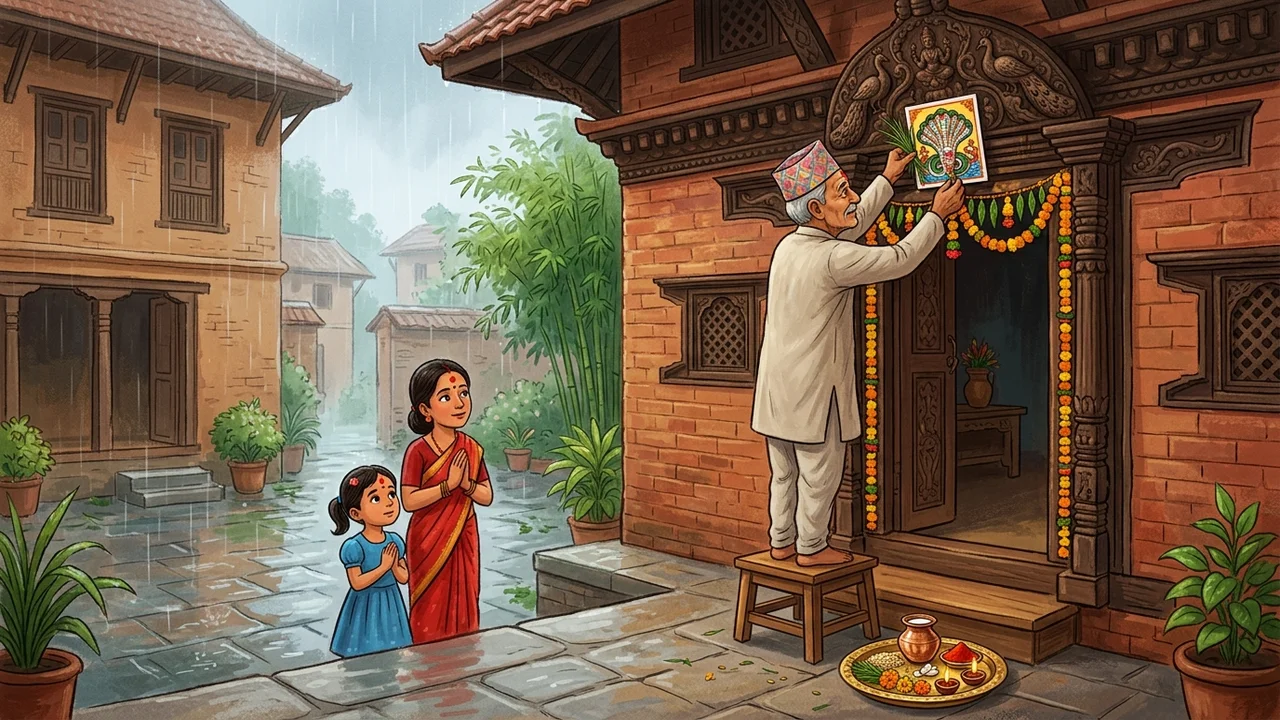
On the morning of this festival, the master of each household affixes a consecrated woodblock print depicting the Eight Great Serpent Kings (Aṣṭa Nāgas)—Ananta, Vāsuki, Shesha, Padma, Kambala, Karkotaka, Aśvatara, and Shankhapala—above the main entrance portal (dhokā). Fastened firmly with fresh cow dung (gobar) and bound with blades of sacred holy grass (dūrvā / dūbo), this talismanic threshold image depicts the multi-hooded serpents attended by divine consorts, birds, and celestial attendants. Households offer unbroken cow's milk, popped paddy (lāvā), vermilion, and unbaked rice-flour sweets to the serpent king, reciting ancient protective verses that ward off domestic lightning strikes, scorpions, and venomous intrusions throughout the torrential monsoon season.
यस दिन बिहानै घरका मुलीले स्नान गरी गाईको गोबर, दुबो, र चामलको अक्षता प्रयोग गरेर मूलढोकाको माथिल्लो भागमा अष्टनागको चित्र विधिपूर्वक टाँस्ने गर्दछन्। अनन्त, वासुकी, शेष, पद्म, कम्बल, कर्कोटक, अश्वतर, र शङ्खपाल गरी आठ प्रमुख नागहरूको यो चित्र ढोकामा टाँस्दा वर्षभरि घरमा चट्याङ नपर्ने, आगलागी नहुने, र विषालु सर्प तथा किराहरू नपस्ने शास्त्रीय मान्यता छ। यस अवसरमा टौदह, नागदह, र विभिन्न कुवा तथा ढुङ्गेधारामा गएर नागदेवतालाई गाईको काँचो दूध, लाभा, चन्दन, र धूप अर्पण गरी परिवारको आरोग्य र कल्याणको प्रार्थना गरिन्छ।
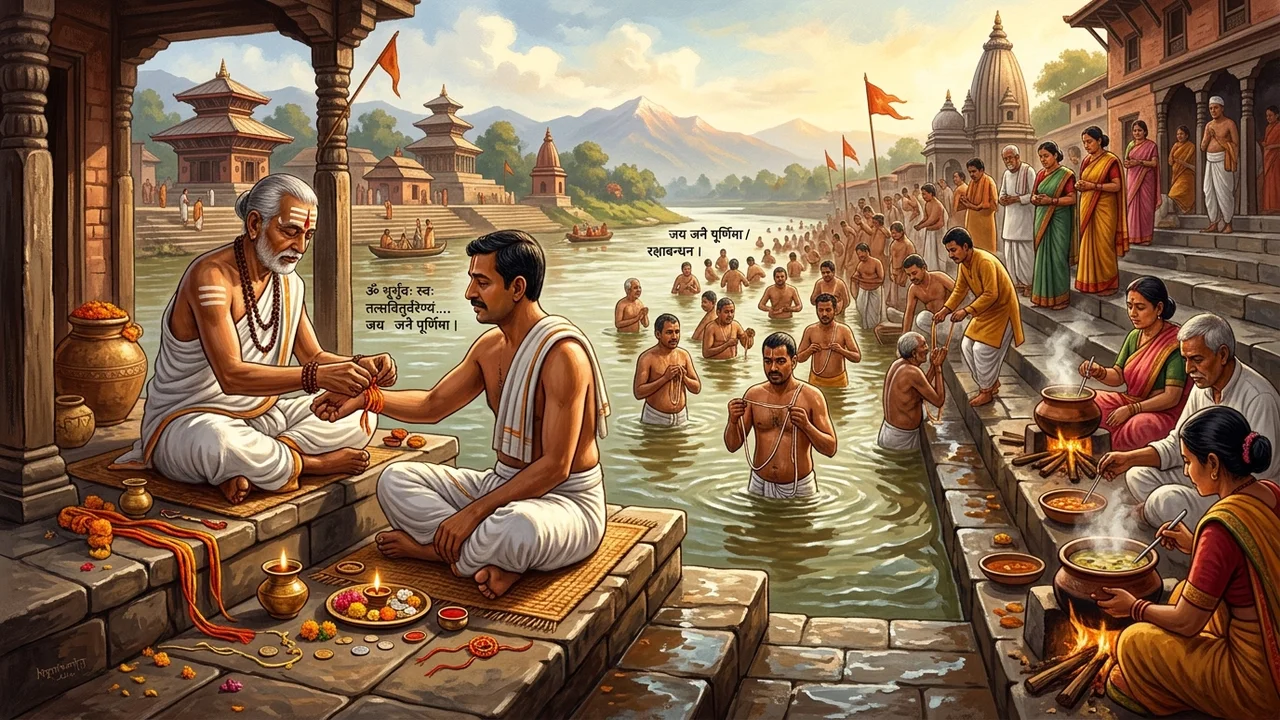
The sacred thread is changed, and the bracelet is tied on the wrist.जनै फेरिन्छ, र नाडीमा डोरो बाँधिन्छ।
Dimension
Details
Liturgical & Physiological Significance
Calendar Tithi
Shrawan Shukla Purnima (साउन पूर्णिमा)
Full moon dedicated to spiritual renewal, filial ancestor oblations, and bodily health.
Sacred Cord Renewal
Yajñopavīta / Janai (यज्ञोपवीत फेर्ने)
Three strands of Brahmā, Vishnu, and Shiva representing Vedic ethical responsibility.
Apotropaic Wrist-Thread
Rakṣā Bandhan / Doro (रक्षा सूत्र बाँध्ने)
Talismanic thread consecrated with King Bali's benediction shielding the wearer from adversity.
Medicinal Gastronomy
Kwātī (नौ थरिका टुसा उम्रेका गेडागुडी)
Nine-legume sprouted broth infused with ajwain restoring gut fire and monsoon immunity.
Glacial Alpine Pilgrimage
Gosāinkuṇḍa & Kumbheśvara
Sacred mountain lake treks honoring Shiva consuming the world-destroying Hālāhala poison.
The story
Falling on the full moon of Shrawan, Janai Purnima—known in the Vedic liturgy as Rishi Tarpaṇī and across the Newar sphere as Kwātī Punī—celebrates the threefold renewal of spiritual initiation, mutual protection, and nutritional rejuvenation. For the tagādhārī castes (the twice-born Brahmins and Chhetris), the day requires ritual immersion at dawn in sacred rivers or temple tanks, such as Pashupatinath or the glacial waters of Kumbheshwar in Patan. Performing Vedic water oblations (tarpaṇa) to the seven primordial sages (Saptarṣis) and ancestors, the initiate removes the old, worn cord of the past year and receives a freshly consecrated, hand-spun triple-strand cotton cord (yajñopavīta / janai). Each of its three primary cords symbolizes the sacred trinity of Brahmā, Vishnu, and Shiva, while the nine interwoven internal threads represent the cardinal deities and moral disciplines that bind the wearer to ethical conduct.
साउन महिनाको शुक्ल पक्षको पूर्णिमा तिथिमा मनाइने जनै पूर्णिमा वैदिक परम्परामा ऋषितर्पणी तथा नेवार संस्कृतिमा क्वाँटी पुन्हीका रूपमा अत्यन्त श्रद्धा र उल्लासका साथ मनाइन्छ। यस दिन तागाधारी (ब्राह्मण र क्षेत्री) हरूले बिहानै नदी, तलाउ, वा पाटनको कुम्भेश्वरजस्ता पवित्र तीर्थहरूमा स्नान गरी सप्तऋषिहरूको नाममा तर्पण दिन्छन्। वर्षभरि लगाएको पुरानो जनै विसर्जन गरी, गायत्री मन्त्रले अभिमन्त्रित गरिएको नयाँ कपासको पवित्र धागो (यज्ञोपवीत) धारण गरिन्छ। जनैका तीन सूत्रले ब्रह्मा, विष्णु, र महेश्वर तथा नौवटा मसिना डोराहरूले नवग्रह र इन्द्रिय नियन्त्रणका नियमहरूको स्मरण गराउँछन्।
Across all families regardless of caste, priests and household elders tie a consecrated multi-colored protective wrist-cord (rakṣā sūtra / doro) around the right wrists of men and the left wrists of women, chanting the ancient Puranic benediction invoking the magnanimous King Bali: Yena baddho Balī rājā dānavendro mahābalaḥ.... Concurrently, Newar kitchens and dining rooms celebrate Kwātī Punī, gathering around steaming bowls of kwātī—a dense, restorative broth prepared from nine varieties of sprouted legumes (black gram, green gram, chickpeas, field peas, soybeans, horse gram, and lentils) fried with aromatic cumin, ajwain (jwāno), and clarified butter. Rich in protein, micronutrients, and digestive heat, this nourishing stew wards off seasonal monsoon dampness, fortifies immune resilience, and celebrates the completion of the arduous agricultural planting season.
यसै दिन पुरोहित तथा मान्यजनहरूले हातमा पहेँलो र रातो रङ्गको पवित्र रक्षाबन्धन (डोरो) बाँधिदिँदै "येन बद्धो बली राजा दानवेन्द्रो महाबलः..." मन्त्रद्वारा सम्पूर्ण संकट र भयबाट रक्षा होस् भनी आशीर्वाद दिन्छन्। यस चाडको अर्को सबैभन्दा स्वादिष्ट र वैज्ञानिक पक्ष भनेको क्वाँटी खाने परम्परा हो। मास, मुगी, चना, केराउ, भटमास, सिमी, बोडी, बकुल्ला, र मस्याङ गरी नौ थरिका गेडागुडीलाई टुसा उमारेर घिउ, ज्वानो, र हीङ झानेर पकाइने तातो झोललाई 'क्वाँटी' भनिन्छ। मनसुनको चिसो र हिलोमा खटिएका किसानहरूको शरीरमा लाग्ने रोगव्याधिबाट बचाउन र पेटको पाचन प्रणालीलाई बलियो बनाउन यो पौष्टिक परिकारले अचूक औषधिको काम गर्दछ।