The festivals of Chaitra are on this page. A name at the top jumps to that story. Chaite Dashain keeps its own page, and its days stay with it.चैतका चाड यसै पृष्ठमा छन्। माथिको नामले त्यो कथामा लैजान्छ। चैते दशैंको आफ्नै पृष्ठ छ, र त्यसका दिन त्यही चाडसँगै रहन्छन्।
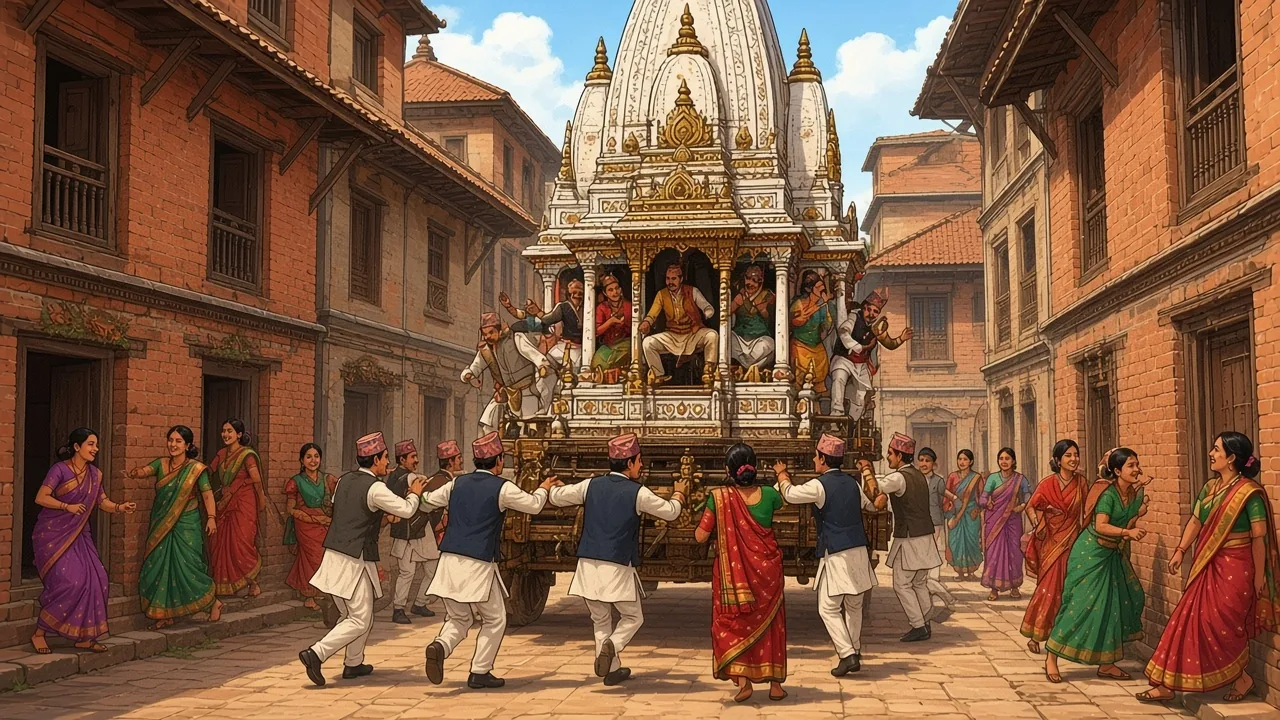
The white god rides through the lane, and the musicians walk ahead.सेतो देवता गल्लीमा हिँड्छन्, र बाजा अगाडि जान्छ।
Dimension
Details
Buddhist & Civic Significance
Calendar Tithi
Chaitra Shukla Ashtami (चैत शुक्ल अष्टमी)
Four-day spring urban circumambulation through historic Kathmandu.
Deity & Temple
Jana Bāhā Dyaḥ at Kel Tol (कनकचैत्य महाविहार)
The White Bodhisattva Padmapāṇi Avalokiteśvara of infinite compassion.
Procession Route
Jamal (Tindhara) → Asan → Hanuman Dhoka → Lagan
Sacred north-to-south longitudinal transit along ancient trans-Himalayan trade axes.
Royal & Divine Darshan
Kumari darshan at Hanumān Dhokā
Public encounter between the Living Goddess of Kathmandu and the White Bodhisattva.
Maternal Circumambulation
Three circles around the Mā Gāḥ tree in Lagan
Reverence for maternal kinship anchoring the spiritual geography of the Newar cosmos.
The story
Celebrated over four days in the bright lunar fortnight of Chaitra—commencing on Caitra Śukla Ashtami—the chariot festival of Seto Matsyendranath honors the radiant white manifestation of the Bodhisattva Avalokiteśvara, known natively in Nepal Bhasa as Jana Bāhā Dyaḥ or Āryāvalokiteśvara. While Patan celebrates the crimson rain deity Rato Machhendranath in Jestha, Kathmandu honors its own white protector whose permanent sanctuary sits inside the tranquil Kanakacaitya Mahāvihāra courtyard in Kel Tol. According to Malla-era chronicle, the deity manifested from a sacred vessel at the confluence of the Bagmati and Bishnumati rivers during the reign of King Yaksha Malla, declaring that anyone who gazes upon his compassionate, moon-white countenance during his spring chariot circumambulation will be absolved of all sins and delivered directly to the western paradise of Sukhāvatī.
चैत महिनाको शुक्ल पक्षको अष्टमीदेखि पूर्णिमासम्म काठमाडौँको प्राचीन व्यापारिक केन्द्रमा मनाइने चारदिने प्रसिद्ध रथयात्रा सेतो मत्स्येन्द्रनाथको हो। नेपाल भाषामा 'जनबहाल द्यः' वा आर्य अवलोकितेश्वरका रूपमा पुजिने यो सेतो करुणामय मूर्ति काठमाडौँको केलटोलस्थित कनकचैत्य महाविहारमा विराजमान रहनुहुन्छ। पाटनमा रातो मच्छिन्द्रनाथको जात्रा भएजस्तै काठमाडौँ सहरका आफ्नै संरक्षकका रूपमा सेतो मच्छिन्द्रनाथको रथयात्रा गरिन्छ। मल्लकालीन इतिहासअनुसार राजा यक्ष मल्लका समयमा बागमती र विष्णुमतीको सङ्गमबाट प्रकट हुनुभएका यी करुणामय देवताको दर्शन गर्नाले मानिसले जीवनमा गरेका सम्पूर्ण पाप नाश हुने र मृत्युपछि सिधै सुखवती भुवन (मोक्ष) प्राप्त हुने जनविश्वास छ।
The grand procession begins at Tindhara near Jamal, where artisans erect a towering thirty-two-foot wooden spire chariot lashed with bamboo poles, adorned with pine branches, and fronted by the carved visage of Hayagrīva. Propelled by hundreds of devotees hauling thick braided ropes, the chariot crawls methodically through the heart of Kathmandu's medieval quarters. On the first night, it arrives at Asan Tol, where thousands of residents crowd surrounding balconies to shower rice and flowers upon the white deity; on the second day, it proceeds through Indra Chowk to Hanuman Dhoka Palace, where the Living Goddess Kumari is carried from her palace to pay formal homage to the Bodhisattva. On the third day, the chariot moves south to Lagan, circling the sacred mother tree (Mā Gāḥ) three times before the image is dismantled and carried home in a gilded palanquin, showering blessings of health and seasonal rains upon the valley.
तीनधारा पाठशाला (जमल) मा ३२ हात अग्लो विशाल काठको रथ निर्माण गरी सुरु गरिने यो जात्रा काठमाडौँका पुराना बस्तीहरूको मेरुदण्ड भएर अगाडि बढ्छ। पहिलो दिन रथलाई तानेर असन पुर्याइन्छ, जहाँ चारैतिरका झ्याल र कौसीबाट लाखौँ भक्तजनहरूले फूल र अक्षताको वर्षा गराउँछन्। दोस्रो दिन असनबाट इन्द्रचोक हुँदै वसन्तपुर दरबार स्क्वायर पुर्याइन्छ, जहाँ जीवित देवी श्री कुमारीलाई ल्याएर सेतो मच्छिन्द्रनाथको दर्शन गराइन्छ। तेस्रो दिन रथलाई लगन टोल पुर्याएर मच्छिन्द्रनाथकी आमाको रुख मानिने 'मा गाः' को तीन पटक परिक्रमा गराइन्छ। अन्त्यमा विधिवत् पूजा गरी मूर्तिलाई सानो खटमा राखेर जनबहाल फिर्ता ल्याइन्छ, जसले उपत्यकामा स्वास्थ्य, शान्ति, र शीतलता प्रदान गर्दछ।
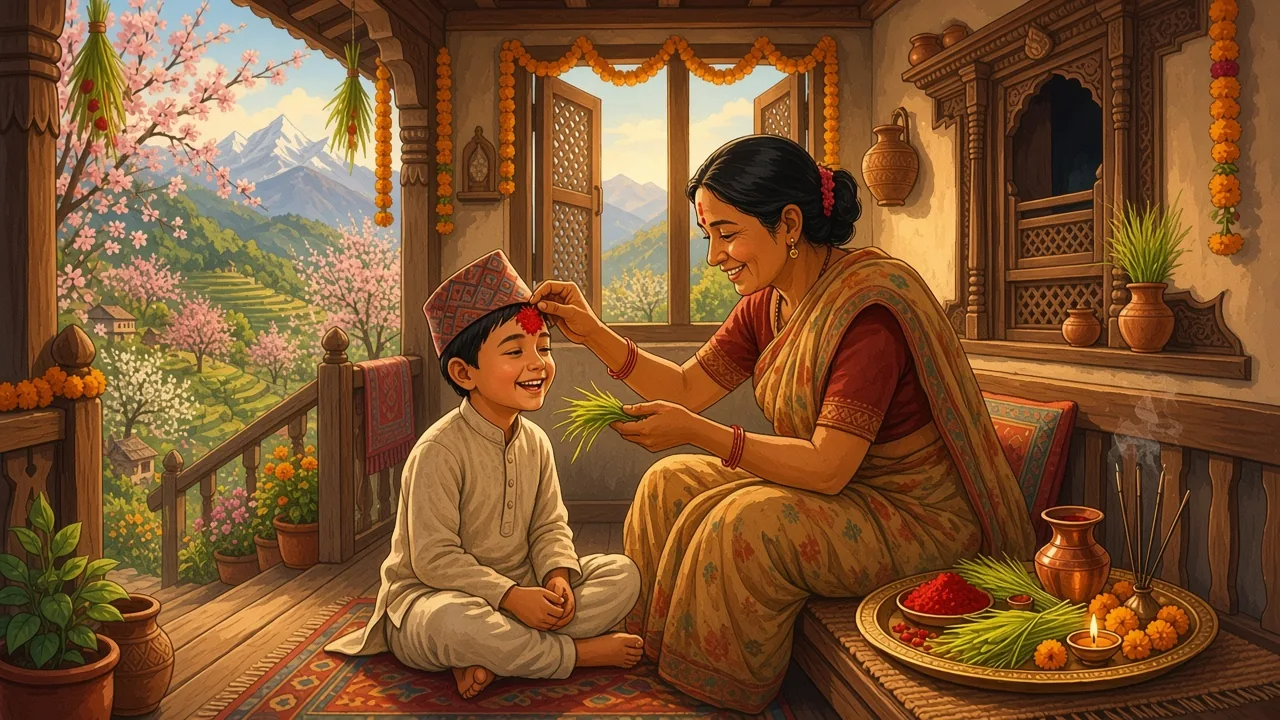
The spring tika is given, and the barley shoots stand by the blossoms.वसन्तको टीका दिइन्छ, र फूलको छेउमा जमरा उभिन्छ।
This is the spring Dashain. The days are on their own page.यो वसन्तको दशैं हो। दिनहरूको आफ्नै पृष्ठ छ।
3. Rama Navami
३. राम नवमी
Rama is honored, and the bow is near the shrine.रामको पूजा हुन्छ, र धनुष मन्दिरको छेउमा छ।
Dimension
Details
Theological & Epic Significance
Calendar Tithi
Chaitra Shukla Navami (चैत शुक्ल नवमी)
Midday advent of the seventh incarnation of Lord Vishnu.
Moral Archetype
Maryādā Puruṣottama (मर्यादा पुरुषोत्तम)
The supreme embodiment of ethical righteousness, filial piety, and justice.
Conjunction with Navaratri
Directly following Chaite Dashain
Synthesis of Śakti veneration with Vaiṣṇava heroic deliverance.
Sanctuary Centers
Rām Mandir in Janakpur & Battisputali, Kathmandu
Epic pilgrimage centers hosting day-long recitations of the Rāmcaritamānasa.
Midday Liturgy
Midday Janmotsava Āratī
Conch proclamations greeting the birth under the Punarvasu constellation.
The story
Celebrated on the ninth day of the waxing lunar fortnight of Chaitra (Caitra Śukla Navami), Rama Navami commemorates the high noon advent of Lord Sri Rama, the seventh avatāra of Vishnu, who incarnated upon the earth to vanquish the ten-headed demon king Rāvaṇa and establish the sovereign reign of righteousness (Rāmarājya). Born to King Daśaratha and Queen Kausalyā in the ancient solar capital of Ayodhyā under the Punarvasu Nakṣatra while the sun stood at its zenith, Rama is venerated as Maryādā Puruṣottama—the supreme archetype of moral rectitude, filial duty, unwavering truthfulness, and heroic self-restraint.
चैत महिनाको शुक्ल पक्षको नवमी तिथिमा मर्यादा पुरुषोत्तम भगवान् श्रीरामको शुभ जन्मोत्सव अर्थात् राम नवमी देशभर अत्यन्त श्रद्धा र भक्तिपूर्वक मनाइन्छ। त्रेतायुगमा अयोध्याका राजा दशरथ र महारानी कौसल्याको ज्येष्ठ सुपुत्रका रूपमा मध्याह्न बाह्र बजे सूर्य आफ्नो चरम उचाइमा रहेका बेला भगवान् विष्णुले सातौँ अवतारका रूपमा श्रीरामको जन्म लिनुभएको थियो। उहाँले अधर्मी र अहङ्कारी राक्षसराज रावणको वध गरी संसारमा धर्म र सत्यको पुनर्स्थापना (रामराज्य) गर्नुभयो। एक आदर्श छोरा, आज्ञाकारी भाइ, निष्ठावान् पति, र प्रजावत्सल राजाका रूपमा श्रीरामको चरित्र सम्पूर्ण मानव जातिका लागि अनुकरणीय छ।
The festival arrives in intimate conjunction with Chaite Dashain (celebrated the preceding day on Chaitra Shukla Ashtami), which honors Goddess Durga's vanquishing of the buffalo demon Mahiṣāsura during the vernal Navaratri. According to epic tradition, Lord Rama invoked Durga's divine shakti before marching into Lanka, linking the worship of the mother goddess with the hero's ultimate triumph. Across Nepal, the vibrant epicenters of devotion include the historic Janaki and Ram Mandirs in Janakpurdham, where thousands celebrate the birth of their beloved son-in-law, and the ancient stone Ram Mandir at Battisputali in Kathmandu. Devotees observe strict morning fasts, listening to melodious recitations of the Rāmcaritamānasa, while temple bells and conch shells ring out precisely at midday to herald the divine birth.
राम नवमीको पूर्वसन्ध्यामा चैत शुक्ल अष्टमीका दिन 'चैते दशैं' मनाइन्छ, जसमा दुर्गा भवानीको उपासना गरी असत्यमाथि सत्यको विजयको कामना गरिन्छ। रावणसँगको युद्धमा विजय प्राप्त गर्न भगवान् श्रीरामले पनि चैत्र नवरात्रमा शक्तिकी अधिष्ठात्री भगवतीको कठोर साधना गर्नुभएको पौराणिक सन्दर्भ छ। नेपालमा यस दिन जनकपुरधामस्थित राम मन्दिर तथा काठमाडौँको बत्तिसपुतलीस्थित ऐतिहासिक राम मन्दिरमा बिहानैदेखि भक्तजनहरूको ठूलो भीड लाग्दछ। दिनभर उपवास बसेर रामायणको पाठ, भजनकीर्तन, र मध्याह्न १२ बजे शङ्खध्वनिका साथ श्रीरामको जन्मोत्सव मनाउँदै प्रसाद वितरण गरिन्छ।
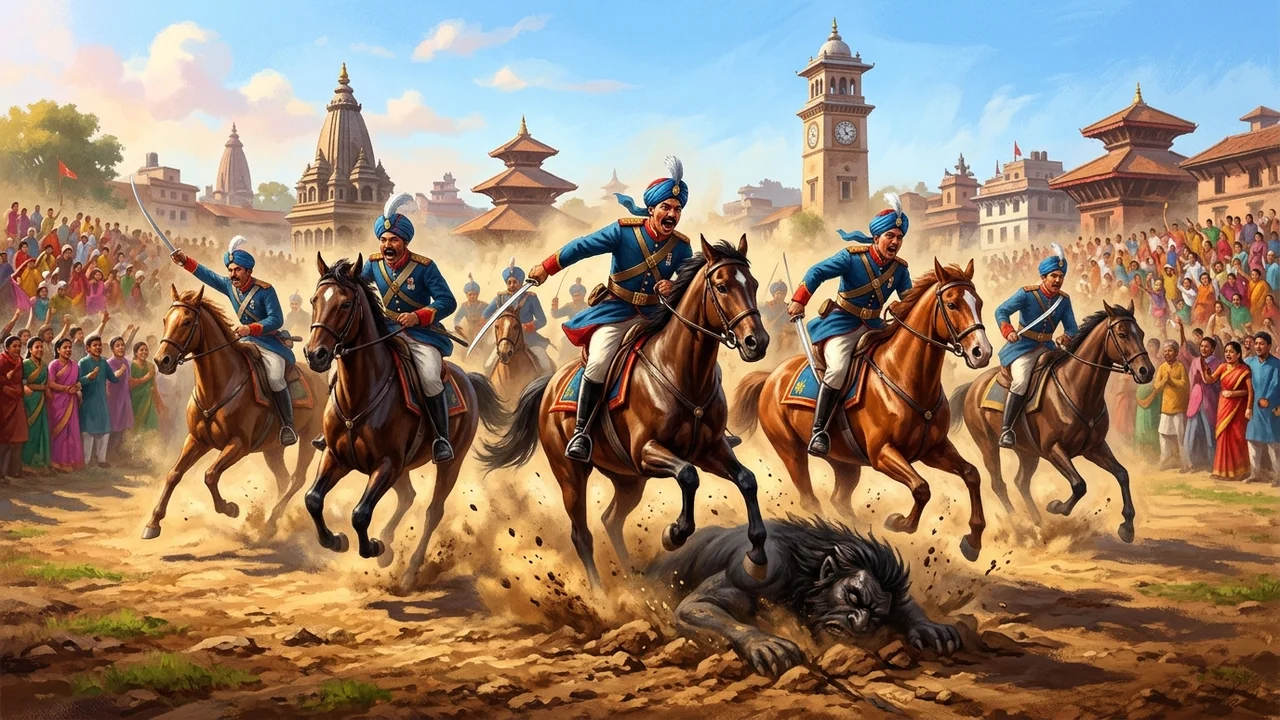
Horses race on the field, and the demon waits at the edge.मैदानमा घोडा दौडिन्छन्, र छेउमा राक्षस पर्खन्छ।
Dimension
Details
Martial & Mythological Significance
Calendar Tithi
Chaitra Krishna Amavasya (चैत कृष्ण औंसी)
Dark moon threshold marking spring equestrian trampling and demonic suppression.
Central Legend
Suppression of Demon Gurumapa / Tuṇḍi
Galloping hooves stamping the meadow earth to bind malevolence beneath the soil.
Equestrian Display
Tuṇḍikhel cavalry races and acrobatics
Martial horsemanship display organized under formal head-of-state inspection.
Nocturnal Goddess Rite
Ajimā Sister Reunion at Asan Chowk
Midnight collision of palanquins and exchange of flaming torches between mother deities.
Civic Safeguard
Protection of the urban mandala
Harmonizing physical military readiness with esoteric tantric boundary sanctification.
The story
Falling on the dark moon of Chaitra (Caitra Krishna Amāvāsyā), Ghode Jatra transforms the vast historical open esplanade of Tundikhel in central Kathmandu into an exhilarating theater of martial equestrianism, civic exorcism, and nocturnal mother-goddess reunions. According to ancient valley myth, a voracious, subterranean titan named Gurumapa (or the demon Tuṇḍi) inhabited the dense meadows of Tundikhel, terrorizing the residents by kidnapping children, trampling standing crops, and unleashing earthquakes from his underground lair. After the citizens managed to overpower and bury the monster beneath the earth, fear remained that his malevolent spirit would break free of the soil; to permanently suppress the demonic presence, the king ordered cavalry regiments to thunder across the ground at full gallop, trampling the earth beneath the iron-shod hooves of hundreds of warhorses to drive the demon deep into the subterranean abyss.
चैत महिनाको कृष्ण पक्षको औंसी तिथिका दिन काठमाडौँको ऐतिहासिक खुला मैदान टुँडिखेलमा मनाइने घोडेजात्रा रोमाञ्चक अश्वकला, ऐतिहासिक दैत्य-दमन, र तान्त्रिक देवीहरूको पूजनीय संगम हो। प्राचीन किम्वदन्तीअनुसार टुँडिखेलको चौरमुनि 'गुरुमापा' अर्थात् 'टुँडी' नाम गरेको एक अत्यन्त भयानक नरभक्षी राक्षस बस्दथ्यो, जसले बालबालिका चोर्ने, उपत्यकामा उपद्रव मच्चाउने, र बस्तीहरू आतंकित पार्ने गर्दथ्यो। पछि सहरवासीहरूले तन्त्रबलद्वारा उसलाई मारेर जमिनमुनि गाडिदिएका थिए। तर त्यो राक्षस फेरि जमिनबाट ब्यूँझेर निस्कन नसकोस भनेर, हरेक वर्ष यस औंसीका दिन राजाले सेनाका घोडाहरूलाई तीव्र गतिमा कुदाएर टापले जमिन कुल्चाउने आदेश दिएका थिए। घोडाहरूको टापको भयानक आवाज र कम्पनले राक्षस पातालमै दबिन्छ र सहर विपत्तिबाट जोगिन्छ भन्ने गहिरो जनविश्वास छ।
While daytime crowds gather at Tundikhel to witness spectacular equestrian pageantry—including high-speed hurdle races, acrobatic horseback maneuvers, and precision cavalry drills performed by the Nepal Army and national police before the head of state—the medieval Newar quarters observe a sacred nocturnal rite known as the sister-goddess reunion. In the dead of night, hereditary guthiyars carry the gilded portable palanquins of the seven Ajimā mother-goddesses—prominently Bhadrakali (Lumadhī), Kaṅkeśvarī (Kangaḥ), and Tebāhal (Teḥ)—through torchlit alleys to the bustling crossroads of Asan Chowk. There, amidst clashing bronze cymbals and sacred chants, the palanquins are deliberately jostled against one another three times while burning pine torches are exchanged between their respective shrines, celebrating the joyful annual reunion of divine sisters who safeguard the boundaries of the ancient capital.
दिउँसो टुँडिखेलमा नेपाली सेना र प्रहरीका घोडचढीहरूले राष्ट्राध्यक्ष तथा लाखौँ जनताको अगाडि अश्वकला, बाधा-पार, र साहसिक दौडका आकर्षक करतबहरू प्रदर्शन गर्दछन्। तर यसको अर्को अत्यन्त रहस्यमय र आध्यात्मिक पक्ष मध्यरातमा काठमाडौँका पुराना गल्लीहरूमा देखिन्छ। मध्यरातमा असन चोकमा दिदीबहिनी मानिने तीन प्रमुख अजिमा देवीहरू—लुमधि अजिमा (भद्रकाली), कङ्ग अजिमा (कङ्केश्वरी), र तेबहाल अजिमाको खट जात्रा गरिन्छ। राँको (मशाल) को उज्यालोमा बाजागाजाका साथ तीनवटै खटलाई आपसमा जुधाइन्छ र राँको साटासाट गरिन्छ। यसरी दिदीबहिनी देवीहरूको पवित्र मिलन गराएपछि सहरमा रोगव्याधि, अनिकाल, र प्राकृतिक प्रकोप नआउने अटल विश्वास रहिआएको छ।