Spanning five luminous days from the thirteenth of the dark lunar fortnight of Kartik through the second of the waxing moon, Tihar—celebrated across Nepal as Yama Pañcaka and the Festival of Lights (Dīpāwalī)—honors the profound spiritual kinship between human beings, non-human creatures, and the cosmic sovereign of mortality, Lord Yama. According to classical Puranic chronicle, King Yama (the deity of death and cosmic justice) was invited by his devoted sister Yamuna to visit her riverside sanctuary. Deeply moved by her boundless affection, the fragrant garlands of unfading globe amaranth (makhamalī) she draped over his shoulders, and the delicious sweetmeats she prepared, Yama declared that any brother who receives his sister's sacred seven-colored forehead blessing and protective boundary on this tithi shall be shielded from premature death, granting humanity a sacred covenant of familial longevity and protection.
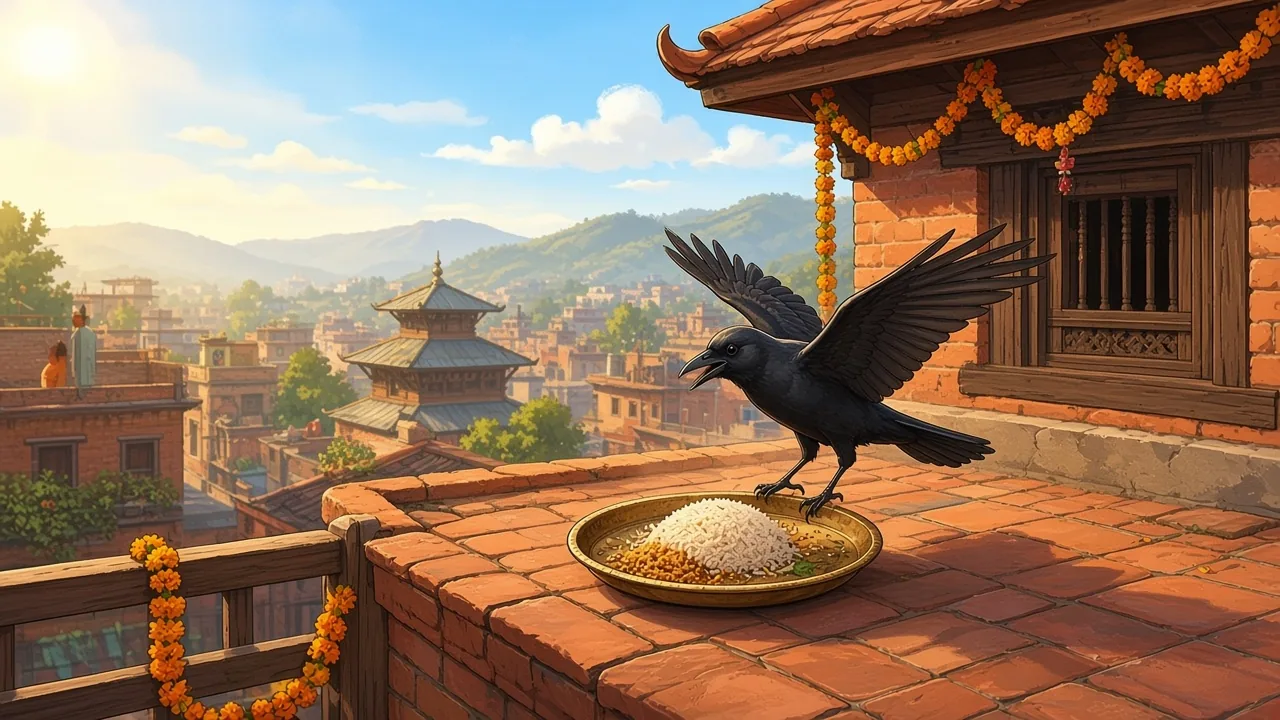
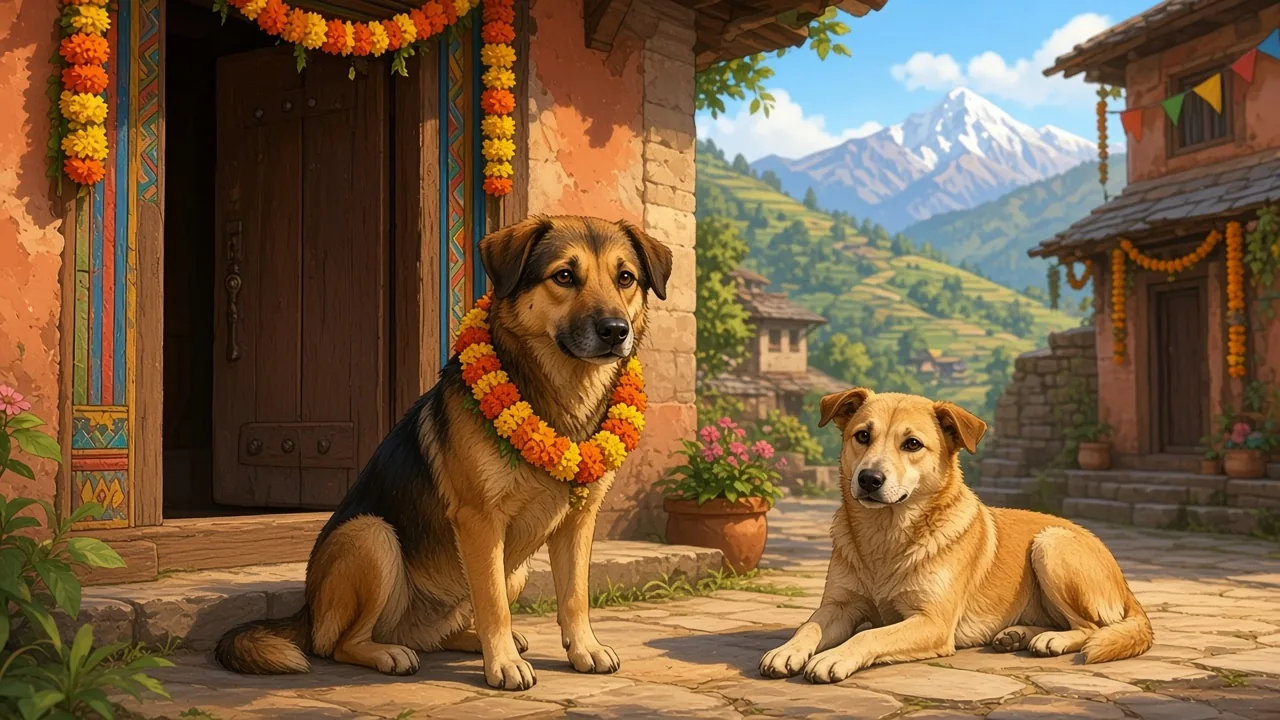
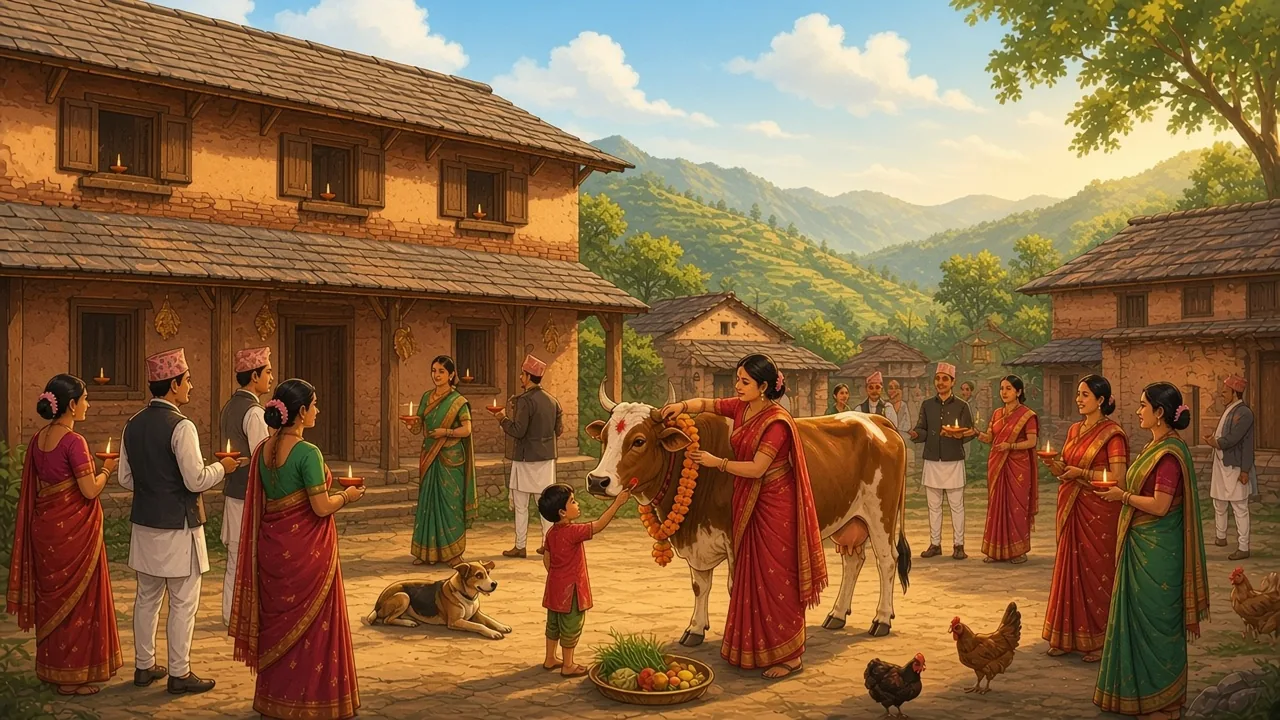
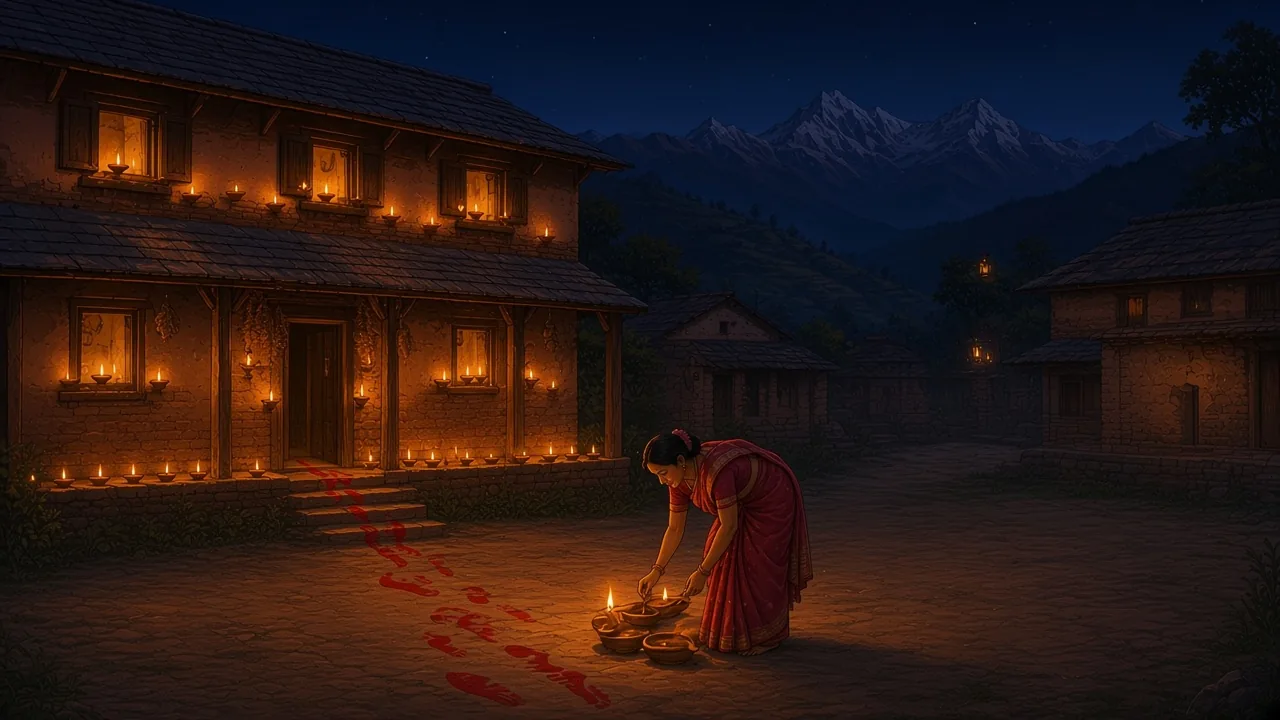
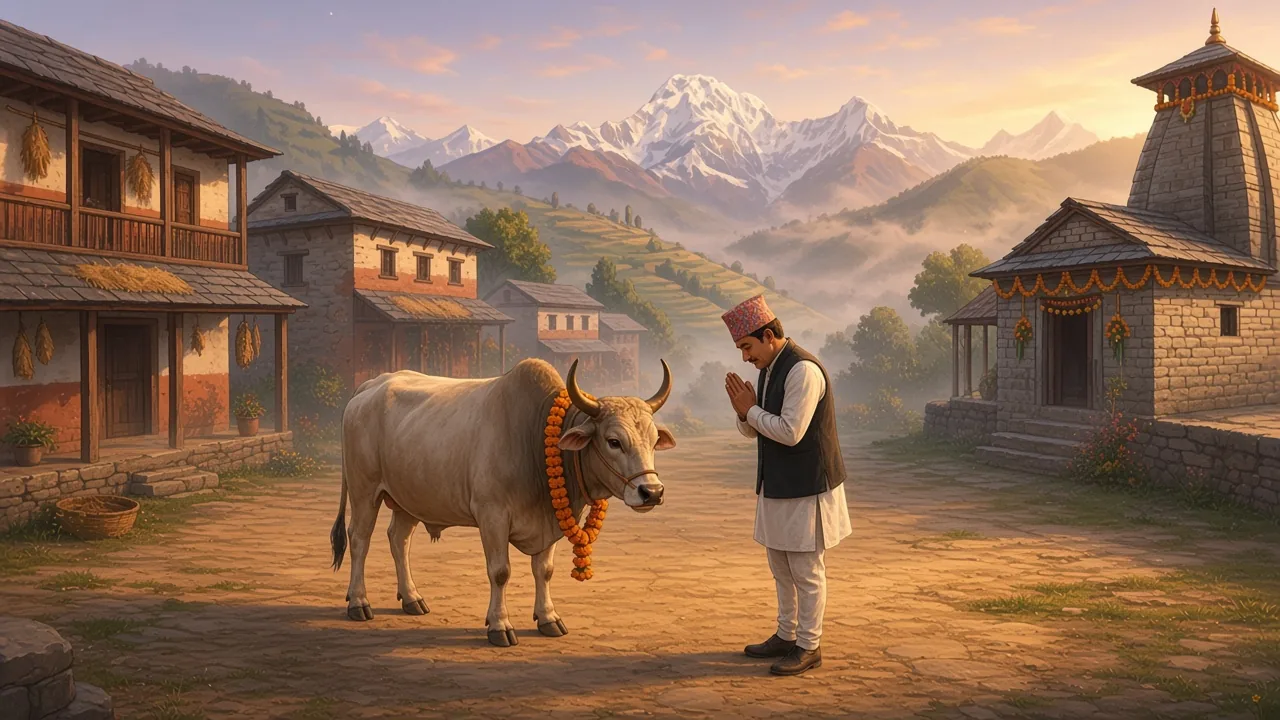
Uniquely distinguished among world harvest festivals for its panoramic, non-anthropocentric ethics, Tihar systematically consecrates the interconnected web of animal and human life over five successive days. Beginning with Kāg Tihār, households place plates of cooked rice, grains, and sweets upon rooftop parapets to feed the black crow, the astute avian messenger who bridges the mortal and nether realms. On the second morning, Kukur Tihār honors man's most loyal companion, decorating domestic and street dogs with brilliant marigold garlands, vermilion marks, and protein-rich feasts in recognition of their vigilance as the four-eyed guardians (Śyāma and Śabala) of Yama's celestial gates. The third day culminates in the adoration of the sacred cow—the maternal foster-mother of agrarian survival—followed at twilight by Lakṣmī Puja, when households scrub their thresholds with cow dung, paint auspicious footprints of red clay and rice flour, and line windows, balconies, and courtyards with thousands of shimmering clay oil lamps (diyos) to beckon the Goddess of Fortune into pristine dwellings.
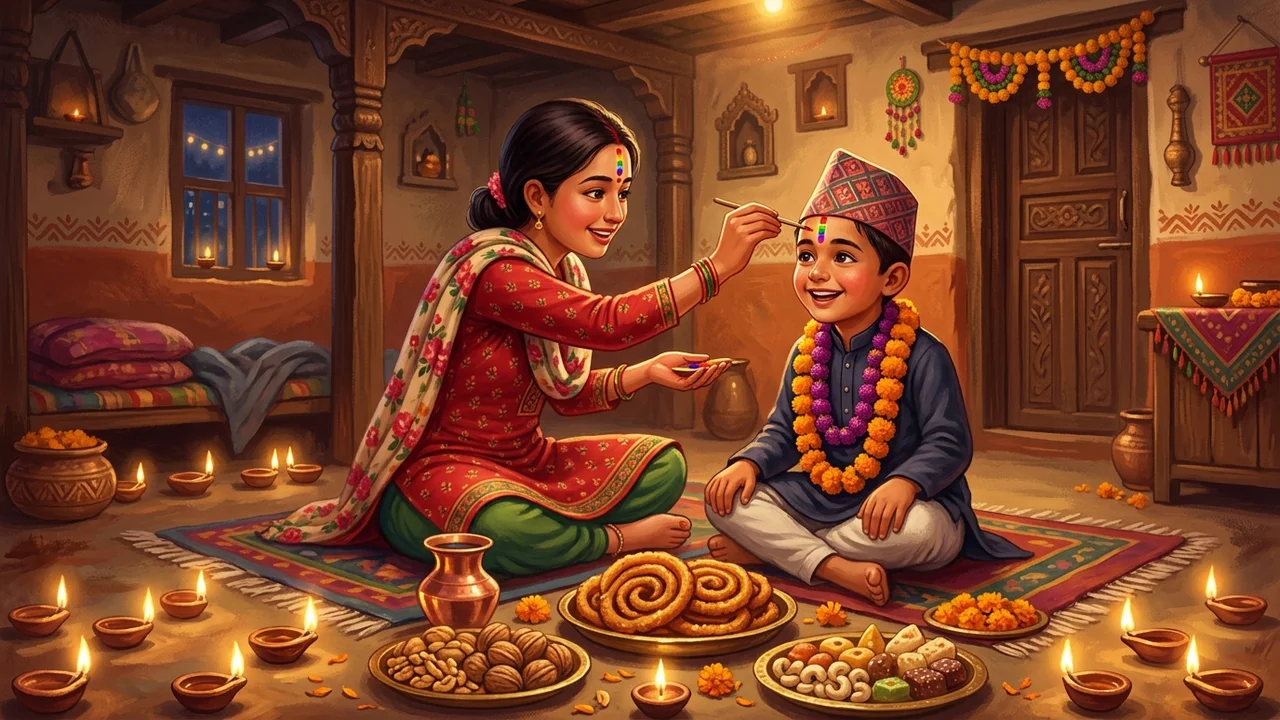
From the night of Lakṣmī Puja, the autumn dark is transfigured by the soaring antiphonal voices of carolers roaming from threshold to threshold: women and girls singing the lilting verses of Bhailo, followed the next evening by youths chanting the rhythmic, humorous cadences of Deusī, blessing each host's granary with prosperity in exchange for puffed rice, sweet bread (selroṭī), and coins. On the fourth day, agrarian families honor the plodding labor of the draft ox (Goru Tihār) and fashion mounds of cow dung representing Govardhan Hill, while Newar households gather in domestic courtyards to celebrate Mha Puja—the profound esoteric veneration of the divine light within one's own physical body—simultaneously greeting the new epoch of the indigenous Nepal Sambat calendar. The festival concludes on Bhāi Tika, where sisters circle seated brothers with protective rings of mustard oil and water, crack walnuts upon the threshold to banish obstacle-spirits, and apply vertical rainbow strokes of seven-colored powder (Saptaraṅgī Tīkā), cementing sibling devotion with eternal vows of mutual protection.
The five days are on this page. The crow receives his morning meal on the dark thirteenth as Yama's swift herald. The dog is crowned with marigolds on the dark fourteenth in thanksgiving for his protective watch. On the new moon the cow is fed at dawn, and at night Lakṣmī is welcomed in a house of lamps. The fourth morning belongs to the ox and Govardhan Hill, yielding in the evening to the Newar rite of Mha Puja, where households worship the indwelling spirit of the self. The festival concludes on Bhai Tika, when sisters place the vertical rainbow marks and unfading makhamali garlands upon their brothers' foreheads.
Also Recommended
Preceding this festival of lights are the fifteen days of Bada Dashain, which terminate on the bright full moon of Kojāgrat Purnima. Directly following Tihar, the riverside communities of the Tarai assemble for the monumental solar fast of Chhath, while the autumn season concludes with the awakening of Lord Vishnu on Haribodhini Ekadashi.
नेपालीमा
कात्तिक महिनाको कृष्ण पक्षको त्रयोदशीदेखि शुक्ल पक्षको द्वितीया तिथिसम्म पाँच दिनसम्म मनाइने उज्यालो र आत्मीयताको महान् पर्व तिहार अर्थात् यमपञ्चक हो। यस पर्वको मूल दार्शनिक आधार मानिस, प्रकृतिका पशुपन्छी, र मृत्युका देवता यमराजबीचको पवित्र सम्बन्धसँग जोडिएको छ। पौराणिक आख्यानअनुसार यमुनाले आफ्ना दाजु यमराजलाई घरमा निम्तो गरी पाँच दिनसम्म अत्यन्त स्नेहपूर्वक सेवा-सत्कार गरिन्। बहिनीको अनन्य प्रेम, सप्तरङ्गी टीका, र कहिल्यै नओइलाउने मखमलीको मालाबाट अत्यन्त प्रसन्न भई यमराजले "यस दिन आफ्नी दिदीबहिनीको हातबाट टीका र आशीर्वाद लिने दाजुभाइलाई अकाल मृत्युबाट मुक्ति मिल्नेछ" भनी वरदान दिनुभयो। यही पावन विश्वासका आधारमा भाइटीकाको परम्परा सुरु भएको हो।
तिहार संसारकै यस्तो अद्वितीय पर्व हो, जहाँ पशुपन्छी र मानव जीवनबीचको सहअस्तित्वलाई गहिरो सम्मान गरिन्छ। पहिलो दिन काग तिहारमा यमदूत मानिने चलाख कागलाई बिहानै कौसीमा मिठामिठा परिकार खान दिइन्छ। दोस्रो दिन कुकुर तिहारमा निष्ठा, इमान्दारी, र सुरक्षाको प्रतीक मानिने भैरवको वाहन कुकुरलाई माला र टीका लगाएर मीठो भोजन दिइन्छ। तेस्रो दिन बिहान गौमाताको रूपमा गाईको पूजा गरिन्छ भने, साँझपख घरआँगन सफा गरी रातो माटो र गोबरले लिपेर, चामलको पिठोबाट लक्ष्मीका पाइला बनाई घरभरि पाला (दियो) र मैनबत्ती बालेर ऐश्वर्यकी देवी लक्ष्मीको भव्य पूजा (दीपावली) गरिन्छ। यसै रातदेखि चेलीबेटीहरू घरघरमा पुगेर 'भैलो' गाउने गर्दछन्।
चौथो दिन किसानको सच्चा साथी गोरुको पूजा र प्रकृतिको संरक्षणको प्रतीक गोवर्धन पर्वतको पूजा गरिन्छ। यसै साँझ नेवार समुदायमा आफ्नो शरीरभित्र रहेको परमात्माको स्वरूपको पूजा गर्ने अद्वितीय तान्त्रिक संस्कार 'म्ह पूजा' गरिन्छ, जसले नयाँ वर्ष नेपाल संवत्को स्वागत गर्दछ। यस रात पुरुषहरू मिलेर टोलटोलमा 'देउसी' खेल्दै घरधनीलाई दीर्घायु र धनधान्यको आशीर्वाद दिन्छन्। पाँचौँ दिन भाइटीकाका दिन दिदीबहिनीहरूले ओखर फुटाएर दाजुभाइका शत्रु नाश गर्ने, तेलको अभेद्य रेखाले घेरेर दीर्घायुको रक्षा गर्ने, सप्तरङ्गी टीका र मखमली-सयपत्रीको माला लगाइदिने गर्दछन्। दाजुभाइले पनि दिदीबहिनीलाई दक्षिणा र नयाँ वस्त्र उपहार दिई गोडामा ढोगेर यो पाँचदिने यमपञ्चकको उल्लासमय समापन गर्दछन्।
Food is set on the roof for the crow. The crow eats and leaves.कागका लागि छतमा खाना राखिन्छ। कागले खान्छ र जान्छ।
The story
Kag Tihar is the first of the five days. The date is the thirteenth of the dark half of Kartik. The fifteen days for the dead are already over. Kojāgrat is already past. This morning people begin with Yama's messenger.
The messenger is the crow. Houses say he carries news between the living and the dead. Or they say he carries a word from Yama himself. Yama is the lord of death. Nobody has to choose one saying. The bird on the roof ridge at dawn is the same bird either way. He is not a pet. He comes, he eats, and he leaves. The roof is bare again. The food was set out, so the morning has been kept.
The days after this one belong to a dog, a cow, an ox, and a sister. The festival still starts with a bird. The crow carries the news, and people meet him with food. The rest of the year, people meet a crow with a shout or a stone. This morning they meet him with a plate of food.
The crow who sat on the drying rack all year is a guest this one morning. Some houses say the crows are the way the ancestors look at a roof. Some houses only say that Yama's message should not go hungry. The festival does not decide which saying is right. It does put the plate out.
What families do
Before the day gets busy, food is set where a crow can take it. Often that place is the roof, a high ledge, or the ridge nobody else uses. The food may be a little of the cooked meal, or rice by itself. Children are sent up, or they watch from the yard. They are told to leave the food alone. If the bird comes, the house is satisfied. If the bird is late, the food stays. Nobody chases one particular crow down the lane.
The street dogs are tomorrow. Lakṣmī's lamps are not tonight.
This page does not say which dish is required. It does not give the steps of a pūjā. Pūjā means the worship.
Also Recommended
The five days are introduced on the Tihar page. Tomorrow is the dog. The cow who leads the dead at Gai Jātrā belongs to a different morning. This morning is the crow's.
नेपालीमा
काग तिहार पाँच दिनको पहिलो हो। मिति कात्तिक कृष्ण त्रयोदशी हो। मृतकका पन्ध्र दिन सकिसकेका छन्। कोजाग्रात पनि बितिसकेको छ। यो बिहान मानिस यमका सन्देशवाहकबाट सुरु गर्छन्।
सन्देशवाहक काग हो। घरहरू भन्छन्, कागले जिउँदा र मरेकाको बीच खबर लैजान्छ। अथवा यमकै वचन लैजान्छ। यम मृत्युका स्वामी हुनुहुन्छ। एउटा भनाइ छान्न पर्दैन। बिहान छतको डिलको चरा दुवै भनाइमा उही चरा हो। पाल्तु होइन। आउँछ, खान्छ, र जान्छ। छत फेरि रित्तो हुन्छ। घरले बिहान मानेको हुन्छ।
यसपछिका दिन कुकुर, गाई, गोरु, र दिदीबहिनीका हुन्। चाड अझै चराबाट सुरु हुन्छ। कागले खबर बोक्छ, र मानिसले खाना दिएर भेट्छन्। वर्षका अरू दिन कागलाई कराएर भेटिन्छ, अथवा ढुङ्गाले। यो बिहान थालको खानाले भेटिन्छ।
वर्षभरि सुकाउने ठाउँमा बसेको काग यो एउटा बिहान पाहुना हो। कुनै घर भन्छ, पितृले कागमार्फत छत हेर्नुहुन्छ। कुनै घर भन्छ, यमको सन्देश भोको नहोस् भनेर मात्र खाना दिइन्छ। चाडले कुन भनाइ ठीक हो भनेर छुट्याउँदैन। थाल चाहिँ राखिन्छ।
दिन व्यस्त हुनुअघि कागले लिन सक्ने ठाउँमा खाना राखिन्छ। प्रायः त्यो ठाउँ छत, अग्लो दलिन, अथवा अरूले नचलाउने डिल हो। राखिने खाना पकाएको खानाबाट अलिकति हुन सक्छ, अथवा केवल चामल। बालकलाई माथि पठाइन्छ, अथवा आँगनबाट हेर्न दिइन्छ। खानालाई नछुन भनिन्छ। चरा आयो भने घर सन्तुष्ट हुन्छ। चरा ढिलो भयो भने खाना बस्छ। कुनै एक कागलाई गलीमा पछ्याइँदैन।
गलीका कुकुर भोलि हुन्। लक्ष्मीका बत्ती यो रात होइनन्।
कुन परिकार अनिवार्य हो, यो पृष्ठले भन्दैन। पूजाको क्रम पनि दिँदैन। पूजा भनेको पूज्ने काम हो।
पाँच दिन तिहारको पृष्ठमा छन्। भोलि कुकुर हो। गाईजात्रामा मृतकलाई लैजाने गाई अर्को बिहानकी हुन्। यो बिहान कागको हो।
Kukur Tihar (कुकुर तिहार)
A marigold garland is for the dog at the door, and for the dog in the lane.सयपत्रीको माला ढोकाको कुकुरका लागि हो, र गलीको कुकुरका लागि पनि।
The story
Yesterday the plate of food was on the roof for the crow. Today the plate is on the ground, in front of a dog.
Kukur Tihar is the second of the five days. It is the fourteenth of the dark half of Kartik. People say Yama keeps dogs at the door of death. In the old story there are two dogs. One is dark. One is spotted. They walk ahead of him. A Nepali family rarely teaches that pair by name. It teaches the dog who is actually there. The one asleep by the kitchen. The one at the gate. The one who belongs to nobody and still walks the lane every afternoon. Street dogs are part of the day.
The garland is marigold, the flower used through these days. A red tika goes on the forehead. Tika is the same kind of mark a person receives at Dashain. Here it is given to a dog. The dog does not bow. The dog who trusts the house eats at once. People have to wait for the dog who does not trust them. On this one day, children learn not to scare a street dog into running off.
People honor the dog because of where he is. He is at the door of the house. In the story, Yama's dogs are at the door of death. By evening the garland has gone crooked. The mark is smeared. He is asleep in his usual dust.
What families do
The dog the family knows comes first. He gets a garland, a tika, and food he will actually eat. Then people go to the lane. A shy dog at the corner is called. Or the plate is carried to him. Or the garland is set down and the child steps back. A dog who is afraid is left as he is. Some houses stop with the dog who guards their own gate. Many go on to every dog who comes. People walk up to the dog, give the flower, give the plate, and then leave him in peace.
Shops sell marigolds in bunches for this reason. A child with a string of flowers and no dog of his own still has the day.
This page does not give the steps of a pūjā. Pūjā means the worship.
Also Recommended
Yesterday was the crow. Tomorrow morning is the cow, and tomorrow night is Lakṣmī. Yama's dogs stand at the door of death in the story. The cow who leads the dead at Gai Jātrā belongs to another day. This page is the living dog.
नेपालीमा
हिजो कागका लागि थाल छतमा थियो। आज थाल भुइँमा छ, कुकुरको अघि।
कुकुर तिहार पाँच दिनको दोस्रो हो। मिति कात्तिक कृष्ण चतुर्दशी हो। यमले मृत्युको ढोकामा कुकुर राख्नुहुन्छ भनिन्छ। पुरानो कथामा कुकुर दुई वटा छन्। एक कालो हो। एक थोप्ले हो। ती उहाँको अघि हिँड्छन्। नेपाली घरले त्यो जोडीको नाम विरलै सिकाउँछ। सामुन्ने भएको कुकुर सिकाउँछ: भान्साछेउ सुतेको कुकुर, ढोकाको कुकुर, र कुनै घरको नभई पनि हरेक दिउँसो गली हिँड्ने कुकुर। गलीका कुकुर पनि यो दिनका हुन्।
माला सयपत्री हो, यी दिनमा प्रयोग हुने फूल। निधारमा रातो टीका लगाइन्छ। टीका दशैंमा मानिसले पाउने खालकै चिह्न हो। यहाँ कुकुरलाई दिइन्छ। कुकुर निहुरिँदैन। घरलाई पत्याउने कुकुर तुरुन्त खान्छ। नपत्याउने कुकुरलाई पर्खनुपर्छ। यो एक दिन बालकहरूले सिक्छन्, गलीको कुकुरलाई तर्साएर भगाउनु हुँदैन।
मानिसले कुकुरलाई ऊ रहेको ठाउँका कारण सम्मान गर्छन्। ऊ घरको ढोकामा हुन्छ। कथामा यमका कुकुर मृत्युको ढोकामा हुन्छन्। बेलुका माला बाङ्गो भइसकेको हुन्छ। टीका मेटिएको हुन्छ। ऊ आफ्नो सधैँको धुलोमा सुतेको हुन्छ।
परिवारले चिनेको कुकुर पहिले आउँछ। उसले माला, टीका, र साँच्चै खाने खाना पाउँछ। अनि मानिस गलीमा जान्छन्। कुनाको लजालु कुकुरलाई बोलाइन्छ। अथवा थाल उसकहाँ लगिन्छ। अथवा माला राखेर बालक पछि हट्छ। डराएको कुकुरलाई जस्ताको तस्तै छोडिन्छ। कुनै घर आफ्नै ढोका हेर्ने कुकुरमा रोकिन्छ। धेरै घर आउने हरेक कुकुरसम्म जान्छन्। मानिस कुकुरको नजिक जान्छन्, फूल दिन्छन्, थाल दिन्छन्, अनि उसलाई शान्त छोड्छन्।
पसलले सयपत्री मुठामा बेच्नुको कारण यही हो। फूलको डोरी भएको बालकसँग आफ्नो कुकुर नभए पनि आफ्नो दिन हुन्छ।
यो पृष्ठले पूजाको क्रम दिँदैन। पूजा भनेको पूज्ने काम हो।
हिजो कागको दिन थियो। भोलि बिहान गाईको दिन हो, र भोलि रात लक्ष्मीको हो। कथामा यमका कुकुर मृत्युको ढोकामा उभिन्छन्। गाईजात्रामा मृतकलाई लैजाने गाई अर्को दिनकी हुन्। यो पृष्ठ जिउँदो कुकुरको हो।
Gai Tihar (गाई तिहार)
In the daylight people honor the cow.उज्यालोमा गाईलाई मानिन्छ।
The story
The third day of Tihar is the new moon of Kartik. It is the darkest night of this month. The morning and the evening are two honors, and they do not happen at the same hour. While it is light, people honor the cow. At night they honor Lakṣmī.
The cow is wealth in a plain way. She gives milk. She belongs with a field. In a farming family she has a stall with a name. In the story she is also a good sign. At Gai Jātrā, months ago, a cow was said to lead the dead. This morning she is alive in the lane. The house goes to her with a garland, a tika, and food. Tika is the red mark on the forehead. In the city, someone who keeps her somewhere else may walk her to the door. At Gai Jātrā a cow was walked because someone had died. This cow stands still, and people feed her.
What families do
By day, the family goes to the cow. If the family keeps her, they may bathe her. They give a garland, a tika, and the best food the kitchen can spare.
This page does not give the steps of a pūjā. Pūjā means the worship.
Also Recommended
Yesterday was the dog. Tonight is Lakṣmī. Tomorrow morning is the ox. In Newar houses, tomorrow evening is Mha Pūjā. The overview is Tihar. The cow at Gai Jātrā is a different day.
नेपालीमा
तिहारको तेस्रो दिन कात्तिकको औंसी हो। यो महिनाको सबैभन्दा अँध्यारो रात हो। बिहान र बेलुका दुई वटा मान हुन्। दुई मान एउटै घडीमा हुँदैनन्। उज्यालो हुँदासम्म गाईलाई मानिन्छ। रात लक्ष्मीलाई मानिन्छ।
गाई सादा अर्थमा सम्पत्ति हुन्। उनी दूध दिन्छिन्। उनी खेतसँगै हुन्छिन्। खेती गर्ने परिवारमा उनको नाम भएको गोठ हुन्छ। कथामा पनि उनी राम्रो संकेत हुन्। महिनौँअघि गाईजात्रामा गाईले मृतकलाई लैजान्छिन् भनियो। यो बिहान गाई गलीमा जिउँदै छिन्। घर माला, टीका र खाना लिएर गाईकहाँ जान्छ। टीका निधारको रातो चिह्न हो। सहरमा अन्तै पाल्ने मानिसले गाईलाई ढोकासम्म ल्याउन सक्छ। गाईजात्रामा कोही मरेकाले गाई हिँडाइइन्। यो गाई उभिन्छिन्। मानिसले खुवाउँछन्।
दिउँसो परिवार गाईकहाँ जान्छ। परिवारले पालेकी छिन् भने उनलाई नुहाइदिन सक्छ। माला दिइन्छ, टीका दिइन्छ, र भान्साबाट छुट्याउन सकिने राम्रो खाना दिइन्छ।
यो पृष्ठले पूजाको क्रम दिँदैन। पूजा भनेको पूज्ने काम हो।
हिजो कुकुर थियो। आज रात लक्ष्मी हुनुहुन्छ। भोलि बिहान गोरु हो। नेवार घरमा भोलि साँझ म्ह पूजा हो। समग्र कथा तिहारको पृष्ठमा छ। गाईजात्राकी गाई अर्को दिनकी हुन्।
Lakṣmī Pūjā (लक्ष्मी पूजा)
After dark the house is lit for Lakṣmī.अँध्यारोपछि लक्ष्मीका लागि घर उज्यालो पारिन्छ।
The story
This is the same new moon of Kartik. The morning belonged to the cow. When the rooms get dark, the honor changes. Lakṣmī is the fortune of the house. People say she enters where the floor has been cleaned and the lamps are lit. They say she passes a house that was left dark. People paint a colored path on the doorstep. In the story, that path shows her where to step. Houses along the lane light their windows. Because the night is the new moon, those lamps light the street. On a brighter night the same lamps would only decorate the house.
From this night, in towns and in many villages, groups go from door to door and sing. The song of the boys and the men is called Deusi. The song of the girls and the women is called Bhailo. A house that opens gives food, or money, or both. The group moves on. The words are different in each place. This page does not print them. People remember the knock. They remember the singing coming up the lane. They remember a plate of food going out to people the house may not know by name.
Some houses play cards. The custom is as common as the lamps. A house can also skip it. If someone asks why, people say fortune is awake, so the house stays awake with her. Kojāgrat already had a night of games. That night was the full moon, and it was still Dashain. This night is the new moon, and it is Tihar. The same goddess is named. The nights are two nights.
A stake is a separate question. A stake is money you can lose in the game. This page does not recommend one.
What families do
By late afternoon the sweeping is more careful than on other afternoons. A colored path is painted at the door. Lamps and electric lights are set so the house can be seen from the lane. Sometimes money is counted and set aside in the room where Lakṣmī is welcomed. How that welcome is done stays in the family.
At dark the door opens for the singers. Children of the house may leave with one group. They may come home and find another group already on their own step. The kitchen stays open later than usual.
This page does not count the lamps. It does not say which door should open first.
Also Recommended
This morning was the cow. Tomorrow morning is the ox. In Newar houses, tomorrow evening is Mha Pūjā. The overview is Tihar.
नेपालीमा
यो पनि कात्तिकको औंसी हो। बिहान गाईको थियो। कोठा अँध्यारो हुँदा मान बदलिन्छ। लक्ष्मी घरको भाग्य हुनुहुन्छ। भुइँ सफा गरिएको र बत्ती बालिएको ठाउँमा उहाँ पस्नुहुन्छ भनिन्छ। अँध्यारो छाडिएको घर उहाँ छल्नुहुन्छ भनिन्छ। मानिसले देहलीमा रङको बाटो कोर्छन्। कथामा त्यो बाटोले उहाँलाई कहाँ पाइला राख्ने भनी देखाउँछ। गलीका घरले झ्यालमा बत्ती बाल्छन्। रात औंसी भएकाले ती बत्तीले सडक उज्यालो पार्छ। अझ उज्यालो रातमा त्यही बत्तीले घर मात्र सजाउँथ्यो।
यो रातदेखि सहरमा र धेरै गाउँमा समूह ढोकाढोकामा गाउँदै जान्छन्। केटा र पुरुषको गीत देउसी हो। केटी र महिलाको गीत भैलो हो। खोल्ने घरले खाना दिन्छ, अथवा पैसा, अथवा दुवै। समूह अघि बढ्छ। शब्द ठाउँपिच्छे फरक हुन्छन्। यो पृष्ठले गीत छाप्दैन। मानिसले ढक्ढक सम्झन्छन्। गलीमा आइरहेको गीत सम्झन्छन्। नाम नचिनेका मानिसकहाँ जाने खानाको थाल सम्झन्छन्।
कुनै घरमा तास खेलिन्छ। चलन बत्ती जत्तिकै फैलिएको छ। घरले नखेल्न पनि सक्छ। किन भनेर सोध्दा, भाग्य जागा हुनुहुन्छ, त्यसैले घर पनि उहाँसँग जागा बस्छ भनिन्छ। कोजाग्रातमा पनि खेलको रात थियो। त्यो पूर्णिमा थियो, र अझै दशैं थियो। यो रात औंसी हो, र तिहार हो। एउटै देवीको नाम आउँछ। रात दुई वटा हुन्।
बाजी छुट्टै प्रश्न हो। बाजी भनेको खेलमा हार्न सकिने पैसा हो। यो पृष्ठले बाजी सिफारिस गर्दैन।
अपराह्नको बढार्ने काम अरू दिनको भन्दा होसियार हुन्छ। ढोकामा रङको बाटो कोरिन्छ। गलीबाट घर देखियोस् भनेर बत्ती र बिजुली बालिन्छ। कहिलेकाहीँ पैसा गनेर लक्ष्मीको स्वागत हुने कोठामा छुट्याइन्छ। स्वागत कसरी हुन्छ भन्ने कुरा परिवारसँगै बस्छ।
अँध्यारो लागेपछि गायकका लागि ढोका खुल्छ। घरका बालक एउटा समूहसँग जान सक्छन्। फर्किँदा अर्को समूह आफ्नै डिलमा आइपुगेको भेट्टाउन सक्छन्। भान्सा सधैँभन्दा अबेर चल्छ।
यो पृष्ठले दियो गन्दैन। कुन ढोका पहिले खुल्नुपर्छ भन्दैन।
यो बिहान गाई थिइन्। भोलि बिहान गोरु हो। नेवार घरमा भोलि साँझ म्ह पूजा हो। समग्र कथा तिहारको पृष्ठमा छ।
Goru Tihar (गोरु तिहार)
At dawn people honor the ox. In the valley, the evening is for each person's body.बिहान गोरुलाई मानिन्छ। उपत्यकामा साँझ हरेकको शरीरका लागि हो।
The story
On the fourth day of Tihar, the morning and the evening are about different things.
The date is the first of the bright half of Kartik. The bright half is the part of the month when the moon grows again. People who count the festival as five days sometimes pause here, because the day has two parts. Across Nepal the dawn belongs to the ox. In Newar houses of the valley, the evening belongs to the body and to a new year. One date includes both.
Goru Tihar honors the ox who pulls the plough. The cow had yesterday. She gives milk, and she has a place in the story of the dead. The ox wears the yoke. He does the field work before the rice grows tall. A farming family brings the garland, the tika, and a feeding he does not get on an ordinary morning. Tika is the red mark on the forehead. At the edge of a town the animals are still standing in the early light. Someone goes out to meet them. In a city room there may be no ox at all. The morning still keeps his name. Where a family can reach one, they go.
Some houses add a second morning, from a story that came with Kṛṣṇa. Govardhana is the hill he held up, so a village would not drown under Indra's rain. Those houses build a small hill of dung, or of food, and give it the mountain's name. Many Nepali families never do this. Their fourth morning is the ox, and only the ox. A guest may see a hill in one courtyard and a garlanded ox in the next. Both are kept on this same morning.
At dusk, Newar houses in the valley keep a different custom. They keep Mha Pūjā, the worship of one's own body. With it they open Nepal Saṃvat, the valley's year-count. There is a row of the living. Each person is greeted. There is also a merchant, Śaṅkhadhara. His sand was gold enough to pay the valley's debts. That story has its own page. A hill family may spend the evening with no maṇḍala and no new year-count. A maṇḍala is a marked circle on the floor. The ox has already been honored. The sister's morning is still ahead. A Newar child can greet an ox in a relative's field. He can still know that his own evening is the body and the year. Both fit on this date.
What families do
Where there is an ox, the morning is the garland, the tika, and food. Where there is no ox, the day is often quiet until evening. Or a child is taken to see one. Houses that keep Govardhana keep it in their own way. The hill is learned at home.
By evening, in the valley, the Newar family sits down inside. The door may still open for Deusi and Bhailo. Those singers began last night. The lane does not stop because two houses are keeping different customs. Inside, the family sits for its own worship. The next sunrise is for the brother and the sister.
This page does not give the steps of a pūjā. Pūjā means the worship.
तिहारको चौथो दिनमा बिहान र बेलुका फरक कुराका हुन्छन्।
मिति कात्तिक शुक्ल प्रतिपदा हो। शुक्ल पक्ष भनेको महिनाको त्यो भाग हो, जब चन्द्रमा फेरि बढ्छ। तिहारलाई पाँच दिन गन्ने मानिस कहिलेकाहीँ यहाँ रोकिन्छन्, किनभने दिनका दुई भाग छन्। नेपालभरि बिहान गोरुको हो। उपत्यकाका नेवार घरमा बेलुका शरीरको हो, र नयाँ वर्षको। एउटै मितिले दुवैलाई समेट्छ।
गोरु तिहारले हलो तान्ने गोरुलाई मान्छ। हिजो गाईको दिन थियो। दूध दिने उनी हुन्। मरेकाको कथामा पनि उनको ठाउँ छ। गोरुले जुवा बोक्छ। धान अग्लिनुअघि खेतको काम गर्छ। किसान परिवारले माला, टीका, र साधारण बिहान नपाउने खुराक ल्याउँछ। टीका निधारको रातो चिह्न हो। सहरको छेउमा जनावर अझै बिहानको उज्यालोमा उभिन्छन्। कोही भेट्न जान्छ। सहरको कोठामा गोरु नै नहुन सक्छ। बिहानको नाम अझै उनकै हुन्छ। जुन परिवार गोरुसम्म पुग्न सक्छ, त्यो जान्छ।
कुनै घरले दोस्रो बिहान थप्छ, कृष्णसँगै आएको कथाबाट। गोवर्धन उहाँले थाम्नुभएको डाँडो हो, इन्द्रको वर्षाले गाउँ नडुबोस् भनेर। ती घरले मलको अथवा खानाको सानो डाँडो बनाउँछन्। त्यसलाई पर्वतको नाम दिन्छन्। धेरै नेपाली घरले यो गर्दैनन्। उनीहरूको चौथो बिहान गोरु मात्र हो। पाहुनाले एउटा आँगनमा डाँडो देख्न सक्छ, र अर्को आँगनमा माला लगाएको गोरु। दुवै यसै बिहान राखिन्छन्।
साँझ उपत्यकाका नेवार घरले अर्को चलन राख्छन्। उनीहरू म्ह पूजा राख्छन्, आफ्नै शरीरको पूजा। सँगै नेपाल संवत् खुल्छ, उपत्यकाको वर्ष गन्ने चलन। जिउँदाको पङ्क्ति हुन्छ। हरेकलाई अभिवादन गरिन्छ। शङ्खधर नामका साहु पनि हुनुहुन्छ। उहाँको बालुवा उपत्यकाको ऋण तिर्न पुग्ने सुन थियो। त्यो कथाको आफ्नै पृष्ठ छ। पहाडको परिवारले साँझ मण्डल र नयाँ संवत्बिना बिताउन सक्छ। मण्डल भुइँमा कोरिएको चिह्न हो। गोरुलाई पहिले नै मानिसकिएको हुन्छ। बहिनीको बिहान अझै बाँकी हुन्छ। नेवार बालकले नातेदारको खेतमा गोरु ढोग्न सक्छ। तैपनि आफ्नो साँझ शरीर र वर्षको हो भन्ने कुरा उसलाई थाहा हुन सक्छ। दुवै यही मितिमा अटाउँछन्।
गोरु छ भने बिहान माला, टीका, र खाना हो। गोरु छैन भने दिन अक्सर साँझसम्म शान्त हुन्छ। अथवा बालकलाई एउटा देखाउन लगिन्छ। गोवर्धन राख्ने घरले आफ्नै तरिकाले राख्छ। डाँडो घरैमा सिकिन्छ।
साँझ, उपत्यकामा, नेवार परिवार भित्र बस्छ। देउसी र भैलोका लागि ढोका अझै खुल्न सक्छ। ती गायकहरूले हिजो रात सुरु गरेका हुन्। दुई घरले फरक चलन राखे पनि गली रोकिँदैन। भित्र परिवार आफ्नै पूजाका लागि बस्छ। अर्को सूर्योदय भाइ र बहिनीको हो।
यो पृष्ठले पूजाको क्रम दिँदैन। पूजा भनेको पूज्ने काम हो।
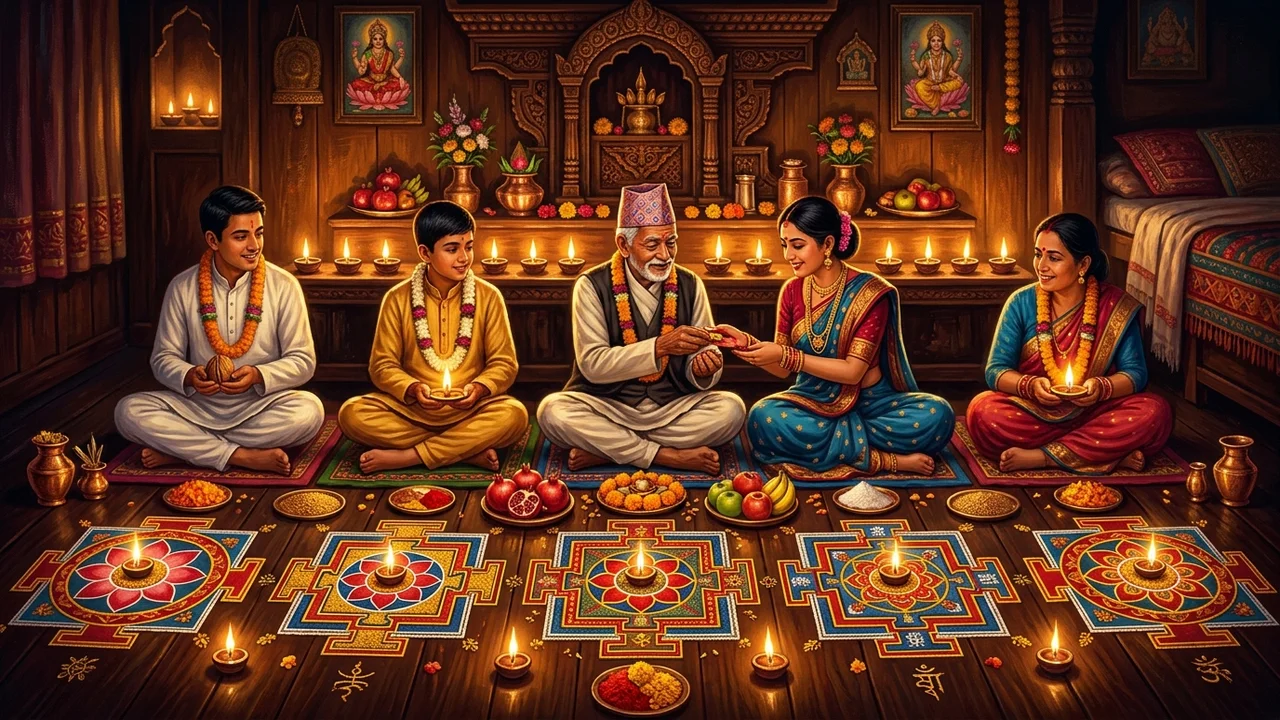
Worshipping the inner light: the circular sand mandalas of Mha Pūjā honoring the soul within.म्ह पूजाको मण्डल: आफ्नै शरीर र भित्री आत्मालाई देवता मानी गरिने आत्म-पूजा।
The story
This evening is the first of bright Kartik. Tihar's lamps are already lit over the valley. A Newar house turns to its own people. Marigolds from the days just before are still on the doors. The dawn of this same date, in other houses, belongs to the ox. This evening belongs to the body. The valley's year-count opens while the family is still in the room.
The house worships its own body. The Newar word mha (म्ह) means body. The worship is called Mha Pūjā. Each person under the roof is greeted. A guest who is asked inside sees the family gathered. A place is marked for each person. They sit in a row of the living. The room is quiet, and it is full. The body that eats, walks, and sleeps in this house is greeted.
People remember that row. Faces are washed for it. Clothes are set aside for it. An elder's hand is near a small shoulder. The family sits on the floor in its usual order. Outside, the lane may still be loud with the lamps of these days. Inside, the names in the room are what the hour is for. A parent can say it without a speech. Today we greet the ones who are here, in the bodies they have.
The same evening Nepal Saṃvat opens. Nepal Saṃvat is the valley's year-count. The number of the year changes. Calendars sold in the lanes print the new number next to the older ones. A child hears that the counting begins while everyone is still sitting together. Other houses open their years on other mornings. This opening belongs to the Newar house, and to these nights of Kartik.
The date is also a story. A merchant stands in it. His name is Śaṅkhadhara Sākhvā (शङ्खधर साख्वा). He was a merchant of Kathmandu. Some stories say he was a jyāpu (ज्यापु), a farmer of the valley's own fields. A day came when debts had to be paid. People owed money. The debts were hard on the houses. People in courtyards still talk about him as a practical man with a real problem. Children like the story because they can picture the work.
The story says his sand was gold that day. He paid the debts. The sand turning into gold is the surprising part. Paying the debts is the good part. Families tell both parts. A man of the valley found that his sand had turned to gold on the day the valley needed gold. He used it to pay what people owed. The year is counted from that payment.
The stories agree on the man, the sand, and the paying. They do not give the names of the people around him. The agreed part is already a whole story. A man of Kathmandu. A day of debts. Sand that was gold. Debts paid. A year-count opening from that hour. A child can say it again while walking from one courtyard to another. The brick underfoot in Patan, in Kathmandu, and in Bhaktapur is the same kind of brick he walked on.
On that evening, lamps from the days around it burn in the windows. The family has finished greeting each body and sits a little longer. Someone says his name. Someone says the new number of the year. The year has opened in the room where they are sitting.
Years later, people often remember the floor more than any one thing. They remember whose shoulder was on the left. They remember the marigold smell coming in from the door. They remember that their own body was worth a greeting, on the evening the valley's year changed its number. Next year another row of people will sit on that floor.
This page does not give the steps. The order stays with the family that knows it.
The day
Each person sits at a maṇḍala. A maṇḍala is a marked circle on the floor. The family feeds the row. A long wick, lights, and the foods of Tihar are around them. The morning of this same date, in other houses, is the ox. The next morning is the sister and the brother, Bhai Ṭīkā. How to draw the maṇḍala is learned at home. A guest needs two facts from this page. The body is worshipped. A man paid what the valley owed.
Also Recommended
Tihar's other days belong to Yama, the crow, the dog, Lakṣmī, and the ox. Mha Pūjā is the Newar evening inside those days, on the ox's date. It is a new year. The other days of Tihar are ordinary days of the festival. No new year-count opens on them. Baisakh 1 is the official new year. Maghi is the Tharu new year. Lhosār is three more new years. Nepal Saṃvat is the valley's year-count. The civil year is Bikram Sambat. It does not open on this evening. It comes from one man. It opens on the night between Lakṣmī's night and the morning of the brother and sister.
नेपालीमा
यो साँझ कात्तिक शुक्ल प्रतिपदा हो। तिहारका बत्ती उपत्यकामा बालिसकेका हुन्छन्। नेवार घर आफ्नै मानिसतिर फर्कन्छ। अघिल्ला दिनका सयपत्री अझै ढोकामा हुन्छन्। यसै मितिको बिहान, अरू घरमा, गोरुको हो। यो साँझ शरीरको हो। परिवार अझै कोठामा हुँदा उपत्यकाको वर्ष गन्ने चलन खुल्छ।
घरले आफ्नै शरीर पूज्छ। नेवार शब्द म्ह (म्ह) को अर्थ शरीर हो। पूजाको नाम म्ह पूजा हो। छानामुनिको हरेक मानिसलाई अभिवादन गरिन्छ। भित्र बोलाइएको पाहुनाले परिवार जम्मा भएको देख्छ। प्रत्येकका लागि ठाउँ छुट्याइएको हुन्छ। जिउँदा मानिस पङ्क्तिमा बस्छन्। कोठा शान्त छ। कोठा भरिएको छ। यो घरमा खाने, हिँड्ने, र सुत्ने शरीरलाई अभिवादन गरिन्छ।
मानिसले त्यो पङ्क्ति सम्झन्छन्। अनुहार धोइएका हुन्छन्। लुगा छुट्याइएका हुन्छन्। सानो काँधछेउ जेठाको हात हुन्छ। परिवार भुइँमा आफ्नो सधैँको क्रममा बस्छ। बाहिर गली अझै यी दिनका बत्तीले चर्को हुन सक्छ। भित्र कोठाका नाम नै यो बेलाको काम हुन्। आमाबाबुले भाषणबिना भन्न सक्छन्। आज हामी यहाँ भएकालाई अभिवादन गर्छौं, उनीहरूका शरीरमा।
त्यही साँझ नेपाल संवत् खुल्छ। नेपाल संवत् उपत्यकाको वर्ष गन्ने चलन हो। वर्षको अङ्क बदलिन्छ। गलीमा बिक्री हुने पात्रोहरूले नयाँ अङ्क पुराना अङ्कछेउ छाप्छन्। सबै अझै सँगै बसिरहँदा गन्ती सुरु हुन्छ भनेर बालकले सुन्छ। अरू घरहरूले वर्ष अरू बिहान खोल्छन्। यो सुरुवात नेवार घरको हो, र कात्तिकका यी रातको हो।
मिति कथा पनि हो। कथामा एक साहु हुनुहुन्छ। नाम शङ्खधर साख्वा (शङ्खधर साख्वा) हो। उहाँ काठमाडौंका साहु हुनुहुन्थ्यो। कुनै भनाइमा उहाँ ज्यापु (ज्यापु) हुनुहुन्थ्यो, उपत्यकाकै खेतका किसान। ऋण तिर्नुपर्ने दिन आयो। मानिसहरूले पैसा तिर्न बाँकी थियो। ऋणले घरहरूलाई गाह्रो पारेको थियो। आँगनमा अझै उहाँको कुरा हुन्छ, साँच्चैको समस्या परेका व्यावहारिक मानिसका रूपमा। बच्चालाई कथा मन पर्छ, किनभने तिनले त्यो काम आँखा अगाडि कल्पना गर्न सक्छन्।
कथाले भन्छ, त्यो दिन उहाँको बालुवा सुन थियो। उहाँले ऋण तिर्नुभयो। बालुवा सुन हुनु अचम्मको भाग हो। ऋण तिर्नु राम्रो भाग हो। परिवारहरूले दुवै भाग भन्छन्। उपत्यकालाई सुन चाहिने दिन उहाँले बालुवा सुन भएको पाउनुभयो। मानिसले तिर्न बाँकी उहाँले त्यसैले तिर्नुभयो। वर्ष त्यो तिराइबाट गनिन्छ।
भनाइहरू मानिस, बालुवा, र तिराइमा मिल्छन्। वरिपरिका मानिसको नाम दिँदैनन्। मिलेको भाग आफैँ पूरा कथा हो। काठमाडौंका एक मानिस। ऋणको दिन। सुन भएको बालुवा। तिरिएको ऋण। त्यो घडीबाट खुलेको वर्ष गन्ने चलन। बालकले एउटा आँगनबाट अर्को आँगनमा हिँड्दा यो फेरि भन्न सक्छ। पाटन, काठमाडौं, र भक्तपुरमा खुट्टामुनिको इँटा उही खालको हो, उहाँ हिँड्नुभएको इँटा।
त्यो साँझ वरिपरिका दिनका बत्ती झ्यालमा बल्छन्। परिवारले हरेक शरीरको अभिवादन सिध्याएर अलि बेर बस्छ। कोही उहाँको नाम भन्छ। कोही वर्षको नयाँ अङ्क भन्छ। वर्ष उनीहरू बसेको कोठामै खुलेको हुन्छ।
वर्षौंपछि मानिसले कुनै एउटा चिजभन्दा बढी भुइँ सम्झन्छन्। बायाँतिर कसको काँध थियो, ढोकाबाट सयपत्रीको गन्ध कसरी आइरहेको थियो, ती सम्झन्छन्। आफ्नै शरीर पनि अभिवादनको योग्य थियो भन्ने सम्झन्छन्, उपत्यकाको वर्षले अङ्क बदलेको साँझमा। अर्को वर्ष अर्को पङ्क्तिका मानिस त्यही भुइँमा बस्नेछन्।
यो पृष्ठले पूजाको क्रम दिँदैन। क्रम चिनेको परिवारसँग बस्छ।
प्रत्येक मानिस मण्डलमा बस्छ। मण्डल भुइँमा कोरिएको घेरा हो। परिवारले पङ्क्तिलाई खुवाउँछ। लामा सल्ता, बत्ती, र तिहारका खाना वरिपरि हुन्छन्। यसै मितिको बिहान, अरू घरमा, गोरु हो। अर्को बिहान दिदीबहिनी र भाइ हुन्, भाइटीका। मण्डल कसरी कोर्ने भन्ने घरैमा सिकिन्छ। पाहुनालाई यो पृष्ठबाट दुई कुरा चाहिन्छ। शरीर पूजिन्छ। एक जना मानिसले उपत्यकाको तिर्न बाँकी तिर्नुभयो।
तिहारका अरू दिन यम, काग, कुकुर, लक्ष्मी, र गोरुका हुन्। म्ह पूजा ती दिनभित्रको नेवार साँझ हो, गोरुकै मितिमा। यो नयाँ वर्ष हो। तिहारका अरू दिन चाडका साधारण दिन हुन्। तिनमा नयाँ वर्ष गन्ने चलन खुल्दैन। वैशाख १ आधिकारिक नयाँ वर्ष हो। माघी थारू नयाँ वर्ष हो। ल्होसार अरू तीन नयाँ वर्ष हुन्। नेपाल संवत् उपत्यकाको वर्ष गन्ने चलन हो। यो एक जना मानिसबाट आउँछ। लक्ष्मीको रात र भाइबहिनीको बिहानको बीचको रातमा खुल्छ। यो साँझ तिहारभित्रै पर्छ, आफ्नै दिनमा। दिदीबहिनीको टीका यी पाँच दिनको अर्को बिहान हो।
Where it sits
This evening is inside Tihar, on its own day. The sister's mark is the next morning of these five days.
Bhai Ṭīkā (भाइटीका)
Yamunā puts the mark on Yama's forehead. This is the fifth morning.यमुनाले यमको निधारमा टीका लगाउनुहुन्छ। यो पाँचौँ बिहान हो।
The story
Bhai Ṭīkā closes Tihar. It is the fifth of the five days. The date is the bright second of Kartik, the second day after the new moon. The order of the old story is clear.
Yama, the lord of death, comes to the house of his sister Yamunā. She puts a mark on his forehead. The great river carries her name. A sister later puts that mark on a brother, so death will pass the brother by. In a living room, a sister and a brother do the mark again.
Yama comes to her. She marks him. If a story switches those two, it is no longer this story.
What he gave her in return is told in more than one way. Some say he promised that a sister's mark would keep death from her brother. Some say the gift was this yearly meeting. The brother and sister would meet face to face, so the year would not pass without it. The visit is also told two ways. In one story the visit is short. In another, the brother who came asks to stay. Every story keeps the same main part. She marked him. The mark is so death will pass the brother by.
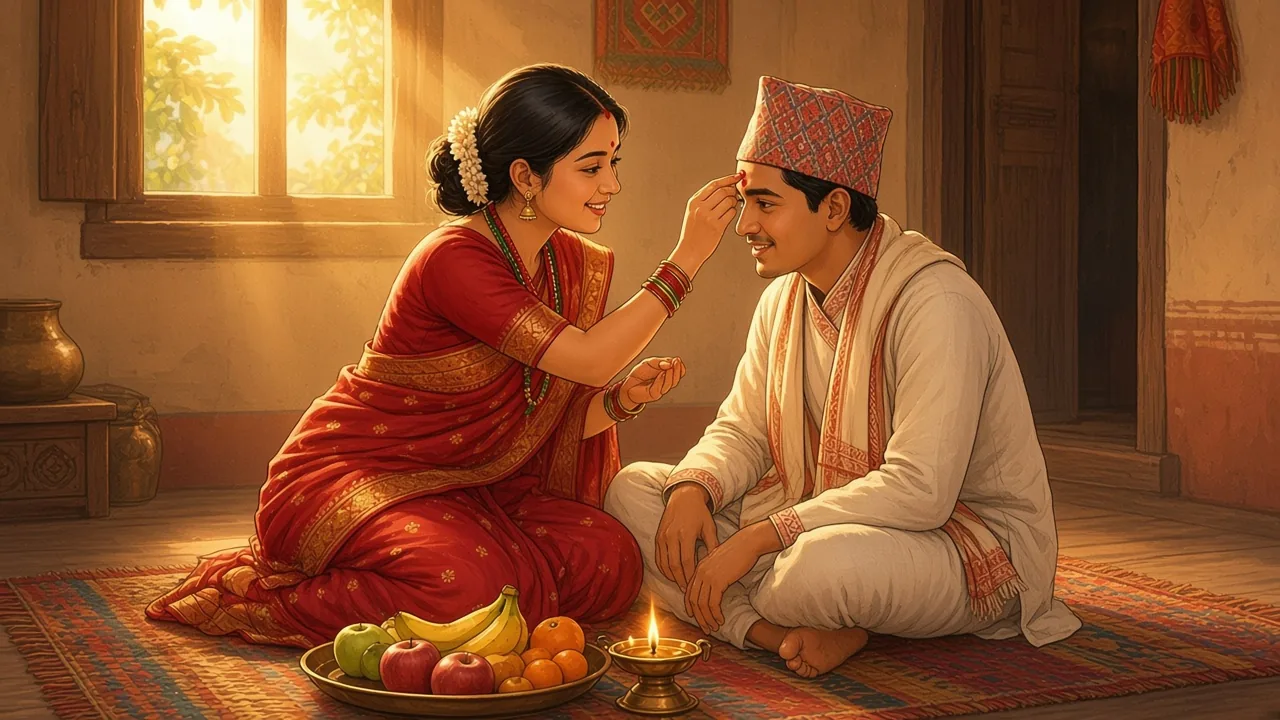
In a Nepali house the tika is often seven colors, one above another on the forehead. Tika is the mark on the forehead. The garland is makhamali, a flower also called globe amaranth. It dries and does not fall apart. People choose it because they want the blessing to last the year. Many sisters draw a circle of oil on the floor. The brother sits inside it. The circle is a line around him for that day. Some sisters put a walnut in his hand. The walnut may be broken or whole. It is a hard nut. The wish is that he will get through the year. The brother gives a gift in return. It may be clothes, money, or dakṣiṇā, a gift given with the blessing. That gift is his part of the meeting.
A brother with no sister, and a sister with no brother, still take part in many families. A cousin can give the mark. A cousin can receive it. The story is still a sister and a brother. The house uses the people who are actually there.
Sisters travel for this morning the way a whole family travels for Dashain's tenth. A sister may come from another town. She brings a plate under a clean cloth. A brother may have been waiting since the cow's night. Deusi and Bhailo are the doorstep songs that began on Lakṣmī's night. They are often heard for the last time today. Then the five days are over.
What families do
The morning starts with a bath. The doorstep may still be colored from the third night. The sister sits. The brother sits, often inside the oil circle. She puts on the seven colors and the garland. She says the wish out loud. She asks that death will pass her brother by, and that his life will be long. He gives the gift. If there are several brothers, the order is the family's own order. The oldest or the youngest goes first, as that house has always done.
After the days of going from door to door, the food is large again. In the afternoon a sister may leave for another brother's house and do it again. A forehead can wear more than one seven-color tika before dusk.
Fewer groups sing in the lane. By night, Tihar has been kept. The next festival a Tarai house is already watching is Chhath. That festival belongs to the sun. Yama's days in these five days are already over.
This page does not give the steps. The songs are not printed here.
Also Recommended
Yesterday's date was the ox and, in the valley, Mha Pūjā. The five days began with the crow, who is also said to bring news to Yama. The sister's mark, told briefly, is on the Tihar page.
नेपालीमा
भाइटीकाले तिहार टुङ्ग्याउँछ। यो पाँच दिनको पाँचौँ दिन हो। मिति कात्तिक शुक्ल द्वितीया हो। पुरानो कथाको क्रम स्पष्ट छ।
यम मृत्युका स्वामी हुनुहुन्छ। उहाँ बहिनी यमुनाको घर आउनुहुन्छ। यमुनाले उहाँको निधारमा टीका लगाउनुहुन्छ। ठूलो नदीले यमुनाको नाम बोक्छ। पछि दिदीबहिनीले त्यो टीका भाइलाई लगाउँछिन्, मृत्युले भाइलाई छलेर जाओस् भनेर। बैठक कोठामा दिदीबहिनी र भाइले टीका फेरि लगाउँछन्।
यम यमुनाकहाँ आउनुहुन्छ। यमुनाले उहाँलाई टीका लगाउनुहुन्छ। यो क्रम उल्टो भयो भने कथा यही रहँदैन।
उहाँले बदलामा के दिनुभयो भन्ने एकभन्दा बढी भनाइ छ। कुनै भनाइमा उहाँले वचन दिनुभयो। बहिनीको टीका लागेपछि मृत्युले भाइलाई छलेर जान्छ। कुनै भनाइमा वरदान हरेक वर्षको यही भेट हो, ताकि दुई जना आमनेसामने भेटेबिना वर्ष नबितोस्। भेट पनि दुई किसिमले भनिन्छ। एउटा भनाइमा भेट छोटो हुन्छ। अर्को भनाइमा आएका भाइ बस्न बिन्ती गर्नुहुन्छ। हरेक भनाइको मुख्य कुरा एउटै हो। यमुनाले टीका लगाउनुभयो। टीका यसैले लगाइन्छ, मृत्युले भाइलाई छलेर जाओस् भनेर।
नेपाली घरमा टीका अक्सर सात रङको हुन्छ। रङ निधारमा एकमाथि अर्को लगाइन्छ। टीका निधारको चिह्न हो। माला मखमली हो, सुकेर नझर्ने फूल। आशीर्वाद वर्षभरि टिकोस् भनेर यो फूल छानिन्छ। धेरै दिदीबहिनीले भुइँमा तेलको घेरा कोर्छिन्। भाइ त्यसभित्र बस्छ। घेरा त्यो दिनका लागि उसको वरिपरि कोरिएको रेखा हो। कुनै दिदीले भाइको हातमा ओखर राख्छिन्। ओखर फुटेको अथवा साबुत हुन सक्छ। ओखर कडा चिज हो। कामना यही हो कि ऊ वर्ष कटाओस्। भाइले उपहार दिन्छ। यो लुगा, पैसा अथवा दक्षिणा हुन सक्छ। दक्षिणा आशीर्वादसँगै दिइने दान हो। त्यो उपहार भेटमा उसको भाग हो।
दिदी नभएको भाइ र भाइ नभएकी दिदी पनि धेरै परिवारमा यो दिन टीकामा सहभागी हुन्छन्। नातेदार दिदीबहिनीले टीका दिन सक्छिन्। नातेदार भाइले लिन सक्छ। कथा दिदीबहिनी र भाइकै रहन्छ। घरमा भएकै मानिसले त्यो काम गर्छन्।
दशैंको दशमीमा परिवार हिँडेझैँ दिदीबहिनी यो बिहानका लागि हिँड्छिन्। दिदी अर्को सहरबाट आउन सक्छिन्। सफा कपडाले छोपिएको थाल ल्याउँछिन्। भाइ गाईको रातदेखि पर्खिरहेको हुन सक्छ। देउसी र भैलो ढोकाका गीत हुन्। ती गीत लक्ष्मीको रात सुरु भएका हुन्। आज अक्सर अन्तिम पटक सुनिन्छन्। अनि पाँच दिन सकिन्छन्।
बिहान नुहाइबाट सुरु हुन्छ। तेस्रो रातको रङ अझै देहलीमा हुन सक्छ। दिदी बस्छिन्। भाइ बस्छ, अक्सर तेलको घेराभित्र। उनी सात रङ र माला लगाउँछिन्। ठूलो स्वरमा कामना भन्छिन्, मृत्युले भाइलाई छलेर जाओस् र उसको उमेर लामो होस् भनेर। ऊ उपहार दिन्छ। भाइ धेरै छन् भने क्रम परिवारकै क्रम हो। जेठो पहिले हुन्छ कि कान्छो, त्यो घरले सधैँ गर्दै आएझैँ नै हुन्छ।
ढोकाढोका हिँडेका दिनपछि खाना फेरि ठूलो हुन्छ। दिउँसो दिदी अर्को भाइको घर जान सक्छिन् र फेरि गर्न सक्छिन्। बेलुकाअघि निधारमा एकभन्दा बढी सप्तरङ्गी टीका हुन सक्छ।
गलीमा गाउने समूह कम हुँदै जान्छन्। रातसम्ममा तिहार मनाइसकिएको हुन्छ। तराईको घरले हेरिरहेको अर्को चाड छठ हो। त्यो चाड घामको हो। यी पाँच दिनमा यमका दिन सकिसकेका हुन्छन्।
यो पृष्ठले पूजाको क्रम दिँदैन। गीत छापिँदैनन्।
हिजोको मिति गोरुको थियो, र उपत्यकामा म्ह पूजाको थियो। पाँच दिन कागबाट सुरु भएका थिए। कागले यमलाई खबर ल्याउँछ पनि भनिन्छ। दिदीबहिनीको टीका छोटकरीमा तिहारको पृष्ठमा छ।