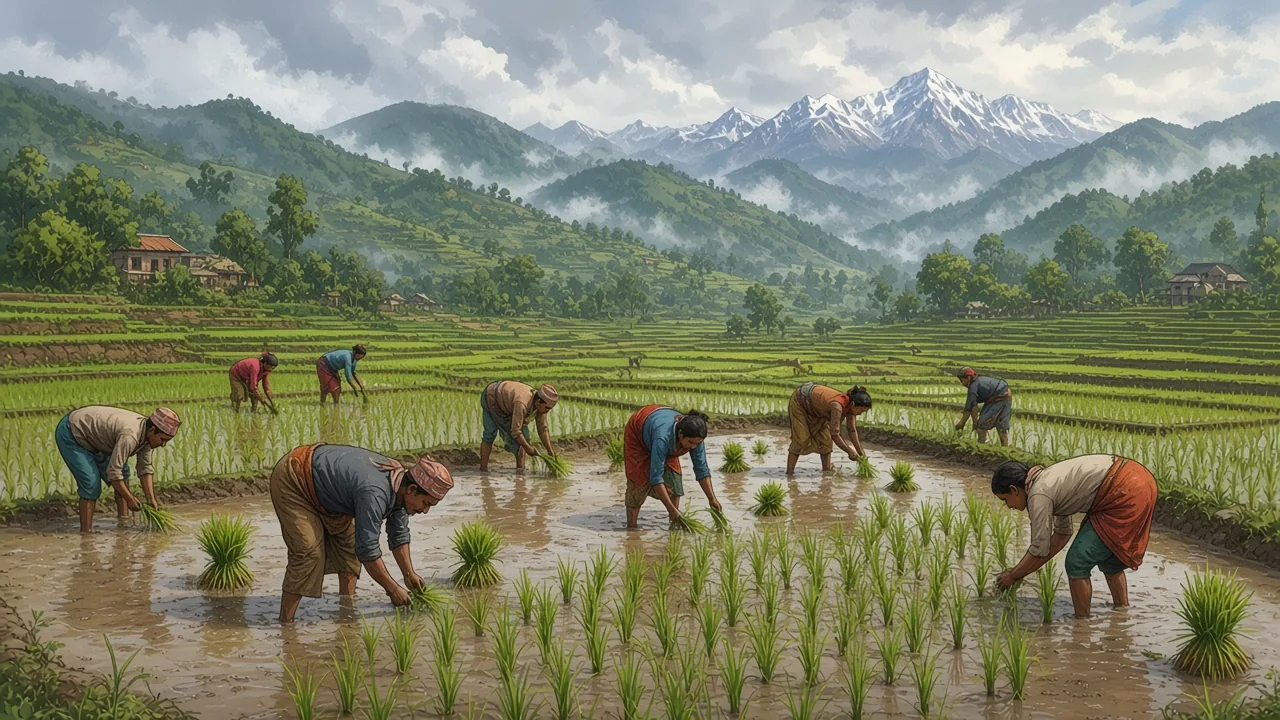
Ritual immersion dissolving social barriers and honoring the generative fertility of the earth.
The story
Reaching its cultural and agrarian apex on the fifteenth of Ashad—celebrated nationally across Nepal as National Paddy Day (Rāṣṭriya Dhān Divas)—the rice transplantation season transforms the hills and valleys into a resonant theater of communal labor, lyrical poetry, and joyous muddy revelry. As the South Asian monsoon saturates the terraced hillsides and rivers crest their banks, rural hamlets activate ancient mutual-aid networks known as parma, wherein farming households systematically pool their physical labor to prepare, flood, and plant each other's fields without the exchange of currency. While men guide yokes of oxen through the heavy mud to level the sodden terraces with wooden harrows (dande), women wade into the emerald pools in synchronized rows, planting tender green seedlings into the rich silt with rhythmic, measured grace.
असार महिनाको १५ गते राष्ट्रिय धान दिवसका रूपमा मनाइने रोपाइँ महोत्सव नेपाली जनजीवनको सबैभन्दा उल्लासमय, सङ्गीतमय, र सामूहिक श्रम-संस्कृतिको अनुपम उदाहरण हो। आकासबाट बर्सेको मनसुनी वर्षाले पाखा-पखेरा र खेतका गराहरू जलमग्न भएपछि, गाउँघरमा 'पर्म' अर्थात् अर्मपर्मको प्राचीन पारस्परिक श्रम-परम्परा जीवन्त बन्दछ। पैसाको कुनै कारोबार नगरी छिमेकीहरू पालैपालो एकअर्काको खेतमा हिलो सम्याउन र धान रोप्न एकाकार भएर जुट्दछन्। पुरुषहरूले हलगोरु नारेर हिलो हिल्याउने र बाउसे गरेर गरा मिलाउने गर्दछन् भने, महिला रोपारहरूले हातमा हरिया बीउका मुठा लिई लामबद्ध भएर पानीभित्र धानका कलिला बिरुवा रोप्ने गर्दछन्।
Across the terraced amphitheaters, the backbreaking toll of field labor is transfigured by the antiphonal cadences of Asāre geet—traditional monsoon folk songs whose soaring, melancholic verses narrate tales of agrarian hardship, seasonal separation, and enduring rural romance. Interspersed with playful mud-slinging battles (hilo khelne) where elders, youths, and travelers alike are splattered with fertile earth in celebration of fecundity, the midday planting pauses for the beloved culinary feast of dahī-ciurā. Consisting of crisp beaten rice folded into thick, chilled buffalo-milk curd and sweetened with fresh summer mangoes or banana slices, this probiotic feast instantly soothes internal inflammation, restores depleted electrolytes, and rekindles the spirit for the afternoon toil.
खेतका गराहरूमा श्रमको थकानलाई मेटाउन असारे गीतको भाका घन्किन्छ। एकापसमा सवाल-जवाफ गर्दै गाइने यी लोकगीतहरूमा किसानका दुःख-सुख, मिलन-बिछोड, र प्रकृतिको सौन्दर्यको मार्मिक चित्रण पाइन्छ। खेतको हिलो छ्यापाछ्याप गरेर माटोसँग आत्मीयता साट्ने र रमाइलो गर्ने अनौठो परम्परा यस दिनको मुख्य आकर्षण हो। दिनभरिको कडा परिश्रमपछि किसानहरू खेतकै कान्लामा बसेर दही-चिउरा, पाकेको आँप, र केराको स्वादिलो खाजा खान्छन्। बाक्लो मोही र दहीले गर्मी र हिलोमा खटिएका शरीरलाई शीतलता, ऊर्जा, र पाचन शक्ति प्रदान गरी फेरि काममा फर्कन नयाँ उत्साह भर्दछ।
Vishnu sleeps on the serpent, and the four months begin.विष्णु सर्पमाथि सुत्नुहुन्छ, र चार महिना सुरु हुन्छन्।
Dimension
Details
Cosmic & Ascetic Significance
Temporal Boundary
Ashad Shukla Ekadashi to Kartik Shukla Ekadashi
Four sacred lunar months spanning the height of the summer monsoon to early autumn.
Theological Core
Vishnu's Yoga-Nidrā in Kṣīra Sāgara
Divine slumber of the Preserver upon the thousand-headed serpent king Shesha.
Domestic Consecration
Planting & Worship of Holy Basil (Tulsī)
Daily courtyard offerings culminating in the ceremonial marriage of Tulsī to Śālagrāma.
Ecological & Dietary Code
Progressive monthly fasts & Monastic Vassāvāsa
Avoidance of insect harm and physiological cleansing attuned to seasonal monsoon digestion.
Ritual Injunction
Suspension of Vivaha and Bratabandha
Focus shifts from expansive worldly alliances to interior devotional contemplation.
The story
Commencing on the eleventh lunar day of the waxing moon of Ashad (Harishayani Ekadashi) and culminating four lunar months later on the eleventh of Kartik (Haribodhini Ekadashi), Chaturmas represents a sacred four-month period of cosmic slumber, monastic retreat, and heightened domestic asceticism. According to Puranic cosmology, Lord Vishnu, the cosmic preserver, enters his profound yogic sleep (yoga-nidrā) upon the celestial serpent Shesha in the primordial Ocean of Milk (Kṣīra Sāgara). Because the sovereign deity is in divine repose, Hindu canonical law suspends major rites of initiation and life-cycle passage—including domestic weddings (vivāha), sacred-thread investitures (bratabandha), and house consecrations (gṛhapraveśa)—shifting the spiritual focus of households inward toward contemplative discipline, vow observance (vrata), and scriptural recitation.
असार शुक्ल एकादशी अर्थात् हरिशयनी एकादशीदेखि सुरु भई चार महिनापछि कात्तिक शुक्ल एकादशी अर्थात् हरिबोधिनी एकादशीमा समापन हुने चार महिनाको पवित्र अवधिलाई चातुर्मास भनिन्छ। पौराणिक आख्यानअनुसार यस अवधिमा भगवान् श्रीहरि विष्णु क्षीरसागरमा अनन्त शेषनागको शय्यामा चार महिनाका लागि योगनिद्रामा शयन गर्नुहुन्छ। जगत्का पालनकर्ता योगनिद्रामा रहने भएकाले यस अवधिमा विवाह, व्रतबन्ध, र गृहप्रवेशजस्ता मांगलिक तथा ठूला संस्कारजन्य कर्महरू निषेध गरिन्छन्। यस समयमा मानिसहरू सांसारिक उत्सवहरूबाट विमुख भई आत्मशुद्धि, व्रत, नियम, र शास्त्र श्रवणजस्ता आध्यात्मिक चिन्तनमा लीन हुने गर्दछन्।
On the opening morning of Harishayani Ekadashi, Hindu households plant tender holy basil saplings into consecrated courtyard altars known as Tulsī Maṭha, tending the sacred plant with daily water ablutions, incense, and lamps throughout the rainy months until its ritual marriage to the fossilized ammonite ammonite deity Śālagrāma on Haribodhini Ekadashi. In classical monastic life, Buddhist and Jain monks similarly observe their rainy season retreats (vassāvāsa), remaining stationary within monasteries to avoid inadvertently trampling microscopic soil organisms and burgeoning crop shoots beneath their sandals. Across both domestic and monastic realms, rigorous dietary abstentions are maintained—such as forsaking leafy greens in Shrawan, curd in Bhadra, milk in Ashoj, and split pulses in Kartik—cleansing the human body and harmonizing spiritual intention with the ecological cycles of the monsoon.
हरिशयनी एकादशीका दिन हरेक हिन्दु घरको आँगनमा रहेको तुलसीको मठमा विधिपूर्वक तुलसीको बिरुवा रोपिन्छ। आषाढदेखि कात्तिकसम्म हरेक दिन बिहान स्नान गरी तुलसीको पूजा-आराधना र जल चढाउने नियम बस्दछ, जसको समापन कात्तिकको हरिबोधिनी एकादशीमा तुलसी र शालिग्रामको विवाह गरी पूर्ण हुन्छ। यसैगरी बौद्ध परम्परामा वर्षावासको व्रत बस्ने भिक्षुहरू यी चार महिना एकै ठाउँमा बसेर ध्यान-साधनामा लीन हुन्छन्, ताकि बाहिर हिँड्दा नयाँ उम्रेका घाँसपात र साना किरा-फट्याङ्ग्राहरू नकुल्चिउन्। शारीरिक र मानसिक सन्तुलनका लागि चातुर्मासमा साउनमा साग, भदौमा दही, असोजमा दूध, र कात्तिकमा दाल त्याग गर्नेजस्ता शास्त्रीय नियमहरू पालना गरिन्छन्।
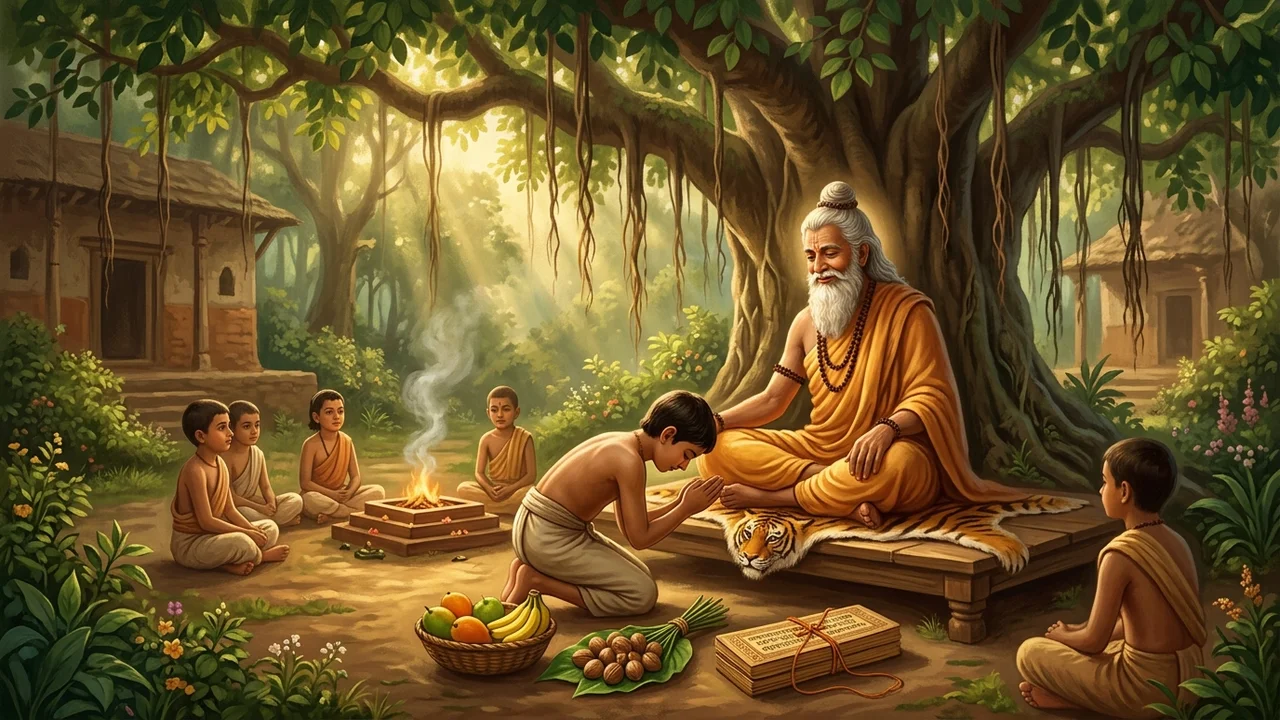
The teacher sits under the tree, and the students bring fruit and cloth.गुरु रूखमुनि बस्नुहुन्छ, र शिष्यहरू फल र कपडा ल्याउँछन्।
Dimension
Details
Epistemological & Sacred Significance
Calendar Tithi
Ashad Shukla Purnima (असार पूर्णिमा)
Full moon dedicated to the lineage of preceptors and intellectual illumination.
Primordial Preceptor
Maharṣi Veda Vyāsa (वेदव्यास)
Compiler of the four Vedas, author of the 18 Mahāpurāṇas and Brahma Sūtras.
Etymology of Guru
Gu (अन्धकार/Darkness) + Ru (प्रकाश/Dispeller)
The transcendent guide who eradicates ignorance and reveals the inner Self.
Ritual Offerings
Caraṇodaka, floral garlands, dakṣiṇā, sweetmeats
Discipleship rites affirming intellectual lineage and lifelong ethical obedience.
Spiritual Resonance
Opening of monastic study during Chaturmas
Commencement of intensive spiritual discourses and philosophical lectures.
The story
Occurring on the full moon of Ashad, Guru Purnima celebrates the unbroken sacred lineage of knowledge transmission (guru-śiṣya paramparā) and commemorates the birth anniversary of Maharṣi Veda Vyāsa, the legendary compiler and categorizer of ancient wisdom. In classical cosmology, Sage Vyāsa—born to Sage Parāśara and Satyavatī—undertook the monumental intellectual task of organizing the singular, primordial Vedic revelation into the four distinct Samhitās (Ṛg, Sāma, Yajur, and Atharva), while additionally authoring the eighteen Mahāpurāṇas, the philosophical Brahma Sūtras, and the encyclopedic epic Mahābhārata. Because Vyāsa structured vast oceanic knowledge into accessible chapters so that mortal seekers across successive epochs could comprehend the truth, he is revered as the Adi Guru, or the primordial preceptor of mankind.
असार महिनाको शुक्ल पक्षको पूर्णिमा तिथिमा सनातन ज्ञान परम्पराको मेरुदण्ड मानिने गुरु पूर्णिमा अर्थात् व्यास पूजा अत्यन्त श्रद्धापूर्वक मनाइन्छ। यसै पावन दिनमा चार वेदका सम्पादक एवम् अठार पुराण र महाभारतका रचयिता महर्षि कृष्णद्वैपायन वेदव्यासको प्राकट्य भएको विश्वास गरिन्छ। महर्षि पराशर र सत्यवतीका सुपुत्रका रूपमा जन्मनुभएका व्यासले एकै ठाउँमा रहेको अथाह वैदिक ज्ञानलाई मानिसहरूको क्षमताअनुसार चार भाग (ऋक्, साम, यजुः, अथर्व) मा विभाजन गरी व्यवस्थित गरिदिनुभयो। मानवकल्याणका लागि ज्ञानको ढोका उघारिदिने यिनै आदिगुरु व्यासको सम्मानमा यो पूर्णिमालाई व्यास जयन्तीका रूपमा पनि पुजिन्छ।
Within both domestic households and traditional academies, disciples assemble to pay homage to their teachers, spiritual preceptors, and mentors, reaffirming that the guru is not merely an instructor of secular letters but the living embodiment of the divine triad: Gurur Brahmā, Gurur Viṣṇur, Gurur Devo Maheśvaraḥ. By dispelling the darkness of ignorance (gu signifying existential obscurity, and ru denoting the radiant light that abolishes it), the preceptor aligns the student's intellect with moral virtue and ultimate liberation. Disciples express gratitude by washing the preceptor's feet (caraṇāmṛta), presenting garlands of fresh seasonal blooms, gifting sweets and traditional vestments, and renewing solemn vows of disciplined study, ethical humility, and selfless pursuit of truth.
घरघरमा, विद्यालयमा, र गुरुकुलहरूमा शिष्यहरू भेला भएर आफ्ना गुरुहरूको चरणकमलमा श्रद्धाका साथ शीर झुकाउँछन्। पूर्वीय दर्शनमा गुरुलाई केवल अक्षर चिनाउने शिक्षक मात्र नभई साक्षात् परब्रह्म, सृष्टि, स्थिति, र संहारका कारक ब्रह्मा, विष्णु, र महेश्वरको स्वरूप मानिएको छ। 'गु' को अर्थ अन्धकार र 'रु' को अर्थ प्रकाश वा त्यसलाई हटाउने तत्त्व भएकाले, अज्ञानताको घोर अन्धकारबाट ज्ञानको ज्योतिर्मय मार्गमा डोर्याउने मार्गदर्शक नै गुरु हुनुहुन्छ। यस दिन गुरुको गोडा धोएर चरणामृत लिने, फूलमाला र वस्त्र अर्पण गर्ने, मिष्ठान्न खुवाउने, तथा गुरुबाट प्राप्त मार्गदर्शनलाई जीवनमा उतार्ने दृढ सङ्कल्प लिने गरिन्छ।