1. Tamu Lhosar
१. तमु ल्होसार
| Tradition | Calendar Month | Community & Geography | Key Instruments & Ritual Foods |
|---|---|---|---|
| Tamu Lhosar | 15th of Poush (पुस १५ / Winter Solstice) | Gurung (Tamu) of the Gandaki-Annapurna valleys | Pye chants, Bonpo-Lama rites, Selroṭī, roasted meats, and Kyāng wine. |
| Sonam Lhosar | Magh Shukla Pratipada (माघ शुक्ल प्रतिपदा) | Tamang of the mid-hills surrounding Kathmandu | Damphu frame drum, Tambā Kaiten epic poetry, Khapsay pastries, and Bābar. |
| Gyalpo Lhosar | Falgun Shukla Pratipada (फागुन शुक्ल प्रतिपदा) | Sherpa, Hyolmo, and Bhutia of the high Himalayas | Guthuk 9-ingredient soup, Chemar altar box, Tsampā flour, and Khatā scarves. |
| Cosmic Engine | Lho-khor (ल्हो-खोर बाह्रवर्षे चक्र) | 12-animal zodiac governing temporal vitality across all three mountain traditions. | Rotational animal signs linking cosmic destiny with seasonal agrarian vigilance. |
The story
Derived from the classical Tibeto-Burman linguistic roots Lho (meaning "year" or "age") and Sār (meaning "new" or "fresh"), Lhosār designates the solemn turning of the astronomical year across the Himalayan peaks and middle hills of Nepal. Governed by the ancient twelve-animal cyclical zodiac known as the Lho-khor—wherein the cosmic order cycles successively through the Mouse, Cow, Tiger, Hare, Dragon, Snake, Horse, Sheep, Monkey, Bird, Dog, and Pig—the arrival of the new year is observed across three distinct cultural moments spanning the winter months: Tamu Lhosar in Poush, Sonam Lhosar in Magh, and Gyalpo Lhosar in Falgun.
तिब्बती-बर्मेली भाषामा 'ल्हो' को अर्थ वर्ष वा आयु र 'सार' को अर्थ नयाँ भन्ने हुन्छ। यसरी 'ल्होसार' को शाब्दिक अर्थ नयाँ वर्ष हो। बाह्रवटा पशुपन्छीको प्रतीकमा आधारित बाह्रवर्षे चक्र (ल्हो-खोर)—जसमा मुसा, गाई, बाघ, खरायो, ड्रागन (मेघ), सर्प, घोडा, भेडा, बाँदर, चरा, कुकुर, र सुँगुर पर्दछन्—त्यसैका आधारमा वर्षको गणना गरिन्छ। हिमाली तथा पहाडी भेगमा बसोबास गर्ने विभिन्न बौद्ध तथा बोन धर्मावलम्बी समुदायहरूले हिउँदका तीन फरक महिनामा तीनवटा प्रमुख ल्होसार मनाउँछन्: पुसमा तमु ल्होसार, माघमा सोनम ल्होसार, र फागुनमा ग्याल्पो ल्होसार।
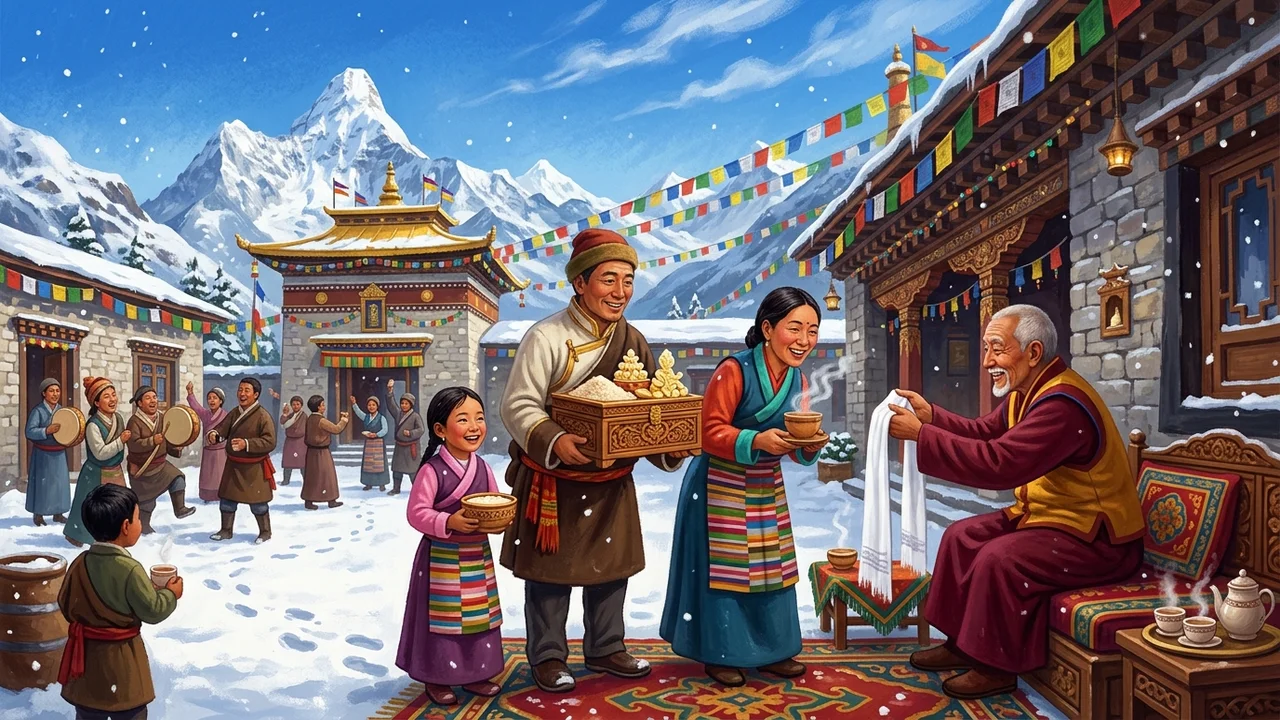
Tamu Lhosār (तमु ल्होसार) marks the winter solstice new year of the Gurung (Tamu) people across their ancestral Gandaki-Annapurna heartland, encompassing Lamjung, Kaski, Gorkha, Syangja, and Tanahun, celebrated annually on the fifteenth of Poush. As frost coats the terraced stones and the sun begins its gradual northern journey (Uttarāyana), Gurung families don hand-loomed bhangrā waistcoats, rich maroon velvet ghalek shawls, and large amber beads, gathering in ancestral courtyards. Led by traditional Ghyābre and Bonpo shamans alongside Buddhist Lamas, elders chant sacred genealogical chants (Pye), banishing the misfortunes of the departing animal year and invoking blessings of health, grain abundance, and communal solidarity while sharing plates of crisp selroṭī, roasted meats, and homemade rice wine.
तमु ल्होसार गुरुङ (तमु) समुदायको महान् नयाँ वर्ष हो, जुन हरेक वर्ष पुस महिनाको १५ गते अन्नपूर्ण र लमजुङ हिमालका काखमा रहेका कास्की, लमजुङ, गोरखा, स्याङ्जा, र तनहुँका बस्तीहरूमा धुमधामका साथ मनाइन्छ। जाडोको चरम विन्दु र सूर्य उत्तरायणतर्फ लाग्ने यस समयमा गुरुङहरू आफ्ना परम्परागत भेषभूषा—भाङ्ग्रा, घलेक, र पहेँलो पोतेमा सजिएर गाउँका चौरमा जम्मा हुन्छन्। बोन तथा बौद्ध लामाहरूले पुराना अनिष्ट ग्रहहरू शान्त पार्न 'प्ये' शास्त्र पाठ गर्दै नयाँ वर्ग (ल्हो) को स्वागत गर्दछन्। यस अवसरमा सेलरोटी, मासुका परिकार, र कोदोको छ्याङ खाँदै कौडा र घाटु नाचको तालमा रमाइलो गरिन्छ।
Sonam Lhosar is the Tamang new year of Magh. That story is on the Magh page.
सोनम ल्होसार तामाङको नयाँ वर्ष हो, माघको। त्यो कथा माघको पृष्ठमा छ।
Gyalpo Lhosar is the Sherpa new year of Falgun. That story is on the Falgun page.
ग्याल्पो ल्होसार शेर्पाको नयाँ वर्ष हो, फागुनको। त्यो कथा फागुनको पृष्ठमा छ।