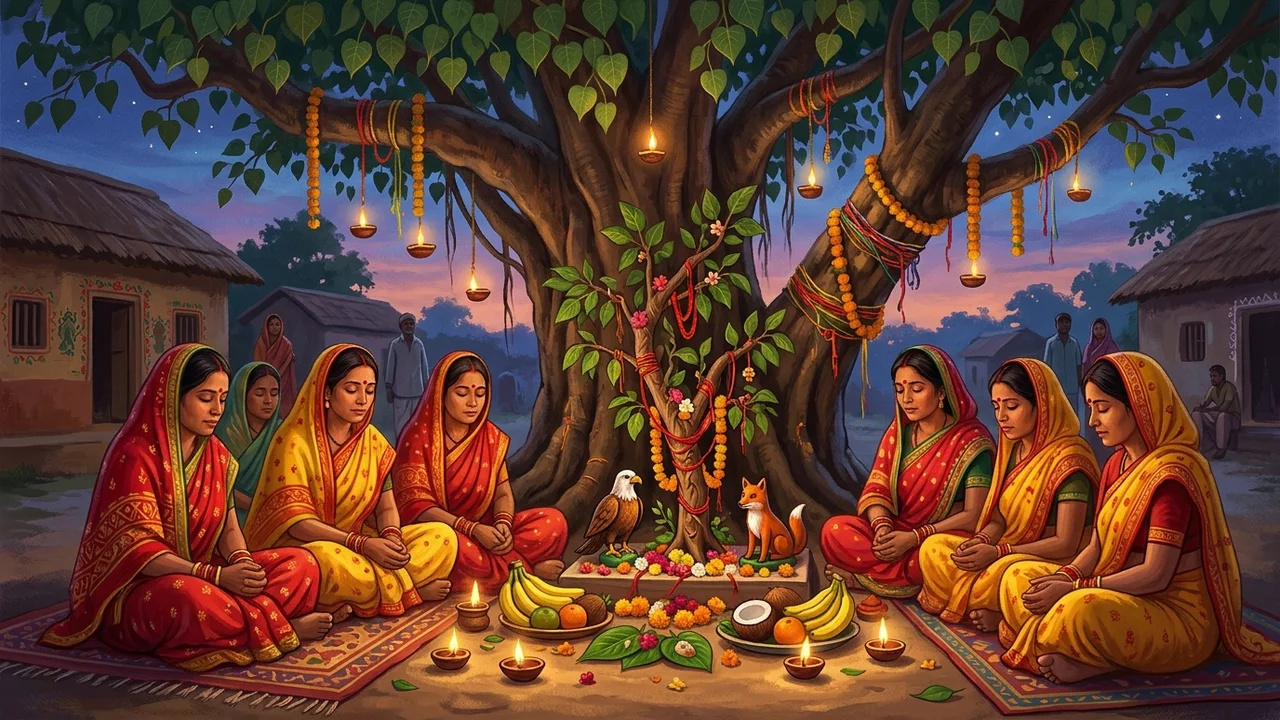
1. Pitr Paksa/Sohra Shraddha
१. पितृ पक्ष / सोह्र श्राद्ध
| Dimension | Details | Eschatological & Genealogical Significance |
|---|---|---|
| Calendar Duration | Bhadra Purnima to Ashoj Amavasya (16 lunar days) | Solemn fortnight dedicated to ancestor propitiation prior to Dashain. |
| Cosmological Mechanism | Opening of Pitṛloka doors | Spirits descend to earthly thresholds seeking water, sesame, and devotion. |
| Ritual Offerings | Piṇḍadāna (cooked rice balls) & Tarpaṇa | Nourishment of ancestors through barley, black sesame, honey, and holy water. |
| Avian & Animal Shares | Portions for Crows (कागबलि), Cows, and Dogs | Universal hospitality feeding the celestial messengers of King Yama. |
| Liturgical Culmination | Mahālayā / Sarvapitṛ Amāvāsyā | Universal liberation of all unremembered spirits opening the gates for Navaratri. |
The story
Spanning the sixteen lunar days of the waning fortnight of Ashoj—from the full moon of Bhadra to the autumn new moon of Mahalaya (Sarvapitṛ Amāvāsyā)—Pitr Paksa, popularly known across Nepal as Sohra Shraddha, constitutes the liturgical zenith of ancestral veneration in the Hindu calendar. According to classical Puranic cosmology, the realm of ancestors (Pitṛloka) lies proximate to the solar sphere; during this sacred interlude, the gates of King Yama's subterranean halls swing open, permitting departed forebears through three generational lineages (father, grandfather, great-grandfather, and their consorts) to hover near the thresholds of their mortal descendants in anticipation of filial sustenance.
भाद्रपद पूर्णिमादेखि सुरु भई आश्विन कृष्ण पक्षको औंसी अर्थात् महालया (सर्वपितृ औंसी) सम्मका सोह्रवटा तिथिहरूमा सम्पन्न गरिने महाअनुष्ठानलाई पितृ पक्ष वा सोह्र श्राद्ध भनिन्छ। वैदिक एवम् पौराणिक मान्यताअनुसार यस पावन अवधिमा सूर्य कन्या राशिमा प्रवेश गर्ने हुँदा पितृलोकका ढोकाहरू खुल्दछन् र तीन पुस्तासम्मका पितृहरू (पिता, पितामह, प्रपितामह तथा मातृकुल) आफ्ना सन्तानले दिने तर्पण र पिण्डदान ग्रहण गर्न आफ्ना प्राचीन घरको आँगनमा उपस्थित हुन्छन्। यो सोह्र दिन आफ्ना पूर्वजहरूप्रतिको अनन्त कृतज्ञता, भक्ति, र पितृऋणबाट मुक्त हुने पवित्र अवसर हो।
Each household performs the elaborate Pārvana Shraddha on the exact lunar tithi on which the ancestor departed. Cleansing the body and donning a ring of sacred kuśa grass (pavitrī) on the ring finger, the householder recites ancient Vedic mantras, offering black sesame seeds (kāla tila), barley, and mountain river water from cupped hands in continuous streams of tarpaṇa. Kneading cooked rice, barley flour, cow's milk, honey, and clarified butter into rounded ritual balls known as piṇḍa, the performer presents them upon sacred leaf-plates to nourish the ethereal bodies of the ancestors. Before family members partake of the solemn memorial meal, portions are placed outdoors to feed crows (the traditional avian messengers of Yama), cows, and stray dogs, concluding on Mahalaya Amavasya when a universal offering liberates all forgotten, childless, or wandering spirits, thereby purifying the domestic hearth before Goddess Durga arrives at Ghatasthapana the following dawn.
प्रत्येक परिवारले आफ्ना बुवा वा आमाको देहावसान भएको ठीक तिथिमा पार्वण श्राद्ध सम्पन्न गर्दछन्। बिहानै स्नान गरी काँक्रा, तिल, जौ, कुश, र तुलसीपत्र हातमा लिएर पुरोहितको निर्देशनमा जलधाराद्वारा पितृतर्पण दिइन्छ। गाईको दूध, घिउ, मह, र चामलको पिठोबाट बनाइएका बाटुला 'पिण्ड' हरू कुशको मण्डलमाथि चढाएर पितृहरूको तृप्ति र मुक्तिको प्रार्थना गरिन्छ। श्राद्ध सकिएपछि घरका मानिसले भोजन गर्नुअघि यमदूत मानिने काग, गाई, र कुकुरलाई अन्नको भाग छुट्याइन्छ। औंसीका दिन सम्पूर्ण ज्ञात-अज्ञात पितृहरूको नाममा सामूहिक महालय श्राद्ध गरिसकेपछि मात्र घर शुद्ध हुन्छ, र भोलिपल्टदेखि महाशक्ति नवदुर्गाको पावन नवरात्र (दशैं) को घटस्थापना सुरु हुन्छ।