1. Tihar
१. तिहार
Tihar keeps its own page.तिहारको आफ्नै पृष्ठ छ।
The festivals of Kartik are on this page. A name at the top jumps to that story. Tihar keeps its own page, and its days stay with it.कात्तिकका चाड यसै पृष्ठमा छन्। माथिको नामले त्यो कथामा लैजान्छ। तिहारको आफ्नै पृष्ठ छ, र त्यसका दिन त्यही चाडसँगै रहन्छन्।
Tihar keeps its own page.तिहारको आफ्नै पृष्ठ छ।
| Stage | Calendar Tithi | Liturgical Actions & Sacred Foods |
|---|---|---|
| 1. Nahāy-Khāy | Kartik Shukla Chaturthi (कात्तिक शुक्ल चतुर्थी) | Purificatory ablution and sattvic meal of bottle gourd (kaddu-bhāt) cooked with rock salt. |
| 2. Kharnā | Kartik Shukla Panchami (कात्तिक शुक्ल पञ्चमी) | Day-long fast broken at night with jaggery kheer and rotis; beginning of 36-hr waterless vow. |
| 3. Sañjhiyā Arghya | Kartik Shukla Shashthi (कात्तिक शुक्ल षष्ठी) | Riverbank sunset libation offering bamboo sūpa, thekuwā, whole coconuts, and sugarcane. |
| 4. Bhorwā Arghya | Kartik Shukla Saptami (कात्तिक शुक्ल सप्तमी) | Predawn immersion offering morning libations to the rising sun, followed by festive pāraṇa. |
| Sacred Gastronomy | Thekuwā (ठेकुवा) & Bhusuwā | Whole-wheat and molasses pastries pressed in floral wooden dies, untouched by commercial contact. |
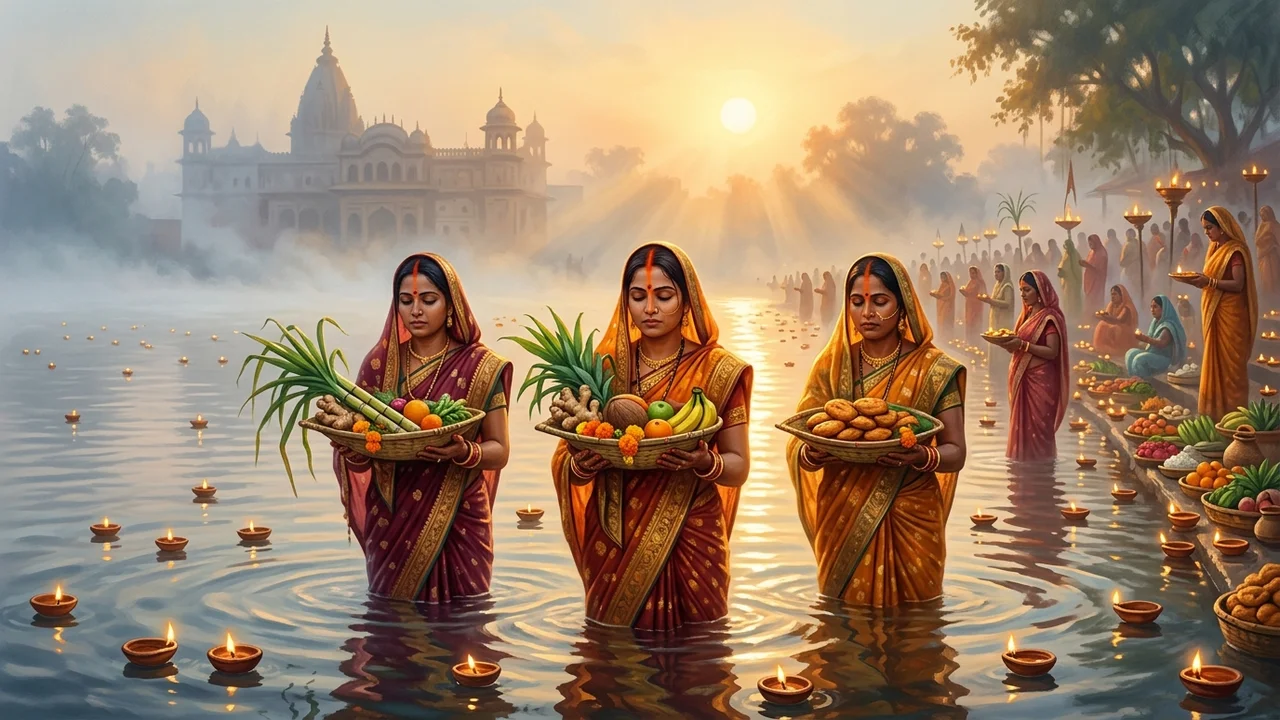
Spanning four rigorous days in the waxing lunar fortnight of Kartik—culminating on the sixth day (Kārtika Śukla Ṣaṣṭhī)—Chhath Parva represents the purest surviving form of Vedic solar adoration, dedicated to Lord Surya, the directly visible divinity (Pratyakṣa Devatā), and his cosmic consort Chhaṭhī Maiyā (Uṣā and Pratyuṣā, the divine rays of dawn and dusk). Uniquely distinguished among world faiths for offering its primary prostrations to both the setting sun (Astañcalagāmī Surya) and the rising sun (Udayācalagāmī Surya), the festival articulates a profound philosophical truth: that human gratitude must honor life's completions, twilight decline, and quiet transitions with the same reverence granted to energetic beginnings and triumphant dawn. In scriptural lore, the vow was practiced by Queen Sita upon her return to Ayodhyā and by the solar hero Karṇa in the Mahābhārata, who gained unconquerable spiritual radiance by offering daily water oblations while submerged chest-deep in holy rivers.
कात्तिक महिनाको शुक्ल पक्षको चतुर्थीदेखि सुरु भई सप्तमीसम्म चार दिनसम्म अत्यन्त निष्ठा, पवित्रता, र कठोर नियमका साथ मनाइने सूर्य उपासनाको महाअनुष्ठान छठ पर्व हो। प्रत्यक्ष देखिने दृश्य देवता भगवान् भास्कर (सूर्य) र उहाँकी चेतना-शक्ति षष्ठी माता (छठी माई) को आराधना गरिने यो पर्व संसारकै यस्तो अनौठो वैदिक अनुष्ठान हो, जहाँ उदाउँदो सूर्यका साथसाथै अस्ताउँदो सूर्य (अस्ताचलगामी सूर्य) लाई पनि उस्तै श्रद्धा र भक्तिपूर्वक पहिलो अर्घ्य दिइन्छ। यसले जीवनको अन्त्य, विश्राम, र वृद्ध अवस्थालाई पनि उत्तिकै सम्मान गर्नुपर्छ भन्ने गहिरो दार्शनिक सन्देश दिन्छ। रामायणमा वनवासबाट फर्केपछि माता सीताले र महाभारतमा सूर्यपुत्र दानवीर कर्णले कम्मरसम्म पानीमा उभिएर सूर्यको पूजा गरी असीम तेज प्राप्त गरेको पौराणिक इतिहास यस पर्वसँग जोडिएको छ।
The observance progresses through four meticulously codified stages of physical and spiritual purification. On the opening day of Nahāy-Khāy, worshippers bathe in sacred rivers, scour their homes, and consume a solitary, pure meal of rice and bottle gourd curry (kaddu-bhāt) cooked in brass pots with rock salt. On the second day, Kharnā, devotees observe an absolute day-long fast, breaking it after nightfall with sweetened jaggery-rice pudding (rasiyāov-khīr) and whole-wheat flatbreads cooked over outdoor clay stoves fueled by pure mango wood, initiating an unyielding thirty-six-hour waterless vow. On the third afternoon, Sañjhiyā Ghāṭ, families carry beautifully woven bamboo flat baskets (sūpa and daurā) heaped with ceremonial delicacies—most notably thekuwā, a rich pastry of whole-wheat flour, molasses, and clarified butter pressed with carved wooden dies, alongside whole coconuts, ginger shoots, and sugarcane stalks—wading into the riverbanks at sunset to pour consecrated libations of milk and holy water while facing the crimson western horizon.
छठ पर्व चार चरणको अत्यन्त कठोर विधिबाट सम्पन्न हुन्छ। पहिलो दिन 'नहाय-खाय' मा व्रतालुहरूले पवित्र जलाशयमा स्नान गरी शुद्ध तोरीको तेल, सिधेनुन, र काँसको भाँडोमा पकाइएको अरुवा चामलको भात र लौकाको तरकारी (कद्दु-भात) एक छाक मात्र खान्छन्। दोस्रो दिन 'खरना' मा दिनभर उपवास बसेर साँझपख माटोको चुल्होमा आँपको काठ बालेर सख्खरको खीर (रसियाउ) र रोटी बनाई कुलदेवतालाई चढाएर प्रसाद ग्रहण गरिन्छ, जसपछि ३६ घण्टा लामो निर्जला व्रत सुरु हुन्छ। तेस्रो दिन 'सँझिया घाट' मा नयाँ बाँसका सुपा र दौरामा ठेकुवा, भुसुवा, उखु, अदुवाको बोट, र फलफूल सजाएर नदी, पोखरी, वा बागमतीको किनारमा पुगिन्छ, जहाँ अस्ताउँदो सूर्यलाई दूध र जलको पहिलो अर्घ्य अर्पण गरिन्छ।
The grand liturgical climax unfolds before dawn on the fourth day, known as Bhorwā Arghya or Pāraṇa. Shivering in the cool autumn waters beneath fading stars, thousands of worshippers stand motionless facing the eastern skies, chanting haunting Maithili and Bhojpuri folk hymns of devotion until the first golden arc of the morning sun pierces the horizon. As conch shells resonate across the misty waters, the morning arghya is poured, concluding the monumental fast. Rooted originally in the ancient cultural heartland of the Tarai-Madhesh, Chhath has transcended regional boundaries to become an all-Nepal festival of communal unity; across Kathmandu, the historic ponds of Ranipokhari and Kamalpokhari and the ghats of the Bagmati river are transformed into luminous, floating mandalas of oil lamps and incense, where mountain and plains communities stand shoulder to shoulder in shared celestial adoration.
चौथो दिन बिहानको मिर्मिरेमै व्रतालुहरू फेरि कम्मरसम्म पानीमा डुबेर उदाउँदो सूर्यको प्रतीक्षा गर्दछन्। मैथिली र भोजपुरीका अत्यन्त सुमधुर लोकगीतहरू घन्किरहेका बेला, जब पूर्व दिशाबाट सूर्यका पहिलो सुनौला किरणहरू देखा पर्छन्, शङ्खध्वनि र घण्टीका साथ दोस्रो अर्घ्य (भोरवा अर्घ्य) दिइन्छ। यसपछि मात्र व्रतालुहरूले ठेकुवा र पानी खाएर पारण गरी ३६ घण्टे कठोर व्रत पूरा गर्दछन्। प्राचीन मिथिला र मधेसको मौलिक पहिचान बोकेको यो पर्व आज काठमाडौँको बागमती किनार, रानीपोखरी, र कमलपोखरीसम्म आइपुग्दा हिमाल, पहाड, र तराईलाई जोड्ने राष्ट्रिय सद्भाव, समानता, र प्रकृतिको साझा उत्सवका रूपमा स्थापित भएको छ।
| What the day holds | When | What houses do |
|---|---|---|
| The date | Bright eleventh of Kartik (कात्तिक शुक्ल एकादशी) | Haribodhini Ekadashi, also called Thulo Ekadashi, the big eleventh. |
| The waking | End of the four months | Viṣṇu's sleep, begun on Harishayani Ekadashi, is said to end. |
| The fast | The big ekadashi | Grain is set aside, as on any eleventh. The fast's rule is the ekadashi fast. |
| The wedding | Tulsi and the shaligrama | The courtyard basil is dressed and married. Sugarcane makes the roof. |
| The walk | Four Nārāyaṇa temples | Chāngu, Ichāṅgu, Biśaṅkhu, and Śeṣanārāyaṇa. |
The date is the eleventh of the bright half of Kartik. People call the day Haribodhini Ekadashi. They also call it Thulo Ekadashi, the big eleventh. Hari is Viṣṇu. The name says he wakes on this day.
मिति कात्तिक शुक्ल एकादशी हो। मानिसले यो दिनलाई हरिबोधिनी एकादशी भन्छन्। ठूलो एकादशी पनि भन्छन्। हरि विष्णु हुनुहुन्छ। नामले भन्छ, उहाँ यो दिन ब्यूँझनुहुन्छ।
He lay down on the bright eleventh of Ashad. That morning is Harishayani Ekadashi. The four months between the two mornings are Chaturmas. The sleep, the pause in weddings, and the food rules of those months are told there. This page is the morning he is said to wake.
उहाँ असारको शुक्ल एकादशीमा सुत्नुभयो। त्यो बिहान हरिशयनी एकादशी हो। दुई बिहानको बीचका चार महिना चातुर्मास हुन्। निद्रा, विवाह रोकिने कुरा, र ती महिनाका खानाका नियम त्यहीँ भनिएका छन्। यो पृष्ठ उहाँ ब्यूँझनुभयो भनिने बिहान हो।
The day is a fast. It is the large ekadashi of the year. An ekadashi is the eleventh of a lunar half. On an ekadashi a house sets grain aside. The general fast is on the rites page. This page does not give the steps of the fast.
यो दिन व्रत हो। वर्षको ठूलो एकादशी हो। एकादशी भनेको पक्षको एघारौँ दिन हो। एकादशीमा घरले अन्न छुट्याउँछ। व्रतको सामान्य नियम संस्कारको पृष्ठमा छ। यो पृष्ठले व्रतको क्रम दिँदैन।
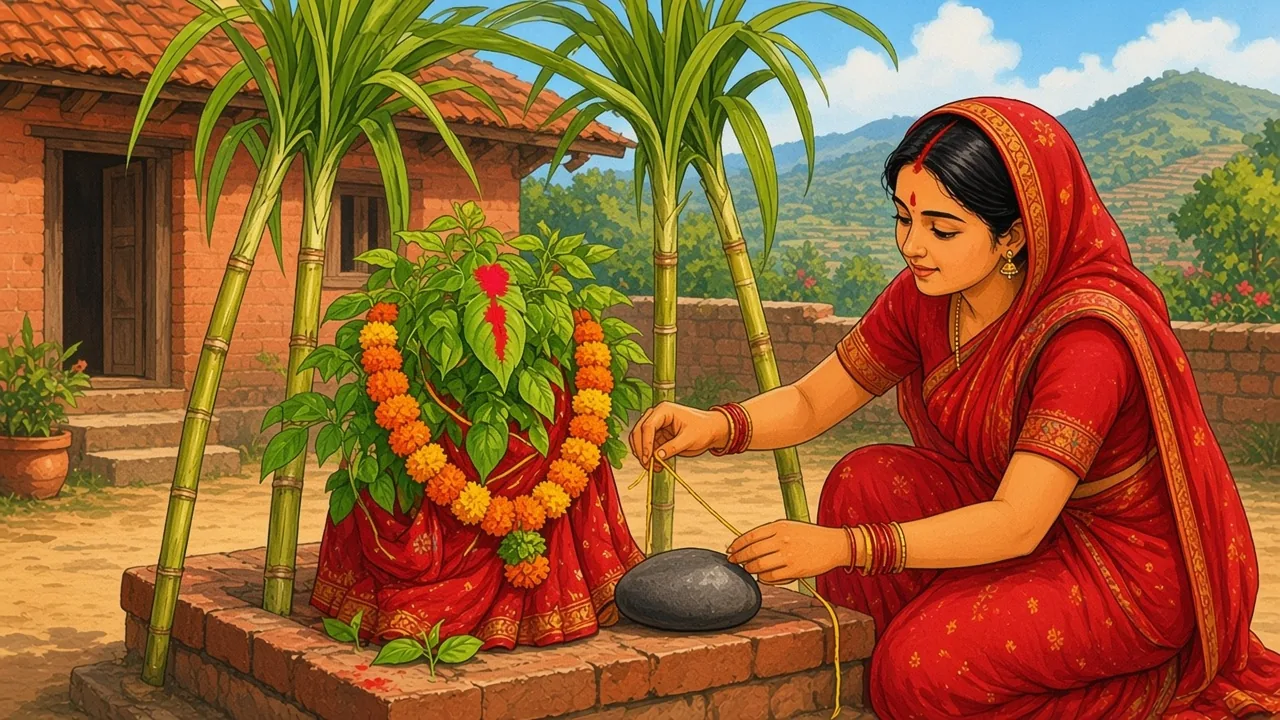
The courtyard keeps a wedding on the same day. In Ashad the house planted a basil in the moth. The moth is the raised stand in the courtyard. The plant has been watered through the rains. Today it is dressed as a bride. A red cloth, a red mark, and bangles are the usual dress. Four stalks of sugarcane are set around the moth and tied at the top, so they make a small roof. The groom is a shaligrama. A shaligrama is a dark stone from the Kali Gandaki. Houses say the stone is Viṣṇu. The knot is tied between the plant and the stone.
त्यही दिन आँगनमा विवाह हुन्छ। असारमा घरले तुलसी मोठमा रोप्यो। मोठ आँगनको अग्लो थान हो। बोटलाई वर्षाभरि पानी हालिएको छ। आज दुलहीझैँ सिँगारिन्छ। रातो कपडा, रातो टीका, र चुरा सधैँको सिँगार हुन्। चार वटा उखु मोठवरिपरि गाडिन्छन्, र टुप्पा बाँधिन्छ, ताकि सानो छाना बनोस्। दुलहा शालिग्राम हुन्। शालिग्राम कालीगण्डकीको कालो ढुङ्गा हो। घरले ढुङ्गा विष्णु हुनुहुन्छ भन्छ। गाँठो बोट र ढुङ्गाको बीचमा बाँधिन्छ।
A house without a daughter may give the plant the way a daughter is given. The wedding is told again on the puja page. This page does not give the order of the wedding.
छोरी नभएको घरले बोटलाई छोरी दिएझैँ दिन सक्छ। विवाह फेरि पूजाको पृष्ठमा भनिएको छ। यो पृष्ठले विवाहको क्रम दिँदैन।
After the wedding the fast is broken with the foods of this season. Yam. Sweet potato. Sugarcane. A house may keep the fast until the next morning. Both are said. The foods are the part the houses agree on.
विवाहपछि व्रत यो मौसमका खानाले खोलिन्छ। तरुल। सखरखण्ड। उखु। घरले व्रत भोलि बिहानसम्म राख्न सक्छ। दुवै भनिन्छ। खानामा घरहरू मिल्छन्।
After this day, a wedding, a bratabandha, or a house-entering that waited through the four months can be set. Bratabandha is the thread ceremony. The pause belonged to the sleep. The waking opens the calendar again.
यो दिनपछि चार महिना पर्खिएको विवाह, व्रतबन्ध, वा गृहप्रवेश राख्न सकिन्छ। व्रतबन्ध जनैको संस्कार हो। रोक निद्राको थियो। ब्यूँझँदा पात्रो फेरि खुल्छ।
In the valley, people who have kept the fast walk to four old temples of Nārāyaṇa. Nārāyaṇa is Viṣṇu. The four are Chāngu, Ichāṅgu, Biśaṅkhu, and Śeṣanārāyaṇa. The stone that has been lying in the pool at Budhānīlakaṇṭha is the same sleep. People go to see him on the morning the story says he wakes. The stone does not move.
उपत्यकामा व्रत बसेका मानिस चार पुराना नारायण मन्दिरमा हिँड्छन्। नारायण विष्णु हुनुहुन्छ। चार वटा चाँगु, इचंगु, विशंखु, र शेषनारायण हुन्। बुढानिलकण्ठको पोखरीमा पल्टिएको ढुङ्गा त्यही निद्रा हो। कथाले ब्यूँझनुभयो भनेको बिहान मानिस हेर्न जान्छन्। ढुङ्गा सर्दैन।