Nepali Readings / Banira Giri
Banira Giri (वानीरा गिरी)वानीरा गिरी
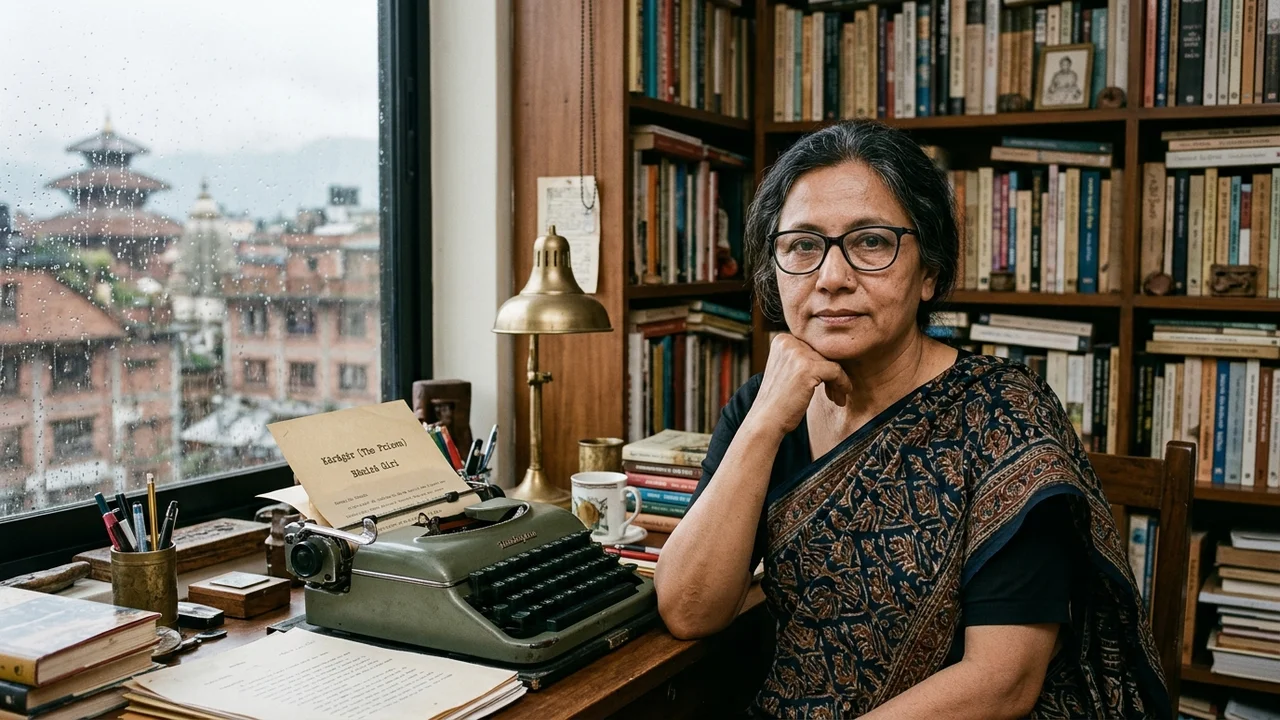
The Architecture of Female Consciousness
| Literary Identity | Pioneering Scholar-Poet & Architect of Feminist Psychological Realism |
|---|---|
| Lifespan & Origins | 1946–2021 CE (2003–2078 BS) · Born in Kurseong, Darjeeling · Migrated to Kathmandu |
| Historic Milestone | First woman awarded a Ph.D. in Nepali Literature by Tribhuvan University (1985, for her groundbreaking doctoral dissertation on the romantic rebellion of Gopal Prasad Rimal) |
| Epochal Masterpiece | Karagar (1985, "The Prison" — an uncompromising psychological study of female incarceration, somatic alienation, and maternal destiny, later adapted into national cinema) |
| Major Works & Accolades | Shabdatit Shantanu (awarded the Sajha Puraskar in 1999, making her the first woman laureate), Nirbandha, and poetry collections Euta Euta Jiudo Jung Bahadur and Jeevan: Thamarukha |
| International Eminence | Represented Nepal at the Afro-Asian Writers' Conference (Alma-Ata, 1975) as only the second Nepali poet invited after Devkota, lecturing and reading verse across Asia, Europe, and North America. |
Standing alongside Parijat as one of the towering twin peaks of twentieth-century Nepali feminist literature, Banira Giri (Vānīrā Girī / वानीरा गिरी) brought to the language an acute psychological precision, structural rigor, and fiercely modern poetic idiom. While earlier generations confined women's literary presence to romantic laments or didactic domestic treatises, Giri engineered complex architectural narratives that dissected marital estrangement, bodily vulnerability, bureaucratic indifference, and the quiet ferocity of feminine desire.
Born in Kurseong, Darjeeling in 1946 CE (2003 BS), she moved to Kathmandu in her youth to pursue higher education, ultimately breaking academic barriers in 1985 by becoming the very first woman to earn a Ph.D. in Nepali literature from Tribhuvan University—compelling an initially reluctant faculty committee to accept her revolutionary dissertation analyzing the romantic freedom of Gopal Prasad Rimal (Gopālaprasāda Rimāla / गोपालप्रसाद रिमाल). In 1999, her complex novel Shabdatit Shantanu (Śabdātīta Śāntanu / शब्दतीत शान्तनु) earned the prestigious Sajha Puraskar, crowning her as the first woman author to claim Nepal's foremost literary guild award.
Her literary legacy pivots upon the masterpiece Karagar (Kārāgāra / कारागार, 1985), where the literal walls of a women's penitentiary become a searing existential metaphor for patriarchal domesticity itself, alongside biting verse collections such as Euta Euta Jiudo Jung Bahadur ("Every Living Jung Bahadur"), which savagely unmasked the lingering feudal brutality and narcissistic tyranny lurking behind civic modernity.
Kurseong, the thesis, the books in order
Kurseong is not a decorative birthplace. It is the same hill country where Dharanidhar and the SuDhaPa (सुधापा) circle made Nepali (नेपाली) a school subject, and where Chandrika (चन्द्रिका) had printed patriotic poems. Banira comes a generation later, from the Indian Nepali (नेपाली) hills into Kathmandu's university. She studied at the University of North Bengal and then at Tribhuvan. In 1967 she married Shankar Giri (गिरी). They had two children. The marriage lasted until her death. In 2019 he established the Banira Giri (वानीरा गिरी) Foundation to help writers starting out, and to keep her books, manuscripts, and photographs. A life-size statue on the foundation's ground was unveiled on 11 May 2022.
The books arrive in a clear order, which is the best way to read her. Euta Jiundo Jung Bahadur (एउटा जिउँदो जङ्गबहादुर), A Living Jung Bahadur, is a book of poems from 1974. The title alone does the historical work. Jung Bahadur is the nineteenth-century founder of the Rana (राणा) order, and he is alive. A woman poet in the 1970s saying the founder is still walking is a political image Bhupi would have recognized and would have made colder. Banira's cold is mixed with lyric. Jiwan: Thayamaru (जीवन: ठाउँमारु), whose title treats life as a kind of unrest or as a place that will not settle, is a book of poems from 1977. Then she turns to the novel. Karagar (कारागार), Prison, comes out in 1978, and it follows a lonely woman in Kathmandu. After the parents die, the brothers and the sister have to invent a relation. She has an affair with a married man. The prison of the title is not only a building the state owns. It is the life those facts make. In 1985 the sequel Nirbandha (निरबन्ध), whose title means a continuation and a binding, picks the story up. Between the novel and the sequel, in 1984, she publishes the memoir Mero Avishkar (मेरो आविष्कार), My Discovery. A long gap then fills with the thesis and with living, and in 1999 Shabdatit Shantanu (शब्दतीत शान्तनु), Shantanu beyond Words, appears as a poetic fantasy novel and as the Sajha book. Later come the essays Parbatko Arko Naam Parbati (पर्वतको अर्को नाम पार्वती) (2010), whose title says the other name of the mountain is Parvati, and Jungle Jungle (जङ्गल जङ्गल) (2012), the poems Kathmandu Kathmandu (काठमाडौं काठमाडौं) (2011), and the travel book Rokinele Aakar Dina Sakdaina (रोकिनेले आकार दिन सक्दैन) (2014), whose title says that what stays cannot give you a shape. The titles are already a poetics. They keep a place, a binding, a mountain that is also a goddess, and a city named twice because once is not enough.
Karagar (कारागार), without stealing it
A sitting can know Karagar (कारागार) the way it knows a Parijat (पारिजात) novel: the situation, the pressure, the reason the book is still handed to a reader. The woman is alone in the capital. The brothers become a problem when the parents are gone, because a sister's room in a Nepali (नेपाली) house is never only hers. The love she finds is a married man, and that love cannot be furnished. The title refuses to decorate this with a flower. It says prison. Parijat's (पारिजात) Shirishko Phool (शिरीषको फूल), a decade earlier, had looked at an empty man and a woman who sees through him, and had won the Madan Puraskar, the first woman to do that. Banira's prison looks at the woman's side of a different emptiness, the one made of family after a death and of a desire the marriage law will not house. They are not the same novel. They are the two doors a reader of women novelists in Nepali (नेपाली) has to open. One is the flower that fails. One is the room that locks.
The sequel's title, Nirbandha (निरबन्ध), says the locking continues. A binding can be a promise or a tether. Banira is interested in both, which is why the fantasy novel of 1999 does not cancel the realist one of 1978. Shabdatit Shantanu (शब्दतीत शान्तनु) goes past words, into a Shantanu, a name the Mahābhārata uses for a king whose desire costs him a son and a vow. A poet-novelist picking that name for a prize-winning fantasy is still talking about desire and cost. She has not left the prison. She has changed the walls from brick to myth. That is a Devkota (देवकोटा) move, the myth retold as a personal weather, done by a woman who had also written the scholarship on Rimal's (रिमाल) spoken hope. The three modes sit in one career. She writes the lyric, she writes the realist novel, and she writes the scholarly reading of a man who went mad for a democracy. A reader who wants only one of them has a postcard.
What to carry out of the room
Carry Kurseong as a birth that rhymes with the old Nepali (नेपाली) hills of India, and Kathmandu as the work. Carry the thesis on Rimal (रिमाल) as a choice of ancestor. Carry Euta Jiundo Jung Bahadur (एउटा जिउँदो जङ्गबहादुर) as a title you can think about before you ever find the book. Carry Karagar (कारागार) as the prison that is a woman's life in the capital, and the Sajha Prize as the door she walked through first. She died in 2021. The sentences stay hers. The map of the books is enough to begin.
पारिजातको छेउकी उपन्यासकार
वानीरा गिरी पारिजातको छेउमा राखेर हेर्नुपर्ने नारी हुन्। उनको जन्म ११ अप्रिल १९४६ मा दार्जिलिङको खरसाङमा भयो, र मृत्यु २४ मे २०२१ मा काठमाडौंको सिभिल अस्पतालमा भयो। उनी कवि, उपन्यासकार, र विदुषी थिइन्। शैली एक्लोपन, जिउँदो जङ्गबहादुर, जीवन पनि भएको कारागार, र उपन्यास बन्न चाहने कल्पना हेर्ने आधुनिक नारीको वाक्य हो। उनी ई.सं. २०२१ मा मरिन्। यो पृष्ठमा उद्धरण छैन। किताबहरूको कुरा सुनाइएको छ।
उनीसँग आशुकविको पुरानो मुकुट छैन। मिल्ने सम्मान उनले साँच्चै लिएका हुन्। ई.सं. १९८५ मा त्रिभुवन विश्वविद्यालयले गोपालप्रसाद रिमालका कविताको स्वच्छन्दतामाथिको शोधका लागि विद्यावारिधि दियो, र यो क्षेत्रमा विश्वविद्यालयबाट त्यो उपाधि लिने पहिली नारी भनेर गनिन्छिन्। विश्वविद्यालयले विषय चाहेको थिएन। रिमालले विशाल तह लेखेका थिएनन्, र समितिको कल्पनामा शोधलाई मात्रा चाहिन्छ। अनुमति नदिउन्जेल सोधिन्। ई.सं. १९९९ मा शब्दतीत शान्तनुले साझा पुरस्कार जित्यो, र जित्ने पहिली नारी उनी हुन्। राज्यले उनलाई सुप्रबल गोरखा दक्षिण बाहु पहिले नै दिइसकेको थियो। ई.सं. १९७५ मा एफ्रो-एसियाली लेखक सम्मेलनमा नेपालको प्रतिनिधित्व गरिन्, देवकोटापछि त्यसो गर्ने दोस्रो नेपाली कवि। पहिलोहरूको जीवन शैली होइन। शैली उनले ती बीचमा लेखेको कुरा हो।
खरसाङ, शोध, क्रममा किताब
खरसाङ सजावटी जन्मस्थान होइन। धरणीधर र सुधापा वृत्तले नेपालीलाई स्कूलको विषय बनाएको त्यही पहाडी देश हो, र चन्द्रिकाले देशभक्तिपूर्ण कविता छापेको। वानीरा एक पुस्तापछि आउँछिन्, भारतीय नेपाली पहाडबाट काठमाडौंको विश्वविद्यालयमा। उत्तर बङ्गाल विश्वविद्यालयमा पढिन्, अनि त्रिभुवनमा। ई.सं. १९६७ मा शङ्कर गिरीसँग विवाह भयो। दुई सन्तान भए। विवाह उनको मृत्युसम्म रह्यो। ई.सं. २०१९ मा शङ्कर गिरीले वानीरा गिरी प्रतिष्ठान स्थापना गरे, लेखन थालेकाहरूलाई मद्दत गर्न, र वानीराका किताब, पाण्डुलिपि र तस्बिर राख्न। प्रतिष्ठानको जमिनमा आदमकदको सालिकको अनावरण ११ मे २०२२ मा भयो।
किताब स्पष्ट क्रममा आउँछन्, र उनलाई पढ्ने सबैभन्दा राम्रो तरिका त्यही हो। एउटा जिउँदो जङ्गबहादुर ई.सं. १९७४ को कविता सङ्ग्रह हो। शीर्षकले एक्लै ऐतिहासिक काम गर्छ। जङ्गबहादुर राणा व्यवस्थाका उन्नाइसौं शताब्दीका संस्थापक हुन्, र उनी जिउँदै छन्। ई.सं. १९७० को दशककी महिला कविले संस्थापक अझै हिँडिरहेका छन् भन्नु भूपीले चिन्ने र झन् चिसो बनाउने राजनीतिक चित्र हो। वानीराको चिसो गीतसँग मिसिएको छ। जीवन: ठाउँमारु ई.सं. १९७७ को कविता सङ्ग्रह हो, जसको शीर्षकले जीवनलाई एक प्रकारको बेचैनी वा नअडिने ठाउँका रूपमा हेर्छ। त्यसपछि उनी उपन्यासतिर मोडिन्। कारागार ई.सं. १९७८ मा निस्कन्छ, र यसले काठमाडौंकी एक्ली नारीलाई पछ्याउँछ। आमाबाबु मरेपछि दाजुभाइ र दिदीबहिनीले नाता रच्नुपर्छ। उनको विवाहित पुरुषसँग सम्बन्ध हुन्छ। शीर्षकको कारागार राज्यको भवन मात्र होइन। ती तथ्यले बनाउने जीवन हो। ई.सं. १९८५ मा उत्तरकथा निरबन्धले कथा उठाउँछ। उपन्यास र उत्तरकथाबीच, ई.सं. १९८४ मा, उनले संस्मरण मेरो आविष्कार प्रकाशित गर्छिन्। त्यसपछि शोध र जीवनले भरेको लामो अन्तराल आउँछ, र ई.सं. १९९९ मा काव्यात्मक फ्यान्टेसी उपन्यास र साझाको किताबका रूपमा शब्दतीत शान्तनु देखा पर्छ। पछि निबन्ध पर्वतको अर्को नाम पार्वती (ई.सं. २०१०) र जङ्गल जङ्गल (ई.सं. २०१२), कविता काठमाडौं काठमाडौं (ई.सं. २०११), र यात्रा किताब रोकिनेले आकार दिन सक्दैन (ई.सं. २०१४) आउँछन्। शीर्षकहरू पहिले नै काव्य हुन्। तिनले ठाउँ, बन्धन, देवी पनि भएको पर्वत, र एक पटक काफी नभएर दुई पटक नाम लिइएको सहरलाई जोगाउँछन्।
कारागार, नचोरी
बैठकले कारागारलाई पारिजातको उपन्यास चिनेझैँ चिन्न सक्छ: यसको अवस्था, दबाब, र किताब अझै पाठकलाई थमाइनुको कारण। नारी राजधानीमा एक्लै छिन्। आमाबाबु गएपछि दाजुभाइ समस्या बन्छन्, किनभने नेपाली घरमा दिदीबहिनीको कोठा उनको मात्र हुँदैन। उनले भेट्ने प्रेम एक विवाहित पुरुष हो, र त्यो प्रेम सजाउन सकिँदैन। शीर्षकले यसलाई फूलले सजाउन मान्दैन। कारागार भन्छ। एक दशकअघि पारिजातको शिरीषको फूलले रित्तो पुरुष र उसलाई आरपार देख्ने नारीलाई हेरेको थियो, र मदन पुरस्कार जितेको थियो; पारिजात त्यो जित्ने पहिली नारी हुन्। वानीराको कारागारले अर्को रिक्तताको नारी पक्ष हेर्छ, मृत्युपछिको परिवारले बनाएको र विवाहको कानुनले घर नदिने इच्छाले बनाएको। एउटै उपन्यास होइनन्। नेपाली महिला उपन्यासकार पढ्नेले खोल्नुपर्ने दुई ढोका हुन्। एउटा असफल हुने फूल हो। अर्को ताल्चा लाग्ने कोठा हो।
उत्तरकथाको शीर्षक निरबन्धले ताल्चा जारी छ भन्छ। बन्धन वाचा हुन सक्छ वा डोरी। वानीरा दुवैमा रुचि राख्छिन्, त्यसैले ई.सं. १९९९ को फ्यान्टेसीले ई.सं. १९७८ को यथार्थ उपन्यास रद्द गर्दैन। शब्दतीत शान्तनु शब्द नाघेर शान्तनुतिर जान्छ, महाभारतले इच्छाको मोल छोरा र शपथ तिर्नुपर्ने राजाका लागि प्रयोग गर्ने नाम। पुरस्कार जित्ने फ्यान्टेसीका लागि त्यो नाम छान्ने कवि-उपन्यासकार अझै इच्छा र मोलको कुरा गर्दै छिन्। कारागार छोडेकी छैनन्। पर्खाल इँटाबाट मिथकमा बदलेकी छिन्। त्यो देवकोटाको चाल हो, व्यक्तिगत मौसमका रूपमा फेरि भनिएको मिथक, रिमालको बोलिने आशामा शोध पनि लेखेकी नारीले गरेको। तीन तरिका एउटै जीवनमा बस्छन्: उनी गीत लेख्छिन्, यथार्थवादी उपन्यास लेख्छिन्, र प्रजातन्त्रका लागि बौलाएका पुरुषको विद्वत्तापूर्ण पढाइ लेख्छिन्। तीमध्ये एउटा मात्र चाहने पाठकले पोस्टकार्ड मात्र पाउँछ।
कोठाबाट के लैजाने
खरसाङलाई भारतका पुराना नेपाली पहाडसँग मिल्ने जन्मका रूपमा लैजानुहोस्, र काठमाडौंलाई कामका रूपमा लैजानुहोस्। रिमालमाथिको शोधलाई पुर्खाको छनोटका रूपमा लैजानुहोस्। एउटा जिउँदो जङ्गबहादुरलाई किताब नभेट्दै सोच्न सकिने शीर्षकका रूपमा लैजानुहोस्। कारागारलाई राजधानीमा नारीको जीवन भएको कारागारका रूपमा लैजानुहोस्, र साझा पुरस्कारलाई उनले पहिले हिँडेको ढोकाका रूपमा लैजानुहोस्। ई.सं. २०२१ मा मरिन्। वाक्य उनका रहन्छन्। किताबको नक्सा सुरु गर्न काफी छ।
Where it sits
The page before this one is Prema Shah (प्रेमा शाह). The other great woman novelist is Parijat (पारिजात). The poet of her dissertation is Rimal (रिमाल). The next page is Queen Aishwarya (ऐश्वर्य).