Nepali Readings / King Mahendra
King Mahendra (महेन्द्र)महेन्द्र
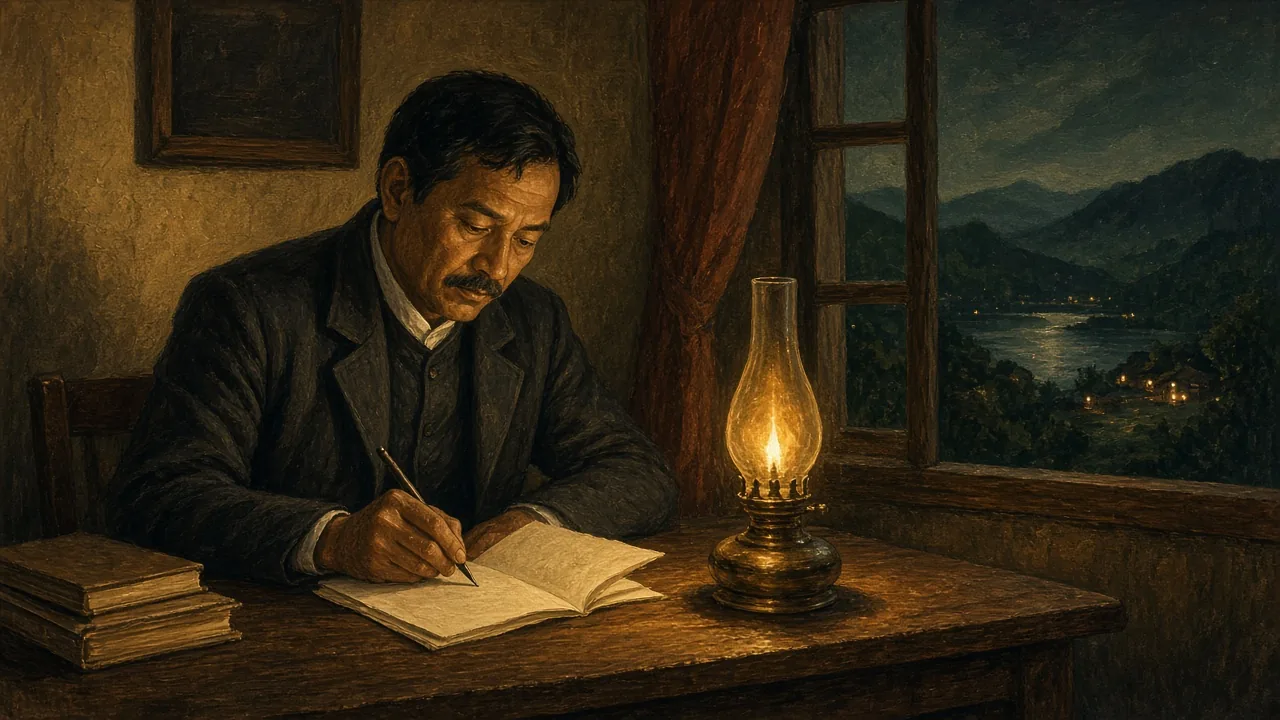
The name on the poem
| Name on the poems | M.B.B. Shah (म.वि.वि. शाह), the initials he put on the poems |
|---|---|
| Life | 11 June 1920 – 31 January 1972. King of Nepal from 1955. |
| Where the poems were printed | Ramjham (रमझम). Crown Prince Birendra edited it. The king's own office published it. |
| Poems people still name | Euta Machine (यौटा मेशीन), Rara ki Apsara (रारा कि अप्सरा), Garchhin Pukar Aama (गर्छिन् पुकार आमा) |
| The other fact | On 15 December 1960 he dissolved parliament, dismissed the cabinet, and jailed BP Koirala. The poet and the king are one man. |
King Mahendra Bir Bikram Shah Dev, born on 11 June 1920, was king of Nepal from 1955 until his death on 31 January 1972. He also wrote poems meant to be sung, and he signed them M.B.B. Shah (म.वि.वि. शाह), which is how the initials of his name look in Nepali. They were printed in a palace magazine called Ramjham (रमझम), and many of them were sung. This page names the poems. The lines stay in the magazine and in the recordings, because the poems are still under copyright, which means the right to copy them still belongs to his heirs.
Ramjham
Later writers say the magazine existed because Crown Prince Birendra's Nepali was weak, and Mahendra thought that editing it would make the language stronger. Birendra was the editor, and the king's own office was the publisher. Sitaram Baral, writing in Nepal Khabar, says the Ashoj 2025 issue in the Bikram calendar, which is the autumn of 1968, printed a poem called Euta Machine (यौटा मेशीन), "A Machine," under the name M.B.B. Shah. The poem is about an old Nepali machine, about half a century old and made of steel, that works long days without extra pay or repair until a part fails before evening. The same account says he wrote it after a heart attack the year before, in the Bikram year 2024, while he was hunting in Kailali and Kanchanpur, and that he was past forty-eight. The lines stay in the magazine.
Sahitya Post, which is where this page takes the pen name and the lake poem, says Rara ki Apsara (रारा कि अप्सरा) sets Lake Rara beside an apsara, a heavenly dancer, after he had gone to the water. A third piece people still name is the song Garchhin Pukar Aama (गर्छिन् पुकार आमा रोइ कराई जोडले), a patriotic song in which a mother calls out, crying. Taranath Sharma later said he was jailed for a hard review, because he argued that the lines sat too close to Urdu songs, and that Mahendra released him once the king knew why. That is Sharma's account, which Sahitya Post repeats, and this page has not checked a court paper.
Abhi Subedi, writing in Kantipur Koseli on 25 December 2021, retells a scene from BP Koirala's memoir Atmabrittanta (आत्मवृत्तान्त), the story of his own life. Before a trip to India, Mahendra read BP a poem about leaving for foreign cities, while the people who stay rest by the river and the chautari (चौतारी), the shaded seat under a tree, and remember him. BP called the poem tender. Other critics called the feeling staged, which means put on for show. Both remarks can stand, and the lines stay in the memoir.
The same man
On 15 December 1960 he suspended the constitution, dissolved parliament, dismissed the cabinet, and jailed BP Koirala (विश्वेश्वरप्रसाद कोइराला). The order he put in place was the Panchayat, a stack of councils with the king above them and no legal party under them. The poems do not cancel that day, and that day does not erase the poems. BP's page tells the jail. Bhupi's page tells the street under that rule. The poems were printed and sung because he was the crown, so they sit beside the writers who lived under that crown.
Accounts of the Royal Nepal Academy, the Nepal Rajkiya Pragya Pratisthan (नेपाल राजकीय प्रज्ञा प्रतिष्ठान), say he was its first head, and that he later gave the chair to the poet Kedarman Vyathit (केदारमान व्यथित). Later essays say a Mahendra scholarship brought Banira Giri (वानीरा गिरी) from the Indian hills to study Nepali in Kathmandu. Banira's own page does not say this, so it stays those essays' claim. Queen Aishwarya (ऐश्वर्य) became queen the day he died. Her poems are on the last page of this book, under the name Chadani Shah (चाँदनी शाह).
What to carry out of the room
Carry M.B.B. Shah as the name on the poems, and Ramjham as the palace magazine that printed them. Carry Euta Machine, Rara ki Apsara, and Garchhin Pukar Aama as names. The lines stay in the magazine and in the recordings. Carry 15 December 1960 as the act of the same man.
कवितामा लागेको नाम
राजा महेन्द्र वीर विक्रम शाह देव ई.सं. ११ जुन १९२० मा जन्मनुभयो, र ई.सं. ३१ जनवरी १९७२ मा बित्नुभयो। ई.सं. १९५५ देखि उहाँ राजा हुनुहुन्थ्यो। उहाँले गाउन मिल्ने कविता पनि लेख्नुभयो, र कवितामा म.वि.वि. शाह लेख्नुहुन्थ्यो, जुन उहाँको नामको अक्षर हो। कविता दरबारको पत्रिका रमझममा छापिए, र धेरै गीत गाइए। यो पृष्ठले कविताको नाम लिन्छ। पङ्क्ति पत्रिका र रेकर्डमै रहन्छन्, किनभने नक्कल गर्ने हक अझै उहाँको परिवारसँग छ।
रमझम
पछिका लेखक भन्छन्, पत्रिका बनेको कारण युवराज वीरेन्द्रको नेपाली कमजोर थियो, र महेन्द्रले सम्पादन गर्दा भाषा बलियो हुन्छ भन्ने ठान्नुभयो। वीरेन्द्र सम्पादक हुनुहुन्थ्यो, र छाप्ने काम राजाको आफ्नै कार्यालयको थियो। सीताराम बरालले नेपाल खबरमा लेख्नुभएको छ, विक्रम संवत् २०२५ को असोजको अङ्क, जुन ई.सं. १९६८ को शरद हो, मा यौटा मेशीन म.वि.वि. शाह नामले छापियो। कविता पुरानो नेपाली मेशिनको हो, करिब आधा शताब्दी पुरानो र फलामको, जसले थप ज्याला र मर्मतबिना लामो दिन काम गर्छ, अनि साँझअघि एउटा भाग बिग्रन्छ। त्यही लेख भन्छ, अघिल्लो वर्ष, विक्रम संवत् २०२४ मा, कैलाली र कञ्चनपुरमा सिकार खेल्दा मुटुको दौरा परेपछि उहाँले यो लेख्नुभएको हो, र उहाँ अठ्चालीस नाघिसक्नुभएको थियो। पङ्क्ति पत्रिकामै छन्।
साहित्य पोस्ट, जहाँबाट यो पृष्ठले कलमको नाम र तालको कविता लिन्छ, भन्छ रारा कि अप्सराले रारा ताललाई अप्सरासँग दाँज्छ, महेन्द्र रारा पुगेपछि। अप्सरा भनेको स्वर्गकी नर्तकी हो। तेस्रो रचना, जसको नाम अझै लिइन्छ, गीत गर्छिन् पुकार आमा रोइ कराई जोडले हो, आमा रुँदै बोलाउने देशभक्तिको गीत। तारानाथ शर्माले पछि भन्नुभयो, उहाँलाई जेल पर्यो किनभने समीक्षा कडा थियो, पङ्क्ति उर्दू गीतको नजिक छन् भन्ने तर्क थियो, र महेन्द्रले कारण थाहा पाएपछि छाडिदिनुभयो। त्यो शर्माको भनाइ हो, जुन साहित्य पोस्टले दोहोर्याउँछ, र यो पृष्ठले अदालतको कागज हेरेको छैन।
अभि सुवेदीले कान्तिपुर कोसेलीमा, ई.सं. २५ डिसेम्बर २०२१ मा, बीपी कोइरालाको संस्मरण आत्मवृत्तान्तबाट एउटा दृश्य भन्नुहुन्छ। भारत जानुअघि महेन्द्रले बीपीलाई एउटा कविता सुनाउनुभयो, परदेशका सहरतिर लाग्ने, र बस्नेहरू नदी र चौतारीमा बसेर सम्झने। चौतारी भनेको रूखमुनि बस्ने छाहारी हो। बीपीले कविता कोमल भन्नुभयो। अरू समीक्षकले भाव देखाउनका लागि सजाएको भने। दुवै भनाइ रहन सक्छन्, र पङ्क्ति संस्मरणमै छन्।
त्यही मानिस
ई.सं. १५ डिसेम्बर १९६० मा उहाँले संविधान रोक्नुभयो, संसद् भङ्ग गर्नुभयो, मन्त्रिमण्डल हटाउनुभयो, र बीपी कोइरालालाई जेल हाल्नुभयो। उहाँले राख्नुभएको व्यवस्था पंचायत हो, तहतहका परिषद्, माथि राजा, मुनि कानूनी दल छैन। कविताले त्यो दिन मेट्दैन, र त्यो दिनले कविता मेट्दैन। बीपीको पृष्ठले जेल भन्छ। भूपिको पृष्ठले त्यो शासनमुनि सडक भन्छ। कविता छापिए र गाइए किनभने उहाँ मुकुट हुनुहुन्थ्यो, त्यसैले ती कविता त्यो मुकुटमुनि बाँचेका लेखकहरूको छेउमा बस्छन्।
नेपाल राजकीय प्रज्ञा प्रतिष्ठानको विवरण भन्छ, उहाँ त्यसका पहिलो प्रमुख हुनुहुन्थ्यो, र पछि त्यो मेच कवि केदारमान व्यथितलाई दिनुभयो। पछिका निबन्ध भन्छन्, महेन्द्र छात्रवृत्तिले वानीरा गिरीलाई भारतीय पहाडबाट काठमाडौंमा नेपाली पढ्न ल्यायो। वानीराको आफ्नै पृष्ठले यो भन्दैन, त्यसैले यो ती निबन्धको दाबी नै रहन्छ। रानी ऐश्वर्य उहाँ बित्दा रानी हुनुभयो। उहाँका कविता यो किताबको अन्तिम पृष्ठमा छन्, चाँदनी शाह नामले।
कोठाबाट के लैजाने
म.वि.वि. शाहलाई कवितामा लागेको नामका रूपमा लैजानुहोस्, र रमझमलाई ती कविता छाप्ने दरबारको पत्रिकाका रूपमा लैजानुहोस्। यौटा मेशीन, रारा कि अप्सरा, र गर्छिन् पुकार आमालाई नामका रूपमा लैजानुहोस्। पङ्क्ति पत्रिका र रेकर्डमै छन्। १५ डिसेम्बर १९६० लाई त्यही मानिसले गरेको कामका रूपमा लैजानुहोस्।
Where it sits
The page before this one is Bhupi Sherchan (भूपि शेरचन). The page after it is Prema Shah (प्रेमा शाह). On the front of the shelf he sits with the writers of these years, after Bhupi, because the Panchayat is the weather of that part of the book. Queen Aishwarya (ऐश्वर्य) is at the end of the book. Her page is the last page of the book, and it points back here, because she became queen when he died.