Nepali Readings / Shambhu Prasad Dhungel
Shambhu Prasad Dhungel (शम्भुप्रसाद ढुङ्गेल)शम्भुप्रसाद ढुङ्गेल
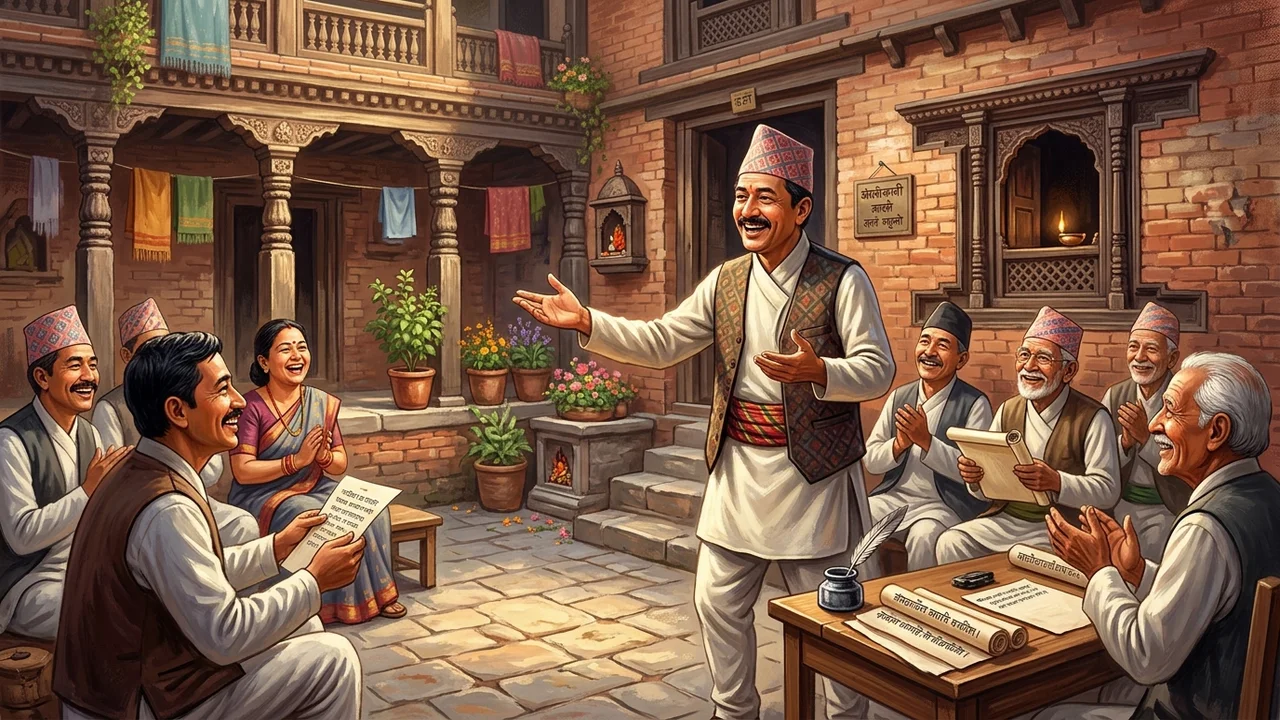
The title, and the style
| Literary Epithet | Ashukavi (Āśukavi / आशुकवि — The Instant / Extemporaneous Poet) |
|---|---|
| Lifespan & Origins | 1889–1929 CE (1946–1986 BS) · Born in Tebahal, Kathmandu, Nepal |
| Literary Movement | Post-Motiram Renaissance & Banaras Print Circle (Mādhyamika Kāla) |
| Defining Craft | Extraordinary prowess in spontaneous, unhesitating oral versification in rigorous Sanskrit meters upon any given topic or rhyming challenge (Samasyā-pūrti) |
| Dramatic Translations | Rendered classical Sanskrit dramas into accessible Nepali verse and prose, including Kalidasa's Śakuntalā, Harsha's Ratnāvalī, and Mālavikāgnimitra |
| Major Publications | Dozens of popular poetic narrative booklets and humorous epigrams printed in Banaras, including Jitakṣara Sāvitrī, Dūtavākyam, and topical satires |
| Cultural Legacy | Demystified formal metrics by proving that intricate classical meters could flow with lightning speed and popular conversational charm. |
Celebrated throughout his era by the singular title Ashukavi (Āśukavi / आशुकवि, "The Instantaneous Poet"), Shambhu Prasad Dhungel (Śambhuprasāda Ḍhuṅgela / शम्भुप्रसाद ढुङ्गेल) possessed a spontaneous versifying genius that dazzled royal courts, popular literary salons, and academic gatherings alike. In a period when formal poetic composition in complex Sanskrit meters required painstaking calculation, Shambhu Prasad could compose polished, rhythmically impeccable stanzas on any prompted subject—or complete difficult poetic riddles (Samasyā-pūrti)—in the span of a single breath.
Born in 1889 CE (1946 BS) in Tebahal, Kathmandu, Shambhu Prasad entered the vibrant publishing circles connecting Kathmandu and Banaras during the post-Motiram era. A versatile playwright, translator, and satirist, he undertook the monumental task of translating classical Sanskrit theatrical masterpieces into readable Nepali, rendering Kalidasa's Shakuntala and Harsha's Ratnavali into fluid dramatic idiom. Although his life was cut short at the age of forty in 1929, his immense output of chapbooks, verse tales, and sharp social observations proved that the Nepali language could match classical Sanskrit in sheer musical speed and rhetorical wit.
What he actually left
Accounts say he wrote about fifteen plays and that six have survived. The named dramatic and narrative books are a map of what a Sanskrit-trained Nepali (नेपाली) of 1910 thought a public wanted. Dhruva Charitra (ध्रुवचरित्र) tells the boy-ascetic Sama (सम) would later put on a modern stage and bend toward the politics of many wives. Shambhu's Dhruva (ध्रुव) is the older job, the telling itself. Krishna Charitra (कृष्णचरित्र) (1921), stretches of the Mahābhārata including the Droṇa parva through the late 1920s, Mālatī-Mādhava (मालतीमाधव), an Aśokasundarī (अशोकसुन्दरी) playlet, translations of Śakuntalā (शकुन्तला), Uttararāmacarita, Ratnāvalī, and Priyadarśikā: this is the repertoire Motiram (मोतीराम) had also touched, Śakuntalā (शकुन्तला) and Priyadarśikā among them. Two men, one dead in 1896 and one dead in 1929, were stocking Nepali (नेपाली) with the same Sanskrit shelf. Lekhnath (लेखनाथ) would then make that shelf philosophical and slow. Shambhu was still in the stocking.
Beside the high plots sit the tales. Hattimataiko Katha (हात्तिमताईको कथा) tells what sounds like a true story of an elephant's loyalty. He also prints Gulbakavali (गुलबकावली), Totamaina (तोतामैना), which sets a parrot beside a mynah, and Singhasan Battisi (सिंहासनबत्तीसी), the thirty-two tales that delay a coronation. Akbar-Birbal (अकबर-बिरबल), Sunkeshara Raniko Katha (सुनकेशरा रानीको कथा), and Maitalu Choriko Katha (मैतालु छोरीको कथा) join that courtyard shelf, and Abola Maiya (अबोला मैयाँ) tells of a girl who does not speak. These are not epics. They are the stories a courtyard already told, caught in print so they would not depend on the next grandmother. A poet titled for speed taking the time to write down other people's plots is a publisher's instinct inside a lyric gift. Motiram (मोतीराम) had it. Shambhu had it. The valley's nineteenth-century problem was not a shortage of lines. It was a shortage of books.
The lyric books have their own names. Gafsindhu (गफसिन्धु) is a sea of talk. Chandra Pratap Varnan (चन्द्रप्रतापवर्णन) and Chandra Vadani (चन्द्रवदनी), descriptions aimed at a moonlike face and, by the titles, at a Chandra, which in those years is never only the moon. Dutashataka (दूतशतक), a hundred verses of a messenger, the Meghadūta (मेघदूत) habit Motiram (मोतीराम) had used for a bird. Shambhu Bhajanmala (शम्भु भजनमाला) is a garland of hymns. Barhamase (बाह्रमासे), the twelve months, which is the season-wheel Lekhnath (लेखनाथ) would make famous and which a Nepali (नेपाली) poet can hardly avoid. Veshya Varnan (वेश्यावर्णन), a description of a courtesan, the old śṛṅgāra (शृङ्गार) subject with its cruelty left in the title. Pinasko Vinas (पिनासको विनास) is the ruin of a cold. Even a sneeze can be a poem if the poet is paid to be sudden. Ashukavi Shambhuka Kavyakriti (आशुकवि शम्भुका काव्यकृति) gathers the verse under the title itself. Shambhuka Ghazal (शम्भुका गजल) and the loose poems, the sphuta padya, are the songs. He also edited a word-treasury, Shabda Sudhanidhi (शब्द सुधानिधि). A dictionary from a spontaneous poet is the joke that is not a joke. Speed in the courtyard, patience in the glossary.
One more book matters for this shelf. Shree Adikavi Bhanubhaktacharyako Jivan Charitra (श्री आदिकवि भानुभक्ताचार्यको जीवनचरित्र) is a life of Bhanubhakta. Motiram's (मोतीराम) life of the same poet is the famous one, the book that taught Kathmandu it had a first poet. Shambhu's life says the job was not finished. A generation later a man with a court title was still telling the grass-cutter's (घाँसी) poet as a story that had to be printed again. The Adikavi (आदिकवि) is not a fact that stays put. He has to be rewritten every few decades or the wedding parties forget which lines were his.
A short life, a stamp, a gap
He died in Kathmandu in 1929. Forty-four is Motiram's (मोतीराम) thirty, the same kind of unfinished shelf. What he did not live to see is Lekhnath's (लेखनाथ) chariot, Devkota's (देवकोटा) folk epic, Sama's (सम) blanker line, the fall of the house that had titled him. In 1962 the government put his face on a stamp. D. B. Gurung, much later, called him a rare poetic genius. The genius a reader can actually hold is the range: ghazal (गजल), hymn, messenger poem, Sanskrit play, grandmother's tale, a life of Bhanubhakta, a dictionary. Spontaneity, under that title, means a man who could start. The bibliography means he also finished, over and over, until the year ran out.
Read him after Motiram (मोतीराम) and the lineage of śṛṅgāra (शृङ्गार) is a street, not a single genius. Read him before Lekhnath (लेखनाथ) and the sweet counted line has a noisier older brother, a man the prime minister praised and the later canon somewhat misplaced. The misplacing is why the page exists. Aashukavi (आशुकवि) is not a mood. It is a name Chandra Shumsher gave, and the poems are the evidence that the name was not empty.
What to carry out of the room
Carry the title to the right man. Carry Tebahal and Banaras and a death at forty-four. Carry the six surviving plays inside a rumor of fifteen, and the Droṇa parva beside a story of an elephant. Carry the second life of Bhanubhakta. Carry the dictionary as the secret of the quick poet: he also sat still. The next page is the man people sometimes confuse with him, and the confusion is worth ending.
उपाधि र शैली
आशुकवि उपाधि यही पृष्ठमा पर्छ। यसको अर्थ हो, क्षणले माग्दा त्यहीँ कविता रच्ने कवि, जसले घर गएर गन्दै बस्नुपर्दैन। चन्द्र शमशेर जङ्गबहादुर राणाले यो उपाधि शम्भुप्रसाद ढुङ्गेललाई दिनुभयो। उपाधि राणाका प्रधानमन्त्रीबाट आएको हो, र यो पछिको प्राज्ञिक मुकुट होइन, दरबारको उपाधि हो। उहाँको जन्म ई.सं. १८८५ मा काठमाडौंको टेबहालमा सम्पन्न घरमा भयो, र मृत्यु ई.सं. १९२९ मा, करिब चौवालीस वर्षको उमेरमा। धरणीधर कोइरालाका लागि आशुकवि शब्द खोज्नेहरू वास्तवमा उहाँकहाँ पुग्न खोजिरहेका हुन्। धरणीधरको नाम पण्डितजी हो भने शम्भुको नाम आशुकवि हो।
उहाँको शैली मोतीराम र लेखनाथको बीचमा पर्छ। उहाँले पुरानो ढाँचाका प्रेमकविता, बनारसमा तालिम पाएको कानले चिन्ने गजल, र संस्कृत कथामा आधारित नाटक लेख्नुभयो: ध्रुव, महाभारतको एक अंश, मालतीमाधव, शाकुन्तला, रत्नावली, प्रियदर्शिका। उपत्यकाले पहिल्यै चिनेका घरायसी कथा पनि सुनाउनुभयो: गुलबकावली, सिंहासनबत्तीसी, अकबर-बिरबल, स्वामिभक्त हात्ती। अनि उहाँले भानुभक्तको जीवनी पनि लेख्नुभयो, जसले उहाँलाई मोतीरामको अर्को कामतिर पुर्याउँछ, अर्थात् पहिलो कविलाई पाठकले समात्न सक्ने मानिस बनाउने काम। उहाँ ई.सं. १९२९ मा बित्नुभयो। किताबहरू पुराना छन्। यो पृष्ठले तिनलाई आफ्नै वाक्यमा सुनाउँछ। उहाँको किताबमा गजल एउटा रात हो। सार भनेको एउटा तहले बोक्न सक्ने कुरा हो।
टेबहाल, अनि बनारसको छापा
जन्म नेपाली संवत् १९४६ को चैत, काठमाडौंको टेबहालमा भएको मानिन्छ। परिवार सम्पन्न थियो। बाल्यकाल भोकको कथा थिएन, र यो कुरा महत्त्वपूर्ण छ, किनकि यो पुस्ताको कविता प्रायः गरिब पहाड वा जेलको कविता हुन्छ। शम्भुको सुरुको आँच संस्कृत पढाउन सक्ने घरबाट आउँछ। पन्ध्र वर्षको उमेरमा उहाँले पञ्चक प्रपञ्च लेख्नुभयो। उहाँका किताबको सूची लामो छ, र त्यसले छापालाई मर्नुअघि भर्नैपर्ने कोठा ठानेर छपाउने मानिसलाई देखाउँछ। बनारस छापाखाना थियो, मोतीरामका लागि जस्तै। पुण्यप्रसादको घरले किताब निकालेको हो। राणाकालका उपत्यकाका कविलाई पाठक चाहियो भने छापाको टाइपका लागि प्रायः सीमा पार गर्नुपर्थ्यो।
चन्द्र शमशेरले सुनेको र उपाधि दिएको कुरा गति थियो। आशुकवि लापरवाह मानिस होइन। उहाँ आँगनमा विषय दिइँदा विषय बस्न नपाउँदै कविता फर्काउन सक्ने मानिस हुनुहुन्छ। मोतीरामले बनारसमा त्यही खेल खेलेका थिए: समस्यापूर्ति, अर्थात् रुपैयाँको इनामका लागि तत्कालै पूरा गरिने समस्यापङ्क्ति। शम्भुको उपाधिले राणा दरबारले त्यो सीपलाई चिनेर नाम दिन चाहेको देखाउँछ। चन्द्र शमशेरले दिएको उपाधि तटस्थ पदक होइन। उपाधि दिने मानिसले अरू कवि थुन्ने र अरू भाषामा रोक लगाउने राज्य चलाउँथे। तैपनि शम्भुले त्यो शब्द लिनुभयो। गजलको शैलीमा बाँचेका कविता आँखा, चन्द्रमा र तलाउमा तिर्खाएको मानिसका कविता हुन्। ती मोतीरामले पहिल्यै घरेलु बनाइसकेको शृङ्गार हुन्। शम्भुको फरक आख्यानको परिमाणमा छ: नाटकपछि नाटक, पर्वपछि पर्व, कथापछि कथा, मानौँ तत्कालता उद्योगको विधि हो।
उहाँले वास्तवमा छोड्नुभएको
भनिन्छ, उहाँले करिब पन्ध्र नाटक लेख्नुभयो र तीमध्ये छ वटा बाँचेका छन्। नाम आएका नाटक र आख्यानका किताबले ई.सं. १९१० तिरको संस्कृत पढेको नेपालीले जनतालाई के चाहिन्छ भन्ठानेको थियो भन्ने नक्सा दिन्छन्। ध्रुवचरित्रले त्यही बालतपस्वीको कथा भन्छ, जसलाई समले पछि आधुनिक मञ्चमा उतारेर धेरै पत्नीको राजनीतितिर मोड्नुभयो। शम्भुको ध्रुव पुरानै काम हो, कथा भन्ने काम आफैँ। कृष्णचरित्र (ई.सं. १९२१), ई.सं. १९२० को दशकको अन्त्यसम्म द्रोणपर्वसहित महाभारतका अंश, मालतीमाधव, अशोकसुन्दरी नाटिका, र शाकुन्तला, उत्तररामचरित, रत्नावली र प्रियदर्शिकाका अनुवाद: यो मोतीरामले पनि छोएको भण्डार हो, जसमा शाकुन्तला र प्रियदर्शिका पनि पर्छन्। ई.सं. १८९६ मा बितेका र ई.सं. १९२९ मा बितेका दुई जनाले नेपाली भाषालाई एउटै संस्कृत तहले भरिरहेका थिए। लेखनाथले पछि त्यो तहलाई दार्शनिक र ढिलो बनाउनुभयो। शम्भु अझै भण्डार भर्ने काममै हुनुहुन्थ्यो।
उच्च कथानकका छेउमा घरायसी कथा पनि छन्। हात्तिमताईको कथाले हात्तीको स्वामिभक्तिको साँचो घटनाजस्तो सुनिने कथा सुनाउँछ। उहाँले गुलबकावली, सुग्गालाई मैनाको छेउमा राख्ने तोतामैना, र राज्याभिषेकलाई ढिलो गर्ने बत्तीस कथाको सिंहासनबत्तीसी पनि छाप्नुभयो। अकबर-बिरबल, सुनकेशरा रानीको कथा र मैतालु छोरीको कथा त्यही आँगनको तहमा जोडिन्छन्, र अबोला मैयाँले नबोल्ने केटीको कथा भन्छ। यी महाकाव्य होइनन्। यी आँगनले पहिल्यै सुनाइसकेका कथा हुन्, जो अर्की हजुरआमामा भर नपरून् भनेर छापामा समातिएका हुन्। गतिका लागि उपाधि पाएको कविले अरूका कथानक लेख्न समय निकाल्नु गीतिप्रतिभाभित्र रहेको प्रकाशकको सहज प्रवृत्ति हो। मोतीरामसँग त्यो थियो। शम्भुसँग पनि थियो। उन्नाइसौं शताब्दीको उपत्यकाको समस्या पङ्क्तिको कमी थिएन। किताबको कमी थियो।
गीतिका किताबका आफ्नै नाम छन्। गफसिन्धु गफको समुद्र हो। चन्द्रप्रतापवर्णन र चन्द्रवदनी चन्द्रमुखजस्तो अनुहारतिर, र शीर्षकअनुसार कुनै चन्द्रतिर पनि, लक्षित वर्णन हुन्; ती वर्षमा चन्द्र केवल चन्द्रमा हुँदैन। दूतशतक एक दूतका सय श्लोक हो, जसमा मोतीरामले चरालाई दूत बनाएको मेघदूतको बानी देखिन्छ। शम्भु भजनमाला भजनको माला हो। बाह्रमासे बाह्र महिनाको ऋतुचक्र हो, जसलाई लेखनाथले प्रसिद्ध बनाउनुभयो र जसलाई कुनै नेपाली कविले सजिलै टार्न सक्दैन। वेश्यावर्णन गणिकाको वर्णन हो, शीर्षकमै क्रूरता बोकेको शृङ्गारको पुरानो विषय। पिनासको विनास रुघाखोकीको विनाश हो। कविलाई अचानक कविता लेख्न पारिश्रमिक दिइन्छ भने हाच्छिउँ पनि कविता हुन सक्छ। आशुकवि शम्भुका काव्यकृतिले कविता शीर्षकभित्रै एकै ठाउँ जम्मा गर्छ। शम्भुका गजल र फुटकर पद्य (स्फुट पद्य) गीत हुन्। उहाँले शब्द सुधानिधि नामको शब्दकोश पनि सम्पादन गर्नुभयो। आशुकविको कोश ठट्टाजस्तो लागे पनि ठट्टा होइन। आँगनमा गति, शब्दकोशमा धैर्य।
यो तहका लागि अर्को एउटा किताब महत्त्वपूर्ण छ। श्री आदिकवि भानुभक्ताचार्यको जीवनचरित्र भानुभक्तको जीवनी हो। त्यही कविबारे मोतीरामले लेखेको जीवनी प्रसिद्ध छ, जसले काठमाडौंलाई आफ्नो पहिलो कवि छ भनेर सिकायो। शम्भुको जीवनीले काम सकिएको थिएन भन्ने देखाउँछ। एक पुस्तापछि पनि दरबारी उपाधि पाएका मानिसले घाँसीका कविको कथा फेरि छाप्नुपर्ने कथाका रूपमा सुनाइरहेका थिए। आदिकवि एकै ठाउँमा अडिने तथ्य होइनन्। केही दशकमा फेरि नलेखिए जन्तीहरूले कुन पङ्क्ति उहाँको थियो बिर्सन्छन्।
छोटो जीवन, टिकट, खाली ठाउँ
उहाँ ई.सं. १९२९ मा काठमाडौंमा बित्नुभयो। चौवालीस वर्ष मोतीरामका तीस वर्षजस्तै हो, उस्तै अधुरो तह। उहाँले देख्न नपाएका कुरा लेखनाथको रथ, देवकोटाको लोक महाकाव्य, समको खुकुलो पङ्क्ति र आफूलाई उपाधि दिने घरको पतन हुन्। ई.सं. १९६२ मा सरकारले उहाँको अनुहार टिकटमा राख्यो। धेरै पछि डी. बी. गुरुङले उहाँलाई दुर्लभ काव्यप्रतिभा भन्नुभयो। पाठकले साँच्चै समात्न सक्ने प्रतिभा भनेको फैलाव हो: गजल, भजन, दूतकाव्य, संस्कृत नाटक, हजुरआमाको कथा, भानुभक्तको जीवनी, कोश। त्यो उपाधिमुनि तत्कालता भनेको सुरु गर्न सक्ने मानिस हो। ग्रन्थसूचीले उहाँले आयु सकिनुजेल बारम्बार काम पूरा पनि गर्नुभयो भन्ने देखाउँछ।
मोतीरामपछि उहाँलाई पढ्नुभयो भने शृङ्गारको वंशपरम्परा एक जना प्रतिभा होइन, एउटा सडक हो भन्ने देखिन्छ। लेखनाथभन्दा अघि उहाँलाई पढ्नुभयो भने मीठो गनिएको पङ्क्तिको एक हल्लाखोर दाजु भेटिन्छ, प्रधानमन्त्रीले प्रशंसा गरेका र पछिको मान्यताले केही ठाउँ बिराएका मानिस। त्यही ठाउँ बिराइ यो पृष्ठको कारण हो। आशुकवि कुनै मनस्थिति होइन। यो चन्द्र शमशेरले दिएको नाम हो, र कविताहरू त्यो नाम रित्तो थिएन भन्ने प्रमाण हुन्।
कोठाबाट के लैजाने
उपाधि सही मानिसकहाँ लैजानुहोस्। टेबहाल, बनारस र चौवालीस वर्षको उमेरको मृत्यु लैजानुहोस्। पन्ध्र नाटकको हल्लाभित्र बाँचेका छ नाटक, र हात्तीको कथाको छेउमा द्रोणपर्व लैजानुहोस्। भानुभक्तको दोस्रो जीवनी लैजानुहोस्। कोशलाई छिटो लेख्ने कविको गोप्य कुराका रूपमा लैजानुहोस्: उहाँ शान्त भई बस्न पनि सक्नुहुन्थ्यो। अर्को पृष्ठ मानिसहरूले कहिलेकाहीँ उहाँसँग मिसाउने मानिसको हो, र त्यो भ्रम अन्त्य गर्न लायक छ। यो पृष्ठभन्दा अघिको पृष्ठ पिकदूतको हो, र त्यो पृष्ठका कवि मोतीराम भट्ट हुन्। यसपछिको पृष्ठ धरणीधर कोइरालाको हो। बालकृष्ण समले पछि ध्रुवलाई आधुनिक मञ्चमा उतार्नुभयो। उहाँले जसको जीवनी लेख्नुभयो, ती कवि भानुभक्त हुन्। उहाँले विरासतमा पाएको गजल मोतीरामको हो।
Where it sits
The page before this one is Pikdūt (पिकदूत), and the poet of that page is Motiram Bhatta (मोतीराम भट्ट). The page after it is Dharanidhar Koirala (धरणीधर कोइराला). Balkrishna Sama (बालकृष्ण सम) later put Dhruva (ध्रुव) on a modern stage. The poet he wrote a life of is Bhanubhakta. The ghazal (गजल) he inherited is Motiram's (मोतीराम).