Nepali Readings / Lekhnath Paudyal
Lekhnath Paudyal (लेखनाथ पौड्याल)लेखनाथ पौड्याल
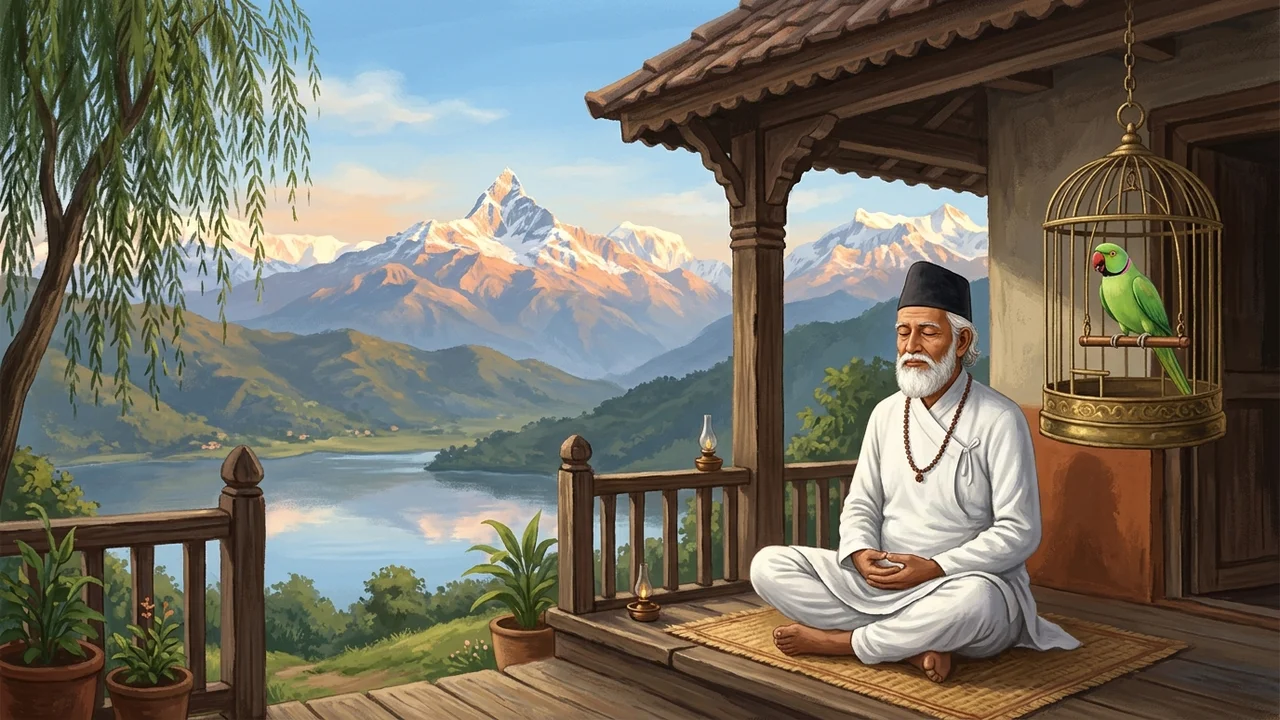
The title, and the style
| Literary Epithet | Kavishiromani (Kaviśiromaṇi / कविशिरोमणि — The Crest-Jewel of Poets) |
|---|---|
| Lifespan & Origins | 1884–1965 CE (1941–2022 BS) · Born in Arghaun-Archale, Kaski, Nepal |
| Literary Movement | Classical-Modern Transition / Classical Renaissance (Pariṣkāravādī Dhārā) |
| Metrical Mastery | Impeccable command of classical Sanskrit meters (notably Śārdūlavikrīḍita, Vasantatilakā, Upendravajrā, and Mandākrāntā), combined with pure Nepali idiomatic grace |
| Magnum Opus & Epics | Taruṇa Tapasī (1953, a philosophical Navya-Kāvya meditating on an ancient banyan tree), Ṛtu Vicāra (1916, evocative meditations on the six seasonal cycles) |
| Iconic Allegorical Works | Pinjarāko Sugā (1917, "The Parrot in the Cage" — dual allegory of the human soul bound in samsara and political subjugation under Rana autocracy), Buddhi Vinoda, Satya Kali Samvada, and Amar Jyoti |
| Philosophical Worldview | Advaita Vedanta non-dualism, moral humanism, profound nature aesthetics, and subtle resistance against tyranny. |
Revered by generations of Nepali scholars as Kavishiromani (Kaviśiromaṇi / कविशिरोमणि, "The Crest-Jewel of Poets"), Lekhnath Paudyal (Lekhanātha Pauḍyāla / लेखनाथ पौड्याल) stands as the towering architect of formal classical perfection in Nepali verse. Standing at the crossroads where traditional Sanskrit scholasticism met modern national self-consciousness, Lekhnath achieved a synthesis of crystalline metrical discipline, Vedantic philosophical depth, and acute moral discernment that elevated Nepali to a medium capable of profound philosophical discourse.
Born in 1884 CE (1941 BS) in the mountain village of Arghaun-Archale, Kaski, Lekhnath was educated in classical grammar and literature in Kathmandu and Banaras. Returning to a country tightly gripped by the aristocratic Rana oligarchy, he served as a tutor within palace compounds, where intimate observation of dynastic luxury alongside political terror deepened his commitment to ethical liberty. In 1917, he published his timeless masterpiece Pinjarāko Sugā (The Parrot in the Cage)—a work whose surface depiction of a captive tropical bird conceals two profound allegorical tiers: an Advaita meditation on the divine spirit (Jīvātman) trapped in worldly embodiment, and a courageous political indictment of an entire populace silenced under feudal despotism.
Over a magnificent literary career spanning more than six decades, Lekhnath published the meditative seasonal cycle Ritu Vichara (Ṛtu Vicāra / ऋतु विचार) in 1916, followed in his maturity by Tarun Tapasi (Taruṇa Tapasī / तरुण तपसी) in 1953, where the quiet life of an ancient roadside banyan tree becomes an allegory for the spiritual pilgrimage of humanity. In 1951, King Tribhuvan conferred upon him the lifelong national title of Kavishiromani, cementing his place as the father of modern classical Nepali poetry.
The parrot in the cage
Pinjada ko Suga (पिँजडाको सुगा), The Parrot in the Cage, came out in 1917. It is the poem a Nepali (नेपाली) schoolchild meets, and it is the poem historians point at when they want an early literary complaint against Rana (राणा) rule. The literal picture is simple. A parrot is shut in. It speaks. It remembers a freer life. Around that picture the poem stacks meanings, which is why it is long, and why some critics, Hutt among them, find it repetitive. One reading is religious. The soul is the bird. The body is the cage. Hindu verse had been saying a version of this for a long time. Another reading is the job. The poet has to produce wise remarks at a master's whim. A third reading, the one that made the poem brave, is the country. Nepal under the Ranas (राणा) is a cage that still asks its bird to sing nicely.
He hesitated to publish it. Saying this in a Rana (राणा) city, while employed by a Rana (राणा), was not a game. Dixit's promise, that the work would be brought out and that the writing itself would make a literary life, is what the accounts give as the push. The poem is not his most perfect piece of craft. Ritu Vichara (ऋतु विचार) and Tarun Tapasi (तरुण तपसी) are finer as making. The parrot is the one that changed what a Nepali (नेपाली) poem was allowed to mean in public. A children's poem, if that is all it was, still taught a generation to hear a cage when they heard a ruler. Allegory is a political skill when the plain sentence can cost a man his place, or worse. Siddhicharan will later pay in years of jail for a plainer line. Lekhnath (लेखनाथ) paid in indirection, and the indirection worked. The twenty-three stanzas are on the parrot's page.
Seasons, a swallow, truth and the dark age
The long early labor is the seasons. Varsha Vichara (वर्षा विचार), Reflections on the Rains, appeared in Madhavi (माधवी) in 1909. He expanded it into Ritu Vichara (ऋतु विचार), Contemplation of the Seasons, finished in 1916 and published only in 1934. The model sitting in the background is Kālidāsa's Ṛtusaṃhāra (ऋतुसंहार), the chain of seasons. Lekhnath (लेखनाथ) does not copy a Sanskrit landscape onto Nepal and stop. He wants each season to be a moral weather. Rain, cold, the turn into flower, the turn into dust: a person watching the year is also watching desire, decay, and the small time a life actually has. The delay between finishing and printing is part of the portrait. He was willing to wait until the line was sweet. A poet in a hurry would have had a book in 1916. He had a book when he was ready. The six seasons are on the Ritu Vichara (ऋतु विचार) page.
Buddhi Vinoda (बुद्धि विनोद), Enjoyments of Wisdom, also belongs to 1916. The title is exact. Wisdom is not a scolding. It is a pleasure he thinks a poem can give, the way a riddle gives pleasure when it closes cleanly. Satya-Kali-Samvada (सत्यकलिसंवाद), from 1919, is a dialogue between the age of truth and the degenerate age. Two times sit down and argue. The device is old, and it is useful. A poet who cannot name a living ruler can still let Kali, the dark age, speak in the ruler's habits, and let Satya answer. Readers who know the parrot know how to listen.
In 1935 he published Gaunthaliko Chiribiri (गौंथलीको चिरिबिरी), The Swallow's Chatter, and also Arunodaya (अरूणोदय), Dawn. The swallow poem is the short one people love because the language drops its Sanskrit weight for a minute. A swallow and the poet dispute a house. The bird has a claim. The man has a claim. The bird's point is the question underneath both claims: who does a house belong to, once you actually turn your mind that way. It is Vedanta in a courtyard. It is also funny, which his grander poems rarely allow themselves to be. A migrant bird lecturing a laureate about property is a scene worth keeping. The same year, dawn as a title shows the other temperature, the formal hope of light arriving. He could do both. The sweet line was not only one mood.
The lines of the 1935 poem are below. He died in 1966, and the fifty years ended in 2016, so the words are public.
ई.सं. १९३५ को गौंथलीका पङ्क्ति तल छन्। उहाँ ई.सं. १९६६ मा बित्नुभयो। पचास वर्ष ई.सं. २०१६ मा सकियो। शब्द सार्वजनिक हुन्।
म बस्ने कोठाकै दलिन-बिचमा गौँथली बस्यो
पिटाएको तन्नाउपर फिर मैला पनि खस्यो ।
मलाई त्यो देखी हृदयबिच लाग्यो किरकिरी
चरी बोल्यो मेरो मन सब बुझी त्यो चिरिबिरी ॥
अहो !! त्यस्ता ताता नजर अति राता विष सरी
तरी तात्यौ बाबा ! किन मनमनै त्यो रिस गरी ।
तिमी धर्मात्मा छौ घरबिच म छू आज अतिथि
तिथी माघे औँसी शहरभर भूकम्प-फजिती ॥
जहाँ बस्थ्यौँ हामी भवन उहि पातालमय भो
चल्यो भारी हा हा नसहिसकनू नै प्रलय भो ।
कहाँ पाउँ ठाडो घर, कसरि ओतौँ शिर भनी
दुवै भाले-पोथी फनफन घुम्यौँ व्याकुल वनी ॥
बिरालोको फेरि अधम चिलको, काग शठको
शिकारी बोहोरी, कुकुरहरुका दुष्ट हठको ।
परी शङ्का भारी सबतिर बिचारी डुलिडुली
निराशामा रुन्थे अघि अघचिलो ठाम नमिली ॥
यहाँ तिम्रो सानू घरमहल वा रामकुपडी
खडा देखी राम्रो गगन-बिच खेल्दै लडिबुडी ।
पसेको हुँ बाबा ! अलि दिन बसूँला कि म भनी
प्रियाको आगामी प्रसव दिनको उत्सव गनी ॥
तिमी भन्छौ मेरो सकल घर यो खास यसमा
चरी घुस्रो सानू कुन चिरबिरे रङ्ररसमा ।
म भन्छु हे बाबा ! घरमहल मेरो छ नभन
पलामा घर्केका घरउपर दौडाउ नयन ॥
निमेषैमा भट्की घररर गरी घर्र त्यसरी
ढली ज्यानै हर्ने घर छ डरको दीर्घ भुमरी ।
विधाताको भित्रै मधुर करुणाको रस परी
परेनौं तै हामी विकट भुमरीमा अरु सरी ॥
तिमी जान्ने सुन्ने मनुज चतुरा, हामी बिचरा
चरा साह्रै साना अबुझ वनका केवल किरा ।
तथापी श्रद्धाले झुकि बिनति गर्छु म सरस
बृथा मेरो भन्ने जटिल ममता-ग्रन्थि नकस ॥
खुला पारी राम्रो सँग नयनको भित्र नयन
बिचारी यी सारा गृह-विभवको चञ्चलपन ।
दयालू भै रोउ मिलिजुलि सबै वान्धवसित
भलो होला जाउ, रिस नगर रन्केर मसित ।
कुनै पल्टेका छन् मलिन मुख लाई रुखमनि
कुनै रुन्छन् बाटो-बिच नमिलि सानू रुख पनि ।
कुनै भोका शोकाऽऽकुल मरिरहेछन् नगरमा
हरे ! तिम्रो यस्तो कुन तुजुक यो तुच्छ घरमा ॥
त्यहाँ त्यो शय्यामा गर तिमि खुशीसाथ शयन
यहाँ यो डन्डीमा बसिबसि म चिम्लन्छु नयन ।
अरू सेरोफेरो सब मुफत मेरो छ नभन
अघी मेरो भन्ने। कतिकति गए ती सब गन ॥
उघारी त्यो भारी मधुर करुणा-द्वार मनको
गरी रक्षा सारा विकल बिचरा दीन जनको ।
यता विश्व-प्रेमी बन, मनुज चोला सफल होस्
उता स्वर्गद्वारा क्षणभर पनी बन्द नरहोस् ॥
तिमीभन्दा लाखौँ गुन अझ धनी मानिस पनि
डुलेका छन् बाबा ! फगत भिखमङ्गासरि बनी ।
विधाताको सारा अघट घटना सम्झ मनमा
सबै मेरो मेरो भनि नभुल यो मोह-वनमा ॥
कदाचित् यो तिम्रो भवन चकनाचूर पहिले
हुँदो हो ता हुन्थ्यो कसरि किन यो भेट अहिले ।
दया राख्यो भारी सदय विधिले सङ्गत भयो
सुन्यौ मेरो सानू चिरिबिरि, सबै पाठ पढ यो ॥
कसै सक्तैनौ यो यदि तिमि भने घच्च सहन
मलाई च्यौ बाबा ! फगत अब यो रात रहन ।
म भोली नै जान्छु नृपतिसँग भूकम्प कहन
पखेटा छन् सक्छू अझ त नभमा सर्र बहन ॥
गरी यस्तो राम्रो चिरिबिरि चरी त्यो चुप भयो
भनेँ मैले भैगो तँ बसि कुल्टि दे गैह्र घर यो ।
पखेटा पैँचो दे बरु म पछि आएर तिर्लाँ
दयाधारी राजासित सकल मै बिन्ति गर्लाँ ।
After 1950, his first new long poem was Amar Jyotiko Satya-Smriti (अमर ज्योतिको सत्यस्मृति), Remembering the Truth of the Undying Light, a grief for Mahatma Gandhi. The devotional poems, of which Saraswati-Smriti (सरस्वतीस्मृति) is the one readers hold up, are more formal still. Beauty and a sincere bow, in the same stanza. He did not pour out a new epic every year after the Ranas (राणा) fell. Shorter poems kept appearing in journals in India and Nepal. Many may be lost. The gathering of the short work, Lalitya (लालित्य), two volumes, a hundred poems, came out in 1967 and 1968, after he had died. The title of the collection is the aim of the life.
Tarun Tapasi (तरुण तपसी)
The book people now call the major work is Tarun Tapasi (तरुण तपसी), The Young Ascetic, published in 1953 by Sajha. It has nineteen cantos, in the śikhariṇī (शिखरिणी) meter, a classical count with a climbing feel in the name itself. He called it a navya-kāvya (नव्यकाव्य), a new kind of long poem, and he did not file it as a mahākāvya (महाकाव्य) under the oldest rules. The modesty of that label is interesting. The poem is long enough to be an epic. He wanted a newer word, as if the classical poet knew he was writing after the classical permission had begun to thin.
It opens at a chautari (चौतारी), the platform under a tree where travelers sit. Evening, the rains, a river, stones on the bank, a place with no town. A poet sits down. His wife has died. He is full of that death, and a wish to practice austerity is waking in him. He lifts a pen to write about that practice. The sun goes, and the page goes dark. A sage appears. The poet questions him. The questions become the poem.
The sage is the spirit of the tree. He has been rooted in one spot. He has been a sapling fighting wind, pests, grazing, and people who take what they want from a living thing. He has watched seasons. He has watched people rest in his shade and has overheard them. He has watched birds gather, and he has watched hunters take birds, and he has heard the lament that follows. The poem turns that sight (दर्शन) toward compassion. The middle cantos are this education: winter, adolescence, the consultations of birds, the building of the platform itself, the long look at human show, stinginess, oppression, the habits of religion when religion becomes a display. The tree's charity is that it keeps giving shade to the same species that wounds it. By the end, the grief under the tree has been answered by a life that stayed still and learned.
Readers hear Lekhnath (लेखनाथ) in the poet. He had buried a young wife in the India years. The man in the poem has a fresher loss. The distance between those two griefs does not break the echo. Some readers also hear the seasons as the ruling houses of Nepal coming and going, the way the parrot's cage could be a palace. He builds poems that survive a literal reading and still repay a second one. That double floor is the style at its most complete. A tree that talks is a classical device. A tree that has watched the century is a modern conscience wearing the device.
If you read only one long Lekhnath (लेखनाथ), read this. The parrot is the famous door. Tarun Tapasi (तरुण तपसी) is the house. It has his sweetness, his meter, his Vedanta, his grief, and his quiet argument with a world that uses living things and then sits in their shade. The nineteen cantos are on the Tarun Tapasi (तरुण तपसी) page.
Ganga (गङ्गा), Rama, and the chariot
Ganga Gauri (गङ्गागौरी) takes the descent of the river. Bhagīratha practices austerity so that the Ganga (गङ्गा) will come down and free his ancestors. Śiva receives the fall in his hair, so the earth is not shattered. Gauri (गौरी) is in that heavenly household. Lekhnath (लेखनाथ) weaves the story with Himalayan nature, which for a Kaski poet is not a backdrop imported from a Sanskrit map. The mountains are the neighborhood of the myth. Mero Rama (मेरो राम), My Rama, came in 1954, a devotional poem with a possessive in the title that is almost startling from so formal a man. The title says "my Rama," and the classical poet allows himself a private god.
The public honor came late, and it came in a form Nepalis (नेपाली) still tell. On 4 January 1955, a few days after he turned seventy, the poets put him in a chariot. The procession went from Thamel toward the old tree at Tundikhel. Thousands came. The wheels carried the words satyam śivam sundaram (सत्यं शिवं सुन्दरम्), truth, the auspicious, the beautiful. Scouts, women riders, and a military band went with it. King Tribhuvan sent his compliments. The prime minister, Matrika Prasad Koirala (कोइराला), pulled. So did Devkota (देवकोटा), Balkrishna Sama (बालकृष्ण सम), and Siddhicharan Shrestha (सिद्धिचरण श्रेष्ठ), who organized the day. The government gave five thousand rupees. He gave the money at once to the Nepal Education Council. In 1957 he became a member of the new Royal Nepal Academy. In 1969, after his death, the Tribhuvan Prize was given to his name.
The chariot is easy to treat as costume. It is more interesting as a measurement. A country that had just come out of the Rana (राणा) century stopped the street for a man whose great work was a refined line. The poets who would be remembered for wilder gifts, Devkota (देवकोटा) among them, took the rope. Siddhicharan, who had been jailed for a poem, organized the honor for the poet of allegory. The shelf is friendlier in life than a textbook's sequence of rebellions suggests. They knew who had made the language able to hold them.
A year, counted
A Nepali (नेपाली) year, the one this shelf tells under household stories, is already a poem if you walk it. Spring thins the cold and starts the weddings and the journeys. The hot months bake the Tarai and the valley brick. The rains shut the roads and fill the rivers, which is why a messenger poem in this language so often chooses a cloud or a bird that lives on rain. Autumn is Dashain and Tihar, the house full, the journeys home. Early winter is the harvest done and the light going. Late winter is the hard clear cold of Poush and Magh, when Lekhnath (लेखनाथ) himself was born. Ritu Vichara (ऋतु विचार) takes that wheel, which Kālidāsa had already turned in Sanskrit, and asks it to be a moral weather in Nepali (नेपाली). Rain is not only rain. It is the season that shows a person how small his roof is. Flowering is not only pretty. It is the season that spends itself. Dust is a sermon that does not need a preacher, if the line is sweet enough to be remembered.
He would not be hurried into print. The rains poem was in Madhavi (माधवी) in 1909. The full cycle was finished in 1916 and published in 1934. Eighteen years of waiting, for a book about time. That wait is part of the style. Lalitya (लालित्य), sweetness, is a standard he enforced on himself by rewriting. A poet who publishes the first heat, as Motiram (मोतीराम) sometimes had to because he was going to die at thirty, leaves a different bookshelf. Lekhnath (लेखनाथ) leaves a bookshelf that has been sanded. Young poets later found the sanding too smooth, and they stopped imitating him. Hutt notes the scorn. Devkota (देवकोटा), who could be wild, still wrote in 1945 to defend him. Both responses are just. A finished classical line is a gift and a wall. You can live inside it, and you can need to leave it. The leaving is Devkota's (देवकोटा) Muna Madan (मुनामदन) in a folk beat, and Bhupi's free verse. The gift is that those later lines had a dignified Nepali (नेपाली) behind them, a language that could already hold a philosophical sentence without apologizing.
The twenty-five years in Bhim Shamsher's house should be pictured as days, not as a label. A priest's morning. A tutor's afternoon with children who will inherit a court. A poet's night, counting syllables until the sweetness holds. The paycheck and the cage are the same building. When he hesitates to print the parrot, he is not being coy. He eats in that building. Ram Mani Dixit's push matters because a friend with a journal is sometimes the only door that is not the employer's door. The three voices in the poem, the fool, the idler, and the friend who says read and speak, are a staff meeting disguised as birdsong. Once you hear it that way, the religious reading does not vanish. The soul in the body is still there. Lekhnath's (लेखनाथ) trick, and his honesty, is that he will not make you choose. A devout line and a frightened employee can share a stanza. That is more grown than a poem that only flatters, and more useful than a poem that only shouts.
The river coming down
Ganga Gauri (गङ्गागौरी) takes a story every Sanskrit house already knows, and sets it against mountains a Kaski man can see. King Sagara's sons, in the old telling, disturb a sage and are burned. The family needs the Ganga (गङ्गा) to come to earth and wash their ashes if the dead are to be freed. Bhagīratha, generations later, stands in austerity until Brahmā (ब्रह्मा) agrees, and until Śiva agrees to catch the fall in his hair. A river that falls straight would break the earth. The god's matted hair breaks the fall into streams a world can survive. Gauri (गौरी) is in that household of the mountain god. The poem's work is to keep the myth and the geography in one line. The Himalaya is not a painted curtain behind a Sanskrit plot. For this poet it is the north of the district, the wall of snow that makes a river possible at all.
Read that beside Tarun Tapasi (तरुण तपसी) and the tree and the river start to answer each other. The tree stays. The river arrives by someone's penance and someone's mercy. Both are lessons in a power that is not a court. A Rana (राणा) can cage a parrot. A Rana (राणा) cannot tell the Ganga (गङ्गा) where to start, or tell a sal tree to stop giving shade to people who wound it. Lekhnath's (लेखनाथ) devotion is not an escape from the century. It is a scale. Kings and tutors are short. Seasons and rivers repeat. Mero Rama (मेरो राम), with that startling "my," lets the scale become personal. The crest-jewel poet allows himself a god who is not only the public one. After the sweetness, after the allegory, the devotion is the quiet room.
On 4 January 1955 the city put the quiet man in a chariot and pulled him from Thamel toward Tundikhel. The detail that stays is the money. Five thousand rupees from the government, handed to a poet who had spent twenty-five years as someone else's priest, and given away the same day to the Nepal Education Council. He had already had the post and the cage. At seventy he did not need a purse. He needed the street to admit that a counted line had been a national labor. Siddhicharan organized it. Devkota (देवकोटा) pulled. The poets who would be called wilder took the rope of the poet they were already leaving behind. That is a better picture of a literature than a chart of rebellions.
What to carry out of the room
Read the parrot until the three meanings are separate in your ear: soul, employee, country. Then read the swallow, because it is the same mind in a lighter voice, and it takes five minutes. Then give Tarun Tapasi (तरुण तपसी) the evening. The seasons and the dialogue of Satya and Kali are the early craft, if you want to see him become himself. Ganga Gauri (गङ्गागौरी) and Mero Rama (मेरो राम) are the devotion. Lalitya (लालित्य) is the short work gathered after he could not gather it himself.
He sits between Motiram (मोतीराम) and Laxmi Prasad Devkota (लक्ष्मीप्रसाद देवकोटा), and this shelf meets him there. Motiram (मोतीराम) brought the press, the ghazal (गजल), and the biography. Lekhnath (लेखनाथ) brought the finished classical line, sweet enough to memorize and double enough to hide a complaint. Devkota (देवकोटा) heard that line and then wrote Muna Madan (मुनामदन) in a folk beat, and Pagal (पागल) in a broken one. You hear Lekhnath (लेखनाथ) better after you have heard what left him behind. The shelf puts him here, before that leaving, so the cage is already on the page.
लेखनाथ पौड्याल कविशिरोमणि हुन्। उपाधिको अर्थ कविको शिरोमणि हो, र मानिस राजकवि पनि भन्छन्। राजा त्रिभुवनले ई.सं. १९५१ मा उहाँलाई यो उपाधि दिनुभयो, त्यही वर्ष राणा राज्य सकियो। ई.सं. १९६६ मा उहाँ बितेपछि त्यो उपाधि अरू कविलाई दिइएको छैन। उहाँकै रह्यो। उहाँको नाम नै उपाधिजस्तो सुनिन्छ। लेख भनेको लेखाइ हो। नाथ भनेको स्वामी हो। शब्दलाई सोझै लिँदा लेखाइका देवता हुन्छ। उहाँ ई.सं. १८८५ मा जन्मनुभयो, नेपाली पात्रोमा १५ पुस १९४१, कास्कीको अर्घौ अर्चलेमा, जुन ठाउँ अहिले पोखराभित्र पर्छ। ई.सं. १९६६ मा बित्नुभयो, असी नाघेर।
शैली जानीजानी शास्त्रीय नेपाली हो। उहाँलाई लालित्य चाहियो, मीठोपन, र मीठो नअड्किन्जेल कविता फेरि लेख्नुहुन्थ्यो। पङ्क्ति गनिन्छ। शब्द संस्कृततिर ढल्किन्छ। भाव प्रायः वेदान्ततिर ढल्किन्छ, मानिसले समातेको संसार देखिएजस्तो ठोस छैन भन्ने शिक्षा। चरा, ऋतु, सल्ला, गौंथली। यी सजावट होइनन्। साधन हुन्। पिँजडाको सुगा शरीरभित्रको आत्मा हुन सक्छ, र राणाको तलबमा बसेको कवि पनि हुन सक्छ। गौंथलीले घर कसको हो भनेर झगडा गर्न सक्छे। उहाँ त्यो कारिगर हुनुहुन्छ, जसले नेपाली पद्यलाई दरबारी भाषाझैँ गरिमा दिनुभयो, र आफ्नै जागिरको राजनीतितिर सानो ढोका खोलिराख्नुभयो।
अङ्ग्रेजी पाठकलाई चिनाउने माइकल हटले योगदान दर्शनभन्दा भाषामा राख्नुहुन्छ। कविताले संस्कृत काव्यको पुरानो करार राख्छन्, र त्यो करारभित्र कहिलेकाहीँ स्वतन्त्र भाव चल्छ। मानिस उहाँलाई पहिलो आधुनिक नेपाली कवि भन्छन्। नजिकको भनाइ शास्त्रीय धाराका अन्तिम ठूला कवि हो, जसले त्यो धारा यति राम्ररी सक्नुभयो कि देवकोटाले तोड्न सक्नुभयो। ई.सं. १९४५ मा देवकोटाले उहाँलाई बूढो ठान्नेहरूविरुद्ध निबन्ध लेख्नुभयो। दुवै तथ्य पृष्ठमा चाहिन्छन्। उहाँले शैली सिद्ध पार्नुभयो। पछिल्लो पुस्तालाई उहाँ त्यहाँ चाहिन्थ्यो, ताकि छोड्नलाई ठोस चिज होस्।
उहाँ ई.सं. १९६६ मा बित्नुभयो। मृत्युको वर्षपछि पचास वर्षको नेपालको म्याद ई.सं. २०१६ मा सकियो। सुगा, ऋतु विचार, र तरुण तपसीका आफ्नै पृष्ठ छन्, श्लोकसहित। गौंथली छोटो हो, र तल छ। वरपरका वाक्य यस तहका हुन्। मीठोपन उहाँको हो।
कास्की, बनारस, राणाको घर
पहिलो पाठ बुबाले दिनुभयो। शताब्दी फर्कँदा परिवारले उहाँलाई काठमाडौंको संस्कृत स्कूलमा पठायो, अनि बनारस, जुन शास्त्र पढ्ने योजना भए पहाडे बाहुनको केटोले हिँड्ने बाटो थियो। भारतमा जवान पत्नी बितिन्। परीक्षा राम्रो भएन। तराईमा बुबाको पुरानो बिर्ता खोज्नुभयो, भेटिएन। थोरै पैसा र पढाइमा थोरै सफलताका साथ केही वर्ष भारतमा काम खोज्नुभयो। पछि कविशिरोमणिको जस्तो सुनिने जीवन जागिरको खोजीबाट सुरु भएको थियो।
ई.सं. १९०९ मा काठमाडौं फर्केर भीम शमशेरको सेवामा पस्नुभयो, शासक घरानाका जेठा मानिस, पुरोहित र गुरुका रूपमा। करिब पच्चीस वर्ष त्यो पदमा रहनुभयो। सुगाको कविता ती वर्षभित्र बस्छ। हुकुममा श्लोक रच्न सक्ने पण्डित राणा घरमा काम लाग्छ। उही मानिस त्यहीँ अड्किन्छ। मालिकले चाहँदा उच्च पङ्क्ति बोल्ने सुगा गाह्रो पहेली होइन, जागिर थाहा भएपछि।
उहाँ सानैदेखि लेख्नुहुन्थ्यो, समस्यापूर्तिमा, जुन खेल मोतीरामले पनि खेलेका थिए। समस्याको पङ्क्ति दिइन्छ, कविले पूरा गर्छ। पहिलो छापिएका कविता ई.सं. १९०४ मा आए। ई.सं. १९०६ मा भारतीय नेपाली पत्र सुन्दरीका दुई कविताले राममणि आचार्य दीक्षितको ध्यान खिचे, जो माधवीका सम्पादक र गोर्खा भाषा प्रकाशिनी समितिका अध्यक्ष हुने थिए। दीक्षित नै महत्त्वपूर्ण साथी भए। उहाँले दीक्षितका सन्तान पढाउनुभयो। पैसा पातलो हुँदा दीक्षित साथमा बसे, र सुगा छाप्न डराउनुभएको बेला धकेल्ने मानिस दीक्षित नै हुन्। त्यो कविताको एउटा स्वर चरालाई मूर्ख भन्छ। अर्को स्वर ऊ बसेको मात्र छ भन्छ। तेस्रो स्वर, जसलाई पाठकले राममणि सुन्छन्, पढ र बोल भन्छ, ताकि नाम रहोस्। कविताले रूपकभित्र धन्यवाद लुकाउँछ। विधि यही हो। निजी तथ्यले शास्त्रीय कोट लगाउँछ।
पिँजडाको सुगा
पिँजडाको सुगा ई.सं. १९१७ मा आयो। नेपाली स्कूलको बालकले भेट्ने कविता यही हो, र राणा शासनविरुद्धको सुरुको साहित्यिक गुनासो चाहिँदा इतिहासकारले देखाउने कविता पनि यही हो। शाब्दिक चित्र सरल छ। सुगा थुनिएको छ। बोल्छ। स्वतन्त्र जीवन सम्झन्छ। चित्र वरिपरि कविताले अर्थ थुपार्छ, त्यसैले लामो छ, र हटसहितका कतिपय समालोचकलाई दोहोरिएको लाग्छ। एउटा पढाइ धार्मिक हो। आत्मा चरा हो। शरीर पिँजडा हो। हिन्दू पद्यले यसको एक रूप धेरै अघिदेखि भन्दै आएको थियो। अर्को पढाइ जागिर हो। कविले मालिकको मर्जी अनुसार ज्ञानका कुरा सुनाउनुपर्छ। तेस्रो पढाइ, कवितालाई साहसी बनाउने, देश हो। राणाकालको नेपाल पिँजडा हो, जसले चरालाई अझै मीठो गाउन लगाउँछ।
छाप्न उहाँ हिचकिचाउनुभयो। राणाको जागिरमा बसेर राणा सहरमा यो भन्नु खेल थिएन। दीक्षितको वाचा, कि कृति निकालिनेछ र लेखाइ आफैँले साहित्यिक जीवन बनाउनेछ, लेखनाथलाई धकेल्ने कारणका रूपमा विवरणहरूले देखाउँछन्। शिल्पमा उहाँको सबैभन्दा सिद्ध टुक्रा यो होइन। ऋतु विचार र तरुण तपसी बनावटका हिसाबले अझ उत्कृष्ट छन्। सुगा त्यो हो, जसले नेपाली कविताले सार्वजनिक रूपमा के अर्थ राख्न पाउँछ भन्ने बदलिदियो। बालकविता मात्र भए पनि, यदि त्यति मात्र हो भने, एउटा पुस्तालाई शासक सुन्दा पिँजडा सुन्न सिकायो। सोझो वाक्यले मानिसको पद जान सक्दा, वा त्योभन्दा नराम्रो हुन सक्दा, रूपक राजनीतिक सीप हो। सिद्धिचरणले पछि सोझो पङ्क्तिका लागि वर्षौं जेल तिर्नुहुनेछ। लेखनाथले घुमाइ तिर्नुभयो, र घुमाइले काम गर्यो। तेईस श्लोक सुगाको पृष्ठमा छन्।
ऋतु, गौंथली, सत्य र कलि
सुरुको लामो मिहिनेत ऋतु हो। वर्षा विचार ई.सं. १९०९ मा माधवीमा आयो। उहाँले त्यसलाई ऋतु विचारमा फिँजाउनुभयो, ई.सं. १९१६ मा सकिएको, छापिएको चाहिँ ई.सं. १९३४ मा मात्र। पछाडिको ढाँचा कालिदासको ऋतुसंहार हो। उहाँले संस्कृत भूदृश्य नेपालमाथि सारेर छोड्नुहुन्न। हरेक ऋतु नैतिक मौसम होस् भन्ने चाहनुहुन्छ। वर्षा, जाडो, फूलतिरको मोड, धूलोतिरको मोड। वर्ष हेर्ने मानिसले इच्छा, क्षय, र जीवनको साँघुरो समय पनि हेर्छ। सकिएको र छापिएको बीचको ढिलाइ चित्रको हिस्सा हो। पङ्क्ति मीठो नहुन्जेल उहाँ पर्खनुहुन्थ्यो। हतारको कविसँग ई.सं. १९१६ मै किताब हुन्थ्यो। उहाँसँग तयार हुँदा किताब भयो। छ ऋतु ऋतु विचारको पृष्ठमा छन्।
बुद्धि विनोद पनि ई.सं. १९१६ कै हो। शीर्षक ठीक छ। बुद्धि हप्की होइन। कविताले दिन सक्ने आनन्द हो, पहेली सफासँग बन्द हुँदा आउने आनन्दझैँ। सत्यकलिसंवाद, ई.सं. १९१९, सत्य युग र कलि युगको संवाद हो। दुई काल बसेर बहस गर्छन्। साधन पुरानो हो, र काम लाग्छ। जीवित शासकको नाम लिन नसक्ने कविले कलिलाई शासकको बानीमा बोल्न दिन सक्छन्, र सत्यलाई जवाफ दिन। सुगा चिन्ने पाठकले सुन्न जान्छन्।
ई.सं. १९३५ मा गौंथलीको चिरिबिरी र अरूणोदय छाप्नुभयो। गौंथलीको कविता मानिसले माया गर्छन्, किनभने एक मिनेट भाषाको संस्कृत वजन झर्छ। गौंथली र कविले घरको झगडा गर्छन्। चराको दाबी छ। मानिसको दाबी छ। चराको कुरा दुवै दाबीमुनिको प्रश्न हो: मन त्यतातिर लगाउँदा घर कसको हुन्छ? आँगनको वेदान्त हो। र हाँसो पनि छ, जुन उहाँका ठूला कविताले विरलै आफूलाई दिन्छन्। कविशिरोमणिलाई सम्पत्तिको पाठ पढाउने बसाइँ सर्ने चरा सम्झिराख्न लायक दृश्य हो। त्यही वर्ष अरूणोदयले अर्को ताप देखाउँछ, उज्यालो आउँदै छ भन्ने औपचारिक आशा। उहाँले दुवै गर्न सक्नुहुन्थ्यो। मीठो पङ्क्ति एउटै मूडमा मात्र बाँधिएको थिएन।
The lines of the 1935 poem are below. He died in 1966, and the fifty years ended in 2016, so the words are public.
ई.सं. १९३५ को गौंथलीका पङ्क्ति तल छन्। उहाँ ई.सं. १९६६ मा बित्नुभयो। पचास वर्ष ई.सं. २०१६ मा सकियो। शब्द सार्वजनिक हुन्।
म बस्ने कोठाकै दलिन-बिचमा गौँथली बस्यो
पिटाएको तन्नाउपर फिर मैला पनि खस्यो ।
मलाई त्यो देखी हृदयबिच लाग्यो किरकिरी
चरी बोल्यो मेरो मन सब बुझी त्यो चिरिबिरी ॥
अहो !! त्यस्ता ताता नजर अति राता विष सरी
तरी तात्यौ बाबा ! किन मनमनै त्यो रिस गरी ।
तिमी धर्मात्मा छौ घरबिच म छू आज अतिथि
तिथी माघे औँसी शहरभर भूकम्प-फजिती ॥
जहाँ बस्थ्यौँ हामी भवन उहि पातालमय भो
चल्यो भारी हा हा नसहिसकनू नै प्रलय भो ।
कहाँ पाउँ ठाडो घर, कसरि ओतौँ शिर भनी
दुवै भाले-पोथी फनफन घुम्यौँ व्याकुल वनी ॥
बिरालोको फेरि अधम चिलको, काग शठको
शिकारी बोहोरी, कुकुरहरुका दुष्ट हठको ।
परी शङ्का भारी सबतिर बिचारी डुलिडुली
निराशामा रुन्थे अघि अघचिलो ठाम नमिली ॥
यहाँ तिम्रो सानू घरमहल वा रामकुपडी
खडा देखी राम्रो गगन-बिच खेल्दै लडिबुडी ।
पसेको हुँ बाबा ! अलि दिन बसूँला कि म भनी
प्रियाको आगामी प्रसव दिनको उत्सव गनी ॥
तिमी भन्छौ मेरो सकल घर यो खास यसमा
चरी घुस्रो सानू कुन चिरबिरे रङ्ररसमा ।
म भन्छु हे बाबा ! घरमहल मेरो छ नभन
पलामा घर्केका घरउपर दौडाउ नयन ॥
निमेषैमा भट्की घररर गरी घर्र त्यसरी
ढली ज्यानै हर्ने घर छ डरको दीर्घ भुमरी ।
विधाताको भित्रै मधुर करुणाको रस परी
परेनौं तै हामी विकट भुमरीमा अरु सरी ॥
तिमी जान्ने सुन्ने मनुज चतुरा, हामी बिचरा
चरा साह्रै साना अबुझ वनका केवल किरा ।
तथापी श्रद्धाले झुकि बिनति गर्छु म सरस
बृथा मेरो भन्ने जटिल ममता-ग्रन्थि नकस ॥
खुला पारी राम्रो सँग नयनको भित्र नयन
बिचारी यी सारा गृह-विभवको चञ्चलपन ।
दयालू भै रोउ मिलिजुलि सबै वान्धवसित
भलो होला जाउ, रिस नगर रन्केर मसित ।
कुनै पल्टेका छन् मलिन मुख लाई रुखमनि
कुनै रुन्छन् बाटो-बिच नमिलि सानू रुख पनि ।
कुनै भोका शोकाऽऽकुल मरिरहेछन् नगरमा
हरे ! तिम्रो यस्तो कुन तुजुक यो तुच्छ घरमा ॥
त्यहाँ त्यो शय्यामा गर तिमि खुशीसाथ शयन
यहाँ यो डन्डीमा बसिबसि म चिम्लन्छु नयन ।
अरू सेरोफेरो सब मुफत मेरो छ नभन
अघी मेरो भन्ने। कतिकति गए ती सब गन ॥
उघारी त्यो भारी मधुर करुणा-द्वार मनको
गरी रक्षा सारा विकल बिचरा दीन जनको ।
यता विश्व-प्रेमी बन, मनुज चोला सफल होस्
उता स्वर्गद्वारा क्षणभर पनी बन्द नरहोस् ॥
तिमीभन्दा लाखौँ गुन अझ धनी मानिस पनि
डुलेका छन् बाबा ! फगत भिखमङ्गासरि बनी ।
विधाताको सारा अघट घटना सम्झ मनमा
सबै मेरो मेरो भनि नभुल यो मोह-वनमा ॥
कदाचित् यो तिम्रो भवन चकनाचूर पहिले
हुँदो हो ता हुन्थ्यो कसरि किन यो भेट अहिले ।
दया राख्यो भारी सदय विधिले सङ्गत भयो
सुन्यौ मेरो सानू चिरिबिरि, सबै पाठ पढ यो ॥
कसै सक्तैनौ यो यदि तिमि भने घच्च सहन
मलाई च्यौ बाबा ! फगत अब यो रात रहन ।
म भोली नै जान्छु नृपतिसँग भूकम्प कहन
पखेटा छन् सक्छू अझ त नभमा सर्र बहन ॥
गरी यस्तो राम्रो चिरिबिरि चरी त्यो चुप भयो
भनेँ मैले भैगो तँ बसि कुल्टि दे गैह्र घर यो ।
पखेटा पैँचो दे बरु म पछि आएर तिर्लाँ
दयाधारी राजासित सकल मै बिन्ति गर्लाँ ।
ई.सं. १९५० पछि पहिलो नयाँ लामो कविता अमर ज्योतिको सत्यस्मृति हो, महात्मा गान्धीको शोक। भक्ति कविताहरूमध्ये पाठकले माथि राख्ने सरस्वतीस्मृति हो, र ती अझ औपचारिक छन्। सुन्दरता र सच्चा नमन एउटै श्लोकमा आउँछन्। राणा ढलेपछि उहाँले हरेक वर्ष नयाँ महाकाव्य खन्याउनुभएन। छोटा कविता भारत र नेपालका पत्रिकामा आइरहे। धेरै हराएका हुन सक्छन्। छोटो कामको सङ्ग्रह लालित्य, दुई भाग, सय कविता, ई.सं. १९६७ र १९६८ मा आयो, उहाँ बितेपछि। सङ्ग्रहको शीर्षक जीवनको लक्ष्य हो।
तरुण तपसी
अहिले प्रमुख कृति भनिने किताब तरुण तपसी हो, ई.सं. १९५३ मा साझाले छापेको। उन्नाइस सर्ग छन्, शिखरिणी छन्दमा, नाममै चढाइ भएको शास्त्रीय गन्ती। उहाँले यसलाई नव्यकाव्य भन्नुभयो, नयाँ खालको लामो कविता, र सबैभन्दा पुरानो नियमको महाकाव्यमा दर्ता गर्नुभएन। त्यो लेबलको नम्रता चाखलाग्दो छ। कविता महाकाव्य हुने गरी लामो छ। उहाँलाई नयाँ शब्द चाहियो, मानौँ शास्त्रीय अनुमति पातलिन थालेपछि आफूले लेख्दै गरेको कुरा शास्त्रीय कविलाई थाहा थियो।
सुरु चौतारीमा हुन्छ, यात्री बस्ने रूखमुनिको थलो। साँझ, वर्षा, नदी, किनारका ढुङ्गा, सहर नभएको ठाउँ। कवि बस्छन्। पत्नी बितेकी छिन्। उहाँ त्यो मृत्युले भरिनुभएको छ, र तप गर्ने इच्छा ब्युँझँदै छ। तपका बारे लेख्न कलम उठाउनुहुन्छ। घाम जान्छ, पृष्ठ अँध्यारो हुन्छ। एक तपस्वी देखा पर्नुहुन्छ। कविले प्रश्न गर्नुहुन्छ। प्रश्न नै कविता बन्छन्।
तपस्वी रूखको आत्मा हुन्। उहाँ एक ठाउँमा जरा गाडेर बस्नुभएको छ। हावा, कीरा, चर्ने जीव, र जीवित चिजबाट चाहेको लिने मानिससँग लड्ने बिरुवा हुनुभएको छ। ऋतु हेर्नुभएको छ। छाहारीमा आराम गर्ने मानिस हेर्नुभएको छ, र उनीहरूको कुरा सुन्नुभएको छ। चरा जम्मा भएको हेर्नुभएको छ, शिकारीले चरा लगेको हेर्नुभएको छ, र पछि आउने विलाप सुन्नुभएको छ। कविताले त्यो दृश्यलाई करुणातिर मोड्छ। बीचका सर्ग यही शिक्षा हुन्: जाडो, किशोरावस्था, चराको सल्लाह, थलो आफैँको निर्माण, देखाव, कन्जुस्याइँ, थिचोमिचो, धर्म प्रदर्शन हुँदाको धर्मको लामो हेराइ। रूखको दान यति हो, कि चोट पुर्याउने जातिलाई पनि छाहारी दिइरहन्छ। अन्त्यमा रूखमुनि शोकलाई एक ठाउँमा बसेर सिकेको जीवनले जवाफ दिन्छ।
पाठकले कविमा लेखनाथ सुन्छन्। भारतका वर्षमा उहाँले जवान पत्नीलाई गाड्नुभएको थियो। कविताको मानिसको क्षति ताजै छ। ती दुई शोकको दूरीले प्रतिध्वनि भाँच्दैन। कतिपय पाठकले ऋतुमा नेपालका शासक घराना आउने र जाने पनि सुन्छन्, सुगाको पिँजडा दरबार हुन सक्छ जस्तै। उहाँले शाब्दिक पढाइमा बाँच्ने र दोस्रो पढाइमा ब्याज दिने कविता बनाउनुहुन्छ। त्यो दोहोरो तला शैलीको सबैभन्दा पूरा रूप हो। बोल्ने रूख शास्त्रीय साधन हो। शताब्दी हेरेको रूख साधन लगाएको आधुनिक विवेक हो।
लेखनाथको एउटा मात्र लामो कृति पढ्ने हो भने यही पढ्नुहोस्। सुगा चर्चित ढोका हो। तरुण तपसी घर हो। उहाँको मीठोपन, छन्द, वेदान्त, शोक, र जीवित चिजलाई प्रयोग गरेर छाहारीमा बस्ने संसारसँगको शान्त तर्क यहाँ छन्। उन्नाइस सर्ग तरुण तपसीको पृष्ठमा छन्।
गङ्गा, राम, र रथ
गङ्गागौरीले नदीको अवतरण लिन्छ। भगीरथले तप गर्छन्, गङ्गा ओर्लिऊन् र पुर्खा मुक्त होऊन् भनेर। शिवले झरलाई जटामा थाम्नुहुन्छ, पृथ्वी नचिरियोस् भनेर। गौरी त्यो स्वर्गको घरमा हुनुहुन्छ। लेखनाथले कथालाई हिमाली प्रकृतिसँग बुन्नुहुन्छ, र कास्कीका कविको लागि हिमाल संस्कृत नक्साबाट झिकिएको पृष्ठभूमि होइन। पहाड मिथकको छिमेक हो। मेरो राम ई.सं. १९५४ मा आयो, शीर्षकमै स्वामित्व भएको भक्तिको कविता, यति औपचारिक मानिसबाट लगभग छक्क पार्ने। शीर्षकले मेरो राम भन्छ, र शास्त्रीय कविले निजी देवता राख्न दिनुहुन्छ।
सार्वजनिक सम्मान ढिलो आयो, र नेपालीले अझै भन्ने रूपमा आयो। ई.सं. ४ जनवरी १९५५ मा, सत्तरी वर्ष पुगेको केही दिनपछि, कविहरूले उहाँलाई रथमा राखे। जुलुस थामेलबाट टुँडिखेलको पुरानो रूखतिर गयो। हजारौँ आए। पाङ्ग्रामा सत्यं शिवं सुन्दरम् लेखिएको थियो। स्काउट, महिला सवार, र सैनिक बाजा सँगै थिए। राजा त्रिभुवनले सम्मान पठाउनुभयो। प्रधानमन्त्री मातृकाप्रसाद कोइरालाले तान्नुभयो। देवकोटा, बालकृष्ण सम, र दिन मिलाउने सिद्धिचरण श्रेष्ठले पनि तान्नुभयो। सरकारले पाँच हजार रुपैयाँ दियो। उहाँले तुरुन्तै नेपाल शिक्षा परिषद्लाई दिनुभयो। ई.सं. १९५७ मा नयाँ नेपाल राजकीय प्रज्ञा-प्रतिष्ठानको सदस्य हुनुभयो। ई.सं. १९६९ मा, बितेपछि, त्रिभुवन पुरस्कार उहाँको नाममा दिइयो।
रथलाई पोसाकझैँ लिन सजिलो छ। नापका रूपमा चाखलाग्दो छ। भर्खर राणा शताब्दीबाट निस्केको देशले परिष्कृत पङ्क्ति नै ठूलो काम भएको मानिसका लागि सडक रोक्यो। अझ उन्मुक्त प्रतिभाका लागि सम्झिइने कविहरूले, देवकोटासमेत, डोरी समाते। कविताका लागि जेल बसेका सिद्धिचरणले रूपकका कविको सम्मान मिलाए। विद्रोहको पाठ्यक्रमले भनेजस्तो जीवनमा तह शत्रुवत् थिएन। भाषालाई आफूहरूलाई धान्न सक्ने बनाउने को हो भनेर उनीहरू जान्थे।
गनिएको वर्ष
नेपाली वर्ष, यो तहले घरायसी कथामुनि भन्ने वर्ष, हिँडेर हेर्ने हो भने पहिले नै कविता हो। वसन्तले जाडो पातलो पार्छ, विवाह र यात्रा सुरु हुन्छन्। गर्मीका महिनाले तराई र उपत्यकालाई इँटाजस्तै पोल्छन्। वर्षाले बाटो बन्द गर्छे र नदी भर्छे, त्यसैले यो भाषाको दूतकाव्यले प्रायः बादल वा वर्षामा बाँच्ने चरा छान्छ। शरद दशैं र तिहार हो, घर भरिने, घर फर्किने। हिउँदको सुरुमा बाली सकिन्छ र उज्यालो जान्छ। हिउँदको अन्त्य पुस र माघको सफा कडा जाडो हो, लेखनाथ आफैँ जन्मनुभएको बेला। ऋतु विचारले त्यो पाङ्ग्रा लिन्छ, कालिदासले संस्कृतमा पहिले घुमाइ सकेको, र नेपालीमा नैतिक मौसम होस् भन्छ। वर्षा वर्षा मात्र होइन। मानिसको छानो कति सानो छ देखाउने ऋतु हो। फूल फुल्नु सुन्दर मात्र होइन। आफैँ खर्च हुने ऋतु हो। धूलो प्रचारक नचाहिने उपदेश हो, पङ्क्ति सम्झन लाग्ने गरी मीठो भए।
उहाँ छापामा हतारिनुहुन्नथ्यो। वर्षाको कविता माधवीमा ई.सं. १९०९ मा थियो। पूरा चक्र ई.सं. १९१६ मा सकियो र ई.सं. १९३४ मा छापियो। समयबारे लेखिएको किताबका लागि अठार वर्ष पर्खनुपर्यो। पर्खाइ शैलीको हिस्सा हो। लालित्य, अर्थात् मीठोपन, उहाँले फेरि लेखेर आफैँमाथि लगाउनुभएको मापदण्ड हो। पहिलो तापमै छाप्ने कविले, मोतीरामले कहिलेकाहीँ गर्नुपरेझैँ, किनभने उनी तीस वर्षमै मर्ने थिए, अर्कै खालको तह छोड्छ। लेखनाथले खारिएको तह छोड्नुहुन्छ। पछिका जवान कविलाई खाराइ एकदम चिल्लो लाग्यो, र उहाँको नक्कल छोडे। हटले त्यो तिरस्कार उल्लेख गर्नुहुन्छ। उग्र हुन सक्ने देवकोटाले पनि ई.सं. १९४५ मा उहाँको पक्षमा लेख्नुभयो। दुवै जवाफ ठीक छन्। सिद्ध शास्त्रीय पङ्क्ति वरदान हो र पर्खाल हो। भित्र बस्न सकिन्छ, र छोड्नुपर्ने पनि हुन्छ। छोडाइ देवकोटाको मुनामदन हो, लोक तालमा, र भूपीको स्वच्छन्द छन्द। वरदान यति हो, कि ती पछिल्ला पङ्क्तिको पछाडि गरिमा भएको नेपाली थियो, माफी नमागी दार्शनिक वाक्य धान्न सक्ने भाषा।
भीम शमशेरको घरका पच्चीस वर्ष लेबल होइन, दिनका रूपमा हेर्नुपर्छ। पुरोहितको बिहान। दरबार पाउने बालकलाई पढाउने दिउँसो। मीठो नअड्किन्जेल अक्षर गन्ने रात। तलब र पिँजडा एउटै भवन हुन्। सुगा छाप्न हिचकिचाउँदा उहाँ बनावटी लाज मान्दै हुनुहुन्न। उहाँ त्यही भवनमा खानुहुन्छ। राममणि दीक्षितको धक्का महत्त्वपूर्ण छ, किनभने पत्रिका भएको साथी कहिलेकाहीँ मालिकको ढोका नभएको एकमात्र ढोका हो। कविताका तीन स्वर, मूर्ख, बसेको, र पढ र बोल भन्ने साथी, चराको गीतको भेषमा कर्मचारी बैठक हुन्। यसरी सुनेपछि धार्मिक पढाइ हराउँदैन। शरीरभित्रको आत्मा अझै छ। लेखनाथको चलाखी, र इमान, यति हो कि छान्न लगाउनुहुन्न। भक्त पङ्क्ति र डराएको कर्मचारीले एउटै श्लोक बाँड्न सक्छन्। चाप्लुसी मात्र गर्ने कविताभन्दा यो बढी हुर्किएको छ, र चिच्याहट मात्र गर्ने कविताभन्दा बढी काम लाग्छ।
ओर्लिने नदी
गङ्गागौरीले हरेक संस्कृत घरले चिनेको कथा लिन्छ, र कास्कीको मानिसले देख्न सक्ने हिमालसामु राख्छ। पुरानो भनाइमा सगरका छोराहरूले ऋषिलाई बिथोल्छन् र जल्छन्। मृतक मुक्त हुन परिवारलाई चाहिन्छ कि गङ्गा पृथ्वीमा आएर तिनको खरानी पखालून्। पुस्तापछि भगीरथ तपमा उभिन्छन्, ब्रह्मा मञ्जुर नगरुन्जेल, र शिवले झर जटामा नथामुन्जेल। सोझै खस्ने नदीले पृथ्वी भाँच्छे। देवताको जटाले झरलाई संसारले धान्न सक्ने धारामा तोड्छ। गौरी पर्वतका देवताको त्यही घरमा हुनुहुन्छ। कविताको काम मिथक र भूगोल एउटै पङ्क्तिमा राख्नु हो। हिमाल संस्कृत कथापछाडिको पर्दा होइन। यस कविको लागि जिल्लाको उत्तर हो, नदी सम्भव बनाउने हिउँको पर्खाल।
तरुण तपसीको छेउमा पढ्दा रूख र नदीले एकअर्कालाई जवाफ दिन थाल्छन्। रूख बस्छ। नदी कसैको तप र कसैको दयाले आउँछे। दुवै दरबार नभएको शक्तिका पाठ हुन्। राणाले सुगा थुन्न सक्छ। राणाले गङ्गालाई कहाँबाट सुरु हुने भन्न सक्दैन, न चोट पुर्याउनेलाई छाहारी दिन छाड भनेर साललाई भन्न सक्छ। लेखनाथको भक्ति शताब्दीबाट भाग्नु होइन। नाप हो। राजा र गुरु छोटा हुन्। ऋतु र नदी दोहोरिन्छन्। मेरो रामले, त्यो छक्क पार्ने "मेरो" ले, नापलाई निजी बनाउँछ। शिरोमणि कविले सार्वजनिक मात्र नभएको देवता राख्न दिनुहुन्छ। मीठोपनपछि, रूपकपछि, भक्ति शान्त कोठा हो।
ई.सं. ४ जनवरी १९५५ मा सहरले त्यो शान्त मानिसलाई रथमा राखेर थामेलबाट टुँडिखेलतिर तान्यो। टिक्ने विवरण पैसा हो। सरकारले दिएको पाँच हजार रुपैयाँ पच्चीस वर्ष अरूको पुरोहित भएर बिताएका कविलाई दिइयो, र त्यही दिन उहाँले नेपाल शिक्षा परिषद्लाई दिनुभयो। पद र पिँजडा उहाँले पाइसक्नुभएको थियो। सत्तरीमा थैली चाहिँदैनथ्यो। गनिएको पङ्क्ति राष्ट्रिय मिहिनेत थियो भनेर सडकले मानोस् भन्ने चाहिन्थ्यो। सिद्धिचरणले मिलाउनुभयो। देवकोटाले तान्नुभयो। उग्र भनिने कविहरूले छाड्दै गरेका कविको डोरी समाते। विद्रोहको तालिकाभन्दा साहित्यको यो चित्र राम्रो हो।
कोठाबाट के लैजाने
सुगा पढ्नुहोस्, तीन अर्थ कानमा छुट्टिएसम्म। आत्मा, कर्मचारी, देश। अनि गौंथली पढ्नुहोस्, किनभने त्यही मनको हलुका स्वर हो, र पाँच मिनेट लाग्छ। अनि तरुण तपसीलाई साँझ दिनुहोस्। ऋतु र सत्यकलिको संवाद सुरुको शिल्प हुन्, उहाँ आफैँ बन्दै गरेको हेर्न चाहनुहुन्छ भने। गङ्गागौरी र मेरो राम भक्ति हुन्। लालित्य उहाँ आफैँले जम्मा गर्न नसक्नुभएपछि जम्मा पारिएको छोटो कामको सङ्ग्रह हो।
उहाँ मोतीराम र देवकोटाको बीचमा बस्नुहुन्छ, र यो तहले उहाँलाई त्यहीँ भेट्छ। मोतीरामले छापा, गजल, र जीवनी ल्याए। लेखनाथले सिद्ध शास्त्रीय पङ्क्ति ल्याए, कण्ठ हुने गरी मीठो, र गुनासो लुकाउने गरी दोहोरो। देवकोटाले त्यो पङ्क्ति सुन्नुभयो, अनि मुनामदन लोक तालमा लेख्नुभयो, र पागल भाँचिएको तालमा। उहाँलाई छाडेको कुरा सुनेपछि लेखनाथ अझ राम्ररी सुनिन्छन्। तहले उहाँलाई त्यो छोडाइभन्दा अघि राख्छ, ताकि पिँजडा पहिले नै पृष्ठमा होस्। यो पृष्ठभन्दा अघिको पृष्ठ धरणीधर कोइरालाको हो। लामा रचनाका पृष्ठ सुगा, ऋतु विचार, र तरुण तपसी हुन्। त्यसपछिका लेखक योगमाया न्यौपाने हुन्। माधवप्रसाद घिमिरेले गनिएको पङ्क्तिलाई अर्को शताब्दीसम्म निरन्तरता दिनुभयो। देवकोटा त्यो कवि हुनुहुन्छ जसले उहाँको रक्षा पनि गर्नुभयो र उहाँलाई पार पनि गर्नुभयो। सिद्धिचरणले रथको आयोजना गर्नुभयो।
Where it sits
The page before this one is Dharanidhar Koirala (धरणीधर कोइराला). The page after it is Pinjada ko Suga. The next writer is Yogmaya Neupane (योगमाया न्यौपाने). Madhav Prasad Ghimire (माधवप्रसाद घिमिरे) kept the counted line into the next century. Laxmi Prasad Devkota (लक्ष्मीप्रसाद देवकोटा) is the poet who both defended him and went past him. Siddhicharan organized the chariot.