Nepali Readings / BP Koirala
BP Koirala (विश्वेश्वरप्रसाद कोइराला)विश्वेश्वरप्रसाद कोइराला
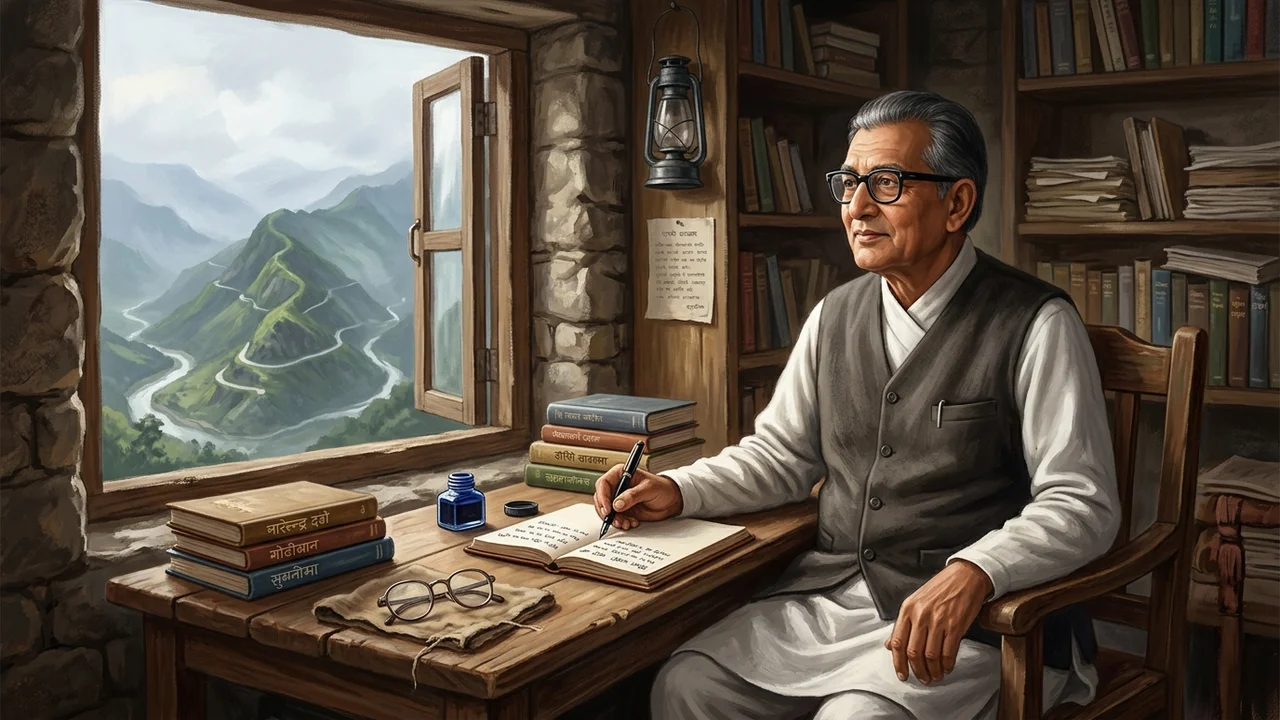
The man and the books
| Dual Identity | Supreme Master of Freudian Psychological Realism & Historic Democratic Statesman (First elected Prime Minister of Nepal, 1959–1960) |
|---|---|
| Lifespan & Origins | 1914–1982 CE (1971–2039 BS) · Born in exile in Varanasi (Banaras), India |
| Literary Movement | Freudian Psychological Realism (Manovaijñānika Yathārthavāda), Existentialism, and Humanist Anarchism |
| Creative Creed | Maintained an unbending boundary between statecraft and literature: "In politics I am a socialist; in literature I am an anarchist." |
| Landmark Novels | Sumnima (1969, exploration of the primal somatic encounter between Aryan intellect and Kirat nature-mysticism), Modiaain (existential meditation on the slaughter of the Mahabharata war), Teen Ghumti, Narendra Dai, Hitlar ra Yahudi, and Babu, Aama ra Chhora |
| Landmark Short Stories | Doshi Chashma (1949, "The Faulty Glasses" — landmark Freudian analysis of judicial neurosis and authoritarian paranoia), Shweta Bhairavi |
| Historical Impact | Liberated Nepali fiction from external moralizing, exploring the raw unconscious drives, sexual repressions, and existential complexities of the human condition. |
Bishweshwar Prasad Koirala (Viśveśvaraprasāda Koirālā / विश्वेश्वरप्रसाद कोइराला), universally known by the initials BP, was a towering intellect of South Asian modernity. While world history remembers him as the charismatic champion of democratic socialism who founded the Nepali Congress and served as Nepal's first democratically elected Prime Minister in 1959, the annals of literature revere him as the undisputed master of psychological realism in the Nepali novel and short story.
Born in 1914 CE (1971 BS) in political exile in Banaras, India, BP was schooled in both the radical anti-colonial movements of British India and the avant-garde European literature of Freud, Lawrence, and Gide. Unlike many contemporaries who weaponized literature for programmatic political propaganda, BP fiercely guarded the sovereignty of his artistic interior, famously declaring: "In politics I am a socialist; in literature I am an anarchist." Literature, for BP, was not a servant of state policy, but a fearless probe into the hidden undercurrents of the human psyche—its repressed libido, existential dread, moral contradictions, and spiritual hunger.
In his 1949 story collection Doshi Chashma ("The Faulty Glasses"), BP created a psychological masterpiece dissecting how political sycophancy and fear under the Rana regime warp an administrator's perception of reality. Later, during eight harrowing years of political imprisonment inside Sundarijal Military Jail following King Mahendra's 1960 royal coup, BP authored a succession of extraordinary novels. His 1969 masterpiece Sumnima staged a profound somatic and philosophical clash between an austere Aryan Vedic youth and a Kirat tribal maiden, examining the tension between spiritual asceticism and the irrepressible claims of physical life.
A life that keeps walking into the books
His father was Krishna Prasad Koirala (कोइराला), a man who followed Gandhi, and the boy grew up in Banaras rather than in a house in Nepal. Until he was fourteen he went to a school his father had set up. After that he went to Harishchandra School in the city. He started writing in the ninth grade. In 1930 the British charged him and his brother Matrika with ties to people they called terrorists. The brothers were held for three months and then let go. His father sent him to Scottish Church College in Calcutta. He left. He came back to Banaras. In 1932 he finished the intermediate exams. His father sent him to Calcutta again. He left again. In 1934 he took a bachelor's degree in economics and politics from Banaras Hindu University. In 1937 he took a law degree from the University of Calcutta and practiced for some years in Darjeeling.
While he was still a student he joined the Indian National Congress, in 1934. During the Second World War the British interned him at Dhanbad for two years, 1942 to 1944. When he came out, Indian independence was close, and he turned the same energy toward Nepal. In 1947 he founded the socialist Nepali (नेपाली) National Congress in India. In 1950 that party became the Nepali (नेपाली) Congress. On 9 March 1947 he crossed into Nepal to help his brother Girija start the strike at the jute mill in Biratnagar. He was arrested with Girija and four other leaders. The prisoners were walked to Kathmandu. The walk took twenty-one days, and it was slow on purpose. Villages along the road saw them. That walk did as much teaching as a speech. In Kathmandu they were held in a bungalow. A hunger strike of twenty-seven days, protests, and a request from Gandhi brought their release in August 1947.
He went back to India and looked for a way to bring the Rana (राणा) government down. He led the revolution of 1951. That ended a Rana (राणा) rule of about a hundred and four years. For nine months he was home minister in a cabinet shared by Ranas (राणा) and Congress. The cabinet broke. The last Rana (राणा) prime minister was dismissed in October 1951. King Mahendra then allowed a constitution and a free election. The election was in 1959. Many people expected a broken parliament. Congress took more than two-thirds of the seats in the lower house. BP's (बीपी) own seat was Biratnagar West in Morang. Mahendra hesitated for weeks, and then asked him to form a government. He took office on 27 May 1959. He was also minister of defence for the whole of that time, and minister of foreign affairs for about a month at the start.
The eighteen months were not quiet. He took Nepal's case to the United Nations. He visited China and India while those two were already quarreling over land. At home, a land reform, and especially a change in the tenancy laws, passed parliament easily and offended the landed families who had long dominated the army. On 15 December 1960 Mahendra suspended the constitution, dissolved parliament, dismissed the cabinet, took direct rule, and jailed BP (बीपी) and the colleagues closest to him. Many of them were out in a few months. BP (बीपी) was not. He had cancer of the throat. He was kept in prison without a trial until 1968. A great part of the fiction was written in those years, in Sundarijal jail.
In 1968 Surya Bahadur Thapa, then prime minister, had a hand in the release, and also in keeping BP (बीपी) out of the country. BP (बीपी) lived in exile in Banaras until December 1976. King Birendra had followed Mahendra in 1972. BP (बीपी) came home in the winter of 1976 on a policy he called national reconciliation, a meeting of king and democrats. He was taken from the airport to Sundarijal again. The date people give is 16 Poush 2033. He was charged with the capital offence of trying an armed revolution. In March 1978 he was cleared of treason and sedition. In 1981 he was allowed to go to the United States for treatment. The government paid part of the cost. Family and friends arranged the rest.
During the student demonstrations of 1979 he was under house arrest. He welcomed Birendra's call for a referendum on the political system. The announced result kept the Panchayat, the party-less system the king ran. BP (बीपी) was the first leader to accept that announced result, and he said the vote had been fair. He then asked people to boycott the 1981 election, because membership in a class organization had been made compulsory, and he would not call that a free contest. His health was failing. In January 1982 he still drew a very large meeting at Ratna Park in Kathmandu. He died on 21 July 1982. A great crowd came to the funeral. His brothers Matrika and Girija were prime ministers too, at other times. His wife was Sushila Koirala (कोइराला), whom he married in 1936. She was a classical dancer, a theatre director, and a worker for public causes. They had four children.
Two tempers in one man
In politics he was a socialist democrat. He wanted more than one party, and he wanted bread to be part of freedom. A poor country, he held, is not free just because it can vote. He differed from communists by saying a person needs more than bread. He differed from a market with no brake by saying that using up the world, and using up people, is a short sight (दर्शन). Socialism, for him, was the way that kept a vote and a fair chance at a living in the same hand.
In the books he let a wilder temper out. He said the fiction was where his revolt against the old order went. The politics was where he looked for an order a citizen could bear. Readers call the novels psychological, and they call Tin Ghumti (तीन घुम्ती) existential, a book about a person who has to choose inside a life that does not cooperate. He had read widely, in Nepali (नेपाली), Hindi, Bengali, and English, and in French, German, and Russian books as well. Freud's way of reading a hidden wish is in the early stories. It is not a costume he wears in every book. Even a story that is not Freudian still felt new in Nepali (नेपाली), because the person on the page wanted something the household rules had no room for.
He wrote the long novels fast, in jail, and they were printed slowly, years later. Modiāin (मोदिआइन) was written in three days at the end of January 1964. Tin Ghumti (तीन घुम्ती) was written in that same January. Sumnimā (सुम्निमा) was written in eight days in June 1964, from the 21st to the 28th. A reader who buys them meets another order. Tin Ghumti (तीन घुम्ती) came out in 1968, Sumnimā (सुम्निमा) in 1969, Narendra Dāi (नरेन्द्र दाइ) in 1970, Modiāin (मोदिआइन) in 1980. The jail was the workshop. The press caught up when it could. For a long time the writings were banned. Young people went to jail for having them in the house. That fact sits on the books like a second cover.
Doshi Chashma (दोषी चश्मा)
The story book is Doshi Chashma (दोषी चश्मा), Faulty Glasses, sixteen stories, published in 1949. Before that, his first stories had come out in Hindi in Hans (हंस), the magazine Premchand edited in Banaras. His first Nepali (नेपाली) story, Chandrabadan (चन्द्रबदन), came out in the magazine Sharada (शारदा) in 1935. Four more stories were in Katha Kusum (कथा कुसुम), an anthology printed in Darjeeling in 1938. By then a reader who followed the magazines already knew the kind of mind he was writing. The 1949 book gathered that work and gave it a name. The name is a pair of glasses that do not see straight. The fault is rarely in the glass alone.
The title story is about Keshav Raj, an ordinary man of the lower middle of society. His glasses blur the world. One day he fails to greet a Rana (राणा) general. He comes home and turns on the glasses first, as if the lenses had committed the discourtesy. A meal that is a little late becomes part of the same night. He cannot sleep. He knows what a missed greeting can cost under that government. The story stays inside the night of his fear. It does not need a speech about the Ranas (राणा). The fear is the speech. A man who believes the ruler's glance is the difference between safety and ruin will prosecute himself harder than a court would. The glasses are called guilty so that the reader can see who is actually on trial. It is the order that taught him to shake.
Karnelko Ghoda (कर्णेलको घोडा), The Colonel's Horse, moves the same pressure up into the ruling house. The colonel is about forty-five. His bride is about nineteen. He wants to be loved, and he wants to look like a man who can carry a marriage. He asks her a question she will not answer. She lets her weight rest on him. He cannot hold her, and he falls. She looks at him with hate. From that day the feeling she might have had is gone. A forty-five-year-old groom cannot read a nineteen-year-old silence, and the story does not ask her to explain herself for his comfort. Later he kills the horse. The killing is not a hunting scene. It is the colonel defeating himself. The aristocracy in the story can command a wedding and a stable, and still be empty when a living creature leans on it.
Madheshtira (मधेशतिर), Toward the Madhesh, follows a young widow. She wants a settled life, and she believes a husband is the way to it, which is the code she was given. She also decides to marry again, which breaks the code a widow was told to keep. She walks toward the Tarai with both of those facts in her. Conformity and revolt are not two women in this story. They are one woman, and neither choice gives her the happiness she walked for. BP's (बीपी) women are often like that. They are not rewards for a hero. They are the minds in which the book's real argument happens.
Those three are the stories a later critic can document in the open. The book holds thirteen more. This page does not invent them. The pattern of the three is already the pattern of the novels. A person tries to obey. The obedience hurts. A person tries to refuse. The refusal does not hand over a happy ending. The Rana (राणा) world, in these stories, is not a backdrop painted in for color. It is the reason a clerk cannot sleep, the reason a colonel is hollow, and the reason a widow's second chance is also a scandal.
Tin Ghumti (तीन घुम्ती)
Tin Ghumti (तीन घुम्ती), Three Turns, was published in 1968 by Sajha. It is the novel he wrote in Sundarijal in January 1964, and it is the one readers call his existential book. The setting is the Panchayat years, the party-less rule that began with the coup. Indramaya is a Newar girl. Pitamber is a Brahmin. They love each other. A marriage across that line was a taboo, a rule with teeth. They marry anyway. That is one turn, and it is already enough plot for an older kind of Nepali (नेपाली) novel, the kind that would stop at the brave wedding.
BP (बीपी) does not stop. Pitamber's political work gets him jailed by the Panchayat government. While he is inside, Indramaya falls in love with his friend Ramesh, and she becomes pregnant. That is the second turn, and it ruins the simple story of a loyal wife waiting at the door. The third turn is not a moral pasted on at the end. It is the inside of Indramaya's mind while those facts are all true at once. She is the wife of a man in a political jail. She is the lover of his friend. She is pregnant. The novel's courage is that it will not tidy her into a lesson about either patriotism or sin. It stays with the person who has to live in the mess.
The title's three turns are the title's promise. This page does not pin each turn to a chapter number, because that map is the book's own. What a reader can carry away is the shape. A marriage crosses caste, a jail breaks that marriage, and a desire arrives while the husband cannot come home. Around those facts, a woman's mind does not match the slogan on either side of the door. He wrote this in the same jail his hero is sent to. That rhyme is hard to miss, and it is still not an autobiography. Pitamber is not a portrait of the prime minister. Indramaya is the subject.
Sumnima (सुम्निमा)
Sumnimā (सुम्निमा) was published in 1969, also from Sajha. He wrote it in eight days in the jail, 21 to 28 June 1964. It is a short book, under a hundred pages, and it is the novel many houses name when they name him as a writer of fiction. The two people are Somdutta and Sumnima (सुम्निमा). He is a Brahmin boy raised on ritual and on the gods. Sex, in the teaching he has swallowed, is a way to produce a child, and celibacy is the ladder toward austerity and release. She is a Kirati girl, practical, at home in a natural life. They spend a long time by the Koshi river. A deep liking grows between them. Then they are separated.
After the separation he finds that she has taken root in him. Wanting her follows him to the end of his life. The ladder he was given, the one that was supposed to lead up and out of the body, has kept him from living in the body he actually has. That is the psychological story, and BP (बीपी) tells it without mocking the gods as a joke. Somdutta's devotion is real. It is also a wall. Sumnima (सुम्निमा) is not a symbol wheeled in to scold Brahmins and then dismissed. She is the person who knows how to be in the world he has been taught to step over. The hurt of the book is that he understands this too late to have the life.
There is a second story running under the love story, and it is about two peoples in one place. A Brahmin household and a Kirati household share a riverside and do not share a world. The novel lets that difference be felt through the two young people, rather than through a speech about ethnicity. Minority, cultural difference, and the consciousness of one's own people are in the book because they are in the friendship. A reader in a later decade can hear a politics of identity here. The 1964 pages are already doing that work, quietly, by refusing to let Somdutta's ritual be the only grown-up way to live. The desire that will not leave him is the novel's way of saying the other life was real.
It is worth saying what the book is not. It is not a folklore of "the first Kirati woman," though some lists subtitle it that way. Sumnima (सुम्निमा) is one woman, with a name, in a novel. It is not a sermon that the Kirati way is pure and the Brahmin way is false. Somdutta's loss is the loss of a man who cannot use what he was taught, and cannot live the life he was not taught. Both of those failures are his. She goes on being herself. The book belongs to the jail year, beside Tin Ghumti (तीन घुम्ती), and it is the one of the two that a general reader is most likely to have actually finished.
Narendra Dai (नरेन्द्र दाइ)
Narendra Dāi (नरेन्द्र दाइ), Brother Narendra, came out in 1970. A boy tells it, and he grows up during the telling. The household is rich enough to have a name in the village. Narendra is the man of that house. He is married to Gauri (गौरी). He does not want Gauri (गौरी). He wants Munaria, a poor girl who works in the house and lives with her father. Gauri (गौरी) wants Narendra. The family tries to make the marriage into a marriage. It does not take. The boy who is telling the story is sorry for Gauri (गौरी) and dislikes Munaria. That dislike is part of what the book will later ask him to outgrow.
The turn comes through Kaptanni Aama, an older woman of the house who keeps the caste line. Munaria gives water to a man of the Sarki caste, a caste the village treats as low, the caste associated with leather. Kaptanni Aama sees it and abuses her. Narendra's anger is immediate. He says he will leave the village, and no one can talk him down. The next day Munaria leaves with him. A social novel of an older kind might end on that exit, the rebel couple walking out of a cruel house. BP (बीपी) is not finished.
The narrator grows up and goes to Banaras to study. One day he sees Munaria in the city. Narendra has gone back to the village. He has tuberculosis, and he is not coming back to her. She is living with a friend of his who betrayed him, and the living is on her body. The narrator, who disliked her when he was a boy in the house, begins to see a girl in a bad place rather than a villain in a love story. That change in the teller is as much the novel as the love triangle. Meanwhile Narendra, home again, comes to love Gauri (गौरी). Then he dies of the illness. Gauri (गौरी) has had the love at the end, and she keeps the marks of a married woman, the red in the parting of the hair and the pote (पोते), the beads, which a widow was expected to put away. She lives in that choice.
Years later the narrator hears that Gauri (गौरी) has died in the great earthquake, the one Nepali (नेपाली) mouths date to 1990 in the Bikram Sambat calendar, which is 1934 in the common calendar. The house fell on her. She lived nine days with the injury and could not get out. A book published in 1970 is looking backward at that disaster, and at a whole village story that seemed, while it was happening, to be about love and caste and pride. The earthquake does not care which of those the village thought was the subject. Gauri's (गौरी) death is not a symbol BP (बीपी) announces. It is the last fact. The people who spent years arranging a correct marriage, a correct exit, a correct widowhood, are still living in houses that can fall down.
Modiaain (मोदिआइन)
Modiāin (मोदिआइन), The Grocer's Wife, is probably his shortest novel. He wrote it in three days, 28 to 30 January 1964, in the same jail, and Sajha published it in 1980, sixteen years later. The frame is modest. A boy is traveling from Nepal toward India with a man called Misirji. The boy wants to see Darbhanga. They stay in the house of the grocer's wife. They bathe in Hadaha Pokhari, the lake by the house, and they eat. By day the boy walks the city. At night he wants to go back to the water. She stops him. The lake, she says, has been there since the time of the Mahabharata. Then she tells him that war.
She tells it as a woman who lost her husband in it. The epic is full of kings, heroes, and a battlefield that later books treat as a lesson. She is none of those speakers. There were a great many women in her position. The novel's bet is that a grocer's wife is a better witness to a war than a catalogue of heroes, because the war arrives in her house as an absence, a man who does not come home. From inside the telling, BP (बीपी) runs a long list of human weather. Love, sex, beauty, longing, anger, honesty, fear, courage, deceit, the wish to renounce, emptiness, and a want that will not die. The prose, readers say, stays smooth while the feelings do not.
He is also arguing with a reading of the Bhagvad Gītā. In that reading the world is an illusion, death is not the final thing it seems to a widow, and doing one's own duty outranks the mess the duty leaves behind. The Gītā on this shelf is the poem itself, in the Bhīṣma section of the Mahābhārata. Modiāin (मोदिआइन) is one novelist's quarrel with the use of that poem as a comfort for war. He does not rewrite the battle. He asks what the battle is worth to the woman who has to keep a shop and a life after it. A Nepali (नेपाली) reader who had been taught to accept fate, and to accept a husband's death as the fruit of a duty, is the reader he wanted to unsettle. The boy by the lake is the stand-in for that reader. He wanted a sight (दर्शन) of the city. He gets a story that will not let the lake be only a lake.
Babu, Ama ra Chora (बाबु, आमा र छोरा)
Bābu, Āmā ra Chorā (बाबु, आमा र छोरा), Father, Mother and Son, was published in 1989, after his death. It is the last of the six novels, and it is the strangest household he built. The places are few, and they are Kathmandu, Calcutta, and Banaras. The people are a small high family. The first wife dies young, after giving birth to one son. The father, a man the telling calls Vidur, is left with the boy. The boy grows up and goes to Banaras to study. There he loves Uma, a girl at the college.
They have a night which the boy takes as a wedding they chose for themselves. The next day he leaves for Calcutta to buy clothes and goods for his father's wedding. He does not know that the bride is Uma. Her brother comes from Kathmandu the same day to fetch her. Within four or five days she is married to the father. She is pregnant, and the child is the son's. The father does not know that his new wife was his son's lover. He never finds out. At the time of the shopping and the wedding, the son does not know that the bride he is buying for is Uma. The knot is fate's, in the novel's own argument. If the father had known, he would not have married her. If Uma had been free to refuse and had held the refusal, the wedding would have failed. The book does not give her that freedom. It says a person walks a path that was already there.
After the wedding the house looks like one family and contains two. One side of the house holds the father, the elder son, and Uma. The other side holds Uma, the son she loved, and the child. What does the father call that child, a son or a grandson. What does the elder son call him, a brother or a son. The questions are cruel because the names of a family are the only names the house has, and none of them fit. Uma did not marry for love of the husband. What she gives him, in the early days, is closer to pity and to the role of a wife than to desire. He is around forty or forty-five, anxious, aware that his body is not a young man's, and unable to feel that this second marriage has saved him from being alone. He picks at small things. The novel lets that anxiety be ordinary and humiliating, not grand.
Later the telling turns again. Uma's own mother dies. The child grows. A liking between Uma and the husband begins where there was none. The book calls that turn fate as well. A reader who loved the earlier novels for their rebellious women can feel betrayed here. Those women decide, and pay. Uma is not allowed to decide. BP (बीपी), who had spent decades arguing for a citizen's freedom, binds this one character so that the sermon about fate can be complete. That is a fair complaint against the book, and it is also why the book is unforgettable. It is the novel in which he stops trusting the free person he had been defending, and tests what a household becomes when nobody in it is guilty and everybody is misplaced. He does not tell the husband the truth at the end. The secret stays a secret. Fate, in this book, includes not knowing.
The books around the novels
Six novels are the set people count. Tin Ghumti (तीन घुम्ती), Sumnimā (सुम्निमा), Narendra Dāi (नरेन्द्र दाइ), Modiāin (मोदिआइन), Bābu, Āmā ra Chorā (बाबु, आमा र छोरा), and one more that he did not finish. Hitler ra Yahudi (हिटलर र यहूदी), Hitler and the Jews, is an unfinished novel in the form of a travelogue, from the 1950s, when politics ate the decade. This page does not retell it. An unfinished travel book about that subject is easy to fake, and faking it would be a lie. The title is enough to show the range he wanted. Europe's disaster was on his desk, beside village caste and a grocer's wife.
Two story collections carry the short work. Doshi Chashma (दोषी चश्मा) is the 1949 book. Shwet Bhairavi (श्वेत भैरवी), The White Bhairavi, came out in 1983, the year after he died. Bhairavi is a fierce form of the goddess. The title puts terror and a holy name in the same mouth. This page does not invent the stories inside it. A later editor, Hariprasad Sharma, gathered stories and poems under the title Bishweshwar Prasad Koiralaka Katha ra Kavita (विश्वेश्वरप्रसाद कोइरालाका कथा र कविता). He did write poems. They are not the road a house walks to reach him. The stories are.
The life in his own late telling is Atmabrittanta (आत्मवृत्तान्त). It grew out of conversations with the senior advocate Ganesh Raj Sharma, and it was published as a book of recollections. An unfinished Mero Katha (मेरो कथा), My Story, is dated to 1983 in lists of the work. Jail Journal (जेल जर्नल) is the daily record of Sundarijal. Pheri Sundarijal (फेरि सुन्दरीजल), Sundarijal Again, is the return, the airport, and the second imprisonment. These are not novels. They are the political man writing down the days the novels were born next to. A reader who has just finished Indramaya, or Somdutta, or the grocer's wife, can open the jail book and see the room. The room does not explain the fiction away. It shows the price of the paper.
He also wrote political essays, and the titles are already arguments. One essay sets monarchy beside democracy. Another says that the pressed-down people have woken. Another takes up nationalism in Nepal's own case, and another treats revolution as something he called necessary. He argues that the Panchayat system is not democracy, he sets democracy beside socialism, and he calls for national unity and reconciliation. Those essays belong to the public fight, from 1960 to 1980. This page does not summarize each one as if a paragraph could stand in for a pamphlet. The titles tell you which door each fight used. The fiction tells you what the fights cost inside a house.
What to carry out of the room
If a reader has one evening, the path through him is this. Start with the faulty glasses, so the fear has a face before it has a theory. Then Sumnimā (सुम्निमा), because it is the novel a house already half knows, and the half it knows is usually only the romance. Then Tin Ghumti (तीन घुम्ती), because Indramaya will not let the romance, or the politics, win cleanly. Then the grocer's wife, if the reader wants his argument with war and with an easy reading of duty. Narendra Dāi (नरेन्द्र दाइ) and Bābu, Āmā ra Chorā (बाबु, आमा र छोरा) are the long look at how a family misnames the people inside it. The memoir and the jail books are the life, and they make more sense after the fiction than before it. Read as a politician's hobbies, the novels look like a great man's side work. Read in the order above, the prime ministry looks like one chapter in a mind that was already, in 1935, more interested in a frightened clerk than in a hero.
विश्वेश्वरप्रसाद कोइराला त्यो मानिस हुन्, जसलाई नेपाली घरले बीपी भन्छ। उहाँ देशले चुनेका पहिलो प्रधानमन्त्री हुनुहुन्थ्यो। उहाँ त्यो लेखक पनि हुनुहुन्थ्यो, जसले लुकेको मनलाई पृष्ठमा राख्नुभयो, र त्यो मन अक्सर नारीको हुन्थ्यो। उहाँ ई.सं. ८ सेप्टेम्बर १९१४ मा बनारसमा जन्मनुभयो, र ई.सं. २१ जुलाई १९८२ मा काठमाडौंमा बित्नुभयो। उमेर सतसट्ठी वर्ष थियो।
मानिस उहाँलाई पहिले राजनीतिज्ञका रूपमा भेट्छन्, अनि किताबले छक्क पार्छ। किताब चाँडैदेखि नै थिए। पहिलो नेपाली कथा ई.सं. १९३५ मा आयो, उहाँ करिब एक्काइस वर्षको हुँदा, कसैले उहाँलाई मत हाल्नुभन्दा धेरै अघि। उहाँको नाम स्थापित गरेको कथासङ्ग्रह ई.सं. १९४९ मा आयो, प्रधानमन्त्री हुनुभन्दा दस वर्षअघि। मानिसले अझै हातैहातमा चलाउने उपन्यासहरू अधिकांश ई.सं. १९६४ मा जेलमा लेखिएका थिए, राजाले उहाँलाई त्यहाँ थुनेपछि। राजनीतिले जीवन दियो। जेलको टेबलले पृष्ठ दियो। यी दुईमध्ये एउटा मात्र लिनेले आधा मानिस पाउँछ।
उहाँ ई.सं. १९८२ मा बित्नुभयो। नेपालमा लेखकका किताब मृत्युको वर्षपछि पचास वर्षसम्म सुरक्षित रहन्छन्, त्यसैले यी किताब अझै उतार्न पाइँदैन। यो पृष्ठले किताबबारे बताउँछ, छाप्दैन। उहाँको एउटा वाक्य पनि यहाँ सार्वजनिक सामग्री झैँ राखिएको छैन। कथा, पात्र, र किताबले के गर्दै छन् भन्ने कुरा यस तहको वर्णन हो।
जीवन, जो किताबभित्र पस्छ
बुबा कृष्णप्रसाद कोइराला, गान्धीलाई पछ्याउने मानिस हुनुहुन्थ्यो। छोरा नेपालको घरमा होइन, बनारसमा हुर्कनुभयो। चौध वर्षसम्म बुबाले खोलेको स्कूलमा पढ्नुभयो। त्यसपछि सहरको हरिश्चन्द्र स्कूलमा जानुभयो। नवौँ कक्षामा लेख्न थाल्नुभयो। ई.सं. १९३० मा बेलायती सरकारले उहाँ र दाजु मातृकालाई आतङ्ककारी भनिएका मानिससँगको सम्बन्धको अभियोग लगायो। उहाँहरू तीन महिना थुनामा हुनुभयो, अनि छुट्नुभयो। बुबाले कलकत्ताको स्कटिस चर्च कलेजमा पठाउनुभयो। उहाँले छोड्नुभयो। बनारस फर्कनुभयो। ई.सं. १९३२ मा इन्टरमिडिएट सक्नुभयो। बुबाले फेरि कलकत्ता पठाउनुभयो। फेरि छोड्नुभयो। ई.सं. १९३४ मा बनारस हिन्दू विश्वविद्यालयबाट अर्थशास्त्र र राजनीतिमा स्नातक लिनुभयो। ई.सं. १९३७ मा कलकत्ता विश्वविद्यालयबाट कानूनको डिग्री लिनुभयो, र केही वर्ष दार्जिलिङमा वकालत गर्नुभयो।
विद्यार्थी छँदै ई.सं. १९३४ मा भारतीय राष्ट्रिय कांग्रेसमा लाग्नुभयो। दोस्रो विश्वयुद्धमा बेलायतीहरूले उहाँलाई धनबादमा दुई वर्ष थुने, ई.सं. १९४२ देखि १९४४। निस्कँदा भारतको स्वतन्त्रता नजिक थियो, र उहाँले त्यो जोश नेपालतिर फर्काउनुभयो। ई.सं. १९४७ मा भारतमा समाजवादी नेपाली राष्ट्रिय कांग्रेस खोल्नुभयो। ई.सं. १९५० मा त्यो दल नेपाली कांग्रेस भयो। ई.सं. ९ मार्च १९४७ मा उहाँ नेपाल पस्नुभयो, भाइ गिरिजालाई विराटनगर जुट मिलको हडतालमा सघाउन। गिरिजा र अरू चार नेतासँगै पक्रिनुभयो। कैदीहरूलाई काठमाडौं हिँडाइयो। हिँड्न एक्काइस दिन लाग्यो, र जानाजानी ढिलो गराइएको थियो। बाटाका गाउँलेले देखे। त्यो हिँडाइले भाषणले जत्तिकै सिकायो। काठमाडौंमा उहाँहरूलाई एउटा बङ्गलामा थुनियो। सत्ताइस दिनको अनशन, विरोध, र गान्धीको बिन्तीले ई.सं. अगस्ट १९४७ मा छुटकारा भयो।
उहाँ भारत फर्कनुभयो, र राणा सरकार ढाल्ने बाटो खोज्नुभयो। ई.सं. १९५१ को क्रान्ति उहाँले अघि बढाउनुभयो। करिब एक सय चार वर्षको राणा शासन टुङ्गियो। राणा र कांग्रेस मिलेको मन्त्रिमण्डलमा नौ महिना गृहमन्त्री हुनुभयो। मन्त्रिमण्डल फुट्यो। अन्तिम राणा प्रधानमन्त्री ई.सं. अक्टोबर १९५१ मा हटाइए। राजा महेन्द्रले संविधान र स्वतन्त्र चुनाव दिनुभयो। चुनाव ई.सं. १९५९ मा भयो। धेरैले टुक्रे संसद् हुने अपेक्षा गरेका थिए। कांग्रेसले तल्लो सदनमा दुई तिहाइभन्दा बढी सिट लियो। बीपीको आफ्नै सिट मोरङको विराटनगर पश्चिम थियो। महेन्द्रले हप्ताहरूसम्म ढिलाइ गर्नुभयो, अनि सरकार बनाउन भन्नुभयो। उहाँ ई.सं. २७ मे १९५९ मा पदमा बस्नुभयो। त्यो सबै समय रक्षामन्त्री पनि हुनुहुन्थ्यो, र सुरुको करिब एक महिना परराष्ट्रमन्त्री पनि।
अठार महिना शान्त थिएनन्। उहाँले नेपालको कुरा संयुक्त राष्ट्रसम्म लैजानुभयो। चीन र भारत भूमिको झगडामा उत्रिसकेका बेला दुवैतिर जानुभयो। घरमा भूमिसुधार, खास गरी मोहीसम्बन्धी कानूनमा भएको परिवर्तन, संसद्बाट सजिलै पास भयो, र सेनामाथि लामो समयदेखि पकड राखेका जमिन्दार घराना रुष्ट भए। ई.सं. १५ डिसेम्बर १९६० मा महेन्द्रले संविधान रोक्नुभयो, संसद् भङ्ग गर्नुभयो, मन्त्रिमण्डल हटाउनुभयो, प्रत्यक्ष शासन लिनुभयो, र बीपी र उहाँका सबैभन्दा नजिकका साथीलाई थुन्नुभयो। तीमध्ये धेरै जना केही महिनामै छुटे। बीपी निस्कनुभएन। उहाँलाई घाँटीको क्यान्सर थियो। ई.सं. १९६८ सम्म बिनामुद्दा थुनामा बस्नुभयो। उहाँको कथा-साहित्यको ठूलो हिस्सा ती वर्षमा सुन्दरीजल जेलमा लेखियो।
ई.सं. १९६८ मा उहाँको रिहाइमा तत्कालीन प्रधानमन्त्री सूर्यबहादुर थापाको हात थियो, र उहाँलाई देशबाहिर राख्नमा पनि। बीपी ई.सं. डिसेम्बर १९७६ सम्म बनारसको निर्वासनमा बस्नुभयो। राजा वीरेन्द्र ई.सं. १९७२ मा महेन्द्रपछि गद्दीमा बस्नुभएको थियो। बीपी ई.सं. १९७६ को जाडोमा राष्ट्रिय मेलमिलापको नीति लिएर घर फर्कनुभयो, राजा र प्रजातन्त्रवादीहरू भेट्नुपर्छ भन्ने नीति। विमानस्थलबाट फेरि सुन्दरीजल लगियो। मिति १६ पुस २०३३ भनिन्छ। सशस्त्र क्रान्तिको प्रयास गरेको मृत्युदण्डयोग्य अभियोग लाग्यो। ई.सं. मार्च १९७८ मा देशद्रोह र राजद्रोहको अभियोगबाट उहाँ सफाइ पाउनुभयो। ई.सं. १९८१ मा उहाँलाई उपचारका लागि अमेरिका जान दिइयो। खर्चको केही भाग सरकारले दियो। बाँकी परिवार र साथीले मिलाए।
ई.सं. १९७९ को विद्यार्थी आन्दोलनमा उहाँ घरकै थुनामा हुनुहुन्थ्यो। वीरेन्द्रले राजनीतिक व्यवस्थामाथि जनमत संग्रहको आह्वान गर्दा उहाँले स्वागत गर्नुभयो। घोषित नतिजाले पंचायत कायम राख्यो, दल नभएको, राजाले चलाएको त्यो व्यवस्था। बीपी त्यो नतिजा स्वीकार गर्ने पहिलो नेता हुनुभयो, र मत निष्पक्ष थियो भन्नुभयो। अनि जनतालाई ई.सं. १९८१ को चुनाव बहिष्कार गर्न आग्रह गर्नुभयो, किनभने वर्गीय सङ्गठनको सदस्यता अनिवार्य पारिएको थियो, र उहाँ त्यसलाई स्वतन्त्र प्रतिस्पर्धा भन्नुहुन्थेन। स्वास्थ्य ढल्दै थियो। ई.सं. जनवरी १९८२ मा पनि रत्नपार्कमा निकै ठूलो भीड उहाँको भाषण सुन्न आयो। ई.सं. २१ जुलाई १९८२ मा बित्नुभयो। अन्त्येष्टिमा ठूलो भीड थियो। दाजु मातृका र भाइ गिरिजा पनि अरू बेला प्रधानमन्त्री हुनुभयो। पत्नी सुशीला कोइराला हुनुहुन्थ्यो। विवाह ई.सं. १९३६ मा भयो। उहाँ शास्त्रीय नृत्याङ्गना, रङ्गमञ्चकी निर्देशक, र सार्वजनिक कामकी मानिस हुनुहुन्थ्यो। चार सन्तान थिए।
एउटै मानिसमा दुई स्वभाव
राजनीतिमा उहाँ समाजवादी प्रजातन्त्रवादी हुनुहुन्थ्यो। एकभन्दा बढी दल चाहनुहुन्थ्यो, र रोटीलाई स्वतन्त्रताको हिस्सा बनाउन चाहनुहुन्थ्यो। गरिब देश मत हाल्न पाउँदैमा स्वतन्त्र हुँदैन भन्ने उहाँको धारणा थियो। कम्युनिस्टहरूसँग उहाँ यसरी फरक हुनुहुन्थ्यो कि मानिसलाई रोटीभन्दा बढी चाहिन्छ भन्नुहुन्थ्यो। ब्रेक नभएको बजारसँग उहाँ यसरी फरक हुनुहुन्थ्यो कि संसार र मानिसलाई सिध्याएर उपभोग गर्नु छोटो दृष्टि हो भन्नुहुन्थ्यो। उहाँका लागि समाजवाद त्यो बाटो थियो, जसले मत र जीविकाको उचित मौका एउटै हातमा राख्थ्यो।
किताबमा उहाँले अर्को, अलि जङ्गली स्वभाव निस्कन दिनुभयो। उहाँ भन्नुहुन्थ्यो, कथा त्यो ठाउँ हो जहाँ पुरानो व्यवस्थाविरुद्धको उहाँको विद्रोह गयो। राजनीति त्यो ठाउँ हो जहाँ उहाँले नागरिकले धान्न सक्ने व्यवस्था खोज्नुभयो। पाठक उपन्यासलाई मनोवैज्ञानिक भन्छन्, र तीन घुम्तीलाई अस्तित्ववादी किताब भन्छन्, जीवनले साथ नदिँदा पनि छान्नुपर्ने मानिसको किताब। उहाँ नेपाली, हिन्दी, बङ्गाली र अङ्ग्रेजीमा पढ्नुहुन्थ्यो, र फ्रान्सेली, जर्मन, रूसी किताब पनि पढ्नुहुन्थ्यो। फ्रायडको लुकेको इच्छा हेर्ने तरिका सुरुका कथामा छ। हरेक किताबमा उहाँले लगाउने पोसाक होइन। फ्रायड नभएको कथा पनि नेपालीमा नयाँ लाग्यो, किनभने पृष्ठको मानिसले घरको नियममा ठाउँ नभएको कुरा चाहन्थ्यो।
लामा उपन्यास उहाँले जेलमा छिटो लेख्नुभयो, र ती ढिलो छापिए। मोदिआइन ई.सं. १९६४ जनवरीको अन्त्यमा तीन दिनमा लेखियो। तीन घुम्ती त्यही जनवरीमा लेखियो। सुम्निमा ई.सं. १९६४ जुन २१ देखि २८ सम्म, आठ दिनमा लेखियो। किताब किन्ने पाठकले अर्कै क्रम भेट्छ। तीन घुम्ती ई.सं. १९६८ मा आयो, सुम्निमा १९६९ मा, नरेन्द्र दाइ १९७० मा, मोदिआइन १९८० मा। जेल कार्यशाला थियो। प्रेसले सकेका बेला पछि पुग्यो। लामो समय लेखनमा प्रतिबन्ध थियो। घरमा किताब भेटिएकैमा युवा जेल गए। त्यो तथ्य किताबमाथि दोस्रो आवरणझैँ बसेको छ।
दोषी चश्मा
ई.सं. १९४९ मा प्रकाशित सोह्र कथाको सङ्ग्रह दोषी चश्मा हो। त्यसअघि पहिलो कथाहरू हिन्दीमा निस्केका थिए, बनारसमा प्रेमचन्दले सम्पादन गर्नुभएको हंसमा। पहिलो नेपाली कथा चन्द्रबदन ई.सं. १९३५ मा शारदा पत्रिकामा आयो। अरू चार कथा दार्जिलिङबाट ई.सं. १९३८ मा छापिएको कथा कुसुममा थिए। त्यतिबेलासम्म पत्रिका पढ्नेले उहाँको मनको किसिम चिनेको थियो। ई.सं. १९४९ को किताबले त्यो काम जम्मा पारेर नाम दियो। नाम एउटा चश्मा हो, जसले सिधा देख्दैन। दोष अक्सर सिसामा मात्र हुँदैन।
शीर्षक कथा केशवराजको हो, समाजको तल्लो मध्यम तहको साधारण मानिस। उसको चश्माले संसार धमिलो पार्छ। एक दिन ऊ राणा जर्नेललाई अभिवादन गर्न चुक्छ। घर आएर पहिले चश्मासँग रिसाउँछ, मानौं लेन्सले नै बेइज्जत गरेको हो। अलि ढिलो भएको खाना पनि त्यही रातको हिस्सा बन्छ। निद्रा लाग्दैन। त्यो शासनमा अभिवादन चुक्नुको मोल उसलाई थाहा छ। कथा डरको रातभित्रै बस्छ। राणाबारे भाषण चाहिँदैन। डर नै भाषण हो। शासकको हेराइले सुरक्षा र विनाश छुट्याउँछ भन्ने मानिसले अदालतले भन्दा कडा आफैँलाई मुद्दा लगाउँछ। चश्मालाई दोषी भनिएको छ, ताकि पाठकले देखोस्, साँच्चै कसको सुनुवाइ भइरहेको छ। उसलाई थरथर काँप्न सिकाएको त व्यवस्थाले हो।
कर्णेलको घोडाले त्यही दबाबलाई शासक घरसम्म लैजान्छ। कर्णेल करिब पैंतालीस वर्षको छ। दुलही करिब उन्नाइस वर्षकी छिन्। ऊ प्रेम पाउन चाहन्छ, र विवाह धान्न सक्ने मानिस जस्तो देखिन चाहन्छ। उसले एउटा प्रश्न सोध्छ, जसको जवाफ उनी दिँदिनन्। उनी आफ्नो तौल उसमाथि छोड्छिन्। ऊ धान्न सक्दैन, र लड्छ। उनी घृणाको आँखाले हेर्छिन्। त्यो दिनदेखि उनीमा हुन सक्ने भाव सकिन्छ। पैंतालीस वर्षको दुलहाले उन्नाइस वर्षकी दुलहीको मौन पढ्न सक्दैन, र कथाले उनलाई उसको सान्त्वनाका लागि व्याख्या गर्न लगाउँदैन। पछि ऊ घोडा मार्छ। त्यो हत्या शिकारको दृश्य होइन। कर्णेल आफैँलाई हराउँदै छ। कथाको अभिजात वर्गले विवाह र तबेला दुवै हुकुम दिन सक्छ, र जीवित जनावर टेक्दा रित्तो हुन्छ।
मधेशतिर कथाले एउटी युवा विधवालाई पछ्याउँछ। उनी स्थिर जीवन चाहन्छिन्, र लोग्ने नै त्यसको बाटो हो भन्ने विश्वास गर्छिन्, जुन उनलाई दिइएको नियम हो। उनी फेरि विवाह गर्ने निश्चय पनि गर्छिन्, जसले विधवाले मान्नुपर्ने नियम तोड्छ। उनी ती दुवै कुरा बोकेर तराईतिर हिँड्छिन्। यो कथामा आज्ञा पालन र विद्रोह दुई नारी होइनन्। एउटै नारी हुन्, र कुनै छनोटले पनि उनले हिँडेर खोजेको सुख दिँदैन। बीपीका नारी अक्सर यस्तै हुन्। नायकको इनाम होइनन्। ती किताबको असली तर्क चल्ने मन हुन्।
यी तीन कथा पछिल्ला समीक्षकले खुला रूपमा प्रमाणित गर्न सक्ने कथा हुन्। किताबमा अरू तेह्र छन्। यो पृष्ठले ती रच्दैन। तीनको ढाँचा नै उपन्यासको ढाँचा हो। मानिस मान्न खोज्छ। मान्दा चोट लाग्छ। मानिस अस्वीकार गर्न खोज्छ। अस्वीकारले सुखान्त दिँदैन। यी कथामा राणा संसार रङका लागि कोरिएको पर्दा होइन। क्लर्क निदाउन नसक्नुको कारण हो, कर्णेल रित्तो हुनुको कारण हो, र विधवाको दोस्रो मौका पनि कलङ्क हुनुको कारण हो।
तीन घुम्ती
तीन घुम्ती ई.सं. १९६८ मा साझाबाट छापियो। सुन्दरीजलमा ई.सं. १९६४ जनवरीमा लेखिएको उपन्यास हो, र पाठकले अस्तित्ववादी किताब भन्ने यही हो। परिवेश पंचायतका वर्ष हुन्, तख्तापलटपछि सुरु भएको दल नभएको शासन। इन्द्रमाया नेवार केटी हुन्। पिताम्बर ब्राह्मण हुन्। दुवै एकअर्कालाई माया गर्छन्। त्यो रेखा नाघेर विवाह गर्नु वर्जित थियो, सजाय हुने नियम। तैपनि विवाह गर्छन्। त्यो एउटा घुम्ती हो, र साहसी विवाहमै रोकिने पुरानो खालको नेपाली उपन्यासका लागि त्यति नै कथानक पुग्थ्यो।
बीपी रोकिनुहुन्न। पिताम्बरको राजनीतिक कामका कारण पंचायत सरकारले उसलाई थुन्छ। ऊ भित्र छँदा इन्द्रमाया उसको साथी रमेशसँग प्रेममा पर्छे, र गर्भवती हुन्छे। त्यो दोस्रो घुम्ती हो, र ढोकामा पर्खिने वफादार पत्नीको सजिलो कथा बिग्रन्छ। तेस्रो घुम्ती अन्त्यमा टाँसिएको नैतिक शिक्षा होइन। ती सबै तथ्य एकैचोटि साँचो हुँदा इन्द्रमायाको मनभित्र जे चल्छ, त्यही हो। ऊ राजनीतिक जेलमा परेको मानिसकी पत्नी हो। ऊ उसको साथीकी प्रेमिका हो। ऊ गर्भवती हो। उपन्यासको साहस यो हो कि यसले उसलाई देशभक्ति वा पापबारेको कुनै पाठमा मिलाएर सफा पार्दैन। झमेलाभित्रै बाँच्नुपर्ने मानिससँगै यो बस्छ।
शीर्षकका तीन घुम्ती शीर्षकको वचन हुन्। यो पृष्ठले हरेक घुम्तीलाई अध्याय नम्बरमा गाड्दैन, किनभने त्यो नक्सा किताब आफैँको हो। पाठकले साथमा लैजान सक्ने यही आकार हो। विवाहले जात नाघ्छ, जेलले त्यो विवाह भत्काउँछ, र लोग्ने घर आउन नसक्दा एउटा इच्छा आइपुग्छ। ती तथ्यका वरिपरि एउटी नारीको मन छ, जुन ढोकाको कुनैतिरको नारासँग मिल्दैन। उहाँले यो त्यही जेलमा लेख्नुभयो, जहाँ उपन्यासको नायकलाई पठाइएको छ। त्यो मेल नदेख्न गाह्रो छ, र पनि यो आत्मकथा होइन। पिताम्बर प्रधानमन्त्रीको चित्र होइन। विषय इन्द्रमाया हुन्।
सुम्निमा
सुम्निमा ई.सं. १९६९ मा, साझाबाटै, छापियो। जेलमा आठ दिनमा लेखियो, ई.सं. १९६४ जुन २१ देखि २८। छोटो किताब हो, सय पृष्ठभन्दा कम, र कथाकारका रूपमा घरले उहाँको नाम लिँदा अक्सर यही उपन्यास लिन्छ। दुई मानिस सोमदत्त र सुम्निमा हुन्। ऊ ब्राह्मण केटो हो, विधि र देवतामा हुर्किएको। उसले निलेको शिक्षामा यौन सन्तान जन्माउने बाटो हो, र ब्रह्मचर्य तप र मुक्ति उक्लने भर्याङ हो। उनी किराती केटी हुन्, व्यावहारिक, प्राकृतिक जीवनमा सहज भएकी। दुवै कोसी किनारमा लामो समय बिताउँछन्। दुईबीच गहिरो लगाव बढ्दै जान्छ। अनि छुट्टिन्छन्।
छुट्टिएपछि उसले थाहा पाउँछ, उनी उसभित्र जरा गाडेर बसेकी छिन्। उनलाई चाहने मनले उसलाई जीवनको अन्त्यसम्म पछ्याउँछ। दिइएको भर्याङ, शरीरबाट माथि निस्कने भर्याङ, उसलाई आफ्नै शरीरमा बाँच्न दिएन। यो मनोवैज्ञानिक कथा हो, र बीपीले देवतालाई ठट्टाझैँ गिज्याउनुहुन्न। सोमदत्तको भक्ति साँचो हो। पर्खाल पनि हो। सुम्निमा ब्राह्मणलाई हप्काउन ल्याइएर पछि बिदा गरिने प्रतीक होइनन्। उनी ऊ नाघेर हिँड्न सिकाइएको संसारमा बस्न जान्ने मानिस हुन्। किताबको पीडा यही हो कि ऊ यो कुरा बुझ्दा जीवन पाउन ढिलो भइसकेको हुन्छ।
प्रेमकथामुनि दोस्रो कथा छ, एउटै ठाउँका दुई जातिको। ब्राह्मण घर र किराती घर एउटै किनार बाँड्छन्, संसार बाँड्दैनन्। उपन्यासले त्यो फरक भाषणले होइन, दुई युवाबाट महसुस गराउँछ। अल्पसङ्ख्यक, सांस्कृतिक फरक, र आफ्नै जातिको चेत किताबमा छन्, किनभने मित्रताभित्र छन्। पछिल्लो दशकको पाठकले यहाँ पहिचानको राजनीति सुन्न सक्छ। ई.सं. १९६४ का पृष्ठले त्यो काम पहिले नै गरिरहेका छन्, चुपचाप, सोमदत्तको विधिलाई बाँच्ने एक मात्र बाटो हुन नदिएर। उसलाई नछोड्ने चाहना नै उपन्यासको भनाइ हो, अर्को जीवन साँचो थियो।
किताब के होइन, त्यो पनि भन्नुपर्छ। यो "पहिली किराती नारी"को लोककथा होइन, यद्यपि कति सूचीले त्यस्तो उपशीर्षक राख्छन्। सुम्निमा एउटी नारी हुन्, नाम भएकी, उपन्यासकी। यो किराती बाटो शुद्ध र ब्राह्मण बाटो झुटो भन्ने उपदेश होइन। सोमदत्तको हार त्यो मानिसको हार हो, जसले सिकेको कुरा काममा लगाउन सक्दैन, र नसिकेको जीवन बाँच्न सक्दैन। दुवै असफलता उसकै हुन्। उनी आफैँ भएर अघि बढ्छिन्। किताब जेल वर्षको हो, तीन घुम्तीको छेउको, र ती दुईमध्ये साधारण पाठकले साँच्चै पढिसकेको हुने सम्भावना यसैको बढी हुन्छ।
नरेन्द्र दाइ
नरेन्द्र दाइ ई.सं. १९७० मा आयो। एउटा केटोले सुनाउँछ, र सुनाउँदासुनाउँदै ऊ हुर्कन्छ। घर गाउँमा नाम हुने गरी धनी छ। नरेन्द्र त्यो घरको मानिस हो। ऊ गौरीसँग विवाह गरेको छ। ऊ गौरीलाई चाहँदैन। ऊ मुनरियालाई चाहन्छ, घरमा काम गर्ने गरिब केटी, जो बाबासँग बस्छे। गौरी नरेन्द्रलाई चाहन्छे। परिवारले विवाहलाई विवाह बनाउन खोज्छ। बन्दैन। कथा सुनाउने केटो गौरीलाई दया गर्छ र मुनरियालाई मन पराउँदैन। त्यो अरुचि पछि किताबले उसलाई नाघ्न लगाउने कुराको हिस्सा हो।
मोड कप्तानी आमाबाट आउँछ, घरकी बूढी, जसले जातको रेखा जोगाउँछे। मुनरियाले सार्की जातको मानिसलाई पानी दिन्छे, गाउँलेले तल ठान्ने जात, छालाको कामसँग जोडिएको जात। कप्तानी आमाले देख्छे र गाली गर्छे। नरेन्द्रलाई तत्कालै रिस उठ्छ। ऊ गाउँ छोड्छु भन्छ, र कसैले सम्झाउन सक्दैन। भोलिपल्ट मुनरिया उसँगै हिँड्छे। पुरानो खालको सामाजिक उपन्यास त्यही निस्कने ढोकामा सकिन सक्थ्यो, विद्रोही जोडी निर्दयी घरबाट हिँड्दै। बीपीले यहीँ टुङ्ग्याउनुभएन।
कथावाचक हुर्कन्छ र पढ्न बनारस जान्छ। एक दिन सहरमा मुनरियालाई देख्छ। नरेन्द्र गाउँ फर्केको छ। उसलाई क्षयरोग लागेको छ, र ऊ उसकहाँ फर्किँदैन। ऊ नरेन्द्रलाई धोका दिने साथीसँग बसेकी छे, र त्यो बसाइ उसको शरीरमाथि छ। बालक छँदा घरमा उसलाई मन नपराउने कथावाचकले खलनायिका होइन, नराम्रो ठाउँकी केटी देख्न थाल्छ। सुनाउनेको त्यो परिवर्तन प्रेम त्रिकोण जत्तिकै उपन्यासको अङ्ग हो। यता नरेन्द्र घरमा गौरीलाई माया गर्न थाल्छ। अनि रोगले मर्छ। गौरीले अन्त्यमा प्रेम पाएकी हुन्छे, र विवाहित नारीका चिह्न राख्छे, सिउँदोको सिन्दुर र पोते, जुन विधवाले फुकाल्नुपर्ने भनिन्थ्यो। ऊ त्यही छनोटमा बाँच्छे।
वर्षौँपछि कथावाचकले सुन्छ, गौरी महाभूकम्पमा मरिन्, जसलाई नेपाली मुखले विक्रम संवत् १९९० को भूकम्प भन्छ, सामान्य पात्रोमा ई.सं. १९३४। घर उसमाथि खस्यो। चोट लागेपछि नौ दिन बाँची, तर बाहिर निस्कन सकिन। ई.सं. १९७० मा छापिएको किताब त्यो विपत्तितिर फर्केर हेरिरहेको छ, र त्यो घटना भइरहँदा प्रेम, जात र घमण्डको कथा जस्तो लागेको सारा गाउँको कथातिर पनि। गाउँलेले ती मध्ये के विषय ठाने भन्ने कुराले भूकम्पलाई फरक पर्दैन। गौरीको मृत्यु बीपीले घोषणा गर्ने प्रतीक होइन। अन्तिम तथ्य हो। सही विवाह, सही निस्कने बाटो, सही विधवापन मिलाउन वर्ष बिताएका मानिस अझै ढल्न सक्ने घरमा बस्छन्।
मोदिआइन
मोदिआइन सायद उहाँको सबैभन्दा छोटो उपन्यास हो। तीन दिनमा लेखियो, ई.सं. १९६४ जनवरी २८ देखि ३०, त्यही जेलमा, र साझाले ई.सं. १९८० मा छाप्यो, सोह्र वर्षपछि। खाका साधारण छ। एउटा केटो मिसिरजी भनिने मानिससँग नेपालबाट भारततिर हिँड्छ। केटो दरभङ्गा हेर्न चाहन्छ। दुवै मोदिआइनको घरमा बस्छन्। घरछेउको हडहा पोखरीमा नुहाउँछन्, खान्छन्। दिउँसो केटो सहर हिँड्छ। राति पानीमा फर्कन चाहन्छ। उनी रोक्छिन्। पोखरी महाभारतको बेलादेखि रहेको हो भन्छिन्। अनि त्यो युद्ध सुनाउँछिन्।
उनी त्यो युद्धमा लोग्ने गुमाएकी नारीका रूपमा सुनाउँछिन्। महाकाव्य राजा, वीर, र पछि पाठ बनाइने रणभूमिले भरिएको छ। उनी ती वक्तामध्ये कोही होइनन्। उनी जस्तो अवस्थाका नारी धेरै थिए। उपन्यासको दाउ यो हो कि पसलेकी पत्नी वीरहरूको सूचीभन्दा युद्धकी बढी भरपर्दो साक्षी हुन्, किनभने युद्ध उनको घरमा अनुपस्थितिका रूपमा आउँछ, घर नफर्केको मानिसका रूपमा। सुनाइभित्र बीपीले मानिसका मनका मौसमको लामो सूची खडा गर्नुहुन्छ। त्यसमा प्रेम, यौन, सुन्दरता, तृष्णा, रिस, इमान, डर, साहस, छल, त्याग्ने इच्छा, रित्तोपन, र नमर्ने चाहना पर्छन्। पाठक भन्छन्, गद्य चिल्लो रहन्छ तर भावहरू चिल्ला रहँदैनन्।
उहाँ भगवद्गीताको एउटा पठनसँग पनि तर्क गर्दै हुनुहुन्छ। त्यो पठनमा संसार माया हो, मृत्यु विधवालाई जस्तो लाग्छ त्यस्तो अन्तिम कुरा होइन, र आफ्नो धर्म निभाउनु त्यसले पछाडि छोडेको झमेलाभन्दा माथि पर्छ। यस तहको गीता कविता आफैँ हो, जो महाभारतको भीष्म पर्वमा छ। मोदिआइन त्यो कवितालाई युद्धको सान्त्वना बनाउने प्रयोगसँग एउटा उपन्यासकारको झगडा हो। उहाँले युद्ध फेरि लेख्नुहुन्न। युद्धपछि पसल र जीवन धान्नुपर्ने नारीलाई त्यो युद्धको के मोल छ भनेर सोध्नुहुन्छ। भाग्य मान्न, र लोग्नेको मृत्यु धर्मको फल मान्न सिकाइएको नेपाली पाठकलाई उहाँले हल्लाउन चाहनुभयो। पोखरीछेउको केटो त्यही पाठकको प्रतिनिधि हो। ऊ सहर हेर्न चाहन्थ्यो। उसले पोखरीलाई पोखरी मात्र हुन नदिने कथा पाउँछ।
बाबु, आमा र छोरा
बाबु, आमा र छोरा ई.सं. १९८९ मा छापियो, उहाँ बितेपछि। छ उपन्यासमध्ये अन्तिम हो, र उहाँले बनाएको सबैभन्दा अनौठो घर हो। ठाउँ थोरै छन्, ती हुन् काठमाडौं, कलकत्ता, र बनारस। मानिस एउटा सानो उच्च परिवारका हुन्। पहिली पत्नी एक छोरा जन्माएर चाँडै मर्छिन्। बाबु, जसलाई कथाले विदुर भन्छ, केटासँग एक्लै रहन्छ। केटो हुर्कन्छ र पढ्न बनारस जान्छ। त्यहाँ ऊ कलेजकी केटी उमासँग प्रेममा पर्छ।
दुवैको एउटा रात हुन्छ, जसलाई केटोले आफूहरूले रोजेको विवाह ठान्छ। भोलिपल्ट ऊ बाबुको विवाहका लागि लत्ताकपडा किन्न कलकत्ता जान्छ। दुलही उमा हुन् भन्ने उसलाई थाहा छैन। उमाका दाजु त्यही दिन काठमाडौंबाट उनलाई लिन आउँछन्। चार पाँच दिनभित्र उनी बाबुसँग विवाह गर्छिन्। उनी गर्भवती छिन्, र बच्चा छोराको हो। बाबुलाई थाहा छैन कि नयाँ पत्नी छोराकी प्रेमिका हुन्। उसले कहिल्यै थाहा पाउँदैन। किनमेल र विवाहको बेला छोरालाई पनि थाहा हुँदैन कि जसका लागि ऊ सामान किन्दै छ, ती उमा हुन्। उपन्यासकै तर्कमा यो गाँठो भाग्यले बाँधेको हो। बाबुले जानेको भए विवाह गर्ने थिएन। उमा अस्वीकार गर्न स्वतन्त्र भएकी भए र आफ्नो अस्वीकारमा अडिग रहेकी भए विवाह टुट्थ्यो। किताबले उनलाई त्यो स्वतन्त्रता दिँदैन। यसले भन्छ, मानिस पहिलेदेखि रहेको बाटो हिँड्छ।
विवाहपछि घर एउटै परिवार जस्तो देखिन्छ, र त्यसभित्र दुई परिवार अटाएका छन्। घरको एकातिर बाबु, जेठो छोरा, र उमा छन्। अर्कोतिर उमा, उनले माया गरेको छोरा, र बच्चा छन्। बाबुले त्यो बच्चालाई के भनेर बोलाउने, छोरा कि नाति? जेठो छोराले उसलाई के भनेर बोलाउने, भाइ कि छोरा? प्रश्न निर्मम छन्, किनभने घरसँग परिवारका नाम मात्र छन्, र ती कुनै पनि मिल्दैनन्। उमाले लोग्नेको प्रेमका कारण विवाह गरेकी थिइनन्। सुरुका दिनमा उनले दिने कुरा इच्छाभन्दा दया र पत्नीको भूमिका नजिक छ। बाबु करिब चालीस वा पैंतालीस वर्षको छ, चिन्तित छ, आफ्नो शरीर जवानको होइन भन्ने उसलाई थाहा छ, र यो दोस्रो विवाहले एक्लोपनबाट बचाएको छ भन्ने ऊ महसुस गर्न सक्दैन। ऊ साना कुरा केलाउँछ। उपन्यासले त्यो चिन्तालाई भव्य होइन, साधारण र अपमानजनक राख्छ।
पछि कथा फेरि मोडिन्छ। उमाकी आफ्नी आमा मर्छिन्। बच्चा हुर्कन्छ। उमा र लोग्नेबीच, जहाँ पहिले केही थिएन, एकअर्कालाई मन पराउने भाव सुरु हुन्छ। किताबले त्यो मोडलाई पनि भाग्य भन्छ। अघिल्ला उपन्यासलाई तिनका विद्रोही नारीका कारण मन पराउने पाठकले यहाँ धोका खाएको महसुस गर्न सक्छ। ती नारीले छान्थे, र मोल तिर्थे। उमालाई छान्न दिइँदैन। दशकौंसम्म नागरिकको स्वतन्त्रताको पक्षमा तर्क गरेका बीपीले भाग्यको उपदेश पूरा होस् भनेर यो एउटा पात्रलाई बाँध्नुहुन्छ। किताबविरुद्धको यो उजुरी ठीक छ, र किताब नबिर्सिने कारण पनि यही हो। यो त्यो उपन्यास हो, जहाँ उहाँले बचाउँदै आउनुभएको स्वतन्त्र मानिसमाथि विश्वास गर्न छोड्नुहुन्छ, र कोही दोषी नहुँदा, सबै बेठिक ठाउँमा पर्दा घर के हुन्छ भनेर जाँच्नुहुन्छ। अन्त्यमा लोग्नेलाई सत्य भन्नुहुन्न। गोप्य गोप्य नै रहन्छ। यो किताबमा भाग्यभित्र नजान्नु पनि पर्छ।
उपन्यास वरिपरिका किताब
मानिसले गन्ने छ वटा उपन्यास हुन्। तीन घुम्ती, सुम्निमा, नरेन्द्र दाइ, मोदिआइन, बाबु, आमा र छोरा, र एउटा अधुरो। हिटलर र यहूदी यात्रावृत्तान्तको रूपमा लेखिएको अधुरो उपन्यास हो, ई.सं. १९५० को दशकको, जब राजनीतिले पूरै दशक खायो। यो पृष्ठले त्यसलाई फेरि सुनाउँदैन। त्यो विषयको अधुरो यात्राकिताब नक्कली रूपमा रच्नु सजिलो छ, र त्यसो गर्नु झुट हुन्छ। शीर्षक नै पुग्छ, उहाँले चाहेको दायरा देखाउन। युरोपको विपत्ति उहाँको टेबलमा थियो, गाउँको जात र पसलेकी पत्नीको छेउमा।
दुई कथासङ्ग्रहले छोटो काम बोक्छन्। दोषी चश्मा ई.सं. १९४९ को किताब हो। श्वेत भैरवी ई.सं. १९८३ मा आयो, उहाँ बितेको अर्को वर्ष। भैरवी देवीको उग्र रूप हुन्। शीर्षकले आतङ्क र पवित्र नाम एउटै मुखमा राख्छ। यो पृष्ठले भित्रका कथा रच्दैन। पछि सम्पादक हरिप्रसाद शर्माले कथा र कविता विश्वेश्वरप्रसाद कोइरालाका कथा र कविता नाममा जम्मा पार्नुभयो। उहाँले कविता पनि लेख्नुभयो। घर उहाँकहाँ पुग्ने बाटो ती होइनन्। कथा हुन्।
उहाँको आफ्नै पछिल्लो भनाइमा जीवन आत्मवृत्तान्त हो। वरिष्ठ अधिवक्ता गणेशराज शर्मासँगको कुराकानीबाट हुर्क्यो, र संस्मरणको किताबका रूपमा छापियो। अधुरो मेरो कथा सूचीमा ई.सं. १९८३ मा राखिन्छ। जेल जर्नल सुन्दरीजलको दैनिक लेखा हो। फेरि सुन्दरीजल फर्किने कुरा हो, विमानस्थल, र दोस्रो थुना। यी उपन्यास होइनन्। उपन्यास जन्मेका दिनको छेउमा राजनीतिक मानिसले लेखेका दिन हुन्। इन्द्रमाया, सोमदत्त, वा पसलेकी पत्नी पढिसकेको पाठकले जेलको किताब खोलेर कोठा देख्न सक्छ। कोठाले कथाको अर्थ काड्दैन। कागजको मोल देखाउँछ।
उहाँले राजनीतिक निबन्ध पनि लेख्नुभयो, र शीर्षक आफैँ तर्क हुन्। एउटा निबन्धले राजतन्त्रलाई लोकतन्त्रको छेउमा राख्छ। अर्कोले थिचिएका जनता जागिसके भन्छ। अर्कोले नेपालकै सन्दर्भमा राष्ट्रियता उठाउँछ, र अर्कोले क्रान्तिलाई आवश्यक ठान्छ। उहाँ पंचायती व्यवस्था प्रजातान्त्रिक होइन भन्ने तर्क गर्नुहुन्छ, प्रजातन्त्रलाई समाजवादको छेउमा राख्नुहुन्छ, र राष्ट्रिय एकता र मेलमिलापको आह्वान गर्नुहुन्छ। ती निबन्ध ई.सं. १९६० देखि १९८० सम्मको सार्वजनिक लडाइँका हुन्। यो पृष्ठले हरेकको सार एउटा अनुच्छेदमा दिँदैन, मानौँ एउटा अनुच्छेदले पर्चाको ठाउँ लिन सक्छ। शीर्षकले कुन ढोकाबाट लडाइँ गयो भन्छ। कथाले लडाइँको मोल घरभित्र के पर्छ भन्छ।
कोठाबाट के लैजाने
पाठकसँग एउटा मात्र साँझ छ भने उहाँतर्फको बाटो यस्तो हो। दोषी चश्माबाट सुरु गर्नुहोस्, ताकि डरको सिद्धान्तभन्दा पहिले अनुहार होस्। अनि सुम्निमा पढ्नुहोस्, किनभने घरले आधा चिनेको उपन्यास यही हो, र चिनेको आधा अक्सर प्रेम मात्र हुन्छ। अनि तीन घुम्ती पढ्नुहोस्, किनभने इन्द्रमायाले प्रेमलाई वा राजनीतिलाई सफा जित गर्न दिँदिनन्। अनि पसलेकी पत्नी पढ्नुहोस्, यदि पाठक युद्धसँग र धर्मको सजिलो पठनसँग उहाँको तर्क चाहन्छ भने। नरेन्द्र दाइ र बाबु, आमा र छोरा परिवारले भित्रका मानिसलाई गलत नाम दिने लामो हेराइ हुन्। संस्मरण र जेलका किताब जीवन हुन्, र कथापछि पढ्दा अघि पढ्नुभन्दा बढी अर्थ लाग्छन्। राजनीतिज्ञको शौकझैँ पढ्दा उपन्यास ठूलो मानिसको छेउको काम जस्ता देखिन्छन्। माथिको क्रममा पढ्दा प्रधानमन्त्री पद त्यो मनको एउटा अध्याय जस्तो देखिन्छ, जुन ई.सं. १९३५ मै नायकभन्दा डराएको क्लर्कमा बढी रुचि राख्थ्यो।
Where it sits
The page before this one is Gopal Prasad Rimal (गोपालप्रसाद रिमाल). The page after it is Parijat (पारिजात). The war the grocer's wife tells is the Mahābhārata, and the teaching BP (बीपी) argues with is a use of the Bhagvad Gītā. The Gītā on this shelf is the poem. The novel is one man's quarrel with a comfort drawn out of it.