Nepali Readings / Parijat
Parijat (पारिजात)पारिजात
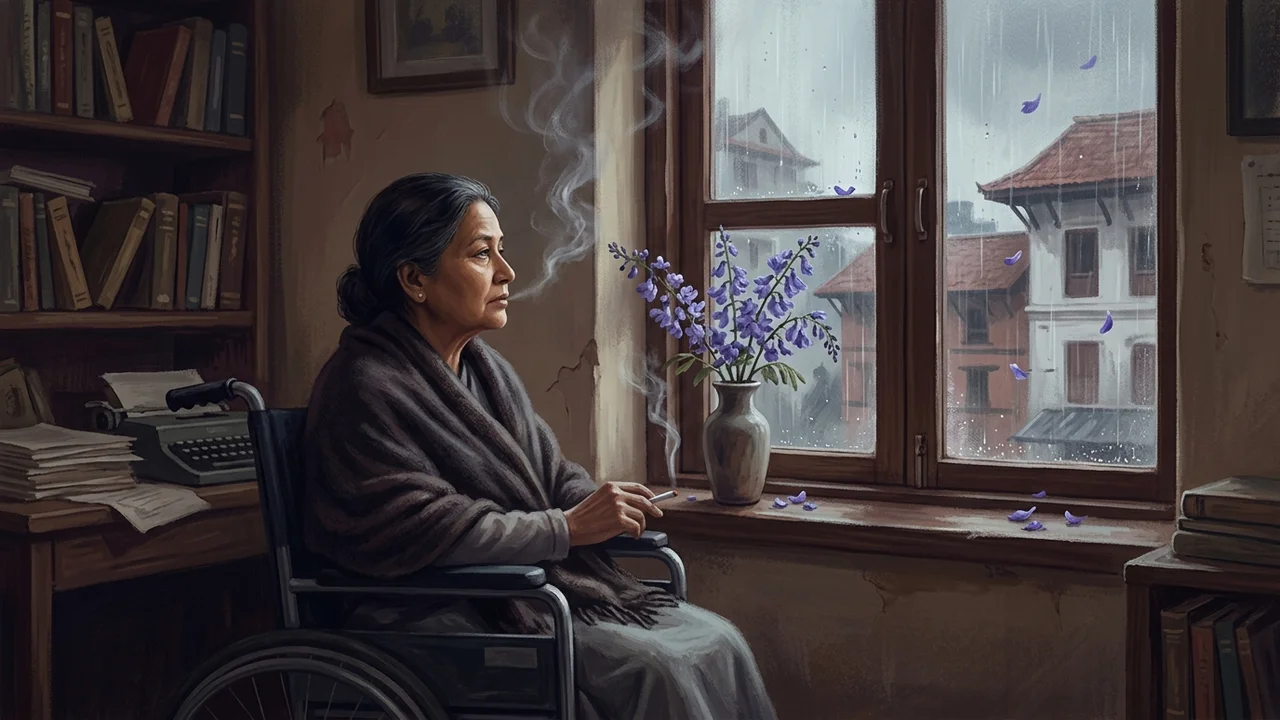
The name
| Literary Identity | Pioneering Matriarch of Modernist Existentialism & Progressive Social Realism |
|---|---|
| Lifespan & Origins | 1937–1993 CE (1994–2050 BS) · Born Bishnu Kumari Waiba in Darjeeling · Lived and died in Kathmandu |
| Historic Association | The Ralfa Movement (Rāla-Phā Āndolana), Existentialist Absurdism (Visaṅgativāda), and Marxist Humanism |
| Epochal Masterpiece | Shirishko Phool (1965, "The Blue Mimosa" — awarded the Madan Puraskar, making her the first woman to win the prestigious prize; translated into English and taught in international comparative literature curricula) |
| Major Novels & Collections | Mahattaheen, Baisko Manchhe, Toribari Hata ra Tirikha, Anido Pahadsanga, Aadhik Shrishti, and poetry volumes including Akanshya |
| Uncompromising Defiance | Afflicted with crippling rheumatoid arthritis from age 26, she wrote from bed while leading democratic resistance, founding human rights and prisoners' defense organizations, and rejecting royal patronage in solidarity with the working class. |
In the landscape of modern South Asian literature, Parijat (Pārijāta / पारिजात) stands as a monumental figure of uncompromising existential honesty and revolutionary defiance. Writing under the pen name of the sacred night-flowering jasmine, she demolished the sentimentality and moral prudery of traditional fiction, introducing an existentialist modernism (Astitvavāda and Visaṅgativāda) that confronted human absurdity, somatic alienation, and the cruelties of state authoritarianism with unflinching clarity.
Born Bishnu Kumari Waiba in 1937 CE (1994 BS) in the tea hills of Darjeeling into an indigenous Tamang family, she relocated in her youth to Kathmandu, completing her education while battling severe, debilitating rheumatoid arthritis that permanently paralyzed her limbs by her late twenties. Confined to a modest room in Mhaskatole, she turned her physical suffering into an engine of fierce intellectual autonomy. In the late 1960s, she co-founded the iconoclastic Ralfa movement, uniting poets and musicians who wandered through Kathmandu's alleys performing songs of existential disillusionment and progressive rebellion.
In 1965, Parijat published her crowning masterpiece Shirishko Phool (Śirīṣako Phūla / शिरीषको फूल, "The Blue Mimosa"). Centered on the disillusioned World War II veteran Suyogbir and the enigmatic, emotionally detached Sakambari, the novel was an existential thunderbolt that shattered traditional romantic conventions, winning the Madan Puraskar as the first work by a woman to receive the honor. In her later years, Parijat evolved into a fearless champion of Marxist humanism, establishing prisoner defense committees and refusing state decorations to stand forever with the marginalized.
Darjeeling, then a house she rarely left
The childhood was in Darjeeling, in the tea hills, and the first schooling was there. In 1950 the family moved to Kathmandu. She went to Padma Kanya campus and finished a B.A. in 1960. She had read French, Russian, and Indian novels in the course of studying English literature, and she was disappointed by the Nepali (नेपाली) novels she set beside them. She had started as a poet. Her first poem came out in 1959, in a paper called Dharti (धरती). The novel was a decision, not an accident. She wanted a Nepali (नेपाली) novel that could stand in the company of the books that had disappointed her by their absence.
While she was studying she wrote four novels and burned them. Then a long illness kept her in bed for about three years, and in that confinement she wrote a fifth. That one she kept. It became Shirishko Phool (शिरीषको फूल). The burning matters. She was not a writer who printed the first heat. She destroyed drafts until a book seemed worth a reader's hours. The illness matters too, and it is easy to tell it badly. A partial paralysis came in her youth. In the later years she rarely left the house. She did not marry. She had no children. Some of that was the body. Some of it, by the accounts of people who knew the choice, was her own wish. The room with flowers, in a house near Balaju, became a place progressive writers came to. The illness is part of the life. It is not the explanation of the books, and it is not a reason to speak of her as if the work were a patient's hobby.
She published three collections of poems, Akanksha (आकांक्षा), Parijatka Kavita (पारिजातका कविता), and Baisalu Bartaman (बैशालु वर्तमान). Her first story was Maile Najanmayeko Chhoro (मैले नजन्माएको छोरो), The Son I Did Not Give Birth To. The country still meets her as a novelist. That is fair, as long as the meeting includes more than one novel. The early book is existential and psychological, a Kathmandu of empty habit. The later books are political on purpose. Readers call the stance Marxist and feminist. She wrote against unequal lives, and she wrote from a body the city did not make easy. Both facts are in the work. Neither one replaces the pages.
What a Nepali (नेपाली) novel was, before this one
The social novel in Nepali (नेपाली) was young when she started. It had been alive for a few decades, and it had not yet had a century. Before that, long stories came mostly out of religious writing. Even after novels began, hundreds of them kept the old values. Heroes and heroines were ideal in face and in conduct. Love was pure. The Gurkha soldier was glorious. The ending was happy, or at least it wept in a way that comforted the weeper. A few of those books are good. Most are thin. Almost all of them accept the past instead of asking it a hard question.
She thought a story could refuse a plot, because a life often has none, and a story that wants to look like a life should be willing to look plotless. Shirishko Phool (शिरीषको फूल) does have events. They do not line up as a reward. Nobody is improved into a marriage. The soldier is not redeemed into a better man who wins the girl. The girl does not soften. The city goes on drinking. That refusal is the modern thing readers either thanked her for or scolded her for. Both reactions arrived at once, which is usually a sign that a book has touched a nerve the older novels had agreed not to touch.
Shirishko Phool (शिरीषको फूल)
The book came out in 1964, or 2022 in the Bikram Sambat calendar. She published it herself. After the Madan Puraskar, Pustak Sansar reprinted it, and later Sajha did too. Shankar Lamichhane, a writer of weight, wrote the foreword. In English the novel is The Blue Mimosa (द ब्लु मिमोसा). A university in Maryland has used that translation in a literature course. The tree in the title is the shirish, albizia, a flower people say spoils when an insect touches it. The English title hears that flower as a blue mimosa. The Nepali (नेपाली) title is plainer and better. It is the flower of that tree, and the flower falls.
The teller is Suyogbir Singh. He is about forty-five, unmarried, a former soldier, a subedar, which is a junior officer's rank. He went to the Second World War with some appetite and some compulsion. He fought the Japanese in Burma. He says he killed no enemy and won no medal. He came home with a skin disease and a pension, and he stayed in Kathmandu though his house was in the hills. By day he sits in a room, or walks with no errand. In the evening he drinks in a bar on New Road. He works for the government now and then, when money requires it. He is not poor. He is empty, and he knows the word for it. He calls the life a void.
In the bar he meets Shivaraj, a younger man. They drink too much and become friends. On a later meeting Shivaraj takes him home. The house sits in a compound planted with blue shirish. A widowed mother lives there, and three unmarried sisters: Mujura, the elder, Sakambari, whom the house calls Bari, and Sanu, the younger. Suyogbir looks at the three with a hungry eye. He files Mujura as the sensible wife, the woman with the feminine virtues a man of his age is supposed to choose. He does not want the file. He wants Bari. She smokes. Her talk is blunt, a small hard thing, like a bullet. She does not dress or behave by the rule for a young woman of that house. One account puts her about sixteen years younger than him. The gap is large enough that the sensible choice really is Mujura, and the book lets him know it.
Bari will not be managed. He tells her the cigarette will make her ill. She tells him he is welcome to that worry, and shuts his mouth with the answer. He likes her long hair. The next time he sees her, she has cut it short. This happens again and again. A gesture from him produces a refusal that is also a joke, and the joke costs her nothing she wanted to keep. She tells him he is old and should marry. He is hurt, and he feels like an empty vessel. He imagines Mujura as a wife and Bari as the person he cannot stop following, and he thinks himself a fool for wanting a woman who has not even been told that she is supposed to love him. When he watches her lying loose in the courtyard, the sight (दर्शन) drags up the women of the war. He keeps following anyway.
The war is the other half of his character, and the novel does not leave it in Burma. He remembers three women. He forced them. He had told himself that death was close, for him and for them, and that the danger made the forcing acceptable. One of them is Matinchi. He kept her with a false promise of marriage, used her beauty until he was done with it, and left her. Meeting Bari, he begins to count those acts as crimes. He had been able to force women he did not love. He cannot simply force the woman he thinks he loves, and the distinction tortures him, because it shows him what the war-excuse was. He thinks of Bari as a flower that kills insects, a bloom that lives for itself. The more she will not feed his pride, the more he feels caught, the way an insect is caught in that flower.
A year passes. The shirish flowers a second time. One evening she is standing under the tree. He goes straight to her, takes her by the neck, and kisses her on the mouth. It is a soldier's trespass, not a lover's question. She does not hit him. She does not cry out. She looks, and she goes into the house. He is the one who burns. He stops going to Shivaraj's house out of fear. On the road Shivaraj tells him Bari is unwell. A week later Mujura says the same. Bari grows seriously ill. Nobody can say why. In the morning, when the flowers are about to fall, he reaches the house and the cook tells him she is dead.
He walks away into what the book treats as a great emptiness. He grants a hard sentence against himself. A love that runs only one way can amount to a rape. That is his conclusion, not a judge's. The novel never brings a doctor out to say the kiss killed her. He believes his act sits at the start of her sickness. A reader can refuse that belief. Bari's death stays unexplained on the page, and the unexplained death is part of her dignity. She does not stay to comfort him, to accuse him, or to forgive him. Her answer, in the moment and after it, is that she will not perform. The punishment he feels is her silence. It lasts longer than she does.
The flower collects the readings and will not settle them. Some readers take Bari as the shirish that dies at a touch. The title invites that. Other readers take her as the flower that will not bloom for the insect, the one that would rather fall alone than be eaten. Both readings are responses to her, and the book has room for the fight. What it does not have room for is a lesson in which Suyogbir becomes good and is rewarded. He ends as he began, empty, with one more reason. Kathmandu, in her account of her own city, was already that kind of place. It was complex, difficult, and frustrating. Motion went on as habit, and a meaningful life was hard to find. The soldier's evenings on New Road are not an import from a French novel pasted onto a valley that was actually simple. She said the situation was Kathmandu's, at least as a figure for it.
The Madan Puraskar came in 1965, 2022 in the Nepali (नेपाली) calendar, the year of the book. She was the first woman to receive it. The fight around the novel was loud and useful to remember. One side called the philosophy decadent, the matter vulgar, the theme a foolish copy of the West. The other side said she had brought Nepal into modern literature. Both sides were talking about the same choices. A hero who is a rapist and a drunk. A young woman who smokes, cuts her hair, and will not marry the narrator for the sake of his soul. An ending with a death that explains nothing and a man who is not saved. Older novels had agreed not to end that way. She ended that way on purpose. The prize did not make the quarrel smaller. It made more people read the quarrel.
Mahattahin (महत्ताहिन)
The second novel, Mahattahin (महत्ताहिन), came out in 1968 from Sajha. The title means without importance, the insignificant. It is about as short as the first novel. A man has just lost a newly married wife. He is left innocent in the worst sense, unprepared, and the book follows him through a search for a self that does not arrive. Some accounts leave him nameless, which fits a novel whose subject is how small a person is in the scheme of things. He is up against his own insignificance, and the confrontation does not resolve into a calling or a new wife or a moral.
Readers file this one with existential writing, the kind that stares at a life and cannot find a reason large enough to comfort the stare. If Shirishko Phool (शिरीषको फूल) still has a plot a reader can retell at dinner, Mahattahin (महत्ताहिन) thins the plot on purpose. A death has happened. A man walks around inside the fact. The walk is the book. It is the right second novel for the writer of the first one. She had already refused the happy ending. Here she refuses the interesting ending too. What remains is a person who cannot make himself matter, and a prose that will not pretend he does.
From a private room to the Panchayat
The novels after those two change temperature. In the 1960s and the 1970s she still builds a soul, an inward person, and lets the country's history show through that person. After the student rising of 1979 she writes her politics in a louder voice. A scholarly look at the whole run puts it this way. The books move from the self toward the polity. The early work thinks about how a person is formed. The work of 1980 and after argues about who holds power, and about how uneven that hold is. The dates of some middle books are printed differently in different lists, so this page will not build a false calendar. The direction is the thing that is steady.
Baisko Manche (बैँसको मान्छे), A Person in the Prime of Youth, is the novel where readers see her trying to put existential thought and Marxist thought in the same book. A young life, a political idea, and the feeling that existence itself is a problem. This page does not retell a plot it cannot verify line by line. The attempt is the gist. She did not drop the inward book when she picked up the political one. She tried to make them speak.
Toribari, Bata ra Sapanaharu (तोरीबारी, बाटा र सपनाहरू) means Mustard Field, Paths, and Dreams. The title is three places a life can happen. A field, a road, and the dreams that are neither. Accounts put it in the late 1970s, and place it on the turn from a private story toward the story of the country. The title is worth trusting even without a scene-by-scene retelling. She is done with rooms that contain only a drinker and a girl. The field and the road are public.
Antarmukhi (अन्तर्मुखी) means Inward. Printed accounts of the story do not agree with each other. One describes a diary of a girl named Sarala, orphaned, living with her mother's family, short of house and money, pushed out of campus. Another describes a woman named Mali back from study abroad, caught between a modern education and a traditional family. When the summaries fight, this page will not pick a winner and call it the plot. The title is secure. The book is about an inward woman, and about how little room a household gives that inwardness. A reader who wants the incidents should read the book. The copyright is one reason this page stops. The disagreement of the summaries is the other.
Usle Rojeko Bato (उसले रोजेको बाटो), The Path He Chose, and Parkhal Bhitra ra Bahira (पर्खाल भित्र र बाहिर), Inside the Wall and Outside It, belong to the same years, around 1978 to 1980. The titles are already the ideas. A man and the road he picked. A life on each side of a wall, the kept side and the free side, or the imprisoned side and the street, depending on which wall a reader hears. This page does not invent which wall, or who walks it. The pair of titles shows the shelf she was building. Choice, and the structure that makes a choice costly.
Paribhashit Aankhaharu (परिभाषित आँखाहरू), Defined Eyes, comes late, around 1989 or 1990, at the end of the Panchayat and the return of the parties. The title is a warning about eyes that have been told what they are allowed to see. Boni (बोनी) is the tenth novel in the lists. This page names it and does not retell it. A gist that requires a fabricated plot is not a gist.
Anido Pahadsangai (अनिदो पहाडसँगै)
The novel a reader needs after Shirishko Phool (शिरीषको फूल), if the reader wants the political Parijat (पारिजात) and not only the famous one, is Anido Pahadsangai (अनिदो पहाडसँगै), published in 1982. English titles call it Under the Sleepless Mountain, or With the Sleepless Mountain. The mountain does not sleep because the country does not. The book is about women, students, and people who work with their hands, and about the Panchayat sitting on all three.
The background is the student movement at the end of the 1970s, the same unrest that pushed the king toward the 1980 referendum. In the novel the rulers cannot hold the street. Corrupt administrators are named, shamed, and refused. Women, students, and activists move together. One picture, in the English translation by Nara Pallav, is of demonstrators throwing stones at a Panchayat speaker and chasing him off a stage. Another is of women and students with black paint smeared on their faces, trying to hang garlands of old shoes on the leaders. The shoe is an insult. The black face is a refusal to look like a grateful subject. The regime answers with force. The people at the margin, women and laborers and the young, are the ones the force is for.
Parijat's (पारिजात) plea in this book is for political wakefulness and for a person's freedom. She is not writing a manifesto with the names filed off. She is writing a novel in which those people have bodies and errands, and in which the errands keep running into a state that thinks a party-less king is the same thing as order. A reader of Shirishko Phool (शिरीषको फूल) who thought her subject was private despair meets, eighteen years later, a subject that is still despair and is now also a crowd. The sleepless mountain is the right image for the join. A private night and a public night are the same night if nobody in the house can sleep for the noise of the state.
It is also a feminist book in a concrete sense, not as a label added later. The women in it are not waiting to be illustrated. They are in the movement. They wear the paint. They carry the insult to the stage. The novel's understanding of society comes from what those characters undergo, not from a theory chapter. Unequal access to rights, by gender and by the work a person does, is the thing that makes them move. A Marxist word for that is class. A feminist word for that is the particular way the class lands on a woman. She uses both, and the novel does not stop to translate one into the other for the reader's comfort.
Stories, poems, and the books that look back
The stories are a second road, and this page will not fake their plots. The first story, Maile Najanmayeko Chhoro (मैले नजन्माएको छोरो), announces itself in the title. A child who was not born, and the person who did not give birth to him. Whatever the incidents are, the subject is a motherhood that did not happen, and the social weight of that fact. The collections are Aadim Desh (आदिम देश), Primitive Country, Sadak ra Pratibha (सडक र प्रतिभा), The Street and the Talent, Salgiko Balatkrit Aashu (साल्गीको बलात्कृत आँसु), and Badhsala Jada Aunda (बधशाला जाँदा आउँदा), Going to the Slaughterhouse and Coming Back. The titles are already harsh. A street where talent has to live. Tears after a rape in a forest fire. The walk to a place where living things are killed, and the walk home. The stories stay with harm, and with people at the bottom of a city. A reader who wants the cases should read the collections. They are short enough to be the evening after the novels, and they are still hers, still protected, still not printed here.
The poems are three books, from the desire named in Akanksha (आकांक्षा) to the present tense of youth and age in Baisalu Bartaman (बैशालु वर्तमान). She was a poet before she was a novelist, and she did not stop being one. This page does not paraphrase single poems into little sermons. The gist of the verse, taken as a body of work, is the same refusal the novels practice. A life is not required to be pretty in order to be worth a page. The body can be ill. The city can be empty. The "I" can want a thing and say so without asking the household for permission.
Three books of memoir and essay look back. Dhupi, Salla ra Laliguransko Phedma (धूपी, सल्ला र लालीगुराँसको फेदमा) sets itself at the foot of a cedar, a pine, and a rhododendron, the trees of the eastern hills where she was a child. Euta Chitramaya Shuruwat (एउटा चित्रमय सुरुवात) is A Picturesque Beginning. Adhyayan ra Sangharsha (अध्ययन र सङ्घर्ष) is Study and Struggle. The three titles are a life in order. The hill, the beginning that can be drawn, and the years of reading and fighting. They are the books to open when the novels have made a reader want the person. They are not a softer Parijat (पारिजात). Study and struggle is the same pair as the inward novel and the sleepless mountain.
What to carry out of the room
Read Shirishko Phool (शिरीषको फूल) slowly enough to keep Bari and Suyogbir distinct. He is not a tragic lover who made a mistake. He is a man who harmed women in a war and then tried to make a young woman into his redemption. She is not a symbol of Nepali (नेपाली) womanhood. She is a person who will not serve that redemption, and who dies without explaining herself. Then read Mahattahin (महत्ताहिन) if you want to see how little plot she was willing to keep. Then read Anido Pahadsangai (अनिदो पहाडसँगै) so the later life is not a rumor about politics. The other novels are a map of the years between, and the map is real even where this page refuses to invent a scene. The poems and the hill essays are the voice when it is not carrying a plot at all.
The mistake to avoid is the kind one. The kind called "women's writing," as if the subject were a women's wing of the real literature. She changed what a Nepali (नेपाली) novel was allowed to do. A soldier could be empty. A girl could be unkind and still be the moral center. A movement could be a novel without becoming a poster. A writer could live in one room and still be the person progressive Kathmandu came to see. The flower drops. The mountain stays awake. Those two pictures are the whole shelf, if the reader will sit with both.
पारिजात किताबमा छापिएको नाम हो। ती किताब लेख्ने महिला विष्णु कुमारी वाइबा हुनुहुन्थ्यो। उहाँ तामाङ महिला हुनुहुन्थ्यो, जसको जन्म ई.सं. १६ सेप्टेम्बर १९३७ मा दार्जिलिङमा भएको थियो र निधन ई.सं. ४ डिसेम्बर १९९३ मा काठमाडौंमा भयो। उमेर छपन्न वर्ष थियो। पारिजात फूलको नाम पनि हो, रातमा फुल्ने चमेली, जसलाई घरहरूमा पूजाका लागि प्रयोग गरिन्छ। उहाँले त्यो नाम लिनुभयो र त्यही राख्नुभयो। पसलमा विष्णु कुमारी माग्नेलाई पारिजाततिर पठाइन्छ। देशले उहाँलाई साँच्चै चिन्ने तरिका भने यसको उल्टो हो।
उहाँ ई.सं. १९९३ मा बित्नुभयो। नेपालमा लेखकको मृत्युको वर्षपछि पचास वर्षसम्म उनका किताबमाथिको प्रतिलिपि अधिकार सुरक्षित रहन्छ, त्यसैले यस पृष्ठमा उहाँका कृतिबाट केही उतारिएको छैन। कथानक सुनाइएका छन्। कविताको वर्णन गरिएको छ। उहाँको कुनै पङ्क्ति नमुनाका रूपमा यहाँ राखिएको छैन। यो वृत्तान्त यस तहको आफ्नै हो।
उहाँले दस उपन्यास, कथा, तीन कवितासङ्ग्रह, र जीवनलाई फर्केर हेर्ने निबन्ध लेख्नुभयो। एउटा उपन्यासले उहाँलाई नेपालको मुख्य साहित्यिक पुरस्कार मदन पुरस्कार पाउने पहिली नारी बनायो। त्यो उपन्यास शिरीषको फूल हो, र पुरस्कारको कुरामै मात्र बिताइएको साँझमा किताब छुट्छ। पुरस्कार ढोका हो। किताब चाहिँ हानि गरेको एउटा मानिस हो, उसको उपचार बन्न नमान्ने एउटी युवती हो, र झर्ने एउटा फूल हो। पछिल्ला उपन्यास त्यो निजी कोठाबाट निस्किएर पंचायतका वर्षमा पुग्छन्, जब राजाको दलविहीन व्यवस्थाले देश चलाउँथ्यो, र ती उपन्यासले नारी, विद्यार्थी, र मजदुरलाई साथमा लैजान्छन्। उहाँको सार पाउन पाठकलाई फूल र सडक दुवै चाहिन्छ। एउटा मात्र भए पोस्टकार्ड हुन्छ।
दार्जिलिङ, अनि उहाँले विरलै छोड्नुभएको घर
बाल्यकाल दार्जिलिङको चियाका पहाडमा बित्यो, र पहिलो पढाइ त्यहीँ भयो। ई.सं. १९५० मा परिवार काठमाडौं सर्यो। उहाँ पद्म कन्या क्याम्पस जानुभयो र ई.सं. १९६० मा बी.ए. सक्नुभयो। अङ्ग्रेजी साहित्य पढ्दा उहाँले फ्रान्सेली, रूसी, र भारतीय उपन्यास पढ्नुभएको थियो, र ती उपन्यासको छेउमा राखेर हेर्दा नेपाली उपन्यासले उहाँलाई निराश पार्यो। उहाँ कविताबाट सुरु गर्नुभएको थियो। पहिलो कविता ई.सं. १९५९ मा धरती नामको पत्रिकामा आयो। उपन्यास लेख्नु निर्णय थियो, संयोग होइन। उहाँ त्यस्तो नेपाली उपन्यास चाहनुहुन्थ्यो, जुन ती किताबको साथमा उभिन सकोस्, जसको अनुपस्थितिले उहाँलाई निराश पारेको थियो।
पढ्दै गर्दा उहाँले चार उपन्यास लेख्नुभयो र जलाउनुभयो। अनि लामो बिमारीले करिब तीन वर्ष उहाँलाई ओछ्यानमा राख्यो, र त्यही थुनिएको अवस्थामा उहाँले पाँचौँ उपन्यास लेख्नुभयो। त्यो चाहिँ राख्नुभयो। त्यो शिरीषको फूल भयो। जलाउनुको अर्थ छ। उहाँ पहिलो आवेगमै छाप्ने लेखक हुनुहुन्थेन। पाठकले खर्चने घण्टाको मोल हुने किताब नलागेसम्म उहाँ मस्यौदा नष्ट गर्नुहुन्थ्यो। बिमारीको पनि अर्थ छ, र यसलाई नराम्रोसँग भन्न सजिलो छ। युवावस्थामा आंशिक पक्षघात आयो। पछिल्ला वर्षमा उहाँले घर विरलै छोड्नुभयो। उहाँले विवाह गर्नुभएन। सन्तान भएन। केही कुरा शरीरको कारणले थियो। केही चाहिँ, त्यो छनोट चिन्नेहरूका भनाइअनुसार, उहाँकै इच्छा थियो। बालाजु नजिकको घरमा फूलहरू भएको कोठा प्रगतिशील लेखकहरू आउने ठाउँ बन्यो। बिमारी जीवनको हिस्सा हो। त्यो उहाँका किताबको व्याख्या होइन, र उहाँको कामलाई बिरामीको शौकजस्तो भन्ने कारण पनि होइन।
उहाँले तीन कवितासङ्ग्रह छाप्नुभयो, आकांक्षा, पारिजातका कविता, र बैशालु वर्तमान। उहाँको पहिलो कथा मैले नजन्माएको छोरो हो। देशले उहाँलाई अझै उपन्यासकारका रूपमा चिन्छ। त्यो उचित हो, तर त्यो चिनारीमा एउटाभन्दा बढी उपन्यास पर्नुपर्छ। सुरुको किताब अस्तित्ववादी र मनोवैज्ञानिक छ, बानीले मात्र चलेको रित्तो काठमाडौंको। पछिल्ला किताब जानीजानी राजनीतिक छन्। पाठकहरूले उहाँको अडानलाई मार्क्सवादी र नारीवादी भन्छन्। उहाँले असमान जीवनविरुद्ध लेख्नुभयो, र सहरले सजिलो नबनाएको शरीरबाट लेख्नुभयो। दुवै तथ्य उहाँको कृतिमा छन्। ती दुईमध्ये कुनैले पनि पृष्ठहरूको ठाउँ लिँदैन।
यो उपन्यासभन्दा अघि नेपाली उपन्यास के थियो
उहाँले सुरु गर्दा नेपाली सामाजिक उपन्यास कलिलो थियो। त्यो केही दशकदेखि मात्र जीवित थियो, र अझै एक शताब्दी पुगेको थिएन। त्यसअघि लामा कथा प्रायः धार्मिक लेखनबाट आउँथे। उपन्यास सुरु भएपछि पनि सयौँले पुरानो मूल्य जोगाए। नायक र नायिका मुहार र चालचलनमा आदर्श थिए। प्रेम शुद्ध थियो। गोर्खाली सिपाही गौरवशाली थियो। अन्त्य सुखान्त हुन्थ्यो, वा कम्तीमा रुनेलाई सान्त्वना दिने गरी रुवाउँथ्यो। ती किताबमध्ये केही राम्रा छन्। धेरै पातला छन्। लगभग सबैले कठिन प्रश्न सोध्नुको सट्टा विगतलाई स्वीकार गर्छन्।
उहाँलाई लाग्यो, कथामा कथानक नहुन सक्छ, किनभने जीवनमा प्रायः हुँदैन, र जीवनजस्तो देखिन चाहने कथा कथानकबिनाको देखिन पनि तयार हुनुपर्छ। शिरीषको फूलमा घटना छन्। तर ती इनामझैँ लहरै मिलेका छैनन्। कसैलाई सुधारेर विवाहसम्म पुर्याइँदैन। सिपाही असल मानिस बनेर केटी जित्ने गरी उद्धार हुँदैन। केटी नरम बन्दिनन्। सहर रक्सी खाइरहन्छ। त्यही इन्कार नै आधुनिक कुरा हो, जसका लागि पाठकले उहाँलाई धन्यवाद दिए वा हप्काए। दुवै प्रतिक्रिया एकैचोटि आए, जुन प्रायः यो संकेत हुन्छ कि किताबले पुराना उपन्यासले नछुने भनेर मानेको नसलाई छोएको छ।
शिरीषको फूल
किताब ई.सं. १९६४ मा आयो, विक्रम संवत् २०२२ मा। उहाँ आफैँले छाप्नुभयो। मदन पुरस्कारपछि पुस्तक संसारले पुनर्मुद्रण गर्यो, पछि साझाले पनि गर्यो। वजनदार लेखक शङ्कर लामिछानेले भूमिका लेख्नुभयो। अङ्ग्रेजीमा उपन्यासको नाम द ब्लु मिमोसा हो। मेरिल्यान्डको एउटा विश्वविद्यालयले त्यो अनुवाद साहित्यको पाठ्यक्रममा प्रयोग गरेको छ। शीर्षकको रूख शिरीष हो, अल्बिजिया, किराको स्पर्शले बिग्रन्छ भनिने फूल। अङ्ग्रेजी शीर्षकले त्यो फूललाई नीलो मिमोसाका रूपमा बुझ्छ। नेपाली शीर्षक सादा र राम्रो छ। त्यो त्यही रूखको फूल हो, र फूल झर्छ।
कथावाचक सुयोगवीर सिंह हुन्। उनी करिब पैंतालीस वर्षका अविवाहित भूतपूर्व सिपाही हुन्, सुबेदार, जुन कनिष्ठ अधिकृतको दर्जा हो। उनी केही रहर र केही बाध्यताले दोस्रो विश्वयुद्धमा गए। बर्मामा जापानीहरूसँग लडे। उनी भन्छन्, उनले कुनै शत्रु मारेनन् र कुनै तक्मा पाएनन्। छालाको रोग र पेन्सन लिएर घर फर्के, र घर पहाडमा भए पनि काठमाडौंमै बसे। दिउँसो कोठामा बस्छन्, वा काम बिना हिँड्छन्। साँझ नयाँसडकको बारमा रक्सी खान्छन्। पैसा चाहिँदा कहिलेकाहीँ सरकारका लागि काम गर्छन्। उनी गरिब होइनन्। उनी रित्तो छन्, र त्यसका लागि शब्द जान्छन्। जीवनलाई शून्य भन्छन्।
बारमा सुयोगवीरले कान्छो उमेरका एक जना मानिस शिवराजलाई भेट्छन्। धेरै रक्सी खाएर उनीहरू साथी बन्छन्। पछिको भेटमा शिवराज उनलाई घर लैजान्छन्। घर नीला शिरीष रोपिएको कम्पाउन्डमा छ। विधवा आमा बस्नुहुन्छ, र तीन अविवाहित बहिनी। जेठी मुजुरा, सकम्बरी, जसलाई घरमा बरी भनिन्छ, र कान्छी सानु। सुयोगवीर तीनैलाई भोका आँखाले हेर्छन्। मुजुरालाई समझदार पत्नीको वर्गमा राख्छन्, उनको उमेरको मानिसले छान्नुपर्ने नारीसुलभ गुण भएकी महिला। तर त्यो वर्ग उनी चाहँदैनन्। उनी बरीलाई चाहन्छन्। बरी चुरोट खान्छिन्। उनको बोली रुखो छ, सानो कडा चिज, गोलीजस्तो। त्यो घरकी युवतीले मान्नुपर्ने नियमअनुसार उनी न लुगा लाउँछिन्, न व्यवहार गर्छिन्। एउटा वृत्तान्तअनुसार बरी सुयोगवीरभन्दा करिब सोह्र वर्ष कान्छी छिन्। अन्तर यति ठूलो छ कि समझदार छनोट साँच्चै मुजुरा नै हुन्, र किताबले सुयोगवीरलाई त्यो थाहा दिन्छ।
बरी कसैको नियन्त्रणमा बस्न मान्दैनिन्। सुयोगवीर उनलाई चुरोटले बिरामी पार्छ भन्छन्। बरी उनलाई त्यो चिन्ता गर्ने छुट छ भन्छिन्, र त्यही जवाफले उनको मुख बन्द गरिदिन्छिन्। सुयोगवीरलाई उनको लामो कपाल मन पर्छ। अर्को पटक भेट्दा उनले त्यो छोटो काटिसकेकी हुन्छिन्। यस्तो बारम्बार हुन्छ। सुयोगवीरको एउटा इसाराले इन्कार निम्त्याउँछ, जुन ठट्टा पनि हुन्छ, र त्यो ठट्टाले उनले राख्न चाहेको कुनै कुरा गुमाउँदैन। बरी उनलाई बुढो भइसक्यो, विवाह गर्नुपर्छ भन्छिन्। सुयोगवीरलाई चोट लाग्छ, र आफू रित्तो भाँडोजस्तो लाग्छ। उनी मुजुरालाई पत्नीका रूपमा र बरीलाई नछोडी पछ्याइरहने व्यक्तिका रूपमा कल्पना गर्छन्, र सुयोगवीरलाई प्रेम गर्नुपर्ने हो भन्ने कुरा नै नसुनाइएकी नारीलाई चाहने आफूलाई मूर्ख ठान्छन्। आँगनमा बरीलाई खुल्ला पल्टिरहेकी देख्दा उनको सम्झनामा युद्धका नारी आइपुग्छन्। तैपनि उनी पछ्याइरहन्छन्।
युद्ध उनको चरित्रको अर्को आधा हो, र उपन्यासले त्यसलाई बर्मामै छोड्दैन। उनी तीन नारी सम्झन्छन्। उनले ती तीनैलाई जबर्जस्ती गरेका थिए। मृत्यु नजिक थियो, आफ्नो र उनीहरूको, र खतराले जबर्जस्तीलाई स्वीकार्य बनायो भनेर उनले आफैँलाई भनेका थिए। तीमध्ये एक मार्टिनची हुन्। उनले विवाहको झुटो वचन दिएर उनलाई आफूसँग राखे, उनको सुन्दरता सकिएसम्म प्रयोग गरे, र छाडे। बरीलाई भेटेपछि उनी ती कामलाई अपराध गन्न थाल्छन्। उनले प्रेम नगरेका नारीलाई जबर्जस्ती गर्न सकेका थिए। आफूले प्रेम गरेको ठानेकी नारीलाई भने त्यसै जबर्जस्ती गर्न सक्दैनन्, र त्यो फरकले उनलाई सताउँछ, किनभने त्यसले युद्धको बहाना के थियो भनेर देखाउँछ। उनी बरीलाई किरा मार्ने फूल ठान्छन्, आफ्नै लागि बाँच्ने फूल। बरीले जति उनको घमण्डलाई खुराक दिन मान्दैनिन्, उनी त्यति नै त्यो फूलमा किराझैँ अड्किएको महसुस गर्छन्।
एक वर्ष बित्छ। शिरीष दोस्रो पटक फुल्छ। एक साँझ बरी रूखमुनि उभिइरहेकी हुन्छिन्। सुयोगवीर सिधै उनीकहाँ जान्छन्, घाँटी समात्छन्, र ओठमा म्वाइँ खान्छन्। यो प्रेमीको प्रश्न होइन, सिपाहीको अतिक्रमण हो। बरीले उनलाई हिर्काउँदैनन्। कराउँदैनन्। हेर्छिन्, र घरभित्र जान्छिन्। जल्ने सुयोगवीर आफैँ हुन्। डरले उनी शिवराजको घर जान छाड्छन्। बाटोमा शिवराजले बरीलाई सन्चो छैन भन्छन्। हप्तादिनपछि मुजुराले पनि त्यही भन्छिन्। बरी गम्भीर बिरामी पर्छिन्। किन भनेर कसैले भन्न सक्दैन। बिहान, फूल झर्न लागेको बेला, उनी घर पुग्छन् र भान्सेले बरी मरिसकिन् भन्छ।
उनी किताबले महाशून्य मानेको ठाउँतिर हिँड्छन्। आफैँविरुद्ध कठोर फैसला सुनाउँछन्। एकोहोरो प्रेम बलात्कार जत्तिकै हुन सक्छ। त्यो उनको निष्कर्ष हो, न्यायाधीशको होइन। उपन्यासले म्वाइँले मारेको हो भन्न कुनै डाक्टरलाई ल्याउँदैन। उनी विश्वास गर्छन्, आफ्नो काम बरीको बिमारीको सुरुमा छ। पाठकले त्यो विश्वास अस्वीकार गर्न सक्छ। बरीको मृत्यु पृष्ठमा अस्पष्ट रहन्छ, र अस्पष्ट मृत्यु उनको मर्यादाको हिस्सा हो। बरी सुयोगवीरलाई सान्त्वना दिन, दोष लगाउन, वा माफ गर्न बस्दैनिन्। त्यस क्षणमा र त्यसपछि उनको जवाफ यही हो, उनी अभिनय गर्दैनन्। सुयोगवीरले भोग्ने सजाय बरीको मौनता हो। त्यो बरीभन्दा लामो समय रहन्छ।
फूलले पठनहरू जम्मा गर्छ, तर टुङ्गोमा पुर्याउँदैन। कति पाठक बरीलाई स्पर्शले मर्ने शिरीष ठान्छन्। शीर्षकले त्यही निम्त्याउँछ। अरू पाठक उनलाई किराका लागि नफुल्ने फूल ठान्छन्, खाइनुभन्दा एक्लै झर्न रुचाउने। दुवै पठन उनप्रतिको जवाफ हुन्, र किताबमा झगडाको ठाउँ छ। सुयोगवीर असल बनेर इनाम पाउने पाठको भने ठाउँ छैन। उनी सुरुमा जस्तै रित्तै टुङ्गिन्छन्, फरक यति कि एउटा कारण थपिएको हुन्छ। उहाँले आफ्नै सहरबारे गरेको वर्णनमा काठमाडौं पहिले नै त्यस्तै ठाउँ थियो। जटिल, गाह्रो, र दिक्क लाग्दो। चलन बानीकै भरमा चलिरहेको, र अर्थपूर्ण जीवन भेट्न गाह्रो। नयाँसडकमा बित्ने सिपाहीका साँझ फ्रान्सेली उपन्यासबाट ल्याएर साँच्चै सरल उपत्यकामा टाँसिएका होइनन्। उहाँले भन्नुभयो, यो स्थिति काठमाडौंकै हो, कम्तीमा काठमाडौंको प्रतीकका रूपमा।
मदन पुरस्कार ई.सं. १९६५ मा आयो, नेपाली पात्रोमा २०२२, किताबकै वर्ष। उहाँ त्यो पाउने पहिली नारी हुनुहुन्थ्यो। उपन्यासको वरिपरि उठेको झगडा चर्को र सम्झनलायक थियो। एक पक्षले यसको दर्शनलाई पतित, विषयलाई अश्लील र भावलाई पश्चिमको मूर्ख नक्कल भन्यो। अर्को पक्षले उहाँले नेपाललाई आधुनिक साहित्यमा ल्याउनुभयो भन्यो। दुवै पक्ष एउटै छनोटहरूको कुरा गर्दै थिए: बलात्कारी र रक्सीबाज नायक; चुरोट खाने, कपाल काट्ने, र कथावाचकको आत्माका लागि विवाह नगर्ने युवती; र केही नबुझाउने मृत्यु तथा उद्धार नपाउने मानिस भएको अन्त्य। पुराना उपन्यासले त्यसरी नटुङ्ग्याउने सहमति गरेका थिए। उहाँले जानीजानी त्यसै गरी टुङ्ग्याउनुभयो। पुरस्कारले झगडा सानो बनाएन। झगडा पढ्ने मानिस बढायो।
महत्ताहिन
दोस्रो उपन्यास महत्ताहिन ई.सं. १९६८ मा साझाबाट आयो। शीर्षकको अर्थ महत्त्व नभएको, तुच्छ हो। यो पहिलो जत्तिकै छोटो छ। एउटा मानिसले भर्खरै विवाह गरेकी पत्नी गुमाएको छ। ऊ सबैभन्दा नराम्रो अर्थमा निर्दोष छ, तयारीबिनाको, र किताब उसलाई कहिल्यै हात नलाग्ने आत्मको खोजमा लैजान्छ। केही वृत्तान्तले उसलाई नामै दिँदैनन्, जुन मानिस योजनामा कति सानो छ भन्ने विषय भएको उपन्याससँग मिल्छ। ऊ आफ्नै तुच्छतासँग जुध्छ, र त्यो भिडन्त कुनै पेशा, नयाँ पत्नी, वा नैतिक निचोडमा टुङ्गिँदैन।
पाठकहरूले यसलाई अस्तित्ववादी लेखनमा राख्छन्, जसले जीवनलाई एकटक हेर्छ र त्यो हेराइलाई सान्त्वना दिन सकिने जत्रो ठूलो कारण भेट्दैन। शिरीषको फूलको कथानक अझै बेलुकीको खानामा पाठकले सुनाउन सकिने खालको छ भने महत्ताहिनले जानीजानी कथानक पातलो पार्छ। मृत्यु भइसकेको छ। मानिस त्यो तथ्यभित्र हिँड्छ। हिँडाइ नै किताब हो। पहिलो किताब लेख्ने लेखिकाका लागि यो ठीक दोस्रो उपन्यास हो। उहाँले सुखान्त पहिले नै अस्वीकार गरिसक्नुभएको थियो। यहाँ रोचक अन्त्य पनि अस्वीकार गर्नुहुन्छ। बाँकी रहन्छ आफूलाई महत्त्वपूर्ण बनाउन नसक्ने एउटा मानिस, र ऊ महत्त्वपूर्ण छ भन्ने बहाना नगर्ने गद्य।
निजी कोठाबाट पंचायतसम्म
ती दुईपछिका उपन्यासले ताप बदल्छन्। ई.सं. १९६० र १९७० का दशकमा उहाँ अझै एउटा आत्मा, अर्थात् भित्रको मानिस, रच्नुहुन्छ, र त्यही मानिसमार्फत देशको इतिहास झल्काउनुहुन्छ। ई.सं. १९७९ को विद्यार्थी आन्दोलनपछि उहाँ राजनीति अझ चर्को स्वरमा लेख्नुहुन्छ। सबै कृतिलाई एकसाथ हेर्ने एउटा विद्वत्तापूर्ण दृष्टिले यसरी भन्छ। किताब आत्मबाट राज्यतिर सर्छन्। सुरुको काम मानिस कसरी बन्छ भन्ने सोच्छ। ई.सं. १९८० र त्यसपछिको काम शक्ति कसको हातमा छ, र त्यो पकड कति असमान छ भन्ने तर्क गर्छ। बीचका केही किताबको मिति विभिन्न सूचीमा फरक छापिएको छ, त्यसैले यो पृष्ठले झुटो पात्रो बनाउँदैन। दिशा नै स्थिर कुरा हो।
बैँसको मान्छे त्यो उपन्यास हो, जहाँ पाठकले अस्तित्ववादी सोच र मार्क्सवादी सोच एउटै किताबमा राख्ने उहाँको प्रयास देख्छन्। यसमा जवान जीवन, राजनीतिक विचार, र अस्तित्व नै समस्या हो भन्ने भाव छन्। यो पृष्ठले पङ्क्तिपिच्छे प्रमाणित गर्न नसकिने कथानक सुनाउँदैन। प्रयास नै सार हो। राजनीतिक किताब उठाउँदा उहाँले भित्रको किताब छोड्नुभएन। उहाँले दुवैलाई बोल्न लगाउने प्रयास गर्नुभयो।
तोरीबारी, बाटा र सपनाहरूको अर्थ तोरीको खेत, बाटाहरू, र सपनाहरू हो। शीर्षक जीवन घट्न सक्ने तीन ठाउँ हो: खेत, सडक, र ती दुवै नभएका सपना। वृत्तान्तहरूले यसलाई ई.सं. १९७० को दशकको अन्त्यमा राख्छन्, र निजी कथाबाट देशको कथातिरको मोडमा राख्छन्। दृश्यपिच्छे कथा नसुनाए पनि शीर्षकलाई भरोसा गर्न सकिन्छ। रक्सी खाने मानिस र एउटी केटी मात्र भएका कोठाबाट उहाँ अब बाहिर निस्कनुभएको छ। खेत र बाटो सार्वजनिक हुन्।
अन्तर्मुखीको अर्थ भित्रतिर फर्केको हो। यस कथाबारे छापिएका वृत्तान्त आपसमा मिल्दैनन्। एउटाले सरला नामकी केटीको डायरी भन्छ, जो अनाथ छिन्, मावलीमा बस्छिन्, घर र पैसाको अभाव छ, र क्याम्पसबाट धकेलिएकी छिन्। अर्कोले विदेश पढेर फर्केकी माली नामकी नारी भन्छ, जो आधुनिक शिक्षा र परम्परागत परिवारबीच फसेकी छिन्। सारांशहरू आपसमा बाझिँदा यो पृष्ठले कुनै एउटालाई विजेता छानेर त्यही कथानक हो भन्दैन। शीर्षक निश्चित छ। किताब भित्रतिर फर्केकी नारीको बारेमा हो, र घरले त्यो अन्तर्मुखतालाई कति थोरै ठाउँ दिन्छ भन्ने बारेमा हो। घटना जान्न चाहने पाठकले किताब पढ्नुपर्छ। यो पृष्ठ यहीँ रोकिनुको एउटा कारण प्रतिलिपि अधिकार हो। सारांशहरूको असहमति अर्को कारण हो।
उसले रोजेको बाटो र पर्खाल भित्र र बाहिर ती नै वर्षका कृति हुन्, करिब ई.सं. १९७८ देखि १९८०। शीर्षकहरू आफैँमा विचार हुन्। एउटा मानिस र उसले रोजेको बाटो। पर्खालको दुवैतिर एक-एक जीवन छ, एकातिर राखिएको र अर्कोतिर स्वतन्त्र, वा एकातिर थुनिएको र अर्कोतिर सडक, पाठकले कुन पर्खाल बुझ्छ त्यसैमा भर पर्छ। यो पृष्ठले कुन पर्खाल हो, वा कसले त्यो बाटो हिँड्छ भनेर आफैँ रच्दैन। यी दुई शीर्षकको जोडीले उहाँले बनाउँदै गरेको तह देखाउँछ: छनोट, र छनोटलाई महँगो पार्ने संरचना।
परिभाषित आँखाहरू धेरै पछि आउँछ, करिब ई.सं. १९८९ वा १९९० मा, पंचायतको अन्त्य र दलहरू फर्किने बेला। शीर्षक के हेर्न दिइएको छ भनेर पहिल्यै भनिएका आँखाहरूबारे चेतावनी हो। बोनी सूचीहरूमा दसौँ उपन्यास हो। यो पृष्ठले त्यसको नाम मात्र लिन्छ, कथा सुनाउँदैन। मनगढन्ते कथानक चाहिने सारलाई सार भन्न मिल्दैन।
अनिदो पहाडसँगै
पाठकले चर्चित पारिजात मात्र होइन, राजनीतिक पारिजात पनि चाहन्छ भने शिरीषको फूलपछि चाहिने उपन्यास अनिदो पहाडसँगै हो, जुन ई.सं. १९८२ मा छापिएको थियो। अङ्ग्रेजी शीर्षकले यसलाई निदाउन नसकेको पहाडमुनि, वा त्यो पहाडसँगै भन्छ। पहाड निदाउँदैन, किनभने देश निदाउँदैन। किताब नारी, विद्यार्थी, र हातले काम गर्ने मानिसबारे हो, र ती तीनैमाथि बसेको पंचायतबारे हो।
पृष्ठभूमि ई.सं. १९७० को दशकको अन्त्यको विद्यार्थी आन्दोलन हो, त्यही अशान्ति जसले राजालाई ई.सं. १९८० को जनमततिर धकेल्यो। उपन्यासमा शासकले सडकमाथि पकड राख्न सक्दैनन्। भ्रष्ट प्रशासकको नाम लिइन्छ, उनीहरूलाई लाजमा पारिन्छ, र अस्वीकार गरिन्छ। नारी, विद्यार्थी, र कार्यकर्ता सँगै हिँड्छन्। नर पल्लवको अङ्ग्रेजी अनुवादको एउटा दृश्यमा प्रदर्शनकारीले पंचायतका वक्तामाथि ढुङ्गा हान्छन् र उनलाई मञ्चबाट लखेट्छन्। अर्को दृश्यमा नारी र विद्यार्थीले अनुहारमा कालो रङ पोतेर नेतालाई पुराना जुत्ताको माला लगाउन खोज्छन्। जुत्ता अपमान हो। कालो अनुहार कृतज्ञ प्रजाजस्तो नदेखिन गरिएको अस्वीकार हो। व्यवस्थाले बलले जवाफ दिन्छ। बल प्रयोगको निशाना किनाराका मानिस, नारी, मजदुर, र युवा नै हुन्।
यो किताबमा पारिजातको बिन्ती राजनीतिक जागरण र व्यक्तिको स्वतन्त्रताका लागि हो। उहाँ नाम हटाइएको घोषणापत्र लेख्दै हुनुहुन्न। उहाँ उपन्यास लेख्दै हुनुहुन्छ, जसमा ती मानिसका शरीर र काम छन्, र ती कामहरू दलविहीन राजालाई व्यवस्था ठान्ने राज्यसँग ठोक्किइरहन्छन्। शिरीषको फूलको विषय निजी निराशा हो भन्ने ठान्ने पाठकले अठार वर्षपछि त्यही निराशा, र अब भीड पनि भएको विषय भेट्छन्। निदाउन नसकेको पहाड ती दुईलाई जोड्ने ठीक प्रतीक हो। राज्यको हल्लाले घरमा कोही निदाउन सक्दैन भने निजी रात र सार्वजनिक रात एउटै रात हुन्।
यो नारीवादी किताब पनि हो, पछि टाँसिएको लेबलका अर्थमा होइन, ठोस अर्थमा। यसमा नारीहरू चित्रित हुन पर्खेर बसेका छैनन्। उनीहरू आन्दोलनमै छन्। अनुहारमा कालो रङ पोत्छन्। अपमानलाई मञ्चसम्म पुर्याउँछन्। समाजबारे उपन्यासको बुझाइ सिद्धान्तको अध्यायबाट होइन, ती पात्रले भोगेको कुराबाट आउँछ। लिङ्ग र गरिने कामका आधारमा अधिकारमा हुने असमान पहुँच नै उनीहरूलाई आन्दोलित बनाउने कुरा हो। त्यसको मार्क्सवादी शब्द वर्ग हो। नारीवादी शब्द भनेको त्यही वर्ग नारीमाथि पर्ने खास तरिका हो। उहाँले दुवै प्रयोग गर्नुहुन्छ, र उपन्यास पाठकको सान्त्वनाका लागि एउटालाई अर्कोमा अनुवाद गरेर रोकिँदैन।
कथा, कविता, र फर्केर हेर्ने किताब
कथाहरू दोस्रो बाटो हुन्, र यो पृष्ठले तिनको कथानक मनगढन्ते रूपमा बनाउँदैन। पहिलो कथा मैले नजन्माएको छोरोले आफ्नो परिचय शीर्षकमै दिन्छ। नजन्मिएको बच्चा, र उसलाई नजन्माउने व्यक्ति। घटना जे भए पनि विषय भने नघटेको मातृत्व र त्यो तथ्यको सामाजिक वजन हो। सङ्ग्रहहरू आदिम देश, सडक र प्रतिभा, साल्गीको बलात्कृत आँसु, र बधशाला जाँदा आउँदा हुन्। शीर्षकहरू पहिल्यै कठोर छन्: जहाँ प्रतिभाले बस्नुपर्ने सडक; जङ्गलको डढेलोमा बलात्कारपछिका आँसु; जीव मारिने ठाउँतिरको हिँडाइ, र घर फर्कने हिँडाइ। कथाहरू हानि, र सहरको तल्लो तहका मानिसहरूसँगै बस्छन्। घटनाहरू जान्न चाहने पाठकले सङ्ग्रह पढ्नुपर्छ। ती उपन्यासपछिको एक साँझमै पढ्न सकिने जत्तिकै छोटा छन्, र अझै उहाँकै हुन्, अझै संरक्षित छन्, यहाँ छापिएका छैनन्।
कविताका तीन किताब छन्, आकांक्षामा नाम दिइएको इच्छादेखि बैशालु वर्तमानको जवानी र उमेरको वर्तमानसम्म। उपन्यासकार हुनुअघि उहाँ कवि हुनुहुन्थ्यो, र कवि हुन छाड्नुभएन। यो पृष्ठले एक-एक कवितालाई सानो उपदेशमा बदल्दैन। पद्यको सार, पूरै कृतिसमूहका रूपमा हेर्दा, उपन्यासले गर्ने त्यही अस्वीकार हो। जीवन एउटा पृष्ठ पाउन योग्य हुन सुन्दर नै हुनुपर्दैन। शरीर बिरामी हुन सक्छ। सहर रित्तो हुन सक्छ। "म" ले चाहेको कुरा भन्न सक्छ, घरसँग अनुमति नमागी।
संस्मरण र निबन्धका तीन किताब फर्केर हेर्छन्। धूपी, सल्ला र लालीगुराँसको फेदमा उहाँ बालिका हुँदाको पूर्वी पहाडका ती तीन रूखमुनि आफूलाई राख्छ। एउटा चित्रमय सुरुवात चित्रात्मक सुरुवात हो। अध्ययन र सङ्घर्ष पढाइ र लडाइँका वर्ष हुन्। तीन शीर्षक क्रमैसँग एउटा जीवन हुन्। पहाड, कोर्न सकिने सुरुवात, र पढ्ने र लड्ने वर्ष। उपन्यासले पाठकलाई त्यस व्यक्तिबारे जान्न चाहने बनाएपछि खोल्नुपर्ने किताब यी हुन्। यी नरम पारिजात होइनन्। अध्ययन र सङ्घर्ष त्यही जोडी हो, जुन अन्तर्मुखी उपन्यास र निदाउन नसकेको पहाड हो।
कोठाबाट के लैजाने
शिरीषको फूल बरी र सुयोगवीरलाई अलग-अलग चिन्न सकिने गरी बिस्तारै पढ्नुहोस्। सुयोगवीर गल्ती गरेका दुःखी प्रेमी होइनन्। उनी युद्धमा नारीलाई हानि गरेर पछि एउटी युवतीलाई आफ्नो उद्धार बनाउन खोजेका मानिस हुन्। बरी नेपाली नारीत्वकी प्रतीक होइनन्। उनी त्यो उद्धारको सेवा नगर्ने, र आफूलाई नबुझाई मर्ने व्यक्ति हुन्। अनि महत्ताहिन पढ्नुहोस्, उहाँ कति थोरै कथानक राख्न तयार हुनुहुन्थ्यो भनेर हेर्न। अनि अनिदो पहाडसँगै पढ्नुहोस्, ताकि उहाँको पछिल्लो जीवन राजनीतिबारेको हल्ला मात्र नहोस्। अरू उपन्यास बीचका वर्षको नक्सा हुन्, र यो पृष्ठले दृश्य रच्न नमाने पनि त्यो नक्सा साँचो छ। कविता र पहाडबारेका निबन्ध कथानक नबोक्दाको उहाँको स्वर हुन्।
जोगिनुपर्ने गल्ती वर्गीकरणको गल्ती हो। "नारी लेखन" भन्ने वर्ग, मानौं विषय असली साहित्यको महिला शाखा हो। उहाँले नेपाली उपन्यासलाई के गर्न दिइन्छ भन्ने कुरा नै बदल्नुभयो। सिपाही रित्तो हुन सक्थ्यो। केटी निष्ठुर भएर पनि नैतिक केन्द्र हुन सक्थी। आन्दोलन पोस्टर नबनी उपन्यास हुन सक्थ्यो। लेखक एउटै कोठामा बसेर पनि प्रगतिशील काठमाडौंले भेट्न आउने मानिस हुन सक्नुहुन्थ्यो। फूल झर्छ। पहाड ब्यूँझिरहन्छ। पाठक दुवै चित्रसँग बस्न तयार छ भने ती दुई चित्र नै पूरै तह हुन्। देशले प्रयोग गर्ने नाम पारिजात हो। उहाँको शैली आधुनिक गद्य हो, जसले पहिले रित्तो जीवनलाई र पछि राज्यले सुताउन नसकेको भीडलाई हेर्छ। उहाँ मदन पुरस्कार पाउने पहिली नारी हुनुहुन्छ। त्यो पुरस्कार ढोका हो। शैली कोठा हो।
Where it sits
The page before this one is BP Koirala (विश्वेश्वरप्रसाद कोइराला), the psychological novel of the jail years. The page after it is Bhupi Sherchan (भूपि शेरचन), the free-verse voice of the same Panchayat decades. Parijat's (पारिजात) flower and Bhupi's chair are not the same instrument. They are aimed at the same city.