Nepali Readings / Madhav Prasad Ghimire
Madhav Prasad Ghimire (माधवप्रसाद घिमिरे)माधवप्रसाद घिमिरे
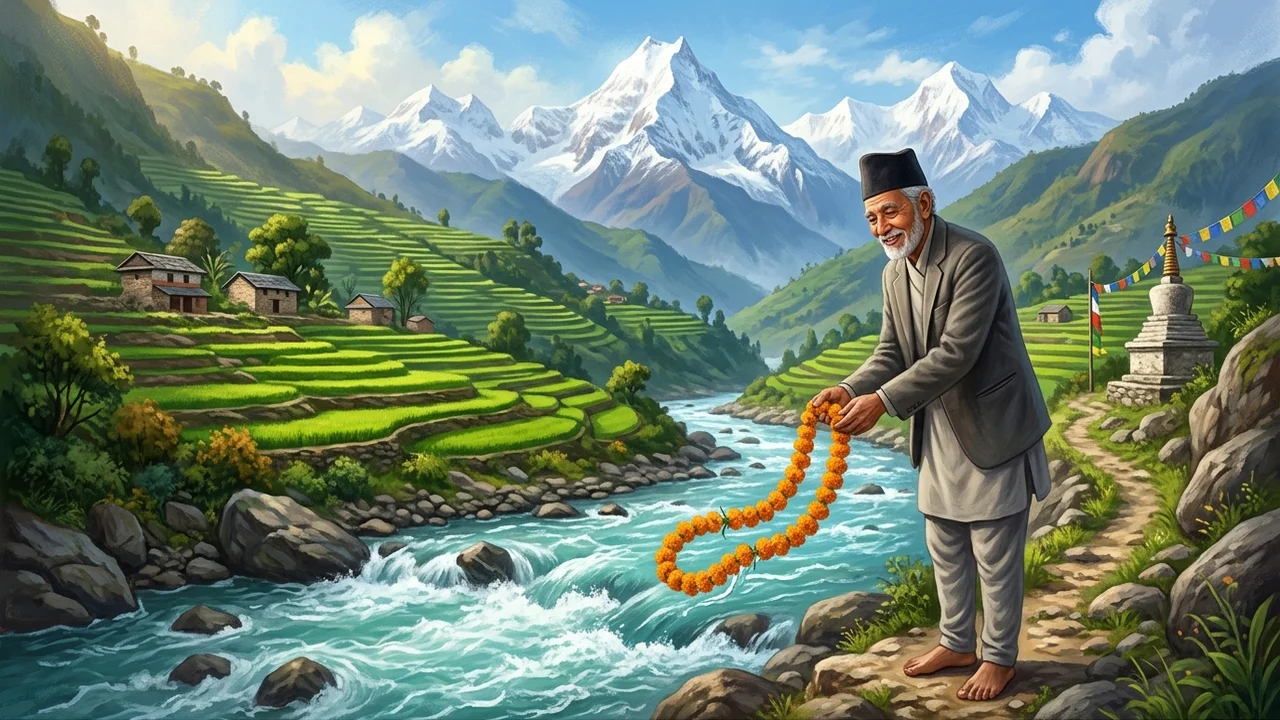
The title, and the style
| Literary Epithet | Rashtrakavi (Rāṣṭrakavi / राष्ट्रकवि — The National Poet of Nepal) |
|---|---|
| Lifespan & Origins | 1919–2020 CE (1976–2077 BS, lived to 101 years!) · Born in Pustun, Lamjung, Nepal |
| Literary Tradition | Lyrical Romanticism (Gīti-Kāvya), Metrical Elegance, and Himalayan Patriotism |
| Supreme Elegy | Gauri (Gaurī, 1948 — the supreme biographical mourning poem in Nepali literature, composed in classical Shardulavikridita meter following the tragic death of his young first wife) |
| Musical Verse Drama | Malati Mangale (Mālatīmaṅgale, 1985 — lyrical play portraying the emancipation of bonded agrarian serfs during the unification era) |
| Landmark Collections | Shakuntala (epic), Himalpari Himalwari, Rajeshwari, Kinnar-Kinnari, Bala-Lahari, and his posthumous epic Ritambhara |
| Cultural Endearment | Celebrated for more than eight decades for his melodic, lilting cadences, pastoral imagery of the Marsyangdi valley, and profound philosophical embrace of life. |
Revered throughout the nation as Rashtrakavi (Rāṣṭrakavi / राष्ट्रकवि, "The National Poet of Nepal"), Madhav Prasad Ghimire (Mādhavaprasāda Ghimire / माधवप्रसाद घिमिरे) embodied the golden melodic stream of modern Nepali romanticism. Spanning a monumental centenarian life from 1919 to 2020 CE, Ghimire's poetic career bridged the classical metrical rigor of the pre-modern era with the accessible, heart-stirring lyricism of the contemporary age, capturing the majestic topography of the Himalayas and the intimate joys and sorrows of rural domestic life.
Born in 1919 CE (1976 BS) in the idyllic hillside hamlet of Pustun, Lamjung, beneath the towering ramparts of the Annapurna range, Ghimire lost his mother in early childhood—a profound bereavement that echoed throughout his lifelong artistic sensitivity. Educated in classical Sanskrit in Ranipokhari and Banaras, he honed an exquisite ear for classical meters while retaining the earthy songcraft of the mid-hills. In 1948, following the tragic death of his beloved twenty-four-year-old wife Gauri, he authored the timeless mourning elegy Gauri (Gaurī / गौरी). Composed in the stately nineteen-syllable Śārdūlavikrīḍita meter, Gauri remains the most tender, emotionally devastating, and cathartic masterpiece of marital bereavement in the Nepali language.
Beyond personal elegy, Ghimire gave Nepal its most beloved patriotic anthems and musical verse dramas. His 1985 lyrical play Malati Mangale dramatized the humanity and liberation of bonded domestic serfs, while works such as Himalpari Himalwari and Kinnar-Kinnari celebrated the cultural harmony of Nepal's mountains, rivers, and peoples. In 2003, the government of Nepal officially bestowed upon him the permanent title of Rashtrakavi, honoring a lifetime of unparalleled lyrical devotion to the nation.
Putsun, a dead mother, Banaras, the paper
His mother died when he was three. His father, Gauri (गौरी) Shankar Ghimire (घिमिरे), and his grandmother raised him. He could read at six. At eight or nine a man called Fulebaba taught him the panchanga (पञ्चाङ्ग), the almanac a house uses for festivals and farming. At eleven he left for Duradanda to study Sanskrit. Later he came to Kathmandu, to the Sanskrit Pradhan Pathshala and the Tindhara Sanskrit Pathshala, and then to Banaras. The road is the old one. A clever hill boy studies Sanskrit, then he studies in the capital, and then he studies in the holy city. What he did with that road was a long life of poems ordinary people can sing.
His first printed piece came out in Gorkhapatra (गोरखापत्र) when he was fourteen. Accounts disagree on the title. One calls it Gyanpuspa (ज्ञानपुष्प). Another calls it Bairagya Pushpa (वैराग्य पुष्प). This page will not pick a winner. The fact that holds is a boy in his early teens already in the national paper. After Banaras he worked as a writer at the Nepal Bhashanuvad Parishad, the same translation council where Devkota (देवकोटा) worked, and in 1944 he was a co-editor of Gorkhapatra (गोरखापत्र). In 1946 he became its editor. He also wrote for Sharada (शारदा) and Udaya (उदय). In 1951, the year the Ranas (राणा) fell, he went back to the village and taught for a short time. The capital kept calling him back. From 1979 to 1988 he was vice-chancellor of the Royal Nepal Academy, and from 1988 to 1990 he was its chancellor. The army gave him the rank of honorary brigadier. The hundredth birthday, in September 2018, was celebrated across the country. The last months needed oxygen. He died of a respiratory illness.
The prizes match the title. They include the Order of Gorkha Dakshina Bahu, the Tribhuvan Pragya Puraskar, the Sajha Award, the Bhanubhakta Award, and the Padmashree Sadhana Samman. People note that the Madan Puraskar, the prize Parijat (पारिजात) won for Shirishko Phool (शिरीषको फूल), did not come to him, though he wrote several epics. The national title came anyway, from the state, in 2003. A reader does not need the prize list to hear him. A reader needs Gauri (गौरी), Malati Mangale (मालतीमङ्गले), and one song in a voice that is not reading.
Gauri (गौरी)
Around 1933 or 1934, when he was about fourteen, he married Gauri (गौरी) Pokharel, who was about ten. They had two daughters. She died while he was still a young man. One account puts the poem's occasion in 1947. Another counts the marriage as about eleven years, another as longer. The dates move. The blow does not. He wrote Gauri (गौरी) for her. Bhanubhakta Pokharel, looking at the making of the poem, thought most of it was done by about 2005 in the Nepali (नेपाली) calendar, the late 1940s. The book people hold was printed around 2015, 1958 or 1959, from Sajha in later editions. He named it among his own favorites. Readers name it as the one that will outlast the title of national poet.
It is an elegy the length of an epic, set, the editions say, in Kathmandu, and fed by the hills he came from. The wife's name is also a name of the goddess. The grief therefore sits inside a sacred word. A husband saying Gauri (गौरी) is saying the woman and, whether he presses the point or not, the name the hymns use. The poem does not need a plot of battles. Its event is a death, and then the long walk of memory around that death. Subedi said he was shattered, and that the elegy is full of pathos, and that this is what people will remember. That is a just summary from a translator. This page will not invent the cantos. A reader who opens the book should find the wife still ahead of the commentary.
The afterlife of the poem shows how far it walked. Music Nepal brought out an album. Ram Krishna Dhakal, Sudesh Sharma, Sangeeta Pradhan Rana (राणा), Rambhakta Jojiju, Sapana Shree, and the poet himself sang. A Korean translation appeared in 2018, while he was still alive to be a hundred. An elegy written in the 1940s was still being carried into other languages in the century's second decade. That is a practical test of a national poet. The country did not only give him a title. It kept singing the grief.
He married again, Mahakali, when he was about twenty-nine. With her he had two sons and four daughters. The two marriages gave him eight children in all. The second household is the long life. Gauri (गौरी) remains the early wound, written before the academies and the brigadier's rank. If a reader wants the man before the honors, the poem is the door.
Malati Mangale (मालतीमङ्गले)
The other work a crowd knows is Malati Mangale (मालतीमङ्गले), a musical play written in 2039 of the Nepali (नेपाली) calendar, 1982 or 1983, and printed by Sajha. It takes a true story from Fujel village in Gorkha, in the Shah (शाह) years, when a house could still own people. Malati and Mangale are servants of the same master, a kamari and a kamara. They come of age and they love each other. The master wants Malati for himself. He sells Mangale away. The two of them weep. Mangale leaves her a flower and a promise of the simplest kind: while that flower holds, the two of them hold.
The road of the story then turns on two gold earrings, the Gorkhali (गोर्खाली) queen's own. With the earring of the right ear she buys Mangale. She sends the earring of the left ear to buy Malati. She means to join them and to free them. The two earrings put mercy and a sense of justice into one gesture. The timing fails. The people who arrive with the left earring find Malati already past saving. She has given up her life in that house, under the master who had fixed his eye on her. The play ends in the grief. Freedom was on the way. It did not arrive in time.
This page does not describe the master's harm beyond that want and that sale. The play's point is already clear. Love between two unfree people is treated as a thing a master can break by a bill of sale. A queen can spend gold to undo the bill. The body that suffered does not wait for the gold. Ghimire's (घिमिरे) patriotism is often a song of mountains and belonging. Here the country is a village that kept slaves, and the national poet tells the story against the village's owner. The sweetness of his line is put to a bitter history. That combination is why the play is essential, and why a shelf that stopped at Gauri (गौरी) would make him only a widower.
The stage life is its own tale, and it is worth the minutes. The play was performed at the Academy, first around 2042 and again around 2044. A recording came in 2044, 1987 or 1988. He wanted Amber Gurung's music and Narayan Gopal's voice for Mangale. The two men were not speaking. Ghimire (घिमिरे) went to Narayan Gopal's house in Maharajgunj and asked as a poet, and said so: he had not come as vice-chancellor. Narayan Gopal came to the Academy a few days later. Ghimire (घिमिरे) sent quietly for Amber Gurung. They met over tea, and the freeze broke in an embrace. Tara Devi was harder. She and Narayan Gopal would not look at each other. The duet was recorded with a heavy curtain between them on the Academy stage. Kiran Pradhan, Deepak, and others were in the company of singers. The play became famous in that friction as much as in the verse. A national poet who can get a sulking genius to sing has a practical gift the elegy does not show.
Songs, the mountain, the other epics
A great many Nepalis (नेपाली) meet him first as a song. The titles are already the gist, and the tunes are public in the way a radio is public. This page does not print the words.
Gaunchha Geet Nepali (गाउँछ गीत नेपाली) is the patriotic song, the one that says a Nepali (नेपाली) song gets sung. Schools and programs know it. It is the Rashtrakavi (राष्ट्रकवि) title in a melody: the country as a thing that sings itself. Nepali Hami Rahaula Kaha (नेपाली हामी रहौंला कहाँ) asks where we Nepalis (नेपाली) will remain. Belonging, said as a question, which is more interesting than belonging said as a shout. Phool ko Thunga Bagera Gayo (फूलको थुङ्गा बगेर गयो) is a bunch of flowers that has gone with the water. The image is departure. Something lovely was in the hand, or on the stream, and it went. People sing it at the edge of loss. Aajai Rati Ke Dekhe Sapana (आजै राति के देखेँ सपना) is a night song: what dream was that, again, tonight. Baisakh (वैशाख) is the month, the first month, the door of the year. Together these songs are a style of their own. The counted line became a thing a person who never opens an epic can still carry.
The mountain books keep the other half of the childhood. Himal Pari Himal Wari (हिमालपारि हिमालवारि) is the range as two sides, the far side and this side. A Lamjung poet does not have to invent a reason to look up. The snow is the north wall of the district. The title makes that wall a subject large enough for a long poem: what is on our side of it, what is beyond, and the life that has to be lived on one side while imagining the other. This page does not invent the cantos. The title is already a map.
Shakuntala (शकुन्तला) is his epic on Kālidāsa's story, in the line that runs from Motiram's (मोतीराम) play through Devkota's (देवकोटा) mahākāvya (महाकाव्य). The king, the hermitage, the ring, the forgetting, the return. Ghimire's (घिमिरे) version is the national poet trying the oldest romantic plot in the counted line he trusted. Kinnar-Kinnari (किन्नर-किन्नरी) is a lyrical book of the mythical beings of the high places, half song. Rastra Nirmata (राष्ट्रनिर्माता) names the builders of the nation. Indrakumari (इन्द्रकुमारी), Rajeshwari (राजेश्वरी), and Aswathama (अश्वत्थामा) are further long poems. Aswathama (अश्वत्थामा) is the Mahābhārata's figure who does not meet an ordinary death, the same name a Dasain blessing asks for length of life. What Ghimire (घिमिरे) does with that undying man stays in his book. Manjari (मञ्जरी) is another of the titles a list always includes. Charu Charcha (चारु चर्चा) is the essay book, a beautiful discussion, the prose beside the meter. Aafno Bansuri Aafnai Geet (आफ्नो बाँसुरी आफ्नै गीत), one's own flute and one's own song, says the late confidence in the plainest words. The flute is his. The song is his.
Ritambhara (ऋतम्भरा), unfinished at his death, is the right last title to mention. Ritambhara (ऋतम्भरा), in the old vocabulary, is a truth-bearing mind, a consciousness that carries what is real. He died still writing toward that. A hundred years, and the desk was not clear. The national poet was a working poet on the last day.
The counted line, after the free one
If you come to Ghimire (घिमिरे) from Bhupi, the meter can feel like a step backward. Bhupi broke the line where the breath breaks, and let irony do a rhyme's old job. Ghimire (घिमिरे) keeps counting. A line has a set number of beats, and it ends where the count ends. That is chhanda (छन्द). Lekhnath (लेखनाथ) had made that count sweet and philosophical. Ghimire (घिमिरे) makes it singable, and he lets a private grief and a village injustice into it. The count is not a refusal of feeling. It is the bowl the feeling is willing to sit in. People who still write this way say the discipline is the art. Anyone can cry in free verse. To cry inside a fixed music, and keep the music, is a different labor. He did that labor from the age of fourteen, in Gorkhapatra (गोरखापत्र), until the year he died.
The Academy years show the other half of a national poet, the half that sits in a chair. From 1979 to 1988 he was vice-chancellor of the Royal Nepal Academy. From 1988 to 1990 he was chancellor. Those are the last years of the Panchayat, the party-less system, and the year the system fell. He did not write Bhupi's blind man. He administered a royal academy while the street was changing, and he still wrote Malati Mangale (मालतीमङ्गले) in that same stretch, a play about people who were owned. The chair and the play should be held together. A title from the state in 2003, Rashtrakavi (राष्ट्रकवि), names the chair's man. The play names the poet who could look at a master's bill of sale. Both are him. The honorary brigadier general's rank is the state's affection for a gentle famous man. Gauri (गौरी) is the affection he gave a dead girl who had been his wife.
Two children, a flower, a pair of earrings
The marriage to Gauri (गौरी) Pokharel needs a plain sentence before the elegy can be heard. He was about fourteen. She was about ten. That was a hill marriage of the 1930s, common enough to be ordinary, and still a fact a modern reader should not sand down. They grew up into the marriage. Two daughters were born. Then she died, and the poem began. Whatever the count of years, eleven or fourteen, the book is a young husband's long walk around an absence. The editions place that walk in Kathmandu. The feeling keeps Lamjung in it, because he had no other childhood to grieve with. The name does extra work. Gauri (गौरी) is the woman. Gauri (गौरी) is also the goddess. A hymn-name wrapped around a wife means the mourning is allowed to be large without becoming a speech about the nation. He was not yet the national poet. He was a man whose first wife was dead.
Malati Mangale (मालतीमङ्गले) is the later conscience, and it is concrete enough to tell slowly. The story is set in Fujel, in Gorkha, in the Shah (शाह) years. A house owns a young man and a young woman. They work. They come of age. They love. The master, who wants the woman, sells the man. Selling a person is the ordinary violence of that order, and the play's horror is that it can be done on paper. Mangale leaves a flower. The promise attached to it is almost childlike, which is why it hurts. While the flower holds, we hold. Then the plot turns on jewelry, which is the right object, because jewelry is how that world measures a life. Two gold earrings of the Gorkhali (गोर्खाली) queen turn up on a road. One earring buys the man back. The other is sent to buy the woman. A queen spending her own ornaments to cancel a master's sale is mercy with a price tag, and the play lets the mercy be real. It also lets the mercy be late. The people who arrive find Malati past saving. She has already given up the body that the master had claimed. The flower's promise and the queen's gold reach a death. That is the ending. It does not comfort, and a poet famous for sweet songs wrote it anyway.
The recording is the comic stanza the tragedy earned. Amber Gurung had the tune. Narayan Gopal had the voice for Mangale. They were not speaking. Ghimire (घिमिरे) went to Maharajgunj and asked as a poet, refusing the shield of vice-chancellor. Tea at the Academy, a quiet message, an embrace, and the freeze between the two men ended. Tara Devi remained on the far side of a curtain. The duet was sung with cloth between them, on the Academy's own stage, because the singers would not look at each other. Out of that absurdity came the performance people still mean when they say the title. A national poet, in this story, is also a man who can walk into a sulk and come out with a song. The servants in the play never get that luck. The artists, barely, do.
What to carry out of the room
Read Gauri (गौरी) first, slowly, as a widower's book and as a hill poet's book. Then see or hear Malati Mangale (मालतीमङ्गले), because the servants correct the idea that he only praised the country. Then one song, out loud, so the meter is a body and not a lesson. Himal Pari Himal Wari (हिमालपारि हिमालवारि) and Shakuntala (शकुन्तला) are the epics for a second week. The essays in Charu Charcha (चारु चर्चा) are the talk around the poems. Ritambhara (ऋतम्भरा) is the door he did not finish closing.
His title is the state's. His style is the counted line with a song inside it. Set him beside Lekhnath (लेखनाथ) and the count is a tradition. Set him beside Devkota (देवकोटा) and the feeling is a friendship. Set him beside Bhupi and you hear the argument the century had with itself: a blind man on a chair, in free verse, and a national poet still willing to number every syllable. Both are Nepali (नेपाली). The garland goes down the river. The hills stay.
माधवप्रसाद घिमिरे राष्ट्रकवि हुन्। नेपाल सरकारले ई.सं. २००३ मा त्यो उपाधि दियो। उहाँ ई.सं. २३ सेप्टेम्बर १९१९ मा जन्मनुभयो, नेपाली पात्रोमा ७ असोज १९७६, लमजुङको पुत्सुनमा, र ई.सं. १८ अगस्ट २०२० मा काठमाडौंको घरमा बित्नुभयो। उमेर सय वर्ष थियो। दाह पशुपतिको आर्यघाटमा, राजकीय सम्मानमा भयो। उहाँले करिब छयासी वर्ष लेख्नुभयो। बित्दा उहाँ अर्को महाकाव्य ऋतम्भराको रचनामै हुनुहुन्थ्यो।
उहाँको शैली छन्द हो, अर्थात् गनिएको पङ्क्ति, जसमा रोमान्टिक स्वभाव र देशभक्तको स्वभाव एकसाथ छन्। लेखनाथले शास्त्रीय मीठोपन सिद्ध पार्नुभएको थियो। घिमिरेले गन्ती कायम राख्नुभयो र त्यसमा बढी भाव आउन दिनुभयो: मरेकी पत्नी, पहाडी गाउँ, बसमा बज्ने गीत, गोरखाका कमाराकमारी। छन्द चिन्ने मानिस भन्छन्, अझै छन्दभित्र लेख्ने कविमध्ये उहाँ सबैभन्दा अनुशासित हुनुहुन्थ्यो। अनुशासनले उहाँलाई सुक्खा बनाएन। मृत्युपछि सत्यमोहन जोशीले भन्नुभयो, कविता सरल थिए, र त्यही श्वासमा गहिरा पनि। उहाँलाई अनुवाद गर्ने अभि सुवेदीले अर्को पट्टीबाट त्यही कुरा भन्नुभयो। उहाँको बल छन्दमा थियो, र त्यही पङ्क्तिले पाठकको संयम भाँच्न सक्थ्यो।
उहाँ रोमान्टिक धारा र संस्कृत धारा दुवैमा पर्नुहुन्छ, र उहाँमा ती दुई एउटै धारा हुन्। विषय प्रकृति, प्रेम, र देश हुन्। हिमाल पोस्टकार्ड होइन। त्यो बाल्यकालको पर्खाल हो, वारि र पारि, लमजुङको केटो हुर्कँदा जसको सामुन्ने हुन्छ त्यो शृङ्खला। विदेशी कविमा रवीन्द्रनाथ ठाकुरको नाम प्रोत्साहनका रूपमा लिइन्छ। नेपाली समकालीनमध्ये उहाँले देवकोटालाई पछ्याउनुभयो, र ई.सं. १९४६ मा दुवै जनाको सँगै खिचेको एउटा तस्बिर छ। ई.सं. १९५३ मा देवकोटाले नेतृत्व गरेको काव्य प्रतिष्ठानमा उहाँ जोडिनुभयो। गएको शताब्दीको उत्तरार्धका राष्ट्रकवि, महाकवि अझै कोठामा हुँदै आफ्नो काम सिक्नुभएका मानिस हुनुहुन्छ।
उहाँ ई.सं. २०२० मा बित्नुभयो। नेपालले लेखकका किताब मृत्युको वर्षपछि पचास वर्षसम्म राख्छ। यो पृष्ठमा उहाँबाट केही उतारिएको छैन। कथा सुनाइएका छन्। गीतका नाम लिइएका छन्। गीतको पङ्क्ति कोरसझैँ यहाँ राखिएको छैन। यो विवरण यस तहको आफ्नै हो।
पुत्सुन, मरेकी आमा, बनारस, पत्रिका
उहाँ तीन वर्षको हुँदा आमा बित्नुभयो। बुबा गौरीशङ्कर घिमिरे र हजुरआमाले हुर्काउनुभयो। छ वर्षमा पढ्न सक्नुहुन्थ्यो। आठ वा नौ वर्षमा फुलेबाबाले पञ्चाङ्ग सिकाए, जुन चाड र खेतीका लागि घरले चलाउने पात्रो हो। एघार वर्षमा संस्कृत पढ्न दुराडाँडा जानुभयो। पछि काठमाडौं आएर संस्कृत प्रधान पाठशाला र टिन्धारा संस्कृत पाठशालामा पढ्नुभयो, अनि बनारस जानुभयो। बाटो पुरानै हो: चलाख पहाडे केटोले पहिले संस्कृत पढ्छ, अनि राजधानीमा, अनि पवित्र सहरमा। तर उहाँले त्यही बाटोबाट बनाउनुभएको चाहिँ साधारण मानिसले गाउन सक्ने कविताको लामो जीवन हो।
उहाँको पहिलो छापिएको रचना चौध वर्षको उमेरमा गोरखापत्रमा आयो। शीर्षकबारे भनाइ बाझिन्छन्। एउटाले ज्ञानपुष्प भन्छ। अर्कोले वैराग्य पुष्प भन्छ। यो पृष्ठले विजेता छान्दैन। टिक्ने तथ्य यति हो: किशोरावस्थाको सुरुमै एउटा केटो राष्ट्रिय पत्रिकामा थियो। बनारसपछि उहाँ नेपाल भाषानुवाद परिषद्मा लेखक हुनुभयो, देवकोटाले काम गर्नुभएको त्यही अनुवाद परिषद्, र ई.सं. १९४४ मा गोरखापत्रका सहसम्पादक हुनुभयो। ई.सं. १९४६ मा सम्पादक हुनुभयो। शारदा र उदयमा पनि लेख्नुभयो। ई.सं. १९५१ मा, राणा ढलेको वर्ष, गाउँ फर्केर केही समय पढाउनुभयो। राजधानीले उहाँलाई बारम्बार बोलाइरह्यो। ई.सं. १९७९ देखि १९८८ सम्म नेपाल राजकीय प्रज्ञा-प्रतिष्ठानको उपकुलपति हुनुभयो, र ई.सं. १९८८ देखि १९९० सम्म कुलपति हुनुभयो। सेनाले मानार्थ सहायक रथीको दर्जा दियो। ई.सं. सेप्टेम्बर २०१८ को सयौँ जन्मदिन देशभर मनाइयो। अन्तिम महिनाहरूमा अक्सिजन चाहियो। श्वासको रोगले उहाँ बित्नुभयो।
पुरस्कार उपाधिसँग मिल्छन्। ती पुरस्कारमा गोरखा दक्षिणबाहु, त्रिभुवन प्रज्ञा पुरस्कार, साझा पुरस्कार, भानुभक्त पुरस्कार र पद्मश्री साधना सम्मान पर्छन्। मानिसहरू यो कुरा औँल्याउँछन्, शिरीषको फूलका लागि पारिजातले जितेको मदन पुरस्कार उहाँकहाँ आएन, उहाँले धेरै महाकाव्य लेख्नुभए पनि। तर राष्ट्रिय उपाधि भने ई.सं. २००३ मा राज्यबाट आयो। पाठकलाई उहाँको स्वर सुन्न पुरस्कारको सूची चाहिँदैन। गौरी, मालतीमङ्गले, र पढाइको स्वरमा नभई गाइएको एउटा गीत चाहिन्छ।
गौरी
करिब ई.सं. १९३३ वा १९३४ मा, उहाँ करिब चौध वर्षको र उनी करिब दस वर्षकी हुँदा, उहाँले गौरी पोखरेलसँग विवाह गर्नुभयो। दुई छोरी भए। उहाँ अझै जवान हुँदा उनी बितिन्। एउटा भनाइले कविताको अवसर ई.सं. १९४७ मा राख्छ। अर्कोले विवाह करिब एघार वर्षको गन्छ, अर्कोले अझ लामो। मिति सर्छन्। चोट सर्दैन। उहाँले गौरी उनकै लागि लेख्नुभयो। भानुभक्त पोखरेलले कविताको बनोट हेर्दा अधिकांश भाग नेपाली पात्रोको करिब २००५ सम्म, अर्थात् ई.सं. १९४० को दशकको अन्त्यसम्म, सकिइसकेको ठान्नुभयो। मानिसले हातमा लिने किताब करिब २०१५ मा, ई.सं. १९५८ वा १९५९ मा, छापियो, र पछिल्ला संस्करण साझाबाट आए। उहाँले आफ्ना मन पर्ने कृतिमध्ये यसको नाम लिनुभयो। पाठकहरू यही कृति राष्ट्रकविको उपाधिभन्दा लामो बाँच्छ भन्छन्।
यो महाकाव्यकै लम्बाइको शोककाव्य हो, संस्करणहरूले जसलाई काठमाडौंमा राख्छन्, र जसलाई उहाँ आएका डाँडाले पालेका छन्। पत्नीको नाम देवीको नाम पनि हो। शोक त्यसैले पवित्र शब्दभित्र बस्छ। पतिले गौरी भन्दा नारीको नाम लिइरहेको हुन्छ, र जोड दिए पनि नदिए पनि, स्तोत्रहरूले प्रयोग गर्ने नाम पनि लिइरहेको हुन्छ। कवितालाई युद्धको कथानक चाहिँदैन। घटना एउटा मृत्यु हो, अनि त्यो मृत्युको वरिपरि सम्झनाको लामो हिँडाइ। सुवेदीले भन्नुभयो, उहाँ टुक्रिनुभएको थियो, शोककाव्य करुणाले भरिएको छ, र मानिसले यही सम्झनेछन्। अनुवादकबाट आएको ठीक सारांश यही हो। यो पृष्ठले सर्ग रच्दैन। किताब खोल्ने पाठकले टिप्पणीभन्दा अघि पत्नी भेट्नुपर्छ।
कविताको पछिल्लो जीवनले यो कति टाढासम्म पुग्यो भन्ने देखाउँछ। म्युजिक नेपालले एल्बम निकाल्यो। रामकृष्ण ढकाल, सुदेश शर्मा, सङ्गीता प्रधान राणा, रामभक्त जोजीजु, सपना श्री, र कवि आफैँले गाउनुभयो। ई.सं. २०१८ मा कोरियन अनुवाद आयो, उहाँ सय वर्षको भएर जीवितै हुँदा। ई.सं. १९४० को दशकमा लेखिएको शोककाव्य शताब्दीको दोस्रो दशकमा अरू भाषामा गइरहेको थियो। राष्ट्रकविको व्यावहारिक परीक्षा यही हो। देशले उहाँलाई उपाधि मात्र दिएन। शोकलाई गाइरह्यो।
उहाँले फेरि विवाह गर्नुभयो, महाकालीसँग, करिब उनन्तीस वर्षको उमेरमा। उनीसँग दुई छोरा र चार छोरी भए। दुई विवाहबाट जम्मा आठ सन्तान भए। दोस्रो घर लामो जीवन हो। गौरी सुरुको घाउ हो, प्रज्ञा र सहायक रथीको दर्जाभन्दा अघि लेखिएको। सम्मानभन्दा अघिको मानिसलाई चिन्न चाहने पाठकका लागि ढोका यही कविता हो।
मालतीमङ्गले
भीडले चिन्ने अर्को कृति मालतीमङ्गले हो, नेपाली पात्रोको २०३९ मा, ई.सं. १९८२ वा १९८३ मा लेखिएको गीतिनाटक, साझाले छापेको। यसले गोरखाको फुजेल गाउँको एउटा सत्य घटना लिएको छ, शाहकालको, जब घरले मानिसको मालिकी गर्न सक्थ्यो। मालती र मङ्गले एउटै मालिकका कमारी र कमारा हुन्। जवान हुँदै जाँदा उनीहरू एकअर्कालाई माया गर्न थाल्छन्। मालिकले मालतीलाई आफ्नै बनाउन चाहन्छ। मङ्गलेलाई बेचिदिन्छ। दुवै रुन्छन्। मङ्गले मालतीलाई एउटा फूल र सबैभन्दा सरल वाचा छोडेर जान्छ: फूल टिकेसम्म दुवै टिक्छन्।
कथाको बाटो त्यसपछि दुई सुनका कर्णफूलमा मोडिन्छ, गोरखाली रानीका आफ्नै। रानीले दाहिने कानको फूलले मङ्गले किन्छिन्। देब्रे कानको फूल मालती किन्न पठाउँछिन्। उनको मनसाय उनीहरूलाई जोड्ने र स्वतन्त्र गराउने हो। दुई कर्णफूलले दया र न्यायको भावनालाई एउटै इसारामा राख्छन्। समय मिलेन। देब्रे फूल लिएर पुग्नेहरूले मालतीलाई बचाउन नसकिने अवस्थामा भेटे। त्यो घरमा, आँखा गाडेका मालिकमुनि, उनले ज्यान छाडिसकेकी थिइन्। नाटक शोकमा टुङ्गिन्छ। स्वतन्त्रता बाटोमा थियो। समयमा पुगेन।
यो पृष्ठले मालिकले पुर्याएको हानिलाई त्यो चाहना र त्यो बिक्रीभन्दा पर वर्णन गर्दैन। नाटकको कुरा पहिले नै स्पष्ट छ। नाटकमा दुई अस्वतन्त्र मानिसको प्रेम यस्तो चिज हो, जसलाई मालिकले बिक्रीको कागजले भाँच्न सक्छ। रानीले कागज उल्टाउन सुन खर्च गर्न सक्छिन्। दुःख पाएको शरीर सुनको पर्खाइमा बस्दैन। घिमिरेको देशभक्ति प्रायः हिमाल र आफ्नो ठाउँको गीत हो। यहाँ देश दास राख्ने गाउँ हो, र राष्ट्रकविले गाउँका मालिकविरुद्ध कथा भन्नुहुन्छ। पङ्क्तिको मीठोपन तीतो इतिहासमा लगाइएको छ। नाटक अनिवार्य हुनुको कारण यही हो, र गौरीमै रोकिने तहले उहाँलाई विधुर मात्र बनाउँथ्यो।
मञ्चको जीवन आफ्नै कथा हो, र केही मिनेट खर्च गर्न लायक छ। नाटक प्रज्ञामा मञ्चन भएको थियो, पहिले करिब २०४२ मा र फेरि करिब २०४४ मा। रेकर्ड २०४४ मा, ई.सं. १९८७ वा १९८८ मा आयो। उहाँलाई मङ्गलेका लागि अम्बर गुरुङको सुर र नारायण गोपालको स्वर चाहिएको थियो। ती दुई जना आपसमा बोल्नुहुन्नथ्यो। घिमिरे महाराजगञ्जमा नारायण गोपालको घरमा जानुभयो, कविका रूपमा माग्नुभयो, र आफू उपकुलपति भएर नआएको कुरा भन्नुभयो। केही दिनपछि नारायण गोपाल प्रज्ञा आउनुभयो। घिमिरेले अम्बर गुरुङलाई चुपचाप बोलाउनुभयो। चियामा भेट भयो, र जमेको सम्बन्ध अँगालोमा पग्लियो। तारादेवीलाई मनाउन अझ गाह्रो थियो। तारादेवी र नारायण गोपाल एकअर्कालाई हेर्नुहुन्नथ्यो। युगल गीत प्रज्ञाको मञ्चमा बीचमा मोटो पर्दा राखेर रेकर्ड भयो। किरण प्रधान, दीपक, र अरू गायक पनि गायकको टोलीमा थिए। नाटक पद्यका कारण जति चर्चित भयो, त्यही घर्षणका कारण पनि त्यति नै चर्चित भयो। रिसाएका प्रतिभालाई गाउन लगाउन सक्ने राष्ट्रकविसँग यस्तो व्यावहारिक वरदान छ, जुन शोककाव्यले देखाउँदैन।
गीत, हिमाल, अरू काव्य
धेरै नेपालीले उहाँलाई पहिले गीतका रूपमा भेट्छन्। शीर्षक आफैँ सार हुन्, र धुन रेडियो सार्वजनिक हुने अर्थमा सार्वजनिक छन्। यो पृष्ठले गीतका बोल छाप्दैन।
गाउँछ गीत नेपाली देशभक्तिको गीत हो, नेपाली गीत गाइन्छ भन्ने गीत। स्कूल र कार्यक्रमहरूमा यो चिनिन्छ। यो राष्ट्रकविको उपाधि धुनमा ढालिएको हो: देश आफैँ गाउने चिज। नेपाली हामी रहौंला कहाँ, अर्थात् हामी नेपाली कहाँ रहनेछौं, भन्ने प्रश्न हो। अपनत्व चिच्याहटका रूपमा होइन, प्रश्नका रूपमा भनिएको छ, जुन बढी चाखलाग्दो छ। फूलको थुङ्गा बगेर गयो पानीसँगै गएको फूलको मुठ्ठीको गीत हो। यसको चित्र प्रस्थानको हो। केही सुन्दर कुरा हातमा थियो, वा खोलामा, र त्यो गयो। मानिसहरू क्षतिको छेउमा यो गाउँछन्। आजै राति के देखेँ सपना रातको गीत हो: आज राति फेरि त्यो कस्तो सपना थियो। वैशाख महिनाको नाम हो, पहिलो महिना, वर्षको ढोका। यी गीत सँगै एउटा आफ्नै शैली हुन्। गनिएको पङ्क्ति महाकाव्य नखोल्ने मानिसले पनि बोक्न सक्ने चिज भयो।
हिमालका किताबले बाल्यकालको अर्को आधा राख्छन्। हिमालपारि हिमालवारि हिमाल शृङ्खलालाई दुई पट्टीका रूपमा हेर्छ, पारि र वारि। लमजुङका कविले माथि हेर्ने कारण बनाउनै पर्दैन। हिउँ जिल्लाको उत्तरी पर्खाल हो। शीर्षकले त्यो पर्खाललाई लामो कविताको विषय बनाउँछ: हाम्रो पट्टी के छ, पारि के छ, र अर्को पट्टी कल्पना गर्दै एक पट्टी बाँच्नुपर्ने जीवन। यो पृष्ठले सर्ग रच्दैन। शीर्षक नै नक्सा हो।
शकुन्तला कालिदासको कथामा उहाँले लेख्नुभएको महाकाव्य हो, जुन मोतीरामको नाटकदेखि देवकोटाको महाकाव्यसम्म पुग्ने धारामा पर्छ। कथामा राजा, आश्रम, औंठी, बिर्सिने कुरा र फर्कने कुरा आउँछन्। घिमिरेको संस्करण राष्ट्रकविले आफ्नो विश्वासको गनिएको पङ्क्तिमा सबैभन्दा पुरानो प्रेमकथा लेख्न गरेको प्रयास हो। किन्नर-किन्नरी उच्च ठाउँका पौराणिक जीवहरूबारे लेखिएको गीतिमय किताब हो, आधा गीत। राष्ट्रनिर्माताले राष्ट्र बनाउनेहरूको नाम लिन्छ। इन्द्रकुमारी, राजेश्वरी, र अश्वत्थामा अरू लामा कविता हुन्। अश्वत्थामा महाभारतका ती पात्र हुन्, जसले साधारण मृत्यु भेट्दैनन्, र दशैंको आशीर्वादमा दीर्घायुका लागि लिइने नाम पनि त्यही हो। घिमिरेले त्यो नमर्ने मानिसलाई के गर्नुभयो भन्ने कुरा उहाँको किताबमै रहन्छ। मञ्जरी कुनै पनि सूचीमा सधैँ राखिने शीर्षकमध्ये एउटा हो। चारु चर्चा निबन्धको किताब हो, अर्थात् सुन्दर चर्चा, छन्दको छेउको गद्य। आफ्नो बाँसुरी आफ्नै गीतले पछिल्लो समयको आत्मविश्वास सबैभन्दा सादा शब्दमा भन्छ। बाँसुरी उहाँको हो। गीत उहाँको हो।
मृत्युको बेला अधुरो रहेको ऋतम्भरा उल्लेख गर्ने अन्तिम शीर्षकका रूपमा ठीक छ। पुरानो शब्दमा ऋतम्भरा सत्य बोक्ने मन हो, वास्तविक कुरा बोक्ने चेत। उहाँ त्यतैतिर लेख्दै बित्नुभयो। सय वर्ष पुगे पनि टेबल खाली थिएन। राष्ट्रकवि अन्तिम दिन पनि काम गर्ने कवि हुनुहुन्थ्यो।
स्वच्छन्द पङ्क्तिपछिको गन्ती
भूपीबाट घिमिरेतिर आउँदा छन्द पछि हटेको कदमजस्तो लाग्न सक्छ। भूपीले सास टुट्ने ठाउँमा पङ्क्ति तोड्नुभयो, र व्यङ्ग्यलाई तुकको पुरानो काम दिनुभयो। घिमिरेले गन्ती कायम राख्नुहुन्छ। पङ्क्तिमा तोकिएको ताल हुन्छ, र गन्ती सकिने ठाउँमा सकिन्छ। त्यो छन्द हो। लेखनाथले त्यो गन्ती मीठो र दार्शनिक बनाउनुभएको थियो। घिमिरेले गाउन सकिने बनाउनुहुन्छ, र निजी शोक र गाउँको अन्याय त्यसमा आउन दिनुहुन्छ। गन्ती भावको अस्वीकार होइन। भाव बस्न तयार भएको भाँडो हो। यसरी लेखिरहने मानिस भन्छन्, अनुशासन नै कला हो। स्वच्छन्द छन्दमा त जो कोहीले रुन सक्छ। तोकिएको सुरभित्र रुने, र सुर नबिगार्ने, अर्कै मिहिनेत हो। उहाँले त्यो मिहिनेत चौध वर्षको उमेरदेखि, गोरखापत्रमा, बित्नुभएको वर्षसम्म गर्नुभयो।
प्रज्ञाका वर्षले राष्ट्रकविको अर्को आधा देखाउँछन्, मेचमा बस्ने आधा। ई.सं. १९७९ देखि १९८८ सम्म उहाँ राजकीय प्रज्ञा-प्रतिष्ठानको उपकुलपति हुनुहुन्थ्यो। ई.सं. १९८८ देखि १९९० सम्म कुलपति हुनुहुन्थ्यो। ती दलविहीन व्यवस्था पञ्चायतका अन्तिम वर्ष हुन्, र व्यवस्था ढलेको वर्ष पनि। उहाँले भूपीको अन्धो मानिस लेख्नुभएन। सडक बदलिँदै गर्दा उहाँले राजकीय प्रज्ञा चलाउनुभयो, र त्यही अवधिमा मालतीमङ्गले लेख्नुभयो, मानिसलाई सम्पत्ति बनाइने नाटक। मेच र नाटक सँगै राख्नुपर्छ। ई.सं. २००३ मा राज्यले दिएको उपाधि राष्ट्रकवि मेचमा बस्ने मानिसको नाम हो। नाटकले बिक्रीको कागज हेर्न सक्ने कविको नाम लिन्छ। दुवै उहाँ हुनुहुन्छ। मानार्थ सहायक रथीको दर्जा नरम स्वभावका चर्चित मानिसप्रति राज्यको स्नेह हो। गौरी उहाँले आफ्नी पत्नी भएकी मरेकी केटीलाई दिनुभएको माया हो।
दुई सन्तान, एउटा फूल, एक जोर कर्णफूल
शोककाव्य सुन्नुअघि गौरी पोखरेलसँगको विवाहलाई सादा वाक्य चाहिन्छ। उहाँ करिब चौध वर्षको हुनुहुन्थ्यो। उनी करिब दस वर्षकी थिइन्। त्यो ई.सं. १९३० को दशकको पहाडी विवाह थियो, साधारण मानिने गरी आम, र आधुनिक पाठकले घोटेर चिल्लो पार्न नहुने तथ्य पनि हो। विवाहभित्र उनीहरू हुर्किए। दुई छोरी जन्मिए। अनि उनी बितिन्, र कविता सुरु भयो। वर्ष एघार होस् वा चौध, किताब एउटा अनुपस्थितिको वरिपरि एक जवान पतिले गरेको लामो हिँडाइ हो। संस्करणहरूले त्यो हिँडाइ काठमाडौंमा राख्छन्। भावले भने लमजुङलाई राखिरहन्छ, किनभने शोकमा साथ लैजान उहाँसँग अर्को बाल्यकाल थिएन। नामले थप काम गर्छ। गौरी नारी हुन्। गौरी देवी पनि हुनुहुन्छ। पत्नीमाथि बेरिएको स्तोत्रको नामले शोकलाई राष्ट्रबारेको भाषण नबनाई ठूलो हुन दिन्छ। उहाँ अझै राष्ट्रकवि हुनुभएको थिएन। उहाँ पहिलो पत्नी गुमाएको मानिस हुनुहुन्थ्यो।
मालतीमङ्गले उहाँको पछिल्लो विवेक हो, र विस्तारै सुनाउन सकिने गरी ठोस छ। कथा गोरखाको फुजेलमा, शाहकालमा घट्छ। एउटा घरले एक जवान केटो र एक जवान केटीको मालिकी गर्छ। उनीहरू काम गर्छन्। जवान हुन्छन्। माया गर्छन्। केटीलाई चाहने मालिकले केटो बेच्छ। मानिस बेच्नु त्यो व्यवस्थाको साधारण हिंसा हो, र नाटकको त्रास यही हो कि यो कागजमै गर्न सकिन्छ। मङ्गले एउटा फूल छोड्छ। फूलसँग जोडिएको वाचा लगभग बालकको जस्तो छ, त्यसैले घोच्छ। फूल टिकेसम्म हामी टिक्छौं। अनि कथा गहनातिर मोडिन्छ, जुन ठीक वस्तु हो, किनभने त्यो संसारले जीवन गहनाले नाप्छ। बाटोमा गोरखाली रानीका दुई सुनका कर्णफूल भेटिन्छन्। एउटाले केटो फिर्ता किनिन्छ। अर्को केटी किन्न पठाइन्छ। मालिकको बिक्री रद्द गर्न रानीले आफ्नै गहना खर्च गर्नु मोल तोकिएको दया हो, र नाटकले त्यो दयालाई साँचो हुन दिन्छ। ढिलो पनि हुन दिन्छ। पुग्नेहरूले मालतीलाई बचाउन नसकिने अवस्थामा भेट्छन्। मालिकले दाबी गरेको शरीर उनले पहिले नै छाडिसकेकी हुन्छिन्। फूलको वाचा र रानीको सुन मृत्युमा पुग्छन्। अन्त्य यही हो। यसले सान्त्वना दिँदैन, तैपनि मीठा गीतका लागि चर्चित कविले यही लेख्नुभयो।
रेकर्ड त्रासदीले कमाएको ठट्टाको श्लोक हो। अम्बर गुरुङसँग धुन थियो। नारायण गोपालसँग मङ्गलेको स्वर थियो। उहाँहरू आपसमा बोल्नुहुन्नथ्यो। घिमिरे महाराजगञ्ज जानुभयो, कविका रूपमा माग्नुभयो, उपकुलपतिको ढाल अस्वीकार गर्नुभयो। प्रज्ञामा चिया खाइयो, चुपचाप सन्देश पठाइयो, अँगालो हालियो, र त्यसपछि दुई पुरुषबीचको जमेको सम्बन्ध पग्लियो। तारादेवी पर्दाको अर्को पट्टी रहनुभयो। गायकहरू एकअर्कालाई हेर्न चाहनुहुन्नथ्यो, त्यसैले युगल गीत प्रज्ञाकै मञ्चमा बीचमा कपडा राखेर गाइयो। त्यही बेतुकबाट मानिसले शीर्षकको नाम लिँदा सम्झने प्रस्तुति जन्मियो। यस कथामा राष्ट्रकवि रिसभित्र पसेर गीत लिएर निस्कन सक्ने मानिस पनि हुन्। नाटकका कमाराकमारीले त्यो भाग्य पाउँदैनन्। कलाकारहरूले भने, बल्लतल्ल, पाउँछन्।
कोठाबाट के लैजाने
पहिले गौरी विस्तारै पढ्नुहोस्, विधुरको किताबका रूपमा र पहाडी कविको किताबका रूपमा। अनि मालतीमङ्गले हेर्नुहोस् वा सुन्नुहोस्, किनभने कमाराकमारीले उहाँले देशको तारिफ मात्र गर्नुभयो भन्ने धारणा सच्याउँछन्। अनि एउटा गीत चर्को स्वरमा गाउनुहोस्, जसले छन्द पाठ होइन, शरीरको अनुभव बनोस्। हिमालपारि हिमालवारि र शकुन्तला दोस्रो हप्ताका महाकाव्य हुन्। चारु चर्चाका निबन्ध कविता वरिपरिका कुराकानी हुन्। ऋतम्भरा उहाँले बन्द गरिसक्न नसक्नुभएको ढोका हो।
उपाधि राज्यको हो। शैली गनिएको पङ्क्ति हो, भित्र गीत भएको। लेखनाथको छेउमा राख्दा गन्ती परम्परा हो। देवकोटाको छेउमा राख्दा भाव मित्रता हो। भूपीको छेउमा राख्दा शताब्दीले आफैँसँग गरेको बहस सुनिन्छ। एकातिर स्वच्छन्द छन्दमा लेखिएको मेचको अन्धो मानिस छ, अर्कातिर हरेक अक्षर गन्न अझै तयार राष्ट्रकवि छन्। दुवै नेपाली हुन्। माला खोलामा जान्छ। डाँडा रहिरहन्छन्।
Where it sits
The page before this one is Siddhicharan, the poet of the era, who paid for a plainer sentence. Lekhnath (लेखनाथ) is the crest-jewel of the counted line he kept. The page after it is Guru Prasad Mainali (गुरुप्रसाद मैनाली). Laxmi Prasad Devkota (लक्ष्मीप्रसाद देवकोटा) is the friend in the 1946 photograph. The burning ground is Paśupati (पशुपति).