Nepali Readings / Lok Priya Devi
Lok Priya Devi (लोकप्रियादेवी)लोकप्रियादेवी
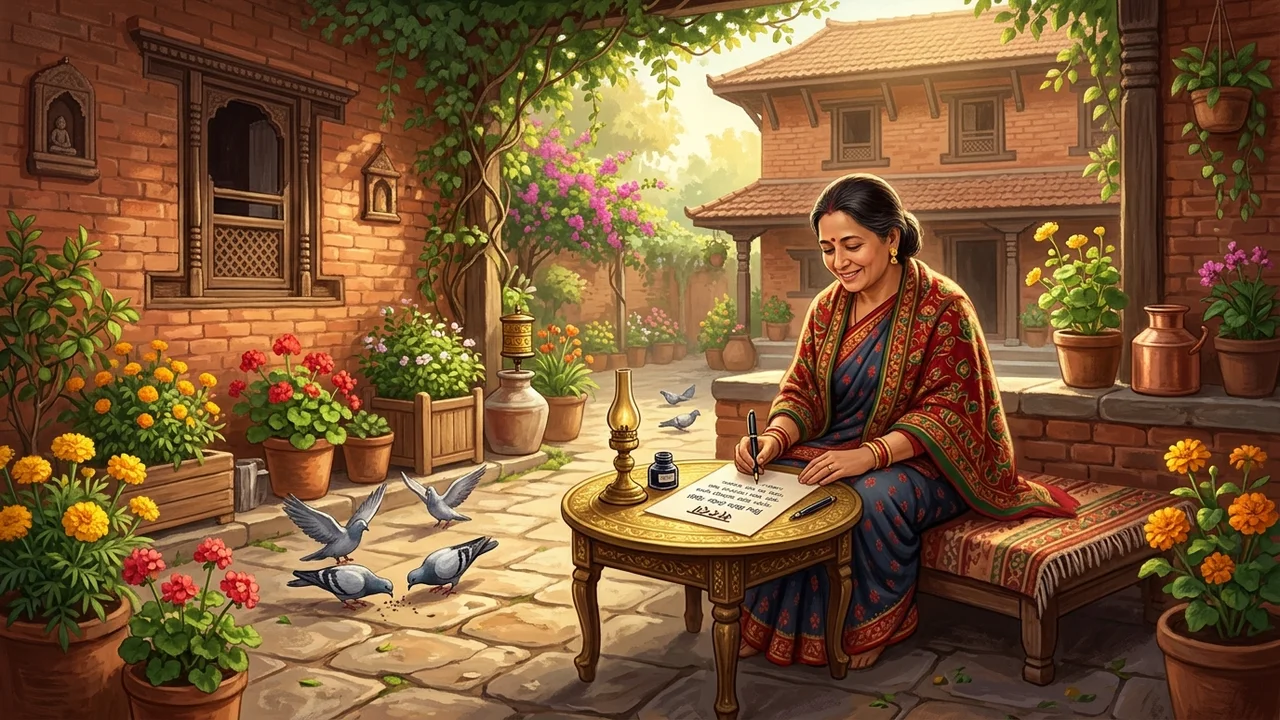
Lyrical Voice of Mourning and Devotion
| Literary Identity | Pioneering Lyricist of the Sharada Era & Master of Epistolary Verse |
|---|---|
| Lifespan & Origins | 1898–1960 CE (1955–2017 BS) · Born Huta Lakshmi Devkota in Dillibazar, Kathmandu · Elder sister of Mahakavi Laxmi Prasad Devkota |
| Poetic Circle | Mentored by Kaviraj Lekhnath Paudyal, encouraged by Chakrapani Chalise and her brother Devkota; published prominently in Sharada, Udyog, and Sahitya Srot |
| Epochal Masterpiece | Lok Priya Devi ka Kavita (1983, posthumously gathered and published by her daughter Shashi Rimal, establishing her place in the canon) |
| Artistic Significance | Transmuted ordinary domestic speech and epistolary correspondence into poignant, rhythmically agile verse articulating female longing, marital separation, and profound spiritual endurance under Rana seclusion. |
While patriarchal literary records long relegated her to a passing footnote as the elder sister of Mahakavi Laxmi Prasad Devkota, Lok Priya Devi (Lokapriyā Devī / लोकप्रियादेवी) was a luminous, self-wrought poet whose agile verses articulated the silent griefs, spiritual yearnings, and intimate emotional domesticity of twentieth-century Nepali womanhood with unprecedented lyrical immediacy.
Born Huta Lakshmi Devkota in 1898 CE (1955 BS) in Kathmandu, she was married at age eight to Loknath Joshi, who fashioned her literary name "Lok Priya" by wedding his own name to hers. Encouraged by her neighboring mentor Lekhnath Paudyal (Lekhanātha Pauḍyāla / लेखनाथ पौड्याल) and cheered by her prodigiously gifted younger brother Laxmi Prasad, she began composing rhyming epistolary verse to bridge long months of spousal separation, pouring everyday speech into elegant metered stanzas that retained the natural music of the living voice.
When the prestigious monthly Sharada opened its pages to her in 1935, she joined the historic vanguard of female poets in print, confronting maternal loss—having buried several of her own children—and the suffocating constraints of feudal domesticity through poems of stoic tenderness. Her posthumous collection, lovingly compiled in 1983 by her daughter Shashi Rimal, endures as a vital testament to female creative autonomy thriving amidst the shadows of Rana autocracy.
Sharada (शारदा), the companions, the Bhanu day
Her poem "Shantlai Jawaf," an answer to Shanta, appeared in Sharada (शारदा) in Phagun of 1992. Her nephew Prem Raj Paudyal (पौड्याल) had carried it there almost by force. Another nephew, Kamal Dixit, was the one who fair-copied pieces for the magazine. Three poems of hers appeared in Sharada (शारदा) in that season. In 2004 a story, "Dosti," friendship, appeared in Udyog (उद्योग), which Chakrapani Chalise and his son Laxmi Nandan were editing. She also published in Sahitya Shrot (साहित्य स्रोत) and in the literary pages of Gorkhapatra (गोरखापत्र). The magazines of the great middle generation, the years this shelf gives to Devkota (देवकोटा) and Siddhicharan, had a woman in them who was not a guest.
The companions who came to the house to hear and to recite were Goma and Prem Rajeshwari (राजेश्वरी). A small women's room inside a famous family's house, swapping poems, is easy to sentimentalize and wrong to skip. Yogmaya (योगमाया) had a committee and a river. Ambalika had Patna and one novel. Lok Priya had a Kathmandu courtyard, a husband on the road, a brother who was about to be called Mahakavi (महाकवि), and two women who came to listen. Out of that she also did the public work. She wanted girls taught. In 2010 of the Nepali (नेपाली) calendar she sat on the executive of the committee for Bhanubhakta's birth anniversary and organized a literacy gathering in his name. The first poet, whose own pages on this shelf include a letter of instruction to a bride, was being celebrated by a woman poet who had been a bride at eight. The irony can be carried without a speech. She used his day to teach reading.
India was the foreign country of her generation, and she went often with Loknath. She learned to speak, read, and write Hindi, and she wrote Hindi poems her brother admired. The bilingual habit matters. Nepali (नेपाली) letters in those decades were always in conversation with Hindi and with Banaras, as Motiram (मोतीराम) and Shambhu and Dharanidhar show from the men's side. Lok Priya shows it from inside a marriage. The poem goes where the husband goes, and it comes home as a letter.
What the collected book is for
Most of what she wrote did not become a book while she lived. That is the ordinary fate of the woman in this generation, and it is why Shashi Rimal's (रिमाल) 1983 gathering matters. A daughter editing a mother is a second authorship, the way Nauli carrying news is part of Mainali's (मैनाली) story, the way Yogmaya's (योगमाया) disciples are the only reason a page can exist. The 2014 remembrance, which set Lok Priya with Ambalika, Chandrakala Devi, Mangala Devi, and Divya Koirala (कोइराला) as women shut out of the record, is the state's late admission. This page is the shelf's. She is not an anecdote in a great brother's childhood. She is a poet who could hold a shloka after one hearing, who answered a friend in Sharada (शारदा), who wrote a story called friendship, and who spent a Bhanu anniversary on literacy.
Read her beside Devkota's (देवकोटा) three instruments and you hear the domestic source of one of them. The Mahakavi's (महाकवि) house was already full of recitation before he broke the line. The sister who wrote to her husband in verse was practicing, in the kitchen of that house, the belief that Nepali (नेपाली) verse was a usable language. He took the belief into epics and essays and a mad free line. She kept it at the size of a letter. The letter is not a failed epic. It is the scale on which a woman's life was allowed to be literary, and she filled the scale.
What to carry out of the room
Carry Huta Lakshmi and the name a husband made. Carry Lekhnath (लेखनाथ) next door as a teacher, not as a patron who replaces her. Carry "Shantlai Jawaf" and "Dosti" as doors into Sharada (शारदा) and Udyog (उद्योग). Carry the 1983 book as a daughter's editing. She died in 1960. The poems are gathered. The page is so she is not only someone's sister.
देवकोटाकी दिदी, र आफ्नै अधिकारकी कवि
लोकप्रियादेवी देवकोटाको पृष्ठमा लेख्ने दिदीका रूपमा नाम लिइएकी छन्। आफ्नै पृष्ठ चाहिन्छ, किनभने दिदी हुनु उनको बारेमा सबैभन्दा कम रोचक साँचो कुरा हो। उनी नेपाली १९५५ जेठमा, अङ्ग्रेजी वर्षको चलनमा १८९८ मा, काठमाडौंमा जन्मिइन्। उनको नाम हुतलक्ष्मी थियो। तिलमाधव देवकोटा र अमरराज्यलक्ष्मीका छ छोरा र सात छोरीमध्ये उनी काइँली थिइन्। घरमा उनलाई काइँलीमैयाँ भनिन्थ्यो। हुतलक्ष्मी भनेर कसैले बोलाउँदैनथे। आठ वर्षमा, नेपाली १९६३ मा, डिल्लीबजारका लोकनाथ जोशीसँग उनको विवाह भयो, र पतिले आफ्नो नामको लोकपछि प्रिया जोडेर उनको नाम बनाए। त्यो नाम लोकप्रिया भयो, अर्थात् जनताकी प्रिया, वा पहिलो शब्दमा कति स्वामित्व सुनिन्छ भन्नेअनुसार लोकनाथकी प्रिया। उनको मृत्यु ई.सं. १९६० मा भयो। ई.सं. १९८३ मा छोरी शशी रिमालले कविताहरू जम्मा गरेर किताब बनाइन्। अहिले एउटा पुरस्कारले कविको नाम बोक्छ।
शैली एक डिग्री पद्यमा धकेलिएको साधारण बोली हो। विषय आइपुग्दा लेख्थिन्। पतिलाई कवितामा चिठी लेख्थिन्, साधारण चिज माग्ने चिठी पनि, र पति भारतमा हुँदा पठाइएका चिठी पनि। एक पटक सुनेको श्लोक मुखमा बस्थ्यो। सुनेको कथा पानीझैँ फेरि खन्याउन सक्थिन्। तिलमाधवले पाहुनाका अगाडि उनलाई उभ्याएर वाचन गराउँथे, जुन बुबाको गर्व पनि हो र तालिम पनि। छिमेकमा बस्ने लेखनाथले पतिको आग्रहमा उनलाई कविताका सिद्धान्त पढाउनुभयो र लेख्न घचघच्याइरहनुभयो। चक्रपाणि चालिसेले उनलाई कविता पत्रिकामा पुग्नैपर्छ भन्नुभयो। साना भाइ देवकोटाले उनका हिन्दी पद्य पढेर खुसी हुनुभयो। वरिपरिका पुरुष प्रसिद्ध छन्। पृष्ठको मुख्य कुरा कविता उनकै थिए भन्ने हो।
शारदा, साथी, भानुको दिन
उनको कविता "शान्तलाई जवाफ", शान्ताको उत्तरमा लेखिएको, शारदामा १९९२ फागुनमा छापियो। उनका भान्जा प्रेमराज पौड्यालले त्यसलाई लगभग जबर्जस्ती त्यहाँसम्म पुर्याएका थिए। अर्का भान्जा कमल दीक्षितले पत्रिकाका लागि रचना सफा सारिदिन्थे। त्यो याममा उनका तीन कविता शारदामा छापिए। २००४ मा "दोस्ती" नामको कथा, अर्थात् मित्रता, उद्योगमा छापियो, जसका सम्पादक चक्रपाणि चालिसे र उनका छोरा लक्ष्मीनन्दन थिए। साहित्य स्रोतमा र गोरखापत्रका साहित्यिक पृष्ठमा पनि उनका रचना छापिए। यो तहले देवकोटा र सिद्धिचरणलाई दिएका वर्षहरूमा, त्यो महान् मध्य पुस्ताका पत्रिकामा, एक यस्ती नारी थिइन्, जो पाहुना थिइनन्।
सुन्न र सुनाउन घर आउने साथी गोमा र प्रेमराजेश्वरी थिए। प्रसिद्ध परिवारको घरभित्र कविता साट्ने महिलाहरूको सानो कोठालाई भावुकता चढाएर हेर्न सजिलो छ, तर त्यसलाई छोडिदिनु गलत हुन्छ। योगमायासँग समिति र नदी थियो। अम्बालिकासँग पटना र एउटा उपन्यास थियो। लोकप्रियासँग काठमाडौंको आँगन, बाटो हिँडिरहेका पति, महाकवि भनिन लागेका भाइ, र सुन्न आउने दुई नारी थिए। त्यही आधारबाट उनले सार्वजनिक काम पनि गरिन्। उनी केटीहरू पढून् भन्ने चाहन्थिन्। नेपाली २०१० मा भानुभक्त जयन्ती समारोह समितिको कार्यकारिणीमा बसिन् र उहाँको नाममा साक्षरता भेला आयोजना गरिन्। यो तहमा जसका आफ्नै पृष्ठमा दुलहीलाई शिक्षा दिने पत्र पनि छ, ती पहिलो कविको उत्सव आठ वर्षमै दुलही भएकी एक महिला कविले मनाउँदै थिइन्। यो विडम्बनालाई भाषण नदिई पनि बोक्न सकिन्छ। उनले उहाँको दिनलाई पढ्न सिकाउने दिन बनाइन्।
भारत उनको पुस्ताको विदेश थियो, र उनी लोकनाथसँग धेरै पटक गइन्। उनले हिन्दी बोल्न, पढ्न र लेख्न सिकिन्, र भाइले प्रशंसा गरेका हिन्दी कविता पनि लेखिन्। यो द्विभाषी बानी महत्त्वपूर्ण छ। ती दशकको नेपाली साहित्य सधैँ हिन्दी र बनारससँग कुराकानीमा थियो, मोतीराम, शम्भु र धरणीधरले पुरुषतर्फबाट देखाएझैँ। लोकप्रियाले यो कुरा विवाहभित्रबाट देखाउँछिन्। कविता पति जाने ठाउँमा जान्छ, र चिठी भएर घर आउँछ।
सङ्ग्रह केका लागि
उनले बाँचुन्जेल लेखेको अधिकांश किताब बनेन। यो पुस्ताकी नारीको साधारण भाग्य हो, र शशी रिमालको १९८३ को सङ्कलन महत्त्वपूर्ण हुनुको कारण यही हो। छोरीले आमालाई सम्पादन गर्नु दोस्रो लेखकत्व हो, जसरी खबर बोक्ने नौली मैनालीको कथाको हिस्सा हो, जसरी योगमायाका शिष्य नै पृष्ठ सम्भव हुनुको एक मात्र कारण हुन्। अम्बालिका, चक्रकलादेवी, मङ्गलादेवी र दिव्या कोइरालासँग लोकप्रियालाई अभिलेखबाहिर पारिएका नारीका रूपमा राख्ने २०१४ को सम्झना राज्यको ढिलो स्वीकार हो। यो पृष्ठ भने यो तहको आफ्नै हो। उनी महान् भाइको बाल्यकालको कुनै किस्सा होइनन्। उनी एक पटक सुनेपछि श्लोक कण्ठ राख्न सक्ने, शारदामा साथीलाई जवाफ दिने, दोस्ती नामको कथा लेख्ने र भानुको वार्षिकोत्सव साक्षरतामा खर्च गर्ने कवि हुन्।
उनलाई देवकोटाका तीन साधनको छेउमा राखेर पढ्दा तीमध्ये एकको घरेलु स्रोत सुनिन्छ। महाकविले पङ्क्ति भाँच्नुअघि नै उहाँको घर वाचनले भरिएको थियो। पतिलाई पद्यमा लेख्ने दिदी त्यो घरको भान्सामा बसेर नेपाली पद्य कामलाग्दो भाषा हो भन्ने विश्वासको अभ्यास गर्दै थिइन्। महाकविले त्यो विश्वासलाई महाकाव्य, निबन्ध र पागल स्वच्छन्द पङ्क्तिमा लैजानुभयो। उनले त्यसलाई चिठीको नापमा राखिन्। चिठी असफल महाकाव्य होइन। नारीको जीवन साहित्यिक हुन पाइने नाप त्यही हो, र उनले त्यो नाप भरिन्।
कोठाबाट के लैजाने
हुतलक्ष्मी र पतिले बनाएको नाम लैजानुहोस्। छिमेकका लेखनाथलाई उनको ठाउँ लिने संरक्षक होइन, शिक्षकका रूपमा लैजानुहोस्। "शान्तलाई जवाफ" र "दोस्ती"लाई शारदा र उद्योगका ढोकाका रूपमा लैजानुहोस्। १९८३ को किताबलाई छोरीको सम्पादनका रूपमा लैजानुहोस्। उनी ई.सं. १९६० मा बितिन्। कविता जम्मा भएका छन्। उनी कसैकी दिदी मात्र नहुन् भनेर नै यो पृष्ठ बनेको हो।
Where it sits
The page before this one is Ambalika Devi (अम्बालिकादेवी). The page after it is Balkrishna Sama (बालकृष्ण सम). Her brother is Laxmi Prasad Devkota (लक्ष्मीप्रसाद देवकोटा). The neighbor who taught her meter is Lekhnath (लेखनाथ).