Nepali Readings / Gopal Prasad Rimal
Gopal Prasad Rimal (गोपालप्रसाद रिमाल)गोपालप्रसाद रिमाल
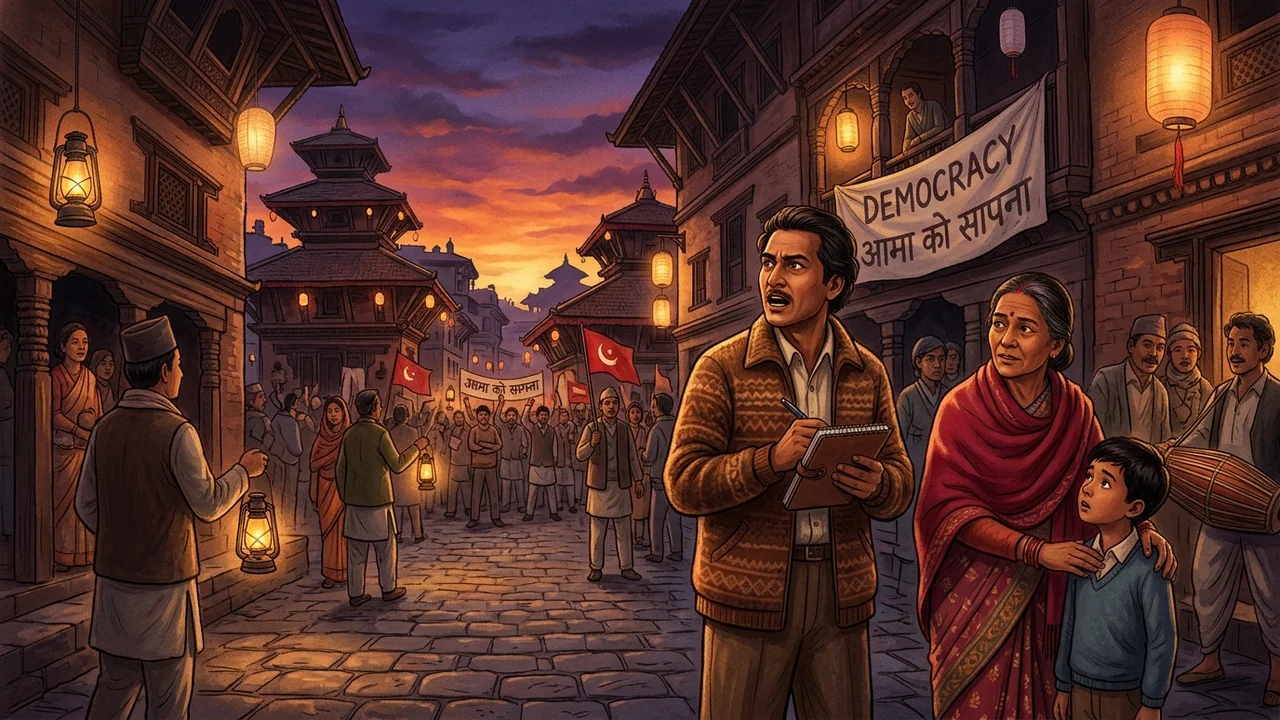
The poet without the crown
| Literary Identity | Pioneer of Revolutionary Free Verse & Modern Ibsenian Problem Plays in Nepal |
|---|---|
| Lifespan & Origins | 1918–1973 CE (1975–2030 BS) · Born in Battisputali, Kathmandu, Nepal |
| Literary Movements | Revolutionary Modernism (Pragativādī Gadya-Kavitā) & Social Dramatic Realism |
| Poetic Masterpiece | Aama ko Sapana (1962, "The Mother's Dream" — awarded the Madan Puraskar; the supreme prophetic anthem of democratic emancipation in Nepali literature) |
| Pioneering Dramas | Masan (1946, "The Cremation Ground" — landmark Ibsenian prose drama exposing patriarchal tyranny, polygamy, and female subjugation) and Yo Prem (1958) |
| Political Defiance | Founded the underground anti-Rana organization Praja Panchayat (1940); repeatedly imprisoned under both the Rana regime and King Mahendra's royal dictatorship; suffered long psychiatric internment. |
Gopal Prasad Rimal (Gopālaprasāda Rimāla / गोपालप्रसाद रिमाल) was the revolutionary herald of modern Nepali literature. At a time when traditional metrical convention reigned supreme, Rimal shattered classical constraints by introducing rhythmic, prose-cadenced free verse (Gadya-Kavitā) and Ibsenian problem drama to Nepal, wielding literature as a blazing torch against feudal autocracy and social degradation.
Born in 1918 CE (1975 BS) in Battisputali, Kathmandu, Rimal was radically politicized by the execution of the four young anti-Rana martyrs in 1941. Refusing passive compliance, he founded the underground political movement Praja Panchayat, suffering repeated arrests and long imprisonments in Rana dungeons. In 1946, he published his revolutionary theatrical masterpiece Masan ("The Cremation Ground"). Breaking with traditional mythological drama, Masan introduced realistic psychological prose to the stage, mounting an unsparing critique of feudal patriarchy, aristocratic polygamy, and the domestic torment of childless wives.
Rimal's ultimate gift to the nation was his prophetic poem Aama ko Sapana ("The Mother's Dream"), compiled into his 1962 Madan Puraskar-winning anthology. Composed as a maternal dialogue reassuring an anxious son that the dawn of liberty and justice is inexorably approaching (*"He will arrive, son, he will arrive..."*), the poem became the sacred hymn of the 1951 democratic revolution. Despite relentless political persecution and severe psychiatric illness in his later years, Rimal remains the eternal poet-prophet of Nepal's struggle for freedom.
The execution, the organization, the asylum
He began to be known as a poet around 1930 and as a playwright around 1940. The adolescence was already political. Men around him wanted the Ranas (राणा) gone. In 1941 the state executed Dashrath Chand and the other martyrs of that conspiracy, and the killing fixed Rimal's (रिमाल) subject. Revolution was no longer a mood. It was a debt to the dead. He founded a creative circle called Praja Panchayat, a people's council in a time when the people had no council, and he was jailed more than once for it. He had a part in the movement of 1950 and 1951, the movement Siddhicharan met by editing a daily called Voice on the morning after. Rimal (रिमाल) met the morning and then could not live in it. Faction, dirt, the sense of a promise spent in a quarrel: the accounts say the democracy betrayed the poem. He lost his balance. He was sent to an asylum in Ranchi. He was brought home. The last years are a man roaming Kathmandu with the dream still in him and the instrument of the dream broken. He died in 1973. The Tribhuvan Pragya Puraskar came that same year, which is the state's habit of arriving with a prize when the poet can no longer answer.
Put that life beside Devkota's (देवकोटा) five months in the same Indian hospital and the rhyme is cruel and useful. Two of the greatest Nepali (नेपाली) poets of the century were treated for their minds in Ranchi. Devkota (देवकोटा) came back and wrote Pagal (पागल), accepted the word mad, and asked to be remembered by Muna Madan (मुनामदन). Rimal (रिमाल) came back and did not recover the public self. The free line he had helped to make possible passes to Bhupi, who will use it for irony rather than for hope. Rimal (रिमाल) is the hope, before the irony. A reader who starts at Bhupi and never meets the mother in Aama ko Sapana (आमाको सपना) thinks the modern Nepali (नेपाली) poem was born sarcastic. It was born expecting a fighter.
The mother's dream
The book is one conversation stretched into a symbol, and then a sheaf of poems around it. A mother speaks to a child. She is waiting for a figure who will stand against injustice. The waiting is not private only. In 1962, twelve years after the Ranas (राणा) and deep into the Panchayat that had replaced the parties, a mother's expectation of a just fighter is a political poem wearing a kitchen. The language is plain. That plainness is the art Banira later studied as a romantic freedom: the refusal of Lekhnath's (लेखनाथ) counted sweetness, the refusal of the court, the belief that a Nepali (नेपाली) sentence spoken at home could carry a country. The title poem entered the schoolbooks, which is how a nation stores a dangerous tenderness. Children memorize a mother. The state hopes they will not ask who the fighter was supposed to unseat.
He wrote plays as well as poems. The plays are less retold than the dream, and this page will not invent their plots. What is secure is the double start, poet in 1930, playwright in 1940, and the organization that made writing and politics the same room. Praja Panchayat is a name to keep, because the Panchayat that later ruled Nepal used a cousin of that word for a party-less order Rimal (रिमाल) would not have blessed. The poet's council and the king's council are not the same noun. Remembering the first protects the second from stealing it.
The Madan Puraskar of 1962 sits in a small history of this shelf. Parijat (पारिजात) will win it for Shirishko Phool (शिरीषको फूल). Ghimire's (घिमिरे) songs will live in other prizes and in the state's later title Rashtrakavi (राष्ट्रकवि). Rimal's (रिमाल) prize is for a book that still believes. Read the belief with the biography and it becomes tragic, which is not the same as false. A man can write a true hope and then be unable to inhabit the country that hope helped to open. That is the sitting's last fact. The dream is not cancelled by the street. The street is what the dream cost.
What to carry out of the room
Carry him as the untitled classic. Carry Dashrath Chand's execution as the date the poem hardened. Carry Ranchi as a shared address with Devkota (देवकोटा), and the unhealed walk home as the difference. Carry Aama ko Sapana (आमाको सपना) as a kitchen that is also a manifesto. Carry Banira's thesis as the proof that a woman scholar of the next generation chose him, not the crowned three, as the poet whose freedom needed explaining. The lines stay in the book. The mother is public.
मुकुट नभएको कवि
गोपालप्रसाद रिमालसँग शिरोमणि छैन, आशुकवि छैन। मुकुटले छोडेका कवि उहाँ हुन्, र उहाँ बिना यो तह अधुरो छ। उहाँको जन्म २१ मे १९१७ मा काठमाडौंमा भयो र मृत्यु २४ अक्टोबर १९७३ मा भयो। शैली बोलिने पङ्क्ति हो, जो पुरानो गन्तीबाट स्वच्छन्द छ, क्रान्तिकारी आशाले भरिएको छ, र आमा नै वक्ता हुन सक्ने गरी सरल छ। आमाको सपनाले ई.सं. १९६२ मा मदन पुरस्कार पायो। वानीरा गिरीको विद्यावारिधि, जुन त्रिभुवन विश्वविद्यालयबाट नेपाली साहित्यमा कुनै नारीले लिएको पहिलो हो, उहाँका कविताको स्वच्छन्दताको अध्ययन हो। राणाकालमा जेल जानुभयो। राणा ढलेपछि देवकोटाझैँ राँची जानुभयो, र होश गुमाएर काठमाडौंका सडक हिँड्न फर्कनुभयो। ई.सं. १९६२ का कविता प्रतिलिपिअधिकारको यति नजिक छन् कि यो पृष्ठले तिनको कथा भन्छ, तर छाप्दैन।
हत्या, संगठन, अस्पताल
कविका रूपमा करिब ई.सं. १९३० देखि र नाटककारका रूपमा करिब ई.सं. १९४० देखि चिनिन थाल्नुभयो। किशोरावस्था पहिले नै राजनीतिक थियो। वरिपरिका पुरुष राणा जाऊन् चाहन्थे। ई.सं. १९४१ मा राज्यले दशरथ चन्द र त्यो षड्यन्त्रका अरू शहीदलाई मार्यो, र त्यो हत्याले रिमालको विषय तय गर्यो। क्रान्ति अब मूड मात्र रहेन। त्यो मृतकप्रतिको ऋण भयो। प्रजा पंचायत भन्ने सिर्जनात्मक वृत्त खोल्नुभयो, जनतासँग परिषद् नभएको बेलाको जनताको परिषद्, र त्यसका लागि एकभन्दा बढी पटक जेल पर्नुभयो। ई.सं. १९५० र १९५१ को आन्दोलनमा उहाँले हिस्सा लिनुभयो, जुन आन्दोलनलाई सिद्धिचरणले भोलिपल्ट स्वर नामको दैनिक सम्पादन गरेर भेट्नुभयो। रिमालले त्यो बिहान भेट्नुभयो, तर त्यसमा बाँच्न सक्नुभएन। गुटबन्दी, फोहोर, र झगडामा वाचा खर्च भइसकेको भाव थियो। विवरणहरू भन्छन्, प्रजातन्त्रले कवितालाई धोका दियो। सन्तुलन गुमाउनुभयो। राँचीको अस्पताल पठाइनुभयो। घर ल्याइनुभयो। अन्तिम वर्षहरूमा सपना अझै भित्र बोकेका, तर सपनाको साधन भाँचिएका एक मानिस काठमाडौंमा डुलिरहनुभयो। ई.सं. १९७३ मा बित्नुभयो। त्रिभुवन प्रज्ञा पुरस्कार त्यही वर्ष आयो, जुन कविले जवाफ दिन नसक्ने बेलामा राज्य पुरस्कार लिएर आइपुग्ने बानी हो।
त्यो जीवनलाई त्यही भारतीय अस्पतालमा बितेका देवकोटाका पाँच महिनाको छेउमा राख्दा त्यो मेल निर्दयी र काम लाग्ने देखिन्छ। शताब्दीका दुई महान् नेपाली कविको राँचीमा मानसिक उपचार भयो। देवकोटा फर्केर पागल लेख्नुभयो, पागल शब्द मान्नुभयो, र मुनामदनबाट सम्झिन चाहनुभयो। रिमाल फर्केर सार्वजनिक स्वरूप फिर्ता पाउनुभएन। उहाँले सम्भव बनाउन मद्दत गर्नुभएको स्वच्छन्द पङ्क्ति भूपीतिर जान्छ, जसले त्यसलाई आशाका लागि होइन, व्यङ्ग्यका लागि प्रयोग गर्नेछन्। रिमाल व्यङ्ग्यभन्दा अघिको आशा हुनुहुन्छ। भूपीबाट सुरु गरी आमाको सपनाकी आमालाई कहिल्यै नभेट्ने पाठकले आधुनिक नेपाली कविता व्यङ्ग्यमै जन्मेको ठान्छ। त्यो एउटा लडाकुको प्रतीक्षामा जन्मेको थियो।
आमाको सपना
किताब प्रतीकमा तन्किएको एउटा कुराकानी हो, र त्यसवरिपरि कविताको एउटा मुठा छ। आमा बालकसँग बोल्छिन्। उनी अन्यायविरुद्ध उभिने कसैको पर्खाइमा छिन्। पर्खाइ निजी मात्र होइन। ई.सं. १९६२ मा, राणा गएको बाह्र वर्षपछि र दलहरूलाई विस्थापित गरेको पंचायतभित्र, न्यायी लडाकुप्रति एउटी आमाको अपेक्षा भान्साको पहिरन लगाएको राजनीतिक कविता हो। भाषा सादा छ। त्यो सादापन त्यही कला हो, जसलाई वानीराले पछि स्वच्छन्द स्वतन्त्रताका रूपमा अध्ययन गरिन्। त्यसमा लेखनाथको गनिएको मीठोपनको अस्वीकार छ, दरबारको अस्वीकार छ, र घरमा बोलिएको नेपाली वाक्यले देश धान्न सक्छ भन्ने विश्वास छ। शीर्षक कविता पाठ्यपुस्तकमा पर्यो, र राष्ट्रले खतरनाक कोमलता यसरी नै थन्क्याउँछ। बालबालिकाले आमा कण्ठ गर्छन्। राज्यले ती बालबालिकाले लडाकुले कसलाई हटाउनुपर्थ्यो भनेर नसोधून् भन्ने आशा गर्छ।
कविताजस्तै नाटक पनि लेख्नुभयो। नाटक सपनाभन्दा कम सुनाइन्छन्, र यो पृष्ठले तिनको कथा रच्दैन। पक्का कुरा यी हुन्: दोहोरो सुरु, ई.सं. १९३० मा कवि र ई.सं. १९४० मा नाटककार, र लेखाइ र राजनीतिलाई एउटै कोठा बनाउने संगठन। प्रजा पंचायत सम्झिराख्नुपर्ने नाम हो, किनभने पछि नेपाल चलाउने पंचायतले त्यो शब्दको नातेदार शब्द दल बिनाको व्यवस्थाका लागि प्रयोग गर्यो, जुन व्यवस्थालाई रिमालले आशीर्वाद दिनुहुने थिएन। कविको परिषद् र राजाको परिषद् एउटै संज्ञा होइनन्। पहिलोलाई सम्झँदा दोस्रोले त्यसलाई चोर्न पाउँदैन।
ई.सं. १९६२ को मदन पुरस्कार यो तहको सानो इतिहासमा बस्छ। पारिजातले शिरीषको फूलका लागि जित्नुहुनेछ। घिमिरेका गीत अरू पुरस्कार र राज्यको पछिल्लो उपाधि राष्ट्रकविमा बाँच्नेछन्। रिमालको पुरस्कार अझै विश्वास गर्ने किताबको हो। विश्वासलाई जीवनीसँग पढ्दा त्रासदी बन्छ, जुन झूट होइन। मानिसले साँचो आशा लेख्न सक्छ र त्यो आशाले खोल्न मद्दत गरेको देशमा बस्न नसक्न सक्छ। बैठकको अन्तिम तथ्य यही हो। सडकले सपना रद्द गर्दैन। सडक सपनाको मोल हो।
कोठाबाट के लैजाने
उहाँलाई उपाधि नभएको क्लासिकका रूपमा लैजानुहोस्। दशरथ चन्दको हत्यालाई कविता कठोर भएको मितिका रूपमा लैजानुहोस्। राँचीलाई देवकोटासँगको साझा ठेगानाका रूपमा लैजानुहोस्, र निको नभएको घर फर्कने हिँडाइलाई फरकका रूपमा। आमाको सपनालाई घोषणापत्र पनि भएको भान्साका रूपमा लैजानुहोस्। वानीराको शोधलाई यसको प्रमाणका रूपमा लैजानुहोस् कि अर्को पुस्ताकी विदुषीले मुकुटधारी तीन जनालाई होइन, उहाँलाई नै स्वतन्त्रता व्याख्या गर्नुपर्ने कविका रूपमा रोजिन्। पङ्क्ति किताबमै रहन्छन्। आमा सार्वजनिक हुन्। यो पृष्ठभन्दा अघिको पृष्ठ गुरुप्रसाद मैनालीको हो। यसपछिको पृष्ठ बीपी कोइरालाको हो। स्वच्छन्द पङ्क्ति भूपि शेरचनमा अघि बढ्छ। यी कविताका अध्येता वानीरा गिरी हुन्।
Where it sits
The page before this one is Guru Prasad Mainali (गुरुप्रसाद मैनाली). The page after it is BP Koirala (विश्वेश्वरप्रसाद कोइराला). The free line continues in Bhupi Sherchan (भूपि शेरचन). The scholar of these poems is Banira Giri (वानीरा गिरी).