Nepali Readings / Siddhicharan Shrestha
Siddhicharan Shrestha (सिद्धिचरण श्रेष्ठ)सिद्धिचरण श्रेष्ठ
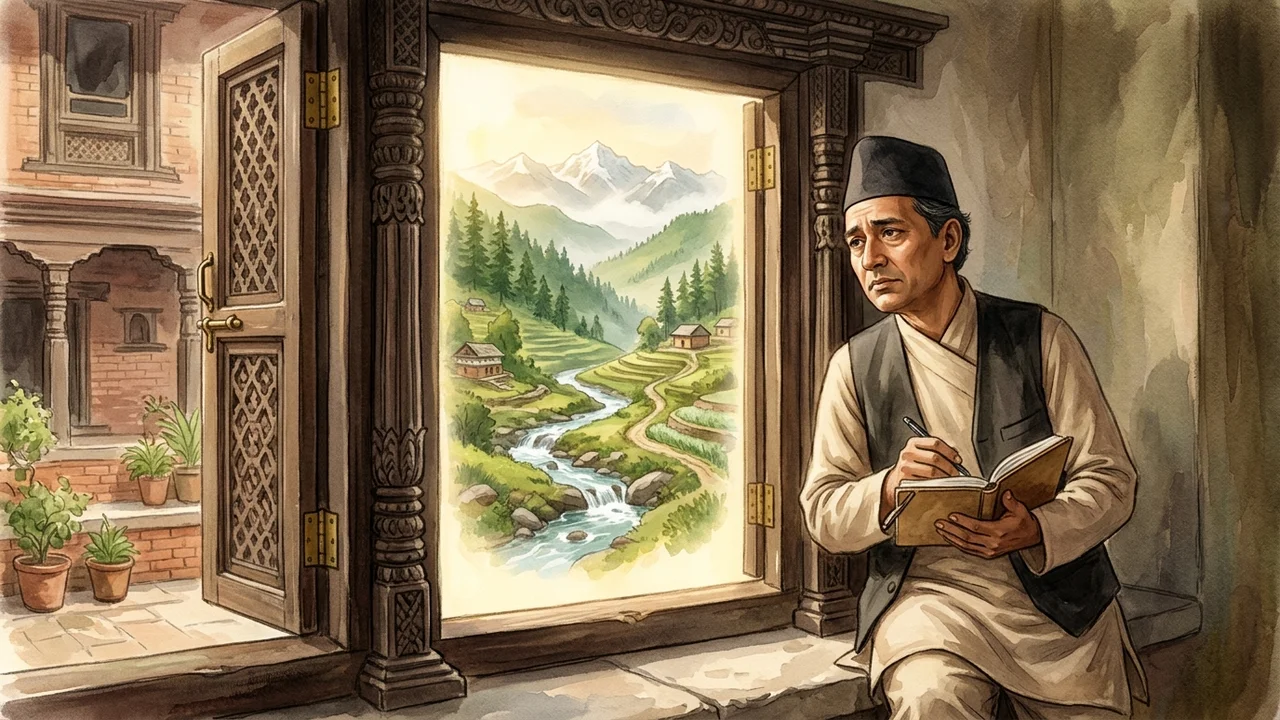
The title, and the style
| Literary Epithet | Yugakavi (Yugakavi / युगकवि — The Poet of the Epoch / Prophet of the Era) |
|---|---|
| Lifespan & Origins | 1912–1992 CE (1969–2049 BS) · Born in Okhaldhunga, eastern Nepal |
| Literary Movements | Romantic Revolutionism (Svacchandatāvādī Krāntikārī Dhārā) & Nature Lyricism |
| Political Imprisonment | Sentenced in 1940 to 18 years in prison by the autocratic Rana regime for publishing a revolutionary poem containing the line "Without revolution, there can be no peace"; languished in jail until 1945 |
| Iconic Masterpieces | Mero Pyaro Okhaldhunga (1935, the definitive pastoral romantic poem of Nepali literature), Urvasi (1960, Kavya reflecting existential sorrow and spiritual transcendence), Jyan-Mara Saila, Mangalman, Bhimsen Thapa, and Kuhiro ra Gham |
| Bilingual Legacy | Major pioneer of the modern renaissance in both the Nepali language and Nepal Bhasa (Newar literature). |
Revered as Yugakavi (Yugakavi / युगकवि, "The Poet of the Epoch"), Siddhicharan Shrestha (Siddhicaraṇa Śreṣṭha / सिद्धिचरण श्रेष्ठ) was the prophetic voice of democratic awakening and romantic lyricism in twentieth-century Nepal. In his verse, the pastoral purity of eastern Nepal's ridges merged seamlessly with a fierce revolutionary conscience, giving voice to a subjugated generation's yearning for freedom, social justice, and national rebirth.
Born in 1912 CE (1969 BS) in the picturesque hill town of Okhaldhunga, Siddhicharan moved as a youth to Kathmandu, where employment in the historic Sharada literary circle brought him into close companionship with Laxmi Prasad Devkota and Balkrishna Sama. In 1935, homesickness for his childhood hill country inspired Mero Pyaro Okhaldhunga ("My Beloved Okhaldhunga")—a pastoral masterpiece whose crystalline musicality and tender nature imagery established an enduring benchmark for romantic landscape poetry in Nepal.
Yet Siddhicharan's lyricism was matched by unyielding political courage. In 1940, during the height of the anti-Rana underground agitation, he penned a poem in Nepal Bhasa containing the fateful declaration: "Without revolution, there can be no peace." Arrested immediately by Prime Minister Juddha Shumsher, his family properties were confiscated and he was sentenced to eighteen years in prison. During five harrowing years behind bars alongside the martyrs of 1941, Siddhicharan channeled his suffering into monumental poetic narratives, emerging upon his release in 1945 as the moral symbol of the impending 1951 democratic revolution.
Okhaldhunga (ओखलढुङ्गा), then a shop in Kamalachi
His father's people had moved from Bhaktapur to Ombahal in Kathmandu. Bishnu Charan Shrestha (श्रेष्ठ), the father, was a novelist, the author of Sumati (सुमति) and Bhismapratigya (भीष्मप्रतिज्ञा), and a man in government service. The service sent him to Okhaldhunga (ओखलढुङ्गा). Siddhicharan was born there, and the childhood was there, which is why the famous poem is not a Kathmandu poem. The mother was Neer Kumari Shrestha (श्रेष्ठ). In 1919, when the boy was seven, the family returned to Kathmandu. The eastern hills became a memory with a very long afterlife.
He studied at Durbar High School, the same school that had held Motiram (मोतीराम) among Rana (राणा) boys and that would be part of the city's map for Laxmi Prasad Devkota (लक्ष्मीप्रसाद देवकोटा). In 1926 he saw an old man bent over his writing at a herbal shop in Kamalachi, near the school. The old man was Siddhidas Amatya, a renowned poet of Nepal Bhasa. Siddhicharan took him as guru. The scene is worth keeping because it is how a second language of poetry actually arrives. The lesson did not arrive in a syllabus. It arrived in a shop, where an old man, a page, and a boy who stops all meet. From that stopping came the Nepal Bhasa half of his work, and later the poem a court would punish.
He began early. A telling of the life says the poems started around thirteen. The 1934 earthquake, 1990 in the Nepali (नेपाली) calendar, hit when he was about twenty-two, and one account gathers poems of that disaster under a title on the order of Bhuichalo (भूइँचालो), the earthquake itself. This page will not pretend to a table of contents it has not held. The direction is enough. He was a poet of public shocks as well as of private hills, and the ground moving under Kathmandu was one of the shocks. A later telling also includes the death of a young son, and a poem written out of a grief that wide. The son's poem, if the telling is exact, belongs with the father he could not cremate. His work keeps returning to people who are gone and to places that remain.
The jail
In 1940 the Rana (राणा) government charged him with sedition for a poem in Nepal Bhasa. The poem's burden was that a real peace does not arrive unless the order itself is shaken. He was sentenced to eighteen years. The state had read him correctly, from its own point of view. A line like that is not a landscape. It is a politics. Many writers were swept up with the politicians. In the jail with him were Chittadhar Hridaya, Phatte Bahadur Singh, and Dharma Ratna Yami, and the artist Chandra Man Singh Maskey. The confinement, which was meant to silence a generation, became a workshop. Epics got written in cells. Urvashi (उर्वशी) belongs to that pressure.
His father died while he was inside. He was not allowed to perform the last rites. The grief went into the poems, which is a bare sentence for a large cruelty. A son who writes about fathers and homelands, locked up so that he cannot stand at his own father's burning, is the Yugakavi (युगकवि) title in one fact. He was released in 1945. Of the eighteen years he served about five. Five were enough to mark the work. The Rana (राणा) state had another six years to live.
Read this beside Lekhnath's (लेखनाथ) parrot, which criticized by allegory and kept the poet employed, and beside the four martyrs Bhupi would later praise, hanged in 1941. Siddhicharan's case sits between those poles. He was not hanged. He was given a sentence long enough to be a warning, and he used the years. The era's poet is not only the man who suffered. He is the man who came out with a longer poem than he had when he went in.
Mero Pyaro Okhaldhunga (मेरो प्यारो ओखलढुङ्गा)
Mero Pyaro Okhaldhunga (मेरो प्यारो ओखलढुङ्गा), My Beloved (सुन प्रिये) Okhaldhunga (ओखलढुङ्गा), is the poem people mean when they say his name in a song. It is in Nepali (नेपाली). It says, in the plain sense of its reputation, that he is proud to have been born and raised in that eastern district. The hills, the childhood, the particular place: these do the work that a general flag cannot do. A person who has left home to work in Kathmandu, or in a foreign city, hears a birthplace that still claims him. Narayan Gopal sang it, and the singing fixed it. The poem became, for a lot of Nepalis (नेपाली), the anthem of the village you cannot live in and cannot stop loving.
The possessive in the title is the style. My beloved Okhaldhunga (ओखलढुङ्गा). Lekhnath (लेखनाथ) could say My Rama, a private god. Siddhicharan says my district, a private country inside the larger one. Ghimire's (घिमिरे) patriotic songs ask where Nepalis (नेपाली) will remain, and they answer with the nation. Siddhicharan answers with a map you could walk, a district with a highway that now has his name on it. The highway is a later honor. The poem was already a road. People who have never been to Okhaldhunga (ओखलढुङ्गा) use the feeling, which is the test of a local poem that has become general. It did not become general by abandoning the local. It became general by refusing to.
This page does not set the stanzas down. They are still his, and they are short enough that a quotation would be most of the poem. The gist is the pride, the distance, and the fact that a jailed poet of Nepal Bhasa is remembered by a great many people first as the singer of a Nepali (नेपाली) hill. Both languages were his. The song that traveled farthest happened to be the one in the language of the schoolbook.
Urvashi (उर्वशी)
The long poem to read after the district is Urvashi (उर्वशी). It comes out of the jail years, when the locked writers were writing epics because a cell gives a man time and takes everything else. The story it takes is from the Mahābhārata. Arjuna, during the exile, spends a time in heaven. Urvashi (उर्वशी), the apsara, comes to him with desire. He refuses. In the old telling he puts her in the generation of his parents, a woman he will not take. The refusal insults her. The story as the epic tells it goes on into a curse, and the curse later becomes the disguise he wears in the year of hiding, among women, before the war. Siddhicharan's poem is not a promise to march through every step of that curse. The accounts of it stress the clash itself. Arjuna's restraint, his ascetic nerve, against Urvashi's (उर्वशी) want. A life weighed toward practice and renunciation, against a life weighed toward taking what is offered.
Written in a jail, that clash is not a school exercise. A man who has been sentenced for a political desire is meditating on desire. What do you refuse, and what does the refusal cost, and is the cost a kind of freedom. The Mahābhārata episode gives him figures large enough to hold the question without writing a pamphlet about the Ranas (राणा). Lekhnath (लेखनाथ) had used a parrot for that indirection. Siddhicharan, even after a plain poem had already jailed him, uses Urvashi (उर्वशी) and Arjuna for the inner half of the same century. The outer half was the Nepal Bhasa poem. The inner half is a hero who says no to a goddess of pleasure. Readers who want only the revolutionary slogan miss this poem. Readers who want only the beautiful myth miss why it was written in a cell.
The early poems, Gewali's "two stars" essay suggests, were more direct, a romantic mind on nature and on people. Urvashi (उर्वशी) is what happens when that mind is locked up with a Sanskrit story and with grief. The directness goes partly underground. It does not disappear. A refusal is still a refusal. In 1940 he had refused the Rana (राणा) peace. In the cell he writes a man who refuses a beautiful offer. The two noes are not the same no. They rhyme.
The morning paper, and the chariot
On 19 February 1951, the day after the Ranas (राणा) fell, Nepal's first daily newspaper, Awaj (आवाज), The Voice, was launched. He was its editor. He had also been with Sharada (शारदा), the literary journal of the great middle generation, and with Gorkhapatra (गोरखापत्र) when it was still a bi-weekly. The daily is the symbolic job. A poet jailed for a line about peace and upheaval edits the voice of the morning the upheaval has arrived. Journalism here is not a second career that dilutes the poems. It is the poems' public consequence, printed on a schedule.
In January 1955 he organized the chariot for Lekhnath's (लेखनाथ) seventieth year. He pulled, with Devkota (देवकोटा), Balkrishna Sama (बालकृष्ण सम), and the prime minister. The poet of the plain line honored the poet of the allegory. That day belongs on both their pages. A literature is a set of arguments, and it is also a set of people who will take a rope when an old man is owed a street. Siddhicharan could hate a regime and still know what Lekhnath (लेखनाथ) had done for the language. The Yugakavi (युगकवि) title does not require him to scorn the Shiromani (शिरोमणि). The era included both.
The later honors are quieter and official. A stamp appeared in 1993, the year after his death. A highway runs from the eastern road toward Okhaldhunga (ओखलढुङ्गा), and a municipality carries his name. A country that names a road after a poet is doing something more intimate than a prize. The road goes to the place the poem already loved. People who drive it are inside the title whether they have read the stanzas or not. A good poem can annex a landscape. This one did.
The heaven the epic already told
The Mahābhārata episode under Urvashi (उर्वशी) is older than any Nepali (नेपाली) poet, and this shelf tells that epic elsewhere. During the exile, Arjuna is taken to heaven. He has been practicing weapons and vows. Urvashi (उर्वशी), an apsara whose beauty is a kind of office, comes to him and asks for the night. He refuses. The reason the epic gives is respect pushed until it becomes a barrier. He sets her among the mothers and the grandmothers of his line, a woman of an earlier generation, someone a son does not take. She hears the refusal as an insult from a guest in her own world. The curse that follows, in the epic, is that he will live as a person neither man nor woman among women. Years later that curse is the disguise, Brihannala, the dance teacher in King Virata's house, the year the Pandavas must stay hidden. A punishment becomes the trick that keeps them alive.
Siddhicharan, writing in a cell, does not have to march the reader through every later disguise. The accounts of his poem stay at the collision. Want on one side. A vowed restraint on the other. The poem prefers the restraint, the practice, the letting-go. A man who has just been given eighteen years for wanting a different peace is thinking about what a person is allowed to want. The Rana (राणा) court is not named as Urvashi (उर्वशी). The poem would be smaller if it were a costume for a pamphlet. It is a meditation that happens to have been written where pamphlets go to die. Chittadhar Hridaya, in the same jail, was turning his years toward a long Nepal Bhasa poem on the Buddha. Phatte Bahadur Singh and Dharma Ratna Yami were there. Chandra Man Maskey was drawing. The state had collected its inconvenient talents in one building and given them nothing but time. They spent it on epics. Urvashi (उर्वशी) is Siddhicharan's share of that accident.
Gewali's essay, the two stars, belongs here as a correction to the jail story. Before 1940 he was already a romantic poet people set beside Devkota (देवकोटा). His early subjects were nature, the human face, and a direct heat. The cell did not invent him. It bent him. The early directness goes partly underground in the myth, and it stays above ground in Mero Pyaro Okhaldhunga (मेरो प्यारो ओखलढुङ्गा), which needs no disguise. A district is not an allegory. It is a place his father was posted, a place he left at seven, a place the song refuses to treat as over. When Narayan Gopal sings it, the politics are still in the life, but the listener is allowed to cry for a road. That permission is the style at its most generous. He had earned the right to a soft poem by writing the hard one.
Sharada (शारदा), the voice, the road
The magazine years have a name among Nepali (नेपाली) readers. Sharada (शारदा) is the journal people use to mean the great middle generation, the years when Devkota (देवकोटा), Siddhicharan, and their peers made Kathmandu feel like a literature and not only a court. He wrote there. He wrote for Gorkhapatra (गोरखापत्र) when it was still a bi-weekly. Then, on 19 February 1951, the day after the Ranas (राणा) fell, he edited Awaj (आवाज), the first daily. Picture the morning. A city that has just changed its masters opens a newspaper whose name means voice, edited by a man who had been locked up for a poem about peace. The irony is so neat it would be suspect if the dates were not dull and real. The revolution came on the 18th, and the daily came on the 19th. The poet of the era, editing the era, on schedule.
The road came later, and it is the honor that matches the poem better than the stamp does. A stamp is a face. The Siddhicharan Highway goes toward Okhaldhunga (ओखलढुङ्गा), the beloved of the title, through the eastern hills people leave when they go to work. Driving it, you are in the poem's situation even if you never memorized a line. You are going to, or coming from, a district that a jailed poet refused to call small. The municipality renamed for him does the same work at the speed of a signboard. He died on 4 June 1992, eighty years old, in Kathmandu, the city he had come back to at seven. Parijat (पारिजात) would die the next year. Ghimire (घिमिरे) would live on toward a hundred, still counting syllables. Siddhicharan's era, the one in his title, was the Rana (राणा) end and the democratic morning. He stayed long enough to see other mornings, and the poem of the district outlived them.
What to carry out of the room
Start with Mero Pyaro Okhaldhunga (मेरो प्यारो ओखलढुङ्गा), and if you can hear Narayan Gopal's recording, hear it, so the district is a tune before it is an essay. Then the fact of the jail, so the tune is not only nostalgia. Then Urvashi (उर्वशी), so the myth and the cell are one book. The Nepal Bhasa poem that brought the sentence is the political door. Awaj (आवाज) is the morning he edited when the door opened. The earthquake poems and the grief for a child, where the tellings hold, are the other shocks. His father's novels, Sumati (सुमति) and Bhismapratigya (भीष्मप्रतिज्ञा), are the house he was born into, a house that already thought fiction was a serious way to spend a life.
The title is Yugakavi (युगकवि). The style is a romantic line that will also risk a charge, in two languages, with a birthplace specific enough to survive as a song. On this shelf he comes after Devkota (देवकोटा). He is not an afterword. He is the poet who stood in the same decades as Devkota (देवकोटा), went to jail while Lekhnath (लेखनाथ) was still the craftsman of the cage, lived to organize Lekhnath's (लेखनाथ) chariot, and died the year before Parijat (पारिजात), while Ghimire (घिमिरे) still had decades of songs ahead. The window faces east. The era looks back at him and agrees.
सिद्धिचरण श्रेष्ठ युगकवि हुन्। उपाधिको अर्थ हो, युगले उहाँमा आफैँलाई चिन्यो। उहाँ ओखलढुङ्गामा ई.सं. १९१२ मे २१ मा, नेपाली पात्रोअनुसार १९६९ जेठ ९ मा, जन्मनुभयो, र ई.सं. १९९२ जुन ४ मा काठमाडौंमा बित्नुभयो। उहाँ असी वर्षको हुनुहुन्थ्यो। त्यो पूर्वी जिल्लातिर जाने राजमार्गले उहाँको नाम बोकेको छ, र उहाँको जन्मथलो अहिले सिद्धिचरण नगरपालिका हो। ई.सं. १९९३ मा हुलाकले उहाँको अनुहार टिकटमा छाप्यो। सम्मानहरू आए। तर उपाधि जेलमै कमाइसकिएको थियो।
उहाँको शैली एउटै श्वासमा रोमान्टिक र राजनीतिक छ। उहाँ प्रकृति र मानिसबारे आफ्नो पुस्ताले जसरी लेख्थ्यो त्यसरी नै लेख्नुहुन्छ, ई.सं. १९३० को दशकको आकाशमा देवकोटा छेउमै हुँदा, र राणा अदालतले राजद्रोह भन्न सक्ने गरी सिधा वाक्य पनि लेख्नुहुन्छ। सूर्यविक्रम ज्ञवालीले ती वर्षमा दुवैलाई दुई तारा भन्ने निबन्ध छाप्नुभयो। देवकोटाको तारा महाकाव्य, लोकलय र पागल पङ्क्तितिर गयो। सिद्धिचरणको तारा जन्मथलो, जेल, र बुबाको दाहसंस्कारमा जान नपाएका मानिसले फेरि सुनाएको मिथकतिर गयो। उहाँ नेपाली र नेपाल भाषा, उपत्यकाका नेवारको भाषा, दुवैमा लेख्नुहुन्थ्यो। ती दुई भाषा शौक होइनन्। नेपाल भाषाका उहाँका गुरु औषधी पसलमा पृष्ठमाथि निहुरिएको भेटिएका एक नेवार कवि हुनुहुन्थ्यो, र उहाँलाई अठार वर्षको सजाय दिलाउने कविता त्यही भाषामा थियो।
लेखनाथले गुनासो सुगाभित्र लुकाउनुभयो भने सिद्धिचरणले अभियोजकले पढ्न सक्ने पङ्क्तिमा गुनासो भन्नुभयो। घिमिरेले देशलाई अपनत्वको धुनका रूपमा गाउनुभयो भने सिद्धिचरणले एउटै जिल्ला, ओखलढुङ्गा, गाउनुभयो, कामका लागि घर छोडेका मानिसले आफ्नै बाटो सुन्दासम्म। मुख्य शैली सार्वजनिक परिणाम भएको त्यही आत्मीयता हो। डाँडा, बुबा, अस्वीकार गरिएको इच्छा, क्रान्तिको भोलिपल्टको पत्रिका। उहाँको उपाधिको युग धमिलो महानता होइन। त्यो ई.सं. १९४० देखि १९५१ सम्मको राणाको अन्तिम दशक र उनीहरू ढलेको बिहान हो, लेखेकै कारण थुनिएर पछि पहिलो दैनिक सम्पादन गर्ने कविले बाँचेको।
उहाँ ई.सं. १९९२ मा बित्नुभयो। नेपालले लेखकका किताबको अधिकार मृत्युको वर्षपछि पचास वर्षसम्म संरक्षण गर्छ। यो पृष्ठले कविताहरूबारे भन्छ। तिनलाई छाप्दैन। चर्चित पङ्क्ति चोर्न सबैभन्दा सजिलो र सबैभन्दा कम काम लाग्ने कुरा हो, किनभने जीवनबिनाको पङ्क्ति नारा मात्र हुन्छ। जीवन यहाँ छ। सुर उहाँकै रहन्छ।
ओखलढुङ्गा, अनि कमलाछीको पसल
बुबाका पुर्खा भक्तपुरबाट काठमाडौंको ओमबहाल सरेका थिए। बुबा विष्णुचरण श्रेष्ठ उपन्यासकार, सुमति र भीष्मप्रतिज्ञाका लेखक र सरकारी सेवामा रहनुभएका मानिस हुनुहुन्थ्यो। सरकारी सेवाले उहाँलाई ओखलढुङ्गा पठायो। सिद्धिचरण त्यहीँ जन्मनुभयो र बाल्यकाल पनि त्यहीँ बित्यो, त्यसैले चर्चित कविता काठमाडौंको कविता होइन। आमा नीरकुमारी श्रेष्ठ हुनुहुन्थ्यो। ई.सं. १९१९ मा केटो सात वर्षको हुँदा परिवार काठमाडौं फर्कियो। पूर्वी डाँडा एउटा धेरै लामो पछिल्लो जीवन भएको सम्झना बन्यो।
उहाँले दरबार हाई स्कूलमा पढ्नुभयो, राणाका केटाहरूका बीचमा मोतीरामलाई पनि राखेको त्यही स्कूल, जुन पछि देवकोटाका लागि सहरको नक्साको एक अंश बन्यो। ई.सं. १९२६ मा स्कूलनजिकैको कमलाछीको औषधी पसलमा उहाँले एक बूढा मानिस लेख्न निहुरिएको देख्नुभयो। ती सिद्धिदास अमात्य हुनुहुन्थ्यो, नेपाल भाषाका प्रसिद्ध कवि। सिद्धिचरणले उहाँलाई गुरु मान्नुभयो। यो दृश्य सम्झन लायक छ, किनभने कविताको दोस्रो भाषा साँच्चै यसरी नै आउँछ। पाठ पाठ्यक्रमबाट आएन। एउटा पसलबाट आयो, जहाँ बूढा मानिस, पृष्ठ र रोकिने केटो सबै भेटिए। त्यही रोकाइबाट उहाँको कामको नेपाल भाषातर्फको आधा भाग आयो, र पछि अदालतले सजाय दिने कविता पनि।
उहाँले चाँडै सुरु गर्नुभयो। जीवनीको एउटा वृत्तान्तअनुसार कविता करिब तेह्र वर्षको उमेरमा सुरु भएको थियो। ई.सं. १९३४ को भूकम्प, नेपाली पात्रोको १९९०, उहाँ करिब बाइस वर्षको हुँदा आयो, र एउटा वृत्तान्तले त्यस विपत्तिका कविता भूइँचालोजस्तो शीर्षकमा जम्मा गर्छ। यो पृष्ठ आफूले नपाएको विषयसूचीको भान पार्दैन। दिशा नै पर्याप्त छ। उहाँ निजी डाँडाका मात्र होइन, सार्वजनिक झट्काका पनि कवि हुनुहुन्थ्यो, र काठमाडौंमुनि हल्लिएको जमिन ती झट्कामध्ये एक थियो। पछिल्लो वृत्तान्तमा सानो छोराको मृत्यु र त्यत्रो ठूलो शोकबाट लेखिएको कविता पनि छ। वृत्तान्त ठीक भए छोराको कविता दाह गर्न नपाएका बुबासँगै पर्छ। उहाँको काम गइसकेका मानिस र रहिरहने ठाउँतिर बारम्बार फर्किरहन्छ।
जेल
ई.सं. १९४० मा राणा सरकारले नेपाल भाषाको एउटा कविताका लागि उहाँमाथि राजद्रोहको अभियोग लगायो। कविताको मर्म के थियो भने व्यवस्था आफैँ नहल्लिई साँचो शान्ति आउँदैन। उहाँलाई अठार वर्षको सजाय भयो। राज्यले आफ्नै दृष्टिकोणबाट उहाँलाई ठीकसँग पढेको थियो। त्यस्तो पङ्क्ति भूदृश्य होइन, राजनीति हो। धेरै लेखक राजनीतिज्ञहरूसँगै पक्राउ परे। जेलमा उहाँसँग चित्तधर हृदय, फत्तेबहादुर सिंह र धर्मरत्न यमि थिए, र कलाकार चन्द्रमानसिंह मास्के पनि। एउटा पुस्तालाई चुप लगाउन खोजिएको थुना कार्यशाला भयो। कोठरीमा महाकाव्य लेखिए। उर्वशी त्यही दबाबको उपज हो।
उहाँ जेलभित्र हुँदा बुबा बित्नुभयो। उहाँलाई अन्त्येष्टि गर्न दिइएन। शोक कवितामा गयो, ठूलो क्रूरताका लागि एउटा नाङ्गो वाक्य। बुबा र जन्मथलोबारे लेख्ने छोरा आफ्नै बुबाको दाहसंस्कारमा उभिन नपाउने गरी थुनिनु, यही एउटै तथ्यमा युगकविको उपाधिको सार छ। ई.सं. १९४५ मा उहाँ छुट्नुभयो। अठार वर्षमध्ये उहाँले करिब पाँच वर्ष बिताउनुभयो। ती पाँच वर्ष कामलाई छाप लाउन पुगे। राणा राज्यलाई बाँच्न अझै छ वर्ष बाँकी थिए।
यसलाई लेखनाथको सुगाको छेउमा राखेर पढ्नुहोस्, जसले रूपकमार्फत आलोचना गर्यो र कविलाई जागिरमै राख्यो, र भूपीले पछि प्रशंसा गरेका ई.सं. १९४१ मा झुण्ड्याइएका चार शहीदको छेउमा पनि। सिद्धिचरणको मुद्दा ती दुई ध्रुवका बीचमा पर्छ। उहाँलाई झुण्ड्याइएन। उहाँले चेतावनी बन्ने गरी लामो सजाय पाउनुभयो, र ती वर्ष काममा लगाउनुभयो। युगका कवि दुःख पाउने मानिस मात्र होइनन्। उहाँ भित्र जाँदाभन्दा लामो कविता लिएर निस्केका मानिस हुनुहुन्छ।
मेरो प्यारो ओखलढुङ्गा
मानिसले गीतमा उहाँको नाम लिँदा जुन कविता सम्झन्छन्, त्यो मेरो प्यारो ओखलढुङ्गा हो। यो नेपाली भाषामा छ। यसको ख्यातिअनुसार सरल अर्थ हो, उहाँलाई त्यो पूर्वी जिल्लामा जन्मेर हुर्केकोमा गर्व छ। डाँडा, बाल्यकाल, खास ठाउँ: यिनले सामान्य झन्डाले गर्न नसक्ने काम गर्छन्। कामका लागि काठमाडौं वा परदेशको सहरमा गएको मानिसले आफूलाई अझै आफ्नो ठान्ने जन्मथलो सुन्छ। नारायण गोपालले गाउनुभयो, र गायनले कविताको ठाउँ पक्का गर्यो। धेरै नेपालीका लागि यो कविता बस्न नसकिने तर माया गर्न नछाडिने गाउँको गीत बन्यो।
शीर्षकमा रहेको 'मेरो' नै शैली हो। मेरो प्यारो ओखलढुङ्गा। लेखनाथले 'मेरो राम' भन्न सक्नुहुन्थ्यो, निजी देवता। सिद्धिचरणले 'मेरो जिल्ला' भन्नुहुन्छ, ठूलो देशभित्रको निजी देश। घिमिरेका देशभक्ति गीतले नेपाली कहाँ रहनेछौँ भनेर सोध्छन्, र त्यसको जवाफ राष्ट्रलाई बनाउँछन्। सिद्धिचरणले हिँडेर नाप्न सकिने नक्साले, अर्थात् अहिले उहाँकै नाम बोकेको राजमार्ग भएको जिल्लाले, जवाफ दिनुहुन्छ। राजमार्ग पछिल्लो सम्मान हो। कविता पहिल्यै बाटो थियो। ओखलढुङ्गा कहिल्यै नगएका मानिसले पनि त्यो भाव आफ्नो बनाउँछन्, जुन स्थानीय कविता सामान्य बनेको परीक्षा हो। यो स्थानीयलाई त्यागेर सामान्य बनेको होइन। स्थानीयलाई नछाडेरै सामान्य बनेको हो।
यो पृष्ठले श्लोक उतार्दैन। ती अझै उहाँकै हुन्, र यति छोटा छन् कि उद्धरण दिँदा कविताको धेरै हिस्सा नै हुन्थ्यो। सार भनेको गर्व, दूरी, र जेल बसेका नेपाल भाषाका कविलाई धेरै मानिसले पहिले नेपाली डाँडाका गायकका रूपमा सम्झन्छन् भन्ने तथ्य हो। दुवै भाषा उहाँका थिए। सबैभन्दा टाढा पुगेको गीत संयोगले पाठ्यपुस्तकको भाषामा थियो।
उर्वशी
जिल्लापछि पढ्नुपर्ने लामो कविता उर्वशी हो। यो जेलका वर्षबाट आउँछ, जब थुनिएका लेखकहरू महाकाव्य लेखिरहेका थिए, किनभने कोठरीले मानिसलाई समय दिन्छ र अरू सबै खोस्छ। यसले लिएको कथा महाभारतको हो। वनवासका बेला अर्जुन केही समय स्वर्गमा बस्छन्। अप्सरा उर्वशी इच्छा लिएर उनीकहाँ आउनुहुन्छ। अर्जुन अस्वीकार गर्छन्। पुरानो कथामा अर्जुन उहाँलाई आफ्ना आमाबुबाको पुस्तामा राख्छन्, आफूले नस्वीकार्ने नारी। अस्वीकारले उहाँलाई अपमान लाग्छ। महाकाव्यले भनेझैँ कथा श्रापमा अघि बढ्छ, र त्यो श्राप पछि युद्धअघि लुकेर बस्ने वर्षमा अर्जुनले नारीहरूका बीच लगाउने भेष बन्छ। सिद्धिचरणको कविता त्यो श्रापका हरेक पाइलामा हिँडाउने वाचा होइन। त्यसबारेका वृत्तान्तले टकरावमै जोड दिन्छन्: अर्जुनको संयम र तपस्वी साहस एकातिर, उर्वशीको चाहना अर्कातिर। साधना र त्यागतिर ढल्केको जीवन, अघि सारिएको कुरा लिनेतिर ढल्केको जीवनको विरुद्ध।
जेलमा लेखिँदा त्यो टकराव स्कूलको अभ्यास होइन। राजनीतिक चाहनाका लागि सजाय पाएको मानिस चाहनामाथि नै ध्यान गरिरहेको छ। के अस्वीकार गर्ने? अस्वीकारको मोल के हो? र त्यो मोल पनि एक प्रकारको स्वतन्त्रता हो कि? महाभारतको प्रसङ्गले उहाँलाई राणाबारे पर्चा नलेखीकन यो प्रश्न धान्न सक्ने ठूला पात्र दिन्छ। लेखनाथले त्यस्तो घुमाउरो भनाइका लागि सुगा प्रयोग गर्नुभएको थियो। सिद्धिचरणले सिधा कविताले जेल पुर्याइसकेपछि पनि त्यही शताब्दीको भित्री आधाका लागि उर्वशी र अर्जुन प्रयोग गर्नुहुन्छ। बाहिरी आधा नेपाल भाषाको कविता थियो। भित्री आधा सुखकी देवीलाई 'होइन' भन्ने वीर हो। क्रान्तिकारी नारा मात्र चाहने पाठकले यो कविता छुटाउँछन्। सुन्दर मिथक मात्र चाहने पाठकले यो कोठरीमा किन लेखियो भन्ने कुरा छुटाउँछन्।
ज्ञवालीको 'दुई तारा' निबन्धले सङ्केत गरेझैँ सुरुका कविता बढी सिधा थिए, प्रकृति र मानिसमाथि रोमान्टिक मनको दृष्टि। उर्वशी त्यही मन संस्कृत कथा र शोकसँग थुनिँदा बनेको कृति हो। सिधापन आधा जमिनमुनि जान्छ। हराउँदैन। अस्वीकार अझै अस्वीकार नै हो। ई.सं. १९४० मा उहाँले राणाको शान्ति अस्वीकार गर्नुभएको थियो। कोठरीमा उहाँ एउटा सुन्दर प्रस्ताव अस्वीकार गर्ने मानिसबारे लेख्नुहुन्छ। ती दुई 'होइन' एउटै 'होइन' होइनन्। तिनमा तुक मिल्छ।
बिहानको पत्रिका, र रथ
ई.सं. १९५१ फेब्रुअरी १९ मा, राणा ढलेको भोलिपल्ट, नेपालको पहिलो दैनिक पत्रिका आवाज सुरु भयो। उहाँ त्यसका सम्पादक हुनुहुन्थ्यो। उहाँ शारदा साहित्यिक पत्रिकासँग पनि जोडिनुभएको थियो, जुन मध्य पुस्ताको ठूलो पत्रिका हो, र गोरखापत्र अझै पाक्षिक हुँदा त्यहाँ पनि। दैनिक प्रतीकात्मक जागिर हो। शान्ति र उथलपुथलको पङ्क्तिका लागि जेल बसेका कविले उथलपुथल आइपुगेको बिहानको स्वर सम्पादन गर्छन्। यहाँ पत्रकारिता कविता पातलो पार्ने दोस्रो पेसा होइन। यो समयतालिकामा छापिएको कविताको सार्वजनिक परिणाम हो।
ई.सं. १९५५ को जनवरीमा उहाँले लेखनाथको सत्तरी वर्षको रथ मिलाउनुभयो। उहाँले देवकोटा, बालकृष्ण सम र प्रधानमन्त्रीसँगै रथ तान्नुभयो। सिधा पङ्क्तिका कविले रूपकका कविको सम्मान गर्नुभयो। त्यो दिन दुवैको पृष्ठमा चाहिन्छ। साहित्य तर्कको समूह हो, र बूढा मानिसलाई सडकको ऋण तिर्नुपर्दा डोरी समात्ने मानिसको समूह पनि हो। सिद्धिचरणले शासनलाई घृणा गर्न सक्नुहुन्थ्यो, र पनि लेखनाथले भाषाका लागि के गर्नुभयो भन्ने जान्नुहुन्थ्यो। युगकविको उपाधिले उहाँलाई शिरोमणिलाई तुच्छ ठान्न लगाउँदैन। युगमा दुवै थिए।
पछिका सम्मान शान्त र आधिकारिक छन्। ई.सं. १९९३ मा, उहाँको मृत्युको अर्को वर्ष, टिकट निस्कियो। पूर्वी बाटोबाट ओखलढुङ्गातिर राजमार्ग जान्छ, र एउटा नगरपालिकाले उहाँको नाम बोकेको छ। कविको नाममा बाटोको नामकरण गर्ने देशले पुरस्कारभन्दा आत्मीय काम गर्छ। त्यो बाटो कविताले पहिल्यै माया गरेको ठाउँमा पुग्छ। त्यो बाटो हिँड्ने मानिस श्लोक पढेका होऊन् वा नपढेका, उपाधिभित्रै हुन्छन्। राम्रो कविताले भूदृश्यलाई आफ्नो बनाउन सक्छ। यसले बनायो।
महाकाव्यले पहिले भनिसकेको स्वर्ग
उर्वशीमुनि रहेको महाभारतको प्रसङ्ग कुनै पनि नेपाली कविभन्दा पुरानो हो, र यो तहले त्यो महाकाव्य अन्यत्र बताउँछ। वनवासका बेला अर्जुनलाई स्वर्ग लगिन्छ। उनी अस्त्र र व्रतको अभ्यास गर्दै थिए। उर्वशी, जसको सुन्दरता एक प्रकारको पद हो, उनीकहाँ आउनुहुन्छ र रात माग्नुहुन्छ। अर्जुन अस्वीकार गर्छन्। महाकाव्यले दिएको कारण आदर हो, जुन बाधा नबन्दासम्म धकेलिएको हो। अर्जुन उहाँलाई आफ्नो वंशका आमा र हजुरआमाको पङ्क्तिमा राख्छन्, अघिल्लो पुस्ताकी नारी, छोराले नलिने कोही। उहाँले त्यो अस्वीकारलाई आफ्नै लोकमा आएको पाहुनाबाट भएको अपमानका रूपमा सुन्नुहुन्छ। महाकाव्यमा पछि आउने श्राप भनेको अर्जुन नारीहरूका बीच न पुरुष न नारी भएर बस्नेछन् भन्ने हो। वर्षौँपछि त्यो श्राप भेष बन्छ, विराट राजाको घरकी नृत्य गुरु बृहन्नला, पाण्डवले लुकेर बस्नुपर्ने वर्षमा। एउटा सजाय उनीहरूलाई जोगाउने चाल बन्छ।
कोठरीमा लेख्दै गरेका सिद्धिचरणले पाठकलाई पछिका हरेक भेषमा डोर्याउनुपर्दैन। उहाँको कविताबारेका वृत्तान्त टकरावमै रोकिन्छन्: एकातिर चाहना, अर्कातिर व्रतको संयम। कविताले संयम, साधना र त्यागलाई रोज्छ। अर्कै शान्तिको चाहनाका लागि अठार वर्षको सजाय पाएको मानिसले मानिसलाई के चाहने अनुमति छ भनेर सोचिरहेको छ। राणा दरबारलाई उर्वशी भनेर नाम लिइएको छैन। पर्चाको पोसाक भएको भए कविता सानो हुन्थ्यो। यो पर्चा मर्ने ठाउँमा संयोगले लेखिएको ध्यान हो। त्यही जेलमा चित्तधर हृदयले आफ्ना वर्षहरू बुद्धबारेको नेपाल भाषाको लामो कवितातिर लगाउँदै हुनुहुन्थ्यो। फत्तेबहादुर सिंह र धर्मरत्न यमि त्यहाँ थिए। चन्द्रमान मास्के चित्र कोर्दै हुनुहुन्थ्यो। राज्यले आफ्ना असजिला प्रतिभा एउटै भवनमा जम्मा गरेर समयबाहेक केही दिएन। उनीहरूले त्यो समय महाकाव्यमा खर्च गरे। उर्वशी त्यो संयोगमा सिद्धिचरणको हिस्सा हो।
ज्ञवालीको निबन्ध, दुई तारा, जेलको कथालाई सच्याउन यहाँ पर्छ। ई.सं. १९४० अघि नै उहाँ देवकोटाको छेउमा राखिने रोमान्टिक कवि हुनुहुन्थ्यो। प्रकृति, मानिसको अनुहार र सिधा ताप उहाँका सुरुका विषय थिए। कोठरीले उहाँलाई बनाएको होइन। मोडिदियो। सुरुको सिधापन मिथकमा आधा जमिनमुनि जान्छ, र मेरो प्यारो ओखलढुङ्गामा माथि नै रहन्छ, जसलाई भेष चाहिँदैन। जिल्ला रूपक होइन। त्यो बुबा खटिएको ठाउँ हो, उहाँले सात वर्षमा छोडेको ठाउँ, जसलाई गीतले सकियो भनेर मान्न मान्दैन। नारायण गोपालले गाउँदा राजनीति जीवनमै रहन्छ, तर सुन्नेलाई बाटोका लागि रुन दिइन्छ। त्यो अनुमति शैलीको सबैभन्दा उदार रूप हो। उहाँले कठिन कविता लेखेर नरम कविताको हक कमाउनुभएको थियो।
शारदा, स्वर, बाटो
नेपाली पाठकहरूमाझ पत्रिकाका वर्षको नै एउटा नाम छ। शारदा त्यो पत्रिका हो, जसलाई मानिसले मध्य पुस्ता भनेर जनाउँछन्, जुन वर्षमा देवकोटा, सिद्धिचरण र उनीहरूका समकालीनले काठमाडौंलाई दरबार मात्र नभई साहित्यजस्तो बनाए। उहाँले त्यहाँ लेख्नुभयो। गोरखापत्र अझै पाक्षिक हुँदा त्यहाँ पनि लेख्नुभयो। अनि ई.सं. १९५१ फेब्रुअरी १९ मा, राणा ढलेको भोलिपल्ट, उहाँले पहिलो दैनिक आवाज सम्पादन गर्नुभयो। त्यो बिहानको कल्पना गर्नुहोस्। मालिक भर्खर फेरिएको सहरले 'स्वर' भन्ने अर्थ भएको पत्रिका खोल्छ, शान्तिबारेको कविताका लागि थुनिएका मानिसले सम्पादन गरेको। व्यङ्ग्य यति सफा छ कि मितिहरू नीरस र साँचा नभएको भए शङ्का लाग्थ्यो। क्रान्ति १८ गते आयो, र दैनिक १९ गते। युगका कवि, युग सम्पादन गर्दै, तोकिएको समयमै।
बाटो पछि आयो, र यो सम्मान टिकटभन्दा बढी कवितासँग मिल्छ। टिकट अनुहार हो। सिद्धिचरण राजमार्ग शीर्षकको प्यारो ओखलढुङ्गातिर जान्छ, मानिसले कामका लागि छोडेर हिँड्ने पूर्वी डाँडाहरू हुँदै। त्यो बाटोमा गाडी चलाउँदा तपाईं कविताको अवस्थामै हुनुहुन्छ, एउटा पङ्क्ति कण्ठ नगरे पनि। तपाईं जेल बसेका कविले सानो भन्न नमानेको जिल्लातिर जाँदै हुनुहुन्छ, वा त्यहाँबाट आउँदै हुनुहुन्छ। उहाँको नाममा नामकरण गरिएको नगरपालिकाले साइनबोर्डको गतिमा त्यही काम गर्छ। उहाँ ई.सं. १९९२ जुन ४ मा, असी वर्षको उमेरमा, काठमाडौंमा बित्नुभयो, सात वर्षको उमेरमा फर्केको सहरमा। पारिजातको मृत्यु अर्को वर्ष हुने थियो। घिमिरे सयतिर पुग्नुहुने थियो, अझै अक्षर गन्दै। सिद्धिचरणको युग, उपाधिको युग, राणाको अन्त्य र प्रजातन्त्रको बिहान थियो। उहाँ अरू बिहान देख्नेसम्म बाँच्नुभयो, र जिल्लाको कविता ती बिहानभन्दा लामो बाँच्यो।
कोठाबाट के लैजाने
मेरो प्यारो ओखलढुङ्गाबाट सुरु गर्नुहोस्, र नारायण गोपालको रेकर्ड भेटिए सुन्नुहोस्, जिल्ला निबन्धभन्दा पहिले धुन बनोस् भनेर। अनि जेलको तथ्य हेर्नुहोस्, धुन पुरानो सम्झना मात्र नरहोस् भनेर। अनि उर्वशी पढ्नुहोस्, मिथक र कोठरी एउटै किताब बनून् भनेर। सजाय ल्याउने नेपाल भाषाको कविता राजनीतिक ढोका हो। आवाज ढोका खुलेको बिहान उहाँले सम्पादन गर्नुभएको पत्रिका हो। भूकम्पका कविता र बालकको शोक, वृत्तान्तले धानेसम्म, अरू झट्का हुन्। बुबाका उपन्यास सुमति र भीष्मप्रतिज्ञा उहाँ जन्मनुभएको घर हुन्, कथालाई जीवन बिताउने गम्भीर बाटो ठान्ने घर।
उपाधि युगकवि हो। शैली अभियोगको जोखिम पनि उठाउने रोमान्टिक पङ्क्ति हो, दुई भाषामा, गीत बनेर बाँच्न सक्ने गरी खास जन्मथलो भएको। यो तहमा उहाँ देवकोटापछि आउनुहुन्छ। उहाँ उत्तरलेख होइन। उहाँ देवकोटाकै दशकमा उभिनुभएका, लेखनाथ अझै पिँजडाका कारिगर हुँदा जेल जानुभएका, लेखनाथको रथ मिलाउन बाँच्नुभएका, र पारिजातभन्दा एक वर्षअघि बित्नुभएका कवि हुनुहुन्छ, घिमिरेसँग अझै दशकौँ गीत बाँकी हुँदा। झ्याल पूर्वतिर छ। युगले फर्केर उहाँलाई हेर्छ र सहमत हुन्छ। यो पृष्ठभन्दा अघिको पृष्ठ देवकोटाको हो। यसपछिको पृष्ठ माधवप्रसाद घिमिरेको हो। यो तहका पहिला कवि भानुभक्त हुन्, जसलाई मोतीरामले सार्वजनिक बनाउनुभयो। ज्ञवालीको निबन्धका अर्का तारा देवकोटा हुन्। लेखनाथ उहाँले रथ मिलाएका मानिस हुन्। नेपाली पठनको सूचीले तहतिर फर्किने बाटो दिन्छ।
Where it sits
The page before this one is Laxmi Prasad Devkota (लक्ष्मीप्रसाद देवकोटा). The page after it is Madhav Prasad Ghimire (माधवप्रसाद घिमिरे). The shelf's first poet is Bhanubhakta, whom Motiram (मोतीराम) made public. Laxmi Prasad Devkota (लक्ष्मीप्रसाद देवकोटा) is the other star in Gewali's essay. Lekhnath (लेखनाथ) is the man whose chariot he organized. The readings index is the way back through the shelf.