Nepali Readings / Motiram Bhatta
Motiram Bhatta (मोतीराम भट्ट)मोतीराम भट्ट
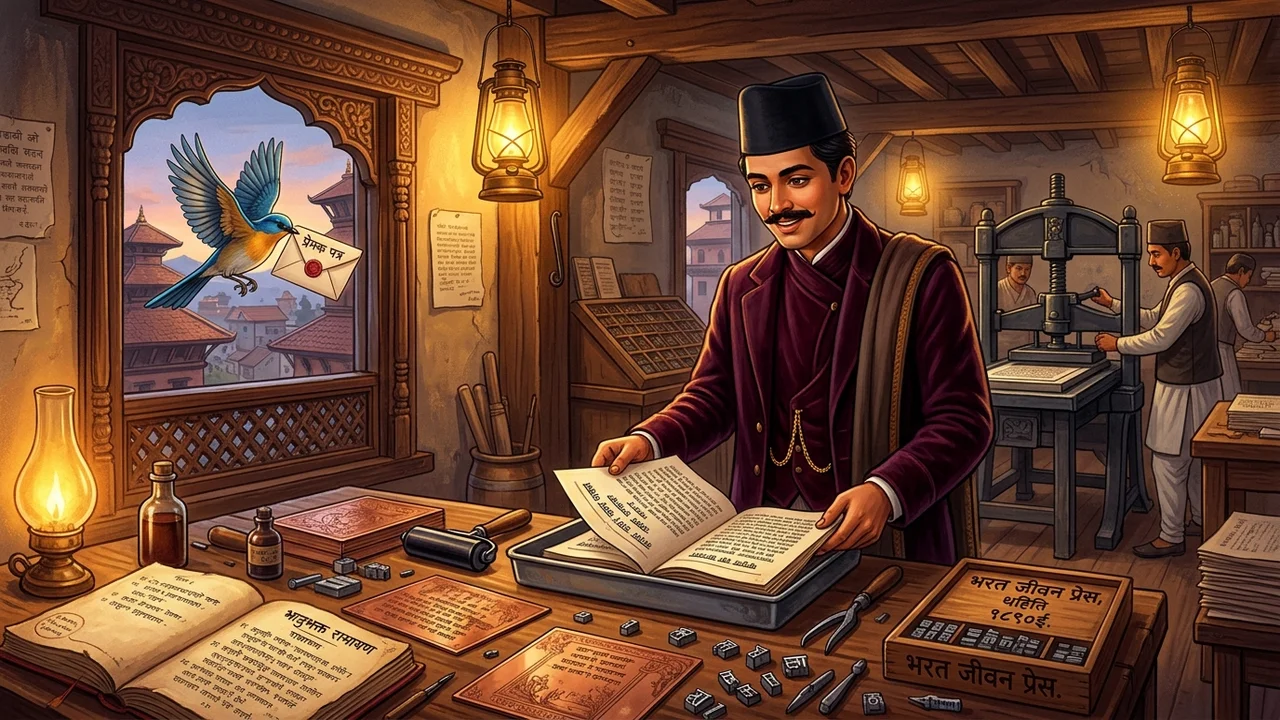
The title, and the style
| Literary Epithet | Yuvakavi (Yuvakavi / युवकवि — The Youth Poet) |
|---|---|
| Lifespan & Origins | 1866–1896 CE (1923–1953 BS) · Born in Bhosiko Tole, Kathmandu, Nepal |
| Literary Era | The Secondary Era of Nepali Letters (Mādhyamika Kāla / "The Motiram Era") |
| Pioneering Innovations | First literary biographer and critic in Nepali; introduced the Urdu/Persian Ghazal genre; established Kathmandu's first lending library (Motiram Pustakalaya) and first private printing press (Motikrishna Dhirendra Press) |
| Journalistic Breakthrough | Founded and edited Gorkha Bharat Jivan (1886, Banaras), the inaugural literary journal in the Nepali language |
| Major Works | Pikdūt (Classical messenger poem adapting Kalidasa's Meghadūta), Kavi Bhanubhaktako Jivan Charitra (1891), Sangit Chandrodaya (Ghazal anthology), Shakuntalopakhyan, and Priyadarshika |
| Historical Impact | Single-handedly propelled Nepali literature from private domestic manuscripts into the vibrant public sphere of print culture and critical appraisal. |
Though he lived a brief span of merely thirty years, Motiram Bhatta (Motīrāma Bhaṭṭa / मोतीराम भट्ट) transformed the landscape of Nepali letters more radically than perhaps any other single figure in the nineteenth century. Endowed by posterity with the title Yuvakavi (Yuvakavi / युवकवि, "The Youth Poet"), he stands as the architect of the Secondary Period (Mādhyamika Kāla) of modern Nepali literature—an era characterized by the emergence of print capitalism, literary journalism, dramatic verse, and analytical biography.
Born on the night of Kushe Aunsi in 1866 CE (1923 BS) in Bhosiko Tole, Kathmandu, Motiram received his early schooling in Banaras, where exposure to flourishing Urdu poetic salons and Hindi publishing houses ignited his determination to endow his native Nepali with a modern print heritage. Recognizing that an oral vernacular could only endure if supported by institutional infrastructure, he established the Motikrishna Dhirendra Press in Kathmandu, collaborated with the Bharat Jivan Press in Banaras, and founded the pioneering literary journal Gorkha Bharat Jivan in 1886. Through these channels, he broke the isolation of Nepali writers, inviting manuscripts from across the hills and creating a national reading public.
Motiram's crowning historic achievement was his rediscovery of Bhanubhakta Acharya. Traveling across Tanahun and Kathmandu to gather scattered oral fragments, he authored Kavi Bhanubhaktako Jivan Charitra in 1891, simultaneously composing the first modern biography and the foundational work of literary criticism in the Nepali language. By organizing the public printing of the complete Bhanubhakta Ramayana in Banaras, Motiram conferred upon the Nepali nation its foundational literary epic, while his own prolific pen introduced the evocative melodies of the Persian-style Ghazal and classical messenger-kavya through works such as Pikdūt.
The press at Thahiti
After about seven years in Banaras he came home in 1945 of the Nepali (नेपाली) calendar, 1888 or 1889. With his maternal uncles Naradev Pandey and Krishna Dev Pandey he opened the Motikrishna Dhirendra Company at Thahiti. A library opened with it, and people call that library the first in Nepal. The company later ran the Pashupat Press. He is credited with the first private printing press in the country, around 1888. Before that, a Nepali (नेपाली) book that wanted to be a book often had to be born in Banaras. He brought the machine closer to the readers.
He also started Mitra Mandali (मित्र मण्डली), a friends' circle on the model of the Banaras group, with Naradev Pandey, Laxmi Dutta Panta, Gopinath Lohani, Bhoj Raj Pandey, and others. The work of the circle was to make Nepali (नेपाली) poems and to pass them around. This is easy to skip, because it is not a famous title. It is how a literature actually grows when the state is a Rana (राणा) court and the language is still proving it can hold a modern book. A few people in a room, a press down the lane, a biography in the works.
He studied at Durbar High School. Among his school friends were Chandra Shumsher and Dev Shumsher, later rulers of the Rana (राणा) state. People say Dev Shumsher's more open temper owed something to this friendship. The claim is the kind a later century likes, and it should stay a "people say." What is solid is the odd picture: the young poet of a private press sitting in class with the boys who would inherit the court.
For a higher exam he went to Calcutta. In 1948 of the Nepali (नेपाली) calendar, 1891 or 1892, he passed the entrance of Calcutta University. He sat the next examination, the A.A.I.A., around 1893 or 1894, and did not pass. He came home. He went back to Calcutta in 1952, 1895 or 1896, fell ill, and came home again. He was in bed for seven months. He died on his lunar birthday, thirty years after the Kushe Aunsi (कुशे औंसी) on which he was born. The uncle who had told the story of the pierced nostril also wrote a life of him, Kavi Motiram Bhattako Sachitra Charitra Varnan (कवि मोतीराम भट्टको सचित्र चरित्र वर्णन). The biographer of Bhanubhakta got a biographer of his own. That is fair. He had shown the language how to do it.
The life of Bhanubhakta
The book that changed the shelf is Kavi Bhanubhaktako Jivan Charitra (कवि भानुभक्तको जीवनचरित्र), published in 1891, 1948 in the Nepali (नेपाली) calendar. It is a biography and a criticism together. Before it, Bhanubhakta was a voice at weddings and a manuscript in houses. After it, he was Adikavi (आदिकवि), the first poet, a man with a grandfather in Tanahun, a well, a shame, and a Rāmāyaṇa (रामायण). Motiram (मोतीराम) did not invent the poems. He invented the public poet. The poems on this shelf are the words. The reason a Nepali (नेपाली) child meets those words first is this thin book from a man who died at thirty.
Later readers have been rightly curious about the method. The life is written with love. It gathers stray verses and sets them down as proof that the poet was easy, gifted, and morally awake. Some of those verses float. A biography that wants its hero to shine will choose the shining pieces and tell the joining story in the biographer's own warmth. That warmth is the book's power and its limit. When you read the grass-cutter (घाँसी) poem, you are reading Bhanubhakta. When you read that the grass-cutter (घाँसी) shamed him into a Rāmāyaṇa (रामायण), you are also reading Motiram's (मोतीराम) shape of a life. Both are worth having. A literature needs the poem and the person who refused to let the poem stay in a wedding song.
The printing belongs with the biography. From Banaras he put the Balakanda out, and then the whole Rāmāyaṇa (रामायण). One national account puts the public printing of the Rāmāyaṇa (रामायण) in 1941 of the Nepali (नेपाली) calendar. The exact year moves a little from teller to teller. The event does not. A poem people could recite became a book people could keep. Motiram's (मोतीराम) prose and Motiram's (मोतीराम) press are one project.
Pikdut (पिकदूत)
Pikdut (पिकदूत) is the poem to read if you want his verse at full length. It is a dūtakāvya (दूतकाव्य), a messenger poem, printed around 1945 of the Nepali (नेपाली) calendar. The model is Kālidāsa's Meghadūta (मेघदूत), in which a yakṣa, separated from his wife, asks a cloud to carry his message to her in the Himalaya. Motiram (मोतीराम) changes the messenger. A woman in separation sends a cātaka (चातक), the pied cuckoo that poems say drinks only raindrops, and she asks the bird to carry her sorrow and her love to her husband without changing a word. In the end the husband comes back.
The pleasure is the errand. A classical poet shows he can do what Sanskrit did, and he does it with a Nepali (नेपाली) bird and a Nepali (नेपाली) wife. The cloud of Kālidāsa is a monsoon that already knows the map. The cuckoo of Motiram (मोतीराम) is a smaller, more anxious postman. She wants the message delivered as she spoke it. That small demand is very human. Lovers do not want a beautiful paraphrase. They want the sentence itself to arrive. The poem is śṛṅgāra (शृङ्गार) with a job to do, which is why it has lasted better than a loose book of compliments.
The thirty verses are on the Pikdūt (पिकदूत) page. Read it beside the ghazal (गजल), not instead of the life of Bhanubhakta. The biography is the public work. Pikdut (पिकदूत) is the private temperature of the style: separation, a faithful bird, a return. The young poet's title fits this poem. It is accomplished, and it is the work of a man who still has the old Sanskrit in his ear and the new language in his mouth.
The ghazal (गजल)
The ghazal (गजल) book people name is Sangeet Chandrodaya (सङ्गीत चन्द्रोदय), from about 1944 of the Nepali (नेपाली) calendar. A ghazal (गजल) is a run of couplets that share a mood and a turn of rhyme, and that can be sung. He had sung them in Urdu first. Putting them in Nepali (नेपाली) was the new thing. A famous turn, in the plain sense of the words, says that two eyebrows are already drawn sharp enough to be swords, so a sword is unnecessary, and that the beloved has become the master, so a government is unnecessary. The joke is the point. A lover's face is promoted until it replaces the state. That is śṛṅgāra (शृङ्गार) as a court compliment, and it is also a young man's pleasure in his own cleverness. Houses still pass the turn around. The two ghazals below are his. The spelling is the old printing.
Eyebrows (दुइ आँखिभौँ)दुइ आँखिभौँ
दुइ आँखिभौँ त तयार छन्, तरबार पो किन चाहियो,
तिमी आफु मालिक भैगयौ, सरकार पो किन चाहियो
पहरा कडा छ कटाक्षको, हरदम तयार मुहारमा,
घर भन्नु भारि महल न हो, दरबार पो किन चाहियो
कति चम्किलो छ हँसाइको हिसिमा किरन पनि दाँतको
मणि, मोती, नीर जुहार न हो, अरु हार पो किन चाहियो
Do not come (न आउनू)न आउनू
दिनको पचास त के हजार पटक कती समझाउनु ।
म गरीबका घरमा हरे तिमिले यसोरि न आउनू ।।
रिसमा थियौ कि खुशी थियौ मत केही जान्दिन के थियौ ।
कि यसो थियौ कि उसो थियौ मनमा कसोरि बुझाउनू ।।
न त आ भनुँ न त जा भनुँ म यसो भनूँ कि उसो भनूँ ।
तिनीको मिजाज म के भनु कतिसम्म विन्ति चढाउनू ।।
वय सोर्हजको मन साठ्ठीको छ र पो गजब जति प्यारिको ।
मुखको रबाबछ चन्द्रको ननिको छ मिस्सि लगाउनु ।।
मनसुव पुग्नु परै रहोस् दरसन पनि छ कठिनजहाँ ।
अब बाँचन्याछु मता कहाँ तिनीलाई यति सुनाउनु ।।
तिमिबिर्सिहाल त क्यै जनी म त सम्झदो छु अझै पनि ।
मुख भित्र पान चपाउनु अलि हाँसि हाँसि हँसाउनु ।।
मणि हो भनूँ त न झल्कने बिजुली भनूँ त न चम्कने ।
अइना भनूँ त न टल्कन् उपमा कसोरी जुराउनू ।।
तिमी पख भनी भनी कन जानु फेरी नआउनू ।
खपि सक्नु छैन मलाइ ता तिमीले यसोरि छकाउनु ।।
सुन है सबै हरिको हुकुम भनुकि भनूँ जुलम ।
अघि जो भयो उत भै गयो तर फेरी मोति नलाउनू ।।
He asks her not to come, in this way, to a poor man's house, not fifty times a day and not a thousand. He cannot tell whether she was angry or glad, and he will not say come, and he will not say go. She is sixteen, with an older mind, and her face is the moon's rabāb (रबाब). Let the wish stay far. Even a sight is hard. She may forget. He still remembers, and he asks for a little betel and a laugh. A jewel that does not flash, lightning that does not gleam, a mirror that does not shine: he cannot find the comparison. She says wait, and goes, and does not come back. The last turn signs Moti (मोति). What happened has gone. Do not apply the pearl again.
उहाँ भन्नुहुन्छ, गरिबको घरमा यसरी नआउनु, दिनको पचास पटक होइन, हजार पटक सम्झाए पनि। रिसाउनुभएको हो कि खुसी, उहाँले छुट्याउन सक्नुहुन्न। आउ भन्नुहुन्न, जा भन्नुहुन्न। उमेर सोह्र हो, मन साठीको, मुख चन्द्रको रबाब हो। मनसुबा पुग्नु परै रहोस्। दर्शन नै कठिन छ। उहाँले बिर्सन सक्नुहुन्छ। कविले अझै सम्झिरहनुभएको छ, र अलिकति पान र हाँसो माग्नुहुन्छ। नझल्किने मणि, नचम्किने बिजुली, नटल्किने ऐना। उपमा जुर्दैन। पर्ख भनेर जानुहुन्छ, फेरि आउनुहुन्न। अन्तिम शेरमा मोति छ। अघि जे भयो, गयो। फेरि मोति नलगाउनु।
The Urdu years are not a side note. About four hundred couplets in Banaras mean the ghazal (गजल) was a practice before it was a Nepali (नेपाली) invention. When people say he introduced the form, they mean he made it a Nepali (नेपाली) habit, with Nepali (नेपाली) beloveds and Nepali (नेपाली) wit. The sitar belongs in the same picture. A poem of his is often closer to a thing sung in a room than to a thing carved for a silent page. Lekhnath (लेखनाथ), on the next page, will take the carved page and perfect it. Motiram (मोतीराम) is still in the room where people answer each other.
The other books
Fifteen years filled a shelf. The names are the map, and a few of them open into stories a house already knows.
Gajendra Moksha (गजेन्द्रमोक्ष), around 1944, retells the elephant's release. In the old story an elephant is caught in the water by a creature that will not let go, and he prays, and Viṣṇu comes, and the elephant is freed. Motiram (मोतीराम) makes a Nepali (नेपाली) poem of that prayer and that release. The page stops at the freedom. The struggle in the water is the purāṇa's, and it does not need a second telling of the grip.
Prahlad Bhakti Katha (प्रह्लाद भक्तिकथा), a year or so earlier, is the boy who will not stop saying the name, in a court that wants him to stop. The devotion holds. The story is one a Dasain house already carries in another form, the victory of a devotion a tyrant cannot break. Motiram's (मोतीराम) poem is that story as a Nepali (नेपाली) epic of bhakti, beside the love poems. He was not only a poet of eyebrows.
Usha Charitra (उषाचरित्र) takes a mythic romance. Panchak Prapancha (पञ्चक प्रपञ्च) is named as a poem of entanglements. Manodweg Pravah (मनोद्वेग प्रवाह), a flow of the mind's urges, is an early collection, around 1942. Kashiraj Chandrasena (काशीराज चन्द्रसेन) is another narrative poem. Kaal Bhramar Sambad (कालभ्रमर संवाद) sets a conversation between time, or death, and a bee, in the old habit of making a small creature talk. These are the workshop. A reader does not need every plot on a first night. The reader needs to see that myth, mind, and the talking creature are all inside the same young style.
The plays are Shakuntal (शकुन्तल), around 1944, Priyadarsika (प्रियदर्शिका), around 1948, and Padmavati (पद्मावती), left unfinished around 1945. Shakuntal (शकुन्तल) is Kālidāsa's story put on a Nepali (नेपाली) stage: the king, the hermitage girl, the forgotten ring, the return of memory. Laxmi Prasad Devkota (लक्ष्मीप्रसाद देवकोटा) will later make a mahākāvya (महाकाव्य) of the same story, and Ghimire (घिमिरे) will make another epic of it. Motiram's (मोतीराम) is the early dramatic try, from a man who had seen how Banaras put Sanskrit plots into living languages. Priyadarsika (प्रियदर्शिका) is the play people put beside it when they list his stage. This page does not invent its scenes. The name says what he wanted the theatre to be: a sight (दर्शन) that pleases, a heroine worth watching.
Around the poems sit smaller books that show the range of the press. Shakunouti (शकुनौती) and Swapna Adhyaya (स्वप्नअध्याय) are studies of omens and of dreams. Gafastak (गफस्तक) is a handful of tales. Chanakya Niti (चाणक्य नीति) puts a book of conduct into Nepali (नेपाली). Gulsanovar (गुलसनोवर) is a fiction. Ukhanko Bakhan (उखानको बखान) is on the list under that name. Teej ko Katha (तीजको कथा) is a story for Tīj, the women's festival. Anupras Manjari (अनुप्रास मञ्जरी) is a garland of alliteration, a craftsman's exercise. An Urdu play, Husna Afroz Aaram Dil (हुस्न अफरोज आराम दिल), sits on the other side of his languages. He also wrote a poem of his own childhood, Bal Jivbarnan (बालजीवबर्णन). The list is almost too wide for thirty years of life. Kumar Pradhan, the critic, put the creative period from 1883 to the death, and said more was written than was printed. The printed list is already a life's work.
What a rasa (रस) is, in his hands
Sanskrit poetics names nine rasa (रस), nine flavors a work can bring to a boil in the person watching. Śṛṅgāra is the erotic-romantic flavor: union, or the ache of being apart, a face, a season that helps or hurts the lovers. Motiram (मोतीराम) chose it as his home flavor in a century when Nepali (नेपाली) verse was still proving it could do more than retell a scripture. The secondary period people assign him, roughly the 1880s into the first decades of the twentieth century, is often described as the śṛṅgāra (शृङ्गार) stream. That description is fair if it stays wide. He also wrote the elephant's prayer, the boy's devotion, a conduct book, and a life of another poet. The love poem is the temperature. It is not the whole house.
A ghazal (गजल), the form he carried over from Urdu, is a chain of couplets that can be sung. Each couplet can stand up by itself. A room can take one turn and pass it, the way his famous turn about eyebrows and a government still gets passed. The rhyme returns. The beloved is almost a convention, a you who is moon, court, and wound. What was new was the language. Urdu already had this room in Banaras. Nepali (नेपाली), in a Rana (राणा) city, mostly had manuscripts, hymns, and the wedding contest he heard at Khadga Dutta Pandey's house. He joined those nights to the ghazal (गजल). A literature changes when a tune people already love is allowed to sit down in the language they scold their children in.
The biography is the other rasa (रस), if a life can have one. Call it the flavor of recognition. He had heard Bhanubhakta without knowing the name, which is how a classic actually lives before anyone calls it a classic. Then he spent the years left to him making the name unavoidable. Print is the tool. A verse sung at a wedding dies with the voices, or it changes in the next mouth. A verse in a book can be argued with. The grass-cutter (घाँसी) poem on Bhanubhakta's page is eight lines about a well and a shame. Motiram's (मोतीराम) life of the poet is the story people tell around those lines: a road, a man still digging, a rich man's blush, and then a Rāmāyaṇa (रामायण). When you feel that story click, you are feeling Motiram's (मोतीराम) gift. He could hear a poem and see the person the country would need. Some of the joining is his warmth. The poems were already strong enough to bear it.
The story his Shakuntal (शकुन्तल) puts on a stage
Kālidāsa's Abhijñānaśākuntalam (अभिज्ञानशाकुन्तलम्) is a play the whole Sanskrit world knew, and Motiram's (मोतीराम) Shakuntal (शकुन्तल) is that story in a Nepali (नेपाली) dramatic shape. The telling, which is older than any of our poets, goes like this. King Duṣyanta is hunting and enters the hermitage of Kaṇva. Śakuntalā (शकुन्तला) is there, the daughter of the sage Viśvāmitra and the apsara Menakā, raised by Kaṇva because her parents' story was not a household story. The king and the girl marry in the gandharva way, a love-marriage without the long rite. He gives her a ring and returns to his city. She is absorbed in him and fails to greet the irascible sage Durvāsas, who curses the king to forget her. The curse is softened. Memory will return with the ring.
She goes to court. On the way the ring is lost in a river. The king does not know her. The humiliation is public. She is taken up, in the full telling, toward her mother's world, and a son, Bharata (भरत), is born, the boy the country's old name will remember. A fisherman later finds the ring inside a fish and brings it to court. Memory comes back. The king and Śakuntalā (शकुन्तला) and the boy are joined. Motiram (मोतीराम) stages this in Nepali (नेपाली) in the 1880s, decades before Devkota's (देवकोटा) epic and a century before Ghimire's (घिमिरे). The point for this shelf is the relay. One story passes through three centuries of Nepali (नेपाली) makers, and it passes through three styles. Motiram's (मोतीराम) is the early theatre, close to the Banaras habit of pouring Sanskrit plots into a living tongue. He does not yet have Lekhnath's (लेखनाथ) patience or Devkota's (देवकोटा) flood. He has the nerve to put the ring on a Kathmandu-facing stage at all.
Priyadarsika (प्रियदर्शिका) sits beside that play in the lists, a name that means the woman pleasant to see. Padmavati (पद्मावती) stayed unfinished. This page does not invent their scenes. What the three titles show is a man trying to build a Nepali (नेपाली) theatre while he was also building a press, a magazine that survives only as an advertisement, a biography, and a messenger poem. The unfinished play is honest. He ran out of years. The finished work is already more than a short life is supposed to leave.
What the press changed
Before the Pashupat Press and the Banaras printings, a Nepali (नेपाली) poem's natural home was a mouth or a notebook. Motiram's (मोतीराम) company at Thahiti, with the library people call the first, is a change of address. A book can sit on a shelf in the city where the language is spoken, and a reader can buy it without a trip to the Ganga (गङ्गा). The friends' circle, Mitra Mandali (मित्र मण्डली), is the human side of the same change. Poems need a room before they need a nation. He had learned that in Bharatendu's Banaras, where a good completion of a riddle could earn ten rupees and a reputation. He tried to make Kathmandu that kind of room, under a Rana (राणा) government that was not famous for liking independent rooms.
The school friendship with Chandra Shumsher and Dev Shumsher is the uneasy edge of the portrait. He was not an enemy of the court in the way Siddhicharan would later be an enemy of the court. He was a brilliant young man from a pandit's house who sat in class with the heirs and who is said to have warmed Dev Shumsher's more open ideas. Hold that as a say. What you can hold firmly is the double life of the 1880s. By day, Durbar High School and the road toward a Calcutta exam he would not quite pass. By night, and in the print shop, a project to give Nepali (नेपाली) a modern bookshelf. The illness took him at thirty, on the lunar day he was born, after seven months in bed. The bookshelf had already started. Bhanubhakta was on it. The ghazal (गजल) was on it. A bird had been sent with a message, and in the poem the husband comes home.
What to carry out of the room
Start with the life of Bhanubhakta, because it is the book that built this shelf's first page. Then read the grass-cutter (घाँसी) poem on that page and notice what Motiram (मोतीराम) added: a person around the eight lines. Then read Pikdut (पिकदूत), so the śṛṅgāra (शृङ्गार) is a story and not a rumor about pretty verse. Then one ghazal (गजल), sung if you can find a singer, so you hear why the form stuck. The plays and the purāṇa poems are the rest of the fifteen years. The press at Thahiti is the fact underneath all of them. A literature that cannot be printed is a wedding song, and he had already heard how good a wedding song can be. He wanted the song to survive the morning.
The title Yuvakavi (युवाकवि) is exact. He did not live to be the old master. Lekhnath (लेखनाथ) will be that, the crest-jewel, patient, classical, rewriting until the line is sweet. Motiram (मोतीराम) is the heat before the patience: Banaras, a press, a biography written with love, a bird sent into the rain with a message that must not be changed.
मोतीराम भट्ट त्यो कवि हुन्, जसलाई देशले युवाकवि भन्छ। युवाकवि भनेको जवान कवि। यो उपाधि पनि हो, तथ्य पनि। उहाँ ई.सं. ८ सेप्टेम्बर १८६६ मा जन्मनुभयो, नेपाली पात्रोमा २५ भदौ १९२३, कुशे औंसीका दिन, भदौको औंसी, जुन उपत्यकाको घरले बुबाको दिन मान्छ। उहाँ त्यही चान्द्र दिन ई.सं. १८९६ मा, नेपाली पात्रोको १९५३ मा, बित्नुभयो। उमेर तीस वर्ष थियो। दाह पशुपतिको आर्यघाटमा, बाग्मतीमा भयो। मानिस अझै कुशे औंसीमा उहाँको दिन मान्छन्।
उहाँ राष्ट्रिय विभूति पनि हुनुहुन्छ। नेपाली साहित्यको एउटा काल, करिब ई.सं. १८८३ देखि १९१९ सम्म, मोतीराम युग भनिन्छ। छोटो जीवनको ठूलो नाम हो। त्यो नामको कारण जीवनले नै बताउँछ। पन्ध्र वर्षको काममा उहाँले करिब पच्चीस किताब लेख्नुभयो, सम्पादन गर्नुभयो, वा छापामा पुर्याउनुभयो। भानुभक्तलाई किन्न सकिने ठाउँमा छाप्नुभयो। काठमाडौंमा निजी छापा सुरु गर्नुभयो।
शैलीका दुई हात छन्। पद्यमा शृङ्गार हो, संस्कृत काव्यको प्रेम रस। प्रेम, विरह, दरबारझैँ हेरिएको अनुहार, सन्देश बोकेको चरा, किनभने प्रेमी आफैँ जान सक्दैन। उहाँले गजल नेपालीमा ल्याउनुभयो, बनारसमा गाउन सिकेको उर्दूको शेर। गद्यमा उहाँ भाषाका पहिलो जीवनीकार र पहिलो समालोचक हुनुहुन्छ। जीवन सुनाउने वाक्य र रिझाउने शेर एउटै मानिसका हुन्। मीठो पङ्क्ति मात्र चाहनेले छापा छुटाउँछ। जीवनी मात्र चाहनेले जीवनी किन न्यानो छ भन्ने कारण छुटाउँछ। उहाँले बचाउँदै गरेका कविलाई माया गर्नुहुन्थ्यो, र माया देखिन्छ।
उहाँ ई.सं. १८९६ मा बित्नुभयो। किताब सार्वजनिक हुन सक्ने पुराना भइसकेका छन्। दुई गजल तल छन्। पिकदूतको आफ्नै पृष्ठ छ, श्लोकसहित। पूरै नाटक उहाँको किताबमा रातको पढाइ हो, र यो पृष्ठले नाटक आफ्नै वाक्यमा सुनाउँछ।
भोसिको टोल, अनि बनारस
घर काठमाडौंको भोसिको टोलमा थियो। बुबा पण्डित दयाराम भट्ट हुनुहुन्थ्यो। आमा रिपुमर्दिनी देवी हुनुहुन्थ्यो। एउटा भनाइमा वंश कुमाउँबाट आएको हो। उहाँ माहिला छोरा हुनुहुन्थ्यो। जेठा छोरा जन्मिँदै बितेका थिए। आमाबुबाले यिनलाई बाँच्न चाहनुभयो। मामा नरदेव पाण्डेले पछि लेख्नुभयो, बालकको दाहिने नाक छेडिएको थियो, आयु लम्ब्याउने चिह्न, र गल्लीले केटी भनेर गिज्याउँथ्यो। सानो क्रूरता, र आमाबुबाको डर, एउटै अनुहारमा। पाँच वर्षमा अक्षर सुरु भयो।
छ वर्षमा आमासँग बनारस जानुभयो। दयाराम र रिपुमर्दिनी कामले त्यहीँ थिए। केटो फारसी स्कूलमा पस्नुभयो, फारसी र उर्दू सिक्नुभयो। व्रतबन्ध त्यही सहरमा भयो। हिन्दीका भारतेन्दु हरिश्चन्द्रसँग भेट भयो, जसको मण्डली बनारसको चल्तीको कोठा थियो, र त्यही सङ्गतमा पढ्नुभयो। पन्नालालबाट, सहरले चिनेका वादकबाट, सितार सिक्नुभयो। गजल गाउनुभयो। नेपाली कविता लेख्नुअघि उर्दूका करिब चार सय शेर लेखिसक्नुभएको थियो। बाजा र शेर पहिले आए। नेपाली तब आयो, जब घर फर्केर विवाहले श्लोकलाई के गर्छ भन्ने सुन्नुभयो।
नेपाली पात्रोको १९३७ मा, ई.सं. १८८० वा १८८१, करिब पन्ध्र वर्षमा काठमाडौं फर्कनुभयो, र विवाह गर्नुभयो। केही समय बस्नुभयो। कान उर्दू गीतमा हुर्किएको थियो। आँगनको नेपाली नयाँ थियो। दोहोरीले समात्यो, तरुण-तरुणीको पालैपालो गीत, र जुहारीले, भोजको श्लोक प्रतियोगिताले। छिमेकी खड्गदत्त पाण्डेको विवाह थियो। उहाँ जन्तीमा जानुभयो। रातभर पाहुनाले श्लोक साटासाट गरे। ती श्लोक भानुभक्तका हुन् भन्ने थाहा पाउनुभयो। करिब ई.सं. १८६८ मा बितेका, छापाको नामका रूपमा लगभग अज्ञात कवि, काठमाडौंको रातको मनोरञ्जन अझै थिए। बाँकी कृति खोज्ने निश्चय गर्नुभयो।
१९३८ को पुसमा, ई.सं. डिसेम्बर १८८१ मा, पत्नीसहित बनारस फर्कनुभयो। हरिश्चन्द्र स्कूलमा अङ्ग्रेजी पढ्नुभयो। कविताको बैठकमा बस्नुभयो। एउटा समस्यापूर्ति थियो, पुरानो खेल, जहाँ आयोजकले समस्याको पङ्क्ति दिन्छन् र कविले पूरा गर्छन्। भारतेन्दुले एउटा समाधानका लागि दस रुपैयाँ दिनुभएको भनिन्छ। त्यसपछि उहाँले आफ्नै मण्डली, समस्यापूर्णी मण्डली, खोल्नुभयो, पद्मविलास पन्त, काशीनाथ, रङ्गनाथ, तेजबहादुर राणा, र चेत सिंहसँग। त्यो कोठामा शृङ्गार लेख्नुभयो, र शैलीले पाठक पायो। हिन्दी पत्र भारतजीवनको नेपाली संस्करण पनि सम्हाल्नुभयो, र भारतजीवन छापाखानामा नेपाली किताब छाप्न थाल्नुभयो। भानुभक्तको रामायणको बालकाण्ड पहिले आयो। पूरै कविता पछि। ई.सं. १८८६ मा गोर्खा भारतजीवन सुरु गर्नुभयो, पहिलो नेपाली समाचार पत्रिका मानिन्छ। प्रति भेटिएको छैन। प्रमाण भारतजीवनको विज्ञापन हो। विज्ञापनका रूपमा बाँचेको पत्रिका मोतीरामको तथ्य हो। उहाँले सार्वजनिक पाठक बनाउँदै हुनुहुन्थ्यो, र त्यो पाठकको केही कागज हराएको छ।
ठाँहीटीको छापा
बनारसमा करिब सात वर्ष बसेपछि नेपाली पात्रोको १९४५ मा, ई.सं. १८८८ वा १८८९ मा, घर फर्कनुभयो। मामा नरदेव पाण्डे र कृष्णदेव पाण्डेसँग ठाँहीटीमा मोतिकृष्ण धीरेन्द्र कम्पनी खोल्नुभयो। सँगै पुस्तकालय खुल्यो, र मानिस त्यसलाई नेपालको पहिलो पुस्तकालय भन्छन्। कम्पनीले पछि पशुपत प्रेस चलायो। देशको पहिलो निजी छापाखाना उहाँकै नाममा राखिन्छ, करिब ई.सं. १८८८। त्यसअघि किताब बन्न चाहने नेपाली रचना अक्सर बनारसमै जन्मनुपर्थ्यो। उहाँले मेसिन पाठकको नजिक ल्याउनुभयो।
बनारसको समूहको ढाँचामा मित्र मण्डली पनि सुरु गर्नुभयो, नरदेव पाण्डे, लक्ष्मीदत्त पन्त, गोपीनाथ लोहनी, भोजराज पाण्डे, र अरूसँग। मण्डलीको काम नेपाली कविता बनाउनु र बाँड्नु थियो। यो चर्चित शीर्षक होइन, त्यसैले छुट्न सजिलो छ। राज्य राणा दरबार हुँदा, र भाषाले आधुनिक किताब धान्न सक्छु भनेर प्रमाण दिँदै गर्दा, साहित्य यसरी नै बढ्छ। कोठामा केही मानिस, गल्लीमुनि छापा, बन्दै गरेको जीवनी।
दरबार हाई स्कूलमा पढ्नुभयो। स्कूलका साथीमा चन्द्र शमशेर र देवशमशेर थिए, पछिका राणा शासक। मानिस भन्छन्, देवशमशेरको खुला स्वभावमा यो मित्रताको केही भाग थियो। पछिल्लो शताब्दीलाई मन पर्ने दाबी हो, र "मानिस भन्छन्" मै रहनुपर्छ। ठोस चित्र यो हो। निजी छापाको जवान कवि, दरबार पाउने केटाहरूसँग एउटै कक्षामा।
माथिल्लो परीक्षाका लागि कलकत्ता जानुभयो। नेपाली पात्रोको १९४८ मा, ई.सं. १८९१ वा १८९२ मा, कलकत्ता विश्वविद्यालयको प्रवेश परीक्षा पास गर्नुभयो। अर्को परीक्षा, ए. ए. आई. ए., करिब ई.सं. १८९३ वा १८९४ मा दिनुभयो, र पास हुनुभएन। घर आउनुभयो। १९५२ मा, ई.सं. १८९५ वा १८९६ मा, कलकत्ता फर्कनुभयो, बिरामी पर्नुभयो, र फेरि घर आउनुभयो। सात महिना ओछ्यानमा बस्नुभयो। चान्द्र जन्मदिनमै बित्नुभयो, जन्मेको कुशे औंसीबाट तीस वर्षपछि। नाक छेडेको कथा भन्ने मामाले उहाँको जीवन पनि लेख्नुभयो, कवि मोतीराम भट्टको सचित्र चरित्र वर्णन। भानुभक्तका जीवनीकारले आफ्नै जीवनीकार पाउनुभयो। ठीक हो। भाषालाई त्यो काम कसरी गर्ने भनेर उहाँले देखाउनुभएको थियो।
भानुभक्तको जीवन
तह बदल्ने किताब कवि भानुभक्तको जीवनचरित्र हो, ई.सं. १८९१ मा, नेपाली पात्रोको १९४८ मा छापिएको। जीवनी र समालोचना सँगै छन्। यसअघि भानुभक्त विवाहको स्वर र घरको हस्तलिखित थिए। यसपछि उहाँ आदिकवि हुनुभयो, तनहुँमा हजुरबुबा भएको, इनार भएको, लाज भएको, रामायण भएको मानिस। मोतीरामले कविता रच्नुभएको होइन। सार्वजनिक कवि बनाउनुभयो। यस तहका कविता शब्द हुन्। नेपाली बालकले ती शब्द पहिले भेट्नुको कारण तीस वर्षमा बितेका मानिसको पातलो किताब हो।
पछिका पाठकले विधिबारे ठीक जिज्ञासा राखेका छन्। जीवन मायाले लेखिएको छ। छरिएका श्लोक जम्मा पारेर कवि सहज, प्रतिभाशाली, र नैतिक रूपमा ब्यूँझेका थिए भन्ने प्रमाण बनाइएको छ। कति श्लोक तैरिन्छन्। नायक चम्कोस् भन्ने जीवनीले चम्किने टुक्रा छान्छ, र जोड्ने कथा जीवनीकारकै न्यानोमा भन्छ। त्यो न्यानो किताबको शक्ति हो, र सीमा पनि। घाँसीको कविता पढ्दा भानुभक्त पढिन्छ। घाँसीको लाजले रामायण जन्मायो भन्ने पढ्दा मोतीरामले जीवनलाई दिएको आकार पनि पढिन्छ। दुवै राख्न लायक छन्। साहित्यलाई कविता चाहिन्छ, र कवितालाई विवाहको गीतमै नछोड्ने मानिस चाहिन्छ।
छपाइ जीवनीसँगै आउँछ। बनारसबाट बालकाण्ड निकाल्नुभयो, अनि पूरै रामायण। एउटा राष्ट्रिय भनाइले रामायणको सार्वजनिक छपाइ नेपाली पात्रोको १९४१ मा राख्छ। ठीक वर्ष भन्ने मानिस अनुसार अलि सर्छ। घटना सर्दैन। सुनाउन सकिने कविता राख्न सकिने किताब भयो। मोतीरामको गद्य र मोतीरामको छापा एउटै योजना हुन्।
पिकदूत
उहाँको पद्य पूरा लम्बाइमा चाहिने हो भने पिकदूत पढ्नुहोस्। यो दूतकाव्य हो, नेपाली पात्रोको करिब १९४५ मा छापिएको। ढाँचा कालिदासको मेघदूत हो, जहाँ यक्ष पत्नीबाट अलग भएर हिमालमा रहेकी पत्नीकहाँ बादलमार्फत सन्देश पठाउँछ। मोतीरामले दूत बदल्नुहुन्छ। विरहिणीले चातक पठाउँछे, कविताले वर्षाको थोपा मात्र पिउँछ भन्ने चरा, र चरासँग दुःख र प्रेम पतिसम्म शब्द नबदली पुर्याउन बिन्ती गर्छे। अन्त्यमा पति फर्कन्छ।
मजा सन्देश पुर्याउने कामकै छ। शास्त्रीय कविले संस्कृतले गरेको काम नेपालीमा गर्न सक्छु भनेर देखाउनुहुन्छ, नेपाली चरा र नेपाली पत्नीसँग। कालिदासको बादल नक्सा चिनेको मनसुन हो। मोतीरामको कोइली सानो, बढी आत्तिएको हुलाकी हो। उनले सन्देश आफूले भनेझैँ पुगोस् भन्ने चाहन्छिन्। त्यो सानो माग एकदम मानवीय हो। प्रेमीहरूले सुन्दर व्याख्या चाहँदैनन्, वाक्य नै आइपुगोस् भन्ने चाहन्छन्। कविताले काम पाएको शृङ्गार हो, त्यसैले ढीलो तारिफको किताबभन्दा बढी बाँचेको छ।
तीस श्लोक पिकदूतको पृष्ठमा छन्। यसलाई गजलको छेउमा पढ्नुहोस्, भानुभक्तको जीवनको सट्टामा होइन। जीवनी सार्वजनिक काम हो। पिकदूत शैलीको निजी ताप हो। विरह, विश्वासिलो चरा, फर्काइ। युवाकविको उपाधि यो कवितामा मिल्छ। सिद्ध छ, र कानमा पुरानो संस्कृत र मुखमा नयाँ भाषा भएको मानिसको काम हो।
गजल
मानिसले नाम लिने गजलको किताब सङ्गीत चन्द्रोदय हो, नेपाली पात्रोको करिब १९४४ को। गजल एउटै भाव र अनुप्रासको घुमाइमा बाँधिएका शेरको लडी हो, र गाउन सकिन्छ। उहाँले पहिले उर्दूमा गाउनुभएको थियो। नेपालीमा राख्नु नयाँ काम थियो। एउटा चर्चित घुमाइको सादा अर्थ यस्तो छ। दुई आँखीभौं पहिले नै तरबार हुने गरी तिखारिएका छन्, त्यसैले तरबार चाहिँदैन, र प्रेमिकाले मालिकको ठाउँ लिइसकेकी छिन्, त्यसैले सरकार चाहिँदैन। ठट्टा नै कुरा हो। प्रेमीको अनुहारलाई राज्यको सट्टामा बढुवा दिइन्छ। यो दरबारी तारिफको शृङ्गार हो, र आफ्नै चलाखीमा रमाएको जवान मानिसको आनन्द पनि। घरले अझै त्यो घुमाइ बाँड्छ। तलका दुई गजल उहाँका हुन्। लेखाइ पुरानो छपाइको हो।
Eyebrows (दुइ आँखिभौँ)दुइ आँखिभौँ
दुइ आँखिभौँ त तयार छन्, तरबार पो किन चाहियो,
तिमी आफु मालिक भैगयौ, सरकार पो किन चाहियो
पहरा कडा छ कटाक्षको, हरदम तयार मुहारमा,
घर भन्नु भारि महल न हो, दरबार पो किन चाहियो
कति चम्किलो छ हँसाइको हिसिमा किरन पनि दाँतको
मणि, मोती, नीर जुहार न हो, अरु हार पो किन चाहियो
Do not come (न आउनू)न आउनू
दिनको पचास त के हजार पटक कती समझाउनु ।
म गरीबका घरमा हरे तिमिले यसोरि न आउनू ।।
रिसमा थियौ कि खुशी थियौ मत केही जान्दिन के थियौ ।
कि यसो थियौ कि उसो थियौ मनमा कसोरि बुझाउनू ।।
न त आ भनुँ न त जा भनुँ म यसो भनूँ कि उसो भनूँ ।
तिनीको मिजाज म के भनु कतिसम्म विन्ति चढाउनू ।।
वय सोर्हजको मन साठ्ठीको छ र पो गजब जति प्यारिको ।
मुखको रबाबछ चन्द्रको ननिको छ मिस्सि लगाउनु ।।
मनसुव पुग्नु परै रहोस् दरसन पनि छ कठिनजहाँ ।
अब बाँचन्याछु मता कहाँ तिनीलाई यति सुनाउनु ।।
तिमिबिर्सिहाल त क्यै जनी म त सम्झदो छु अझै पनि ।
मुख भित्र पान चपाउनु अलि हाँसि हाँसि हँसाउनु ।।
मणि हो भनूँ त न झल्कने बिजुली भनूँ त न चम्कने ।
अइना भनूँ त न टल्कन् उपमा कसोरी जुराउनू ।।
तिमी पख भनी भनी कन जानु फेरी नआउनू ।
खपि सक्नु छैन मलाइ ता तिमीले यसोरि छकाउनु ।।
सुन है सबै हरिको हुकुम भनुकि भनूँ जुलम ।
अघि जो भयो उत भै गयो तर फेरी मोति नलाउनू ।।
He asks her not to come, in this way, to a poor man's house, not fifty times a day and not a thousand. He cannot tell whether she was angry or glad, and he will not say come, and he will not say go. She is sixteen, with an older mind, and her face is the moon's rabāb (रबाब). Let the wish stay far. Even a sight is hard. She may forget. He still remembers, and he asks for a little betel and a laugh. A jewel that does not flash, lightning that does not gleam, a mirror that does not shine: he cannot find the comparison. She says wait, and goes, and does not come back. The last turn signs Moti (मोति). What happened has gone. Do not apply the pearl again.
उहाँ भन्नुहुन्छ, गरिबको घरमा यसरी नआउनु, दिनको पचास पटक होइन, हजार पटक सम्झाए पनि। रिसाउनुभएको हो कि खुसी, उहाँले छुट्याउन सक्नुहुन्न। आउ भन्नुहुन्न, जा भन्नुहुन्न। उमेर सोह्र हो, मन साठीको, मुख चन्द्रको रबाब हो। मनसुबा पुग्नु परै रहोस्। दर्शन नै कठिन छ। उहाँले बिर्सन सक्नुहुन्छ। कविले अझै सम्झिरहनुभएको छ, र अलिकति पान र हाँसो माग्नुहुन्छ। नझल्किने मणि, नचम्किने बिजुली, नटल्किने ऐना। उपमा जुर्दैन। पर्ख भनेर जानुहुन्छ, फेरि आउनुहुन्न। अन्तिम शेरमा मोति छ। अघि जे भयो, गयो। फेरि मोति नलगाउनु।
उर्दू वर्ष छेउको टिपोट होइनन्। बनारसका करिब चार सय शेरको अर्थ गजल नेपाली आविष्कार हुनुअघि अभ्यास थियो। मानिसले उहाँले यो रूप ल्याउनुभयो भन्दा उहाँले यसलाई नेपाली बानी बनाउनुभयो भन्ने हो, नेपाली प्रेयसी र नेपाली चलाखीसँग। सितार त्यही चित्रमा अटाउँछ। उहाँको कविता अक्सर मौन पृष्ठका लागि कुँदिएको चिजभन्दा कोठामा गाइने चिजको नजिक छ। अर्को पृष्ठका लेखनाथले कुँदिएको पृष्ठ लिएर त्यसलाई पूर्णता दिनेछन्। मोतीराम अझै मानिसले एकअर्कालाई जवाफ दिने कोठामा हुनुहुन्छ।
अरू किताब
पन्ध्र वर्षले एउटा तह भर्यो। नाम नक्सा हुन्, र केही नाम घरले चिनेका कथामा खुल्छन्।
गजेन्द्रमोक्ष, करिब १९४४, हात्तीको मुक्तिको कथा भन्छ। पुरानो कथामा हात्ती पानीमा एउटा जीवको पकडमा पर्छ, प्रार्थना गर्छ, विष्णु आउनुहुन्छ, र हात्ती मुक्त हुन्छ। मोतीरामले त्यो प्रार्थना र त्यो मुक्तिको नेपाली कविता बनाउनुहुन्छ। पृष्ठ मुक्तिकहाँ रोकिन्छ। पानीको संघर्ष पुराणको हो, त्यो पकडलाई दोस्रोपटक सुनाउनु पर्दैन।
प्रह्लाद भक्तिकथा, झन्डै एक वर्ष अघि, नाम भन्न नछाड्ने बालकको कथा हो, रोक्न चाहने दरबारमा। भक्ति टिक्छ। कथा दशैंको घरले अर्को रूपमा बोकेको हो, अत्याचारीले भाँच्न नसक्ने भक्तिको विजय। मोतीरामको कविता प्रेमकविताको छेउको भक्तिको नेपाली काव्य हो। उहाँ आँखीभौंका कवि मात्र हुनुहुन्नथ्यो।
उषाचरित्रले पौराणिक प्रेम लिन्छ। पञ्चक प्रपञ्च झमेलाको कविताका रूपमा नाम लिइन्छ। मनोद्वेग प्रवाह, मनका आवेगको बहाव, सुरुको सङ्ग्रह हो, करिब १९४२। काशीराज चन्द्रसेन अर्को कथाकाव्य हो। कालभ्रमर संवादले काल र मौरीबीचको कुराकानी राख्छ, सानो जीवलाई बोल्ने पुरानो बानी। यी उहाँको कार्यशाला हुन्। पहिलो रातमा हरेक कथा चाहिँदैन। मिथक, मन, र बोल्ने जीव एउटै जवान शैलीभित्र छन् भन्ने देखिनुपर्छ।
नाटक शकुन्तल हुन्, करिब १९४४, प्रियदर्शिका, करिब १९४८, र पद्मावती, करिब १९४५ मा अधुरो। शकुन्तल कालिदासको कथालाई नेपाली मञ्चमा राखेको नाटक हो। राजा, आश्रमकी केटी, हराएको औंठी, फर्केको स्मृति। देवकोटाले पछि यही कथाको महाकाव्य बनाउनुहुन्छ, र घिमिरेले अर्को महाकाव्य। मोतीरामको चाहिँ सुरुको नाट्य प्रयास हो, संस्कृत कथालाई जीवित भाषामा राखेको बनारस देखेका मानिसको। प्रियदर्शिका मानिसले मञ्चको सूचीमा छेउमा राख्ने नाटक हो। यो पृष्ठले दृश्य रच्दैन। नामले उहाँले रङ्गभूमि कस्तो होस् भन्ने चाहनुभएको थियो भन्छ। हेर्न लायक नायिका, मन पर्ने दृश्य।
कविता वरिपरि छापाको फैलाव देखाउने साना किताब छन्। शकुनौती र स्वप्नअध्याय शकुन र सपनाका अध्ययन हुन्। गफस्तक मुठ्ठी कथा हो। चाणक्य नीतिले आचारको किताब नेपालीमा राख्छ। गुलसनोवर कथा हो। उखानको बखान सूचीमा त्यही नामले छ। तीजको कथा महिलाहरूको चाड तीजका लागि लेखिएको कथा हो। अनुप्रास मञ्जरी अनुप्रासको माला हो, कारिगरको अभ्यास। उर्दू नाटक हुस्न अफरोज आराम दिलले उहाँका भाषाको अर्को पाटो देखाउँछ। बालजीवबर्णन आफ्नै बाल्यकालको कविता हो। सूची तीस वर्षको जीवनका लागि लगभग अति नै फराकिलो छ। समालोचक कुमार प्रधानले सिर्जना काल ई.सं. १८८३ देखि मृत्युसम्म राख्नुभयो, र छापिएभन्दा बढी लेखिएको थियो भन्नुभयो। छापिएको सूची नै जीवनको काम हो।
उहाँको हातमा रस
संस्कृत काव्यले नौ रस गन्छ, हेर्ने मानिसमा उम्लन सक्ने नौ स्वाद। शृङ्गार प्रेमको स्वाद हो। मिलन, वा अलग हुँदाको पीडा, अनुहार, प्रेमीलाई सघाउने वा दुखाउने ऋतु। नेपाली पद्यले शास्त्र दोहोर्याउनुभन्दा बढी गर्न सक्छ भनेर प्रमाण दिँदै गरेको शताब्दीमा मोतीरामले यसलाई आफ्नो घरको स्वाद बनाउनुभयो। उहाँलाई दिइने मध्यकाल, करिब ई.सं. १८८० देखि बीसौँ शताब्दीको सुरुसम्म, अक्सर शृङ्गार धारा भनिन्छ। धारा फराकिलो रह्यो भने भनाइ ठीक छ। उहाँले हात्तीको प्रार्थना, बालकको भक्ति, आचारको किताब, र अर्का कविको जीवन पनि लेख्नुभयो। प्रेमकविता ताप हो। पूरै घर होइन।
गजल, उहाँले उर्दूबाट बोकेर ल्याउनुभएको रूप, गाउन सकिने शेरको लडी हो। हरेक शेर आफैँ उभिन सक्छ। कोठाले एउटा घुमाइ लिएर बाँड्न सक्छ, आँखीभौं र सरकारको चर्चित घुमाइ अझै बाँडिन्छ जस्तै। अनुप्रास फर्किन्छ। प्रेयसी लगभग एउटा चलन हो, चन्द्र, दरबार र घाउ तीनै भएको तिमी। नयाँ चाहिँ भाषा थियो। उर्दूसँग बनारसमा यो कोठा पहिले थियो। राणा सहरको नेपालीसँग हस्तलिखित, भजन, र खड्गदत्त पाण्डेको घरमा उहाँले सुन्नुभएको विवाहको प्रतियोगिता थियो। उहाँले ती रातलाई गजलसँग जोड्नुभयो। मानिसले पहिले नै माया गरेको धुन, बालकलाई हप्काउने भाषामा बस्न पाए, साहित्य बदलिन्छ।
जीवनी अर्को रस हो, यदि जीवनको रस हुन्छ भने। चिन्ने स्वाद भनौं। उहाँले नाम नजानी भानुभक्त सुन्नुभएको थियो, क्लासिकलाई क्लासिक भन्नुअघि क्लासिक यसरी नै बाँच्छ। अनि बाँकी वर्ष नाम अनिवार्य बनाउन खर्च गर्नुभयो। साधन छापा हो। विवाहमा गाइएको श्लोक स्वरसँग मर्छ, वा अर्को मुखमा बदलिन्छ। किताबको श्लोकसँग बहस गर्न सकिन्छ। भानुभक्तको पृष्ठको घाँसीको कविता इनार र लाजका आठ पङ्क्ति हुन्। मोतीरामको जीवन ती पङ्क्ति वरिपरि मानिसले भन्ने कथा हो। बाटो, खन्दै गरेको मानिस, धनीको रातो मुख, अनि रामायण। त्यो कथा मिलेको महसुस हुँदा मोतीरामको वरदान महसुस हुन्छ। उहाँले कविता सुनेर देशलाई चाहिने मानिस देख्न सक्नुहुन्थ्यो। जोडाइ केही उहाँको न्यानो हो। कविताहरू त्यो न्यानो धान्न सक्ने गरी बलिया थिए।
उहाँको शकुन्तलले मञ्चमा राख्ने कथा
कालिदासको अभिज्ञानशाकुन्तलम् संस्कृत संसारले चिन्ने नाटक हो, र मोतीरामको शकुन्तल त्यो कथाको नेपाली नाट्य रूप हो। हाम्रा कविभन्दा पुरानो भनाइ यस्तो छ। राजा दुष्यन्त शिकारमा कण्वको आश्रम पस्छन्। त्यहाँ शकुन्तला छिन्, विश्वामित्र र अप्सरा मेनकाकी छोरी, आमाबुबाको कथा घरको कथा नभएकाले कण्वले हुर्काएकी। राजा र केटी गन्धर्व विवाह गर्छन्, लामो संस्कार बिनाको प्रेम विवाह। उहाँ औंठी दिएर सहर फर्कनुहुन्छ। उनी उहाँमै डुबेकी हुन्छिन् र रिसाहा ऋषि दुर्वासलाई अभिवादन गर्न चुक्छिन्। दुर्वासले राजालाई उनलाई बिर्सने श्राप दिनुहुन्छ। श्राप नरम पारिन्छ। औंठीसँग स्मृति फर्किनेछ।
उनी दरबार जान्छिन्। बाटोमा औंठी नदीमा हराउँछ। राजाले चिन्दैनन्। अपमान सार्वजनिक हुन्छ। पूरा भनाइमा उनी आमाको लोकतिर लगिन्छिन्, र छोरा भरत जन्मिन्छ, देशको पुरानो नामले सम्झने बालक। माझीले पछि माछाभित्रको औंठी दरबारमा ल्याउँछ। स्मृति फर्किन्छ। राजा, शकुन्तला, र बालक जोडिन्छन्। मोतीरामले यो ई.सं. १८८० को दशकमा नेपाली मञ्चमा राख्नुहुन्छ, देवकोटाको महाकाव्यभन्दा दशकौं अघि, घिमिरेकोभन्दा एक शताब्दी अघि। यस तहका लागि मुख्य कुरा रिले दौड हो। एउटै कथा तीन शताब्दीका नेपाली रचनाकारबाट, तीन शैलीमा हुँदै जान्छ। मोतीरामको सुरुको रङ्गभूमि हो, संस्कृत कथालाई जीवित जिब्रोमा खन्याउने बनारसको बानीको नजिक। उहाँसँग लेखनाथको धैर्य वा देवकोटाको बाढी अझै छैन। औंठीलाई काठमाडौंतिरको मञ्चमा राख्ने आँट छ।
प्रियदर्शिका सूचीमा त्यो नाटकको छेउमा बस्छे, हेर्न रमाइलो नारी भन्ने नाम। पद्मावती अधुरो रह्यो। यो पृष्ठले दृश्य रच्दैन। तीन शीर्षकले देखाउने यति हो। छापा बनाउँदै, विज्ञापनका रूपमा मात्र बाँचेको पत्रिका बनाउँदै, जीवनी र दूतकाव्य बनाउँदै, उहाँ नेपाली रङ्गभूमि पनि बनाउन खोज्दै हुनुहुन्थ्यो। अधुरो नाटक इमानदार छ। वर्ष सकिए। सकिएको काम छोटो जीवनले छोड्ने भनिएकोभन्दा धेरै छ।
छापाले के बदल्यो
पशुपत प्रेस र बनारसको छपाइअघि नेपाली कविताको प्राकृतिक घर मुख वा कापी थियो। ठाँहीटीको कम्पनी, मानिसले पहिलो भन्ने पुस्तकालयसहित, ठेगानाको परिवर्तन हो। किताब भाषा बोलिने सहरको तहमा बस्न सक्छ, र पाठकले गङ्गाको यात्रा बिना किन्न सक्छ। मित्र मण्डली त्यही परिवर्तनको मानवीय पट्टी हो। राष्ट्रभन्दा पहिले कवितालाई कोठा चाहिन्छ। उहाँले त्यो भारतेन्दुको बनारसमा सिक्नुभएको थियो, जहाँ पहेली राम्ररी पूरा गरे दस रुपैयाँ र ख्याति आउन सक्थ्यो। राणा सरकार स्वतन्त्र कोठा मन पराउनेमा प्रसिद्ध नभएको बेला उहाँले काठमाडौंलाई त्यस्तो कोठा बनाउन खोज्नुभयो।
चन्द्र शमशेर र देवशमशेरसँगको स्कूल मित्रता चित्रको असहज किनारा हो। उहाँ पछि सिद्धिचरण हुने अर्थमा दरबारका शत्रु हुनुहुन्नथ्यो। पण्डित घरका तेजिला जवान हुनुहुन्थ्यो, उत्तराधिकारीसँग कक्षामा बस्ने, र देवशमशेरको खुला सोच न्यानो पारेको भनिने। त्यो भनाइमै राख्नुहोस्। दृढ रूपमा राख्न सकिने ई.सं. १८८० को दोहोरो जीवन हो। दिनमा दरबार हाई स्कूल र पास नहुने कलकत्ताको परीक्षातिरको बाटो। रातमा, र छापामा, नेपालीलाई आधुनिक तह दिने योजना। रोगले तीस वर्षमा लियो, जन्मेको चान्द्र दिनमै, सात महिना ओछ्यानपछि। तह सुरु भइसकेको थियो। भानुभक्त त्यसमा थिए। गजल त्यसमा थियो। चरा सन्देश लिएर पठाइएको थियो, र कवितामा पति घर आउँछ।
कोठाबाट के लैजाने
भानुभक्तको जीवनबाट सुरु गर्नुहोस्, किनभने यो तहको पहिलो पृष्ठ बनाएको किताब यही हो। अनि त्यो पृष्ठको घाँसी पढ्नुहोस्, र मोतीरामले के थप्नुभयो हेर्नुहोस्। आठ पङ्क्तिको वरिपरि एउटा मानिस। अनि पिकदूत पढ्नुहोस्, ताकि शृङ्गार कथा होस्, मीठो पद्यको हल्ला होइन। अनि एउटा गजल पढ्नुहोस्, गायक भेटिए गाउन लगाएर, ताकि रूप किन टिक्यो सुनिओस्। नाटक र पुराणका कविता पन्ध्र वर्षका बाँकी हुन्। ठाँहीटीको छापा ती सबको मुनिको तथ्य हो। छाप्न नसकिने साहित्य विवाहको गीत हो, र विवाहको गीत कति राम्रो हुन्छ उहाँले सुन्नुभएको थियो। गीत बिहानपछि बाँचोस् भन्ने चाहनुहुन्थ्यो।
युवाकवि ठीक उपाधि हो। उहाँ बूढा गुरु हुने उमेरसम्म बाँच्नुभएन। लेखनाथ त्यो हुनेछन्, कविशिरोमणि, धैर्य, शास्त्र, पङ्क्ति मीठो नहुन्जेल फेरि लेख्ने। मोतीराम धैर्यअघिको ताप हुन्। बनारस, छापा, मायाले लेखिएको जीवनी, वर्षामा पठाइएको चरा, सन्देश बदलिन नहुने।
Where it sits
The page before this one is Rāmagītā (रामगीता). The page after it is Pikdūt (पिकदूत). The next writer is Shambhu Prasad Dhungel (शम्भुप्रसाद ढुङ्गेल). The poet he made public is Bhanubhakta. He was burned at Paśupati (पशुपति), and his day is Kushe Aunsi (कुशे औंसी).