Nepali Readings / Bhanubhakta poems
Bhanubhakta poems (भानुभक्तका कविता)भानुभक्तका कविता
The poems
| Literary Epithet | Adikavi (Ādikavi / आदिकवि — The Pioneering / First Poet of National Idiom) |
|---|---|
| Lifespan & Origins | 1814–1868 CE (1871–1925 BS) · Born in Ramgha, Tanahun, Nepal |
| Literary Movement | Early Renaissance of Vernacular Nepali Literature (Prāthamika Kāla / Bhakti Movement) |
| Metrical Craft | Classical Sanskrit meters naturalized into vernacular folk cadence (primarily Śārdūlavikrīḍita, Śikharīṇī, and Indravajrā) |
| Magnum Opus | Bhanubhakta Ramayana (1,319 verses across seven kāṇḍas, translating the Adhyatma Ramayana into accessible vernacular) |
| Seminal Shorter Works | Bhaktamala (Bhakti devotional hymn), Prashnottaramala, Badhushiksha, Ram Gita, and autobiographical epigrams (Spuṭa Kavitā) |
| Cultural Significance | Democratized sacred literature beyond Sanskrit scholarly elites, establishing the common linguistic bedrock of modern Nepali identity. |
Revered throughout the Himalayan foothills as Adikavi (Ādikavi / आदिकवि, "The Pioneering Poet"), Bhanubhakta Acharya (Bhānubhakta Ācārya / भानुभक्त आचार्य) laid the foundation of modern Nepali literature by liberating the poetic word from the restrictive corridors of elite Sanskrit scholasticism. Although formal court poetry had long been composed in intricate Sanskrit, Bhanubhakta achieved an unprecedented cultural breakthrough: he translated the profound narrative of the Adhyatma Ramayana into the living, spoken idiom of the mid-hills, forging a shared national vocabulary that could be sung in village courtyards, recited at firesides, and carried effortlessly across the geographical divides of Nepal.
Born in 1814 CE (1871 BS) in the mid-hill village of Ramgha, Tanahun, to an aristocratic Brahmin lineage under his scholar-grandfather Shrikrishna Acharya, Bhanubhakta inherited the rigorous disciplines of classical metrics, yet chose to channel them into the colloquial cadence of vernacular Nepali. Decades after his passing in 1868, the brilliant young poet and publicist Motiram Bhatta rediscovered his handwritten manuscripts, founded dedicated printing presses in Banaras, and published Bhanubhakta's life and complete Ramayana in 1891, establishing his legacy as the literary father of the modern Nepali language.
While his magnum opus spans 1,319 metered stanzas across seven liturgical books (Kāṇḍas), Bhanubhakta was equally celebrated for his incisive short epigrams (Spuṭa Kavitā). Rooted in the noble Śārdūlavikrīḍita meter—whose majestic nineteen-syllable line he mastered with effortless conversational grace—his spontaneous verses capture personal epiphanies, romantic descriptions of Kathmandu's valleys, administrative delays in court jails, and moral instructions for household harmony.
Presented below are seven of his most celebrated short poems, faithfully reflecting the classical orthography of their historical printings, accompanied by dedicated portals to his four expansive independent masterworks: the devotional Bhaktamala (Bhaktamālā / भक्तमाला), the moral colloquy Prashnottaramala (Praśnottaramālā / प्रश्नोत्तरामाला), the social domestic manual Badhushiksha (Badhū-śikṣā / वधुशिक्षा), and the philosophical discourse of the Ram Gita (Rāmagītā / रामगीता).
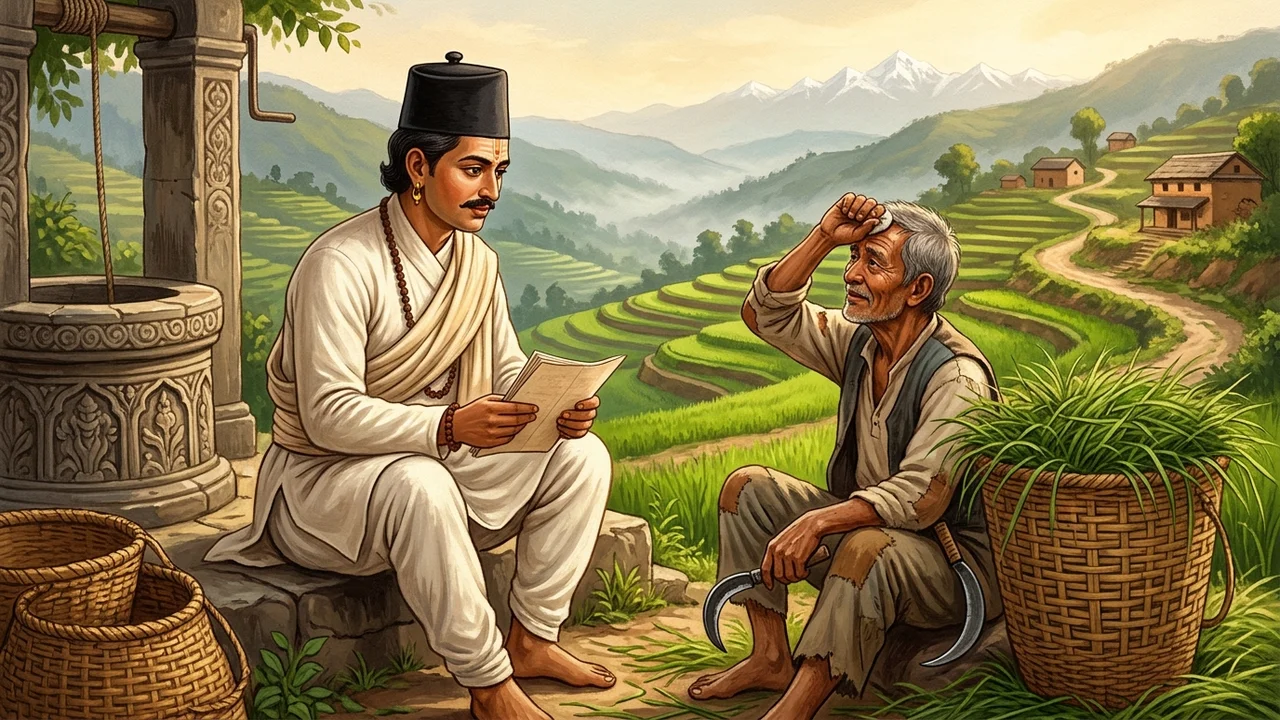
The grass-cutter (घाँसी)
भर् जन्म घाँस तिर मन् दिई धन कमायो
नाम क्यै रहोस् पछि भनेर कुवा खनायो
घाँसी दरिद्र घरको तर बुद्धि कस्तो
म भानुभक्त धनी भैकन किन यस्तो ।
मेरा ईनार न त सत्तल पाटिकै छन्
जे धन चीजहरु छन् घर भित्रनै छन्
त्यस घाँसीले कसरी आज दिए छ अर्ति
धिक्कार हो म कन बस्नु न राखि किर्ति ।
A poor man who cuts grass spent his life on that work, earned what he could, and dug a well so that a name would remain after him. The poet stops on the man's mind. The grass-cutter (घाँसी) is poor. Bhanubhakta calls himself rich, and asks why he is as he is. He has no public well, no sattal (सत्तल), no pāṭī (पाटी). A sattal (सत्तल) is a rest-house. A pāṭī (पाटी) is a public shelter. Whatever wealth he has stays inside his own house. The grass-cutter (घाँसी) has become his teacher for the day. The last line is shame at living on without leaving a fame.
The poem is the meeting as he kept it. Tellings add a road, and a man still at the digging, and they join the shame to the years he then gave to a Nepali (नेपाली) Rāmāyaṇa (रामायण). The eight lines stop at the well and the shame.
The signature (म भानुभक्त)
पाहाड्को अति बेस देश् तनहुँमा श्रीकृष्ण ब्राह्मण् थिया,
खुप् उच्चा कुल आर्यबंशि हुन गै सत्कर्ममा मन् दिया।
विद्यामा पनि जो धुरन्धर भई शिक्षा मलाई दिया,
तिन्को नाति म भानुभक्त भनि हुम् यो जानि चिहन्नी लिया।।
This is how he signs. In a very good hill country, Tanahun, there was a brāhmaṇa, Śrīkṛṣṇa (श्रीकृष्ण). He was of a high family, he set his mind on good work, and he was deep in learning. He gave Bhanubhakta his education. The poet says: know me as that man's grandson. The verse is a mark, the way a painter writes a small name in a corner. Tellings place this mark at the end of his Rāmāyaṇa (रामायण). The lines themselves are the house, the grandfather, and the name.
Beloved (सुन प्रिये)
बिन्ती एक म गर्दछू सुन प्रिये प्रीती निरन्तर् रहोस्
ताहाँको मन पिञ्जरा म मुनियाँ यै चाल् सदाकाल् रहोस्
तिम्रो त्यो मुख चन्द्र झल्कि मनमा तेस्ले उज्यालो गरी
शीतल गर्नु उचीत हो अधिक ताप् गर्दो छ सूर्यै सरि ।
He asks one thing. Hear, beloved. Let the love remain without a break. May he remain a bird in the cage of her mind, and may that going-on be the way it always is. Her face is the moon. It flashes in the mind and makes a light there. What is fitting is that she cool him. The sun is burning hard. Tellings hear the beloved as his wife. The line says priye (प्रिये), beloved. The poem is a plea for coolness and for staying.
Bālājī (बालाजि)
यति दिन पछि मैले आज बालाजि देख्याँ,
पृथिवि तलभरीमा स्वर्ग हो जानि लेख्याँ।
वरिपरि लहरामा झूलि बस्न्या चरा छन्,
मधुर वचन बोली मन् लिँदा क्या सुरा छन्।।१।।
याँहाँ बसेर कविता यदि गर्न पाऊँ,
यस्देखि सोख अरु थोक म के चिताऊँ।
उस्माथि झन् असल सुन्दरि एक् नचाऊँ,
खैंचेर इन्द्रकन स्वर्ग यहीं बनाऊँ।।२।।
After many days he sees Bālājī (बालाजि) and takes the whole of the earth below for heaven. Birds sit swinging in the vines around him. Their sweet talk is a music when the mind takes it in. If he may sit here and make poems, he asks what other pleasure he would even think of. He adds one more wish. If a beautiful woman danced here as well, he would drag Indra (इन्द्र) down and make heaven on this spot. The poem names Bālājī (बालाजि) and does not describe the shrine. One telling hears the valley's Bālājī (बालाजि). The lines are the birds, the poems, and the wish.
Kantipur (कान्तिपुरी नगरी)
चपला अबलाहरु एक् सुरमा,
गुनकेसरिको फुल ली शिरमा।
हिडन्या सखि लीकन ओरिपरी
अमरावति कान्तिपुरी नगरी।।
यति छन् भनि गन्नु काहाँ धनि ञाँ,
खुसि छन् बहुतै मनमा दुनिञाँ।
जनकी यसरी सुखकी सगरी,
अलकापुरि कान्तिपुरी नगरी।।
कहिँ भोट - र लण्डन - चीन - सरी,
कहिँ काल्-भरि गल्लि छ दिल्ली-सरी।
लखनौं - पटना - मदरास - सरी
अलकापुरि कान्तिपुरी नगरी।।
तरबार कटार खुँडा खुकुरी,
पिसतोल र बन्दुक सम्म भिरी।
अतिशूर - र - वीर - भरी नगरी,
छ त कुन्- सरि कान्तिपुरी नगरी।।
रिस राग कपट् छल छैन जाँहाँ,
तव धर्म कती छ कती छ याहाँ,
पशुका पति छन् रखबारि गरी,
शिवकी पुरि कान्तिपुरी नगरी।।
Kāntipurī (कान्तिपुरी) is the old name of Kathmandu. Women walk in one tune, a kesarī (केसरी) flower in the hair, a friend on either side, and the city is Amarāvatī (अमरावती), Indra's (इन्द्र) city. Who could count how many there are. The world is glad in its mind. The people are gathered in happiness, and the city is Alakāpurī (अलकापुरी), the city of wealth. He sets it beside Bhota and London and China, beside lanes that have run all the age like Delhi, beside Lucknow, Patna, and Madras. He dresses the city in a sword, a dagger, a khukhurī (खुकुरी), a pistol, and a gun, and calls it full of the brave. The line is praise. Where anger, passion, deceit, and fraud are absent, he asks how much dharma there is, and answers with the lord of beasts keeping watch. That lord is Paśupati (पशुपति). The city is Śiva's city.
The bund (ख्वामित् यस् गिरिधारिले)
ख्वामित् यस् गिरिधारिले अति पिर्यो व्यर्थै गर्यो झेल् पनी,
यस्का झेल उतार्नलाइ सजिलो यै हो व्यहोरा पनी।
ख्वामित् लाइ चढाउँनाकन यहाँ क्यै श्लोक् कवीता गर्याँ,
मेरा श्लोक् सुनिबक्सियोस् त झगडा छीनिन्छ पाऊ-पर्याँ।।
बीस् साल् सम्म त ज्यान त्यान यहिं वाँद् लाग्यो र खेत् रोपिया,
यो साल् बाँद पनि खोलिएछ जलले ढुङ्गा सबै छोपिया,
ढुङ्गा खोजि लगाउँ बाँद कसरी राख्तैन ढुङ्गा पनी,
मानिस् पस्न त क्वै सकेन जलमा स्वात्तै बगम्ला भनी।।
अर्ज्याल् भाट ढकाल् अचार्ज इन चार् जम्मा भई सब् वस्यौं,
मील्यो मत् सब मोहिको र मतले बाँद् लाऊनामा पस्यौं,
उस् मौका गिरिधारि एहि पनि भाट् सल्लाहमा नै थियो,
भर् यस्को नभएर मात्र अहिले यस्तो उजुर् पो दियो।।
This one is a plea, addressed to the master, the khwāmit (ख्वामित्). Giridhārī (गिरिधारी) has harassed the poet without cause and landed him in trouble, in jhel (झेल). The poet says this account is the easy way out of that trouble. He has made a few verses to offer to the master. If the master hears the verses, the quarrel ends, and the poet falls at his feet. For twenty years life was tied to this place and the fields were planted. This year the bund (गिरिधारिले) opened. Water covered the stones. He says to search out stones and set the bund (गिरिधारिले) again. It will not hold the stones. No person could step into that water. It would sweep them at once. Arjyāl, Bhāṭ, Dhākāl, and Ācārya, these four, sat down together. All the tenants agreed, and on that agreement they went in to build the bund (गिरिधारिले). Giridhārī (गिरिधारी) himself was in the Bhāṭs' counsel that day. A complaint has come now, and the poem lays it on an absence. The lines are the broken bund (गिरिधारिले), the four houses, and the bow. They do not tell how the quarrel ended.
Daily sight (रोज् रोज् दर्शन)
रोज् रोज् दर्शन पाउँछू चरणको ताप् छैन मन्मा कछू।
रात् भर् नाच् पनि हेर्छु खर्च नगरी ठूला चयन्मा म छु।
लामखुट्टे उपियाँ उडुस् इ सँगि छन् इन्कै लहड्मा बसी।
लाम्खुट्टेहरु गाउँछन् इ उपियाँ नाच्छन् म हेर्छु बसी।
जागिर् छैन धनी म छैन घरको केबल् कुदालो खनी,
खान्थ्याँ दुक्ख गरेर चाकरि गर्याँ मान् पाउँला की भनी।
एक् मन् चित्त लगाइ चाकरि गर्याँ खूसी भया छन् हरि।
मान्पाथी पनि भुक्तमान् थपिदिया कैल्यै नछुट्न्या गरी।
Every day he has sight (दर्शन) of the feet, and he says there is no burning in the mind. All night he watches a dance as well, without spending, and the line puts him in a ṭhūlā cayana (ठूला चयन्). Mouths hear that phrase as a great ease. The printing leaves the word as it stands. Then the companions arrive. Mosquitoes, fleas, and bedbugs are his company. He sits at their whim. The mosquitoes sing. The fleas dance. He sits and watches. He has no jāgīr (जागिर), no post with an income, and he is not a rich man of the house. He would eat by digging with a kodālo (कुदालो), a hoe, having served in the hope of honor. He served with a single mind. Hari (हरि) is pleased, and the portion of honor was added so that it would not be dropped.
Tomorrow (भोली भोली)
बिन्ती डिट्ठा विचारीसित म कति गरूँ चुप् रहन्छन् नबोली।
बोल्छन् ता ख्याल् गर्या झैं अनि पछि दिनदिन् भन्दछन् भोलि भोली।
की ता सक्तीन भन्नू कि तब छिनिदिनू क्यान भन्छन् यि भोलि।
भोली भोली हुँदैमा सब घर बितिगो बक्सियोस् आज झोली।
The plea turns to a diṭṭha (डिठ्ठा) and a vicārī (विचारी), the official and the man who weighs the case. How much should he petition. They stay silent. When they speak, it is as if in jest, and day after day they say tomorrow, tomorrow. Shall he say he cannot, or shall the official decide. Why do they say tomorrow. While it remains tomorrow, the whole house is spent. He asks that the jholī (झोली), the bag, be given today. Tellings place this complaint in the months he was confined, after the quarrel over a bund (गिरिधारिले). This stanza is in another meter, sragdharā, and stands as its own poem; the two before it are śārdūlavikrīḍita. The lines themselves are the waiting: an official, a silence, and a tomorrow.
The longer works
The Bhaktamālā (भक्तमाला), the Praśnottaramālā (प्रश्नोत्तरमाला), the Badhū-śikṣā (वधूशिक्षा), and the Rāmagītā (रामगीता) are each on their own page, with a summary in English, a summary in Nepali (नेपाली), and the verses.
His long work is the Nepali (नेपाली) Rāmāyaṇa (रामायण), in seven kāṇḍas: Bāla, Ayodhyā, Araṇya, Kiṣkindhā, Sundara, Yuddha, and Uttara. A Nepali (नेपाली) house often meets Rāma (राम) first in this telling. The seven books are a book. This page sits the door.
एक् दिन् नारद सत्यलोक् पुगि गया लोक्को गरूँ हित् भनी।
ब्रह्मा ताहिं थिया पर्या चरणमा खूसी गराया पनी॥
क्या सोध्छौ तिमि सोध भन्छु म भनी मर्जी भयेथ्यो जसै।
ब्रह्माको करुणा बुझेर ऋषिले बिन्ती गर्या यो तसै॥
Nārada (नारद) goes one day to the world of truth, meaning to do good for people. Brahmā (ब्रह्मा) is there. Nārada (नारद) falls at his feet and pleases him. When Brahmā (ब्रह्मा) says, ask what you will ask, and I will tell it, the sage understands the kindness and makes this request. In the verses that follow he describes an age he fears, and asks how people will cross. This page leaves that list where it stands. Brahmā's (ब्रह्मा) answer is the one the book rests on.
नारद्ले दुनियाँउपर् गरि दया बिन्ती गर्या यो जसै।
ब्रह्माजी पनि खूप् प्रसन्न हुनुभो मर्जी भयो यो तसै॥
हे नारद् सब पाप हर्न कन ता रामायणैले सरी।
आर्को मुख्य उपाय छैन सबको हित् यै छ अमृत् सरी॥
When Nārada (नारद) has made the request, with pity for the world, Brahmā (ब्रह्मा) is deeply pleased. He tells Nārada (नारद) that for taking away every pāpa there is nothing like the Rāmāyaṇa (रामायण). There is no other chief means. This is everyone's good, like nectar. Later verses in that opening pile ritual fruits on the hearing and the nearness of the book. This page does not sit that count. The rest of the seven kāṇḍas, after this opening of the Bālakāṇḍa, are his, and they are public, and they are not sat here.
One passage of that Rāmāyaṇa (रामायण) is called the gift of the sandals, pādukā-dāna (पादुका-दान). Bharata (भरत) asks Rāma (राम) to come home. Rāma (राम) sends him back, and the sandals go to stand for the king. The meeting is told on the chronicle's sandal page. The speeches of Bhanubhakta's passage are not sat here.
उहाँलाई आदिकवि, अर्थात् पहिलो कवि, भनिन्छ। यो उपाधि देशले देख्ने ठाउँमा राख्ने मानिस मोतीराम भट्ट हुनुहुन्छ, जसले जीवनी र रामायण छापेर यो काम गर्नुभयो। शैली सभामा बोल्न सकिने नेपाली हो। विवाहको जन्तले उहाँको कविता रातभरि गाउँदै राख्न सक्छ। पङ्क्तिले कथा सुनाउँछ, वा एउटा लाज, एउटा सहर, एउटी प्रियामा रोकिन्छ। पङ्क्ति सुनिन दरबारिया संस्कृत चाहिँदैन। भानुभक्त आचार्य त्यो कवि हुन्, जसलाई नेपाली घरले पहिले भेट्छ। चलनअनुसार उहाँको घर तनहुँको राम्घामा थियो, र वर्ष ई.सं. १८१४–१८६८ (वि.सं. १८७१–१९२५) हुन्। उहाँको आफ्नै चिह्न-कविताले तनहुँ भन्छ, र हजुरबुबाको नाम दिन्छ। यस पृष्ठका पङ्क्ति उहाँकै हुन्। उहाँ ई.सं. १८६८ (वि.सं. १९२५) मा बित्नुभयो। यी कविता ई.सं. १९३१ भन्दा धेरै अघि छापिएका थिए। शब्द सार्वजनिक हुन्। वरपरका वाक्य यस तहका हुन्। पछिको जीवनकथा, र पछिका अङ्ग्रेजी पद्य अनुवाद, अरूका पुस्तक हुन्। यहाँ उतारेका छैनन्।
लेखाइ पुरानो छपाइको हो। आजको मुखले मन् भएको ठाउँमा मन भन्न सक्छ, र ईनार भएको ठाउँमा इनार। घाँसीको कवितामा मानिस एक शब्दले झगडा गर्छन्। धेरै छपाइमा 'आज यस्तो' छ; कतै 'किन यस्तो'। यो पृष्ठले किन यस्तो राख्छ। कविता त्यही हो।
सात छोटा कविता यसै पृष्ठमा पूरा छन्। चार लामा कृतिका आफ्नै पृष्ठ छन्: भक्तमाला, प्रश्नोत्तरमाला, वधूशिक्षा, र रामगीता। ती पृष्ठमा अङ्ग्रेजी सार, नेपाली सार, र श्लोक छन्। नेपाली रामायण सात काण्डमा १,३१९ श्लोकको पुस्तक हो। यो पृष्ठले त्यसको ढोका राख्छ। त्यस ढोकाको फलको गन्ती यहाँ छैन। गद्यले पङ्क्ति के गर्दै छन् भन्छ। यो यस तहको आफ्नै वाक्यमा लेखिएको वर्णन हो।
घाँसी
भर् जन्म घाँस तिर मन् दिई धन कमायो
नाम क्यै रहोस् पछि भनेर कुवा खनायो
घाँसी दरिद्र घरको तर बुद्धि कस्तो
म भानुभक्त धनी भैकन किन यस्तो ।
मेरा ईनार न त सत्तल पाटिकै छन्
जे धन चीजहरु छन् घर भित्रनै छन्
त्यस घाँसीले कसरी आज दिए छ अर्ति
धिक्कार हो म कन बस्नु न राखि किर्ति ।
घाँस काट्ने गरिब मानिसले जीवन घाँसमै बिताए, जति सके कमाए, र पछि नाम रहोस् भनेर कुवा खनाए। कवि त्यसको बुद्धिमा अडिन्छन्। घाँसी दरिद्र छ। भानुभक्त आफूलाई धनी भन्नुहुन्छ, र किन यस्तो भनेर सोध्नुहुन्छ। उहाँसँग सार्वजनिक इनार छैन, सत्तल छैन, पाटी छैन। सत्तल विश्रामघर हो। पाटी सार्वजनिक छाना हो। जे धन छ, घरभित्रै छ। त्यो घाँसी आज उहाँका गुरु भएका छन्। अन्तिम पङ्क्ति कीर्ति नराखी बाँचेको लाज हो।
कविता त्यो भेट हो, उहाँले जसरी राख्नुभयो त्यसै। भनाइले बाटो थप्छ, खनिरहेको मानिस थप्छ, र यो लाजलाई उहाँले नेपाली रामायणलाई दिनुभएको वर्षसँग जोड्छ। आठ पङ्क्ति कुवा र लाजमा रोकिन्छन्।
म भानुभक्त
पाहाड्को अति बेस देश् तनहुँमा श्रीकृष्ण ब्राह्मण् थिया,
खुप् उच्चा कुल आर्यबंशि हुन गै सत्कर्ममा मन् दिया।
विद्यामा पनि जो धुरन्धर भई शिक्षा मलाई दिया,
तिन्को नाति म भानुभक्त भनि हुम् यो जानि चिहन्नी लिया।।
उहाँ यसरी चिह्न लगाउनुहुन्छ। पहाडको अति राम्रो देश तनहुँमा श्रीकृष्ण ब्राह्मण हुनुहुन्थ्यो। उहाँ उच्च कुलका हुनुहुन्थ्यो, सत्कर्ममा मन दिनुहुन्थ्यो, र विद्यामा धुरन्धर हुनुहुन्थ्यो। उहाँले भानुभक्तलाई शिक्षा दिनुभयो। कवि भन्नुहुन्छ, मलाई तिनको नाति भनेर चिन्नुहोस्। यो श्लोक चिह्न हो, जसरी चित्रकारले कुनामा सानो नाम लेख्छ। भनाइले यो चिह्न रामायणको अन्त्यमा राख्छ। पङ्क्ति आफैँ घर, हजुरबुबा, र नाम हुन्।
सुन प्रिये
बिन्ती एक म गर्दछू सुन प्रिये प्रीती निरन्तर् रहोस्
ताहाँको मन पिञ्जरा म मुनियाँ यै चाल् सदाकाल् रहोस्
तिम्रो त्यो मुख चन्द्र झल्कि मनमा तेस्ले उज्यालो गरी
शीतल गर्नु उचीत हो अधिक ताप् गर्दो छ सूर्यै सरि ।
उहाँ एक कुरा माग्नुहुन्छ। सुन, प्रिये। प्रीति नटुटोस्। म तिम्रो मनको पिँजराको चरा भएर रहूँ, र यो चाल सधैँ रहोस्। तिम्रो मुख चन्द्र हो। मनमा झल्किन्छ, उज्यालो गर्छ। प्रियेले उहाँलाई शीतल पार्नु उचित हो। सूर्यले अति ताप दिँदै छ। भनाइले प्रियेलाई पत्नी सुन्छ। पङ्क्तिले प्रिये भन्छ। कविता शीतलता र बसिरहने बिन्ती हो।
बालाजि
यति दिन पछि मैले आज बालाजि देख्याँ,
पृथिवि तलभरीमा स्वर्ग हो जानि लेख्याँ।
वरिपरि लहरामा झूलि बस्न्या चरा छन्,
मधुर वचन बोली मन् लिँदा क्या सुरा छन्।।१।।
याँहाँ बसेर कविता यदि गर्न पाऊँ,
यस्देखि सोख अरु थोक म के चिताऊँ।
उस्माथि झन् असल सुन्दरि एक् नचाऊँ,
खैंचेर इन्द्रकन स्वर्ग यहीं बनाऊँ।।२।।
धेरै दिनपछि उहाँले बालाजि देख्नुभयो, र पृथिवी तलभरि स्वर्ग हो भन्ठान्नुभयो। वरिपरिका लहरामा चरा झुलेर बस्छन्। मनले लिँदा त्यो मीठो बोली सुर हो। यहीँ बसेर कविता गर्न पाइए अरू सोख के सोच्नु। उहाँले एउटा इच्छा थप्नुहुन्छ। असल सुन्दरी एक जना यहीँ नाचे भने इन्द्रलाई तानेर यहीँ स्वर्ग बनाउँछु भन्नुहुन्छ। कविताले बालाजि भन्छ, मन्दिरको वर्णन गर्दैन। एउटा भनाइले उपत्यकाको बालाजि सुन्छ। पङ्क्ति चरा, कविता, र इच्छा हुन्।
कान्तिपुरी नगरी
चपला अबलाहरु एक् सुरमा,
गुनकेसरिको फुल ली शिरमा।
हिडन्या सखि लीकन ओरिपरी
अमरावति कान्तिपुरी नगरी।।
यति छन् भनि गन्नु काहाँ धनि ञाँ,
खुसि छन् बहुतै मनमा दुनिञाँ।
जनकी यसरी सुखकी सगरी,
अलकापुरि कान्तिपुरी नगरी।।
कहिँ भोट - र लण्डन - चीन - सरी,
कहिँ काल्-भरि गल्लि छ दिल्ली-सरी।
लखनौं - पटना - मदरास - सरी
अलकापुरि कान्तिपुरी नगरी।।
तरबार कटार खुँडा खुकुरी,
पिसतोल र बन्दुक सम्म भिरी।
अतिशूर - र - वीर - भरी नगरी,
छ त कुन्- सरि कान्तिपुरी नगरी।।
रिस राग कपट् छल छैन जाँहाँ,
तव धर्म कती छ कती छ याहाँ,
पशुका पति छन् रखबारि गरी,
शिवकी पुरि कान्तिपुरी नगरी।।
कान्तिपुरी काठमाडौंको पुरानो नाम हो। अबलाहरू एक सुरमा हिँड्छन्; शिरमा केसरीको फूल छ, वरिपरि सखीहरू छन्, र नगरी इन्द्रको सहर अमरावती हो। कति छन् भनेर कसले गन्नु। दुनियाँ मनमा अति खुसी छ। जन सुखले भरिएका छन्, र नगरी धनको सहर अलकापुरी हो। उहाँ नगरीलाई भोट, लन्डन, चीनसँग, दिल्लीजस्तै कालभरि चल्ने गल्लीसँग, र लखनऊ, पटना, मद्राससँग तुलना गर्नुहुन्छ। तरबार, कटार, खुँडा, खुकुरी, पिस्तोल, र बन्दुक लगाएको वीरले भरिएको सहर भन्नुहुन्छ। पङ्क्ति प्रशंसा हो। जहाँ रिस, राग, कपट, छल छैन, त्यहाँ धर्म कति छ भनेर सोध्नुहुन्छ, र पशुका पति रखवारीमा छन् भन्नुहुन्छ। ती पशुपति हुन्। नगरी शिवकी पुरी हो।
बाँधको बिन्ती
ख्वामित् यस् गिरिधारिले अति पिर्यो व्यर्थै गर्यो झेल् पनी,
यस्का झेल उतार्नलाइ सजिलो यै हो व्यहोरा पनी।
ख्वामित् लाइ चढाउँनाकन यहाँ क्यै श्लोक् कवीता गर्याँ,
मेरा श्लोक् सुनिबक्सियोस् त झगडा छीनिन्छ पाऊ-पर्याँ।।
बीस् साल् सम्म त ज्यान त्यान यहिं वाँद् लाग्यो र खेत् रोपिया,
यो साल् बाँद पनि खोलिएछ जलले ढुङ्गा सबै छोपिया,
ढुङ्गा खोजि लगाउँ बाँद कसरी राख्तैन ढुङ्गा पनी,
मानिस् पस्न त क्वै सकेन जलमा स्वात्तै बगम्ला भनी।।
अर्ज्याल् भाट ढकाल् अचार्ज इन चार् जम्मा भई सब् वस्यौं,
मील्यो मत् सब मोहिको र मतले बाँद् लाऊनामा पस्यौं,
उस् मौका गिरिधारि एहि पनि भाट् सल्लाहमा नै थियो,
भर् यस्को नभएर मात्र अहिले यस्तो उजुर् पो दियो।।
यो मालिक (ख्वामित्) लाई चढाइएको बिन्ती हो। गिरिधारीले कविलाई व्यर्थै पिरोलेर झेलमा पार्यो। कवि भन्नुहुन्छ, यो व्यहोरा त्यो झेलबाट उम्कने सजिलो बाटो हो। उहाँले मालिकलाई चढाउन केही श्लोक बनाउनुभएको छ। मालिकले श्लोक सुन्नुभयो भने झगडा टुङ्गिन्छ, र कवि उहाँको पाउमा पर्नुहुन्छ। बीस वर्षसम्म ज्यान यहीँ बाँधमा बाँधिएको थियो, र खेत रोपिएका थिए। यो वर्ष बाँध खुल्यो। पानीले ढुङ्गा सबै छोप्यो। उहाँ भन्नुहुन्छ, ढुङ्गा खोजेर बाँध फेरि लगाऊँ। तर बाँधले ढुङ्गा थाम्दैन। कुनै मानिस त्यो पानीमा पस्न सक्दैन। पस्यो भने तुरुन्तै बगाइहाल्छ। अर्ज्याल, भाट, ढकाल, आचार्य, यी चार जना सँगै बसे। सबै मोहीको मत मिल्यो, र त्यही मतमा बाँध लगाउन पसे। त्यो बेला गिरिधारी आफैँ पनि भाटहरूको सल्लाहमा थियो। अहिले उजुरी परेको छ, र कविताले त्यो एउटा नभएको कुरामा राख्छ। पङ्क्ति फुटेको बाँध, चार घर, र ढोग हुन्। झगडा कसरी टुङ्गियो भन्दैनन्।
रोज् रोज् दर्शन
रोज् रोज् दर्शन पाउँछू चरणको ताप् छैन मन्मा कछू।
रात् भर् नाच् पनि हेर्छु खर्च नगरी ठूला चयन्मा म छु।
लामखुट्टे उपियाँ उडुस् इ सँगि छन् इन्कै लहड्मा बसी।
लाम्खुट्टेहरु गाउँछन् इ उपियाँ नाच्छन् म हेर्छु बसी।
जागिर् छैन धनी म छैन घरको केबल् कुदालो खनी,
खान्थ्याँ दुक्ख गरेर चाकरि गर्याँ मान् पाउँला की भनी।
एक् मन् चित्त लगाइ चाकरि गर्याँ खूसी भया छन् हरि।
मान्पाथी पनि भुक्तमान् थपिदिया कैल्यै नछुट्न्या गरी।
रोज चरणको दर्शन पाउँछु, मनमा ताप केही छैन भन्नुहुन्छ। रातभर नाच पनि हेर्छु, खर्च नगरी, ठूला चयन्मा छु भन्नुहुन्छ। मुखले त्यो वाक्यांशलाई ठूलो चैन सुन्छ। छपाइले शब्द चयन् नै राख्छ। अनि साथी आउँछन्। लामखुट्टे, उपियाँ र उडुस उहाँका साथी छन्। उहाँ तिनकै लहडमा बस्नुहुन्छ। लामखुट्टे गाउँछन्। उपियाँ नाच्छन्। उहाँ हेरेर बस्नुहुन्छ। उहाँको जागिर छैन, आम्दानी हुने पद छैन, र घरको धनी पनि होइन। उहाँ कुदालो खनेर खान्थे, तर मान पाउँला कि भनेर चाकरी गर्नुभयो। उहाँले एक मन लगाएर चाकरी गर्नुभयो। हरि खुसी हुनुभयो, र मानको भाग पनि कहिल्यै नछुट्ने गरी थपियो।
भोली भोली
बिन्ती डिट्ठा विचारीसित म कति गरूँ चुप् रहन्छन् नबोली।
बोल्छन् ता ख्याल् गर्या झैं अनि पछि दिनदिन् भन्दछन् भोलि भोली।
की ता सक्तीन भन्नू कि तब छिनिदिनू क्यान भन्छन् यि भोलि।
भोली भोली हुँदैमा सब घर बितिगो बक्सियोस् आज झोली।
बिन्ती डिठ्ठा र विचारीतिर फर्कन्छ, अधिकृत र मुद्दा हेर्ने मानिसतिर। कति बिन्ती गरूँ भन्नुहुन्छ। तिनी चुप लाग्छन्। बोले ठट्टा गरेझैँ बोल्छन्, अनि दिनदिन भोलि भोलि भन्छन्। कि सक्दिन भनूँ, कि तपाईं छिनोफानो गर्नुहोस्। यिनले किन भोलि भन्छन्। भोलि भोलि हुँदैमा सब घर बित्यो। आज झोली बक्सियोस् भन्नुहुन्छ। भनाइले यो उजुरीलाई बाँधको झगडापछि उहाँ बन्द रहेको महिनामा राख्छ। यो श्लोक अर्कै छन्द, स्रग्धरामा छ, र आफ्नै कविता हो; अघिका दुई शार्दूलविक्रीडितमा छन्। पङ्क्ति आफैँ पर्खाइ हुन्: अधिकृत, मौन, र भोलि।
लामा कृति
उहाँको लामो कृति नेपाली रामायण हो, सात काण्ड। बाल, अयोध्या, अरण्य, किष्किन्धा, सुन्दर, युद्ध, र उत्तर। नेपाली घरले रामलाई अक्सर यही भनाइमा पहिले भेट्छ। सात पुस्तक एउटा पुस्तक हो। यो पृष्ठले ढोका राख्छ।
एक् दिन् नारद सत्यलोक् पुगि गया लोक्को गरूँ हित् भनी।
ब्रह्मा ताहिं थिया पर्या चरणमा खूसी गराया पनी॥
क्या सोध्छौ तिमि सोध भन्छु म भनी मर्जी भयेथ्यो जसै।
ब्रह्माको करुणा बुझेर ऋषिले बिन्ती गर्या यो तसै॥
एक दिन नारद सत्यलोक पुग्नुभयो, लोकको हित गरूँ भनेर। ब्रह्मा त्यहाँ हुनुहुन्थ्यो। नारद चरणमा पर्नुभयो, खुसी गराउनुभयो। के सोध्छौ, सोध, म भन्छु भन्नुभएपछि ऋषिले करुणा बुझेर यो बिन्ती गर्नुभयो। पछिका श्लोकमा उहाँले डराउनुभएको युग बताउनुहुन्छ, र मानिस कसरी तर्लान् भन्नुहुन्छ। यो पृष्ठले त्यो सूची त्यहीँ छोड्छ। ब्रह्माको उत्तर नै पुस्तकको टेको हो।
नारद्ले दुनियाँउपर् गरि दया बिन्ती गर्या यो जसै।
ब्रह्माजी पनि खूप् प्रसन्न हुनुभो मर्जी भयो यो तसै॥
हे नारद् सब पाप हर्न कन ता रामायणैले सरी।
आर्को मुख्य उपाय छैन सबको हित् यै छ अमृत् सरी॥
नारदले दुनियाँमाथि दया गरेर बिन्ती गर्नुभएपछि ब्रह्मा अति प्रसन्न हुनुभयो। उहाँ भन्नुहुन्छ, हे नारद, सब पाप हर्न रामायण जस्तो अर्को मुख्य उपाय छैन। सबको हित यही हो, अमृतझैँ। त्यसपछिका श्लोकले पुस्तक सुन्दा र नजिक जाँदाको फल थप्दै जान्छन्। यो पृष्ठले त्यो गन्ती राख्दैन। सात काण्डको बाँकी भाग, अर्थात् बालकाण्डको यो ढोकापछिको सबै, उहाँकै हो, सार्वजनिक छ, र यहाँ प्रस्तुत छैन।
त्यो रामायणको एउटा अंशको नाम पादुका-दान हो। भरतले रामलाई घर आउन बिन्ती गर्छन्। रामले उनलाई फर्काउनुहुन्छ, र पादुका राजाको प्रतिनिधि भएर जान्छन्। त्यो भेट इतिहासको पादुका पृष्ठमा छ। भानुभक्तको त्यो अंशका भाषण यहाँ प्रस्तुत छैनन्।
चार पृष्ठ
चार लामा कृति अब आफ्नै पृष्ठमा छन्। भक्तमाला, प्रश्नोत्तरमाला, वधूशिक्षा, र रामगीता। प्रत्येकमा अङ्ग्रेजी सार, नेपाली सार, र श्लोक छन्।
Where it sits
The short poems are his, and they are public. The Bhaktamālā (भक्तमाला), the Praśnottaramālā (प्रश्नोत्तरमाला), the Badhū-śikṣā (वधूशिक्षा), and the Rāmagītā (रामगीता) have their own pages. The Nepali (नेपाली) Rāmāyaṇa (रामायण) is the book, and its door is above. The birth morning is Rāma (राम) Navamī. The sandals in the Sanskrit chronicle are the meeting his passage retells. The question-garland names Vedānta. The sentences sat for that are on the Upaniṣad pages.