Nepali Readings / Guru Prasad Mainali
Guru Prasad Mainali (गुरुप्रसाद मैनाली)गुरुप्रसाद मैनाली
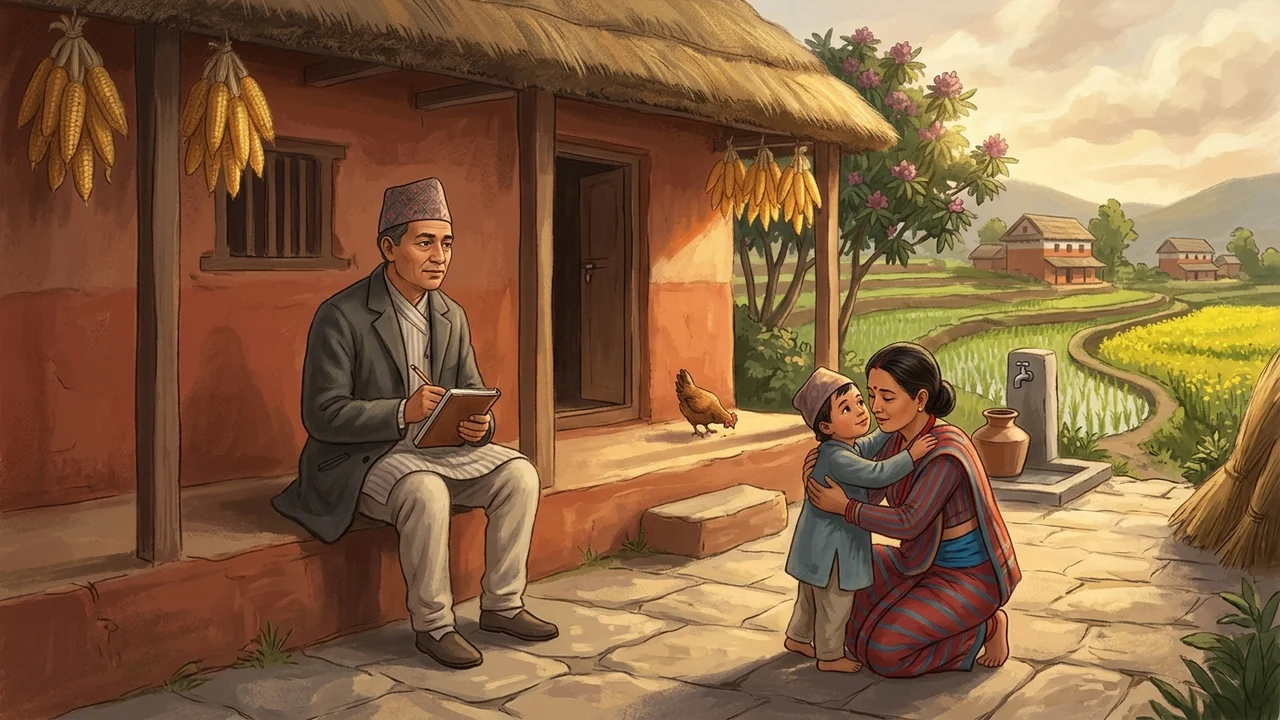
The title he does not need
| Literary Identity | Father of the Modern Social Realist Short Story in Nepali Literature |
|---|---|
| Lifespan & Origins | 1900–1971 CE (1957–2028 BS) · Born in Kanpur, Kavrepalanchok, Nepal |
| Literary Movement | Social Realism & Idealist Humanism (Ādarśonmukha Yathārthavāda) |
| Judicial Career | Served as a traveling magistrate and district court judge under the Rana and early democratic judiciaries, traversing remote hill regions (Dhankuta, Ilam, Palpa, Birgunj) where direct contact with peasant litigations inspired his fiction |
| Landmark Masterpiece | Naso (1963, "The Ward / The Sacred Trust" — timeless collection of 11 foundational short stories, including "Naso", "Paral ko Aago", "Chhimeki", "Shahid", and "Bida") |
| Core Themes | Rural community solidarity, reconciliatory domestic wisdom ("a quarrel between spouses is a straw fire"), social taboos, childlessness, and the quiet dignity of the hill peasantry. |
In the landscape of modern Nepali fiction, Guru Prasad Mainali (Guruprasāda Mainālī / गुरुप्रसाद मैनाली) holds an immortal place as the father of the social realist short story. In a literary culture where narrative prose had previously lingered in romantic escapism and courtly fantasy, Mainali brought fiction down to the sunlit red clay courtyards, terraced hillsides, and smokey kitchens of ordinary Nepali villages, portraying peasant existence with immense psychological empathy, gentle humor, and ethical dignity.
Born in 1900 CE (1957 BS) in Kanpur, Kavrepalanchok, Mainali spent decades serving as a roving judicial officer (Nayab Subba and district judge) within the judicial machinery of Nepal. Assigned to remote provincial court benches from Dhankuta and Ilam in the east to Palpa in the west, he traveled the mountain footpaths on foot, observing firsthand the bitter land litigations, domestic heartbreak, caste tensions, and debt traps that bound rural society. Rather than viewing these disputes with bureaucratic detachment, Mainali transformed them into literature.
Beginning in 1935 with the publication of the seminal story Naso ("The Ward / The Trust") in the pages of the historic literary journal Sharada, Mainali inaugurated modern Nepali realism. In 1963, his eleven landmark stories were compiled into the anthology Naso. Stories such as Paral ko Aago ("Straw Fire"—immortalizing the proverb that marital quarrels burn hot but turn to harmless ash) and Chhimeki ("Neighbors"—depicting how shared agrarian survival ultimately heals communal rifts) remain the undisputed masterpieces of social realism in the Nepali language.
Kanpur, the postings, the bench
The ancestral house is Kanpur in Kavre. His father Kashi Nath was a government man, and the postings moved the family. Nepali (नेपाली) accounts put the birth itself in Dhankuta, while the father was stationed in the east, on Bhadra 23, 1957. His mother was Kashi Rupa Devi. School was broken by the transfers. He learned letters at home, then the small Sanskrit books a Brahmin boy was given, Laghukaumudi, Amarakosha, the Rudri, the Durga Saptashati, and then the sresta school that trained clerks. He entered service as a nausinda on eleven rupees a month. He rose through the ranks a Rana (राणा) court used for its writers and its judges: vichari, dittha, tahabildar, and at last judge. A man from an ordinary house, with little formal schooling, on the bench, was not a small fact. The bench is also why the stories are good. He heard husbands and wives. He walked villages. He saw why people were poor, and he saw the small event that cuts. India, where Nepali (नेपाली) men went for wages, gave him the other wound. He came back and wrote it down.
The first story, Naso (नासो), appeared in Sharada (शारदा) in 1992 of the Nepali (नेपाली) calendar, 1935. Before it, a Nepali (नेपाली) tale was rarely an ordinary house. After it, other writers imitated the ordinary. He published in magazines for years and did not have a book. In 2020 of the Nepali (नेपाली) calendar, 1963, the critic Taranath Sharma gathered the eleven stray stories, edited them, and brought out Naso (नासो). Readers who had met the tales one by one finally had the shelf. He also wrote humorous prose and a few essays that never became books. He took no prize while he lived. The prize is the genre. When a Nepali (नेपाली) says "the short story," and means the village, the quarrel, the custom, they are standing in his yard. BP (बीपी) will take the hidden mind into the novel. Parijat (पारिजात) will take the empty life into the city. Prema Shah (प्रेमा शाह) will write the woman's private room. Mainali (मैनाली) is the courtyard before all of them.
Naso (नासो), walked
The title story is a household, and it should be told slowly, because the title is a riddle until the last page.
Deviraman and Subhadra have no child. He wins the neighborhood at money, strength, and wit, and the word childless turns his pride to dust. They build rests for travelers, dig paths, light the great lamp at Pashupati, endow a reading of the Harivamsha. Subhadra, devoted and the woman who made a poor husband rich, ties the amulets and keeps the fasts. Astrologers tell him to marry again. He will not do it without her say. Whether her say is free is the question he cannot stop asking himself, which is the story's first honesty. He marries a girl of twelve. On the wedding morning he remembers his first marriage to Subhadra and does not know what this second one will do to his next life. He tells himself it is dharma, the Hindu fear that a man without a son is blocked from heaven, and not appetite. On the road home the wedding party laughs. He does not. He is relieved when Subhadra is not in the crowd watching from the rest-stop, and then he finds her indoors, paying the porters. He is ashamed of having suspected her. That night her bed is not under his. She says she will bathe in the Gandaki at dawn because the next day is a fast. She still comes in to press his feet. That has always been her work. Then she goes to the other room, where Nauli is stitching leaf-plates.
Nauli is the person the story trusts with the truth. She is an old servant of the house, about Subhadra's age, freed from slavery by Chandra Shumsher's order and kept on because Deviraman did not collect a price and because she would not leave. She is Subhadra's companion from girlhood, the bowl the sorrow is poured into. Nauli says what a co-wife is. Subhadra answers that she has eaten coarse food and suffered the housework, and that the new girl seems docile. The reader is not asked to find this fair. The reader is asked to watch a good woman consent to her own replacement and then do the evening's duty anyway.
Years pass. A son, Sushil, is born to the younger wife, Lakshmi. Subhadra raises him. He calls Subhadra mother. He calls Lakshmi "the bride," because the house calls Lakshmi the bride-grandmother, dulahi bajyai. Deviraman sits on the veranda and watches the boy chase pigeons while Subhadra feeds him, and he imagines the ancestors watching from the lip of heaven. Then he decides on a pilgrimage. Widows and old people of the village fill the yard. Lakshmi insists on going. The boy holds his father's hem and cries, so the boy goes too. No one asks Subhadra if she will come. She has swept that threshold since she was twelve. The cattle, the trees, the house are the company of a childless woman, and a single sentence of invitation would have dried her eyes. Deviraman, who can preach, does not know that. The pilgrimage is the seed. When they return, Lakshmi answers Subhadra with a jab, and the quarrels become the day. He stays quiet. To scold the mother of his son feels like a sin against the wife who gave him the heir. To scold Subhadra feels like a sin against the wife who gave him the life. His famous speech fails in his own kitchen. Learning, the story says, is for advising others.
Subhadra leaves at night with a small bundle under her shawl. A falling star reminds her of a childhood answer: gods fall from heaven when their merit ends, and they vanish before they hit the earth. She thinks people fall too, from hunger and grief, and they hit. She bows to the house and disappears. She lives at Gaurighat with a paternal aunt who has a government cooking-pot to live on. Months later Nauli, come to Pashupati to scatter a little rice for her own dead, finds her thin and nearly unrecognizable. The house has collapsed. Lakshmi has been ill for six months, a wasting cough a Gorkha doctor has given a foreign name. The boy is covered in sores. Deviraman cooks or eats a snack and sleeps. He has been heard crying that the sinner has torn down the rest-stop she herself once knew. The fields are let on shares. Debts do not come in. Servants do not stay. Subhadra, hearing it, turns on herself. She could have built a separate hut. She has eaten one meal at the aunt's while a child asks for her. She goes back.
Lakshmi is counting the last hours on a dirty mat. The boy sits by the mother he is about to lose. Subhadra enters, thin, in poor clothes, and bows to her husband. Lakshmi opens her eyes, calls her elder sister, and says she has been hanging on for this sight (दर्शन). She points to a hard hurt on Subhadra's chest. Subhadra says it has healed, not a sesame seed of it left, which is a lie of love. Then Lakshmi puts the boy's hand in Subhadra's lap and gives the boy the name of the title, a naso, a thing left in trust. The child was that trust. Lakshmi's face brightens like a lamp at the moment it goes out, and she dies. The story's last gift is not a moral pasted on. It is a dying girl returning the son to the woman who raised him, and naming the return with the legal word for property held for someone else. A judge wrote that. He had heard the word in court. He put it in a mother's mouth.
Straw fire, neighbors, a martyr
Paralko Aago (परालको आगो), a blaze in the straw, is the marriage story people set beside Naso (नासो), and a 1978 film took the title. Chame and his wife Gaunthali quarrel every few days. She has a sharp mouth. He comes home from the plough and finds her gone to watch a village wedding. The next evening she has left for her parents, taking her clothes. The buffalo, unloved, kicks him into the dung, breaks into a neighbor's maize, and earns him two slaps from the neighbor's son, who was in the middle of a wedding dance. Chame compares his house with Juthe's, an older neighbor whose wife and he walk together and talk about sorrow as if it were shared. He lives on roasted maize. The buffalo's milk goes spiteful. He decides he must go and fetch her even if she will not come. In the cap he finds the little packet of tobacco she had tucked there, and he is angry and tender at once, which is the whole art of the story. A straw fire burns hot and does not last. The quarrel is the fire. The walk back is the point. Mainali (मैनाली) does not pretend the blows did not happen. He also does not end on the blow. A poor marriage, in his hands, is a thing that can be ruined by a day and mended by a walk, and the mending does not make the day clean.
Chhimeki (छिमेकी), neighbors, is shorter and just as exact. Gumane and Dhanjite fall out over the water in the canal, the oldest village war. Sickness and trouble make them lean on each other. They ask pardon and are neighbors again. The story is small enough to be a proverb, and it is better than a proverb because the water is real. Shaheed (शहीद), the martyr, turns the same eye on a political death. A person stands up against an injustice. The family and the village have to live with the standing up. The death does not wipe the memory. Mainali (मैनाली) is not a slogan poet. The martyr is a household event. Bida (बिदा) is a farewell, a person leaving the village with the road already grieving. Abhagi (अभागी), the luckless one, turns on a second wife and a boy whose dead mother seems, in the living man's conscience, to ask where her son is. Chitako Jwala (चिताको ज्वाला) stands at a pyre. Pratyagaman (प्रत्यागमन) is a return, a boy and a sister-in-law's affection and a new bride's tension, and then the search for the house again. Prayashchitta (प्रायश्चित्त) is repentance after a wrong done for one's own advantage. Kartabya (कर्तव्य) puts duty against desire and makes someone pay. Papako Parinam (पापको परिणाम) lets a consequence arrive in its own time. The book holds eleven stories. A reader can finish the book in a few evenings and have met the Nepal that poems about the nation often fly over.
What to carry out of the room
Carry the number eleven. Carry the bench as the school. Carry Naso (नासो) as a child in a lap, not as a piece of jewelry, and carry the word as a legal tenderness. Carry the straw fire as a theory of marriage that includes the slap and the walk home. He died at Paśupati (पशुपति) in 1971. The stories are his. The telling on this page is a gist, so the book can still surprise you.
उहाँलाई नचाहिने उपाधि
गुरुप्रसाद मैनालीसँग आशुकविको उपाधि छैन, शिरोमणिको पनि छैन। उहाँ कथा हुनुहुन्छ। जिल्ला अदालत हिँड्ने न्यायाधीशले एघार कथा लेख्नुभयो, र ती एघार आधुनिक नेपाली कथाको जग हुन्, जसरी भानुभक्त आख्यान कविताको जग हुन्। किताबको नाम नासो हो। नासो कसैको जिम्मामा छोडिएको चिज हो। प्रसिद्ध कथाले यो शब्दलाई सार्थक बनाउँछ। उहाँको जन्म ७ सेप्टेम्बर १९०० मा भयो र मृत्यु ८ जुन १९७१ मा आर्यघाटमा भयो। उहाँले गाउँको यति नजिकको नेपालीमा लेख्नुभयो कि उहाँको छेउमा पछिको चिल्लो गद्य सिँगारिएको जस्तो लाग्न सक्छ। आलोचकहरू प्रेमचन्दको नाम लिन्छन्। उहाँले चिनेको जीवन आफ्नै कार्यक्षेत्रको घेरा हो: क्लर्कबाट न्यायाधीश बनेको, र राणा राज्यका घरायसी मुद्दा सुनेको मानिसको जीवन।
कानपुर, सरुवा, इजलास
पुख्र्यौली घर काभ्रेको कानपुर हो। बुबा काशीनाथ सरकारी मानिस हुनुहुन्थ्यो, र सरुवाले परिवारलाई ठाउँ-ठाउँ सारिरह्यो। नेपाली विवरणहरूले जन्म नै धनकुटामा भएको भन्छन्, बुबा पूर्वमा खटिएका बेला, १९५७ भाद्र २३ मा। आमा काशीरूपादेवी हुनुहुन्थ्यो। सरुवाका कारण स्कूलको पढाइ टुटिरह्यो। अक्षर घरमै सिक्नुभयो, अनि ब्राह्मण केटालाई पढाइने साना संस्कृत किताब, लघुकौमुदी, अमरकोश, रुद्री, दुर्गासप्तशती, पढ्नुभयो, त्यसपछि कारिन्दा तयार गर्ने स्रेस्ता पाठशालामा पढ्नुभयो। नौसिन्दाका रूपमा महिनाको एघार रुपैयाँमा सेवा सुरु गर्नुभयो। राणा अदालतले आफ्ना लेखक र न्यायाधीशका लागि चलाउने तहहरू चढ्दै जानुभयो: विचारी, डिठ्ठा, तहबिलदार र अन्त्यमा न्यायाधीश। थोरै औपचारिक पढाइ भएको सामान्य घरको मानिस इजलासमा हुनु सानो तथ्य थिएन। इजलास कथा राम्रो हुनुको कारण पनि हो। उहाँले लोग्नेस्वास्नी सुन्नुभयो। गाउँ हिँड्नुभयो। मानिस किन गरिब छन् भन्ने देख्नुभयो, र घाउ दिने सानो घटना पनि देख्नुभयो। नेपाली पुरुषहरू ज्यालाका लागि जाने भारतले उहाँलाई अर्को चोट दियो। फर्केर त्यो लेख्नुभयो।
पहिलो कथा नासो शारदामा नेपाली साल १९९२, ई.सं. १९३५ मा निस्क्यो। त्यसअघि नेपाली कथामा सामान्य घर विरलै आउँथ्यो। त्यसपछि अरूले सामान्यको नक्कल गरे। वर्षौंसम्म पत्रिकामा छाप्नुभयो, तर किताब निकाल्नुभएन। नेपाली साल २०२०, ई.सं. १९६३ मा आलोचक तारानाथ शर्माले एघार फुटेका कथा जम्मा पारेर सम्पादन गरी नासो निकाले। एकएक गरी भेटेका पाठकले अन्ततः तह पाए। हास्य गद्य र किताब नबनेका केही निबन्ध पनि लेख्नुभयो। बाँचुन्जेल पुरस्कार लिनुभएन। पुरस्कार विधा हो। नेपालीले कथा भन्दा गाउँ, झगडा, चलन बुझाउँछ भने उनीहरू उहाँकै आँगनमा उभिएका हुन्छन्। बीपीले लुकेको मन उपन्यासमा लैजानुहुन्छ। पारिजातले रित्तो जीवन सहरमा लैजानुहुन्छ। प्रेमा शाहले नारीको निजी कोठा लेख्नुहुन्छ। मैनाली ती सबैभन्दा अघिको आँगन हुनुहुन्छ।
नासो, हिँडाइ
शीर्षक कथा घर हो, र अन्तिम पृष्ठसम्म शीर्षक पहेली भएकाले बिस्तारै भन्नुपर्छ।
देवीरमण र सुभद्राका सन्तान छैन। उहाँ छिमेकमा धन, बल र बुद्धिमा जित्नुहुन्छ, र अपूतो शब्दले उहाँको गर्व धूलो बनाइदिन्छ। चौतारा चिन्छन्, बाटो खन्छन्, पशुपतिमा महादीप बाल्छन्, हरिवंश पुराण लगाउँछन्। पतिपरायणा र गरिब लोग्नेलाई धनी बनाउने सुभद्राले जन्तर बाँध्छिन् र व्रत बस्छिन्। ज्योतिषीहरूले उहाँलाई फेरि विवाह गर्न भन्छन्। सुभद्राको सहमति बिना उहाँ गर्नुहुन्न। उनको सहमति स्वतन्त्र हो कि होइन भन्ने प्रश्न उहाँ आफैँलाई सोधिरहनुहुन्छ, र यही कथाको पहिलो इमानदारी हो। बाह्र वर्षकी केटीसँग विवाह गर्नुहुन्छ। विवाहको बिहान सुभद्रासँगको पहिलो विवाह सम्झनुहुन्छ, र यो दोस्रो विवाहले आफ्नो परलोकमा के असर गर्ला भन्ने उहाँलाई थाहा हुँदैन। यो भोगका लागि होइन, छोरा बिना मानिसको स्वर्गको बाटो छेकिन्छ भन्ने हिन्दू डरले गरेको धर्म हो भनेर उहाँ चित्त बुझाउनुहुन्छ। बाटोमा जन्ती हाँस्छ। उहाँ हाँस्नुहुन्न। चौताराबाट हेर्ने भीडमा सुभद्रा नदेखिँदा उहाँ ढुक्क हुनुहुन्छ, अनि भित्र उनलाई भरियाको ज्याला बाँड्दै गरेको भेट्नुहुन्छ। उनलाई शङ्का गरेकोमा उहाँ लाज मान्नुहुन्छ। त्यो रात उहाँको खाटमुनि उनको ओछ्यान हुँदैन। भोलि व्रत हो, बिहानै गण्डकीमा नुहाउन जान्छु भन्छिन्। तैपनि खुट्टा मिच्न आउँछिन्। त्यो सधैँ उनको काम थियो। अनि पल्लो कोठामा जान्छिन्, जहाँ नौलीले पात गाँस्दै छे।
नौली त्यो मान्छे हो जसलाई कथाले सत्य सुम्पन्छ। ऊ घरकी पुरानी चाकर्नी हो, सुभद्राकै उमेरकी, चन्द्र शमशेरको आदेशले दासत्वबाट मुक्त भएकी, तर देवीरमणले मोल नलिएकाले र आफैँ नगएकाले त्यहीँ बसेकी। ऊ सुभद्राको बाल्यकालदेखिकी साथी, दुःख खन्याइने भाँडो हो। नौलीले सौता के हो भन्छिन्। सुभद्राले खस्रो खाएँ, काम सहेँ, नयाँ केटी सोझी छ भन्छिन्। पाठकलाई यो न्याय हो भनिँदैन। असल नारीले आफ्नै ठाउँमा अर्की ल्याउन मन्जुर गरेर पनि साँझको कर्तव्य निभाएको हेर्न पाठकलाई भनिन्छ।
वर्ष बित्छन्। कान्छी पत्नी लक्ष्मीबाट छोरा सुशील जन्मन्छ। सुभद्राले हुर्काउँछिन्। उसले सुभद्रालाई आमा भन्छ। लक्ष्मीलाई दुलही भन्छ, किनभने घरले लक्ष्मीलाई दुलही बज्यै भन्छ। देवीरमण फलैँचामा बसेर सुभद्राले खुवाउँदा केटाले परेवा लखेटेको हेर्नुहुन्छ, र स्वर्गको डिलबाट पितृहरू हेरिरहेका होलान् भन्ने कल्पना गर्नुहुन्छ। अनि तीर्थको निधो गर्नुहुन्छ। गाउँका विधवा र बूढाबूढीले आँगन भर्छन्। लक्ष्मी जानै पर्छ भन्छिन्। केटाले बुबाको दौरा समातेर रुन्छ, त्यसैले केटा पनि जान्छ। सुभद्रालाई जाने कि नजाने कसैले सोध्दैन। उनले बाह्र वर्षको उमेरदेखि त्यो दैलो बढारेकी छन्। गाईवस्तु, रूख, घर सन्तान नभएकी नारीका साथी हुन्, र एउटा वाक्यको निम्तोले आँसु पुछिने थियो। प्रवचन गर्न सक्ने देवीरमणलाई थाहा हुँदैन। तीर्थ बीउ हो। फर्केपछि लक्ष्मीले सुभद्रालाई घोचेर जवाफ दिन्छिन्, र झगडा नै दैनिकी बन्छ। उहाँ चुप लाग्नुहुन्छ। छोराकी आमालाई हप्काउनु उत्तराधिकारी दिने पत्नीविरुद्धको पापजस्तो लाग्छ। सुभद्रालाई हप्काउनु जीवन दिने पत्नीविरुद्धको पापजस्तो लाग्छ। प्रसिद्ध वाणी आफ्नै भान्सामा असफल हुन्छ। विद्या अरूलाई उपदेशका लागि हो भन्छ कथा।
सुभद्रा राति शालमुनि सानो पोको लिएर हिँड्छिन्। खसेको ताराले बाल्यकालको जवाफ सम्झाउँछ। पुण्य सिद्धिए देवता स्वर्गबाट खस्छन्, र पृथ्वीमा नपुगी हराउँछन्। उनलाई लाग्छ, मानिस पनि भोक र शोकले खस्छन्, र भुइँमा ठोक्किन्छन्। घरलाई ढोगेर हराउँछिन्। गौरीघाटमा फुपूकहाँ बस्छिन्, जसलाई सरकारले गुजाराको हण्डी बक्सेको छ। महिनौँपछि आफ्ना मृतकका लागि चामल छर्न पशुपति आएकी नौलीले उनलाई दुब्ली र चिन्नै नसकिने भएकी भेट्छिन्। घर भत्किएको छ। लक्ष्मी छ महिनादेखि बिरामी छिन्, उनलाई सुकाउने खोकी लागेको छ, जसलाई एक गोरखे डाक्टरले विदेशी नाम दिएका छन्। केटाको जीउमा खटिरा छन्। देवीरमण आफैँ पकाउनुहुन्छ वा चमेना खाएर सुत्नुहुन्छ। पापिनीले आफैँ चिनेको चौतारा भत्काएर गइन् भनेर उहाँ रोएको सुनिएको छ। खेत अधियाँमा छ। ऋण उठ्दैन। नोकर टिक्दैनन्। सुनेर सुभद्रा आफैँलाई दोष दिन्छिन्। कटेरो बनाएर बस्न सकिन्थ्यो। केटाले आमा खोज्दा फुपूकहाँ एक छाक खाएकी छिन्। फर्किन्छिन्।
लक्ष्मी मैलो बिछ्याउनामा अन्तिम घडी गनिरहेकी छन्। केटा गुमाउन लागेकी आमाको छेउमा बसेको छ। सुभद्रा दुब्ली, झुत्रा लुगामा पस्छिन्, र पतिलाई ढोग्छिन्। लक्ष्मीले आँखा खोलेर दिदी भन्छिन्, र यो दर्शनका लागि सास झुण्ड्याएकी छु भन्छिन्। सुभद्राको छातीको कडा चोट देखाउँछिन्। सुभद्राले निको भयो, तिलको दाना पनि बाँकी छैन भन्छिन्, जुन मायाको झूट हो। अनि लक्ष्मीले केटाको हात सुभद्राको काखमा राखिदिन्छिन् र केटालाई शीर्षककै नाम दिन्छिन्: नासो, जिम्मामा छोडिएको चिज। त्यो बालक नै त्यो नासो थियो। निभ्ने बत्तीझैँ लक्ष्मीको मुख एक क्षण उज्यालो हुन्छ, र उनी मर्छिन्। अन्तिम वरदान टाँसिएको नैतिक होइन। मर्ने केटीले हुर्काउने नारीलाई छोरा फर्काउनु हो, र फिर्तीलाई अरूका लागि राखिएको सम्पत्तिको कानूनी शब्दले नाम दिनु हो। न्यायाधीशले त्यो लेख्नुभयो। शब्द अदालतमा सुन्नुभएको थियो। आमाको मुखमा राख्नुभयो।
परालको आगो, छिमेकी, शहीद
परालको आगो नासोको छेउमा राखिने विवाह कथा हो, र ई.सं. १९७८ को फिल्मले शीर्षक लियो। चामे र स्वास्नी गौँथली केही दिन बिराएर झगडा गर्छन्। उसकी स्वास्नीको मुख तिखो छ। चामे हलो जोतेर आउँदा उसकी स्वास्नी गाउँको विवाह हेर्न गएकी हुन्छे। भोलिपल्ट साँझ उसले लुगा लिएर माइत हिँडिसकेकी हुन्छे। माया नपाएकी भैँसीले उसलाई गोबरमा ढाल्छे, छिमेकीको मकैबारी पस्छे, र विवाहको नाचको बीचमा छिमेकीको छोराले दुई थप्पड लगाउँछ। चामेले आफ्नो घर जुठेको घरसँग दाँज्छ, बूढा छिमेकी, जसले आफ्नी स्वास्नीसँगै हिँड्छ र दुःखको कुरा साझा जस्तै गर्छ। भुटेको मकैमा बाँच्छ। भैँसीको दूध बिग्रन्छ। नआए पनि लिन जानैपर्छ भन्ने निधो गर्छ। टोपीमा उसकी स्वास्नीले राखेको तमाखुको सानो पोको भेट्छ, र एकैचोटि रिसाउँछ र नरम हुन्छ, कथाको सारा कला यही हो। परालको आगो छिटो बल्छ र टिक्दैन। झगडा आगो हो। फर्किने हिँडाइ मतलब हो। मैनालीले कुटाइ भएन भन्दैनन्। कुटाइमै अन्त्य पनि गर्दैनन्। गरिब विवाह, उहाँको हातमा, एक दिनले बिग्रने र हिँडाइले टालिने चिज हो, र टालाइले दिन सफा हुँदैन।
छिमेकी छोटो र त्यति नै ठीक छ। गुमाने र धनजिते कुलको पानीमा झगडा गर्छन्, गाउँको सबैभन्दा पुरानो युद्ध। रोग र विपत्तिले एकअर्कालाई टेक्न लगाउँछ। माफी माग्छन् र फेरि छिमेकी हुन्छन्। कथा उखान हुने गरी सानो छ, र पानी साँचो भएकाले उखानभन्दा राम्रो छ। शहीदले त्यही आँखा राजनीतिक मृत्युमा लगाउँछ। कोही अन्यायविरुद्ध उभिन्छ। परिवार र गाउँले त्यो उभिएको कुरासँग बाँच्नुपर्छ। मृत्युले स्मृति मेट्दैन। मैनाली नाराका कवि होइनन्। शहीद घरायसी घटना हो। बिदा बिदाइ हो, गाउँ छोड्ने मानिस, बाटोले शोक गरिसकेको। अभागी दोस्रो पत्नी र एउटा केटातिर मोडिन्छ; त्यो केटाकी मरेकी आमाले जीवित मानिसको विवेकमा "मेरो छोरा खोइ?" भनेर सोधेजस्तो लाग्छ। चिताको ज्वाला चितामा उभिन्छ। प्रत्यागमन फर्काइ हो, जसमा केटा र भाउजूको स्नेह, नयाँ दुलहीको तनाव, अनि फेरि घरको खोज आउँछन्। प्रायश्चित्त आफ्नो स्वार्थको अपराधपछिको पछुतो हो। कर्तव्य कथाले कर्तव्यलाई चाहनाको विरुद्ध राख्छ र कसैलाई मूल्य तिराउँछ। पापको परिणाम कथाले नतिजालाई आफ्नै बेलामा आउन दिन्छ। किताबमा एघार कथा छन्। पाठकले केही साँझमा किताब सक्न सक्छ र राष्ट्रबारे लेखिएका कविताले प्रायः उडेर नाघ्ने नेपाल भेट्न सक्छ।
कोठाबाट के लैजाने
एघार सङ्ख्या लैजानुहोस्। इजलासलाई स्कूलका रूपमा लैजानुहोस्। नासोलाई गहना होइन काखको बालकका रूपमा लैजानुहोस्, र शब्दलाई कानूनी मायाका रूपमा लैजानुहोस्। परालको आगोलाई थप्पड र घरको हिँडाइ दुवै समेट्ने विवाहको सिद्धान्तका रूपमा लैजानुहोस्। उहाँ ई.सं. १९७१ मा पशुपतिमा बित्नुभयो। कथा उहाँका हुन्। यस पृष्ठको भनाइ सार हो, किताबले तपाईंलाई अझै छक्क पारोस् भनेर। यो पृष्ठभन्दा अघिको पृष्ठ माधवप्रसाद घिमिरेको हो। त्यसपछिको पृष्ठ गोपालप्रसाद रिमालको हो। यो आँगनपछि लुकेको मनले के गर्न सक्छ भन्ने सिकेका उपन्यासकार बीपी कोइराला हुन्। उहाँको दाहसंस्कार पशुपतिमा भएको थियो।
Where it sits
The page before this one is Madhav Prasad Ghimire (माधवप्रसाद घिमिरे). The page after it is Gopal Prasad Rimal (गोपालप्रसाद रिमाल). The novelist who learned what a hidden mind could do after this courtyard is BP Koirala (विश्वेश्वरप्रसाद कोइराला). He was burned at Paśupati (पशुपति).