Nepali Readings / Prema Shah
Prema Shah (प्रेमा शाह)प्रेमा शाह
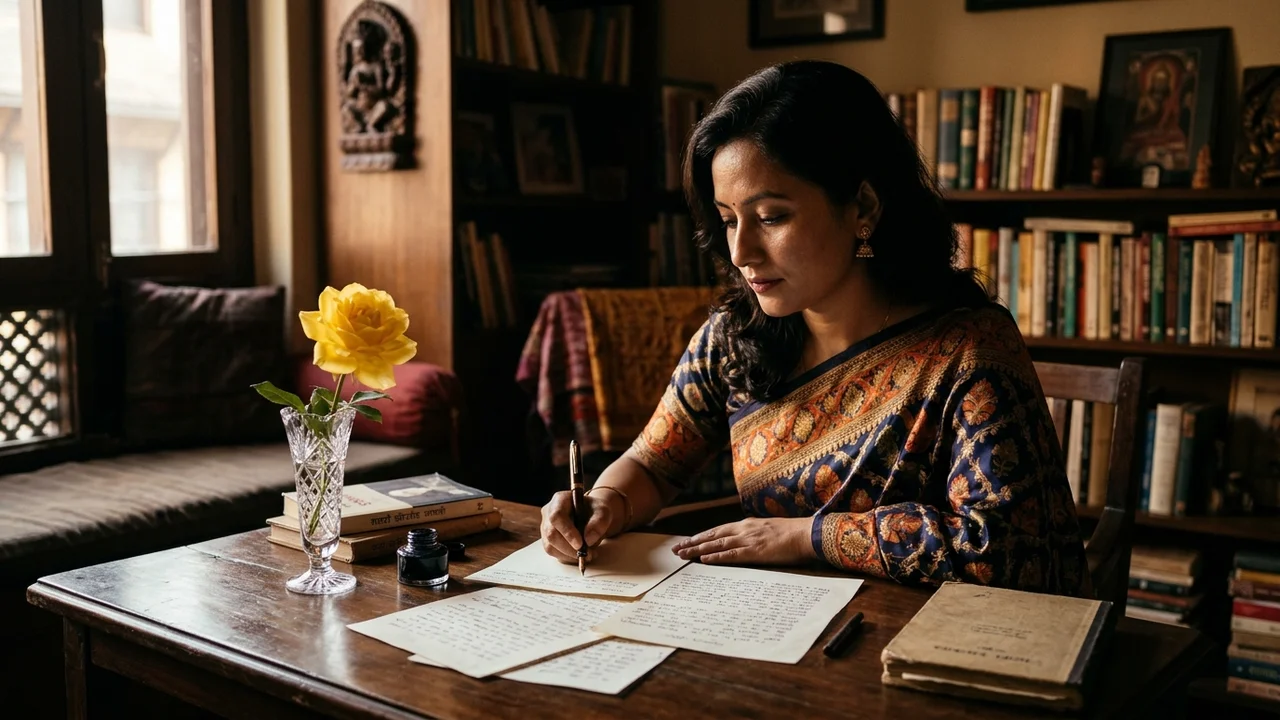
The story writer of that generation
| Literary Identity | Groundbreaking Feminist Iconoclast & Master of Psychological Fiction |
|---|---|
| Lifespan & Origins | 1945–2017 CE (2002–2074 BS) · Born in Birgunj, Nepal |
| Literary Movement | Feminist Psychological Realism & Somatic Modernism |
| Epochal Masterpiece | Pahenlo Gulab (1966, "The Yellow Rose" — revolutionary story confronting repressed female sexual desire and psychiatric trauma) |
| Major Collections | Pahenlo Gulab, Vishayantara (1971), and enduring contributions to children's literature |
| Significance | Shattered Victorian and patriarchal hypocrisies in Nepali fiction, asserting the uncompromising sovereignty of female psychological and bodily truth. |
With the publication of her sensational 1966 story Pahenlo Gulab (Paheṃlo Gulāba / पहेँलो गुलाब, "The Yellow Rose") in the literary journal Rup-Rekha, Prema Shah (Premā Śāha / प्रेमा शाह) delivered an aesthetic and intellectual earthquake to the conservative decorum of Nepali letters, shattering romantic platitudes to explore female eroticism, psychological alienation, and patriarchal hypocrisy with unsparing modern intensity.
Born in Birgunj in 1945 CE (2002 BS), Shah emerged at the forefront of the psychological realist and feminist modernism that redefined South Asian fiction in the 1960s. Refusing the sanitized domestic archetypes demanded of female writers, she exposed the dark undercurrents of the female psyche, neurotic fixation, and somatic desire in groundbreaking short story collections such as Pahenlo Gulab (1966) and Bishyantar (Viṣayāntara / विषयान्तर, 1971), alongside her psychologically labyrinthine novel Mummy (1983).
Beyond her pioneering adult fiction, Shah made lasting contributions to children's literature as a sensitive editor and storyteller, receiving the Mainali Katha Puraskar and the Ratnashree Gold Medal while asserting a woman's sovereign right to write about the body, trauma, and psychological freedom without moralistic apology.
Birgunj, the general's house, the nanny
Her father was Purnendra Bikram Shah (शाह). Her mother was Aruna Shah (शाह). On the fourteenth day she was taken to her maternal house in Kathmandu, and she grew up there, in the care of her maternal grandfather Bigyan Shumsher, a general of the Rana (राणा) world that was ending as she was beginning. A childhood in a general's house, with singing and dancing as part of the training of a girl of that rank, is the opposite of Yogmaya's (योगमाया) Majhuwabesi (मझुवाबेसी) and the cousin of Sama's (सम) Gyaneshwar. The person the biographies keep beside the general is the nanny, Tulsi Devi Upadhyay Koirala (कोइराला). A writer raised by a general and a Koirala (कोइराला) nanny is a small map of the century. Rank, and the woman who actually brought up the child.
School came late and in pieces, which is its own story of a girl in that decade. She was taught at home, then put straight into the sixth grade at Patan High School. After a year the morning classes moved to Madan Memorial, and she went there. She then went to Tri-Padma in Patan, and after that to Adarsha Kanya Niketan in Mangal Bazar. She passed the School Leaving Certificate in 2016 of the Nepali (नेपाली) calendar, about 1959. She took a proficiency certificate from Patan College, a bachelor's degree from Tribhuvan University, a diploma in batik from Banaras Hindu University, and training in ceramics in Banaras. The Banaras of Motiram (मोतीराम) and Shambhu, the press city, is for her a craft city. Cloth and clay came first, and sentences came after them. She lectured. She edited Ujyalo (उज्यालो), a children's magazine. The adult books and the children's books are one person. A writer who will look at a yellow rose and also write Rameko Katha (रमेको कथा) for a child is refusing the split this shelf sometimes inherits, the split between the serious and the household.
Two marriages, a daughter, two collections
The marriages ended. The names the record gives are J. P. Shahi and R. M. Karmacharya. The daughter is Jal Shah (शाह), who became an actress, so the artistic line did not stop at the page. A biography that lists two divorces and then a death in Utah is easy to gossip and better to read as the condition of the work. Pahenlo Gulaph (पहेंलो गुलाब) comes out in 1966, when she is twenty-one. Vishayantara (विषयान्तर) comes out in 1971. The titles are a poetics even before the plots. A yellow rose is a beautiful thing that is also a little unnatural, a rose dyed or a rose of a color the wild ones rarely keep. Digression is a method. A woman's story in that decade often had to approach its subject by leaving it, because the direct road was watched. Mainali (मैनाली) could say canal water and a co-wife because he was a judge writing peasants. A young Shah (शाह) woman writing the private life had to earn the right to stay on the subject by seeming, sometimes, to wander. The second title admits the wander. It is not a failure of attention. It is the route.
The novels sit beside the stories. Aakash Bibhajit Chha (आकाश विभाजित छ), the sky is divided, written with someone else, and Mummy (ममी). The sky divided is a title for a country and for a house. Mummy (ममी) is the English word in a Nepali (नेपाली) book, a modern daughter's name for a mother, and a book that puts that name on the cover is already far from Mainali's (मैनाली) bajyai (बज्यै). Then the children's shelf, which deserves its own paragraph because Nepali (नेपाली) letters still treats it as lesser and she did not. The story collections are Jinki ra Joker (जिन्की र जोकर), Mantu Bajaiko Kathako Patero (मन्तु बाजैको कथाको पतेरो), Indra Dhanush (इन्द्रधनुष), Rangi Changi Kathaharu (रङ्गीचङ्गी कथाहरू), Ramro Kaam (राम्रो काम), and Reka Kehi Katha (रेका केही कथा). The children's novels are Rameko Katha (रमेको कथा), Anandako Aavishkar (आनन्दको आविष्कार), and Manu ra Bhangera (मनु र भँगेरा). One of them keeps a sparrow and a child, one keeps a rainbow, and one keeps the discovery of joy. This is the same writer as the yellow rose. The range is the point, as Sama's (सम) range was the point, as Devkota's (देवकोटा) three instruments were the point. A woman who writes the adult digression and the child's sparrow is using the whole language.
She died far from Birgunj and far from Mangal Bazar, in a hospital in Salt Lake City, seventy-two years old, on 20 December 2017, 5 Poush 2074. The death abroad is part of the late Nepali (नेपाली) century, the way Darjeeling was part of the early one. People leave. The books stay in the language they were written in. A shelf in Kathmandu that includes her is a shelf willing to count a life that ended in Utah as still a Nepali (नेपाली) literary life. It is.
Where she sits among the women
Read in order, the women on this shelf are a history and not a list. Yogmaya (योगमाया) speaks from the east, illiterate, organizing, and dies in the Arun (अरुण) in 1941. Ambalika prints one novel in Varanasi in 1932 and dies in Patna in 1936. Lok Priya writes verse letters in Devkota's (देवकोटा) family and dies in 1960, her book gathered by a daughter in 1983. Parijat (पारिजात), already on the shelf, makes the modern novel from a body in pain and dies in 1993. Banira writes the prison and the living Jung Bahadur and dies in 2021, the first woman through the Sajha door. Prema, between Parijat's (पारिजात) generation and Banira's, makes the short story a woman's instrument and also writes the child. If you only read Parijat (पारिजात) you have the greatest single blaze. If you read these pages you have the road that blaze stands on, and the traffic after it.
There is no Aashukavi (आशुकवि) among them, and they do not need one. The titles that matter are the ones the work earned. Ambalika is the first woman novelist. Parijat (पारिजात) is the first woman to win the Madan Puraskar. Banira is the first woman to take a PhD in the field, and the first woman to win the Sajha Puraskar (साझा पुरस्कार). Prema wrote the yellow rose, the digression, and the children's rainbow, and she is the lecturer who edited a magazine called Light.
What to carry out of the room
Carry Girija and the name Prema. Carry the general and the nanny as the two educations. Carry 1966 and 1971 as the years the stories became books. Carry the children's shelf as part of the seriousness. Carry Utah as a death that does not cancel the language. The plots are in her books. This page is the door.
त्यो पुस्ताकी कथाकार
प्रेमा शाहको जन्म गिरिजा राज्यलक्ष्मी शाहका रूपमा २९ जुन १९४५ मा वीरगञ्जको श्रीपुरमा भयो, र मृत्यु २० डिसेम्बर २०१७ मा युटाको साल्ट लेक सिटीमा भयो। उनी कवि, प्राध्यापक, कथाकार, र बालबालिकाकी लेखिका थिइन्। अम्बालिकाको एउटा उपन्यासदेखि पारिजातका उपन्यास हुँदै वानीराको कारागारसम्म पुग्ने नारी परम्पराभित्र उनी बीसौँ शताब्दीका प्रमुख नेपाली लेखकमध्ये एक हुन्। उनको माध्यम छोटो कथा हो, जसले उनलाई मैनालीको छेउमा पनि राख्छ। मैनालीले पुरुषको अवलोकन गर्ने आँखाले गाउँको आँगन लेख्नुभयो। उनी पत्रिका र विश्वविद्यालय सिकिसकेको सहरी नेपालीमा पछिल्लो समयको एउटा कोठा लेख्छिन्, नारीको कोठा। पढ्न थाल्ने दुई सङ्ग्रह पहेंलो गुलाब, ई.सं. १९६६, र विषयान्तर, ई.सं. १९७१ हुन्। उनी ई.सं. २०१७ मा मरिन्। कथा यहाँ दृश्यपिच्छे सुनाइएका छैनन्, किनभने ती अझै प्रतिलिपि अधिकारभित्र छन् र तिनका कथानक मनगढन्ते रूपमा बनाउनु झूट हुन्थ्यो। जीवन, किताब, र ती किताबले ओगटेको ठाउँ नै यो बैठकको विषय हुन्।
वीरगञ्ज, जनरलको घर, आया
बुबा पूर्णेन्द्रविक्रम शाह हुनुहुन्थ्यो। आमा अरुणा शाह हुनुहुन्थ्यो। चौधौँ दिनमा उनलाई काठमाडौंको मामाघर लगियो, र त्यहीँ उनी आमाका बुबा विज्ञान शमशेरको हेरचाहमा हुर्किन्। विज्ञान शमशेर राणा संसारका जनरल थिए, र त्यो संसार उनको जीवन सुरु हुँदै गर्दा सकिँदै थियो। जनरलको घरको बाल्यकाल, जहाँ त्यो दर्जाकी केटीको तालिमको हिस्सा गाउने र नाच्ने थियो, योगमायाको मझुवाबेसीको ठीक उल्टो हो र समको ज्ञानेस्वरको नातेदार हो। जनरलको छेउमा जीवनीले राख्ने मानिस आया हुन्, तुलसीदेवी उपाध्याय कोइराला। जनरल र कोइराला आयाले हुर्काएको लेखिका शताब्दीको सानो नक्सा हो: दर्जा, र बालकलाई साँच्चै हुर्काउने नारी।
स्कूल ढिलो र टुक्राटुक्रामा आयो, जुन त्यो दशककी एउटी केटीको आफ्नै कथा हो। घरमा पढाइयो, अनि सिधै पाटन हाई स्कूलको छैटौँ कक्षामा हालियो। एक वर्षपछि बिहानका कक्षा मदन मेमोरियलमा सरे, र उनी त्यहाँ गइन्। अनि उनी पाटनको त्रिपद्म गइन्, र त्यसपछि मङ्गलबजारको आदर्श कन्या निकेतन गइन्। नेपाली पात्रोको २०१६ मा, करिब ई.सं. १९५९ मा, एसएलसी पास गरिन्। पाटन कलेजबाट प्रवीणता प्रमाणपत्र लिइन्, त्रिभुवन विश्वविद्यालयबाट स्नातक लिइन्, बनारस हिन्दू विश्वविद्यालयबाट बाटिकको डिप्लोमा लिइन्, र बनारसमा सिरेमिकको तालिम लिइन्। मोतीराम र शम्भुको बनारस, छापाको सहर, उनका लागि शिल्पको सहर हो। पहिले कपडा र माटो आए, अनि वाक्य आए। उनले पढाइन्। बाल पत्रिका उज्यालो सम्पादन गरिन्। वयस्कका किताब र बालबालिकाका किताब एकै व्यक्तिका हुन्। पहेंलो गुलाबलाई हेर्ने र बालकका लागि रमेको कथा पनि लेख्ने लेखिकाले यो तहले कहिलेकाहीँ विरासतमा पाउने त्यो चिरफार, गम्भीर र घरायसीबीचको चिरफार, मान्दैनन्।
दुई विवाह, एक छोरी, दुई सङ्ग्रह
दुवै विवाह टुटे। अभिलेखले दिने नाम जे. पी. शाही र आर. एम. कर्मचार्य हुन्। छोरी जल शाह हुन्, जो अभिनेत्री बनिन्, त्यसैले कलात्मक पङ्क्ति पृष्ठमै रोकिएन। दुई सम्बन्धविच्छेद र त्यसपछि युटामा मृत्यु लेख्ने जीवनीलाई गफ बनाउन सजिलो हुन्छ, तर त्यसलाई कामको अवस्थाका रूपमा पढ्नु राम्रो हुन्छ। पहेंलो गुलाब ई.सं. १९६६ मा निस्कन्छ, उनी एक्काइस वर्षकी हुँदा। विषयान्तर ई.सं. १९७१ मा निस्कन्छ। कथानकभन्दा अघि नै शीर्षकहरू एउटा काव्यशास्त्र हुन्। पहेंलो गुलाब सुन्दर चिज हो र अलि अप्राकृतिक पनि, रङ लगाइएको गुलाब वा जङ्गली गुलाबले विरलै राख्ने रङको गुलाब। विषयान्तर विधि हो। त्यो दशकमा नारीको कथाले प्रायः आफ्नो विषयलाई छोडेर मात्र त्यसमा पुग्नुपर्थ्यो, किनभने सोझो बाटोमा निगरानी थियो। मैनालीले कुलोको पानी र सौता भन्न सक्नुहुन्थ्यो किनभने उहाँ किसानबारे लेख्ने न्यायाधीश हुनुहुन्थ्यो। निजी जीवन लेख्ने एउटी जवान शाह नारीले कहिलेकाहीँ भौँतारिएझैँ देखिएर विषयमा टिकिरहने अधिकार कमाउनुपर्थ्यो। दोस्रो शीर्षकले भौँतारिनु स्वीकार गर्छ। यो ध्यानको असफलता होइन। यो बाटो हो।
उपन्यासहरू कथाको छेउमा छन्: आकाश विभाजित छ, अरू कसैसँग मिलेर लेखिएको, र ममी। विभाजित आकाश देशका लागि पनि शीर्षक हो, घरका लागि पनि। ममी नेपाली किताबमा रहेको अङ्ग्रेजी शब्द हो, आमालाई आधुनिक छोरीले दिने नाम, र त्यो नाम आवरणमा राख्ने किताब मैनालीकी बज्यैबाट पहिल्यै धेरै टाढा पुगिसकेको छ। त्यसपछि बाल तह आउँछ, जो आफ्नै अनुच्छेदको हकदार छ, किनभने नेपाली साहित्य-जगत्ले अझै त्यसलाई सानो ठान्छ र उनले ठानिनन्। कथासङ्ग्रह: जिन्की र जोकर, मन्तु बाजैको कथाको पतेरो, इन्द्रधनुष, रङ्गीचङ्गी कथाहरू, राम्रो काम, रेका केही कथा। बाल उपन्यास: रमेको कथा, आनन्दको आविष्कार, मनु र भँगेरा। तिनमध्ये एउटाले भँगेरा र बालक राख्छ, एउटाले इन्द्रेणी, र एउटाले आनन्दको खोज। यी पहेंलो गुलाबकै लेखिका हुन्। दायरा नै मुख्य कुरा हो, जसरी समको दायरा मुख्य कुरा थियो, जसरी देवकोटाका तीन माध्यम मुख्य कुरा थिए। वयस्कका लागि विषयान्तर र बालकका लागि भँगेरा लेख्ने नारीले पूरै भाषा प्रयोग गरिरहेकी छिन्।
उनी वीरगञ्जबाट टाढा र मङ्गलबजारबाट टाढा, साल्ट लेक सिटीको अस्पतालमा, बहत्तर वर्षको उमेरमा, २० डिसेम्बर २०१७, २०७४ पुस ५ मा मरिन्। विदेशमा हुने मृत्यु पछिल्लो नेपाली शताब्दीको हिस्सा हो, जसरी दार्जिलिङ सुरुको शताब्दीको हिस्सा थियो। मानिस देश छाड्छन्। किताब लेखिएको भाषामा बस्छन्। उनलाई समेट्ने काठमाडौंको तह युटामा सकिएको जीवनलाई पनि नेपाली साहित्यिक जीवन नै गन्न तयार तह हो। साँच्चै त्यो नेपाली साहित्यिक जीवन नै हो।
नारीहरूका बीचमा कहाँ बस्छिन्
क्रममा पढ्दा यो तहका नारी इतिहास हुन्, सूची होइनन्। योगमाया पूर्वबाट बोल्छिन्, निरक्षर छिन्, संगठन बनाउँछिन्, र ई.सं. १९४१ मा अरुण नदीमा मर्छिन्। अम्बालिकाले ई.सं. १९३२ मा वाराणसीमा एउटा उपन्यास छाप्छिन् र ई.सं. १९३६ मा पटनामा मर्छिन्। लोकप्रियाले देवकोटाको परिवारमा पद्य चिठी लेख्छिन् र ई.सं. १९६० मा मर्छिन्, उनको किताब छोरीले ई.सं. १९८३ मा जम्मा पारिन्। पहिले नै तहमा रहेकी पारिजातले पीडाको शरीरबाट आधुनिक उपन्यास बनाउनुहुन्छ र ई.सं. १९९३ मा मर्नुहुन्छ। वानीराले कारागार र जिउँदो जङ्गबहादुर लेख्छिन् र ई.सं. २०२१ मा मर्छिन्, साझाको ढोकाबाट भित्र पुग्ने पहिलो नारी। पारिजातको पुस्ता र वानीराको पुस्ताका बीचकी प्रेमाले छोटो कथालाई नारीको माध्यम बनाउँछिन् र बालबालिकाका लागि पनि लेख्छिन्। तपाईंले पारिजात मात्र पढ्नुभयो भने सबैभन्दा ठूलो एउटा ज्वाला पाउनुहुन्छ। यी पृष्ठ पढ्नुभयो भने त्यो ज्वाला उभिएको बाटो पाउनुहुन्छ, र त्यसपछिको आवागमन पनि।
उनीहरूमध्ये कुनै आशुकवि छैन, र उनीहरूलाई चाहिँदैन पनि। महत्त्व राख्ने उपाधि कामले कमाएका हुन्। अम्बालिका पहिली महिला उपन्यासकार हुन्। पारिजात मदन पुरस्कार जित्ने पहिली महिला हुन्। वानीरा यस क्षेत्रमा विद्यावारिधि गर्ने पहिली महिला हुन्, र साझा पुरस्कार जित्ने पहिली महिला हुन्। प्रेमाले पहेंलो गुलाब, विषयान्तर, र बालकको इन्द्रेणी लेखिन्, र उनी उज्यालो भन्ने पत्रिका सम्पादन गर्ने प्राध्यापक पनि हुन्।
कोठाबाट के लैजाने
गिरिजा र प्रेमा नाम साथमा लैजानुहोस्। जनरल र आयालाई दुई शिक्षाका रूपमा लैजानुहोस्। १९६६ र १९७१ लाई कथा किताब बनेका वर्षका रूपमा लैजानुहोस्। बाल तहलाई गम्भीरताको हिस्साका रूपमा लैजानुहोस्। युटालाई भाषा रद्द नगर्ने मृत्युका रूपमा लैजानुहोस्। कथानक उनका किताबमा छन्। यो पृष्ठ ढोका हो।
Where it sits
The page before this one is King Mahendra (महेन्द्र). The page after it is Banira Giri (वानीरा गिरी). The story writer of the village, two generations back, is Mainali (मैनाली). The novelist already on this shelf is Parijat (पारिजात). The first of the women, by the river, is Yogmaya (योगमाया).