Nepali Readings / Balkrishna Sama
Balkrishna Sama (बालकृष्ण सम)बालकृष्ण सम
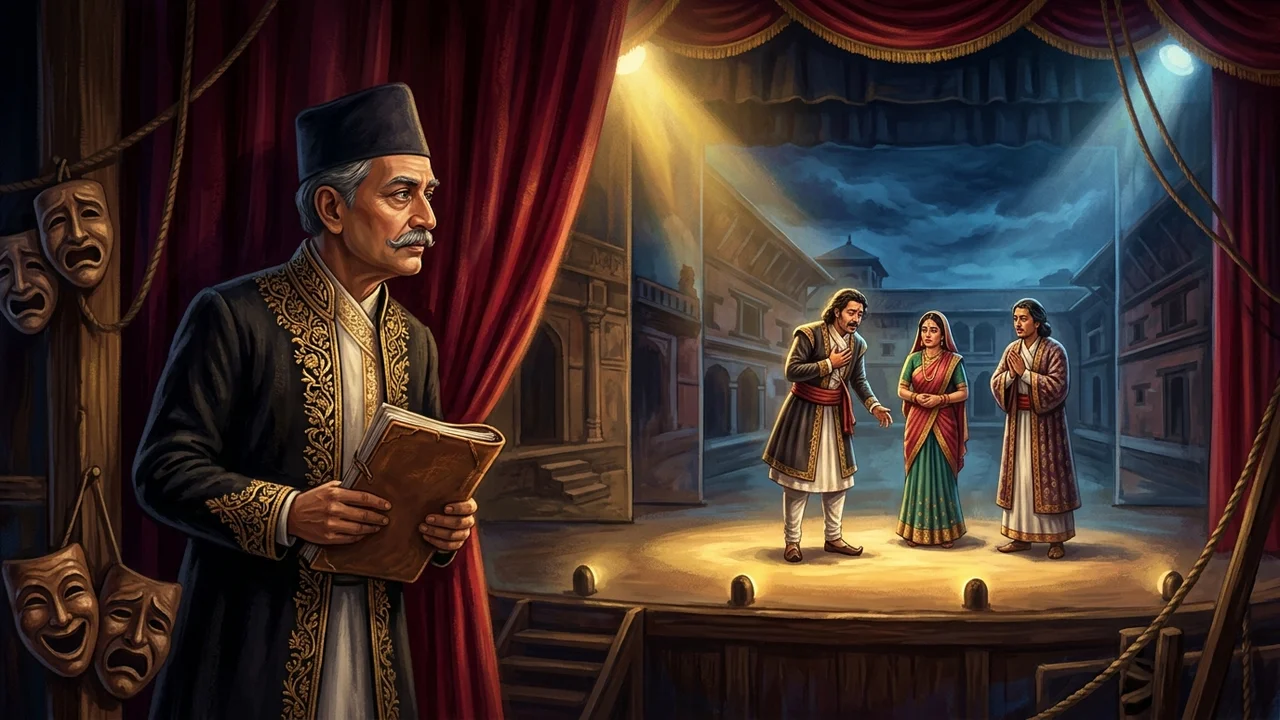
The title, and the style
| Literary Epithet | Natyashiromani (Nāṭyaśiromaṇi / नाट्यशिरोमणि — The Crest-Jewel of Dramatists / "The Shakespeare of Nepal") |
|---|---|
| Lifespan & Origins | 1902–1981 CE (1959–2038 BS) · Born in Gyaneshwar, Kathmandu, Nepal |
| Egalitarian Renunciation | Born into the ruling Rana dynasty as Balkrishna Shumsher Jung Bahadur Rana; discarded the hereditary title "Shumsher" to adopt "Sama" (सम, "Equal"), affirming solidarity with the common populace |
| Dramatic Masterpieces | Mutuko Vyatha (1929, the foundational tragedy of modern Nepali theater), Mukunda Indira (1937, landmark verse drama on domestic fidelity and societal vice), Prahlad, Dhruva, Andhabega, and Premapinda |
| Epic Masterwork | Chiso Chulho (1958, "The Cold Hearth" — an immense 1,100-page blank-verse epic dismantling caste untouchability through the tragic love of an artisan blacksmith and an upper-caste maiden) |
| Philosophical Core | Intellectual Idealism (Buddhikatā), humanist rationalism, moral introspection, and artistic realism across painting, poetry, and stagecraft. |
Crowned by universal acclaim as Natyashiromani (Nāṭyaśiromaṇi / नाट्यशिरोमणि, "The Crest-Jewel of Dramatists"), Balkrishna Sama (Bālakṛṣṇa Sama / बालकृष्ण सम) fundamentally remade the intellectual and theatrical culture of Nepal. An accomplished painter, philosopher, poet, and stage visionary often hailed as "The Shakespeare of Nepal," Sama brought an unprecedented philosophical rigor and psychological realism to a theatrical tradition previously dominated by farcical pageantry and imported mythological spectacles.
Born in 1902 CE (1959 BS) within the luxurious palace compounds of Gyaneshwar, Kathmandu, into the paramount aristocratic ruling clan as Balkrishna Shumsher Jung Bahadur Rana, he made a historic break with feudal privilege. Renouncing the dynastic moniker "Shumsher," he embraced the egalitarian surname Sama—a Sanskrit term signifying "Equal"—publicly dedicating his art to the dismantling of caste hierarchies, class tyranny, and superstitious fatalism.
In 1929, Sama published Mutuko Vyatha ("The Anguish of the Heart"), establishing the modern tragedy in Nepali dramatic literature. He followed this in 1937 with his towering dramatic triumph Mukunda Indira, exploring marital fidelity, the corrupting lure of urban hedonism, and moral redemption through fluid, Shakespearean-inspired blank verse (Anuprāsa-rahita chhanda). In his monumental 1958 epic Chiso Chulho ("The Cold Hearth"), spanning over eleven hundred pages of verse, he delivered a devastating indictment of caste untouchability, affirming that human dignity transcends the artificial decrees of birth.
A Rana (राणा) who took the name Equal
He was born Balkrishna Shamsher Jang Bahadur Rana (राणा) on 8 February 1903, Magh 24 of 1959 in the Nepali (नेपाली) calendar, at Gyaneshwar in Kathmandu. His father was Samar Shamsher. His mother was Kirti Rajya Lakshmi. His grandfather Dambar Shamsher kept a house where plays happened. His elder brother Pushkar Shamsher would become a man of the language in his own right, a lexicographer's name. The boy had tutors, paints, sacred books, and a stage in the family. Til Madhav Devkota (देवकोटा), father of the Mahakavi (महाकवि), was among the men who taught him. Before he was eight he was already answering the house in metrical lines. He watched a sister bow to Bhanubhakta's Rāmāyaṇa (रामायण) and thought, for a while, that a god had written it. The discovery that a man had written it is the start of a playwright. In 1914 he put Wordsworth's "Lucy Gray" into Nepali (नेपाली). At school he met Lekhnath's (लेखनाथ) season-poems and imitated them. The first play, Tansenko Jhari (तानसेनको झरी), a rain at Tansen, he wrote around 1921 in classical meter. It waited decades to be printed. The apprenticeship was Sanskrit. The break came later.
A Rana (राणा) son was expected to wear a uniform. In 1923 he became an officer. From 1933 the state let him sit as chair of the Nepali (नेपाली) Bhasha Prakashini Samiti, the committee that published the language, and literature became the job. He taught at Durbar High School and at Tri-Chandra. He had passed matriculation through Calcutta and started science at Tri-Chandra, and he did not finish the degree. The army and the committee ate the years. He read anyway. Shakespeare sat on one side of the desk. The Sanskrit dramatic tradition sat on the other. What he wanted, and what Mutuko Vyatha (मुटुको व्यथा) begins, is a play about Nepali (नेपाली) social life in a Nepali (नेपाली) a listener does not need a pandit to hear.
The name is the biography's turn. In the last Rana (राणा) years he was jailed for keeping company the family regime did not want. In 1948 he set down Shamsher and Jang Bahadur Rana (राणा) and took Sama (सम), which means equal, level, the same. A man born to the ruling house publishing under a word that refuses rank is a scene all by itself. After 1951 he directed Radio Nepal for a time and, in 2012 of the Nepali (नेपाली) calendar, edited Gorkhapatra (गोरखापत्र). The Royal Nepal Academy took him as a member in 1957, as vice-chancellor in 1968, and as a life member when he retired in 1971. His wife was Mandakini. He died in Kathmandu on Shrawan 6, 2038. The river of this shelf has taken many of these writers at Aryaghat. Sama's (सम) last room was the city he had staged.
The heart, told as a break
Mutuko Vyatha (मुटुको व्यथा), Heart's Anguish, 1929, is the play people put first when they want the modern Nepali (नेपाली) stage to begin. Before it, a Kathmandu night of theatre was often a Sanskrit plot or a Hindi one, fitted to a court. This one is a social tragedy of lovers separated, grim, and written so that the verse does not jingle. The count remains. The rhyme at the end of the line goes. Hutt and the German accounts of his dramatic work agree on the change: simpler speech, a Nepali (नेपाली) color, a wish to put social reality on the boards. The later plays keep that wish after 1950 as well as before it. A reader who wants the lovers' names and the last speech has to take them from the book. What the shelf can carry is the break itself. A Rana (राणा), in the middle of Rana (राणा) rule, stopped adapting the old repertoire and wrote a Nepali (नेपाली) grief in a line that could be said.
He did not abandon myth. He re-argued it. Dhruva (ध्रुव) takes the boy who stands in austerity until he is given a fixed place in the sky, and sets that old story inside a palace where a king has more than one queen. The king watches a child suffer because a second wife's will runs the house. Anyone who knows the Shah (शाह) and Rana (राणा) habit of many wives, and the massacres that grew out of those households, hears the myth as news. Prahlad (प्रह्लाद), 1938, is the play admirers call his best. The devotee is still there. The miracle is not the point Sama (सम) will rest on. Prahlad (प्रह्लाद) becomes a humanist, a man whose spiritual ideal has to meet material work, and a man who says that whoever twists nature's way may win for a while and will find, when he is drowning, nothing to hold. Madhusudan Devkota (देवकोटा), the Mahakavi's (महाकवि) younger brother, put the play into English. A crest-jewel of drama who will retell a purāṇa as an argument about conduct is using the myth the way this shelf uses it: the story is public, the pressure is now.
Mukunda, Indira, and a khukuri
Mukunda Indira (मुकुन्द इन्दिरा), 1937, is the social play a theatre can still see. Five acts, eighteen scenes, a happy ending, which makes it the comic shape after the heartbreak of Mutuko Vyatha (मुटुको व्यथा) and after Prahlad (प्रह्लाद). The story is concrete enough to walk.
Mukunda is the only son of Roop Narayan Shrestha (श्रेष्ठ), a middling merchant of Patan. He goes to Calcutta for an education and disappears into the city's bad company. Letters from his father go unanswered. The house, the parents, the wife, the country, all of it slides off him. A man of the family, Bhavadev, goes to fetch him and fails. The bargain they strike is ugly and exact, which is why the play is not a sermon. Mukunda may test Indira's faithfulness. If he can shake it, he may return to Calcutta. If he cannot, he stays in Nepal. He comes home in disguise, meets her at the water tap, and says he is Mukunda's close friend. She asks him to the garden the next morning. He praises her, slanders the husband, offers marriage. She scolds him. At night he comes into her room with a khukuri and tries to frighten her, then to seize her. She gets the knife. She wounds his head and his hand. He falls. Bhavadev arrives and says the fallen man is Mukunda. She faints. The parents come in. Husband and wife wake, and the others leave them the room. They promise not to leave each other again.
Read that slowly and the play's nerve shows. The test is the husband's idea. The virtue is the wife's courage with his own weapon. The city that ruined him is Calcutta, the school-city of so many of these writers, and the cure is a Patan room. Sama (सम), a Rana (राणा), writes a Newar merchant's son as the one who has to be dragged home, and a wife as the one who will use a blade. The staging of this play is part of its fame. Nepali (नेपाली) theatre had lived in palaces. This one moved toward schools and a wider room. A national stage begins when a play can leave the house that paid for the costumes.
History, with the culprit still standing
Bhimsenko Antya (भीमसेनको अन्त्य), 1955 in the usual dating of its publication, is the death of Bhimsen Thapa. The historical man had ruled Nepal for decades, played the queens against each other, and fell. Sama's (सम) stage makes the fall a conspiracy you can watch. Kulraj, a courtier trained to move men by fabricating news, steers Bhimsen to suicide before King Rajendra Bikram Shah (शाह) can arrive and pardon him. On the deathbed Bhimsen gestures toward Kulraj, who is standing beside the king. He wants to say that this is the man. The king does not catch it. The truth stays unsaid. The culprit is positioned to grow more powerful. Around that death the play shows the Chhetri and Brahmin houses, Basnet, Thapa, Pandey, as rivals for the same chair. A Rana (राणा) writing the suicide of the minister who preceded his own family's century is not writing costume drama. He is writing the machine he was born in. Multiple wives, a senior wife and a junior wife, a king who cannot choose: the same machine turns in Dhruva (ध्रुव). The myth and the history are one politics.
Amar Singh (अमरसिंह) takes the other historical body, Amar Singh Thapa (अमरसिंह थापा) in the war with the Company. Nepal signs the treaty. He fights on. Then he learns the country has already surrendered, and he dies under the sentence that he has ruined it. Patriotism, in this play, is not a song at the end. It is a man who was brave on a calendar the capital had already closed. Set it beside Siddhicharan's jail and Rimal's (रिमाल) mother's dream and you hear three different patriots. Sama's (सम) is a general who outlives the order he was obeying. The order kills him with a piece of news.
Prempinda (प्रेमपिण्ड), Love's Offering, around 1952, stays inside the Rana (राणा) atmosphere and refuses to flatter it. The names the criticism keeps are Edwill, Sabita, and Nahakul. Love, rank, and the wish to belong to oneself pull against each other. A harem is not a romantic set. It is a building where desire is administered. Andhaveg (अन्धवेग), a blind momentum, and Ma (म), and U Mareki Chhaina (ऊ मरेकी छैन) (She is not dead), and the late Tala Mathi (तलमाथि) (Below and Above) keep the same appetite: social reality, after the democracy as well as under the Ranas (राणा). Bhakta Bhanubhakta (भक्त भानुभक्त) puts the first poet on a stage, which closes a circle with the boy who thought the Rāmāyaṇa (रामायण) had no author. Swasni Manchhe (स्वास्नी मान्छे) and Motiram (मोतीराम) name a wife and the young poet of the press. One-act plays run beside the long ones: a witch, a feast, a sick man and his nurse. He also wrote the short epic Aago ra Pani (आगो र पानी) and the epic Chiso Chulho (चिसो चुल्हो), a cold stove, and the philosophical book Niyamit Akasmikta (नियमित आकस्मिकता), regulated randomness, a mind trying to hold law and accident in one sentence. The poems, gathered near the end of his life, are mostly late. Fewer than forty before 1950, more than a hundred and fifty after. The dramatist became, in the second half, a poet of the opened country.
What to carry out of the room
Carry the trimurti (त्रिमूर्ति) as a fact of seating. Lekhnath (लेखनाथ), Sama (सम), Devkota (देवकोटा): the counted line, the stage, the flood. Carry the name Sama (सम) as a decision, not a pen-name for music. Carry Mutuko Vyatha (मुटुको व्यथा) as the year the Nepali (नेपाली) play stopped being an adaptation. Carry Indira's hand on the khukuri, Bhimsen's gesture the king misses, and Amar Singh (अमरसिंह) learning the treaty from the wrong side of it. Carry Prahlad (प्रह्लाद) as an argument a drowning man can use. The lines stay in his books. He died in 1981. A house can know the plays without owning a sentence of them.
उपाधि र शैली
बालकृष्ण सम यो तहमा लेखनाथ र देवकोटाका बीचमा छुटेका मानिस हुन्। घरहरूले ती तीन जनालाई त्रिमूर्ति भन्छन्, शताब्दीको पहिलो आधाका तीन रूप। लेखनाथले पङ्क्ति मीठो नहुन्जेल गन्नुभयो। देवकोटाले तीन साधन खर्च गर्नुभयो, लोक ताल, महाकाव्य, र भाँचिएको निबन्ध। समले मञ्च बनाउनुभयो। उहाँको उपाधि नाट्यशिरोमणि हो, नाटकको चूडामणि, र मानिसहरू नाट्यसम्राट पनि भन्छन्। उहाँको मृत्यु २० जुन १९८१ मा भयो। नाटक अझै प्रतिलिपिअधिकारभित्र छन्। यो पृष्ठले ती नाटकको कथा सुनाउँछ। छाप्दैन।
शैली सोच्ने मानिसको पद्यनाटक हो। उहाँ राणा घरहरूमा नाच र नाटकका रात हुने ठाउँमा हुर्कनुभयो, त्यसैले रङ्गमञ्च उहाँका लागि सिद्धान्त थिएन। अनि उहाँले शेक्सपियर पढ्नुभयो, र पङ्क्तिको अन्त्यमा अनुप्रास हाल्न छाड्नुभयो। मुटुको व्यथा, ई.सं. १९२९, अनुष्टुभको गन्तीमा चल्छ, पुरानो अन्त्यानुप्रास बिना, कोठाले बुझ्ने नेपालीमा। कथा नेपाली हुन्। मुटु फुट्छ। पति कलकत्तामा कुहिँदा पत्नी पाटनमा छुट्छिन्। प्रह्लादलाई चमत्कारका रूपमा मात्र होइन, नैतिक मानिसका रूपमा पनि तर्क गरेर देखाइन्छ। दरबारीले भीमसेन थापालाई मृत्युतिर धकेल्छन्। अमरसिंह थापाले युद्ध सकिएको कुरा ढिलो सुन्नुहुन्छ। उहाँ चित्रकार, संयोगका दार्शनिक, र ई.सं. १९५० पछि अघिभन्दा बढी कविता लेख्ने कवि हुनुहुन्थ्यो। माइकल हटको चित्रण काम लाग्ने छ। लेखनाथको शास्त्रीय फाइल र देवकोटाको बाढीको छेउमा सम बौद्धिक हुनुहुन्छ। उहाँका चिह्न संयम, फराकिलो पढाइ, र पद्यलाई बोलिने बनाउने इच्छा हुन्, र ती चिह्न नै तेस्रो मुख हुन्।
बराबर भन्ने नाम लिएका राणा
उहाँको जन्म बालकृष्ण शमशेर जङ्गबहादुर राणाका रूपमा ८ फेब्रुअरी १९०३, नेपाली पात्रोको १९५९ माघ २४, काठमाडौंको ज्ञानेश्वरमा भयो। बुबा समर शमशेर हुनुहुन्थ्यो। आमा कीर्तिराज्यलक्ष्मी हुनुहुन्थ्यो। हजुरबुवा डम्बर शमशेरको घरमा नाटक हुन्थ्यो। दाजु पुष्कर शमशेर पछि आफैँमा भाषाका मानिस, कोशकारका रूपमा चिनिने नाम हुनुभयो। केटासँग गुरु, रङ, धर्मग्रन्थ, र घरकै मञ्च थियो। महाकविका बुबा तिलमाधव देवकोटा पढाउनेहरूमा हुनुहुन्थ्यो। आठ वर्ष नपुग्दै उहाँ घरलाई छन्दमा जवाफ दिन थाल्नुभयो। उहाँले दिदीलाई भानुभक्तको रामायणमा निहुरिएको हेरेर केही बेर देवताले लेखेको हो भन्ने ठान्नुभयो। मानिसले लेखेको रहेछ भन्ने पत्ता लाग्नु नै नाटककारको सुरु हो। ई.सं. १९१४ मा वर्डस्वर्थको लुसी ग्रे नेपालीमा उल्था गर्नुभयो। स्कूलमा लेखनाथको ऋतुकविता भेटेर नक्कल गर्नुभयो। पहिलो नाटक तानसेनको झरी, ई.सं. १९२१ तिर, शास्त्रीय छन्दमा लेख्नुभयो। यो छापिन दशकौँ पर्खनुपर्यो। सिकाइ संस्कृत थियो। मोड पछि आयो।
राणाका छोराले वर्दी लगाउने अपेक्षा गरिन्थ्यो। ई.सं. १९२३ मा उहाँ अफिसर हुनुभयो। ई.सं. १९३३ देखि राज्यले उहाँलाई नेपाली भाषा प्रकाशिनी समितिको अध्यक्ष बनायो, जुन भाषा छाप्ने समिति हो, र साहित्य नै जागिर भयो। दरबार हाई स्कूल र त्रिचन्द्रमा पढाउनुभयो। उहाँले कलकत्ताबाट म्याट्रिक पास गरेर त्रिचन्द्रमा विज्ञान पढ्न थाल्नुभएको थियो, तर डिग्री पूरा गर्नुभएन। सेना र समितिले वर्ष खाए। तैपनि उहाँ पढिरहनुभयो। टेबलको एकातिर शेक्सपियर थिए। अर्कोतिर संस्कृत नाट्यपरम्परा थियो। उहाँले चाहेको, र मुटुको व्यथाले सुरु गरेको, श्रोतालाई बुझ्न पण्डित नचाहिने नेपालीमा लेखिएको नेपाली सामाजिक जीवनको नाटक हो।
नाम जीवनीको मोड हो। राणाका अन्तिम वर्षमा परिवारको शासनले नचाहेको सङ्गतका कारण उहाँ जेल पर्नुभयो। ई.सं. १९४८ मा शमशेर र जङ्गबहादुर राणा छोड्नुभयो र सम लिनुभयो, जसको अर्थ बराबर, समतल, उस्तै हो। शासन गर्ने घरमा जन्मेको मानिसले दर्जा अस्वीकार गर्ने शब्दमा छाप्नु आफैँ दृश्य हो। ई.सं. १९५१ पछि केही समय उहाँले रेडियो नेपाल चलाउनुभयो, र नेपाली पात्रोको २०१२ सालमा गोरखापत्र सम्पादन गर्नुभयो। राजकीय नेपाल प्रज्ञा-प्रतिष्ठानले ई.सं. १९५७ मा सदस्य, १९६८ मा उपकुलपति, र १९७१ मा अवकाशपछि आजीवन सदस्य बनायो। पत्नी मन्दाकिनी हुनुहुन्थ्यो। मृत्यु काठमाडौंमा श्रावण ६, २०३८ मा भयो। यो तहको नदीले धेरै लेखक आर्यघाटमा लगेको छ। समको अन्तिम कोठा उहाँले मञ्चमा उतार्नुभएको सहर हो।
मुटु, मोडका रूपमा
मुटुको व्यथा, ई.सं. १९२९, आधुनिक नेपाली मञ्चको सुरुआत भन्न खोज्दा मानिसले पहिले राख्ने नाटक हो। त्यसअघि काठमाडौंको नाट्यरात प्रायः संस्कृत वा हिन्दी कथानकको हुन्थ्यो, दरबारअनुकूल मिलाइएको। यो छुट्टिएका प्रेमीको कठोर सामाजिक त्रासदी हो, र पद्य झङ्कार नबज्ने गरी लेखिएको छ। गन्ती रहन्छ। पङ्क्तिको अन्त्यको अनुप्रास जान्छ। हट र उहाँको नाट्यकार्यबारे जर्मन विवरणहरू यस परिवर्तनमा सहमत छन्: सरल बोली, नेपाली रङ, र सामाजिक यथार्थलाई मञ्चमा उतार्ने इच्छा। पछिल्ला नाटकले त्यो इच्छा ई.सं. १९५० पछि पनि राख्छन्। प्रेमीका नाम र अन्तिम भाषण किताबबाट लिनुपर्छ। यो तहले बोक्न सक्ने कुरा त्यो मोड आफैँ हो। राणा शासनकै बीचमा एक राणाले पुराना नाटकहरू रूपान्तरण गर्न छाडेर बोल्न सकिने पङ्क्तिमा नेपाली शोक लेख्नुभयो।
मिथक छोड्नुभएन। तर्क गर्नुभयो। ध्रुवले आकाशमा अटल स्थान नपाउन्जेल तपमा उभिने बालकको पुरानो कथा लिन्छ, र त्यो कथालाई एकभन्दा बढी रानी भएको दरबारभित्र राख्छ। दोस्रो रानीको इच्छाले घर चलेकाले राजाले बालकलाई दुःख पाएको हेर्छन्। शाह र राणाको धेरै पत्नी राख्ने बानी, र ती घरबाट उम्रिएका हत्याकाण्ड चिन्नेले मिथकलाई खबरझैँ सुन्छ। प्रह्लाद, ई.सं. १९३८, प्रशंसकले सर्वोत्तम भन्ने नाटक हो। भक्त अझै हुनुहुन्छ। चमत्कार नै सम अडिने बिन्दु होइन। प्रह्लाद मानववादी बन्नुहुन्छ, आध्यात्मिक आदर्शले भौतिक काम भेट्नुपर्ने मानिस, र प्रकृतिको बाटो बङ्ग्याउनेले केही बेर जित्न सक्छ र डुब्दा समात्ने केही पाउँदैन भन्ने मानिस। महाकविका कान्छा भाइ मधुसूदन देवकोटाले नाटक अङ्ग्रेजीमा अनुवाद गर्नुभयो। पुराणलाई आचरणको तर्क बनाउने नाट्यशिरोमणिले मिथक यो तहले चलाएझैँ चलाउनुहुन्छ। कथा सार्वजनिक हो। दबाब अहिलेको हो।
मुकुन्द, इन्दिरा, र खुकुरी
मुकुन्द इन्दिरा, ई.सं. १९३७, थिएटरले अझै देख्न सक्ने सामाजिक नाटक हो। पाँच अङ्क, अठार दृश्य, सुखान्त, जसले यसलाई मुटुको व्यथा र प्रह्लादपछिको हास्य रूप बनाउँछ। कथा हिँड्न सकिने गरी ठोस छ।
मुकुन्द पाटनका मध्यम व्यापारी रूपनारायण श्रेष्ठका एक मात्र छोरा हुन्। पढ्न कलकत्ता जान्छन् र सहरको कुसङ्गतमा हराउँछन्। बुबाको चिठीको जवाफ आउँदैन। घर, आमाबाबु, पत्नी, देश, सबै चिप्लिन्छ। घरका भवदेव लिन जान्छन् र असफल हुन्छन्। उनीहरूले गरेको सर्त नराम्रो तर ठ्याक्कै छ, त्यसैले नाटक उपदेश होइन। मुकुन्दले इन्दिराको सतीत्व जाँच्न पाउँछन्। डगाउन सके कलकत्ता फर्कन पाउँछन्। नसके नेपालमै बस्नुपर्छ। भेष बदलेर आउँछन्, धारामा भेट्छन्, र मुकुन्दको घनिष्ठ साथी हुँ भन्छन्। उनी भोलि बिहान बारीमा बोलाउँछिन्। मुकुन्द उनको प्रशंसा गर्छन्, पतिको निन्दा गर्छन्, विवाहको प्रस्ताव राख्छन्। उनी हप्काउँछिन्। राति मुकुन्द खुकुरी लिएर उनको कोठामा पस्छन्, तर्साउन खोज्छन्, अनि समात्न। उनले छुरा हात पार्छिन्। उनी मुकुन्दको टाउको र हातमा चोट लगाउँछिन्। मुकुन्द ढल्छन्। भवदेव आएर ढलेको मानिस मुकुन्द हुन् भन्छन्। उनी मूर्च्छा पर्छिन्। आमाबाबु आउँछन्। लोग्नेस्वास्नी ब्युँझन्छन्, अरूले कोठा छोड्छन्। उनीहरू फेरि कहिल्यै नछुट्टिने बाचा गर्छन्।
बिस्तारै पढ्दा नाटकको नसा देखिन्छ। परीक्षा पतिको विचार हो। सतीत्व पत्नीको साहस हो, पतिकै हतियारमा। उनलाई बिगार्ने सहर कलकत्ता हो, यी धेरै लेखकको स्कूल सहर, र उपचार पाटनको कोठा हो। राणा समले नेवार साहूका छोरालाई घिसारेर घर ल्याउनुपर्ने मानिस लेख्नुहुन्छ, र पत्नीलाई धार चलाउने मानिस। यो नाटकको मञ्चन ख्यातिको हिस्सा हो। नेपाली थिएटर दरबारमा बस्थ्यो। यो स्कूल र फराकिलो कोठातिर सर्यो। पोसाकको खर्च बेहोर्ने घरबाट नाटक निस्कन सक्दा राष्ट्रिय मञ्च सुरु हुन्छ।
इतिहास, अपराधी अझै उभिएको
भीमसेनको अन्त्य, प्रकाशनको चलनचल्तीको मितिमा ई.सं. १९५५, भीमसेन थापाको मृत्युको नाटक हो। ऐतिहासिक मानिसले दशकौँसम्म नेपाल चलाए, रानीहरूलाई एकअर्काविरुद्ध खेलाए, र ढले। समको मञ्चले पतनलाई हेर्न सकिने षड्यन्त्र बनाउँछ। कुलराज, मनगढन्त खबरले मानिस चलाउन सिकेको दरबारी, राजा राजेन्द्रविक्रम शाह आएर माफी दिनुअघि भीमसेनलाई आत्महत्यातिर धकेल्छन्। मृत्युशय्यामा भीमसेनले राजाको छेउमा उभिएका कुलराजतिर इशारा गर्छन्। यही मानिस हो भन्न खोज्छन्। राजाले बुझ्दैनन्। सत्य नभनिएरै रहन्छ। अपराधी झन् शक्तिशाली हुने ठाउँमा हुन्छ। त्यो मृत्युको वरिपरि नाटकले क्षेत्री र ब्राह्मण घर, बस्नेत, थापा, पाण्डे, एउटै मेचका प्रतिद्वन्द्वी देखाउँछ। आफ्नै परिवारको शताब्दीभन्दा अघिका मन्त्रीको आत्महत्या लेख्ने राणा पोसाकको नाटक लेख्दै हुनुहुन्न। उहाँ जन्मनुभएको यन्त्र लेख्दै हुनुहुन्छ। धेरै पत्नी, जेठी र कान्छी, छान्न नसक्ने राजा। त्यही यन्त्र ध्रुवमा घुम्छ। मिथक र इतिहास एउटै राजनीति हुन्।
अमरसिंहले अर्को ऐतिहासिक शरीर लिन्छ, कम्पनीसँगको युद्धका अमरसिंह थापा। नेपालले सन्धिमा सही गर्छ। उहाँ लडिरहनुहुन्छ। अनि देशले हारिसकेको थाहा पाउनुहुन्छ, र उहाँले देश बिगार्नुभयो भन्ने फैसलामुनि मर्नुहुन्छ। यो नाटकमा देशभक्ति अन्त्यको गीत होइन। राजधानीले बन्द गरिसकेको पात्रोमा बहादुर बनेको मानिस हो। सिद्धिचरणको जेल र रिमालकी आमाको सपनाको छेउमा राख्दा तीन फरक देशभक्त सुनिन्छन्। समको देशभक्त आफूले मान्दै आएको आदेशभन्दा बढी बाँच्ने जनरल हुन्। आदेशले उनलाई खबरले मार्छ।
प्रेमपिण्ड, करिब ई.सं. १९५२, राणाको वातावरणभित्र बस्छ र त्यसको चाप्लुसी गर्दैन। समालोचनाले राख्ने नाम एडविल, सविता, र नहकुल हुन्। प्रेम, दर्जा, र आफ्नो हुने इच्छा एकअर्काविरुद्ध तान्छन्। हरम रोमान्टिक सेट होइन। इच्छा प्रशासन गरिने भवन हो। अन्धवेग, म, ऊ मरेकी छैन, र पछिको तलमाथि, त्यही भोक राख्छन्। सामाजिक यथार्थ, राणामाझ र प्रजातन्त्रपछि। भक्त भानुभक्तले पहिलो कविलाई मञ्चमा राख्छ, जसले रामायणको लेखक छैन भन्ने केटाको वृत्त बन्द गर्छ। स्वास्नी मान्छे र मोतीरामले पत्नी र छापाका जवान कविको नाम लिन्छन्। एकाङ्कीहरू लामा नाटकको छेउमा चल्छन्: एउटी बोक्सी, एउटा भोज, एक बिरामी र उनको नर्स। उहाँले छोटो महाकाव्य आगो र पानी, महाकाव्य चिसो चुल्हो, र दार्शनिक किताब नियमित आकस्मिकता पनि लेख्नुभयो, जुन नियम र संयोग एउटै वाक्यमा राख्न खोज्ने मनको काम हो। जीवनको अन्त्यतिर जम्मा पारिएका कविता अधिकांश पछिका हुन्। ई.सं. १९५० अघि चालीसभन्दा कम, पछि एक सय पचासभन्दा बढी। नाटककार दोस्रो आधामा खुलेको देशका कवि बन्नुभयो।
कोठाबाट के लैजाने
त्रिमूर्तिलाई बसाइको तथ्यका रूपमा लैजानुहोस्। लेखनाथ, सम, देवकोटा। गनिएको पङ्क्ति, मञ्च, बाढी। सम नामलाई संगीतको उपनाम होइन, निर्णयका रूपमा लैजानुहोस्। मुटुको व्यथालाई नेपाली नाटक रूपान्तरण हुन छाडेको वर्षका रूपमा लैजानुहोस्। इन्दिराको हात खुकुरीमा, राजाले नबुझेको भीमसेनको इशारा, र सन्धिको गलत पट्टीबाट त्यसबारे थाहा पाउने अमरसिंह लैजानुहोस्। प्रह्लादलाई डुब्ने मानिसले काम लाउन सक्ने तर्कका रूपमा लैजानुहोस्। पङ्क्ति उहाँका किताबमै रहन्छन्। उहाँ ई.सं. १९८१ मा बित्नुभयो। एउटै वाक्यको मालिक नभईकन पनि घरले नाटक चिन्न सक्छ।
Where it sits
The page before this one is Lok Priya Devi (लोकप्रियादेवी). The next page is Laxmi Prasad Devkota (लक्ष्मीप्रसाद देवकोटा). The two other faces of the trimurti (त्रिमूर्ति) are Lekhnath (लेखनाथ) and Devkota (देवकोटा). Shambhu Prasad Dhungel (शम्भुप्रसाद ढुङ्गेल) is the poet Chandra Shumsher actually titled Aashukavi (आशुकवि). Sama (सम) was born a Rana (राणा) in Gyaneshwar. The river pages of this house are at Paśupati (पशुपति).