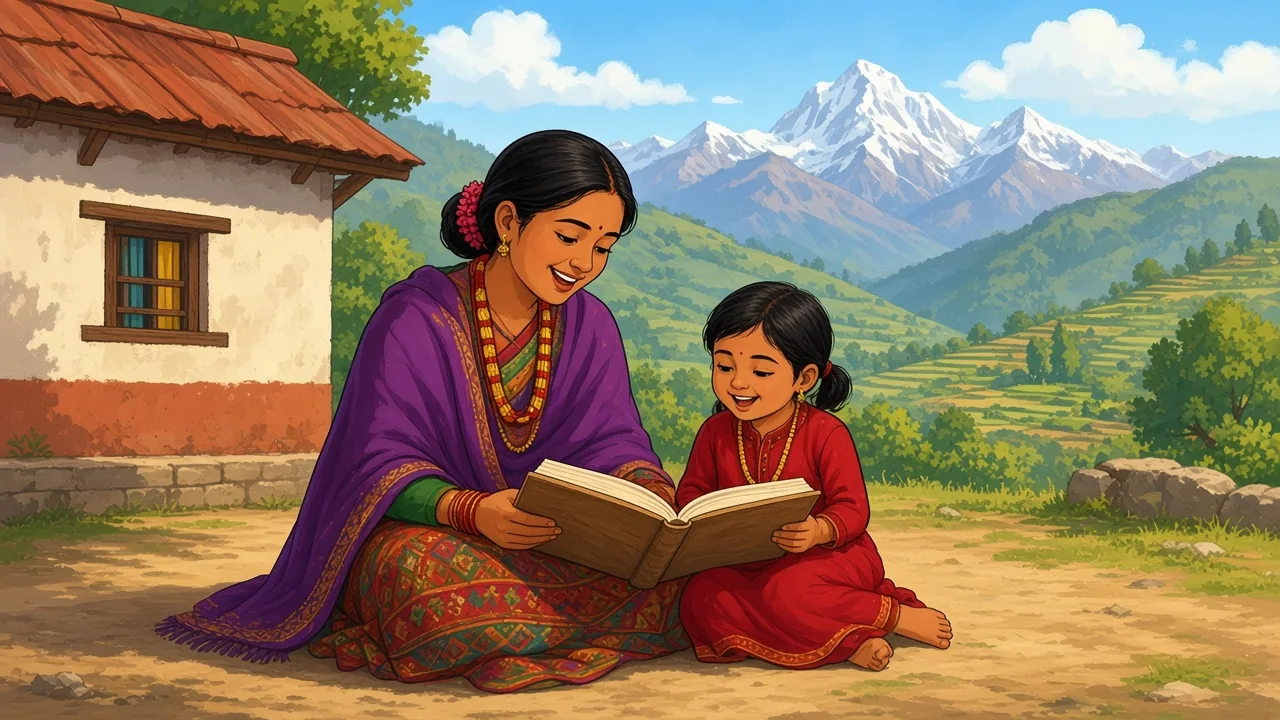
Long enough to read out loud.ठूलो स्वरले पढ्न पुग्ने गरी लामो छ।
Executive Overviewसारांश
This document provides an overview of the core narrative domains inherent to traditional Nepali society, categorized into six primary thematic sections: Calendars, Festivals of the Year, Pujas, Rites and Rituals, Places, and The Supernaturals. The temporal framework initiates with the traditional almanac or patro (पात्रो), which establishes liturgical and festival dates based on lunar calculations, alongside the solar Bikram Sambat (विक्रम संवत्) calendar. The festival cycles progress systematically from Baisakh (वैशाख) through Chaitra (चैत्र), incorporating major observances such as Dashain (दशैं) during the month of Ashoj (असोज), Tihar (तिहार) during the month of Kartik (कात्तिक), and the Swasthānī (स्वस्थानी) vrata (व्रत) during the month of Magh (माघ). Family-centered devotional rituals, or pujas (पूजा), encompass dedicated ceremonies such as Satya Nārāyaṇ (सत्य नारायण) and lakh batti (लाख बत्ती). Life-cycle rites, dietary observances, and sacred geography further anchor these cultural practices across historical riverways and temple complexes, while mythological entities such as the lākhe (लाखे) demon dancer remain centrally integrated into major civic celebrations like Indra Jātrā (इन्द्र जात्रा).यो दस्तावेजले परम्परागत नेपाली समाजका मुख्य कथाहरूलाई छ वटा खण्डमा राख्छ: पात्रो र संवत्, वर्षका चाड, पूजा, संस्कार, ठाउँहरू, र अलौकिक। समयको ढाँचा परम्परागत पात्रोबाट सुरु हुन्छ। पात्रोले चन्द्र गणनाबाट पूजा र चाडको दिन तोक्छ। सँगै सौर्य विक्रम संवत् चल्छ। चाडको चक्र वैशाखदेखि चैत्रसम्म जान्छ। असोजमा दशैं, कात्तिकमा तिहार, र माघमा स्वस्थानी व्रत पर्छ। घरेलु पूजामा सत्य नारायण र लाख बत्ती छन्। जीवनका संस्कार, भोजन, व्रत, र पवित्र नदी तथा मन्दिरले यी चलनलाई थाम्छन्। लाखे नाच्ने राक्षस इन्द्र जात्रा जस्ता सहरका जात्रामा गाँसिएको छ।
Calendarsपात्रो र संवत्
The traditional Nepali almanac, known as the patro (पात्रो), serves as the primary instrument for calculating lunar phases (tithi / तिथि) and designating auspicious dates for religious observances and festivals. Operating alongside this lunar schedule is the official solar civil calendar, Bikram Sambat (विक्रम संवत्), which tracks the solar year and provides the standard calendar date or gatey (गते) for administrative and daily civic record-keeping.परम्परागत नेपाली पात्रो चन्द्र पक्ष, अर्थात् तिथि, गन्न र पूजा तथा चाडका शुभ दिन तोक्न मुख्य साधन हो। यसैको छेउमा सरकारी सौर्य नागरिक पात्रो विक्रम संवत् चल्छ। त्यसले सौर्य वर्ष गन्छ, र प्रशासन तथा दैनिक कामका लागि गते दिन्छ।
The ceremonial year follows an annual cycle beginning in the month of Baisākh (वैशाख) and concluding in Chaitra (चैत्र). Key seasonal observances are distributed throughout this cycle, including the month-long Swasthānī (स्वस्थानी) fast during Māgh (माघ), as well as major urban street festivals such as Indra Jātrā (इन्द्र जात्रा), which features public appearances of the living goddess Kumārī (कुमारी) alongside the masked lākhe (लाखे) demon dance.चाडको वर्ष वैशाखमा सुरु भएर चैत्रमा सकिन्छ। यो चक्रमा मौसमी व्रत बाँडिएका छन्। माघभरिको स्वस्थानी व्रत त्यसमध्ये हो। इन्द्र जात्रा जस्ता सहरका सडक जात्रामा जीवित देवी कुमारी निस्किन्छिन्, र मुखुण्डो लगाएको लाखेको नाच पनि हुन्छ।
Household religious life relies heavily on specific devotional ceremonies, or pujas (पूजा), officiated by family priests or household heads to invoke divine blessings or fulfill religious vows. Standard rites include the Satya Nārāyaṇ (सत्य नारायण) puja (पूजा) and the offering of 100,000 wicks in the lakh batti (लाख बत्ती) ritual, both performed to express gratitude, ensure familial prosperity, and mark significant life milestones.घरेलु धार्मिक जीवन खास पूजामा अडिएको छ। परिवारका पुरोहित वा घरका मानिसले आशीर्वाद माग्न वा व्रत पूरा गर्न यी पूजा गराउँछन्। सत्य नारायण पूजा र लाख बत्तीमा एक लाख बत्ती चढाउने विधि यसमध्ये पर्छन्। दुवै कृतज्ञता देखाउन, घरको समृद्धि माग्न, र जीवनका ठूला मोड चिन्ह लगाउन गरिन्छन्।
Sacred traditions encompass mandatory life-cycle rites (saṃskāra / संस्कार), ritual feasting, and voluntary fasting observances. Domestic wedding ceremonies constitute a vital subset of life rites, whereas major mythological commemorations like Vivāha Pañcamī (विवाह पञ्चमी) mark divine holy matrimony during the month of Mangsir (मंसिर).पवित्र परम्परामा अनिवार्य जीवन-संस्कार, भोज, र आफैले रोजेको व्रत पर्छन्। घरको विवाह जीवन-संस्कारको एउटा मुख्य भाग हो। विवाह पञ्चमी जस्ता ठूला पौराणिक सम्झना मंसिरमा देव विवाहको दिन हुन्।
Nepal's sacred geography establishes a network of holy rivers (nadī / नदी) and temple shrines (mandir / मन्दिर) throughout the region. Among the most prominent of these sites is Pashupatinath Temple (पशुपतिनाथ मन्दिर), situated 5 km northeast of Kathmandu (काठमाडौं) along both banks of the sacred Bagmati River (बागमती नदी). Regarded as the holiest Hindu temple dedicated to Lord Shiva (शिव) in the world, Pashupatinath (पशुपतिनाथ) features a richly ornamented pagoda housing the sacred liṅga (लिङ्ग). The earliest dated record on this ground is a Licchavi (लिच्छवि) pillar of 459 CE. An inscription of 533 CE calls the land Paśupati's ground (पशुपतिक्षेत्र). The surrounding grounds encompass the deer forest of Paśupati (पशुपति). One story has Śiva (शिव) take refuge there as a deer. Another has him as Kirāteśvara (किरातेश्वर), the god in a hunter's form. Alongside stands the nearby Guhyeśvarī (गुह्येश्वरी) shrine, an essential pīṭha (पीठ) marking a seat of Satī (सती). Geographically, the Bagmati River (बागमती नदी) originated as the main drainage route formed when the bodhisattva (बोधिसत्त्व) Mañjuśrī (मञ्जुश्री) cleaved the ridge at Chobhar (चोभार) to drain the ancient valley lake. Today, the river and temple precinct serve as a focal point for sacred life, hosting open-air cremations, major observances such as Śivarātri (शिवरात्रि), and the scattering of grains during Bālā Caturdaśī (बाला चतुर्दशी).नेपालको पवित्र भूगोलले यस क्षेत्रभरि पवित्र नदी र मन्दिरको जाल बाँधेको छ। यीमध्ये प्रमुख पशुपतिनाथ मन्दिर हो, काठमाडौंबाट ५ किलोमिटर उत्तरपूर्व, पवित्र बागमती नदीका दुवै किनारमा। संसारमै शिवलाई अर्पित सबैभन्दा पवित्र हिन्दू मन्दिर मानिने पशुपतिनाथमा सुनले सजिएको प्यागोडा छ, र भित्र पवित्र लिङ्ग छ। यो जमिनको सबैभन्दा पुरानो मिति भएको प्रमाण लिच्छविकालको खम्बा हो, ४५९ ईस्वीको। ५३३ ईस्वीको एउटा शिलालेखले यो जमिनलाई पशुपतिक्षेत्र भन्छ। वरिपरिको जमिनमा पशुपतिको मृगवन छ। एउटा कथामा शिव मृग बनेर त्यहाँ शरण लिन्छन्। अर्को कथामा उहाँ किरातेश्वर हुनुहुन्छ, शिकारी रूपका देवता। छेउमै गुह्येश्वरीको मन्दिर छ, सतीको एउटा पीठ। भौगोलिक रूपमा बागमती त्यो मुख्य निकास हो, जुन बोधिसत्त्व मञ्जुश्रीले चोभारको डाँडो काटेर आदि ताल सुकाउँदा बनेको हो। आज नदी र मन्दिर-क्षेत्र पवित्र जीवनको केन्द्र हुन्। खुला घाटमा दाहसंस्कार हुन्छ, शिवरात्रि जस्ता ठूला व्रत हुन्छन्, र बाला चतुर्दशीमा अन्न छरिन्छ।
The same door houses the pilgrimages a household names beyond those rivers, among them Cār Dhām (चारधाम), Pāthibharā (पाथिभरा), and Manakāmanā (मनकामना).त्यही ढोकाले ती नदीबाहिर घरले नाम लिने तीर्थ राख्छ। तीमध्ये चारधाम, पाथिभरा, र मनकामना हुन्।
Nepali folklore categorizes spectral entities, elemental spirits, and divine beings within a complex cosmological framework. Mythological figures such as the short, plump, hair-covered house spirit Khyāḥ (ख्याः), a guardian of the storeroom, occupy specific domestic lore, whereas deities like Airi (ऐरी) and Barāhī (बाराही) represent distinct tutelary gods rather than ghostly apparitions. Legendary figures like the lākhe (लाखे) transition between wild demonic lore and structured civic ritual within urban processions.नेपाली लोककथाले प्रेत, प्राकृतिक आत्मा, र देवतालाई एउटा जटिल ब्रह्माण्डीय ढाँचाभित्र राख्छ। होचो, मोटो, रौंले ढाकिएको घरको आत्मा ख्याः, भण्डारको रक्षक, घरेलु कथामा बस्छ। ऐरी र बाराही जस्ता देवता कुल-रक्षक देवता हुन्। उनीहरू भूत होइनन्। लाखे जस्ता कथाका पात्र जङ्गली राक्षसी कथा र सहरको जात्राको विधि बीच सर्छन्।
Thematic Interconnections in Nepali Traditionsनेपाली परम्पराका विषयगत सम्बन्ध
Given the vast network of families across Nepal, these traditions span numerous interconnected narratives. While distinct stories unfold across different regions, several core thematic threads naturally intersect across multiple domains, allowing readers to trace recurring motifs even as individual festival observances maintain their unique character.नेपालभरिका परिवारको ठूलो जाल भएकाले यी परम्परा धेरै जोडिएका कथामा फैलिएका छन्। बेग्लाबेग्लै ठाउँमा बेग्लाबेग्लै कथा चले पनि केही मुख्य सूत्र एकभन्दा बढी क्षेत्रमा जोडिन्छन्। पाठकले दोहोरिने रूप पछ्याउन सक्छन्, र हरेक चाडको आफ्नै स्वरूप रहन्छ।
One goddess manifests across multiple stories. The narrative begins as Satī (सती) sacrifices her physical form during her father's ritual, only to return reborn as Pārvatī (पार्वती), the daughter of the mountains who steadfastly refuses any other suitor. When Kāma (काम) attempts to prematurely force their union, he is reduced to ashes, demonstrating that the sacred marriage is ultimately realized through her rigorous ascetic penance rather than worldly desire. In the central hills, this divine determination is commemorated during Tīj (तीज), while the far western region celebrates Gaurā (गौरा) as the return of the married goddess to her maternal home. The auspicious nuptials are recalled once more during Śivarātri (शिवरात्रि). In contrast, Dashain (दशैं) honors this overarching divine feminine energy through a martial narrative centered on the epic battle against the buffalo demon (महिषासुर) and culminating in a victorious tenth day. In human devotion, Gomā (गोमा) exemplifies a mortal woman upholding these same rigorous vows, whose pious sacrifices bestow blessings upon her son Navarāj (नवराज).एकै देवी धेरै कथामा देखिन्छिन्। कथा सतीले बाबुको यज्ञमा शरीर छाडेपछि सुरु हुन्छ। उनी पर्वतकी छोरी पार्वती भएर फर्किन्छिन्, र अर्को वर मान्दिनन्। कामले जोडी जबरजस्ती चाँडो गराउन खोज्दा ऊ खरानी हुन्छ। पवित्र विवाह उनको कठोर तपले पूरा हुन्छ। मध्य पहाडमा यो अठोट तीजमा सम्झिन्छ। सुदूर पश्चिमले गौरालाई बिहे भएकी देवी माइत फर्केको रूपमा मनाउँछ। शुभ विवाह शिवरात्रिमा फेरि सम्झिन्छ। दशैंले यही व्यापक स्त्रीशक्तिलाई महिषासुरसँगको युद्ध र विजयी दशौँ दिनको कथामा मान्छ। मानिसको भक्तिमा गोमा त्यही कठोर व्रत निभाउने नारी हुन्। उनको तपले छोरा नवराजलाई आशीर्वाद दिन्छ।
Viṣṇu (विष्णु) reappears through successive earthly incarnations. Whether honored as Mādhav Nārāyaṇ (माधव नारायण) at Sānkhu (साँखु), praised through the epics of Rāma (राम) and Kṛṣṇa (कृष्ण), or invoked through the concise household devotional text of Satya Nārāyaṇa (सत्य नारायण), these traditions center on the same supreme deity adapted to family worship. A recurring subtheme involves divine protection over vulnerable devotees: Prahlāda (प्रह्लाद) survives the wrath of his tyrannical father, reflecting the same protective arc seen later when the infant Kṛṣṇa (कृष्ण) escapes King Kaṃsa (कंस). Chronologically, Viṣṇu slumbers (विष्णु) atop the cosmic serpent Śeṣa (शेष) throughout the monsoon season, from the eleventh bright day of Ashad (असार) to the eleventh bright day of Kartik (कात्तिक). Major festivals like Dashain (दशैं) and Tihar (तिहार) occur during this sacred slumber, whereas winter observances such as Swasthānī (स्वस्थानी), Magh (माघ), and Sarasvatī Pūjā (सरस्वती पूजा) take place after the deity awakens.विष्णु पछिल्ला जन्ममा फेरि आउनुहुन्छ। साँखुमा माधव नारायणका रूपमा, राम र कृष्णका महाकाव्यमा, वा घरको छोटो सत्य नारायण पाठमा, यी सबै त्यही परम देवता हुन्, जसलाई परिवारले आ-आफ्नै पूजामा राखेको छ। दोहोरिने अर्को सूत्र कमजोर भक्तको रक्षा हो। प्रह्लाद अत्याचारी बुबाको रिसबाट बाँच्छन्। पछि शिशु कृष्ण राजा कंसबाट उम्किँदा त्यही रक्षाको चाप देखिन्छ। कालक्रममा विष्णु वर्षायामभरि ब्रह्माण्डीय सर्प शेषमाथि सुत्नुहुन्छ, असारको शुक्ल एकादशीदेखि कात्तिकको शुक्ल एकादशीसम्म। दशैं र तिहार यो पवित्र निद्राभित्र पर्छन्। स्वस्थानी, माघ, र सरस्वती पूजा देवता ब्यूँझिनुभएपछि आउँछन्।
Śiva (शिव) is venerated across diverse sacred sites. The central deity of the Swasthānī (स्वस्थानी) narrative manifests in multiple forms, including the divine deer residing at Paśupati (पशुपति), the poison-swallowing savior whose throat was cooled at Gosāīkuṇḍa (गोसाईंकुण्ड), and the sacred liṅga (लिङ्ग) at Bāṇeśvara (बाणेश्वर), which gave its name to the modern urban settlement. These depictions distinguish clearly between mortal hunters—such as the devotee who unwittingly dropped bilva (बेलपत्र) leaves upon a shrine—and divine hunter forms like Kirāteśvara (किरातेश्वर) in the deer forest. Furthermore, Guhyeśvarī (गुह्येश्वरी), situated alongside Paśupati (पशुपति), stands as a premier seat of Satī (सती), establishing a revered sanctuary without explicitly focusing on anatomical lore. That page does not list body parts.शिव धेरै पवित्र ठाउँमा पूजिन्छन्। स्वस्थानी कथाका मुख्य देवता धेरै रूपमा देखिनुहुन्छ: पशुपतिमा बस्ने दिव्य मृग, गोसाईंकुण्डमा कण्ठ सेलाइएका विष पिउने उद्धारक, र बाणेश्वरको लिङ्ग, जसले आजको बस्तीलाई नाम दियो। यी रूपले मानिस शिकारी र दिव्य शिकारी छुट्याउँछन्। नजानी थानमाथि बेलपत्र झार्ने भक्त मानिस हुन्। मृगवनका किरातेश्वर देवताको शिकारी रूप हुन्। पशुपतिको छेउकी गुह्येश्वरी सतीको प्रमुख पीठ हुन्। त्यो पृष्ठले शरीरका अङ्गको सूची दिँदैन।
The origins of the Kathmandu Valley (काठमाडौं उपत्यका) predate the annual festival cycle. Before annual celebrations were established, the bodhisattva (बोधिसत्त्व) Mañjuśrī (मञ्जुश्री) sliced through the hill at Chobhar (चोभार), allowing the primordial lake to drain away. This act revealed the self-existent flame at Svayambhū (स्वयम्भू) and formed the flowing waters of the Bagmati River (बागमती), while Karkoṭaka (कर्कोटक) remained as ruler of the subterranean waters. The draining of the lake made the sacred forest of Paśupati (पशुपति) possible, distinguishing this ancient transformation from the historical life of the Buddha of Lumbini (लुम्बिनीका बुद्ध). Today, during the holy month of Gunlā (गुँला), pilgrims journey up to the stupa (स्तूप), whereas the chariot procession of the red deity (रातो देवता) represents a subsequent tradition designed to bring rain to a drought-stricken valley rather than draining an ancient lake.काठमाडौं उपत्यकाको उत्पत्ति वार्षिक चाडभन्दा अघिको हो। वार्षिक चाड चल्नुअघि बोधिसत्त्व मञ्जुश्रीले चोभारको डाँडो काटे, र आदि तालको पानी बग्यो। त्यसले स्वयम्भूको स्वयंभू ज्योति देखायो, र बागमती बग्यो। कर्कोटक भूमिमुनिको पानीका स्वामी भएर रहे। ताल सुकेपछि पशुपतिको पवित्र वन सम्भव भयो। यो पुरानो परिवर्तन लुम्बिनीका बुद्धको ऐतिहासिक जीवनभन्दा बेग्लै हो। आज गुँलाको पवित्र महिनामा तीर्थयात्री स्तूपतिर हिँड्छन्। रातो देवताको रथ जात्रा पछिको परम्परा हो, जसले खडेरी परेको उपत्यकामा वर्षा ल्याउँछ। त्यो ताल सुकाउने कथा होइन।
Rain, water sources, and serpent deities form an interconnected mythic network. Rather than representing a single character, the nāgas (नाग) constitute a distinct serpent race. Karkoṭaka (कर्कोटक) guards the subterranean waters remaining from the primeval lake, while Nāga Pañcamī (नाग पञ्चमी) warns against inadvertent harm done during agricultural plowing. During Sithi Nakha (सिठी नखः), communities clean local wells when the serpent spirits are believed to be temporarily absent. In another story, Karkoṭaka (कर्कोटक) bestows a jewel-encrusted vest at Bhoto Jatra (भोटो जात्रा) as a token of gratitude for healing his queen's eye ailment. Elsewhere, the intertwined serpents of Bisket (बिस्केट) frame a dramatic tale of mortality within a royal marriage. Meanwhile, Śeṣa (शेष) serves as the cosmic couch for the reclining Viṣṇu (विष्णु) and protects the newborn Kṛṣṇa (कृष्ण), whereas during Jimūtavāhana (जिमूतवाहन), a hero offers himself to Garuḍa (गरुड) in place of a young nāga (नाग), ultimately securing the safety of the serpent race. Though interconnected by common motifs, each narrative retains its own distinct plot.वर्षा, पानीका मुहान, र सर्प देवता एउटै कथाजालमा छन्। नाग एउटा पात्र होइनन्। उनीहरू एउटा सर्प जाति हुन्। कर्कोटकले आदि तालबाट बाँकी भूमिमुनिको पानी थामेका छन्। नाग पञ्चमीले हलो जोत्दा नहेरी भएको हानिको चेतावनी दिन्छ। सिठी नखःमा सर्प आत्मा केही बेर टाढा भएको भनिने बेला समुदायले इनार सफा गर्छ। अर्को कथामा कर्कोटकले रानीको आँखा निको भएको कृतज्ञतामा रत्न जडिएको भोटो भोटो जात्रामा दिन्छन्। अन्तै बिस्केटका जोडिएका सर्प राजकीय विवाहभित्रको मृत्युको कथा हुन्। शेष सुतेका विष्णुको ब्रह्माण्डीय शय्या हुन्, र नवजात कृष्णलाई रक्षा गर्छन्। जिमूतवाहनको कथामा उनी युवा नागको सट्टा गरुडलाई आफूलाई दिन्छन्, र सर्प जाति सुरक्षित हुन्छ। साझा रूपले जोडिए पनि हरेक कथाको आफ्नै कथानक छ।
Ancestral remembrance is observed across distinct occasions. Maternal homage is paid at Mātā Tīrtha (मातातीर्थ) during Baisakh (वैशाख), whereas Gai Jātrā (गाईजात्रा), the day after Janai Pūrṇimā (जनै पूर्णिमा), features urban processions honoring family members who passed away in the preceding year. Paternal remembrance takes place at Gokarṇa (गोकर्ण) during Kuśe Auṃsī (कुशे औंसी), while the fortnight of Pitṛ Pakṣa (पितृ पक्ष) honors the entire ancestral lineage prior to Dashain (दशैं). In the bright fortnight of the monsoon, Indra Jātrā (इन्द्र जात्रा) ensures spiritual peace for the recently deceased, followed in Mangsir (मंसिर) by Bālā Caturdaśī (बाला चतुर्दशी), when grains are scattered throughout the deer forest. Additionally, Chāsok Tangnam (चासोक तङनाम) offers the first harvest rice to ancestors in accordance with Limbu (लिम्बू) traditions. Each observance serves a complementary and distinct purpose in the spiritual calendar.पुर्खाको सम्झना बेग्लाबेग्लै दिनमा हुन्छ। आमाको सम्मान वैशाखको मातातीर्थमा हुन्छ। गाईजात्राजनै पूर्णिमाको भोलिपल्ट हुन्छ, र अघिल्लो वर्ष गएका परिवारलाई सहरको जात्राले सम्झन्छ। बाबुको सम्झना गोकर्णको कुशे औंसीमा हुन्छ। पितृ पक्षको पक्षले दशैंअघि पूरै वंशलाई सम्झन्छ। मनसुनको शुक्ल पक्षमा इन्द्र जात्राले भर्खरै गएकालाई शान्ति दिने वाचा गर्छ। मंसिरमा बाला चतुर्दशीमा मृगवनभरि अन्न छरिन्छ। चासोक तङनामले लिम्बू परम्पराअनुसार पुर्खालाई नयाँ धानको चामल चढाउँछ। हरेक व्रतको आध्यात्मिक पात्रोमा आफ्नै काम छ।
Diverse New Year traditions mark distinct cultural horizons. Standard timekeeping frameworks are detailed on the patro page (पात्रो) and the Bikram Sambat page (विक्रम संवत्). The official solar year opens on the first day of Baisākh (वैशाख), accompanied by the ceremonial raising and lowering of the pole at Bisket Jātrā (बिस्केट जात्रा) in Bhaktapur (भक्तपुर). During the same month, Ubhaulī (उभौली) marks the Kirat (किरात) New Year as communities migrate upward, whereas Mha Pūjā (म्ह पूजा) initiates the Nepal Saṃvat (नेपाल संवत्) calendar during Tihar (तिहार). In winter, Māghī (माघी) celebrates the Tharu (थारू) New Year as the sun enters Capricorn (मकर), while Tamu, Sonam, and Gyalpo Lhosar (तमु, सोनम, र ग्याल्पो ल्होसार) designate New Year celebrations across Himalayan communities. At harvest time, Udhaulī (उधौली) completes the Kirat (किरात) cycle during the downward seasonal transition. Families frequently celebrate multiple observances, reflecting Nepal's rich cultural tapestry.नयाँ वर्षका परम्परा बेग्लाबेग्लै सांस्कृतिक क्षितिज चिन्छन्। समय गन्ने ढाँचा पात्रोको पृष्ठ र विक्रम संवत्को पृष्ठमा छन्। सरकारी सौर्य वर्ष वैशाखको पहिलो दिन खुल्छ। त्यसै बेला भक्तपुरको बिस्केट जात्रामा खम्बा उठाइन्छ र ढालिन्छ। त्यही महिना उभौलीले किरात नयाँ वर्ष चिन्छ, जब समुदाय माथि सर्छ। म्ह पूजाले तिहारभित्र नेपाल संवत् खोल्छ। जाडोमा माघीले थारू नयाँ वर्ष मनाउँछ, सूर्य मकरमा पस्दा। तमु, सोनम, र ग्याल्पो ल्होसार हिमाली समुदायका नयाँ वर्ष हुन्। फसलको बेला उधौलीले किरात चक्र पूरा गर्छ, मौसम तल सर्दा। परिवारले धेरै व्रत मनाउँछन्। यसले नेपालको धेरै संस्कृति देखाउँछ।